Genius: The Game

geniusthegameby Leopoldo Gout
First sentence: “The night Teo disappeared started off just like any other.”
Support your local independent bookstore: buy it there!
Content: There’s some mild swearing. It feels more like a YA book, so it’s in the YA section (grades 6-8), but I’d give it to an interested 5th-grader.

Three friends — Mexican-American Rex, Nigerian Tunde, and Chinese Cai — are at the top of the game when it comes to technology. Rex is a top-notch programmer and hacker, Tunde a brilliant engineer, and Cai a blogger who goes by Painted Wolf and exposes corruption in the government, and together they are LODGE, and have a massive on-line presence. Then they get word: the CEO of a major tech corporation is having an invitation-only competition for the world’s best and brightest. And Tex, Tunde, and Cai all need in, for different reasons. Not the least of which is to win.

On the one hand: this book is SO cool. It’s nice to have a tech-laden book that isn’t scifi, but rather just people using advanced technology the way it’s supposed to be used. Bonus points, as well, for an effortlessly diverse cast. (I did find Tunde’s chapters a bit odd, but I eventually warmed up to it.) It makes sense that all the people at the competition wouldn’t be white boys, and so I appreciated having not only a good ethnic mix (the CEO’s Indian, on top of it all!), but a good mix of girls and boys. The design of the book is cool too, from the sleek cover, to the art and graphics mixed in, depending on which narrator’s POV we’re reading. (Tunde’s was the most elaborate, Rex the most spare.)

But, I’m not sure cool is enough. For one thing, I was expecting a stand-alone, and about 2/3 of the way through I realized it wasn’t, and I’ll admit it: I lost interest. *sigh* The characterization lacked a bit, especially of the Big Bad; why on earth is he trying to bring the world’s tech down, and what does he want with our super-smart, capable kids? Questions that were, unfortunately, left unanswered. It’s not that it was bad — I finished it after all — but it just didn’t make me super enthused. It wasn’t bad. But it wasn’t super great either.
Two DNFs

I suppose each  of these could have gotten their own post, but I didn’t want to work that hard.

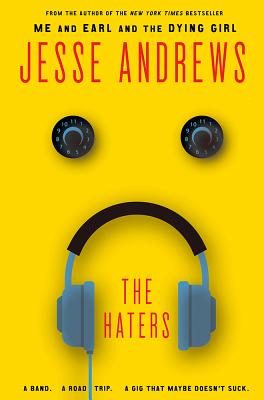
hatersThe Haters
by Jesse Andrews
First sentence: “Jazz camp was mostly dudes.”
Review copy provided by publisher
Content: So many swear words, including a bucketful of f-bombs. Realistic, sure, but it lands it squarely in the Teen (grades 9+) section of the bookstore.

Wes and Corey are at jazz camp. They’re not the world’s best musicians; mostly what they do is mess around on the bass and drums, respectively, and be super snobbish about the music they listen to. They figure it’s going to be a halfway decent camp, until they meet Ash, who is a lead guitarist. But not a jazz one. She’s also the only girl at the camp. And then, one night, she talks Wes and Corey into ditching camp and going on a “tour” as a band — just the three of them.

I wanted to like this one, and sometimes I did. Sometimes I laughed. Sometimes I thought that Andrews’ observations on music and hipsters and snobs and possibly even teenagers were spot-on. But, that just wasn’t enough to make me care. I made it nearly halfway before I realized that I had no desire to find out what happens on this “world tour of the south” or how Wes, Corey, and Ash deal with everything. It was funny at times. It just wasn’t interesting.

Which is too bad.

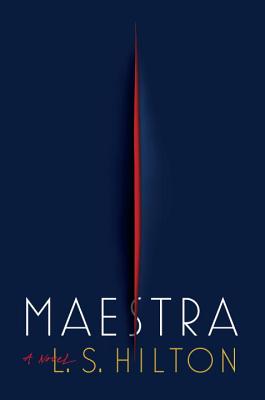
maestraMaestra
by L. S. Hilton
First sentence: “Heavy hems and vicious heels swooped and clacked over the parquet.”
Review copy provided by the publisher.
Content: Um. Well. Let’s just say that it’s a smarter 50 Shades of Grey.  It’s in the Mystery section of all places.

I think there’s a plot to this one. By day, Judith works at an art house as a lackey — she’s super informed about art, smarter than everyone else at the art house, but she just doesn’t get respect. So, by night, she works at a house of pleasure (of sorts). I’m sure more stuff happens, but I bailed after she accidentally killed a guy in France (or was it Italy?) and went on the lamb.

I’ll admit I don’t mind sex in my books. I like sex when it’s smart, when I like the chemistry between the characters, when there’s a plot to attach itself to. I don’t go in for erotica, mostly because it’s sex and no plot. This one, I was assured, balanced the both: hot sex, interesting character, good plot.

Um. I never got past the hot sex part to see the other two. Sure, Judith was intriguing, but 100 pages in there really wasn’t much of a plot. And it’s rumored that this is a series? Seriously? I decided I was much too innocent for this one (the sex wasn’t so much hot as it was disturbing), and since the characters and plot weren’t enough to hold my interest, I bailed.

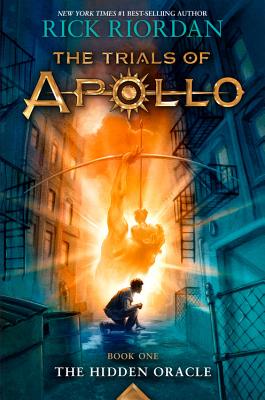
The Trials of Apollo: The Hidden Oracle

hiddenoracleby Rick Riordan
First sentence: “My name is Apollo.”
Support your local independent bookstore: buy it there!
Others in the series: Well, it’s the first one, but it helps if you’ve read Percy Jackson and the Olympians and The Heroes of Olympus series first.
Content: There’s no swearing, and only some violence. Riordan hints at an abusive relationship, but there’s nothing graphic. I’d give it to a 10-year-old who loves the Percy world. It’s in the YA section (grades 6-8) with the Heroes of Olympus and Magnus Chase because it feels right there.

I think the best way to review this is to go over the arc that A — who read it before I did — expressed.

  1. Apollo is awful, I hate this book. She’s right: Apollo is awful. But: character growth. I was glad to see Apollo change from a first-class ass to a halfway decent human being by the end. That said, there were some nice touches, even if they were annoying: the “Me Cabin” and his daily affirmation (“You are beautiful, and everyone loves you.”) both made me smile.
  2. Meg is fantastic.  A new character, a daughter of Demeter, and also the person Apollo is (accidentally) pledged to serve, she’s a great character. More Meg please.
  3. Will and Nico are adorable. All the fangirl feels. Yes please.
  4. Haiku! This one’s mine. I loved the (bad) haiku at every chapter. A’s favorite:
    Practice makes perfect
    Ha, ha, ha, I don’t think so
    Ignore my sobbing
  5. As for plot, etc? It wasn’t bad. Riordan wrapped up some loose ends that I never really considered loose ends, but it’s nice to know. He did break a couple of rules (too spoilery to tell, but left me kind of meh) that he’d set up, but other than that, it was a basic hero-quest, and I liked that it took place entirely at Camp Half Blood (over a short period of time). I liked the Big Bad he’s created (no more Huge Gods being Scary); he kept this one small and simple.

Was it the best book I’ve ever read? No. But it was lots of fun. Which is all I really wanted.

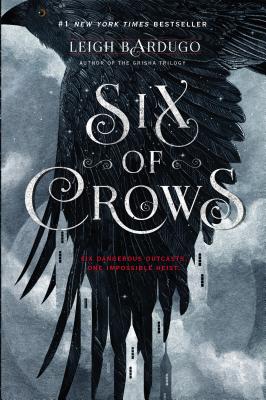
Audio book: Six of Crows

sixofcrowsby Leigh Bardugo
Read by: Jay Snyder, Brandon Rubin, David LeDoux, Lauren Fortgang, Roger Clark, Elizabeth Evans, and Tristan Morris
Support your local independent bookstore: buy it there!
Content: There is a lot of violence, some of it on the graphic side. Illusions to prostitution, and two swear words (they stood out). It’s in the YA section (grades 6-8), but I’m glad I read it. It’s probably on par with Hunger Games, so if your kid/you can handle the content of that, this one is probably okay.

I put this one off. I know I did. I know I should have read it last fall when it was Hot and Everyone was reading it. But, I was busy, and I kept putting it off. Until I was in need of a new audio book and I stumbled across this one. I finished it, went into work and declared “So THAT’S what I was missing!” Yeah.

Kaz Brekker has worked his way up in the Dregs — a criminal gang in the island city/nation of Ketterdam — and has a reputation for being brutal and willing to take anything on. So when he’s tasked with springing a scientist out of the most secure prison in the world — the Ice Fortress in Fjerda — of course he accepts. The price is right, after all. He gathers together a crew of six people — ranging from a merchant’s exiled son to a Grisha —  and they set out to achieve the impossible. Of course, they don’t get along, there’s a lot of internal mistrust and bickering. And, of course, things go badly. (I was wondering how it was all going to fit in one book. The answer is it does but it doesn’t.)

This was enormous amounts of fun. Perhaps part of that fun was the audio form: there were five different people doing the five different narrators, which helped immensely. I really enjoyed the way each one did the other characters slightly differently as well as the way each actor interpreted their own character. It definitely added something more to the book.

I have to admit that I liked this one better than the Grisha books. For whatever reason, I love heist books, I love books with twists and turns (though some of the twists were unfair; she didn’t give me enough information to see things coming and I was genuinely surprised a couple of times) and this one had both. I came to like the characters — Matthais the Fjorden had the most character growth (I wanted to throttle him in the beginning), but I loved the rest of the crew as well. I liked the diversity — it felt effortless and natural rather than an author just trying to be diverse. Bardugo expanded the narrow world she’d created in the Grisha books, and gave it much more depth, which I absolutely adored.

I’ll most definitely be picking up the next one (maybe even in audio) to see how this adventure ends.

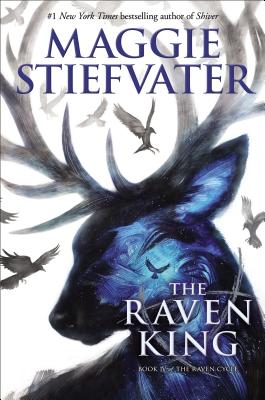
The Raven King

ravenkingby Maggie Stiefvater
First sentence: “Richard Gansey III had forgotten how many times he had been told he was destined for greatness.”
Support your local independent bookstore: buy it there!
Others in the series: The Raven Boys, The Dream Thieves, Blue Lilly, Lilly Blue
Content: Like the others, this is intense, heavy on the swearing and violence.

I’m always a little sad when a series I’ve loved for years comes to an end. I get so invested, waiting for each one, that it almost feels anticlimactic when it actually comes to an end. I feel let down that I no longer will get to look forward to visiting with characters I love, following their story through pages.

Sometimes, my expectations are too high and while I like the ending, I’m not wholly satisfied with it. However, this was not the case with the last in the Raven Cycle. (No, I didn’t read the others in anticipation. Maybe I should have.) Maggie Stiefvater has come up with an ending that is so perfect for the series, that captures everything, that ends it so wonderfully, that I am genuinely sad that I will not get to visit this world again. (Well, I mean, I can always re-read, but there will be nothing NEW.)

The plot is really immaterial: there’s something attacking Cabeswater, Blue and the boys are dealing with Great Things and small things. There’s a new character, Henry, who has showed up as a minor character before (or at least I got that impression, since, you know, I didn’t reread), but I fell in love with him as much as I do Blue and the boys. He melded perfectly into the Raven Boys, and played a pivotal role in the narrative; he wasn’t just window dressing. And while the psychics weren’t as much a part of this — it is a YA novel after all — I did love them and Mr. Gray when they showed up. The sum total? It really was everything I could have hoped for in the end.

Maggie’s going to be at Watermark Friday night. I’m going to be a basket case, gushing at her about this. It’s going to be wonderful as this ending.

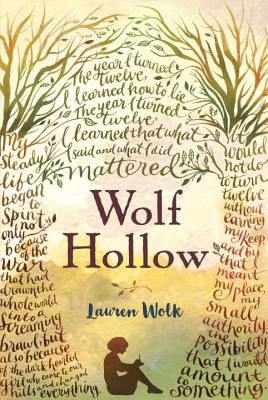
Wolf Hollow

wolfhollowby Lauren Wolk
First sentence: “The year I turned twelve, I learned how to lie.”
Support your local independent bookstore: buy it there!
Release date: May 3, 2016
Content: There’s some death and bullying and one pretty intense injury scene. Probably not for the younger set. It will probably go in the YA section (grades 6-8) of the bookstore.

It’s the fall of 1943, and Annabelle is living a happy, quiet life on her farm in Pennsylvania. Sure, the war in Germany is raging, seemingly without end, but it doesn’t really touch Annabelle’s life. What does touch her is Betty, the new girl who has moved in with her grandparents. Betty has decided that Annabelle is her target, and demands things from her. And when Annabelle refuses to give in, Betty turns her ire on bigger targets. Like Toby, the World War I veteran who Annabelle’s family has taken care of for the past few years. And so when Betty goes missing, it’s Toby who gets blamed.

On the one hand, this really grew on me. It took about 100 pages, but I finally got to where I was invested in Annabelle’s story, and curious about the direction it was taking. The writing is excellent; Wolk really does know how to spin a story. And I thought that, even though it’s a work of historical fiction, the themes of acceptance of others and defending the innocent were incredibly timely.

My problem with it? It’s not really a children’s book. Our narrator is reflecting back on her childhood, so everything is kind of infused with adult sensibilities. (At least: I thought so.) I appreciated that the parents were good parents, helping out when Annabelle confessed the bullying to them. But, it just doesn’t feel like a book I can give to a kid (maybe that special, precocious kid? The 9-year-old who likes Harper Lee, maybe.). Maybe I’m being too sensitive, dumbed down by Diary of a Wimpy Kid-like books. Maybe this is like Pax, which I had a viciously violently negative reaction to, but it turned out it was just me.

Though I didn’t have a negative reaction to this. I liked it, I thought it was well-written and the story incredibly powerful. I just don’t think it’s really a kids’ book.

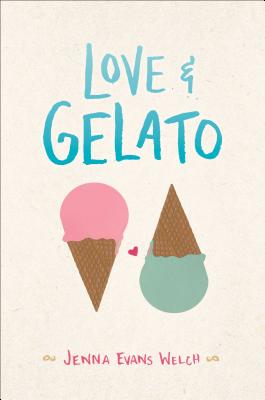
Love & Gelato

lovegelatoby Jenna Evans Welch
First sentence: “You’ve had bad days before, right?”
Support your local independent bookstore: buy it there!
Release date: April 12, 2016
Review copy snagged from the ARC shelves at work.
Content: There’s some drinking (the drinking age in Italy is 16) and a couple of lecherous men that the main character encounters. It’ll be in the YA section of the bookstore.

Lina’s mom has died somewhat suddenly, and several months later Lina has found herself in Florence, meeting the father  — Howard — she never knew because her mother never told her about him. It’s not exactly her idea of a good time. What she really wants is to just go home and live with her best friend.

Then she receives her mother’s journal from her time in Florence, and all of a sudden, things become more interesting. She not only learns about her mother’s secrets, but sees Florence through her mother’s eyes. It also helps that she meets a cute Italian (well, half-American) boy, Ren, to share things with.

This was was just about perfect as a summer romance. Sure, it starts with a dead parent, but after that it’s utterly charming. I loved the mystery of Lina’s father: who was he, what was he like? I loved her getting to know Howard, and I adored Ren as a character. Sure, it was a little predictable (I figured out the twist pages before Lina did), but in a comforting way. Besides, I was reading it as an escape to and a romance in Italy, not for some great literary writing. And Welch served it up (pun intended) delightfully.


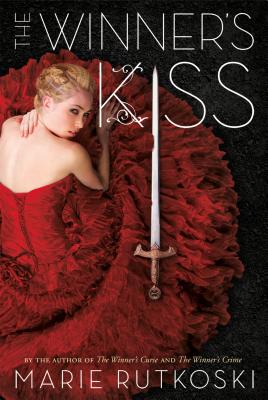
The Winner’s Kiss

by Marie Rutkoskiwinnerskiss
First sentence: “He told himself a story.”
Support your local independent bookstore: buy it there!
Others in the series: The Winner’s Curse, The Winner’s Crime
Content: There’s some sexytimes, but it’s tastefully off screen. Mostly. I am toying with moving this to the Teen section (grades 9+). (I hate doing that, especially since the other two are really pretty firmly in my 6-8th grade range. But, I also don’t want one in the Teen section and the other two in the YA section, so I may just move them all, or keep this one in YA. Frustrating.)

Spoilers for the first two, obviously.  Also: I still hate these covers with a passion. I mean, they’re pretty and all, but they’re NOT the books.

Kestrel has been arrested as a traitor to her country and shipped off to a work camp in the frozen tundra. Arin is still reeling from betrayal, when Kestrel rejected him and is throwing himself into his alliance with the Dacrans, determined to beat Valoria out of his country once and for all. He’s still in love with Kestrel, but she doesn’t seem to return his affections.

Both are determined to make the best of their situation. Both are determined to exact vengeance upon the leaders of Valoria, which includes Kestrel’s father. Neither are prepared for the directions that goal will lead them.

I don’t want to give more away from the plot (though if you’re smart, you can make some assumptions from the content…), but I’ll say this. It’s a good ending. I liked how Rutkoski wrapped things up, giving the story a complete finish, while not giving us every single little detail about the future. I love how she gave both Arin and Kestrel moments to shine, moments to grow, moments to be complex and do the unexpected. I liked that there was palpable tension, not necessarily between people but in situations. I found myself biting my nails, hoping things worked out okay. I loved how no one was black or white, and that even the bad guys were complex and interesting.

I’m definitely sad that this series is ending. It was definitely a good story.

Tell Me Three Things

tellmethreethingsby Julie Buxbaum
First sentence: “Seven hundred and thirty-three days after my mom died, forty-five days after my dad eloped with a stranger he met on the Internet, thirty days after we then up and moved to California, and only seven days after starting as a junior at a brand-new school where I know approximately no one, an email arrives.”
Support your local independent bookstore: buy it there!
Release date: April 5, 2016
Review copy snagged from the ARC shelves at my place of employment.
Content: There’s a lot of swearing, including a dozen f-bombs, some teen drug use and drinking, as well as talk of sex. It’ll be in the Teen section (grades 9+) of the bookstore.

Two years after Jessie’s mom’s’ death, her father decides to move on, marrying a woman from L. A. that he met on one of the grief chat boards. What that means for Jessie, however, is being uprooted before her senior year, forced to leave her Chicago home and friends and forced to move in with a stepmother she doesn’t know and a stepbrother who loathes her and go to a private school where everything she does is wrong. Then she gets an email out of the blue from someone who calls himself “Somebody Nobody” and they start a conversation. One that, over the course of the fall, becomes increasingly important to Jessie. `

The big mystery, though, is who this Somebody Nobody is. Jessie’s pretty sure it’s a guy, but which one? And, as they get closer and she spills more of her secrets to him, will the ever meet?

I fell head over heels in love. Sure, it’s a bit 99% with the private school and the rich California kids, and sure there’s the whole dead-parent thing, but it’s a good picture of a girl trying to get past her mom’s death (rather than her mom dying) and moving on. and I liked how Buxbaum dealt with the whole blended family thing. But, what I really liked was the romance. I adored the conversations between SN and Jessie (is it bad that I peeked at the end to find out if it was who I hoped it was?) and I felt that Buxbaum found a creative and clever way to make their relationship grow without it feeling trite or cliche.

It really was a delightful read.

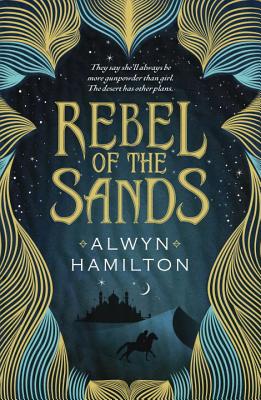
Rebel of the Sands

rebelofthesandsby Alwyn Hamilton
First sentence: “They said the only folks who belonged in Deadshot after dark were the ones who were up to no good.”
Support your local independent bookstore: buy it there!
Release date: March 8, 2016
Review copy provided by the publisher.
Content: There’s some pretty disturbing violence near the end of the book. It’s in the YA section (grades 6-8) of the bookstore.

The store’s Penguin children’s rep (whom I adore, and not just because she’s got an Irish accent) told me when she handed me the ARC of this book that it was Totally Brilliant and that I was going to Totally Love It. (Just imagine that in an Irish accent. She’s great.) I said okay, I’ll read it. And then it got stuck on the back burner. Things crept up, and then A stole it from me and plowed through it. And she said that it was really really good and I should totally read it. And still it was on the back burner.

(This is less a review a more of a “why didn’t I read this SOONER” post. Sorry.)

But then a day came when I was shuffling through my shelves and piles looking for something Really Good, and this finally Called to me.

And as I plowed through the first two chapters — in which our heroine, Amani Al’Hiza finds herself in a shooting contest in order to get out of her dead-end desert town and away from her lecherous uncle and demanding aunt — and was hooked. Seriously. I was reminded of Harry from The Blue Sword and of Katsa from Graceling and I was in love. I plowed through this book like I didn’t have to work or do dishes or manage four kids in the house.  (Some people are calling it East Meets West — it’s set in a Middle Eastern-like country, with djinn but there’s guns — but I disagree. Sure, it’s pulling on all influences, but I really didn’t get the whole “Western” vibe. It’s a fantasy with guns instead of swords. I can go with that.) I loved the characters (yeah, so I called the love interest from the first chapter, but I did love the twists that came), I loved the complexity of the mythology Hamilton created, I loved that she didn’t give me a clean ending. (I didn’t love that it’s probably not a stand-alone, but at least it came to a conclusion.) It definitely hit all the right buttons for me.

Which leads me to say, don’t do what I did and put this one off. It really is THAT good.