Hour of the Bees

hourofbeesby Lindsey Eagar
First sentence: “Something flies too close to my ear.”
Support your local independent bookstore: buy it there!
Review copy provided by the publisher.
Content: It’s a tricky story, moving between “reality” and “magic” for much of it. Though there’s really nothing content-wise that would be inappropriate for younger readers, they might lose interest with the plotting. It’s in the YA section (grades 6-8) of the bookstore, though I’d give it to a 4th or 5th grader if they expressed interest.

All Carol wants to do the summer before 7th grade is hang out with her friends and have pool parties and sleepovers, but instead she’s stuck out at her grandfather’s ranch in southwest New Mexico, helping her family pack him up in order to send him to a nursing home. Not exactly her idea of fun. And it doesn’t help that her grandfather is suffering from dementia, either. It’s shaping up to be a long, hot, boring summer.

Except, once she gets there, Carol finds out that her grandfather is full of crazy, magical stories, ones that may or may not be true. And, over the course of the summer, Carol decides that maybe it’s not too bad.

Okay, that’s not exactly all there is to it. There’s a whole thread about a drought, and a tree, and bees taking away the rain that, honestly, I didn’t find all that interesting.

Maybe I should start with the good: I really like that there’s a book out there that deals with grandparents, dementia and death. It’s something that children do need to deal with, and it’s good that there’s a book that does take something like moving a grandparent out of the house and into a nursing home as well as tackling the mood and personality swings that come with dementia.

That said, this smack WAY too much of the Magical Mexican for me. Truthfully, it may just be me (though as I was relating it to E — who’s Mexican — she said, “Um. No.” But she may have been biased from my retelling); please let me know if you read it and you think I’m wrong here. But, I felt like the whole thing of “needing to get back to your roots” and the whole magical realism story thing just didn’t work. Yes, roots are important. But, so is change and growth. You don’t need to sacrifice one for the other (and I felt like Eagar was coming down firmly on Family and Roots are Very Important, especially since we’re Mexican).  It just felt… forced. Off. Not quite natural. And then there was Carol’s whole flipping from being a city girl to being a ranch hand at the end. I just didn’t get WHY. Was it her grandfather’s stories? Where did this deep connection to her roots come from? Why did it happen so suddenly, and so deeply that she would do drastic and rash things at the end? It didn’t make sense to me. (Again: it may just be me. I’ll admit I skimmed a lot.)

At any rate, it ended up not being one that I really loved.

The Wild Robot

wildrobotby Peter Brown
First sentence: “Our story begins on the ocean, with the wind and rain and thunder and lightning and waves.”
Support your local independent bookstore: buy it there!
Release date: April 5, 2016
Review copy provided by the publisher.
Content: It’s fairly large print, with illustrations. It’s good for third grade and up (and is in the middle grade section of the bookstore), but would make a great read-aloud for younger kids.

After a hurricane, the ROZZUM unit 7134 robot washes up on the shore of an uninhabited island. The robot is inadvertently activated by some otters, and Roz (as she introduces herself) comes on. She doesn’t know that she isn’t supposed to be on the island, so she sets about trying to figure out what this place is and how to fit in. She initially meets resistance from the animals: they call her a monster and try to run her off the island. But, through time and some cleverness, Roz learns to adapt. She makes friends with the beavers. She accidentally orphans a goose, but then adopts him as her son. She learns how to fit in.

There really isn’t much to this book; there’s a lot of narration and an intrusive narrator that I didn’t mind terribly much. Because of that, I think this would probably make a better read-aloud than one kids are going to want to pick up. That said, I tossed it in K’s direction for a book report, and so far she’s enjoying it. It helps, I think, that the chapters are short (some as little as one page) and there are illustrations liberally scattered throughout.

In the end, I found I really liked it. I came to really care about Roz and her relationship with the animals. And while I didn’t really care for the abrupt ending (sequel, anyone?), I cared about the journey. And it was an interesting mix of tech — Roz was able to use her computer database to find out answers — and nature — the winter was rough, animals (even though they were talking) died.

A very intriguing book, in the end.

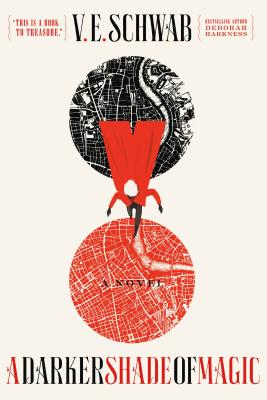
A Darker Shade of Magic

darkershadeby V. E. Schwab
First sentence: “Kell wore a very peculiar coat.”
Support your local independent bookstore: buy it there!
Content: There are three f-bombs, some reference to sex (but none actual) and a lot of violence. That said, I think it’d be a good crossover for the high school set. It’s in the Science Fiction/Fantasy section of the bookstore.

I want you to know up front that whatever I write here won’t do this book any sort of justice. I really do need to work on an elevator speech for this one at work, because it really is THAT good, and I’d love it if more people read it. But, summing up the plot? Not as easy as it sounds.

Kell is many things: a brother, a prince, a magician, a smuggler. He lives in what he calls “Red” London, a world of magic and opulence, where the Thames runs red with blood. The reason he needs to give it a marker other than the city name is because Kell is one of the few people (well, really only two) who can travel between worlds. He moves through doors of his own making to “Grey” London (ours, set in the early-1800s) to “White” London (an incredibly violent and vicious place), but never, ever to Black London. That’s been sealed off from the other worlds after the magic there went bad and began killing people. However, when Kell accidentally brings a token from Black London back into his world, he discovers that he’s created a problem almost too big for him to handle.

I didn’t even mention Lila… a thief and pirate wannabe that Kell picks up in Grey London, who ends up being more than a sidekick.

Seriously: I don’t know where to start with this. It feels like a Gaiman novel, rich and opulent with its world-building, and yet Schwab never forgets the plot (not to mention the palpable tension when Kell’s life is on the line, multiple times). It twists and turns and weaves and is just unputdownable.

It’s also nice that it comes to a conclusion (albeit a bit rushed, but that’s often the case for me in fantasy novels), while leaving the door open for the sequel. Which, of course, I can’t wait to get my hands on.

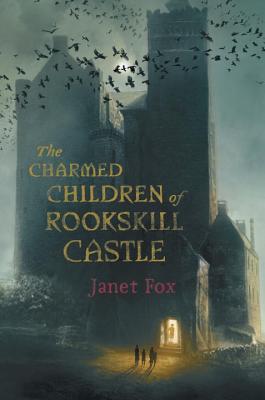
The Charmed Children of Rookskill Castle

charmedchildrenby Janet Fox
First sentence: “It is 1863.”
Support your local independent bookstore: buy it there!
Review copy provided by the publisher.
Release date: March 15, 2016
Content: There’s some scary imagery, and the narrative is a bit confusing. I’d give it to a precocious 3rd grader, but definitely 4th and up. It will be in the Middle Grade (grades 3-5) section of the bookstore.

At first glance (at least for me), this looks like a kind of off-beat historical fiction. It’s the middle of WWII, and the children in London are being sent out to the countryside in order to escape the bombing. Kat and her siblings Robbie and Amelie are among those kids sent away, in this case to a castle in Scotland where a boarding school of sorts has been set up.

But things aren’t always what they seem. Including this book.

Rookskill Castle is a dark place (and not just because fall in Scotland is dreary), and the lady of the castle is up to something. Kat is sensible and practical, and not at all inclined to believe that what it going on could be dark magic.

And yet.

I loved this book, with reservation. On the one hand, the story was compelling — by the end, I was flying through it — and I adored Kat. She was practical, mechanically-minded and good at math, all things you don’t usually get from fantasy heroines. She was also willing to admit when she’s scared, and the boys were mostly willing to support her in the decisions that had to be made.

However,  I have issues when I know more than the characters. Fox flits back and forth through time, from WWII backwards to the mid-1800s, in order to give the reader the backstory of the castle. I’m not the most careful reader, and so I was able to piece things together before the characters did. I’ll admit it kind of heightened the tension — I wanted Kat to figure things out before they got too bad — but I was also annoyed that it took her so long. In the end, I found I didn’t mind so much, but it did niggle at the back of my mind while I was reading,.

The magic, however, was great. I loved the way Fox wove good vs. dark magic, and how it was a very practical sort of magic as well. That much — plus the  general, overall creepiness — definitely nakes the book worth reading.

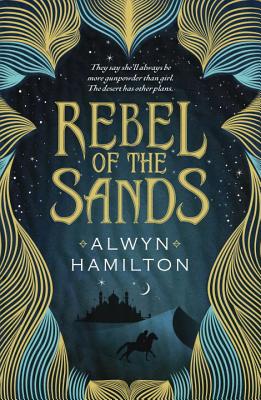
Rebel of the Sands

rebelofthesandsby Alwyn Hamilton
First sentence: “They said the only folks who belonged in Deadshot after dark were the ones who were up to no good.”
Support your local independent bookstore: buy it there!
Release date: March 8, 2016
Review copy provided by the publisher.
Content: There’s some pretty disturbing violence near the end of the book. It’s in the YA section (grades 6-8) of the bookstore.

The store’s Penguin children’s rep (whom I adore, and not just because she’s got an Irish accent) told me when she handed me the ARC of this book that it was Totally Brilliant and that I was going to Totally Love It. (Just imagine that in an Irish accent. She’s great.) I said okay, I’ll read it. And then it got stuck on the back burner. Things crept up, and then A stole it from me and plowed through it. And she said that it was really really good and I should totally read it. And still it was on the back burner.

(This is less a review a more of a “why didn’t I read this SOONER” post. Sorry.)

But then a day came when I was shuffling through my shelves and piles looking for something Really Good, and this finally Called to me.

And as I plowed through the first two chapters — in which our heroine, Amani Al’Hiza finds herself in a shooting contest in order to get out of her dead-end desert town and away from her lecherous uncle and demanding aunt — and was hooked. Seriously. I was reminded of Harry from The Blue Sword and of Katsa from Graceling and I was in love. I plowed through this book like I didn’t have to work or do dishes or manage four kids in the house.  (Some people are calling it East Meets West — it’s set in a Middle Eastern-like country, with djinn but there’s guns — but I disagree. Sure, it’s pulling on all influences, but I really didn’t get the whole “Western” vibe. It’s a fantasy with guns instead of swords. I can go with that.) I loved the characters (yeah, so I called the love interest from the first chapter, but I did love the twists that came), I loved the complexity of the mythology Hamilton created, I loved that she didn’t give me a clean ending. (I didn’t love that it’s probably not a stand-alone, but at least it came to a conclusion.) It definitely hit all the right buttons for me.

Which leads me to say, don’t do what I did and put this one off. It really is THAT good.

Fridays with the Wizards

fridaysby Jessica Day George
First sentence: “It was good to be home.”
Support your local independent bookstore: buy it there!
Others in the series: Tuesdays at the Castle, Wednesdays in the Tower, Thursdays with the Crown
Content: These books are so great for those middle readers who don’t like super long books, but want action-packed stories. Not too many difficult words, and George keeps them short and sweet. It’s in the middle grade (grades 3-5) section of the bookstore.

Now that Castle Glower is whole again and Wizard Arkwright is captured, Celie figures her work is done and she can just go back to normal. Except that normal isn’t, well, normal anymore. Lilah and Lulath are engaged (yay!) and so there are preparations to go to Grath and meet Lulath’s family. The king decides that a ship really needs to be built. And people keep bonding with all the baby griffins, though they soon learn that it’s the griffins who choose, not the people.

Celie isn’t happy with all these changes, but she can deal. Until they discover that Wizard Arkower has escaped his prison and is creeping around the secret passageways of the Castle. Celie’s the one who knows the Castle best, and so it falls on her to figure a way to capture the wizard. If she can.

This series is such a delight. I love that the family is a good one, that Celie has challenges that are outside of her family and that her family is generally supportive of her as a person. It’s wonderfully refreshing. I also enjoy that these books build on each other while offering an individual adventure that actually comes to a stopping point. No real cliffhangers, which is nice. And that she writes at a kids’ level without talking down to them. It really is a fun series. I’ll definitely be sad when it ends.

As a bonus, I got to host her here for school visits and a store event a couple weeks ago. She’s just as delightful as her books!

IMG_5775

The Key to Extraordinary

keytoextraordinaryby Natalie Lloyd
First sentence: “It is a known fact that the most extraordinary moments in a person’s life come disguised as ordinary days.”
Support your local independent bookstore: buy it there!
Review copy pilfered off the ARC shelves at my place of employment.
Release date: February 23, 2016
Content: It’s short(ish) and the words aren’t too terribly difficult, but there’s kind of a little romance, so maybe it’s not for the 3rd graders? It’s in the middle grade (grades 3-5) section of the bookstore.

The women in Emma’s family have had a long history of doing Extraordinary things. They have a dream, which they call their Blue Wildflower dream, and in that dream they are Shown Their Path, the way in which they’ll be extraordinary. At almost 13, Emma’s convinced that in spite of all this, her life won’t be that special. She lives in a smallish town in Tennessee, and while she loves her Grandma Blue and the cafe she runs, where Emma’s older brother is the baker, there really isn’t much else.

Then Emma gets her wildflower dream, and it doesn’t make sense.  Then developers start sniffing around the cafe, wanting to buy it, and suddenly maybe Emma can piece together some lost history and save the cafe while filling her destiny.

I liked Snicker of Magic quite a bit, and I like Southern Quirky (as Ms. Yingling calls it), but this one didn’t work for me.  I’m not sure I can pinpoint why, though. Maybe it’s a bit of a reading slump (I tossed aside about four books partially read before I settled on this one), maybe it’s that I’m a bit under the weather. Either way, Emma and her plight didn’t sit with me. It even had a Nice Moral at the end: follow your dreams and expectations and don’t let the accomplishments of the past make you intimidated (or at least I think that’s the message), but I kind of just shrugged and said, “Meh.”

Which is too bad. I did want to like this one more.

Audio book: The Buried Giant

buriedgiantby Kazuo Ishiguro
Read by: David Horovitch
Support your local independent bookstore: buy it there!
Content: There’s some violence and mild sexual elements. But, no worse than any Tolkein book. In fact, if you’ve made it through LOTR, you will probably really like this one.

Axl and Beatrice have had a long, good life. Or, at least as much as they can remember. They live in a cave dwelling in Britain, in the time after the Romans left and Arthur’s peace with the Saxons is waning. They’re not quite content, and so they determine that they need to head to a nearby village to see their son — whom they only can barely remember having — because he’s anxiously waiting for them.

They have no idea how their journey will go, or the people they will meet (an elder Sir Gawain among them, much to my delight), and how it will all change them.

I’m not sure how much more of the actual plot I want to divulge. Much like LOTR (which this strongly reminded me of), the plot is less important than the journey. Axl and Beatrice’s journey — though we never really got inside Beatrice’s head, which disappointed me — was a grand one, like Odysseus, or Frodo. The people the met, the friendships they made, the emotional journey they took as well as the physical one all had a mythological quality to it.

I’m sure you can find a lot of deeper meaning in the story as well. But for me, listening to it on my way to and from Dallas (the narrator was excellent, once I got used to his cadence), it was more a long oral narrative, a story to be heard by the firelight over several nights, a story to capture the imagination and to be swept up in.

Which means it’s being told by a master storyteller. And I loved every minute.

The Fog Diver

fogdiverby Joel Ross
First sentence: “My name is Chess, and I was born inside a cage.”
Support your local independent bookstore: buy it there!
Content: There’s some intense moments, and it’s a bit difficult to follow plot-wise, but it’s great for grades 4 and up. It’s in the middle grade (grades 3-5) section of the bookstore.

It’s the distant future, and the nanites that the world had designed to clean up the smog went crazy and created a fog that is inhabitable for humans. They’ve moved up to the tops of mountains to survive and have developed a whole society up there. Chess and his friends are at the bottom of the totem pole, being junk divers: they troll the Fog in their airship and it’s Chess’s job to dive in the fog to find relics of the lost age. The reason why Chess is so good at this is because he was born in the fog and his eye is swirling with nanites. He’s in hiding, somewhat, from the evil Lord Kodoc, who will take Chess and work him to death if he ever finds out he exists.

Huh. I’m not sure if that does this justice. (Probably not.) It’s a fantastic, wild weird world that Ross has created. My favorite part? The obscure references to pop culture. Harry Otter, or the X-Wing Enterprise or skycatchers (instead of skycrapers), all made me smile. It’s was a wink to current times without being too trendy and it was perfect. I also loved the supporting characters. Chess was pretty great, but so was the captain Hazel, the pilot Swede, and the gear girl (who had shades of Kaylee from Firefly) Bea. They worked well as a team and I ended up loving all of them equally.

I do have to admit that this took me a bit to get into. It’s slowish to start, but once it gets going, it’s a LOT of fun. And fun is just what I needed right now.

Nomad

nomadby William Alexander
First sentence: “Nadia Antonovna Kollontai, the ambassador of her world, was not on her world.”
Support your local independent bookstore: buy it there!
Review copy provided by the publisher.
Others in the series (though I’ve not read it): Ambassador
Content: There’s some intense moments, and maybe some difficult made-up words, but I’d give it to a 4th grader or higher. It would be in the middle grade (grades 3-5) sections of the bookstore.

I didn’t know what to expect heading into  William Alexander’s latest. From the cover, something in space, most likely. What I got was an epic adventure that involved aliens, space travel, time travel, and kids learning to put aside biases and learning to work together. There’s also a side story (which was never truly fleshed out to my satisfaction, but it didn’t deter from my overall enjoyment) about deporting illegal immigrants and how that affects people. In short: there’s a lot packed into this one.

From what I understand, Gabe and Nadia’s story begins in Ambassador, but since this is a Cybils book (I could have checked it out, but I honestly didn’t know until after I’d finished Nomad) I just dove right in. And aside from some initial getting used to the world that Alexander had created — a world in which aliens from all over space and time meet together in a dream space that you get to by, well, dreaming — I fell headfirst into the story and thoroughly enjoyed my time there.

I really enjoyed the problem-solving aspect of this as well. Nadia has been in space for 40 years (and hasn’t aged; isn’t speed-of-light travel fun?) and has to learn how to get along without her sight (she lost it in a failed experiment). She didn’t moan or whine about it; she just tackled the problem and looked for solutions. Gabe was the same way with being put into a new situation with being the Ambassador of Earth. He needed to learn the rules and guidelines and how to cooperate with people who are vastly different from him, and he did.

The only thing I didn’t think fit exactly was the subplot involving Gabe’s dad being deported. It did give Alexander an excuse to use a holding area near the border in Arizona, and to spotlight the awful conditions that immigrants (especially children) were being held in. But, other than that, it really didn’t serve much of a purpose to the overall story.

But even with that one little quibble, it was a delightful book, one I’m glad I read.

(Just for the record: because this is a Cybils nominee, I’ve been asked to make sure y’all know this is my opinion only, and not that of the panel.)