Not If I Save You First

by Ally Carter
First sentence: “Dear Maddie, There’s a party at my house tomorrow night.”
Support your local independent bookstore: buy it there!
Review copy provided by the publisher.
Release date: March 27, 2018
Content: There’s some tense moments, and a couple people die, but it’s not graphic. It will be in the YA section (grades 6-8) of the bookstore.

Ally Carter has a distinct talent for writing girls who are smart, capable, and more than willing to save themselves from whatever situation they find themselves in. Sure, it may be implausible (I mean, a 16-year-old spy or art thief?) but it’s always fun.

This time she gives us Maddie: the daughter of former Secret Service agent who suddenly retired (after thwarting a kidnapping attempt of the First Lady by some Russians) to the middle of nowhere, Alaska. She’s been living there for six years, homeschooling, cutting word, learning how to survive in the Alaskan wilderness. So, when her former best friend (emphasis on former, since he never wrote her back!), the president’s son, shows up on her and her father’s doorstep, she knows she’s going to kill him. That is, until he’s kidnapped by some Russians while her father’s away, and so it’s up to her to, well, save him.

And thus follows a very intense and gripping girl-against-nature book. She’s smart, she knows her terrain, and it’s fascinating (and okay, I admit, quite fun) to watch Maddie outwit the kidnappers, navigate the wilderness, use her know-how and skills to get her and Logan (who isn’t as helpless as he first appears) out of the scrapes they got into. Which makes for a delightfully fun (and that includes the bit of romance thrown in) book to read.

Oh, and for the record: I saw Logan as black, and you won’t convince me otherwise.

Highly recommended.
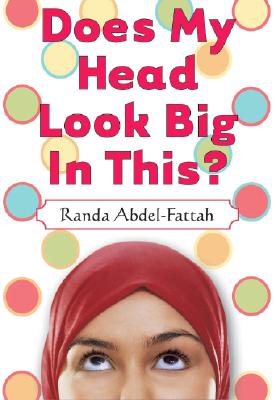
Does My Head Look Big in This?

by Randa Abdel-Fattah
First sentence: “It hit me when I was power walking on the treadmill at home, watching a Friends rerun for about the ninetieth time.”
Support your local independent bookstore: buy it there!
Content: There is some mild swearing. It would be in the YA section (grades 6-8) of the bookstore, if we had it.

Amal is an Australain-Muslim-Palestinian girl attending a prep school for her 11th grade year, and she has just made a big decision: she is a faithful Muslim, and she wants to express that faith by wearing the hijab full time. Except. She’s the only Muslim in her school, it’s right after 9/11, and, well, let’s say that people, even in Melbourne, aren’t that open-minded.

But Amal is determined to make it work. She faces down the disapproval of her headmistress, the questions of her (non-Muslim) friends, the bullying and badmouthing of the close-minded, and she comes out much better for the experience.

It’s a simple plot; no massive twists or turns, no real huge conflict with a tear-jerker reveal. Just a simple, true-to-life story about a religious girl trying to live her life. And I loved it. I loved Amal and the way she made the decision, but the way she kept having to reaffirm the decision to herself. Being religious in a secular world isn’t always easy, and Abdel-Fattah reflected that. I also loved how she wrote about Amal’s faith. It’s hard to put into words, but I felt that she got what it means to be religious. (I’m sure she does.) The book did feel a little dated; it’s set in 2002 and was written in 2005, but I think it’s still necessary. And it’s really a charming story.

Joey Pigza Swallowed the Key

by Jack Gantos
First sentence: “At school they say I’m wired bad, or wired mad, or wired sad, or wired glad, depending on my mood and what teacher has ended up with me.”
Support your local independent bookstore: buy it there!
Content: It’s short, and it’s got short chapters, so probably good for reluctant readers. It’s in the middle grade (grades 3-5) section of the bookstore.

Joey Pigza has problems sitting still and focusing. It’s just the way he’s “wired”: he has an excess of energy and he just can’t focus. Unfortunately, that tends to get him in trouble, especially in school. That is, until one day when he accidentally hurts another student with scissors. Then he’s sent to a “special ed” (ugh) school in order to figure out how to behave better. Which not only involves getting Joey the right medication, but als teaching him how to focus so he can learn.

Honestly? I wanted to smack the adults in the book. I guess my parenting style is “let them be who they are” which I suppose doesn’t always translate well into strict social situations, but HONESTLY. I know Joey has ADHD, and couldn’t focus, and it was a medical condition that was interfering with his learning, but I wanted to shake every single adult that told him to sit still and be “normal”. NORMAL? Really?

But Joey, I felt so bad for him. His mother abandoned him (but came back), his grandmother was abusive, his teachers were impatient with him… he just needed some time, some caring, and some attention to help him focus. Okay, so maybe there’s a lot of class issues in this one as well: they were lower class — his mom worked at a salon — and so she didn’t have the time to sit at home and interact with him in ways that he needed. And his diet of candy and fast food also is a class thing. Maybe I’m reading too much into this one, but there’s a lot to unpack about class there, I think. And bad adulting. And about kids with ADHD.

All this from a lower-end middle grade book. Go figure.

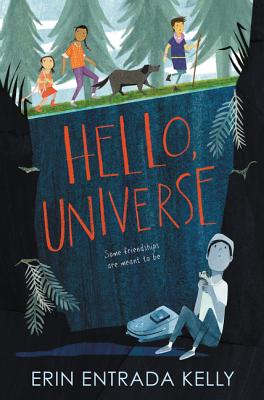
Hello, Universe

by Erin Entrada Kelly
First sentence: “Eleven-year-old Virgil Salinas already regretted the rest of middle school, and he’d only just finished sixth grade.”
Support your local independent bookstore: buy it there!
Content: There’s some bullying. This will be in the Newbery section of the bookstore. Before that (if I had ordered it in; why didn’t I?) it would have been in the Middle Grade (grades 3-5) section of the bookstore.

Sometimes, fate works in ways that you have no control over.

Virgil is shy, quiet, and the object of bullying at school. He doesn’t really stand up for himself, and doesn’t know how to change that.

Valencia is deaf, but she doesn’t let that define her. Unfortunately, everyone else does. She doesn’t have any friends because of that.

And  Kaori, a budding psychic and fortune teller, is the one to bind everyone together.

This is a sweet story of making new friends, of figuring up how to stand up for yourself. About fate and connecting to one another. And about not being alone. It’s delightful and even if I completely missed it before it was awarded the Newbery, it’s perfectly deserving of that award.

State of the TBR Pile: March 2018

I am reading SO much and yet my TBR pile looks pretty much exactly the same as last month… I keep them there to remind me that someday I will get to read what I want to read (not that I’m minding reading what I am reading!) again. On the upside, spring break is this week. Should I read what I want, or read ahead??

My Name is Asher Lev by Chaim Potok
East by Edith Pattou
The Wild Robot Escapes by Peter Brown
Children of Blood and Bone by Tomi Adeyemi
People Like Us by Dana Mele
Dread Nation by Justina Ireland
The Book of Boy by Catherine Gilbert Murdock
Orphan Monster Spy by Matt Killeen
The Hanging Girl by Eileen Cook
Tess of the Road by Rachel Hartman

What are you looking forward to on your TBR pile?

Module 8: The Drowned Cities

Bacigalupi, P. (2012). The Drowned Cities. New York, NY: Little, Brown and Co.

Genre: Speculative fiction: science fiction, post-apocalyptic/dystopia, Earth’s future.

Book Summary: “War maggots” Mahlia and Mouse have their existence in the jungles of a war-torn future America figured out: Mahlia has apprenticed herself to a pacifist doctor and even though the villagers don’t particularly like her, she makes do. And Mouse, who saved her life once, is her faithful sidekick. That is, until a bioengineered war creature called Tool escapes his prison and ends up in Mahila and Mouse’s neck of the woods. Suddenly their life is gone: Mouse is taken by the soldiers and Mahlia escapes with Tool. From there, both friends will do what they need to survive, but perhaps the cost of  maintaining their is too high?

Impressions: This was fascinating. It took me a while to get into the book, mostly because I haven’t read Ship Breaker, but eventually I got hold of the world that Bacigalupi has built and fell into the book. It’s not a happy book though: Bacigalupi is very frank about the effects of war, and what that does to everyone: civilians, soldiers, leaders. It wasn’t a bleak, hopeless view though: Bacigalupi makes the reader care about his characters, and gives them — even Tool — a humanity that transcends the situations. I was a bit worried about 3/4 of the way through, wondering how he was going to wrap it up (and, to be fair, there is a proper sequel to this one — Tool of War — that properly finishes the story), but he managed very well. It was a satisfying ending, and while it left things open for the next story, it wraps this one up quite nicely. It’s definitely beautifully written, and it nails a lot of current issues — of violence and tribalism, especially — on the head.

Review: The reviews I read praised the world building and the action of the series, as well as Bacigalupi’s frankness when it comes to war. The staff review writes, “Beautifully written, filled with high-octane action, and featuring badly damaged but fascinating and endearing characters, this fine novel tops its predecessor and can only increase the author’s already strong reputation.”

Staff. (2012). Children’s reviews. Publisher’s Weekly. 259 (11), n.a.

Library Uses: This would go great on a “books about climate change” display, as well as a general speculative fiction display. It also needs to be in a book group; there is so much to discuss!

Readalikes:

  • The Knife of Never Letting Go by Patrick Ness: This one is aliens rather than post-apocalyptic, but it has the same themes of tribalism, war, and understanding the “other”. Also, everyone should just read it.
  • Undertow by Michael Buckley: In this near-future, some humanoid creatures have come out of the ocean and tried to settle on land. There is tension (obviously) between them and the humans. This explores the tribalism angle as well.
  • The Fog Diver by Joel Ross: An environmental Earth future mashed with steampunk: Earth was destroyed through chemicals, which produced a “fog” that covered the world, so humans moved to the skies. Some fantastic action.
  • And, obviously, Mockingjay by Suzanne Collins: This is the closest read alike to The Drowned Cities, but I think Bacigalupi does what Collins was trying to do SO much better.

The Ship of the Dead

by Rick Riordan
First sentence: “‘Try it again,’ Percy told me.”
Support your local independent bookstore: buy it there!
Others in the series:  The Sword of Summer, The Hammer of Thor
Content: There’s violence, and some kissing. It’s in the Young Adult (grades 6-8) section of the bookstore.

Spoilers for the other two, obviously.

So, Loki’s up to his old tricks: he’s going to raise the Ship of the Dead, sailing it with the intention of starting Ragnarok and ending the world. And, of course, Magnus and his friends are on tap to stop him. The question is how? And can they?

My kids and I are at odds: I really like the Apollo series, and they love Magnus Chase. I can’t put my finger on why I don’t love these — they’re pretty much standard Riordan fare: mytholoy plus snark plus current references  — but I don’t. I don’t dislike them, but I am also not really invested in any of the characters. Not really. (They love Alex. And Magus. And Hearth. And Blitzen. And the rest of them.) That’s not to say it’s bad; maybe if I knew more about Norse myths I would like them better. At any rate, it was an enjoyable way to spend a couple of days, and I do enjoy Riordan’s writing style. It’s just not my favorite.

#TeamApollo all the way.

The War That Saved My Life

by Kimberly Brubaker Bradley
First sentence: “‘Ada! Get back from that window!’ Mam’s voice, shouting.”
Support your local independent bookstore: buy it there!
Content: There is some depiction of abuse, and tense moments when there is bombing. The bookstore has it in its middle grade (grades 3-5) section, but the state awards deemed it for 6-8th graders.

I know I’ve needed to read this one for a while now, and when my class did a unit on other awards and we were instructed to read a Schneider Family Award winner, I jumped at the chance to finally cross this one off my list.

Ada was born with a club foot. And, because her mother is AWFUL, she was raised to think that somehow her foot made her less. She wasn’t allowed out in public, she couldn’t walk, and her mother shut her in a cupboard and hit her every time she did something her mother didn’t like. And then Germany threatened invasion, and the children of London were sent to the countryside. Ada wasn’t on the list; her mother really was that cruel, but she decided she couldn’t let her younger brother go by himself, and so she went too.

Once there, they were placed with Susan Smith, who had been grieving the loss of her friend, Becky (it was unstated, but I believe they were partners), for two years. Susan didn’t want children, but she made the best of it. And, that simple act changed everyone’s lives.

It is a simple book, following Ada as she figured out how to live a life. Bradley does really well at portraying a traumatized child; Ada is sullen and ungrateful and unresponsive, and has panic attacks set on by the smallest things. But Susan is patient and kind and Ada flourishes. This really is a testament to kindness and resilience and the human spirit.

Very good.

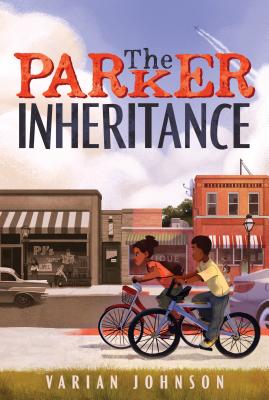
The Parker Inheritance

by Varian Johnson
First sentence: “Abigail Caldwell stared at the letter.”
Support your local independent bookstore: buy it there!
Review copy provided by the author.
Release date: March 27, 2018
Content: There are some tough issues brought up about racism, especially in the 1950s, but also currently. It will be in the middle grade (grades 3-5) section of the bookstore, though it  may be more interesting for grades 5 and up.

Candice does NOT want to spend the summer in Lambert, South Carolina. Her parents have recently divorced, though, and their house needs to be renovated in order to put it on the market, and it’s better if they’re not underfoot, so Candice’s mom decides to take up residence in her grandma’s old house in the small Southern town. It’s bound to be a boring, never-ending summer.

That is until two things happen: she meets Brandon, the boy across the street, and she discovers an old letter, detailing a mystery about an inheritance of $40 million. The same inheritance that her grandmother tried to find ten  years ago, and was fired from her job as city manager over. If Candace and Brandon can figure this out, they could not only help the city, but also clear her grandma’s name.

I love puzzle books, even if I’m not entirely smart enough to figure them out, and this was no exception. About halfway through, Johnson references The Westing Game (one of my favorites!), and from then-on, I was using what I knew about that book to figure out the clues. (I did pretty well, too!) So, perhaps this one is better the more you know that one. But, in addition to the fun puzzle solving, Johnson takes us through history. We learn about sharecroppers, and what it was like to be a black person in the South in the pre-Civil Rights era (there’s not a lot, especially for kids, written about that time). He weaves in themes of revenge, justice and forgiveness as well as acceptance and tolerance. It’s a lot for a middle grade novel, but under Johnson’s capable hands, everything comes together seamlessly. He knows how to write kids so they seem real, and address tough issues in a way that they are accessible but not watered down.

An excellent book.

First Sunday Daughter Reviews: March 2018

Spring is pretty much here, and the other day I sat outside for a couple of hours and read. It was delightful. The girls are neck-deep in school, but a couple of them are still finding time to read.

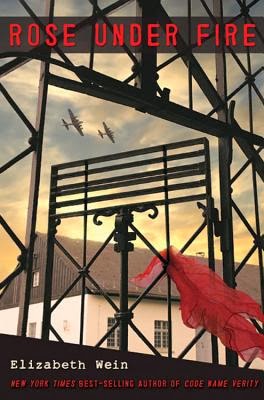
A has to read a Holocaust book for her gifted class, and so she picked:She did ask when it was going to pick up and get interesting, but I hope she does give it a bit more time…

And K has taken to reading multiple books at one time. Right now, that’s:

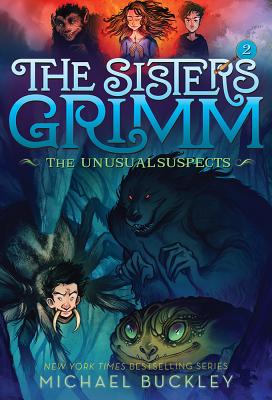
She picked up Sisters Grimm after a conversation when C was remembering how much she liked the series. So far, K’s really liking it.

What are you reading right now?