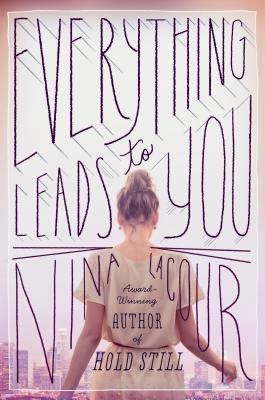
Everything Leads to You

by Nina LaCorr
First sentence: “Five texts are waiting for me when I get out of my English final.”
Support your local independent bookstore: buy it there!
Content: There is some swearing, including a half-dozen f-bombs scattered throughout. And a mention of older teen drinking. Plus, it’s really a growing-up story. For those reasons, it’s in the Teen (grades 9+) section of the bookstore.

Emi Price is a golden California girl. (Except, for the record, she has a black grandfather and is NOT the blonde thing you see on the cover.) She as loving parents, a cool older brother who has a job as a site scout in a production company, and a fantastic best friend. She has a job as a set-design intern at the same production company as her brother (nepotism works).

She just broke up with her off-again/on-again girlfriend, though, and that’s getting her down. And so, when her brother leaves his posh Venice apartment to Emi and her best friend, Charlotte, for the summer with the one catch — do something amazing here! — she feels hopeless.

Then she and Charlotte discover an old letter written by a famous actor Clyde Jones (think John Wayne) that is a clue to a mystery: he had a daughter. And a grandchild. And so, Emi and Charlotte set out to find them and deliver the letter.

That’s really only the beginning of the book, and perhaps the least important part of it as well. It’s much more about Emi figuring herself out. The letter helps, but it’s also this job on an indie movie that she lands, thanks to her ex-girlfriend. And when they find Clyde’s long-lost granddaughter, that opens up a whole new avenue for Emi.

I loved this book. Wholeheartedly and unabashedly. I loved the peek into the way movies work, the facts behind the fantasy. I loved the way Emi thought about characters and set design. And I loved how sometimes she let fantasy overtake her reality. The characters were so real, so deep, so complex, that I couldn’t help but be drawn into their lives.

An absolutely perfect summer book.
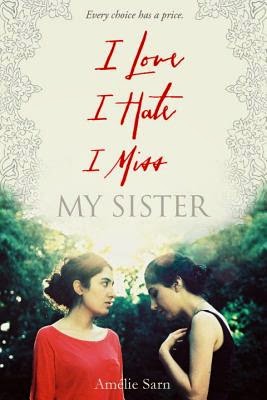
I Love I Hate I Miss My Sister

by Amélie Sarn, translated from French by Y. Maudet
First sentence: “The women walk slowly, heads down.”
Support your local independent bookstore: buy it there!
Release date: Augst 5, 2014
Review copy snagged from the ARC shelves at my place of employment.
Content: There is violence, some mild swearing, and some teen drinking and smoking. I’ll probably put this in the Teen (grades 9+) section of the bookstore, though I wouldn’t hesitate to give it to a 7th- or 8th-grader who is interested.

Sohane Chebli is many things: 18 years old, a daughter, a sister, a scholar, French, and a Muslim. She lives in an apartment complex full of others of  Algerian heritage, and mostly she and her younger sister (by 11 months), Djelila, get along with their neighbors, schoolmates, and each other just fine.

Then, during Sohane’s senior year, a few young Muslim men take it on themselves to start harassing Djelila because she dresses in jeans and tighter shirts. Because she wears makeup. Because she smokes with her friends. And Sohane, whose path has become more conservative — she wears the hijab — doesn’t step in to defend her sister. Partially because Sohane thinks her sister is wrong for following a path away from Islam. And partially because Sohane’s been expelled from school, due to a French law banning all religious symbols, for wearing the hijab.

I’m going to spoil a bit — it’s not too bad, because from the beginning,  you know this — but Djelila is killed by the Muslim boys for her refusal to conform to their expectations. And it’s that paired with the other side of the coin: Sohane’s constant discrimination for wearing the hijab. (Not that I mean to compare murder with discrimination.) But it got me thinking: why do we feel a need to tell others how to behave? Why did these boys feel compelled to not only shame, but eventually kill a girl for not following her/their religion to the letter? Why did people refuse to see Sohane’s hijab wearing as an expression of her religion, instead interpreting it as an act of repression? It’s a thought-provoking book.

And it’s written well, in tight, short chapters. It took a bit for me to catch the rhythm of the book because it’s translated, but once I did, I was hooked. And I wasn’t disappointed, in the end.

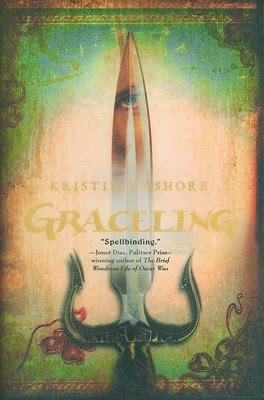
Re-read: Graceling

by Kristin Cashore
First sentence: “In these dungeons the darkness was complete, but Katsa had a map in her mind.”
Support your local independent bookstore: buy it there!
Content: There’s some tasteful sex, a lot of violence, and you need to be somewhat more mature to understand what Leck is capable of in order for it to have its full impact. It’s in the Teen section (grades 9+) of the bookstore, but I wouldn’t hesitate to give it to an 8th grader who was interested.

For June’s YAcker book, we picked Bitterblue, but one thing led to another, and we ended up making a summer project of reading Cashore’s trilogy. I’m not one for re-reading books, but since I hadn’t picked this one up in 5 years, I thought, in order to be an intelligent participant, I needed to reread it.

And, oh, it was just as wonderful as it was the first time.

I don’t have much more to say (the above link takes you to my initial review) that won’t be said when the YAckers post our discussion. But let me say this: I love Kasta. Her fierceness, her depth of emotion, her contrariness. And I love her with Po. I love their team, I love their relationship. I love how Cashore describes them together.

And I love Bitterblue. I’d forgotten that, not having reread this when Bitterblue came out. But, she’s so small and so fierce, and I love her.

The Riverman

by Aaron Starmer
First sentence: “Every town has a lost child.”
Support your local independent bookstore: buy it there!
Content: There’s some alcohol usage and talk of murdered children. Also, it feels really adult in its sensibilities. It’s in the middle grade (grades 3-5) section of the bookstore, but I’m not happy with that. On the other hand, it’ll languish in the YA (grades 6-8) section too, so I might just leave it where it is.

Alistair Cleary  is the kind of kid who blends in. He’s not popular at his middle school, but he’s not reviled, either. His best friend is a gamer — which is quite unusual, since it’s the fall of 1989 — but Alistair has managed to escape certain geek doom. He’s content to slide through life. Until Fiona decides that it’s Alistair who needs to write her sad tale down.

And what a tale: Fiona insists that she’s been going to this imaginary land, Aquavania, which is absolutely real. She’s added months to her life in her trips (which become years later in the book). And that her friends in Aquavania — who also happen to be real people in the Solid World — are disappearing because someone called the Riverman is sucking their souls away.

I had Issues with this book. It compelled me enough to finish it, sure, but it was one of those books that I threw across the room when I was done. I’ve been trying for days to figure out how to write about my issues, and to boil my problems with the book down into a neat, concise package, but I don’t think I can. There will be spoilers.

My initial problems come from the incongruity between the cover and the book itself. The cover screams middle grade, but the content is very… adult. On some level, I feel like Starmer should have gone all the way, made this incredibly dark and sinister, used the metaphor that he was building — that Aquavania is a crutch for Fiona, who uses it to escape horrible things in her life — and made it an adult book.

But, even though that is the set up for most of the book, Starmer doesn’t follow through. He pulls what I have come to think of as a bait-and-switch, a “HA! It’s Really REAL” moment. For which he has given us no basis in the rest of the book. Our narrator, Alistair, believes Fiona is making it up. He believes in the dark understory, so I do too. And so it’s incredibly unsatisfying (for me as an adult; would an older kid?) to have the rug pulled out from underneath you.

I’m sure there I have other complaints (did it really need to be set in 1989? REALLY?), but that’s the main one. Going in, I didn’t know what to expect, but by the end I hoped for a lot more than what I got.

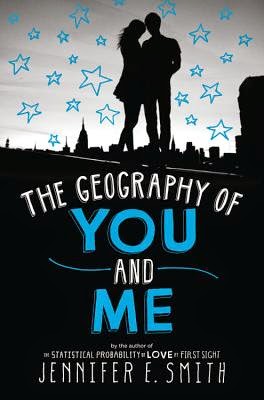
The Geography of You and Me

by Jennifer E. Smith
First sentence: “On the first day of September, the world went dark.”
Support your local independent bookstore: buy it there!
Review copy sent to my boss by the Little, Brown people, and she passed it off to me.
Content: There’s kissing. And a wee bit of swearing. Mostly it’s just sweet. It was in the Teen section (grades 9+) but after finishing it, I moved it to the YA section (grades 6-8) and it fits there just fine.

Lucy is the youngest child of well-off parents, living in an upscale apartment in Manhattan. Owen is the only child of parents who were once drifters, and whose mother recently died in a freak accident. His dad — who isn’t doing so well — is now the superintendent of Lucy’s building. They would have never met, except they were both in the elevator when the power went out. It was a chance meeting, but one that expanded into a night spent wandering a darkened New York City, and then falling asleep on the rooftop.

The next morning, though, Owen is gone when Lucy wakes up, and they never really quite connect again. Lucy’s parents move her to Scotland; Owen’s dad is fired and they’re headed west, looking for jobs. They figure they’ll never see each other again. Except, Owen starts sending her postcards. And so, they start a tentative long-distance relationship. One with its ups and downs.

It’s not a spoiler to say that this one has a hopefully ever after. It’s not happy, per se — Lucy and Owen still live a great distance away — but it’s hopeful that they can make it work. And it’s not a spoiler to say that it’s not a terribly deep book. There’s no issues, really, and no angst. It’s mostly just a sweet journey of two people figuring out they really really like each other.

It’s enjoyable fluff, though. Sweet and charming. And I found that’s exactly what I needed to make me smile.

The Inventor’s Secret

by Andrea Cremer
First sentence: “Every heartbeat brought the boy closer.”
Support your local independent bookstore: buy it there!
Content: There’s a couple of intense romantic moments, and the characters talk of “wanting” each other, but no actual physical contact takes place other than kissing. There is talk of an affair a character’s dad had, and there is quite a bit of violence. It’s in the YA section (grades 6-8th) but I wouldn’t blink at giving it to a savvy 5th grader.

It was the cover that caught my eye. The steampunk dragonfly with the explosion in the background promised really cool things. And since I hadn’t read any Cremer before (she of the Wolf series), I wasn’t really expecting anything.

So, I was more than blown away when I was pulled into an alternate history where the American Revolution failed, Boston converted to a maximum security prison, and the “traitors” were hanged for their crimes against the crown. And they were the lucky ones. In the years since the failed revolution, the Empire has just become stronger and more stratified. The elite live in the Floating City, New York City, in levels rising up into the sky. The lower you are, the worse off. There’s still a rebellion, out in the woods outside of the city, where the adults are trying to topple the Empire. And the children? They’re in the Catacombs, underground, safe from harm until they turn 18 and go to join the rebellion.

The Catacombs is all Charlotte remembers. She and her older brother, Ash, have been there since they were 5 and 7, respectively. And now, at nearly 18, Ash is in charge. This is where the plot gets a bit tricky to describe. Too much, and it sounds silly. And maybe it is.  I do know there was more romance than I was expecting, and it was a bit hackneyed and overwrought as well. But I loved the world. I loved the combination of history and mythology and technology. I loved how the class issues were at the forefront. I loved the imagination that Cremer put into the book, the cool little things — like mice bombs, or Pocky the gun — she littered everywhere.

No, it’s not perfect. Far from it. But it IS fun. And that’s exactly what I needed right now.

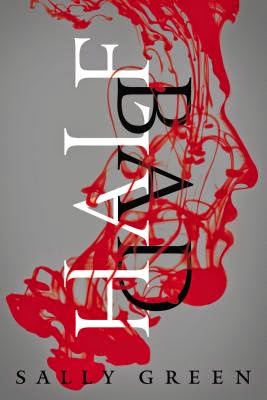
Half Bad

by Sally Green
First sentence: “There’s these two kids, boys, sitting close together, squished in by the big arms of an old chair.”
Support your local independent bookstore: buy it there!
Review copy pilfered from the ARC shelves at my place of employment
Content: There’s talk of imagined sex (none actual), and some (mostly mild) swearing. But the talk of the abuse Nathan takes is hard to get though, even for me as an adult. It’s in the teen section  (grades 9 and up) because of that. Be wary of giving this one to an overly-sensitive person.

I was talking this book up in January to a group of educators, saying to look for it, that Green turns the whole “white=good and black=bad” thing upside down. How little did I know.

It does do that: sure. But to say that’s all this first in a trilogy does is to woefully underestimate it.

Nathan is the illegitimate child of a White Witch — his mother — and the baddest of all Black witches. Marcus, Nathan’s father, has alluded the White Hunters for years. And so, to say that having his kid in their midst irks them is a gross understatement. So the council imposes Codes — restrictions — on all Half Bloods. They start mild, with yearly assessments, but get increasingly more restrictive as Nathan gets older. It ends with him being held in a cage for two years. This is partially because of a vision Marcus saw that Nathan would kill him. The White Hunters want to make that happen: he’s ostensibly being “trained” to murder his father. Not that he has any say in the matter.

So, yes, Greene is turning good and evil upside down; how can the “good” people treat someone who is different from them so atrociously. (And believe me, it’s worse than bad.) But, the black witches don’t fare so well, either. Marcus, from all reports (granted, they’re  untrustworthy) is a despicable person. And the one time we see him, he doesn’t entirely acquit himself either. And the only other black witches we see aren’t that much better. Perhaps it’s more a treatise on how power corrupts, and how differences become so ingrained that we can’t see those who aren’t the same as us.

And even though it was difficult at times to get through, emotionally, it did give me a lot to think about. I’m quite interested to see where she goes with this series, and if she can keep up the complex nature of the characters.

The Road Home

by Ellen Emerson White
First sentence: “On Christmas morning, Rebecca lost her moral virginity, her sense of humor – and her two best friends.”
Content: This is a book about war, and doesn’t pull any punches. There’s language (with a couple of f-bombs), talk of sex (none actual) and lots and lots of violence. It’s also more emotionally mature. It’d be in the teen section (grades 9 and up) of the bookstore, if it were in print.

This was thrown at me by my wonderful friend Laura, without me knowing much else besides she thought it was really great.

This is the last book of a series about a family (I gathered, not having read any of the others), focusing on the daughter, Rebecca. Her long-time boyfriend was killed in Vietnam and her brother fled to Canada to avoid the draft. So she did the only logical thing: she signed up for a tour. Because it was the 1960s, and because women weren’t allowed to be on the front lines, and because Rebecca has an interest in medicine, she signed up to be a nurse. To say she didn’t know what she was getting into was an understatement. The book follows the second half of her tour in Vietnam, after a horrific event she was involved in, through to her coming home.

It’s taken me quite a while to get through this book, not because it was bad or I was disinterested — neither were true –but rather because it was so emotionally taxing. White knows how to write war. The mundane elements of being out in the field, the stress of the ER when helicopters full of wounded and dying soldiers come in. And then the PTSD of coming home. Especially in the 1960s, when there was so much anti-war sentiment at home. She captured Rebecca’s increasing despair, the difficulty she had in making it through so well, that I was drained each time I picked it up.

That’s not to say there wasn’t hopeful elements to the story: there were. Rebecca makes friends and even has a bit of a relationship But it’s not some miraculous recovery or some “ah-ha” moment. It’s very real, almost brutally so, and very honest.

I found it worth reading (once at least), and while I didn’t love it, I appreciated it. I appreciated the depiction of the soldiers and of Rebecca, and especially of her coming home. It’s not an easy read, but it’s definitely worth the time.

All These Things I’ve Done

by Gabrielle Zevin
First sentence: “The night before my junior year — I was sixteen, barely — Gable Arsley said he wanted to sleep with me.”
Support your local independent bookstore: buy it there!
Content: There’s talk of sex and a lot of kissing, but nothing graphic. And there’s talk of violence, but again, nothing graphic. It’s in the YA section (grades 6-9) of the bookstore.

This one is a hard one to sum up, partially because the world Zevin created is so complex. It’s futuristic, but not exactly a post-apocalyptic or dystopian. It’s a world where things are strictly rationed, and coffee and chocolate and books are illegal. So, much like alcohol in the 1920s, there is a strong black market for those items. And our main character, Anya Balanchine (her friends call her Annie), is part of the Balanchine mafia family that has a strong presence in the chocolate market. Her father was the head of the family until he was shot and killed (in front of her) when she was 9. Annie and her older brother, Leo (who is slightly mentally disabled due to another hit meant for her father that killed their mother and disabled Leo) and younger sister Natalya have been raised the past 7 years by their grandmother, whose health is slowly failing.

Over the course of the year, things spin out of control for Annie. Her ex-boyfriend, Gable, ends up poisoned by chocolate, and Annie ends up in juvenile prison because of that. She falls for and dates the son of the assistant DA, in spite of the extreme pressure to break it off. She stresses about Leo, especially since he begins working for the family. And her grandmother finally passes away.

All that managed to fill up the book, which I wanted to like very much. But, aside from world creation, there really isn’t much there. Annie is a fascinating character, but I got tired of her waffling. I wanted her to step up and take charge. It’s not good when the most interesting character is the head of the Japanese mafia family who shows up for probably 10 pages. I hoped for more out of this one, and was disappointed.

I might give the second one in the series a try, just to see if it gets any better.

Dorothy Must Die

by Danielle Page
First sentence: “I first discovered I was trash three days before my ninth birthday — one year after my father lost his job and moved to Secaucus to live with a woman named Crystal and four years before my mother had the car accident, started taking pills, and begin exclusively wearing bedroom slippers instead of normal shoes.”
Support your local independent bookstore: buy it there!
Review copy handed to me by my manager who said “Get on this.”
Content: A pregnant teenager, a moderate amount of swearing including a few f-bombs, and some violence. The book belongs in the store’s teen section (grades 9+).

At first glance, the idea of this book is awesome: Dorothy from Wizard of Oz, didn’t want to be in Kansas after she went home, and found a way back to Oz, where she has taken over and is not only a tyrant, but she’s a bully. And she’s draining Oz of its magic. It is going to take another girl from Kansas — Amy, of the trailer park — who finds her way to this new and drained Oz, to kill the tyrant and save Oz from certain ruin.

See? Sounds pretty cool, right?

Well, not so much.

It’s not that this one was Horrible, per se. There were a lot of things to like about it, starting from the cool idea. I liked the way that Page developed the magic in the world, and made the Wicked Witches if not the good guys, at least the better ones. I liked Amy, and her willingness to try even though the odds were against her.

But that was about it. I won’t delineate my entire complaints (which include having Amy say “I was used to cornfields back in Kansas..” UM, where??), but rather my main one, this: why is this book not a stand-alone? There really was nothing in this book that either 1) warranted that it be 460 pages or 2) meant for it to go longer than one book. I think with some better plotting and editing (and less of the pregnant bully in the beginning) this could have been a tight, fun, cool romp in a unique version of Oz.

I guess I’m a bit miffed that it’s not, and that’s effecting how I see the book. Others (who don’t mind the whole drawn-out-ed-ness of this one) may find it more enjoyable. Part of me hopes she finds success with this, because it’s a really cool idea.

I just wish the execution was better.