Deadly Design

by Debra Dockter
First sentence: “I was five years old when I found out that my older brother wasn’t just my brother.”
Support your local independent bookstore: buy it there!
Review copy downloaded from Edelweiss.
Content: There was a LOT of swearing in this (including quite a few f-bombs) plus some off-screen sex. That puts this squarely in the Teen section (grades 9+) of the bookstore.

I didn’t quite know what to expect out of this one, when I first picked it up. It’s billed as a sci-fi thriller, but I don’t quite think that fits. It’s not really futuristic, though it is dealing with gene splicing and genetic manipulation. And it wasn’t really thriller-y, except for a bit near the end. So, I came to think of it more as a medical drama, and on that level it worked for me.

Kyle McAdams is the younger son of a couple who had problems conceiving and bearing children. The one they did have died fairly young. So, they went to a doctor who promised them that he could “create” healthy children for them: one egg, one sperm, some genetic manipulation and they’ll have a healthy kid. Except, in the petri dish, the egg splt, and suddenly they had two children. They chose to have one at a time, and so Connor was born two years before Kyle. The catch: they were identical, pretty much in every way.

So, Kyle spent most of his life (in small-town Kansas, outside of Wichita. Yes, the author is local(ish).) in the shadow of his older, perfect brother. Connor was into sports, the Valedictorian, had the perfect girlfriend. Kyle was… not. Even so, when Connor drops dead right before his 18th birthday, Kyle is shaken: they share the same genes, does this mean he’ll die, as well?

When Kyle starts going down the rabbit hole of his origin, what he finds out gets creepier and creepier. He and his brother aren’t the only genetically modified humans out there, and they all seem do die right before their 18th birthday. The question is: why?

I’ll be up front: Kyle is a bit of a moody jerk. (A bit is an understatement.) That makes it hard to connect with him. And so, what kept me reading at the beginning was the novelty factor: I love a good Kansas book that gets Kansas right, as opposed to being just a “nowhere” place. I loved that she got the feel of small town right. Or the visits they made to Wichita. Or the weather. It was lovely. And I loved her ruthlessness: she was killing people off right and left in the first third of the book. It’s always refreshing to have an author write like that.

It also helped that Kyle became less sulky and annoying as the book went on. I began to care about his plight, though I never really felt a sense of urgency about his death. I don’t know why that was; Dockter showed herself willing to kill everyone off, and they told me that Kyle was going to die. Therefore, there should have been tension, but I just didn’t feel it. I came to care about the people Kyle interacted with, and when the twist happened, I was pretty shocked. (No, I didn’t see it coming; then again, I never do.)

That said, I do have one major complaint: Kyle didn’t DO much of anything. He went to doctors who told him stuff, and people helped him, and doctors solved his problems (mostly). But he was more a reactor than an actor in his life. I wanted Kyle to be brilliant and find a solution to save his life, but no. Mostly he had other people do the work while he waited around for them.

But, that said, I did enjoy the science and the drama of it. It’s a solid debut novel and I am interested to see what Dockter writes next.

The Improbable Theory of Ana and Zak

by Brian Katcher
First sentence: “Zak!”
Support your local independent bookstore: buy it there!
Content: There’s some swearing, and one (brief) naked scene (which was alluded to), as well as passing references to drug use and drinking. It’s in the YA section (grades 6-8) of the bookstore.

I can sum up this book in one sentence: Hermione and Michael Cera spend a crazy action-filled night at Seattle ComicCon and fall strongly in like.

It sounds simplistic, and like I didn’t care for the book, neither of which is true. The book may not be tackling the deepest subjects ever, but it’s not all fluff. And I found myself — in spite of the improbable situations that Ana and Zak found themselves in — thoroughly enjoying their adventure.

Ana is the daughter of super strict parents. Seriously: she believes that she makes one mistake — like her older sister, Nicole, did — and she’s kicked out of the house. So, she does everything right, from following her parents’ (insane) rules to letting them choose her college for her.

Zak’s father died a few years back and his mother recently remarried a guy Zak — uber geek extraordinaire — has nothing in common with. So, he spends his time being the slacker, failing health (by turning in a paper copied from Wikepedia, hyperlinks and everything. Who does that?), and having no desire to even go to college when he graduates in the spring.

They come together one fateful night, when the health teacher (who also happens to be the quiz bowl coach), um, encourages Zak to come to a tournament (by telling him she’ll waive his plagiarized paper and allow him to pass the class) instead of going to his favorite con, Washingcon, that happens to be in Seattle the same weekend as the tournament. Ana is loathe to have him on her team, especially since her first impression of him was terrible. Zak is loathe to be on the team, mostly because he finds Ana rigid and cold and because he’d much rather be AT the con rather than just near it. So, of course, they spend the entire night together at the con, looking for Ana’s younger brother who snuck out to attend.

The con itself was my favorite part (good thing it was most of the book); having never been to one before (shock! It’s on my bucket list, if only to people watch), I thoroughly enjoyed the con atmosphere Katcher painted. I don’t know if it was realistic; there were bullies and gay weddings and gaming tournaments and singing and Zak being some sort of geek god, but I ate it up. If that’s what a con is, then heck yeah, I want to go.

No, it wasn’t perfect: the ending took a turn for the weird when they ran into trouble with a drug runner, and the confrontation with Ana’s mom (when it came out that they were lying about where they were) was pretty unsatisfying (especially since I has just spent the whole book hating her). But, for the most part, it was a thoroughly enjoyable geeky adventure.

And you really can’t ask for much more than that.

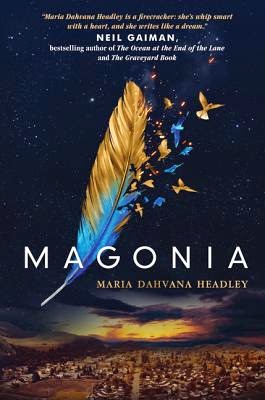
Magonia

by Maria Dahvana Headley
First sentence: “I breathe in.”
Support your local independent bookstore: buy it there!
Review copy provided by the publisher.
Content: There’s a bunch of swearing, including several f-bombs. It’s in the Teen section (grades 9+) but I wouldn’t be adverse to giving it to an 8th grader as long as they knew about the language going in.

Aza Ray has spent the nearly sixteen years of her life struggling to breathe. It’s a miracle she’s even lived this long, since she’s got a weird disease (named after her, unfortunately) that basically renders her allergic to air. She’s managed okay, with the help of her family, and her BFF, Jason. But, now, on the eve of her 16th birthday, things are getting weird. Jason maybe wants to be more than BFFs. It’s getting harder and harder to breathe. And weirdest of all? She’s seeing ships in the sky.

There are spoilers ahead. You’ve been warned. Because, for better or for worse, this is about to get REALLY trippy.

See: Aza Ray is seeing ships in the sky because there’s a country of bird people up there, called Magonia. And Aza is one of them. (Which is, duh, why she’s having trouble breathing regular earth air.) She was kidnapped as a baby and placed in a human home; whether it’s to punish her mother (according to her mother) or to save her (according to the bird-person who kidnapped her) remains to be seen. It’s really because Aza has this super-singing power that will either save Magonia or destroy the world. Or both. The problem is that she just can’t give up her human life (even though she DIED), and she just can’t quite kill off the humans.

I didn’t really know what to expect going into this, except that there’s a bit quote from Neil Gaiman on the cover and that everyone (at least on Edelweiss) is loving it. I completely — pun intended — missed the boat on this one. Seriously. I thought the premise was at best a drug-induced fantasy and at worst stupid. I thought the conversation was trying to hard to be John Green-esque and it sounded forced. I thought the plot was lame, even though it wrapped up nicely, and that the romance between Jason and Aza was forced. And even though I love fantasy, this just was NOT my thing.

But, as I said: it’s getting tons of love, so that may just be me not getting it.

Bone Gap

by Laura Ruby
First sentence: “The people of Bone Gap called Finn a lot of things, but none of them was his name.”
Support your local independent bookstore: buy it there!
Content: There’s some intense situations, some creepiness, and some on-screen, tasteful sex. It’s also pretty mature in its themes. For those reasons, it’s in the Teen (grades 9+) section of the bookstore.

Bone Gap is one of those places that everyone knows everyone else’s business and opinions once formed aren’t so easily changed. So, everyone knows that the Rudes are hopeless and mean. That Charlie Valentine is just plain weird. And that Priscilaa — who insists upon being called Petey — is homely. And that Sam and Finn are okay without their mom, who ran off, but they could be better. And that the strange newcomer, Roza, is the most beautiful girl ever.

They also know that Finn’s not the most reliable person; he’s kind of spacey, like his mom, and so when he says some guy in a black SUV took Roza, no one believes him. They chalk it up to “women are always leaving those boys”. They assume that Roza wants to go. But Finn? Finn knows different. So, he sets about trying to find Roza, not because he loves her but because his brother does and his brother can’t quite bring himself to find her. Little does Finn know that looking for Roza will change everything.

I have been sitting here, staring at the screen, trying to figure out what to say about this book. It’s not that I didn’t like it; I did. But I didn’t love it like I felt I should.

My favorite part?  The women. I loved them. I loved Roza and her desire to be Seen for herself and not for her beauty. I loved Petey and her fierceness. I wished there were more women to love, because Ruby knows how to write them whole and complex, people rather than stereotypes.  I liked that they saved themselves, even though the men weren’t worthless louts or even helpless. It was something that was just Done, that they rose up and just did that. They were my kind of women. I also loved the idea that what we assume about other isn’t always the Truth. That there’s more to people than what we see.

But aside from that, I didn’t really love it. Maybe it was the whole magical realism thing; that genre and I have never really quite gotten along. I think I prefer my magic overt: if there’s going to be something strange going on, then give me magic with Rules. I didn’t understand what was going on until the book was nearly done, and that left me feeling, well, stupid.

So, I didn’t enjoy it as much as others on the interwebs, but I still think it’s a novel worth reading.

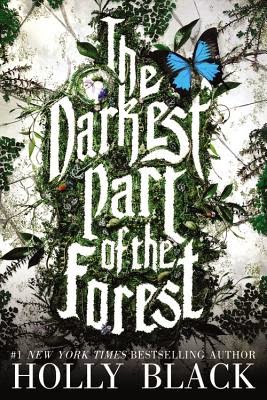
The Darkest Part of the Forest

by Holly Black
First sentence: “Down a path worn into the woods, past a stream and a hollowed-out log full of pill bugs and termites, was a glass coffin.”
Support your local independent bookstore: buy it there!
Content: There’s a few f-bombs and some teen drinking at the beginning. And some intense kissing, not to mention violence. It’s in the Teen section (grades 9+) of the bookstore.

Siblings Hazel and Benjamin have grown up in Fairfold, where they know that faeries are in the forest. They know not to mess with the fairies, but since Ben was blessed (cursed) to make gorgeous music as a child and Hazel has always been drawn to the forest, they really didn’t listen. They made up stories about the prince that was in the glass coffin, they fought some bad faeries, and Hazel even made a bargain with the Alderking to help with Ben getting some musical training.

But all that was in the past. Hazel, now 16, is reckless with boys’ hearts and Ben stopped making music years ago.

And now the prince in the coffin is awake and Hazel’s life is falling apart. The question is whether or not Hazel can figure things out before her life is completely destroyed.

I love Black’s storytelling. Wholly and completely. She pulls you into the world she creates, and makes you believe everything she writes. I loved Hazel in her brokenness, and her relationship with Ben. I loved that there were faerie characters and human characters in all shades of the rainbow (both in terms of skin color and morality). I loved the myth she spun around the town and these characters, and the way she worked with the whole idea of the fey.

I just loved the book. Period.

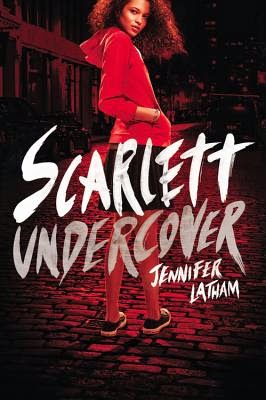
Scarlett Undercover

by Jennifer Latham
First sentence: “The kid was cute.”
Support your local independent bookstore: buy it there!
Content: There’s a bit of mild swearing (s**t) being the “worst” one, plus some kissing and references to (adult) smoking. It’s in the YA section (grades 6-8) of the bookstore, but I wouldn’t mind giving it to a savvy 5th grader.

I adored Nancy Drew as a kid. Seriously. I devoured them all. I loved the mystery, I loved Nancy Drew’s pluck. It was what I wanted.

This, however, is Nancy Drew for the Modern Age: she’s sassy, smart, and street-wise. And I loved it just as much (if not more).

Fifteen-year-old Scarlett is many things: an orphan (dad was murdered, mom died because of cancer); brilliant (she graduated from high school two years early); Muslim; and, perhaps most importantly, a detective. No, it’s not really official: she mostly does inside jobs for the Las Almas police department, and sometimes she hustles and gets a case locating something missing. Nothing that prepared her for when 9-year-old Gemma walks through her door.

Gemma’s worried about her older brother: something has happen to change him; he’s become distant, angry, and mean. But, more than that: Gemma’s convinced that her brother is responsible for the “suicide” of his (former) friend. And she needs Scarlett to find out what’s going on. Little does Scarlett realize the rabbit hole that she’s just opened up.

One of the things I loved most about this book was that Scarlett came from a religious family (she wasn’t non-religious; she just wasn’t as religious as her older sister), and there was a huge support in the surrounding community. But, it wasn’t an issue: it was just who Scarlett was. She greeted people in Arabic, she said her prayers, she observed Islamic customs and traditions. And she solved cases. It was so perfect in so many ways.

I also liked that she was sassy. She had an attitude, but one that suited her and the narrative, and it came through loud and clear. If I was my 11-year-old self, I would have adored Scarlett. (Which my mother may not have appreciated it.) I also loved that Scarlett, was capable: she got into some dangerous situations, and she had the know-how (and the tools) to get herself out. It’s really fantastic.

There is a vague hint of the supernatural — talk of djinn and portals and such — but it didn’t develop in a speculative fiction way, which actually made me very happy. I love speculative fiction, but it would have been out of place here.

I’m willing to talk this one up as much as possible; I do hope it finds a ton of readers.

The Kiss of Deception

by Mary E Pearson
First sentence: “Today was the day a thousand dreams would die and a single dream would be born.”
Support your local independent bookstore: buy it there!
Content: There’s some illusions to sex, but nothing explicit. And there’s some violence, but nothing graphic. This one has been languishing in our Teen (grades 9+) section, but I think I’ll move it to YA (grades 6-8) with all the other pretty-dress-covered fantasy.

Lia is a princess of the land of Morrigan, a First Daughter. Which means that her life, as much as she hates it, is not her own. Per custom and religious tradition, First Daughters have arranged marriages, for political gain. And so, Lia is being married off to the prince of a neighboring kingdom, Dalbreck. Whom she has never met. And whom, because he’s just doing what his father wants, she will never have any respect for.

So she runs away, the morning of her wedding. Escapes to a small, coastal town with her maid, and disguises herself as a barmaid. She figures she’ll happily live out her life there. But, there are people on her trail: an assassin from another neighboring “barbarian” country, and the prince himself, who (of course) is nothing like Lia thinks he’ll be.

There are a lot of “of courses” here: yes, there’s a love triangle (but it’s handled well). Yes, she gets caught out. Yes, there’s a smattering of magic and religiousy folklore;  Pearson has developed a whole religion and a prophecy, though I have to admit that I skipped a bunch of that. But, in Pearson’s hands, none of that seemed trite. I really liked Lia as a character, from the get-go: she knew what she wanted and she wasn’t afraid to take it. She was independent — there was none of that stuck-up royal stuff you often get in these sorts of stories — and thoroughly confident in her decisions.

And so when the story takes a left turn — the assassin ends up kidnapping Lia and dragging her back to his country — I was giddy with delight. The book is good, but the last third, after Lia is kidnapped, is great.  No, the story didn’t wrap up; the sequel is coming out in July. But, this is a series definitely worth reading.

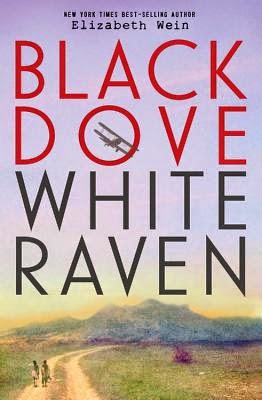
Black Dove, White Raven

by Elizabeth Wein
First sentence: “Sinidu told me I should aim for the sun.”
Support your local independent bookstore: buy it there!
Content: There’s a smattering of violence, and some insinuations, but it’s not nearly as intense as Wein’s other books we have in the store. I’m torn between leaving it where it is (in Teen, grades 9+) and moving it to YA (grades 6-8), where it really fits better, subject and content-wise. Thoughts?

I know Wein has written other books about Ethiopia, but I didn’t know they existed, really, until this one came out and I started hearing the buzz. And so I really didn’t know what to expect with this one.

Many of the elements I have enjoyed about Wein are there: women pilots, in this case two: a white woman, Rhoda, and her black friend, Delia,  learned to fly in France and go around the States in the late 1920s/early 1930s with their barnstorming act. There is also World War II: after Delia’s accidental death, Rhoda takes their two children, her daughter Emelia and Delia’s son Teo (whom Rhoda has taken as her own) to live in Ethiopia, which was Delia’s dream.

The book is a long letter written to the emperor of Ethiopa by Emelia. It’s in the middle of World War II, and the Italians have invaded Ethiopia. Because of their precarious legal situation: Teo is not legally Rhoda’s son, they’re not really legally in the country, and because Teo’s father was Ethiopian, it means that their position in the country, especially with the Italians there, is a precarious one.

Emelia recounts history and how their little family ended up where they are. Teo contributes some, writing journal entries and flight logs — Rhoda eventually teaches both children to fly — and so you hear his voice as well as Emelia’s.

There’s a lot going on in this book, and yet, I felt like the conflict didn’t really pick up until the last third. It’s a quieter book than her previous two WWII books, one that felt more vignette-driven as well. (Though typing that, and thinking back to Code Name Verity and Rose Under Fire, I’m not sure that’s true.) The characters were definitely younger in this one, and perhaps that’s what I’m feeling. I did like how Wein rounded out most of the characters in the book, but especially the female ones (the male ones, aside from Teo, were basically set dressing, there to move the plot along). Wein also touched on a lot of cultural issues for the time: segregation in the US, slavery in Ethiopia, the war, the limitations of women at the time. Even though it didn’t feel like much, plot-wise, there was enough to hold my interest and carry the book.

I’m not sure I love it as much as I do the other books I’ve read by Wein, but I did thoroughly enjoy it.

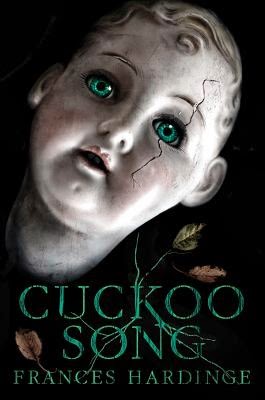
Cuckoo Song

by Frances Hardinge
First sentence: “Her head hurt.”
Support your local independent bookstore: buy it there!
Review copy left for me by the publisher rep.
Comtent: It’s more than a bit creepy, and it’s slow (like many Hardinge) books. I’ll probably put it in the YA section (grades 6-8), but I’d give it to a 10-year-old who showed interest and was willing to be patient with it.

I have not read everything Hardinge has read, but what I’ve read I’ve (almost) wholeheartedly loved. She is not an easy author to love; she makes you work for the story, often having a very slow start and building from there. Cuckoo Song was no different in that respect. It was a slow and somewhat confusing beginning, one that took me a bit to get into.

Triss has been ill for a good long while. She is Delicate, and often prone to Sickness. And so when she wakes after an accident during her family’s vacation no one seems to think that anything is the matter. Except she feels like something is … off. And her younger sister, Pen, (with whom she has always had a contentious relationship) is screaming awful things at her.  And so Triss does what any 12-year-old would do: she tries to figure out what’s wrong with her. And the deeper she goes into that mystery, the more she discovers that there are things Wrong with her family in some very dark (and somewhat magical) ways. And it’s probably up to her and Pen to fix things.

I don’t want to give away too much because much of what I loved about this was the slow realization of what was going on. There’s a reason the beginning is slow and confusing: Triss, herself, is slow and confused. The reader figures things out as Triss does, peeling one glorious, dark, delicious layer back after another. And no to worry: once the story really gets going, Hardinge’s writing is so lyrical it pulls you in, increasing the tension until the immensely satisfying ending.

It’s absolutely wonderful.

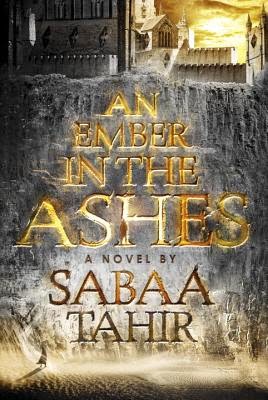
An Ember in the Ashes

by Sabaa Tahir
First sentence: “My big brother reaches home in the dark hours before daown, when even ghosts take their rest.”
Support your local independent bookstore: buy it there!
Review copy provided by the publisher.
Content: It’s dark and it’s brutal. Seriously. More so than Hunger Games. And because of that, it’s in the Teen section (grades 9+) of the bookstore.

Laia has grown up in a world where her people, the Scholars, are a captive people. Their great enemy, the Martials, conquered them and have shown no mercy. They imprison the Scholars, they rape the women, they torture and kill those that they catch. Laia’s parents were part of the resistance, and they were betrayed and killed, along with her older sister. She and her brother Darin lived with their grandparents, trying to fly under the radar of the Martials. Until one day, when they don’t. And the Masks come for them, kill her grandparents, take Darin. Laia barely gets away.

Elias has grown up at Blackcliff, the military school that trains the Martial Masks. An unwanted bastard son of Blackcliff’s Commander, he spent the years before he turned six with the Tribal people in the desert. Then the Augurs — the mystic, magical, immortal Martial prophets — came for him and thrust him into a kill-or-be-killed world. The only way he survived was because of Helene, his fellow student and best friend. Now, just as he was graduating and dreaming of freedom, the Augurs decide that it’s time for a new emperor, and pit Elias and Helene against each other and two other students in a bid to be emperor (or die).

I think the most logical comparison read for this book is Game of Thrones. This is brutal, unflinching, dark, violent, harsh… there’s magic, but it takes a back seat to the exploration of Martial culture. And yet, underneath all of that dark is a hope, a light. Elias, for all the terrible things he’s done (and that have been done to him), turned out to be a decent human being. Laia, even though she thinks of herself as weak, has a quiet strength and bravery to her that isn’t readily seen or valued. It’s a very human book, as well: the characters are complex and messy, there’s depth even to the most hateful of characters (Marcus and the Commander, I’m looking at you), that makes them understandable, even if they aren’t likable.

In fact, the only thing I didn’t like about this book was that there are many unresolved issues, and many unanswered questions at the end. Then again, if this is the quality of writing that Tahir gives us with her first book, I only have high hopes for where this story is going to go.