The Kiss of Deception

by Mary E Pearson
First sentence: “Today was the day a thousand dreams would die and a single dream would be born.”
Support your local independent bookstore: buy it there!
Content: There’s some illusions to sex, but nothing explicit. And there’s some violence, but nothing graphic. This one has been languishing in our Teen (grades 9+) section, but I think I’ll move it to YA (grades 6-8) with all the other pretty-dress-covered fantasy.

Lia is a princess of the land of Morrigan, a First Daughter. Which means that her life, as much as she hates it, is not her own. Per custom and religious tradition, First Daughters have arranged marriages, for political gain. And so, Lia is being married off to the prince of a neighboring kingdom, Dalbreck. Whom she has never met. And whom, because he’s just doing what his father wants, she will never have any respect for.

So she runs away, the morning of her wedding. Escapes to a small, coastal town with her maid, and disguises herself as a barmaid. She figures she’ll happily live out her life there. But, there are people on her trail: an assassin from another neighboring “barbarian” country, and the prince himself, who (of course) is nothing like Lia thinks he’ll be.

There are a lot of “of courses” here: yes, there’s a love triangle (but it’s handled well). Yes, she gets caught out. Yes, there’s a smattering of magic and religiousy folklore;  Pearson has developed a whole religion and a prophecy, though I have to admit that I skipped a bunch of that. But, in Pearson’s hands, none of that seemed trite. I really liked Lia as a character, from the get-go: she knew what she wanted and she wasn’t afraid to take it. She was independent — there was none of that stuck-up royal stuff you often get in these sorts of stories — and thoroughly confident in her decisions.

And so when the story takes a left turn — the assassin ends up kidnapping Lia and dragging her back to his country — I was giddy with delight. The book is good, but the last third, after Lia is kidnapped, is great.  No, the story didn’t wrap up; the sequel is coming out in July. But, this is a series definitely worth reading.
Black Dove, White Raven

by Elizabeth Wein
First sentence: “Sinidu told me I should aim for the sun.”
Support your local independent bookstore: buy it there!
Content: There’s a smattering of violence, and some insinuations, but it’s not nearly as intense as Wein’s other books we have in the store. I’m torn between leaving it where it is (in Teen, grades 9+) and moving it to YA (grades 6-8), where it really fits better, subject and content-wise. Thoughts?

I know Wein has written other books about Ethiopia, but I didn’t know they existed, really, until this one came out and I started hearing the buzz. And so I really didn’t know what to expect with this one.

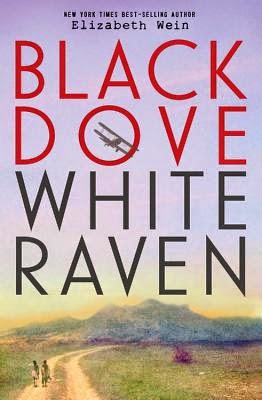
Many of the elements I have enjoyed about Wein are there: women pilots, in this case two: a white woman, Rhoda, and her black friend, Delia,  learned to fly in France and go around the States in the late 1920s/early 1930s with their barnstorming act. There is also World War II: after Delia’s accidental death, Rhoda takes their two children, her daughter Emelia and Delia’s son Teo (whom Rhoda has taken as her own) to live in Ethiopia, which was Delia’s dream.

The book is a long letter written to the emperor of Ethiopa by Emelia. It’s in the middle of World War II, and the Italians have invaded Ethiopia. Because of their precarious legal situation: Teo is not legally Rhoda’s son, they’re not really legally in the country, and because Teo’s father was Ethiopian, it means that their position in the country, especially with the Italians there, is a precarious one.

Emelia recounts history and how their little family ended up where they are. Teo contributes some, writing journal entries and flight logs — Rhoda eventually teaches both children to fly — and so you hear his voice as well as Emelia’s.

There’s a lot going on in this book, and yet, I felt like the conflict didn’t really pick up until the last third. It’s a quieter book than her previous two WWII books, one that felt more vignette-driven as well. (Though typing that, and thinking back to Code Name Verity and Rose Under Fire, I’m not sure that’s true.) The characters were definitely younger in this one, and perhaps that’s what I’m feeling. I did like how Wein rounded out most of the characters in the book, but especially the female ones (the male ones, aside from Teo, were basically set dressing, there to move the plot along). Wein also touched on a lot of cultural issues for the time: segregation in the US, slavery in Ethiopia, the war, the limitations of women at the time. Even though it didn’t feel like much, plot-wise, there was enough to hold my interest and carry the book.

I’m not sure I love it as much as I do the other books I’ve read by Wein, but I did thoroughly enjoy it.

Cuckoo Song

by Frances Hardinge
First sentence: “Her head hurt.”
Support your local independent bookstore: buy it there!
Review copy left for me by the publisher rep.
Comtent: It’s more than a bit creepy, and it’s slow (like many Hardinge) books. I’ll probably put it in the YA section (grades 6-8), but I’d give it to a 10-year-old who showed interest and was willing to be patient with it.

I have not read everything Hardinge has read, but what I’ve read I’ve (almost) wholeheartedly loved. She is not an easy author to love; she makes you work for the story, often having a very slow start and building from there. Cuckoo Song was no different in that respect. It was a slow and somewhat confusing beginning, one that took me a bit to get into.

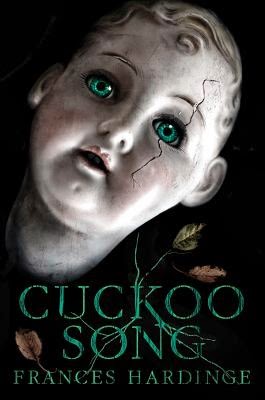
Triss has been ill for a good long while. She is Delicate, and often prone to Sickness. And so when she wakes after an accident during her family’s vacation no one seems to think that anything is the matter. Except she feels like something is … off. And her younger sister, Pen, (with whom she has always had a contentious relationship) is screaming awful things at her.  And so Triss does what any 12-year-old would do: she tries to figure out what’s wrong with her. And the deeper she goes into that mystery, the more she discovers that there are things Wrong with her family in some very dark (and somewhat magical) ways. And it’s probably up to her and Pen to fix things.

I don’t want to give away too much because much of what I loved about this was the slow realization of what was going on. There’s a reason the beginning is slow and confusing: Triss, herself, is slow and confused. The reader figures things out as Triss does, peeling one glorious, dark, delicious layer back after another. And no to worry: once the story really gets going, Hardinge’s writing is so lyrical it pulls you in, increasing the tension until the immensely satisfying ending.

It’s absolutely wonderful.

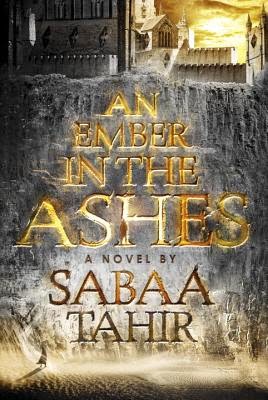
An Ember in the Ashes

by Sabaa Tahir
First sentence: “My big brother reaches home in the dark hours before daown, when even ghosts take their rest.”
Support your local independent bookstore: buy it there!
Review copy provided by the publisher.
Content: It’s dark and it’s brutal. Seriously. More so than Hunger Games. And because of that, it’s in the Teen section (grades 9+) of the bookstore.

Laia has grown up in a world where her people, the Scholars, are a captive people. Their great enemy, the Martials, conquered them and have shown no mercy. They imprison the Scholars, they rape the women, they torture and kill those that they catch. Laia’s parents were part of the resistance, and they were betrayed and killed, along with her older sister. She and her brother Darin lived with their grandparents, trying to fly under the radar of the Martials. Until one day, when they don’t. And the Masks come for them, kill her grandparents, take Darin. Laia barely gets away.

Elias has grown up at Blackcliff, the military school that trains the Martial Masks. An unwanted bastard son of Blackcliff’s Commander, he spent the years before he turned six with the Tribal people in the desert. Then the Augurs — the mystic, magical, immortal Martial prophets — came for him and thrust him into a kill-or-be-killed world. The only way he survived was because of Helene, his fellow student and best friend. Now, just as he was graduating and dreaming of freedom, the Augurs decide that it’s time for a new emperor, and pit Elias and Helene against each other and two other students in a bid to be emperor (or die).

I think the most logical comparison read for this book is Game of Thrones. This is brutal, unflinching, dark, violent, harsh… there’s magic, but it takes a back seat to the exploration of Martial culture. And yet, underneath all of that dark is a hope, a light. Elias, for all the terrible things he’s done (and that have been done to him), turned out to be a decent human being. Laia, even though she thinks of herself as weak, has a quiet strength and bravery to her that isn’t readily seen or valued. It’s a very human book, as well: the characters are complex and messy, there’s depth even to the most hateful of characters (Marcus and the Commander, I’m looking at you), that makes them understandable, even if they aren’t likable.

In fact, the only thing I didn’t like about this book was that there are many unresolved issues, and many unanswered questions at the end. Then again, if this is the quality of writing that Tahir gives us with her first book, I only have high hopes for where this story is going to go.

Miss Mayhem

by Rachel Hawkins
First sentence: “This is going to be a total disaster.”
Support your local independent bookstore: buy it there!
Review copy snagged off the ARC shelves at my place of employment
Others in the series: Rebel Belle
Content: There’s some violence and a bit of swearing — not as much as Rebel Belle in either case. It’s in the YA section (grades 6-8) of the bookstore.

Spoilers for Rebel Belle. Just so you know.

It’s been a few months since Harper became a butt-kicking Paladin, sworn to protect her now-boyfriend David Stark, who’s the super-mystical Oracle. She’s working with her ex, Ryan (who’s now a Mage) to protect David, and for Harper — who is super controlly by any standard — that means limiting David’s visions to helping out Harper’s friends and family.

Unfortunately, that backfires: the Ephors find them, and while they give back Harper’s best friend Bee, who was kidnapped, they decide that Harper needs to go through a super-intense test to prove that she’s worthy to be the Oracle’s Paladin.

Of course, things aren’t as simple as that: David’s questioning his abilities, and things are on the rocks between him and Harper. Ryan’s having his own problems with girls, and Bee is finding re-entering society after being gone for several months isn’t as easy as they hoped. And then there’s the question of the spooky Ephor guy.What does he really want?

I really enjoyed Rebel Belle, and I was hoping for the same level of sillyness and fluff and fun from this one. But, alas, it’s the middle book in a trilogy, which means I got angst and unease and things unraveling to the point where it just wasn’t fun. It wasn’t bad — Hawkins knows how to write action, and Harper’s definitely grown on me even with all her Southernisms that drive me batty. But, it just wasn’t AS fun as Rebel Belle. Which made me a little sad. Then again, I can always hope for the next book to go back to being fun… at least by the end.

It’s a good series, overall, though.

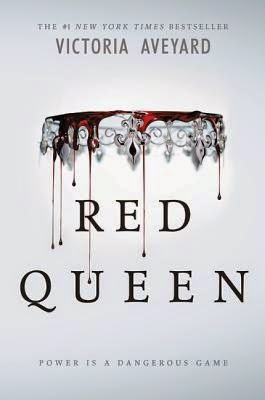
Red Queen

by Victoria Aveyard
First sentence: “I hate First Friday.”
Support your local independent bookstore: buy it there!
Review copy brought back from the ABA Winter Institute for me by a co-worker.
Content: There’s a lot — a LOT — of violence, some of it gruesome. It’s in the teen section (grades 9+) of the bookstore, and I’m going to leave it there, but I wouldn’t be adverse to giving it to a kid who could stomach Maze Runner or The Hunger Games.

This one is getting All the Buzz (at least in the bookselling circles). It’s got a great cover (seriously), and it’s another one of those vaguely apocalyptic books and so I think publishers are expecting it to do Great Things. I don’t know if that raised my expectations — it is a debut novel, so I don’t know how high they could have been — but this fell flat for me.

Mare Barrow is a Red. Which means, in this world (it was never clear if it’s Earth or a different world entirely), that she’s considered low. Base. A slave. Because her blood bleeds red. See, in this world, the people who have all the power are the ones whose blood is Silver (perhaps because they were aliens that invaded the planet hundreds of years ago? It was never clear.) and because they have powers that give them an advantage over those low Reds. Mare figures she’s going to spend her short life stealing to get by until she gets conscripted into the war that’s been going on for a hundred years, in which she will die.

And then her life changes: she meets Cal, a Silver, who gets her a job in the palace, and then during the Queenstrial (in which Silvers from the noble houses compete to become the prince’s bride), she discovers (quite by accident) that she has powers, like a Silver.

All this sets in motion political intrigue, betrayal, and a lot of fighting that will ultimately be Mare’s downfall. Maybe.

The plot doesn’t sound half bad: there’s a bit of a forced love triangle, and a twist at the end that wasn’t entirely unexpected. But the thing that kept pulling me out of the book was two simple words: smirk and sneer. EVERYONE smirked. EVERYONE sneered. And after the first 15 times, I noticed every time someone did. Then after the next 30, I lost patience with the book and skipped to the end. I did go back and fill in the middle, just to see how we got to the end, but I ended up loathing the book for two simple words. I couldn’t get past it. That’s just lazy writing and lazy editing (and the book would have been 20 pages shorter if they were all deleted). Sure, there were some interesting ideas about class and race and bias, but I couldn’t rise above the writing level to appreciate them.

Definitely for someone less picky than me.

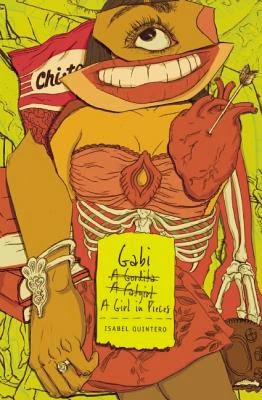
Gabi a Girl in Pieces

by Isabel Quintero
First sentence: “My mother named me Gabriela after my grandmother who — coincidentally — did not want to meet me when I was born because my mother was not married and was therefore living in sin.”
Support your local library: buy it there!
Content: There’s a lot here: talk of drug use, sex (off screen, not graphic), and swearing (including multiple f-bombs). It’d be in the Teen section (grades 9+) of the bookstore.

I didn’t know what to expect when I picked this up. I’d heard good things about it, and it won the Morris Award this year. Even so, I wasn’t prepared for the onslaught of emotions I’d feel while reading it.

It’s Gabi Hernandez’s senior year, and life has gotten more complicated than usual. One of her best friends is pregnant; the other just came out, and has been kicked out of his parents’ house. She’s still struggling with math in school, but she has hopes that she can get into college, the first in her family, since her parents immigrated from Mexico. She wants a boyfriend, but is afraid since she’s a self-proclaimed “fat girl” that she’ll never find love. Then there’s her meth-addicted father, and her punk younger brother. Not to mention a mom who is constantly placing pressure on her to be a “good” girl.

Writing all that down, it both sounds like a lot and not quite enough to hold a book together. One of the things that makes this book shine is the voice. Told in diary form, we get Gabi’s innermost thoughts, her insecurities and feelings, her poems and heartfelt letters to her father (which she never sends). Even though her life is complicated and hard, you can’t help but connect with Gabi on the most elemental level: she’s just a girl trying to live the best she can.

But, it’s also a feminist book, showing us the double standard we have for girls and boys. Which leads me to: oh my gosh, her mom. I wanted to smack her. She was SO hard on Gabi, from nagging her constantly about her weight to lectures about sex (while she tells Gabi’s brother “be sure to use a condom”). I know she was trying and doing the best she could under the circumstances, but I wanted to shake her. Call this another one of those reverse-parenting books, but there is no way I want to have the sort of relationship with my daughter that Gabi had with her mom.

It was Gabi’s awakening to the double standard, and her actively trying to do something about it — which came near the end of the book –which endeared me to the book. There was so much crap going on (if there’s an issue out there that deals with teenagers, it was in the book) going on in Gabi’s life that I found it difficult, initially, to relate. But by the end, I was cheering for Gabi, for her attitude toward her life, and for Quintero’s unflinching portrayal of her.

Rebel Belle

by Rachel Hawkins

First sentence: “Looking back, none of this would have happened if I’d brought lip gloss the night of the Homecoming Dance.”
Support your local independent bookstore: buy it there!
Content: There’s some mild swearing, and some (somewhat oblique) references to sex. Plus some violence. None of which is enough to make it “objectionable”, so it’s in the YA section (grades 6-8) of the bookstore.

Harper Price is one of those annoyingly perfect people. She’s the president of everything, super involved in her school. Great grades, popular friends, the Perfect Boyfriend. She’s even going to be crowned Homecoming Queen. (Seriously: about 50 pages into the book. I’m thinking she’s the embodiment of everyone I loathed in high school.) So, the last thing she expected, when she went to the restroom the night of the homecoming dance to touch up her lip gloss, was to get superpowers. She inadvertently stumbled into a world with Mages and Paladins — who are protectors, and it’s the powers Harper ended up with — who have sworn to protect the Oracle. Who just happens to be the person Harper loathes most.

There’s a lot more going on in this novel, including boyfriend drama and a Cotillion, but that’s basically the gist of it.  Harper, the annoyingly perfect girl, gets powers and becomes awesome.

I was in the mood a while back for something completely fluffy, something that was fun, but not taxing, so I turned to an author who I knew would deliver. And Hawkins did. Yeah, there’s probably some inconsistencies in the book and it’s definitely really white. (Then again, it’s Alabama.) No, it’s not as good as Hex Hall. However, it IS fun. It’s got that delightfully quirky Southern feel to it (I loved Harper’s great-aunts), and the magic is clever and different. But mostly, it was just FUN. Which is all I really wanted out of this book.

I even enjoyed it enough to pick up the second one. 

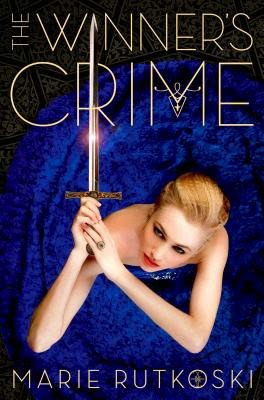
The Winner’s Crime

by Marie Rutkoski
First sentence: “She cut herself opening the envelope.”
Support your local independent bookstore: buy it there!
Review copy snagged from the ARC shelves at my place of employment.
Others in the series: The Winner’s Curse
Content: There’s some violence, sometimes a bit graphic, and mention of sex (but only illusions). It’s in the YA section (grades 6-8) of the bookstore.

There will be spoilers for Winner’s Curse. You’ve been warned.

Kestrel handed Arin his country, a treaty that gave them a pseudo-independence from Valoria after their brief revolution. Even though she’s in love with Arin, she knows she can’t have him. He’s Herran. He was her slave. And, probably most importantly, she offered herself to the emperor to be his son’s bride in exchange for Herran’s independence.

But, of course, things are not simple. She can’t get Arin out of her head. The emperor is cruel and manipulative, which means Kestrel is constantly playing games with other people’s (and her own) lives. Especially because she wants — no, NEEDS — to help the Herrani out. By becoming a spy for them. She’s definitely playing with fire.

First: I LOVED being back with Kestrel. She’s so smart, so wily, and yet feels everything deeply. She’s just a fantastically complex character, and I thoroughly loved being in her head as she went through the paces. I loved hating the emperor (oh, man, he’s despicable). And even though Arin is pretty annoying, I enjoyed his character growth.

That said, it’s very much a middle book in a trilogy. It’s moving things forward, sure, but it’s also very much spinning in place. Kestrel, while fun, doesn’t have any character growth, really, until the end when she does something completely out of character (but leads to a pretty great cliffhanger ending). Arin did grow, however, and after he stops being moody about Kestrel, he has some pretty great scenes. It took me a while to get going, but once I did, I plowed through straight to the end which left me begging for the last book.

Even with the second-book-in-a-series curse hanging over it, it’s still a GREAT read.

Shadow Scale

by Rachel Hartman
First sentence: “I returned to myself.”
Support your local independent bookstore: buy it there!
Others in the series: Seraphina
Release date: March 10, 2015
Review copy snagged off the ARC shelves at work.
Content: It’s pretty complex, when it comes to keeping tabs on everything that’s going on, and it’s fairly long and slow-moving as well. It’s also more mature in its sensibilities, though there’s not much else that would put it in the Teen section (grades 9+). Even so, that’s where I shelve these.

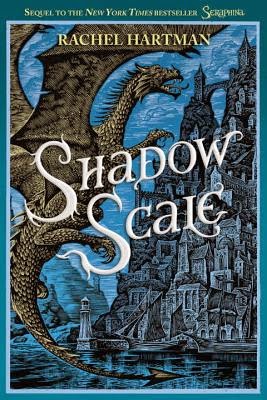
There’s so much going on in this novel that, much like Seraphina, it’s kind of difficult to put all of what’s going on down on paper. (Or the internet, for that matter.) On the one hand, this is a straight-forward road trip: to help her friend Glisselda, who is now queen of Goredd, Seraphina goes on a quest to find the other ityasaari — those who are half-dragon, half-human. She feels that, if she gets everyone in one place, they’ll be able to create a mind-field to keep the renegade dragons out of the city. Seraphina initially thinks this will be a simple task: go into the surrounding countries, locate the ityasaari, get back to Goredd and they will all live happily-ever-after.

Thankfully for the reader, it’s not that simple. There are obstacles in Serpahina’s way, and not least of all is Jannoula, an abused, embittered, scheming ityasaari who has the ability to manipulate the humans (and dragons) around her. She is there every step of the way, adding conflict, tension, and suspense to Seraphina’s path.

Also like Seraphina, there’s much to love about this one. Hartman’s world-building is impeccable, and it’s fantastic to see what she’s done with the other cultures, religions, and people surrounding Goredd. The romance that was budding at the end of Seraphina is still here, but it takes a back-seat to Seraphina’s journeys and allows Seraphina to become her own strong woman independent of anyone else. That said, there’s some surprises by the end of the book, ones that I thought were thoroughly refreshing.

Speaking of the end, about two-thirds of the way through, I worried that Hartman wasn’t going to wrap up the story, but she pulled through. In classic high-fantasy style, she gives us an epic and truly fantastic ending, one that is thoroughly satisfying while staying true to the story, characters, and world she built.

Hartman is truly a writer to keep an eye out for. Whatever she touches is just amazing.