Module 8: The Drowned Cities

Bacigalupi, P. (2012). The Drowned Cities. New York, NY: Little, Brown and Co.

Genre: Speculative fiction: science fiction, post-apocalyptic/dystopia, Earth’s future.

Book Summary: “War maggots” Mahlia and Mouse have their existence in the jungles of a war-torn future America figured out: Mahlia has apprenticed herself to a pacifist doctor and even though the villagers don’t particularly like her, she makes do. And Mouse, who saved her life once, is her faithful sidekick. That is, until a bioengineered war creature called Tool escapes his prison and ends up in Mahila and Mouse’s neck of the woods. Suddenly their life is gone: Mouse is taken by the soldiers and Mahlia escapes with Tool. From there, both friends will do what they need to survive, but perhaps the cost of  maintaining their is too high?

Impressions: This was fascinating. It took me a while to get into the book, mostly because I haven’t read Ship Breaker, but eventually I got hold of the world that Bacigalupi has built and fell into the book. It’s not a happy book though: Bacigalupi is very frank about the effects of war, and what that does to everyone: civilians, soldiers, leaders. It wasn’t a bleak, hopeless view though: Bacigalupi makes the reader care about his characters, and gives them — even Tool — a humanity that transcends the situations. I was a bit worried about 3/4 of the way through, wondering how he was going to wrap it up (and, to be fair, there is a proper sequel to this one — Tool of War — that properly finishes the story), but he managed very well. It was a satisfying ending, and while it left things open for the next story, it wraps this one up quite nicely. It’s definitely beautifully written, and it nails a lot of current issues — of violence and tribalism, especially — on the head.

Review: The reviews I read praised the world building and the action of the series, as well as Bacigalupi’s frankness when it comes to war. The staff review writes, “Beautifully written, filled with high-octane action, and featuring badly damaged but fascinating and endearing characters, this fine novel tops its predecessor and can only increase the author’s already strong reputation.”

Staff. (2012). Children’s reviews. Publisher’s Weekly. 259 (11), n.a.

Library Uses: This would go great on a “books about climate change” display, as well as a general speculative fiction display. It also needs to be in a book group; there is so much to discuss!

Readalikes:

  • The Knife of Never Letting Go by Patrick Ness: This one is aliens rather than post-apocalyptic, but it has the same themes of tribalism, war, and understanding the “other”. Also, everyone should just read it.
  • Undertow by Michael Buckley: In this near-future, some humanoid creatures have come out of the ocean and tried to settle on land. There is tension (obviously) between them and the humans. This explores the tribalism angle as well.
  • The Fog Diver by Joel Ross: An environmental Earth future mashed with steampunk: Earth was destroyed through chemicals, which produced a “fog” that covered the world, so humans moved to the skies. Some fantastic action.
  • And, obviously, Mockingjay by Suzanne Collins: This is the closest read alike to The Drowned Cities, but I think Bacigalupi does what Collins was trying to do SO much better.

Midwinterblood

by Marcus Sedgwick
First sentence: “The sun does not go down.”
Support your local independent bookstore: buy it there!
Content: There is some violence, and it’s a complicated story. It would be in the Teen section (grades 9+) of the bookstore, if we had it.

This one is SO hard to describe. Possibly because I think it really is best if you don’t know very much going in.

So know this: the stories are connected, going backward in time. Not directly connected; that tripped me up in the beginning – I kept expecting people to be related, but they’re not. The names are similar, the setting — the Blessed Island, a mysterious place somewhere in the northern ocean — is the same. But, while the stories are connected, it’s not a direct connection.

Also know this: how confused you are, how strange you think it is, you need to stick it through all the way to the end. Do that, and you will be rewarded. It will all make sense, it will all pull gloriously together, and it will be worth it.

I’ve never read anything like this before, and I’m sure this one will stick with me for a long time.

Module 5: All American Boys

Reynolds, J. and Kiely, B. (2015). All American Boys. New York, NY: Atheneum Books for Young Readers.

Genre: Realistic fiction, Coretta Scott King Honor. Realistic fiction because it is set in contemporary times with no magic or other speculative elements.

Book Summary: All Rashad wants to do is pop into a convenience store and pick up some chips on his way to a party on a Friday night. What happens, though, changes everything. Rashad bends down to pick out his cell phone from his bag, a woman trips over him, and the next thing he knows, a cop has him handcuffed and is beating him. He ends up in the hospital, and — subsequently — the subject of discussion of police brutality in the community, even though Rashad isn’t comfortable with being the center of attention.

Quinn, a member of the basketball team, witnesses Rashad being beaten, and is friends with officer, who has been like a second father to Quinn, since his father’s death. Quinn’s struggle is a decision whether or not he wants to become political and speak out against his friend.

Impressions: Oh, wow. I’d been putting this book off for years, mostly because I thought it was a football book. (Shows you what I know!)  But, this one — especially in the light of all the books dealing with police brutality in the wake of Ferguson (among others) — really packs a punch, especially for me as a white person. I really appreciated the dichotomy between Rashad — who is just grateful to be alive and who is trying to figure out answers why — and Quinn — who has a much more passive decision to make, in whether or not he wants to speak out about what he saw. It really does provide a lot of food for thought, and brings forward white privilege in a way that I don’t think I’ve seen before. While this book was hard to read — both Reynold and Kiely are masters of getting across emotion in as few words as possible — it is an important one.

Review: Magoon praises the book, reflecting on the dissonance between the white and black characters and praising it for the questions it raises with readers. Her final thoughts were: “It is perhaps too easy to call this worthy book timely and thought-provoking. Let us reach beyond simple praise and treat it instead as a book to be grappled with, challenged by, and discussed.”

Magoon, K. (2015, December 8). ‘All American Boys’ by Jason Reynolds and Brendan Kiely. The New York Times [New York]. Retrieved from:  https://www.nytimes.com/2015/12/20/books/review/all-american-boys-by-jason-reynolds-and-brendan-kiely.html.

Library Uses: I would put this one on a display of either books about African American life, Coretta Scott King award winners, or books reflecting the issues in the news. This would also be fantastic for a book group.

Readalikes:

  • The Hate U Give by Angie Thomas: This book is written from the point of view of the friend of a boy who was shot by police. She was a witness to the event, and because of that, her grief was made political. It touches on the topic of police brutality as well as systematic racism in the country.
  • Dear Martin by Nic Stone: Through letters to Martin Luther King Junior, the main character looks at race relations in America — he is Ivy League-bound — and the judgement of the media after he has a run-in with a white, off-duty officer.
  • Ghost Boys by Jewell Parker Rhodes: This one is written for a slightly younger audience, but touches on the topic of police violence as well. The main character is shot by an officer, and spends the rest of the book as a ghost as he watches his family and friends deal with his death.

Daughter of the Siren Queen

by Tricia Levenseller
First sentence: “The sound of my knife slitting across a throat feels much too loud in the darkness.”
Support your local independent bookstore: buy it there!
Review copy provided by the publisher.
Release date: February 27, 2018
Others in the series: Daughter of the Pirate King
Content: There is violence, obviously, and a LOT of sexual tension and kissing, but nothing ever happens. It’ll be in the the YA section (grades 6-8) of the bookstore.

Spoilers for Daughter of the Pirate King, obviously.

Picking up where we left off, Alosa has a copy of the map to the secret Isla del Canta, where the legendary treasure of the sirens lay. Initially, she plans to help her father find it, and then help rule the seas with him. Except, when she and her crew show up at the keep, Alosa discovers a secret that turns everything upside down. Suddenly, Alosa and her crew are no longer working with her father, they’re racing against him. And it will take everything that Alosa has to beat him to the island, and ultimately, defeat him.

Again: So. Much. Fun. There really isn’t a whole lot more to these (except for a very woke love interest), but man, female pirates are fun. Alosa is a great character, and I loved her relationship with Riden and with her crew. I loved that Levenseller was ruthless; she killed characters I thought were safe, which upped the ante and made the tension that much greater. I have a slight quibble with the end, but I’m going to let it go because it really was just fun to read.

And… it’s only a duology! So the story wrapped up. YAY! That said, I wouldn’t mind spending more time with Alosa and her crew again.

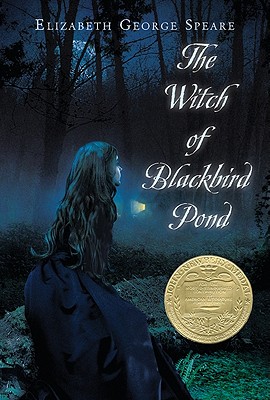
The Witch of Blackbird Pond

by Elizabeth George Speare
First sentence: “On a morning in mid-April 1687, the brigantine Dolphin left the open sea, sailed briskly across the Sound to the wide mouth of the Connecticut River and into Saybrook harbor.”
Support your local independent bookstore: buy it there!
Content: There’s some violence, but it’s off screen. It’s in the Newbery Medal section of the bookstore.

I adored this book when I was a teenager. I don’t remember how I got this book, or why I got it, but I do remember reading and re-reading it endlessly. In fact, my copy, which I still have, is quite battered. I’m knee-deep in a Newbery Medal section of my class, and I thought I’d take the opportunity to see if this story held up to my recollections of it (and if I could remember why I liked it so much).

Kit Tyler is in a precarious position: raised by her grandfather on Barbados after her parents’ deaths, she is left penniless and mostly without family after his death. So, she throws everything on traveling to America, to live with her mother’s sister, whom she’s never met, in a Puritan Connecticut settlement. For most of the book, it’s a fish-out-of-water story: Kit tries and fails to fit into this strict religious community. She’s flashy, she’s never worked (they had slaves; I found some of the dichotomy between the British slave-owners in the Caribbean and the land owners in America to be interesting), she, of course is always in trouble. But Kit’s growth arc in this book is significant: after meeting Hannah, a Quaker who is ostracized from the community because she doesn’t attend Puritan services and branded a “witch”, Kit learns that having friends and helping others really is the best thing. Oh, and then there’s Nat.

Actually, I think, in the end, it was the love story between Kit and Nat that I liked as a teenager. I liked the push and pull of their relationship, how neither of them quite figured out they were Meant To Be until it was almost too late. It was very satisfying, to say the least. The other thing I got out of this was that Puritans were Awful.  At least in historical fiction. They are quick to judge, closed-minded, insular, and set on being against everything that is different or not plain. I don’t think Speare set out to condemn them; they’re not wholly bad as a group and there are some redeemable characters. But as a whole, Purtians are definitely awful.

In the end, I’m not sure I liked it as much as I did when I was younger, but I do see why I liked it so much. And it’s a good book, overall.

The Belles

by Dhonielle Clayton
First sentence: “We all turned sixteen today, and for any normal girl that would mean raspberry and lemon macarons and tiny pastel blimps and pink champagne and card games.”
Support your local independent bookstore: buy it there!
Release date: February 6, 2018
Content: There is some physical and emotional abuse and an attempted rape scene, but it’s not overly graphic. It will probably be in the YA section (grades 6-8) of the bookstore.

Camille is one of the Belles, the only people in the kingdom of Orléans who was born with color and who have the ability to manipulate the bodies of everyone else, and she is determined to be the favorite of the Queen. This means she’s the best, the chosen, the, well, favored.  Only she’s not chosen to be the favorite… and from there, she starts unraveling the mystery that is the Belles, and discovers the lengths that the royals will go to keep the Belles in their control.

So the tagline on the ARC was “the revolution is here” which is REALLY misleading, so I’m glad they changed that. This is a very long (almost overlong), very opulent, set up to whatever is going to happen in the next. There’s a lot of world-building here, and quite of bit of it leaves questions hanging. We discover things as Camille discovers them, which means we are left as frustrated and impatient as she is. I liked the world and I liked the characters… for me the downfall was just the descriptions. Everything was food (buttercream, chocolate, caramel, honey) and fabric, and I felt almost smothered in it all. Underneath, I could sense a criticism of plastic surgery, of the desire to change one’s appearance, but I’m not sure I could find it underneath all the clothes and makeup. But that’s just me (though I do admit that I’m curious about the sequel). There will be readers who gobble this up and love every minute. I’m just not one of them.

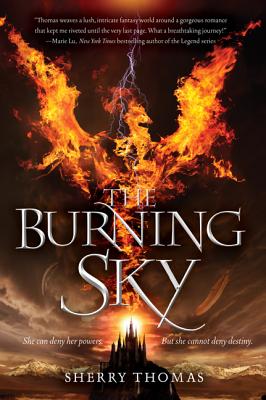
The Burning Sky

by Sherry Thomas
First sentence: “Just before the start of Summer Half, in April 1883, a very minor event took place at Eton College, that venerable and illustrious English public school for boys.
Support your local independent bookstore: buy it there!
Content: There is some violence and some mild swearing. It’s in the YA section (grades 6-8) of the bookstore.

Iolanthe was enjoying a quiet life with her guardian, Master Heywood, in a small town, when her life gets turned upside down. It was simple enough: she was trying to salvage a ruined light elixer, and brought down lightning from the sky. That simple (well, maybe not) thing brought not only the crown prince, Titus, to her doorstep, but the dreaded Inquisitor, and sent Iolanthe into hiding with Titus as she learned her True Purpose: to overthrow Atlantis and kill the Bane, Atlantis’s unkillable leader.

It’s pretty by-the-numbers — of course Titus and Iolanthe are taking on the Big Bad Guys, of course they fall in love. But, I still found myself enjoying this. Perhaps because it’s kind of a reverse Harry Potter — Iolanthe and Titus come from the magical world to go to school at Eaton where they not only have to pass as non-magical but Iolanthe also has to pass as a boy. It’s an interesting world Thomas has built, with the elemental vs. subtle (learned) magic, with dragons and wyverns and wands and potions. I liked it quite a bit. Maybe not enough to continue on with the series, but still. It’s an intriguing start to a series.

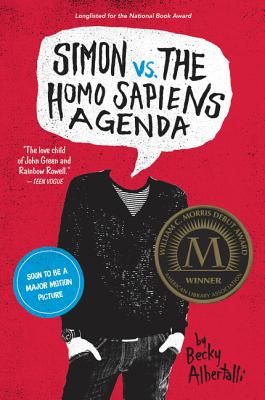
Simon Vs. The Homo Sapiens Agenda

by Becky Albertalli
First sentence: “It’s a weirdly subtle conversation.”
Support your local independent bookstore: buy it there!
Content: There’s quite a bit of swearing, including a lot of f-bombs, and some teenage drinking. It’s in the Teen section (grades 9+) of the bookstore.

This one is a difficult one to sum up plot-wise. Simon is gay, but he’s not out. He’s being blackkmailed by another student who found out (accidentally) about Simon’s gayness, because Simon is emailing and flirting with a boy, Blue, online. Their relationship is entirely online, even though Simon knows that Blue is a student at his high school… Blue is just more comfortable with the anonymity.

As the book goes on, Simon juggles being blackmailed, and making and keeping friends, and high school drama, as he falls in love with Blue, and tries to figure everything out.

It’s not a deep or complex plot, but I thoroughly enjoyed this book. I loved Simon and his loveable awkwardness as he tries to figure everything out. (Being a high school junior is hard.) I loved his relationship with Blue, and once he figured it out, their in-person relationship. I liked Simon’s  family — it’s always nice to see a good, functional family in a YA novel — and his friends, and liked that there was conflict between them, but not of the sort that went against their fundamental relationship. It was sweet and wonderful and just happy-making. Which is what I would call this book. Maybe not perfect, but definitely very very wonderful.

The Cruel Prince

by Holly Black
First sentence: “On a drowsy Sunday afternoon, a man in a long coat hesitated in front of a house on a tree-lined street.”
Support your local independent bookstore: buy it there!
Review copy provided by the publisher.
Content: It’s violent. And dark. It’s in the Teen section (grades 9+) of the bookstore, but I’d give it to a willing 7th grader.

Jude has lived in Faerie ever since she was 10, when her mother’s first husband, a faerie general named Madoc, came to the human world and slaughtered her parents, and spirited away her, her twin sister, Taryn, and her mother’s first child, Vivian. It’s not been a comfortable life, being a human in Faerie, but Jude had made do. In fact, she’s done better than that: in spite of her terror at everything (because her life is constantly in danger), she has learned to fight, to strategize, and to, well, thrive.

And so when, as Faerie prepares to crown a new High King, she gets involved in the Court drama, she feels capable of handling what’s thrown at her. Except, things don’t quite go the way she thinks.

I loved this one. I like faerie stories generally, and Holly Black’s are particularly gorgeously told. I loved the dark undertones, and I loved the way Jude worked with her limitations and made the best of her situations, the way she played the situation. And, since this is the first in a series, I can’t wait to see how it all will play out in the next one.

American Heart

by Laura Moriarty
First sentence: “One thing someone just meeting me might want to know is why I have two first names.”
Support your local independent bookstore: buy it there!
Review copy provided by the publisher.
Release date: January 30. 2018
Content: There are some disturbing situations, including an almost rape and violence against minorities. It will be in the YA (grades 6-8) section of the bookstore.

Sarah-Mary and her younger brother are living with their aunt in Hannibal, Missouri, because their mother is one of those Bad Mothers who can’t take care of her children. Her younger brother is okay with this (except for the missing mom part), but it chafes with Sarah-Mary. She has a limited amount of freedom, which chafes. And then, she and her brother meet an Iranian woman, whom Sarah-Mary ends up calling Chloe, who is  on the run, avoiding the mandatory Muslim registry that has been implemented for “our safety”. Her brother begs Sarah-Mary to help get Chloe to safety in Canada, and of course Sarah-Mary promises. And thus begins the adventure.

It’s not a pleasant one, either. Moriarty attempts to focus on the wrongness of profiling people by race or religion (there’s this scene where Sarah-Mary witnesses a raid on a house where the person was harboring Muslims) and touches on prejudice and discrimination. She also make sure that the dangers of two women hitchhiking are amply described.  Nothing “bad” ever happens, but the novel brushes up against it several times, and it’s only through luck, wit, and technology that Sarah-Mary and Chloe get away.

And along the way Sarah-Mary learns the one great lesson that we all need to learn, especially right now: people are people. They all have hopes, dreams, and stories. And that judging a whole religion or race by one person’s actions not only is not fair, it’s wrong. However, the Muslim registry doesn’t miraculously go away at the end of the book, nor does Sarah-Mary’s actions have a larger Meaning, so maybe Moriarty missed the mark on something big here.

Perhaps, though, that’s also the problem with the book. That Sarah-Mary (read: white people) needed a Muslim woman (read: any diverse person of color) to Show Her the Way. As a concept, it’s clumsy, and I’ve read some responses on the book that lead me to think that it might be harmful, reinforcing White Stereotypes of Islam and Muslims, and just the White Savior narrative. I did enjoy this while reading it, but in retrospect, I’m not sure it was the best idea for a white woman to tackle something like this.