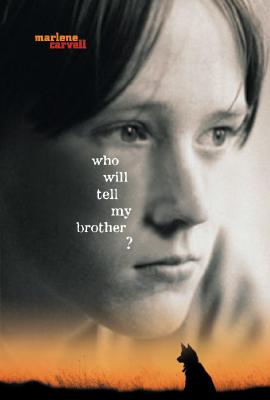
Who Will Tell My Brother?

by Marlene Carvell
First sentence: ¨When I filled out the form for the test — the dreaded “you will be labeled for life test” the “colleges will want you–or not” test the “who are you? — what are you? — why are you?” test, I wrote my name.”
It´s out of print, unfortunately.
Content: There is some blatant racism, one use of the n-word, and one (off-screen) instance of violence against an animal.

Evan is a bi-racial (half Mowhawk) senior at his small-town (Upstate New York?) high school, and he’s fed up with their mascot: an exaggeration of the “generic” Native American, with feathered headdress and tomahawk, complete with war whoops and “dancing” at the pep rallies. He decides that this year he’s going to do something about it. Except his petitions fall on deaf ears: they don’t want to change “tradition”; they don’t feel it’s racist; and by the way, you have light brown hair and blue eyes, are you even Indian?

As Evan’s fight goes on over the years, this book gives readers an extended look into not just white privilege, but also White Arrogance. White people, at least the white people in this book, not just refuse to listen to a minority, they assume they Know Better just because they’re white. (In other words: white people are the worst!)

I was a bit skeptical about Carvell writing this story, since she’s white, but since it’s loosely biographical (written in verse, which is why I’m not entirely sure of some of the details) based on her son, I’m going to give her a pass. She didn’t come up with a huge white savior ending; the school didn’t change their policy, though there was some protests by other seniors at graduation. It felt real and honest, which I appreciated.
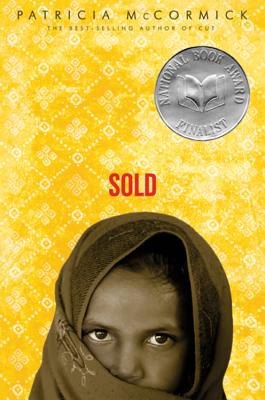
Sold

by Patricia McCormick
First sentence: “One more rainy season and our roof will be gone, says Ama.”
Support your local independent bookstore: buy it there!
Content: There is violence toward women and a (non-graphic) rape scene. It’s in the teen section (grades 9+) of the bookstore.

Lakshmi is a 13-year-old girl in the mountains of Nepal who is just getting by with her mother and step-father and baby brother. Their existence isn’t great: they depend on the weather to make sure their livelihood — growing rice — is secure, and Lakshmi’s stepfather is a gambler and a drunk, spending all their money on cards and booze. Still, it’s not a terrible life. That is, until one monsoon season wipes out their entire crop. There’s nothing else to pay their debts with, and so Lakshmi’s stepfather sells her to a buyer that’s passing through. Lakshmi thinks she’s off to be a maid, and that the wages will go home to her family. Turns out, though, that she’s been sold into slavery, and that her “job” is prostitution. (I loathe to use that word, because I feel it implies some sort of choice, and Lakshmi has NO choice in the matter; in fact, she’s drugged and repeatedly raped at the beginning since she’s unwilling to do what she’s told.)

Eventually, some well-meaning Americans come in and shut the business down and rescue the girls who want to be rescued (go white savior moment?) but there’s a lot going on culturally with the girls.

This is such a hard book to read. Not technically; it’s written in loose prose verse (they weren’t simple enough to be poems, but it wasn’t really a prose book either), and so it went quickly, but emotionally? It packs a wallop of a punch. Toxic masculinity and patriarchy and class divisions are going to kill us all. That someone would sell their child to be a sex worker, that men would want to come visit them, that women would imprison these girls for their own gain? It’s a lot to stomach and it makes me feel both incredibly angry and incredibly hopeless.

It’s an excellently written book, and I’m grateful someone told their story (even if it’s a white woman). Even if it is emotionally draining and difficult.

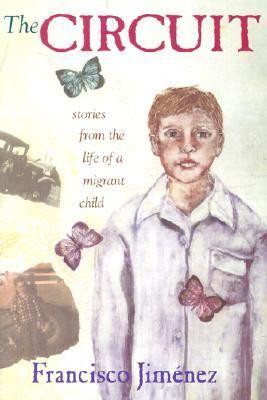
The Circuit

by Francisco Jimenez
First sentence: “‘La frontera’ is a word I often heard when I was a child living in El Rancho Blanco, a small village nestled on barren, dry hills several miles north of Guadalajara, Mexico.”
It’s out of print, unfortunately. I found a copy at the library.
Content: It’s a series of short chapters, fictional but with an autobiographic feel. It’s in the teen section at the library, but I really can’t figure out why.

This is basically the fictionalized autobiography of Jimenez. He doesn’t bother to change the names of his family (maybe of the other characters?) or even of the situations he finds himself in over the time that his family — he’s the second of seven children — spent as migrant workers in California. This book covers the time they entered the United States (his father had a green card; his mother, older brother, and he were all undocumented. His younger siblings were all born in the United States) through the time when, in high school, his older brother was picked up by ICE. (Though he doesn’t go into what happened after. Just that he was picked up.)

Jimenez does an amazing job making the migrant worker’s life come to life on the page: the back-breaking labor, the constant moving to follow the work. Not just for his parents — there was a scene when his father was sitting in their meager tent, smoking cigarette after cigarette, cursing the rain that wouldn’t stop and that was ruining the crops and therefore their livelihood that really brought it home to me — but also for the children, how they couldn’t start school until after the cotton crop in November, how they moved often so he went to multiple schools in the course of one school year.

It makes one think about where one’s food come from. Who is out there picking the crops, and what kind of conditions they live in. And yes, it made me think about immigration — this story took place beginning in the 1940s — and the way they are treated, not just by the government but also by business owners. It’s not an easy thing, politically, but I think we often forget that there are people on the other end.

At any rate, it was a fascinating little book.

With the Fire on High

by Elizabeth Acevedo
First sentence: “Babygirl doesn’t even cry when I suck my teeth and undo her braid for the fourth time.”
Support your local independent bookstore: buy it there!
Review copy provided by the publisher.
Content: There is swearing, including multiple f-bombs, one almost sex-scene, and frank talk about teenage sex. It’s in the teen section (grades 9+) of the bookstore.

Emoni is many things: Afro-Puerto Rican. A mom. A senior in high school. And most importantly, someone who loves to cook.

As she starts her senior year, she’s navigating her world: co-parenting with her ex, Tyrone, and taking more responsibility for their daughter. Her relationship with her abuela and her absent father. And her final year at high school. She wasn’t really expecting any challenges, but she is thrown for a loop: her school has just added a culinary arts class. And she wants to take it, but will she be able to handle the pressure from a working chef.

This isn’t a novel in verse like Poet X is but it’s still just as lyrical. I thoroughly enjoy Acevedo’s writing, and her celebration of Afro-Latinx culture. I loved the food in this book, and though she touched on magical realism (I really love it when food makes people feel/do things) she didn’t really go there. I loved Emoni as a character, and her struggle to overcome the results — the baby — of a bad decision she made when she was 15. I loved the support she got from her abuela and friends, and I felt that Acevedo captured some very real emotions.

It was just a delight to read and I can’t wait to see what else Acevedo writes.

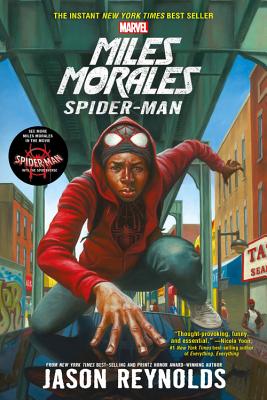
Miles Morales Spider-Man

by Jason Reynolds
First sentence: “Miles set the good dishes on the table.”
Support your local independent bookstore: buy it there!
Content: There’s violence, but not graphic and some mild swearing. It’s in the YA section (grades 6-8) but I’d give it to a younger kid who was interested.

Yes, I did pick this up because I adored Into the Spider-Verse. I liked Miles Morales as a character, and I wanted to spend more time with him. Aside from the movie, I have no knowledge of Miles’s backstory or comic history, so I’m pretty much operating blind.

The basic plot is that Miles is kind of tired of being Spider-Man, and mostly just wants to focus on school. Except he keeps getting called into the office, first for leaving class (his Spidey sense was tingling) and then for a minor theft, for which he was totally framed. And it feels like his history teacher is super antagonistic toward him. And maybe it’s not an evil plot to take over the world, but maybe it is.

And on top of all that, he’s struggling with school and friends and fitting it. Not to mention the crisis about being Spider-Man; maybe he’s just not cut out for this.

My first reaction? It was fun, but heavy on the social justice. Not that that’s a bad thing. I liked the book well enough; Reynolds is a great writer and Miles is a great character. But… perhaps I would have liked it more had I been more invested in Miles Morales as a superhero. Coming in with as little knowledge as I did, I kind of felt like I was missing something. I caught similarities between the book and the movie, but it wasn’t enough or deep enough for me to truly love this book.

Obsidio

by Amie Kaufman and Jay Kristoff
First sentence: “Perhaps we should get proceedings under way?”
Support your local independent bookstore: buy it there!
Others in the series: Illuminae, Gemina
Content: There is a lot of swearing, all blacked out, and a lot of violence. It’s in the Teen section (grades 9+) of the bookstore.

Spoilers for the first two, obviously.

First off: this series is some solid action/adventure science fiction. This one is lacking the aliens or diseases of the others, but deals more on the human aspects of war. We’re back on Kerenza, where for the past seven months (while the previous two books were happening), the people who didn’t escape are now being occupied by BeiTech forces. Who, to be frank, are murderous, awful people. In fact, that’s the central conflict of the book, as we find out how the Illuminae files were compiled (though I wonder how the audiobooks changed from the first, as we learned more) and the conflict between the Hypatia and Heimdall crews. It’s about what happens to humans in time of conflict, and the decisions — and rationalizations — that come from it. Kaufman and Kristoff are also exploring the consequences of decisions made by the AI without the aid of emotion.

And, yes, this one has two new characters to add to the mix. And while we weren’t given as much time to connect with them, they still were fascinating to read through the twists and turns. And while they didn’t play as big a role as other characters, they were still integral to the plot.

It’s such a good series, maybe made better by being able to read them all back-to-back without waiting in between. I was able to catch small things in the stories that I would have probably missed if I had waited between books. But plowing through them all one right after another is highly recommended.

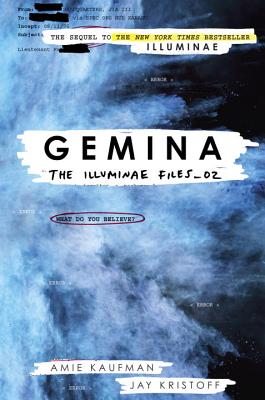
Gemina

by Amie Kaufman and Jay Kristoff
First sentence: “… over seven hundred thousand employees across dozens of colonized worlds.”
Support your local independent bookstore: buy it there!
Others in the series: Illuminae
Content: All the swear words are blacked out, but there’s a lot of violence and some drug use. It’s in the Teen section (grades 9+) of the bookstore.

Spoilers for the first one, probably.

The nice thing about not reading a series when it first comes out is that you can read them all one right after another. And I remember what happens! That said, Gemina is part of the whole story, and picks up where we left off, but it also it’s own thing.

It’s the space station Heimdall, and everything is going lovely for Hannah and her boyfriend Jackson for their Terra Day plans. She’s got a super cute outfit, she’s about to pick up some dust to make the party super lit. Except, while she’s on her way, the station is attacked by an elite crew of 24 “auditors” (read: assassins) from BeiTech corp, who is still trying to cover up their attack on Kerenza. They have orders to take over Heimdall and open up the wormhole before any survivors reach the jump station.

(There’s a bit of a gap here: how did BeiTech know that there were survivors from the Kerenza attack?)

Anyway. The assassins capture the station, kill the commander (who happens to be Hannah’s dad), and take over. But, a few people Hannah and her drug dealer, Nik, and Nik’s cousin Ella, who’s a hacker, are left on the outside to stop the assassins from completely taking over.

I wondered how this would go over in print, since I adored it so much in audio. And it’s fabulous. I’m amazed that Kauffman and Kristoff could put so much into just documents, text streams, and illustrations, but they do! (since this one is so heavily illustrated, I wonder how it is in audio?) It never got tedious, I adored the reveals as they happened, and I was never too far ahead of the characters. I figured something out, and by the next page, the characters were there as well. It’s quite brilliantly plotted. And they do tension SO very well. I kept having to take breaks as I read because it would just get too much for me to handle. So very very good.

And yes, I’ve got the third already checked out, so I can see how this story ends.

Finale

by Stephanie Garber
First sentence: “Scarlett Dragna’s bedroom was a palace built of wonder and the magic of make-believe.”
Support your local independent bookstore: buy it there!
Others in the series: Caraval, Legendary
Review copy provided by the publisher.
Release date: May 7, 2019
Content: There is some violence, some mild swearing, and some off-screen sex (plus a bunch of passionate kissing). It will be in the teen section (grades 9+) of the bookstore.

Spoilers for the other two, obviously.

The Fates have been released from their cards, Legend is set up to be emperor, and all Scarlett and Tella want is for their mother to wake up. But when she does… she sets off a series of events that lead Scarlett and Tella into their most dangerous game yet: the game for their lives.

All the characters are back: Julian, Legend, and Jacks of course, and there are a huge number of new characters — the Fates — that come into play. On the surface, its a lush, magical, dangerous romp. But, underneath, I think Garber has always been exploring what people will do for love, and the difference between love and obsession. It’s especially clear in this book, and I think it’s stronger for it. I wasn’t terribly impressed with the second in this series, but I think Garber has pulled it together and put out a strong, fascinating, good conclusion.

Audiobook: Illuminae

by Amie Kaufman and Jay Kristoff
Narrated by  Olivia Taylor Dudley, Lincoln Hoppe & Johnathan McClain, and a full cast.
Support your local independent bookstore: buy it there!
Or listen at Libro.fm
Content: There is swearing, but at least on the audio it’s all bleeped out. And there is violence. It’s in the Teen section (grades9+) at the bookstore, but I’d give it to someone younger if they were interested.

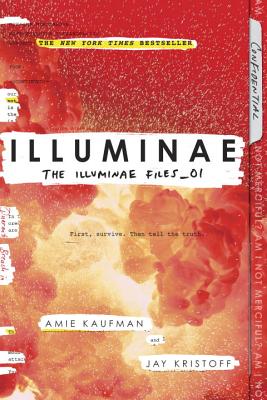
So, people have been telling me to read this for YEARS. I’ve brushed them off, partially because it’s a thick book, and partially because, well, I thought it was hack science fiction. (I’m super snobby. I shouldn’t be!) But, I’ve recently read other books by both Kristoff and Kaufman, and my on-line book club picked this, so it was Time. Someone in the book club mentioned that it was a stellar audio book, and so I went that route.

And Holy Amazeballs! THIS was what I was missing?! (I know: I should listen to the buzz!) Set in the future — 2575 to be exact — and written entirely in hacked documents (reports, emails, texts, images, security footage transcriptions — it tells the story of a planet (which was colonized for illegal mining by one company) that was attacked by another corporation. Our main character, a hacker named Kady, along with a number of other citizens are rescued by a fleet of ships: the military vessel Alexander; the medical ship Copernicus; and the science vessel Hypatia. The ability to jump to safety was damaged in the fight with the other corporation, so the fleet has to make it to the nearest jump station, which is six months away.

And then things get interesting. I don’t want to say too much, because the less you know going in, the better. But let’s say it’s FANTASTIC science fiction. There’s a smidge of horror, and the AI, AIDAN is an amazingly written character (think HAL from 2001: A Space Odyssey). Kaufman and Kristoff take you through twists and turns and reveals, and will keep you guessing at every turn.

And the audio? It really was fantastic. It was full cast, which is usually not a great thing, but this one pulls it off amazingly. I was literally just driving around so I could listen to the book (I got it on CD, so I could only listen to it in the car), and I didn’t want to stop. I was riveted by the whole production, from plot through the performances.

And yes, of course I’m going to go read the other two. I think I’ll try them in print this time. Just to see.

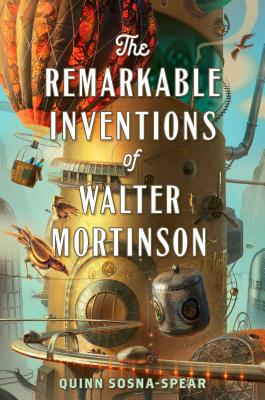
The Remarkable Inventions of Walter Mortinson

by Quinn Sosna-Spear
First sentence: “‘Walter’ is no kind of name for a boy.”
Support your local independent bookstore: buy it there!
Review copy provided by the publisher.
Content: There’s death, including one Really Tragic One, as well as some kissing. It was in the middle grades (3-5) section, but I decided that that age group doesn’t want to read about kissing so I moved it to the YA (grades 6-8) section.

I picked this one up after the first line was chosen as the best of the week a couple weeks back. I was intrigued (I love the cover!). It’s the story of an imaginative boy with an overbearing mother and a dead father in a dreary town and his search for Something More. Walter’s dead father was an inventor (his mother is a mortician) and he desperately wants to follow in his footsteps, so when he gets an invitation to join a famous inventor on his island, he takes his mother’s hearse (a 13 year old knows how to drive?!) and runs away with the girl next door.

It’s less about Walter and Cordelia’s adventure though, and more about forgiveness and acceptance between Walter and his mother. See, Walter and Cordelia retrace the path that his parents took when leaving the island and coming to their boring, dreary town, and in doing so Walter Learns Things about his parents, particularly his father, which he never knew before.

It wasn’t a bad book; I did finish it, though by the end I was skimming (it may have been me). In the end, though, it seems to me the kind of kids books that adults would like rather than kids. I’m not sure many kids are wanting to explore their relationships with their overbearing mothers (on the other hand, there are overbearing mothers who need to read this) and not many kids are interested in heteronormative relationships either. There just wasn’t enough adventure and too much moody musing. Maybe they wanted to be all Dahl-esque, but it just kind of fell flat for me. Which is just too bad, since the premise is pretty great.