The War That Saved My Life

by Kimberly Brubaker Bradley
First sentence: “‘Ada! Get back from that window!’ Mam’s voice, shouting.”
Support your local independent bookstore: buy it there!
Content: There is some depiction of abuse, and tense moments when there is bombing. The bookstore has it in its middle grade (grades 3-5) section, but the state awards deemed it for 6-8th graders.

I know I’ve needed to read this one for a while now, and when my class did a unit on other awards and we were instructed to read a Schneider Family Award winner, I jumped at the chance to finally cross this one off my list.

Ada was born with a club foot. And, because her mother is AWFUL, she was raised to think that somehow her foot made her less. She wasn’t allowed out in public, she couldn’t walk, and her mother shut her in a cupboard and hit her every time she did something her mother didn’t like. And then Germany threatened invasion, and the children of London were sent to the countryside. Ada wasn’t on the list; her mother really was that cruel, but she decided she couldn’t let her younger brother go by himself, and so she went too.

Once there, they were placed with Susan Smith, who had been grieving the loss of her friend, Becky (it was unstated, but I believe they were partners), for two years. Susan didn’t want children, but she made the best of it. And, that simple act changed everyone’s lives.

It is a simple book, following Ada as she figured out how to live a life. Bradley does really well at portraying a traumatized child; Ada is sullen and ungrateful and unresponsive, and has panic attacks set on by the smallest things. But Susan is patient and kind and Ada flourishes. This really is a testament to kindness and resilience and the human spirit.

Very good.
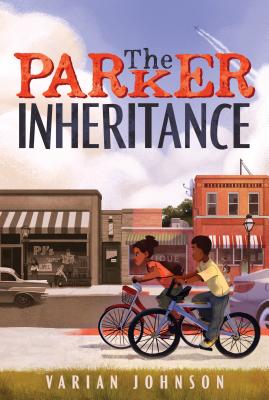
The Parker Inheritance

by Varian Johnson
First sentence: “Abigail Caldwell stared at the letter.”
Support your local independent bookstore: buy it there!
Review copy provided by the author.
Release date: March 27, 2018
Content: There are some tough issues brought up about racism, especially in the 1950s, but also currently. It will be in the middle grade (grades 3-5) section of the bookstore, though it  may be more interesting for grades 5 and up.

Candice does NOT want to spend the summer in Lambert, South Carolina. Her parents have recently divorced, though, and their house needs to be renovated in order to put it on the market, and it’s better if they’re not underfoot, so Candice’s mom decides to take up residence in her grandma’s old house in the small Southern town. It’s bound to be a boring, never-ending summer.

That is until two things happen: she meets Brandon, the boy across the street, and she discovers an old letter, detailing a mystery about an inheritance of $40 million. The same inheritance that her grandmother tried to find ten  years ago, and was fired from her job as city manager over. If Candace and Brandon can figure this out, they could not only help the city, but also clear her grandma’s name.

I love puzzle books, even if I’m not entirely smart enough to figure them out, and this was no exception. About halfway through, Johnson references The Westing Game (one of my favorites!), and from then-on, I was using what I knew about that book to figure out the clues. (I did pretty well, too!) So, perhaps this one is better the more you know that one. But, in addition to the fun puzzle solving, Johnson takes us through history. We learn about sharecroppers, and what it was like to be a black person in the South in the pre-Civil Rights era (there’s not a lot, especially for kids, written about that time). He weaves in themes of revenge, justice and forgiveness as well as acceptance and tolerance. It’s a lot for a middle grade novel, but under Johnson’s capable hands, everything comes together seamlessly. He knows how to write kids so they seem real, and address tough issues in a way that they are accessible but not watered down.

An excellent book.

First Sunday Daughter Reviews: March 2018

Spring is pretty much here, and the other day I sat outside for a couple of hours and read. It was delightful. The girls are neck-deep in school, but a couple of them are still finding time to read.

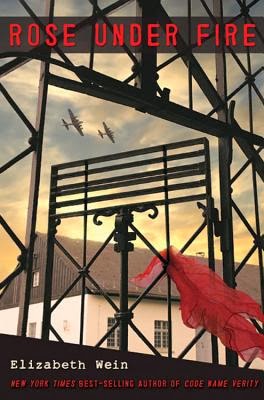
A has to read a Holocaust book for her gifted class, and so she picked:She did ask when it was going to pick up and get interesting, but I hope she does give it a bit more time…

And K has taken to reading multiple books at one time. Right now, that’s:

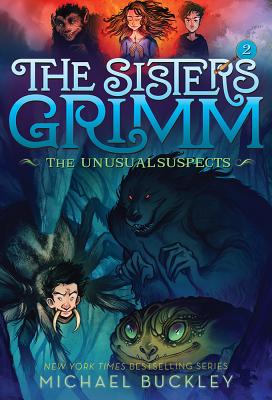
She picked up Sisters Grimm after a conversation when C was remembering how much she liked the series. So far, K’s really liking it.

What are you reading right now?

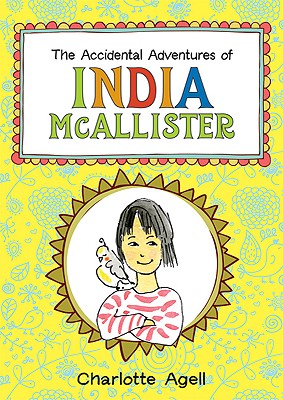
Module 7: The Accidental Adventures of India McAllister

Agell, C. (2010). The Accidental Adventures of India McAllister. New York, NY: Henry Holt and Co.

Genre: Realistic beginning chapter book.

Book Summary: At the end of her fourth grade year, India McAllister — named for the ink not the country — tries to figure out friendship, especially since her best friend is a boy and that seems to be an unacceptable thing in fourth grade; whether or not she can like her dad’s new partner, Richard;  and wonders if she will ever have an adventure (until she gets lost in the woods!).

Impressions: The reviews and summaries I read focused mostly on India’s friendship with Colby and her rivalry with Amanda, but I think that short-changes the book. India is concerned with every aspect of her life: her relationship with her parents, especially her dad who’s left and has a new partner, Richard, among other things. I liked how this one was very nondescript with that: India’s dad is gay, and has a male partner, but there isn’t a huge issue surrounding it. I thought Beatrice Bird was delightful, and enjoyed India’s relationship with her pets. And I could understand  her annoyance and confusion surrounding Colby’s sudden hanging out with Amanda, but I think it was less boy/girl friend thing and more just friend thing — if Colby had been a girl, the dynamics and feelings that India has would probably still be the same. It was a delightful story, overall; I loved the diary feel of it, including the sketch drawings.

Review: Reviewer Phelan praised the book, calling it ” rooted in a tradition that goes back to Beverly Cleary’s Ramona stories”, and praised it for being nuanced emotionally, especially around relationships, and called it a strong start to a series.

Phelan, C. (2010). The Accidental Adventures of India McAllister. The Booklist. 106 (21), 55, 58.

Library Uses: This one would be good on a display of fun girl characters boys would like, or LGBT families, or just first in a series books. It would also make a good book for a book group for younger kids.

Readalikes:

  • Clementine by Sarah Pennypacker: Clementine is slightly younger than India (eight instead of nine) but this book has the same sort of whimsy and charm that India has. Clementine is a hilarious free spirit and the books are delightful to read.
  • Ramona the Brave by Beverly Cleary: The true first of the Ramona series, in which we see Ramona tackle kindergarten. The Ramona books don’t have to be read in order, and Ramona Quimby, Age 8 or Ramona and her Father are probably more closely like India.
  • Charlie and Mouse by Laurel Snyder: There aren’t many realistic fiction books featuring boys that aren’t also survivalist or some other extreme situation, but Charlie and Mouse is a great example of one. It’s younger than India, but has the same sort of down-to-earth, yet whimsical and often hilarious, feeling that India has.

Ninth Ward

by Jewell Parker Rhodes
First sentence: “They say I was born with a caul, a skin netting covering my face like a glove.”
Support your local independent bookstore: buy it there!
Content: There are some intense moments, but it’s written very simply. It’s in the middle grade (grades 3-5) section of the bookstore.

Lanesha lives in New Orleans’ Ninth Ward, one of the poorest sections of the city, with her Mama Ya-Ya, who is the woman who delivered her, because Lanesha’s mother has passed on and her extended family doesn’t want her. But, even though they’re poor, Lanesha’s happy. That is, until a storm — Hurricane Katrina — comes riding in. Mama Ya-Ya passes on in the middle of the storm, and Lanesha is left to figure out how to ride out the flooding that came after the hurricane by herself.

I adore Rhodes, and the way she takes tough issues and makes them really accessible to younger readers. She knows her audience, knows how to talk to her audience, and knows how to make difficult subjects into a gripping, interesting, compelling story. This one is no exception (I hadn’t read it before!). The only difference with this one is that it has ghosts. Lanesha has the ability to see those who have passed on, and can even talk to them. (Which makes me wonder why this one ended up in the “realistic fiction” section of my children’s lit class…) Even so, the ghosts don’t seem out of place; it is New Orleans after all. And even though the ghosts play a role in resolving the ultimate conflict, I think Rhodes did an excellent job in making this a real middle grade novel, with the action being propelled forward by the children.

Excellent. But that’s no surprise.

Montly Round-Up: February 2018

I constantly get asked at work what I’m reading, mostly because they’re looking for recommendations. And I’m happy to give them! But what I’m reading as of late is a lot of OLDER books. I think that’s the thing I find most frustrating about the class. They’re either stuck in books written before 2013, when the last textbook came out (the other text book is from 2006!) or I’ve read pretty much everything on the list. There are SO many good books  coming out now, I wish I could read them. But, no. I’ve got to read something written in 1998. *grumble grumble* (Not that those books are bad. I just wish I could read something more, well, current.)

My favorite this month:

All American Boys

It was just SO good. And incredibly timely. And made for a really good book group discussion as well.

As for the rest…

Middle Grade:

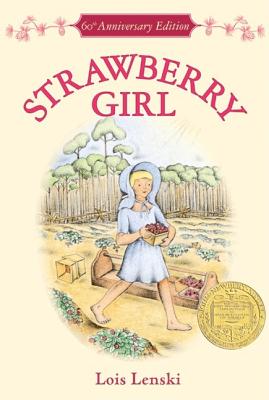
Strawberry Girl
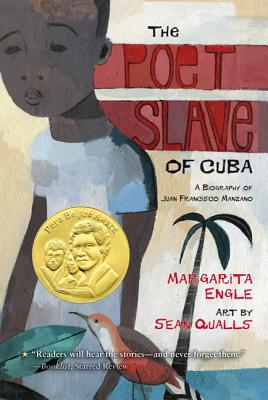
The Poet Slave of Cuba

Adult fiction:

Enchantress of Numbers
Back Home at Firefly Lake (audio)

YA:

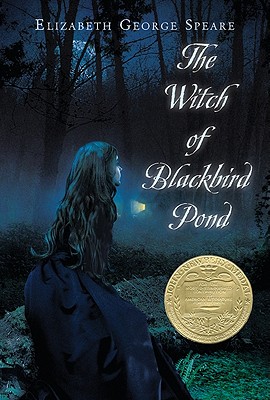
The Witch of Blackbird Pond
The Grey King
Daughter of the Siren Queen
Midwinterblood

Non-Fiction:

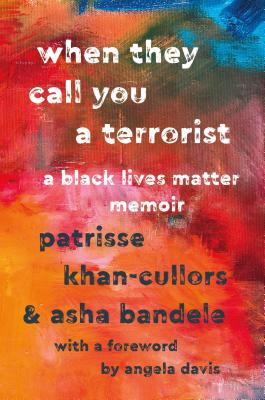
When They Call You a Terrorist
Lincoln: A Photobiography

Graphic Novel:

Black Panther, Book 1

That Time I Loved You

by Carrianne Leung
First sentence: “1979: This was the year the parents in my neighbourhood began killing themselves.”
Support your local independent bookstore: buy it there!
Review copy provided by the publisher.
Content: There is some sex (on-screen but not graphic) and swearing, including a few f-bombs. It’s in the adult fiction section of the bookstore.

Set in a suburb of Toronto, specifically on one street in a particular neighborhood, this collection of connected short stories  follows the inner workings of a dozen people of all ages.  The characters are mostly women, except for one black teenage boy, and many of them are immigrants. Leung explores immigrant expectations and prejudices toward them. She explores female dynamics both with other females and with males. She touches on sexual assault and racism and emotional abuse. It’s a lot. And yet, it works.

I usually have problems with short stories, but I think because these are connected — the characters in the stories appear in their own as well as in the background of other stories — it felt more like a novel. We got to know the characters, we get to know the neighborhood, and because each story focuses on a different person, we get to know them intimately and it means more when they show up in a different story.

I really enjoyed this one!


Midwinterblood

by Marcus Sedgwick
First sentence: “The sun does not go down.”
Support your local independent bookstore: buy it there!
Content: There is some violence, and it’s a complicated story. It would be in the Teen section (grades 9+) of the bookstore, if we had it.

This one is SO hard to describe. Possibly because I think it really is best if you don’t know very much going in.

So know this: the stories are connected, going backward in time. Not directly connected; that tripped me up in the beginning – I kept expecting people to be related, but they’re not. The names are similar, the setting — the Blessed Island, a mysterious place somewhere in the northern ocean — is the same. But, while the stories are connected, it’s not a direct connection.

Also know this: how confused you are, how strange you think it is, you need to stick it through all the way to the end. Do that, and you will be rewarded. It will all make sense, it will all pull gloriously together, and it will be worth it.

I’ve never read anything like this before, and I’m sure this one will stick with me for a long time.

Module 6: Oh No! (Or How My Science Project Destroyed the World)

Barnett, M. (2010). Oh No! (Or How My Science Project Destroyed the World). New York, NY: Hyperion Books.

Genre: Picture book. Not exactly realistic, but not exactly speculative either. Good for all ages, though older kids will “get” the humor better, I think.

Book Summary: A girl’s science project, a robot, escapes from the science fair and destroys the city because she forgot to program overrides on it. So, she creates a giant frog to defeat the robot, which (unfortunately) causes almost more problems than the robot.

Impressions: In looking up readalikes, I noticed that a good number of books about robots feature boys, so three cheers for Santat for making the main character of this book a girl! (Barnett doesn’t specify a gender in the book, as it’s written in the first person.) I have long been a fan of Barnett’s humor, but I think it’s downplayed in this book. The narrator is exasperated and kind of practical : “I probably shouldn’t have done this” and “Looks like I’m going to have to fix this.”  The humor in this book, the outlandishness, comes from Santat’s illustrations. Without them, the book holds no punch. I am not a fan of old monster movies, so I missed a lot of the details, but there’s still a lot to look at in each picture on every page. Perhaps, ultimately, the humor is in the over the top idea: that a kid could actually program a robot and then create a toad to stop the robot. It’s basically every kid’s dream, to be powerful enough to “conquer” the world, isn’t it?

Review: Publisher’s Weekly gave Oh No! a starred review, calling it a seamless collaboration between Barnett’s simple text and Santat’s homage to old Japanese monster movies. The review pointed out details that I missed, like the blurring of the image and text when the robot stomps. It also went on to say that there was “wicked humor” and admonished kids not to try this at home, even though there are “blueprints” in the end papers.

Staff. (2010). Book reviews. Publishers Weekly. 257 (19), 41-44. Retrieved from:  https://www.publishersweekly.com/978-1-4231-2312-5.

Library Uses: I would use this as a springboard for a STEM activity, discussing exactly how the girl would program the robot and then segue into simple coding with Scratch.

Readalikes:

  • Wild Robot by Peter Brown: Not a picture book, but a fantastic story of a robot who ends up on a deserted island and figures out how to survive and communicate with animals. It is a delightful story and makes for a great read-aloud.
  • Robosauce by Adam Rubin:  A boy who wants to create a robot ends up taking a special “sauce” that not only turns the main character into a robot, but (thanks to a wrap around extra cover tucked into the book) turns the whole book into a robot.
  • Little Robot by Ben Hatke:  An almost wordless younger graphic novel follows a lonely girl who finds a robot in a junkyard and fixes it up so she can have a friend. Another great robot book featuring  a girl main character, who isn’t afraid to get dirty and be innovative.

Audio book: Back Home at Firefly Lake

by Jen Gilroy
Read by: Karissa Vacker
Support your local independent bookstore: buy it there!
Listen to it through Libro.fm
Content: There’s mild swearing and one pretty graphic (but not distasteful) sex scene. It would be in the fiction section, if we had it in the store.

I needed a fluffy book, and when this one showed up, I jumped at it. It’s exactly what it looks like: Cat, a single mother, and adjunct history professor moves back to her hometown of Firefly Lake, Vermont. There she meets her high school crush, Luke, a former Olympic and NHL hockey player, who is still recovering from the sudden death of his wife, the love of their life.

Of course Cat and Luke have a thing for each other. Of course things — Luke’s dead wife, Cat’s daughter Amy — get in the way. Of course the sex was hot. And, of course, there’s a happily ever after. I didn’t listen to this because the plot was fantastic or the character development was amazing, though there was some growth in the characters, which was nice. No, I wanted pure fluff, and this delivered. Which was nice.