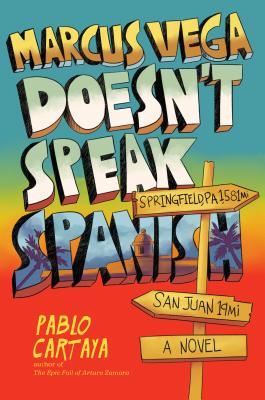
Marcus Vega Doesn’t Speak Spanish

by Pablo Cartaya
First sentence: “Most kids clear out of the way when I walk down the hall.”
Support your local independent bookstore: buy it there!
Review copy provided by the publisher.
Content: There’s nothing “objectionable” language or other-wise, but the main character is 14 years old, and the themes seemed a bit more mature than the usual middle grade fare. So, it’s in the YA (grades 6-8) section of the bookstore.

Marcus Vega is a very large 14 year old. He’s one of those kids that went through puberty early, and he’s the giant in the hallway. He uses this to his advantage: he charges kids for his “protection” services, walking them to school and home again and otherwise being the heavy, enforcing the principal’s rules (for a fee). The money goes home to help out his struggling single mom, and he’s also super protective of his younger brother, Charlie, who has Down Syndrome. So, it’s not out of character for Marcus to punch a kid — the school bully, Stephen — for making fun of his brother. However, it’s his word against Stephen’s, and Stephen’s parents are the super involved, high donors type, and so it’s Marcus who ends up being threatened with expulsion. Thankfully, it’s right before spring break, and Marcus’s mom decides that it’s about time for them to head to Puerto Rico to meet Marcus’s father’s (who left when Marcus was four) family.

Marcus then becomes obsessed with finding and confronting his father, if only for closure. This takes him, his mother, and his brother, all over the island, meeting different members of the extended Vega clan. But, mostly what this book becomes at this point is an extended love letter to Puerto Rico. The book starts with a blurb about the hurricanes that hit the island last year, and how many of these places in the book are no longer like Cartaya describes them. But, as a reader, you can tell the affection that Cartaya has for the island. It’s a charming, sweet, Spanish- and Puerto Rican-infused book. Sure, Marcus has a happy ending but that’s not the point of the book, I think. It’s more to raise awareness: there is a culture and a history in Puerto Rico that’s rich and rewarding and even though they’re different from us, they’re also Americans too.

And while it’s not as good as visiting Puerto Rico, it’s a good second choice.

Louisiana’s Way Home

by Kate DiCamillo
First sentence: “I am going to write it all down, so that what happened to me will be known, so that if someone were to stand at their window at night and look up at the stars and think, My goodness, whatever happened to Louisiana Elefante? Where did she go? they will have an answer.
Support your local independent bookstore: buy it there!
Review copy provided by the publisher.
Content: It’s a follow-up to Raymie Nightingale, and it deals with some tough subjects. It’s in the middle grade (grades 3-5) section of the bookstore.

We first met the inimitable Louisiana Elefante in Raymie Nightengale; she was one of the Rancheros who was basically defined by her slightly off-kilter granny, her dead circus performing parents, and her pluck and spirit. Now, two years later, we’re back with Louisiana and her granny, as they take off from Florida in the middle of the night, uprooting Louisiana from her friends and a place she’s grown to love.

When Granny’s tooth begins to ache, it derails their running away, and they land in a small Georgia town. All of Granny’s teeth get pulled, and they take up shop in a motel, while she recovers. Louisiana is left not only to her own devices, but eventually, just left, as Granny takes off to take care of the curse that is hanging over her head.

It’s Louisiana’s voice and spirit that comes through most in this book. It’s written in the first person — DiCamilo’s first since Winn Dixie — and Louisiana comes out loud and clear. She’s angry and insecure and yet hopeful at the same time. She’s angry at her Granny for uprooting her, she’s insecure about her future, but she’s hopeful that maybe she can find a place for herself. There are some pretty shocking revelations made throughout the book, and Louisiana takes everything in stride, which is both remarkably resilient and gives the book a hopeful and uplifting feel to it.

It’s classic DiCamillo, and definitely a delight to visit with this character again.

Monthly Round-Up: September 2018

It’s the end of September (?!) and you know what that means? Tomorrow is Cybils Day! (That really should be a Thing.) Public nominations open up at midnight on Oct 1. And we need YOU to nominate. You can find out more information here.

My favorite this month:

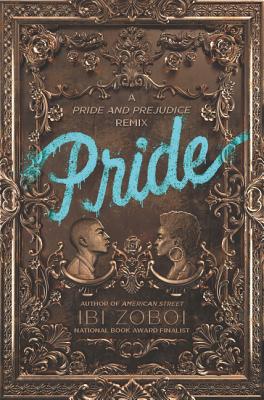
pridePride

I’m a sucker for a Jane Austen retelling and this one is both smart and modern and yet true to the spirit of the original. So very good.

And the rest:

Middle Grade:

Merci Suarez Changes Gears
The Darkdeep
Harbor Me

Young Adult:

Leah on the Offbeat (audio)
Ruin of Stars
A Mad, Wicked Folly
Muse of Nightmares

Adult Fiction:

absolutelyremarkablething
An Absolutely Remarkable Thing

Graphic Novels:

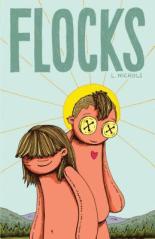
flocks
Flocks

Non-Fiction:

deathoftruth
The Death of Truth

What was your favorite this month?

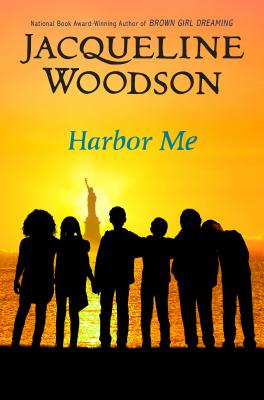
Harbor Me

by Jacqueline Woodson
First sentence: “We think they took my papi.”
Support your local independent bookstore: buy it there!
Review copy provided by the publisher.
Content: This deals with some heavy topics: immigration, guns, police brutality, etc. but it does so in a way that’s accessible and approachable for younger kids. It’s in the middle grade (grades 3-5) section of the bookstore.

In this classroom in New York City (I’m assuming… it’s a very diverse classroom), six kids are allowed one hour each week to talk, unsupervised by adults. The idea, hatched by their teacher, is that they would be able to talk about things on their minds, big and small, unencumbered by  adult approval/disapproval and interference.
The six kids are Esteban, whose father has been recently taken by ICE and is being held in Miami, possibly to be deported back to the Dominican Republic; Amari, a black boy whose father has recently had the talk with him about how to act in public, which bothers him deeply; Ashton, a white kid who recently moved from Connecticut, and who is often bullied at school; Holly, an upper-middle-class black girl; Tiago, a Puerto Rican whose mother doesn’t speak much English; and our main narrator, Haley, a biracial whose mother died in a car crash and whose father is in jail, and who is being raised by her uncle.

While Haley’s our main narrator, and her story is the one that we learn the most about, this really isn’t a plot-driven book. It reads much like the idea behind it: as a safe space for 4-6th graders (mostly, though maybe kids younger or older would be interested) to explore tough topics and feelings about things in the news today that may be bothering them. It’s less about the characters than it is about the ideas and themes. Which isn’t a bad thing; kids hear news and are probably more aware than adults give them credit for, and to have a book that addresses their fears  — even if they don’t solve them — and is a space for them to discuss their fears, is a good thing.

And Woodson’s writing is as lyrical as always. It’s a really tight book; there isn’t an extra word in it.

Worth reading.

Muse of Nightmares

by Laini Taylor
First sentence: “Kora and Nova had never seen a Mesarthim, but they knew all about them.”
Support your local independent bookstore: buy it there!
Release date: October 2, 2018
Others in the series: Strange the Dreamer
Content: There’s references to sex and rape, and there’s violence. It’s in the teen section (grades 9+) of the bookstore.

Spoilers for Strange the Dreamer, of course.

This one picks up immediately after Strange ends. Lazlo is now one of the gods. Sarai is dead. And neither one knows what’s going to happen next. And what does happen next — which takes place over mere hours, it feels like — is completely unlike anything they expected.

Interspersed with flashbacks, where Taylor introduces a couple of new characters and explains how the gods came to be over Weep, Taylor looks at tragedy, occupation, and the choices we make when faced with fear and rage and love.

I actually think I liked this one better than Strange, primarily because it didn’t feel like  retread of old ground for Taylor. She’s come up with some interesting world-building, and even though the “bad guy” — in this case the one who started all the horror — has been long dead, his presence was still made known in the book. Taylor’s exploring — I think — the aftermath of occupation and how, even if the occupiers are long gone, there are still scars that need to be healed. On both sides, really. It’s a much more introspective book than her other ones , or at least it feels that way. There is some action, and Sarai really does play an important role in the end, but mostly it’s exploring character’s feelings of bias and prejudice and hate and revenge, and, ultimately, forgiveness.

I’m not sure this duology is for everyone, but I thoroughly enjoyed it.

The Darkdeep

by Ally Condie and Brendan Reichs
First sentence: “The ground lept up to smack Nico in the face.”
Support your local independent bookstore: buy it there!
Review copy provided by the publisher.
Release date: October 2, 2018
Content: There are some intense and possibly scary parts. It will be in the middle grade (grades 3-5) section of the bookstore.

Nico’s father is a park ranger in their small town in the Pacific northwest and made a decision which cost people jobs and made Nico a target at school. And so, when he and his friends are off at Still Cove — a cliff over a cove that “everyone” says is haunted — and the son of the mill owner comes along, Nico is not surprised that he’s targeted. The result of that target, though, is that Nico slips off the cliffside and discovers an island in the cove and an abandoned houseboat on the island. And when his friends Emma and Tyler, and one of the bully’s cronies, Olivia, join him, they decide to explore the houseboat.

What they find is a weird portal that brings all their subconscious manifestations alive. At first, it’s fun: BB8, a centaur… silly stuff like that. But everyone’s subconscious contains a little darkness, and as the darkdeep (as they start to call it) gains in strength, the manifestations begin acting on their own accord. And soon, the town’s in trouble, and Nico, Olivia, and their friends are the only ones who know why.

This was so much fun! I suppose I shouldn’t say that about an adventure/mystery/horror-light book, but it really was. I loved the creation that Condie and Reichs came up with, and the voice they found together (they worked for a single voice rather than alternating chapters, and it really works well) is just spot on middle grade. I loved the friendships they had between the four, though the focus was more on Nico and Olivia and their struggle to become friends (I mean: who wants to be friends with one of the people who was formerly bullying you?) and to trust each other. I liked the way it was plotted, letting suspense build and giving the kids the keys to the next part of the mystery as they went along. It definitely has everything it needs for kids to really enjoy this one.

I sure did.

A Mad, Wicked Folly

by Sharon Biggs Waller
First sentence: “I never set out to pose nude.”
Support your local independent bookstore: buy it there!
Content: There’s one steamy kissing scene and some posing “undraped” (it’s not naked, it’s nude if it’s art). It’s in the YA section (grades 6-8) of the bookstore.

it’s 1908, and all Vicky Darling wants is to be an artist. She has found a community in Paris that she sneaks away to, away from her finishing school, and draws to her heart’s content. The thing is: Art is not done in Vicky’s social circles. At least not by women. Sure, they can paint… but only acceptable things: flowers, furniture, etc. Not Art. And definitely not Nudes.

So, when Vicky poses nude for her (all-male) art class, it causes a scandal. And she’s sent home to London where her parents decide the best thing is to marry her off as quickly as possible (she’s 16!) to curb her desires to Make Art. Because, of course, being a wife and mother will be so fulfilling that Vicky won’t have time for Art.

Except, it doesn’t really work. it’s also the time of the suffragette movement, and Vicky is inspired to help out. Initially, it’s only to draw them to work on her application to the Royal Art College, but eventually, she finds herself emboldened and empowered by these women who are fearlessly trying to exercise their right to vote.

It doesn’t help, either, that she’s met a supportive (and cute!) police officer, who’s willing to be her muse.

Vicky ends up faced with a choice: please her parents and society and give up her passion or follow her passion and give up her place in society?

Two guesses as to which one she picks.

I actually really enjoyed this one. It’s good to be reminded of the initial fight for equal (such as they are) rights for (white, mostly) women, and the struggles and trials they went through. And while Waller was sympathetic to Vicky and the suffragettes, she never really painted the upper class world that Vicky ran in as completely morally bankrupt. Constricting, yes. And lacking in understanding. But her parents did care for her (even if her friends and their parents did not). I especially liked the end (well, most of it), when Vicky left. Waller never hid the amount of privilege she had. She didn’t sugarcoat what it cost Vicky — monetarily, but also personally — to leave, and how much she had to learn when living on her own.

It was a really well done bit of historical fiction. And thoroughly enjoyable.

An Absolutely Remarkable Thing

by Hank Green
First sentence: “Look, I am aware that you’re here for an epic tale of intrigue and mystery and adventure and near death and actual death, but in order to get to that (unless you want to skip to chapter 13–I’m not your boss) you’re going to have to deal with the fact that I, April May, in addition to being one of the most important things that has ever happened to the human race, am also a woman in her twenties who has made some mistakes.”
Support your local independent bookstore: buy it there!
Review copy provided by the publisher.
Content: There’s a lot of swearing, including multiple f-bombs. It will be in the Science Fiction/Fantasy section of the bookstore, but a high school student who was interested could definitely read this one.

April May is just living her life — and not really her best one, at all — when she stumbles upon a… thing… in Manhattan at three a.m. She has enough presence of mind to grab her filmmaker friend and upload a video about the phenomenon that will come to be known as The Carls, which shoots April into the world of the famous. She  is at the forefront of everything Carl-related: TV stations want interviews, her YouTube and Twitter followers skyrocket. And, yet, no one knows what the Carls really want.

Soon, April is experiencing the darker side of fame: There are factions out there that want to defend the world from The Carls, and see April as a traitor for being a “spokesperson” for them. And it doesn’t help that April keeps burning the bridges between her and everyone in her life that cares about her.

There are two ways you can read this book:

1) as a straight-up science fiction story. And, to be honest, it kind of lacks on this level. It’s not really a great plot; you only find out what The Carls are up to at the end of the book, and it turns out to be rather anti-climatic. April is a questionable human being, more concerned about her own fame than the lives or feelings of the people around her (though I do wonder if I’d feel the same way if Green wrote April as a man). There’s a bit of action, but not much; it’s mostly talk about coding and uploading videos and dealing with people.

2) as an exploration of what fame can do to a “regular” person. This is where I thought the book actually worked. If you know anything about Green (one half of the Vlogbrothers, etc.), it seems that he is coming to terms with the way fame works, especially in the era of social media, and how that affects people. I found that part of the book to be fascinating; how the masses glom on to someone — anyone really — who says things we like (or don’t) and by the sheer force of numbers make that person famous. And how that fame — and the money advertisers and corporations and “news” stations are willing to throw at them — ultimately changes a person. It was an interesting exploration into April’s psyche and the ups and downs of fame.

An interesting read, in the end.

A Birthday Peek Into My World

It’s said (no, I don’t know by whom) that we, as a society, spend a lot of time on our phones and screens. I know that’s true in our family; the girls are constantly on their phones, and I’ve chosen to meet them there. Whether it’s Facebook (well, not the girls, but friends and relatives) or Instagram or Snapchat or Twitter or Marco Polo, I love the apps on my smartphone. And, I have to admit, I love the camera too. I don’t save everything I take a picture of, but sometimes, I come across something — either online or with the photos I take — that I just can’t bring myself to delete, no matter how much memory its taking up. Since today is my 46th (!) birthday, I thought I’d give y’all a peek into the photos I love.

Category 1: Stolen from the Internet. These are memes or tweets or photos that I just loved enough to take a screenshot of, and still find enough humor or meaning from that I can’t bring myself to delete.

(You knew Nathan Fillion had to be in there, right? I actually have several photos; that one is just my favorite.)

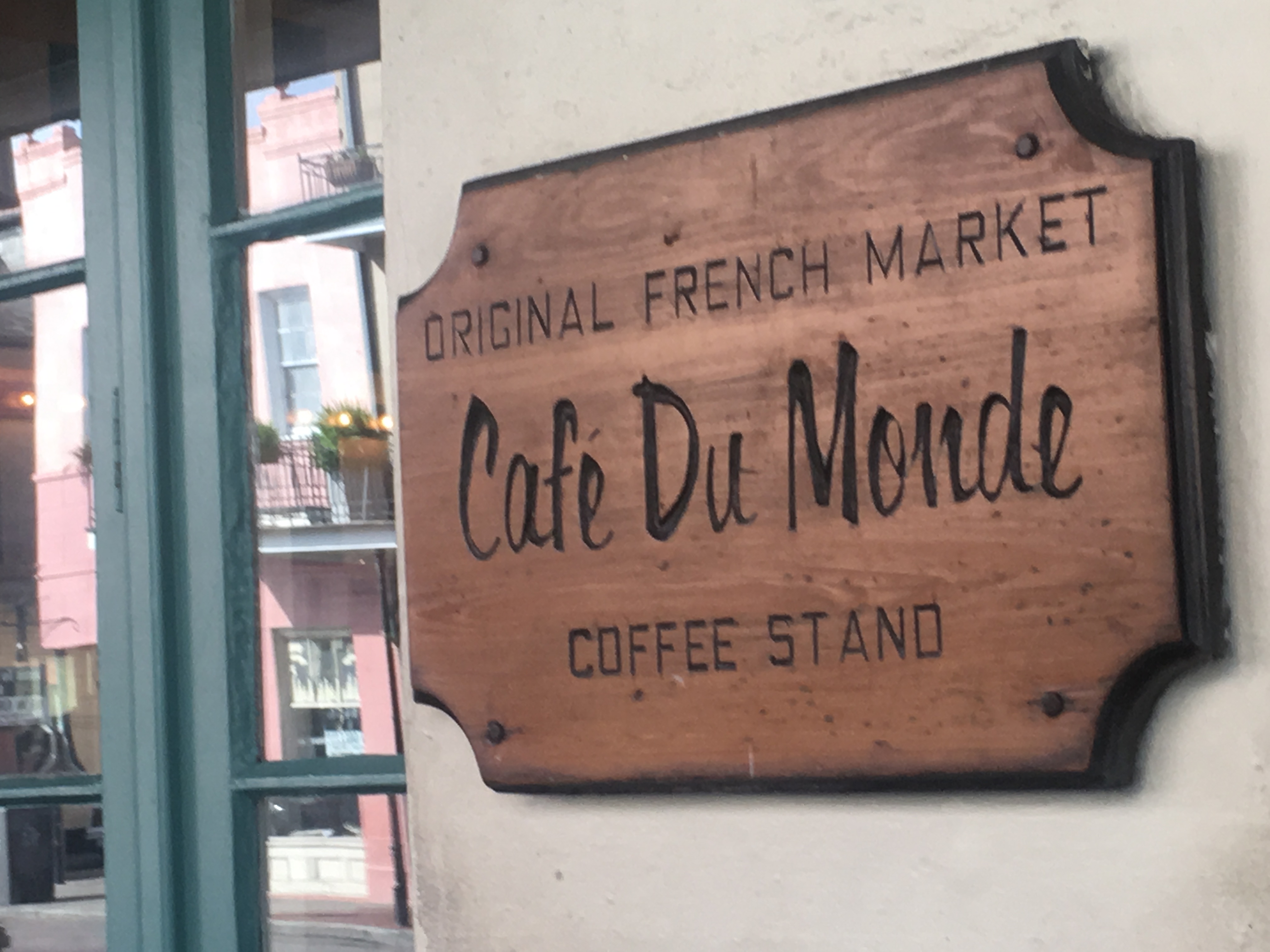
Category 2: Places I’ve been. I like to keep at least one picture from all my travels in order to remember something about the place I went to and/or the people I saw.

Category 3: Work-related pictures. I generally stick most of these on Instagram, so I don’t really have to keep them, but sometimes, I just don’t want to let them go. Not yet, anyway.

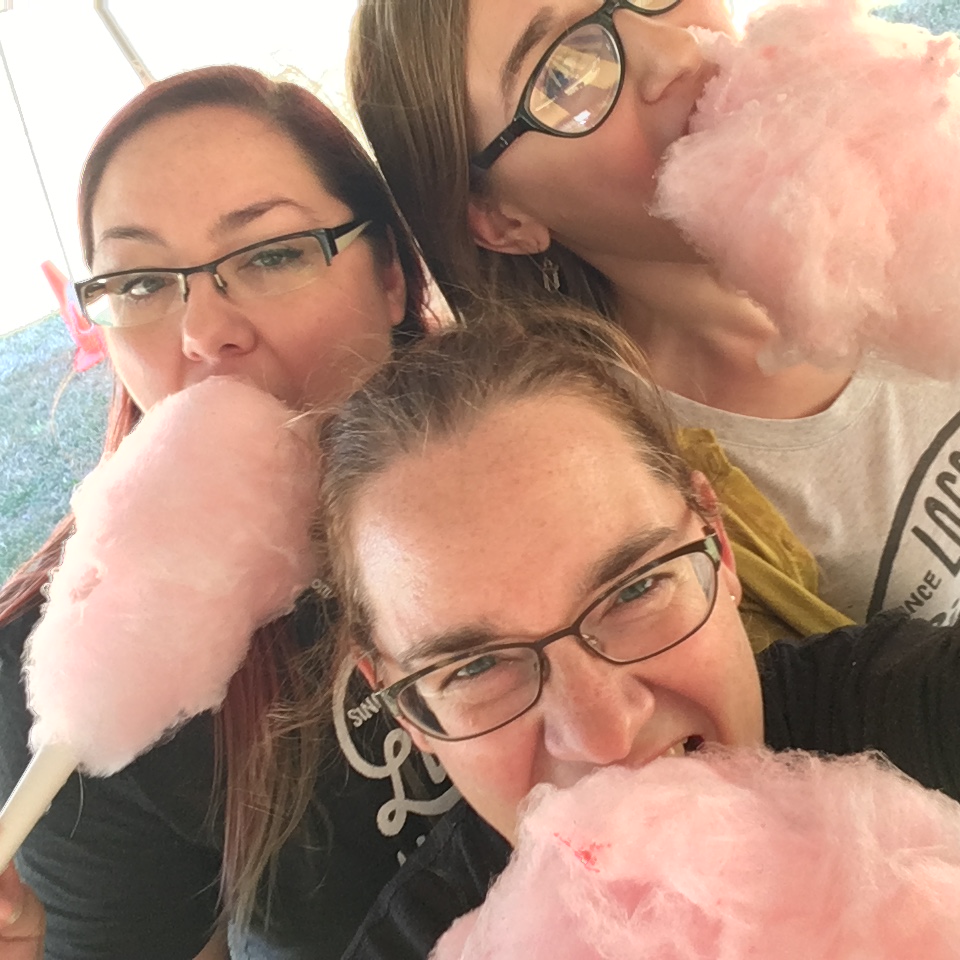
And category 4: my people. My family, my friends, my dog…

So, there you have it. All my life and loves in a nutshell! It’s been a good year. Here’s to another one.


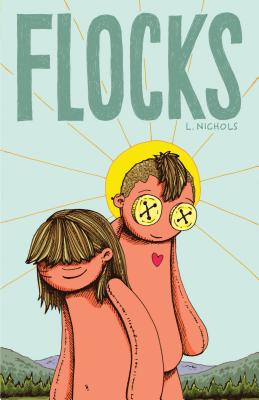
Flocks

by L. Nichols
Support your local independent bookstore: buy it there!
Review copy provided by the publisher.
Content: There is some mild swearing and two f-bombs, plus some drinking and self harm and illusions to sex. It’s in the graphic novel section of the bookstore.

I’ll be up front: Nichols is a transgender man who was assigned female at birth in Louisiana and raised in a very religious Southern Baptist family.This is his story.

It’s not just a story of feeling out of place in a religious society — he tried very very hard to pray the gay away from the time he was young — but also feeling out of place in his own body. The only place he felt at home and at peace was in nature. He graduated from high school and went to MIT (the first in his family to go to college) where the sense of displacement both increased and decreased. Decreased because he was among friends who accepted him and cared about him for who he was; increased because he loathed his body — he began cutting himself — and couldn’t figure out why (that is, until he had a realization that it was because he wasn’t male enough). It’s a very personal story, as one would expect from a memoir, but one that raises some interesting questions about religion and community.

I loved Nichols’ art as well. Everyone is drawn fairly realistically except him, and he’s in this doll-esque shape, which I loved because it allowed him to not only be the gender he was assigned at birth (while simultaneously demonstrating his obvious discomfort with himself) but it allows the reader to empathize more with him as a character. It’s quite clever, and I loved it.

I also loved that this made me think, not just about trans people, but about how communities include and exclude others and the benefits and disadvantages of that. I appreciated his (inadvertent) critique of religion vs. God and it made me want to be more open and kind to others. We’re all struggling here, why add hate to the pile?

Excellent.