Circus Mirandus

by Cassie Beasley
First sentence: “Four small words.”
Support your local independent bookstore: buy it there!
Review copy provided by the publisher. (Plus: popcorn!)
Release date: June 2, 2014
Content: It’s kind of slow, and definitely heavy on the exposition, which may make more reluctant readers, well, reluctant to give it a try. But I’m assuming there will be gorgeous art throughout (I haven’t seen it yet), and so there’s that to give it a boost with those who like pictures with their books. It’ll be in the middle grade (grades 3-5) section of the bookstore.

Micah has been raised by his grandfather since his parents died when he was young. He’s had a good life; his grandfather is one of those Good people who know how to be happy. He was also a storyteller, raising Micah on stories of the grand Circus Mirandus and the Lightbender, who promised Micah’s grandfather a miracle.  Now, when grandfather’s health is failing, he calls in the Lightbender’s miracle. But getting that isn’t as easy as all that. And it’s up to Micah (and his friend Jenny Mendoza) to help grandfather get the miracle he deserves.

I am not a critical reader. I fall head first into stories, and they either work for me or they don’t. I don’t stop to think much about a deeper meaning, or issues, or (sadly) stereotypes and cliches. I like characters (or not), I like the plot (or not), I like the writing (or not). And so, I find myself loving books and not having a real “reason” for it.

This is one of those books. I loved it. Wholly and unabashedly. I fell into the magic and the suspension of disbelief. I understood the magic and the story that Beasley was trying to tell. I cried at the end. I am not sure I’ve felt this in love with a book since I read the first Penderwicks. This book? This book is my people.

I loved it. I loved the Big Fish-esque feel of the story. I loved Micah and his grandpa’s relationship. I loved the flashbacks to grandpa’s time with the circus. Yeah, so some of the characters — Aunt Gertrudis, especially — were pretty much caricatures, but so is Trunchbull in Matilda, and no one complains about that. I loved that Jenny was smart, and that they were just friends and that she wasn’t a romantic interest. I loved her skepticism, and her belief in her friend (if not in the magic). I loved the whimsy of the book. But most of all, I loved the heart of it. It has such a big heart.

I’m sure there are drawbacks, and people who this book won’t speak to. But, for me, this was a little slice of perfection.

Lost in the Sun

by Lisa Graff
First sentence: “When we were real little kids, Mom used to take Aaron and Doug and me to Sal’s Pizzeria for dinner almost every Tuesday, which is when they had their Family Night Special.”
Support your local independent bookstore: buy it there!
Review copy snagged from the ARC shelves at work.
Release date: May 26, 2015
Content: There’s some bullying, and some tough subjects and a couple of instances of mild swearing. It’ll be in the middle grade (grades 3-5) section of the bookstore, though I would hesitate giving it to the younger end of that spectrum.

Eight months ago, Trent was the cause of a fatal accident. He hit a hockey puck into the chest of one of his friends, who then died. Not really from the hockey puck: his friends had a heart condition that no one knew about, and that’s what caused the death. But Trent is convinced that it’s his fault. And he feels like everyone — well his father, his brothers, and his former friends — blames him for what happened.

Now, on the first day of sixth grade, Trent is completely depressed. Until the “weird” girl, Fallon, decides that they need to be friends. Fallon’s the one everyone shuns, mostly because she has a scar down her face. Everyone asks how it happened, but she keeps the true story close, choosing instead to make up ones. Over the fall, Fallon and Trent deal with his grief, guilt, and anger, as he tries to make life work.

A lot of books deal with grief from dead or sick parents, or dead or sick siblings. But the idea that a kid could be the catalyst for a friend’s death hits home and deep. I thought Graff captured those emotions perfectly, from Trent’s self-loathing to his feelings like everyone hated him. And because we saw the rest of the world through Trent’s eyes, I could tell which adults were reaching out (his homeroom teacher, eventually) and which adults just needed a good smack (his father). The longer Trent’s self loathing went on, the more I was afraid that Graff wouldn’t be able to give Trent a good resolution. But, in so many ways, she did. I was thoroughly satisfied with Trent’s arc, and with the way things weren’t neatly tied up in a bow.

Quite good.

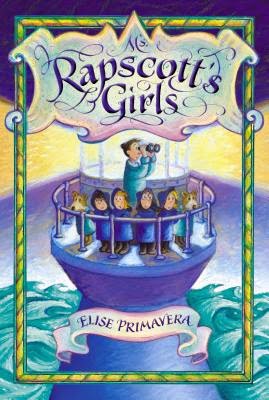
Ms. Rapscott’s Girls

by Elise Primavera
First sentence: “Attention, Busy Parents!”
Support your local independent bookstore: buy it there!
Release date: March 10, 2015
Review copy handed to me by the publisher rep.
Content: It’s a good mix of illustrations and print; while it’s out of the beginning chapter book phase, it’s a good one for reluctant readers. It will be in the middle grade (grades 3-5) section of the bookstore.

Ms. Rapscott likes things rough. An orphan at an early age, she figured out how to make her Way in Life. And this is a skill she wants to give to young girls. Especially young, neglected girls of Extremely Busy parents. At the start of this summer school term (though you wouldn’t know it by the weather at the lighthouse that serves as the school; it’s always storming), five girls are on their way — arriving by pre-paid post (yes, in boxes) — for Ms. Rapscott to mold. There’s angry Beatrice, lazy Mildred, timid Fay, and competent Annabelle as well. And, of course, Dalhlia, who was so tiny (and her parents so absent-minded) that she fell out of the box and went missing.

At first glance, it’s easy to call this one a modern-day Mary Poppins. Ms. Rapscott serves as a kind, but firm nanny (or boarding school mistress) who gives the girls cake and ice cream for dinner and pie for breakfast, and yet demands tidiness and hard work. There’s a slight magical element — flying boxes, for one, but also her assistants, two dogs who handle the day-to day operations. It definitely feels like one of those books. (I felt chastised, reading it as a busy parent, for not being more attentive to my kids. And I’m pretty attentive. Maybe I was just having a down day when I read this.)

But it’s more than that: Ms. Rapscott doesn’t just straighten up these unruly daughters of busy parents; she helps them learn to be parents. I’m not quite sure what kids will think of this — I need to get K to read it — but as a parent, I saw that Primavera was advocating for the need for variety in a kid’s life: too much pie is bad, but some pie is good. Too much TV and staying in PJs all day is bad, but sometimes, it’s what is needed. Adventure, exploring is good, and can be Learned From. But, mostly, being helpful, cheerful, and optimistic is the best. And, perhaps, that’s something we all need to be reminded of.

It’s a delightful little read.

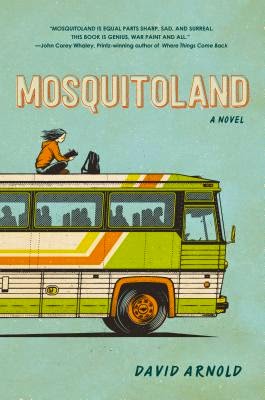
Mosquitoland

by David Arnold
First sentence: “I am Mary Iris Malone, and I am not okay.”
Support your local independent bookstore: buy it there!
Release date: March 3, 2015
Review copy handed to me by the publisher rep.
Content: There’s a whole lot of language, both mild and strong. There’s some creepy characters, including a serial rapist, but nothing is graphic. It’ll be in the teen section (grades 9+) of the bookstore.

Mary Iris Malone, Mim to everyone but her mother, is not happy. Her father, in a whirlwind, divorced her mother — who then disappeared — married the waitress at the local Denny’s, then relocated the three of them — Mim had no choice — to the middle of nowhere, Mississippi.

This does not sit well with Mim, who just wants her mother back, her old life back, her home back. So, when she’s called to the principal’s office and overhears her dad and Kathy talking about Mim’s mom with the principal, she snaps. She takes off from school, packs a backpack, grab’s Kathy’s coffee can stash of money, and heads to the Greyhound bus station. She’s headed back to Ohio this Labor Day weekend to see her mother, come hell or high water.

It’s not as easy as it sounds; there’s perils in them thar woods, and Mim is in for one of those life-changing adventures. There are some creepy people on the road, but she makes friends, both causal and the best-friend-types. And she discovers that maybe humanity — and Kathy — aren’t as bad as she’s always made them out to be.

I thoroughly enjoyed this one. Seriously. It started out slow and kind of awkward; Mim is a tough shell to crack and a prickly one at the beginning. But the more time I spent with her, the more I grew to love her. The more she revealed about her family and her life, the more I enjoyed spending time with her. And her adventures were fantastic. The people she met were fascinating and quirky, and I wanted to go on more adventures with them. I was almost sad when the book ended because I wouldn’t be spending more time with Mim and her friends.

I’m not sure this is a book for everyone. But for those who love good road trip adventures, and quirky characters, it’s a gem.

Vivian Apple at the End of the World

by Katie Coyle
First sentence: “There came a time when the American people began to forget God.”
Support your local independent bookstore: buy it there!
Release date: January 6, 2015
Review copy snagged from the ARC shelves at my place of employment.
Content: There is teenage drinking and a lot of swearing, including multiple f-bombs. There is also frequent off-screen violence. It’ll be in the Teen Section (grades 9+) of the bookstore.

In this sort-of future, American has been taken over by the conservative, pseudo-Christian  Church of America. Except “taken over” is too strong. It’s not like America has become a theocracy. No, it’s just that the Church of America founder, Beaton Frick, has predicted the end of the world. The rapture will come on a night in March, and all the faithful will be taken up.

Even though a good majority of Americans follow the Book of Frick, as it came to be called, Vivian Apple doesn’t. Her parents do, though. They’re faithful believers. And so, when the “rapture” comes, they disappear, leaving Vivian behind.

I’m going to stop right here for a minute. I’ve read a bazillion dystopian/post-apocalyptic novels and this is the first time I’ve come across the rapture as the cause. (At least in mainstream fiction. Is this a theme in Christian fiction?) In fact, this is what compelled me to pick the book up. I’m often curious about the way religion is portrayed in mainstream fiction, and I thought this could be an interesting take on it. And it was, even if it wasn’t necessarily a kind one. Religion and believers come off badly in this book, as people who believe anything they hear without question and are willing to commit acts of violence for the sake of their belief. More than once, I cringed at the “religion” and marveled at what I saw as pot-shots against the religious right.

But I digress.

Vivian determines that it’s all a hoax and she sets out from her hometown in Pittsburg to the Church headquarters outside of San Francisco with her friend, Harp. She just wants to know answers. They pick up a boy along the way, Peter, who seems to be on their side. Little do they know what’s waiting for them.

There is some good in this book: I really liked the tentative romance that budded between Vivian and Peter. I liked that Harp was Indian. I liked the way Vivian grew and became more willing to make decision and to Act in her own life throughout the course of the book. And I can even forgive that the book didn’t end, but rather left me hanging with more questions than answers.

But this one will be a tough sell around here.

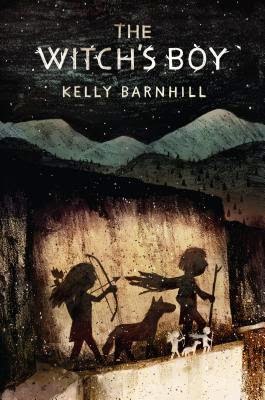
The Witch’s Boy

by Kelly Barnhill
First sentence: “Once upon a time there were two brothers, as alike to one another as you are to your own reflection.”
Support your local independent bookstore: buy it there!
Review copy snagged from the ARC shelves at my place of employment.
Content: There really isn’t anything objectionable. The pacing is slow, however, which is something that might turn more reluctant readers off. It’s in the middle grade (grades 3-5) section of the bookstore.

Ned has been “the wrong boy” since the fateful day when he and his twin brother, Tam, tried to sail to the sea and ended up drowning in the river. Or nearly drowning, in Ned’s case. See: his mother is the witch of the village, and she has been the keeper of the magic — dangerous, unruly magic which Ned is never to touch — for most of Ned’s life. And although she couldn’t save Tam, she saved Ned… by sewing Tam’s soul inside of Ned.

Fast forward a few years — ones in which Ned doesn’t have much strength, where he has a stutter, and where he can’t read — to when the Bandit King comes into their lives with the intention to steal the magic for his own. This is where Ned does something remarkable: he takes the magic into himself, and sets off on an adventure. One in which he’ll meet a friend — his first since his brother died — and change the course of the world.

It’s a slow, quiet book; one that reminded me strongly of Anne Ursu’s books. That’s a good thing, except it’s not one for people who are expecting Grand Action and Adventure. Much of the book is spent inside Ned’s head (mostly because he can’t talk, though I did like Barnhill’s methods for portraying Ned’s stutter), which doesn’t lend itself to fast reading. That said, given time, this book is really a fantastic read. I loved how Barnhill portrayed the magic; it had its own personality, one that can be controlled by it’s “owner”, provided the person is strong enough. And I really enjoyed seeing Ned come into his own. Yes, he was pushed around by (some of) the adults in his life (I loved his mother; she’s fantastic), but it’s a true middle grade novel in that Ned (and his new friend, Áine) face the conflict on their own, without adult help.

Speaking of Áine: she’s a remarkable character, too. Self-sufficient, yes, and strong, but she also finds it in her heart to be a friend and a true companion.

I think this is one that will stay with me for a while.

The Whispering Skull

by Jonathan Stroud
First sentence: “‘Don’t look now,’ Lockwood said.”
Support your local independent bookstore: buy it there!
Release date: September 16, 2014
Review copy snagged out of the box sent by our Hachette rep.
Others in the series: The Screaming Staircase
Content: There’s lots of ghosts, obviously, and some scary situations. Also a couple of deaths and a couple of instances of mild swearing. It’s in the middle grade (grades 3-5) section of the bookstore, but I’d be wary about giving it to an overly sensitive child.

It’s not very often, I think, that the second book in a series is as good (if not better) than the first one. This is one of those rare instances.

First off, it was wonderful to be back with Lockwood, George, and Lucy. Lockwood was as reckless and charming as ever; Lucy was still the glue that held the company together. But George was really the focus of this story. He got his moment in the spotlight, and was something more than the bookish, slightly overweight Other Guy.

The mystery this time is centered around a body Lockwood, Lucy, and George are hired to help secure.  A couple of grave excavators have found a grave site that wasn’t supposed to be there, the body of one Edmund Bickerstaff, who was a leading paranormal and psychic experimenter in Victorian times. It turns out that he was experimenting with things he shouldn’t have been, creating a Bone Glass which was supposed to give you a view into the afterlife, but instead kills anyone who looks at it.

Soon after the excavation, however, the Bone Glass is stolen, and Lockwood & Co are in a fierce competition with their rivals at Fittes to solve the mystery.

Oh, and yes, the whispering skull of the title (and the cover; love it!) does play a fairly major role.

There are so many brilliant things about this book. From the pacing (I couldn’t put it down!) to the hilarious asides, to the action-adventure feel.  It’s wonderful that you don’t really have to read The Screaming Staircase to enjoy this one. There are a few references to the previous book, but nothing happened in it that you Have to know before picking this one up. Additionally, even though there are teasers for the next book (which can’t come out soon enough) the story in this one wraps completely up. I love it when series books are like this.

I can’t wait for the next one.

Just Call My Name

by Holly Goldberg Sloan
First sentence:
Support your local independent bookstore: buy it there!
Others in the series: I’ll Be There
Content: To say that this is intense is an understatement. Violence, yes, but also psychological intensity. It’s not for the faint of heart. It’s in the Teen section (grades 9+) at the bookstore.

When we last left Sam and Riddle, their father was safely behind bars and they were living with Emily Bell and her family. A happily ever after, right?

Well, only Holly Goldberg Sloan would take a happily ever after and turn it into a nightmare.

First, there’s the whole issue of security: Sam and Riddle (especially Riddle) were controlled and abused for so long that it’s difficult for them to trust their own decisions, to get back into “real” life. They’re suffering, and much of that is the residual affects from the years spent with their father. It doesn’t help that Emily and her family (well, except for her brother, who’s resentful) are super nice. Sam and Riddle don’t know how to handle super nice.

And then their happily ever after starts unraveling. First, it’s Destiney Vance, one of those girls that just screams trouble. Sam just knows it: like calls to like, and he understand’s Destiny’s hard life. But, she won’t be gotten rid of, and sticks to Sam and Emily (and Emily’s former boyfriend, Bobby) like glue.

Which is a good thing, because their dad, Clarence, finds his way out of jail and is coming for the boys. And the Bells.

Few authors have the power to completely wreck me emotionally, and yet keep me turning pages at an ever more furious pace, dying to know: WHAT NEXT? Sloan is one of those authors. She captures the inner lives of all the characters, deftly balancing between Sam, Riddle, Emily, Jared, Destiny, Robb, and Clarence. You wouldn’t think it would work, but Sloan pulls it off not only well, but spectacularly. It probably would have been even more powerful if I’d read the first book right before, but even though I didn’t, I was able to immerse myself in this story, my heart simultaneously aching and pounding as I read about Sam and Riddle and their not-so-happily ever after.

Amazing.

Landline

by Rainbow Rowell
First line: “Georgie pulled into the driveway, swerving to miss a bike.”
Support your local independent bookstore: buy it there!
Review copy nabbed off the ARC shelves at my place of employment.
Content: It’s all about marriage, so I don’t know how appealing it would be to teenagers. It’s also full of f-bombs and illusions to sex and drinking (but no actual, I don’t think). It’s in the adult fiction section of the bookstore.

After 15 years of marriage, Georgie and Neal are broken. Well, Georgie doesn’t really like to think they are; she loves her husband and her two  young daughters. But she’s gone all the time, writing for a popular TV sitcom. Neal stays home with the kids, and does a fantastic job, but increasingly it seems like it’s not enough for him. And so when an opportunity comes for Georgie, and her best friend Seth, to pitch a new show — their own show — just after Christmas, Neal digs his heels in. They were supposed to go to his mom’s house, in Omaha. And now Georgie is putting work first, again. So, he packs up the kids and takes them, leaving Georgie stranded a week before Christmas.

But then, Georgie discovers that her old yellow landline phone connects her to a Neal in the past, one the year they got engaged. And maybe, by talking to Neal-in-the-past, she can figure out what is wrong in the present.

Rowell is a talented writer; don’t get me wrong. There were some fun moments, and some beautiful turns of phrase in this book. But, I think she writes better about falling in love than about staying in love. There wasn’t much drive, much reason to stay connected to this book (and I didn’t cry!), much reason to care about the characters. It all felt very rote, very run-of-the-mill, and not at all fresh or original. Perhaps we were supposed to think it was, since Georgie is the breadwinner and Neal is the stay-at-home parent, but it felt like the same old conflicts with just a role reversal. And perhaps there was growth, but I just didn’t feel it. They are both self absorbed and unfit for each other, and although Rowell wanted us to believe that love is “enough” she never gave me enough proof to convince me that, in the case of Georgie and Neal, it would be.

Not bad, but not great, either.

Fat Boy vs. The Cheerleaders

by Geoff Herbach
First sentence: “Shortly before midnight on June 15, Gabriel Johnson, a sixteen-year-old from Minnekota, MN, was apprehended outside Cub Foods by Officer Rex McCoy.”
Support your local independent bookstore: buy it there!
Review copy pilfered from the ARC shelves at my place of employment.
Content: There’s a lot of swearing, none of it strong. I put it in the Teen (grades 9+) section of the bookstore primarily because I like to keep the YA section toned down. Also, because that’s where all of Herbach’s other books are. I’d say, depending on your kid, it’s good for as young as 7th graders.

In high school, there are two types of people: the jocks and everyone else. Gabe is everyone else.  Actually, Gabe is a band geek, and a mostly friend-less loser. He’s been going downhill since his mom ran off with a Japanese guy a few years back, and his grandpa moved in. It’s not just that he has only two friends, it’s that he’s overweight. Massively so. In fact, everyone (including his friends) call him Chunk. And he’s okay with that.

Gabe spends his days chugging Code Red, primarily because the money in the school’s soda vending machine goes to support the band that is Gabe’s lifeline. He figures he can chug 5 bottles of the stuff, if the money goes to fund his program. Then he finds out that a Super Sekrit school board meeting took away the vending machine money from the band and gave it to the Brand Spanking New dance team. Which makes Gabe mad. Eventually.

There’s more to the plot, of course, but it’s more about Gabe gaining self-respect than any eventual result. You know from the start — the whole book is his confession; a one-sided conversation with a Mr. Rodriguez — that he’s gotten arrested for doing something. You assume it’s for stealing money out of the vending machine. But, things are more complex than that.

Part of the charm of this book is the format; I was entertained by hearing only one side of the conversation, and imagining what Mr. Rodriguez’s side was. But, it was also Gabe. He was such a loser to start with, and it’s empowering to see how he regains control over his life, in spite of the people — from his friends to his father — who are trying to hold him back. Everyone needs a summer in which they find their best selves, and this story of Gabe’s was a truly fun one.