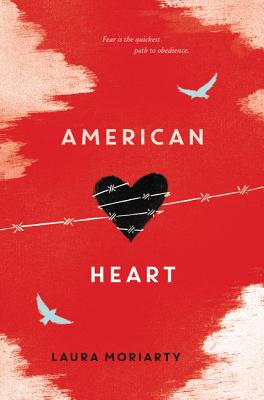
American Heart

by Laura Moriarty
First sentence: “One thing someone just meeting me might want to know is why I have two first names.”
Support your local independent bookstore: buy it there!
Review copy provided by the publisher.
Release date: January 30. 2018
Content: There are some disturbing situations, including an almost rape and violence against minorities. It will be in the YA (grades 6-8) section of the bookstore.

Sarah-Mary and her younger brother are living with their aunt in Hannibal, Missouri, because their mother is one of those Bad Mothers who can’t take care of her children. Her younger brother is okay with this (except for the missing mom part), but it chafes with Sarah-Mary. She has a limited amount of freedom, which chafes. And then, she and her brother meet an Iranian woman, whom Sarah-Mary ends up calling Chloe, who is  on the run, avoiding the mandatory Muslim registry that has been implemented for “our safety”. Her brother begs Sarah-Mary to help get Chloe to safety in Canada, and of course Sarah-Mary promises. And thus begins the adventure.

It’s not a pleasant one, either. Moriarty attempts to focus on the wrongness of profiling people by race or religion (there’s this scene where Sarah-Mary witnesses a raid on a house where the person was harboring Muslims) and touches on prejudice and discrimination. She also make sure that the dangers of two women hitchhiking are amply described.  Nothing “bad” ever happens, but the novel brushes up against it several times, and it’s only through luck, wit, and technology that Sarah-Mary and Chloe get away.

And along the way Sarah-Mary learns the one great lesson that we all need to learn, especially right now: people are people. They all have hopes, dreams, and stories. And that judging a whole religion or race by one person’s actions not only is not fair, it’s wrong. However, the Muslim registry doesn’t miraculously go away at the end of the book, nor does Sarah-Mary’s actions have a larger Meaning, so maybe Moriarty missed the mark on something big here.

Perhaps, though, that’s also the problem with the book. That Sarah-Mary (read: white people) needed a Muslim woman (read: any diverse person of color) to Show Her the Way. As a concept, it’s clumsy, and I’ve read some responses on the book that lead me to think that it might be harmful, reinforcing White Stereotypes of Islam and Muslims, and just the White Savior narrative. I did enjoy this while reading it, but in retrospect, I’m not sure it was the best idea for a white woman to tackle something like this.


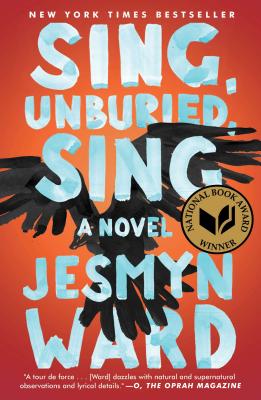
Audiobook: Sing Unburied Sing

by Jesmyn Ward
Read by Kevin Harrison Jr, Chris Chalk, and Rutina Wesley
Support your local independent bookstore: buy it there!
Listen to it at Libro.fm
Content: There’s a lot of swearing, including multiple f-bombs, drug use, and violence. It’s in the adult fiction section of the bookstore.

It’s not often I end up reading the National Book Award winner for fiction, and to be honest, I was surprised that I did. (I started listening to it before the awards…) I picked it up because people were talking about it, because I’ve never read Jesmyn Ward before, and because I was curious.

It’s basically a slice of life portrait of Mississippi. A black woman, Leonie, takes her two children — Jojo, whose story this is, and Kayla — on a road trip from the Gulf to Parchman, where their dad is getting out of jail after serving time for drug charges. It’s a hot mess of a road trip, partially because Leonie is a drug addict, and partially because she just can’t parent, interspersed with reflections from Jojo, his grandfather (Leonie’s father), and Leonie. It’s about relationships — Leonie’s brother was killed in a race-related shooting by her boyfriend’s (and baby daddy’s) cousin — and surviving and growing up and expectations.

I enjoyed the narration; there were three different narrators, one each for Jojo (I liked him best), Leonie and a ghost who shows up halfway through, but I wonder if this was a book that would have gone down easier read than listened to. It’s not that I didn’t like it; I just felt like I missed things — connections, imagery, story — and I could have taken it slower in print than in audio.

Still, a worthwhile read.

Cybils Reading Round-Up, Part 1

I’ve been reading LOTS (well, not as much as some years) for the Cybils, and I haven’t had the time to write down reviews of all of them. Here are a bunch I enjoyed, but didn’t have the time to write a whole review of.
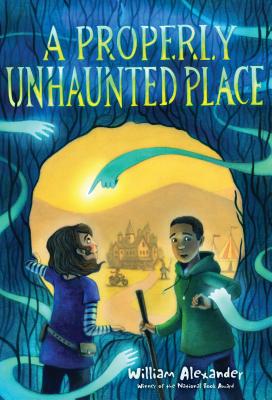
A Properly Unhaunted Place
by William Alexander
Support your local independent bookstore: buy it there!
Content: It’s a ghost story, but it’s not scary, and it’s short enough not to scare off reluctant readers. It’s in the middle grade (grades 3-5) section of the bookstore.

Basic plot: there’s this town, Ingot, that doesn’t have ghosts. Which is unusual in this alternate world where ghosts are incredibly prevalent. Jasper, who grew up in Ingot, doesn’t mind, but Rosa, who just moved there, does. And so when ghosts start appearing at the Renaissance Faire, Rosa is ecstatic: appeasing the ghosts (not banishing!) is her family’s business, after all. And she enlists Jasper’s help to figure out the ghost problem in Ingot.

It’s a fun enough book; short and sweet and simple, and I could tell that Alexander wanted to make it diverse (props for that, but it felt forced) but it just wasn’t, well, interesting.

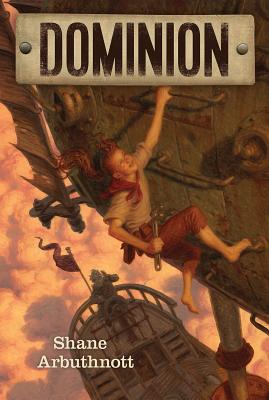
Dominion
by Shane Arbuthnott
First sentence: “They had been chasing the font for days, and Molly knew the engine was getting tired.”
Support your local independent bookstore: buy it there!
Review copy provided by the publisher for the Cybils.
Content: There’s a few mild swear words, and some intense moments. It’s not at the store, but if it was, it’d be in the YA (grades 6-8) section.

This book takes place in a world — perhaps our own? — that has been taken over by spirits. Except, these aren’t ghosts (I thought they were, at first). They’re more like djinn, except they don’t have magic powers. What the people of this world do is capture the spirits, and then force them into iron containers (so they can’t escape) and then use them to power airships and robots. Molly is the engineer on her family’s airship, when she realizes (over a course of a few events) that what they’re doing is essentially slavery. So, she sets out to stop it.

The thing I liked best about this was the world. Arburthnott has created a unique world where he mixes magic (of sorts) with steampunk technology, and then thrown in a capable and interesting heroine (whose main antagonists end up being her family, which was also interesting) and it turns out that this is a pretty fantastic speculative fiction adventure.

The Unicorn in the Barn
by Jacqueline K. Ogburn
First sentence: “My dad always told me, ‘Never surprise anybody swinging a hammer; something is liable to get smashed.'”
Support your local independent bookstore: buy it there!
Content: There’s one adult smoking and a hunting accident. It’s in the middle grade (grades 3-5) section of the bookstore.

This is a charming little story about a boy and a girl, some woods, a unicorn, and a vet clinic that helps (among other animals) magical animals. It was very sweet and tender, and lovely, and would be perfect for the sweet, tender, animal-loving reader. I enjoyed the push-and-pull relationship between the main character and the daughter of the veterinarian, and I liked that the conflict happened in spite of the parents, not because of them. (They were actually really good parents.) I’m not much of a horse/unicorn lover (anymore; my 4th grade self would have loved this book), so I wasn’t completely enthralled, but I do like that there’s a charming, sweet horse story starring a boy out there.
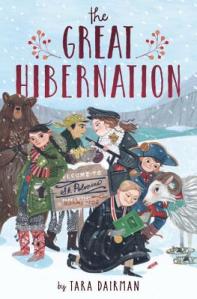
The Great Hibernation
by Tara Dairman
First sentence: “The bear was dead.”
Support your local independent bookstore: buy it there!
Review copy provided by the publisher for the Cybils.
Content: There’s some bullying and sleeping parents. It’s in the middle grade (grades 3-5) section of the bookstore.

This was a delightfully odd story about a northern town (maybe in the Yukon? Or northern Alaska?) which, every year, all the adults, 12 years and 4 months and 6 days old  and up eats bear liver to honor a long-ago event by their forefathers. It’s considered a punishable offense to not do so, and so when Jean throws it up, she’s worried. Until everyone who ate the liver falls asleep and the kids — especially the mayor’s kid, Magnus — take over. Then, it’s up to Jean to figure out why the adults are all asleep and stop the vote on the new thistleberry plant before it’s too late.

A highly improbably premise with a scientific solution, this one was silly fun. I enjoyed reading how Jean and her new Thai friend, Isara, figure out the truth behind the sudden “hibernation” and how to wake up the adults. It’s a clever mystery and a silly story, even if it is full of improbabilities.
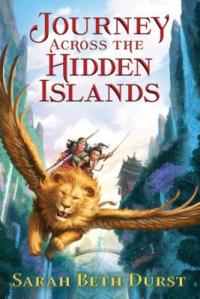
Journey Across the Hidden Islands
by Sarah Beth Durst
First sentence: “Don’t fall.”
Support your local independent  bookstore: buy it there!
Content: There’s some intense moments with scary monsters. It’s in the middle grade (grades 3-5) section of the bookstore.

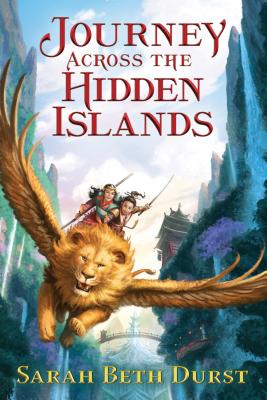
As a general rule, I enjoy Sarah Beth Durst’s writing, and this one is no exception. She’s excellent with her world building — this one being a world of islands protected by a magical barrier which is sustained by a dragon — and her writing propels the reader forward. I thoroughly enjoyed this tale of twin sisters, daughters of the Emperor, and their journey to the dragon. I liked that Durst explored the nature of the stories we tell each other and ourselves, how a shared history can differ depending on where a person is from,  how perceptions can often be wrong , and how change is sometimes for the best. It was a delightful story, the only negative side being (and this may be a big negative) the vaguely Asian feel to it, which I think could have been done better by an Asian author. That said, overall, it was very good.

Rise of the Jumbies

by Tracey Baptiste
First sentence: “Corinne La Mer dove through the waves.”
Support your local independent bookstore: buy it there!
Others in the series: The Jumbies (which I know I read and will swear I reviewed, but I guess I didn’t)
Content: There’s some scary parts. It’s in the middle grade (grades 3-5) section of the bookstore.

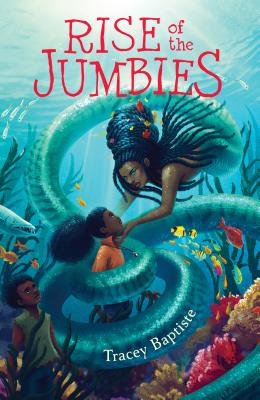
This is the second in a series of books set in the Caribbean, based loosely on the folklore there (Baptiste is from Trinidad). I’m not entirely sure what happened in the first book (it’s been two years since I read it!), but from what I gathered from this one, Corinne is half jumbie (her mother was a jumbie) and her aunt is out (and I can’t remember why) to capture the children on the island and keep them for her own. Corinne almost saves them all. This one picks up some months (maybe a year?) later, and children are going missing again. The island residents are suspicious: since Corinne is a jumbie, she must be involved somehow. So, Corinne knows she has to solve this problem. She goes to Mama D’Leau, the queen of the seas, and follows several mermaids over the ocean to Ghana in order to solve this problem. Except, it only solves half, and Corinne has to choose between her human and jumbie halves in order to bring peace to the island again.

I love Baptiste’s storytelling: she captures a place perfectly, and makes the island folklore come alive. (Perhaps it’s just me: I love folklore, so I’m already on board for this!) I love the way she updated the tales, but retained a classic air about them. Corinne is a plucky heroine, but she also has the help of her friends and her father, in order to accomplish everything she needs to. It’s really a delightful story.

Spirit Hunters

by Ellen Oh
First sentence: “‘Harper! Come quick!'”
Support your local independent bookstore: buy it there!
Content: There’s an abusive relationship, and it’s quite scary in parts. It’s in the middle grade (grades 3-5) section of the bookstore, but I wouldn’t give it to the faint of heart.

Harper and her family have recently moved from New York City into a Washington, D. C. house. It’s nominally for her parents’ jobs, but it’s also because Harper had a couple of incidents — at school and at the mental health hospital — that were kind of sketchy. However, she can’t remember anything about the fire at school that landed her in the hospital. And now, her younger brother is acting unlike himself, and no one can quite figure out why.

(Though you can probably guess from the title!)

This was SO good! I loved the characters, even the clueless/controlling/close-minded parents, and I loved that the main character not only figured out the problem, but also solved it, with the help from her friend and her estranged grandmother. I liked the historical detail that Oh wove into the book, and I loved the suspense that she built throughout the book. An excellent ghost story.


You Bring the Distant Near

by Mitali Perkins
First sentence: “The swimmers have finished their races and are basking in the sun.”
Support your local independent bookstore: buy it there!
Review copy provided by the publisher.
Content: There is some mild swearing. It’s in the YA section (grades 6-8) of the bookstore.

This one is a difficult one to describe plot-wise. It’s a slice of life, looking at three generations of women in an Indian family as they move to America and make a life here. It starts with the mother, Ranee, and her two daughters, Sonia and Tara, as they move from London to New York in the early 1970s. Each of the daughters reacts differently to coming to America, each looking for their own way to cope. Ranee isn’t as adaptable: she complains about their apartment in Flushing, she complains about her husband sending money home. Then he passes on, and Ranee is forced to adapt to this country as her daughters grow up and get married, one to an Indian, the other to a black American man.

The book then picks up when Ranee’s granddaughters, Anna and Chantal, are in high school. They are dealing with their own issues: Chantal is bi-racial and is trying to figure out her own identity. And Anna, though American, was raised in Mumbai where her mother is a Bollywood star, but has recently moved back so she could go to high school and college in America.

Perkins handles all this admirably; giving us a taste of Bengali culture, as well as the things immigrants do in order to fit in. One of the more interesting parts of the novel, for me, was set after 9/11, when Ranee goes through her own transformation as a reaction to the terrorist attacks. She figures out what “American” means to her. And that sentence may be what’s at the heart of this delightful novel: what does “American” mean? Perhaps it has become an individual expression for everyone, and there isn’t a “norm” anymore. (That was probably always the way it was, but we pretended otherwise.) Which is, as posited by this book, a very good thing.

An excellent read.

Audio Book: Wonder Woman Warbringer

by Leigh Bardugo
Read by Mozhan Marino
Support your local independent bookstore: buy it there!
Listen at Libro.fm
Content: There is some violence and several instances of mild swearing. It’s in the YA section (grades 6-8) of the bookstore.

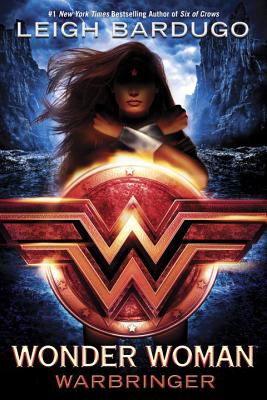
I’ll admit that I’m on board with anything Wonder Woman right now, so I probably would have read/listened to this whether or not it was any good. Thankfully, I didn’t have to worry about that, because in Bardugo’s capable hands, it was definitely worth listening to.

It’s a bit of a Wonder Woman origin story, starting with Diana on Themyscira and dealing with feeling like an outcast with the Amazons because she was born rather than earning her spot among them. So, when she inadvertently rescues a mortal from a shipwreck which sets off a chain of events — since the mortal is no ordinary mortal — Diana is forced to leave the island and head out into the mortal world to save her life, her island, and the world from impending war.

Okay, there’s more to it than that; the mortal, Alia, is the daughter of scientists who died in a tragic accident, and who is trying to find her place in the world, out from under the long shadow of her brother, Jason. Her friends, Theo and Nim are fantastic and definitely worth rooting for. There’s a lot of fantastic action (Bardugo knows how to plot a book), as well as some fantastic reflective moments (plus a wee bit of romance).

And Marino is a stellar narrator. Seriously stellar. She had me enthralled, glued to the narrative, anxious to hear what will happen next.

I really can’t ask for anything better.

Pashmina

by Nidhi Chanani
Support your local independent bookstore: buy it there!
Review copy provided by the publisher.
Content: The main character is in high school, and there is some references to sex. I’m not 100% sure if it’d put it in Middle Grade Graphic Novels, but it doesn’t feel like it fits in with the Teen Graphic Novels either. Hm.

Priyanka Das has a decent life: she and her mom live in America, and whileshe has unanswered questions about her father, or why her mother left India, she has a pretty good life. That is, until Pri’s curiosity about India gets sparked by a magical pashmina Pri finds in her mother’s suitcase. The pashmina gives Pri a glimpse of India, and she desperately wants to go. And she does, eventually. But when she gets there, it’s nothing like she expected, and yet everything she wanted.

On the one hand, this is written by an Indian, and it very much embraces the “India as amazing homeland” narrative that so often comes up in Bollywood movies. The narrative that one can find oneself in India is not a new one, and yet it still is something that resonates. It works here, primarily because it’s not a white person co-opting that (says the white person), but because Pri’s does actually need to go to India to see what it was her mother left behind. I liked that part of the story. The magical pashmina, though, didn’t do much for me. It does have a good reason to be there — it specifically helps women take charge of their lives — but it felt, well, forced. That, and Pri felt younger than she was in the book, which was a slight disconnect.

Even with those (slight) criticisms, it was a good story about family, and about how learning about your family’s past helps accept and understand your present. It was also nice to “visit” India for a bit.

A good debut novel.

All the Crooked Saints

by Maggie Stiefvater
First sentence: “You can hear a miracle a long way after dark.”
Support your local independent bookstore: buy it there!
Release date: October 10, 2017
Review copy provided by the publisher.
Content: There’s some swearing, including a couple of f-bombs. It will be in the Teen section (grades 9+) of the bookstore, but younger kids might be interested in it.

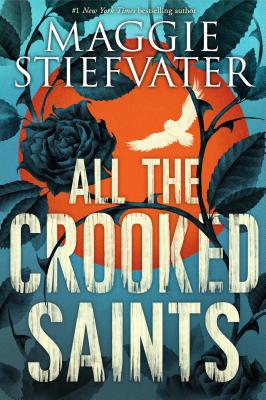
The problem with this book is that the plot is really hard to describe. There’s a family in the southern Colorado desert, the Sorias, that have basically made a living performing miracles for pilgrims who come to their homestead looking for help. But, it’s much more than about the miracles. There’s a boy who comes looking for help (but not a miracle) and a few pairs of lovers, some who are new and some who have lost their way. In fact, a lot of the plot is about how to find one’s way back from being, well, lost.

It’s historical, set sometime in the 1960s (I had it initially pegged for contemporary, then set in the 1970s… so I was close), but it feels, well, set out of time.

Mostly, though, the best thing about this is, like many Stiefvater novels, the words. She just has a way of telling a story that sucks you in and won’t let you go. And this was no exception. The magic here was less “magic” and more magical realism; it felt like it really could happen, that it was a natural outgrowth of the story, and it made perfect sense.

I’m sure Stiefvater will get some push back for writing a story with Latin@ main characters, but honestly, I don’t think she used stereotypes at all. (Or at least, that’s the way I felt; I’m not a great judge of this.)  I loved all the characters, from the Soria family to the pilgrims, and I loved the way Stiefvater told the story. Everything just seemed to fit.

It’s really a wonderful story.

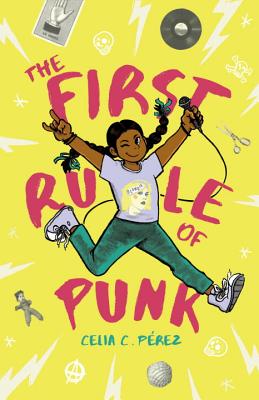
The First Rule of Punk

by Celia C. Pérez
First sentence: “Dad says punk rock only comes in one volume: loud.”
Support your local independent bookstore: buy it there!
Review copy provided by the publisher.
Content: There’s some lying (by omission) and some middle school drama. It’s in the Middle Grade section (grades 3-5) of the bookstore, though 6th-7th graders might like it too.

Mariá Luisa (call her Malú please) is NOT happy about moving to Chicago. She wants to stay where she is, in her own school, splitting her time between her house and her father’s record store. But, her mom got a job in Chicago teaching Mexican literature, so they’re moving. And so she has to start over. Which is additionally hard because she’s in a school with a large Mexican American population, and Malú is struggling to find her own identity, especially with her mother always harping on Malú’s love of punk music.

But, she slowly finds her crowd in this new school, and maybe even some friends, although she makes some enemies as well (inevitable). Maybe she can find a balance in this new place.

I loved this one! Malú is a seriously great character, and I loved how Pérez wove in Mexican culture and history through the work. I loved the inclusion of punk music (and lifestyle) and actually really liked the conflict between Malú and her mom (it’s SO hard to let kids be themselves and not what we want them to be). I loved the zines in the book, and Malú’s slow acceptance of her new school and neighborhood. It was just an excellent story all around.