Pashmina

by Nidhi Chanani
Support your local independent bookstore: buy it there!
Review copy provided by the publisher.
Content: The main character is in high school, and there is some references to sex. I’m not 100% sure if it’d put it in Middle Grade Graphic Novels, but it doesn’t feel like it fits in with the Teen Graphic Novels either. Hm.

Priyanka Das has a decent life: she and her mom live in America, and whileshe has unanswered questions about her father, or why her mother left India, she has a pretty good life. That is, until Pri’s curiosity about India gets sparked by a magical pashmina Pri finds in her mother’s suitcase. The pashmina gives Pri a glimpse of India, and she desperately wants to go. And she does, eventually. But when she gets there, it’s nothing like she expected, and yet everything she wanted.

On the one hand, this is written by an Indian, and it very much embraces the “India as amazing homeland” narrative that so often comes up in Bollywood movies. The narrative that one can find oneself in India is not a new one, and yet it still is something that resonates. It works here, primarily because it’s not a white person co-opting that (says the white person), but because Pri’s does actually need to go to India to see what it was her mother left behind. I liked that part of the story. The magical pashmina, though, didn’t do much for me. It does have a good reason to be there — it specifically helps women take charge of their lives — but it felt, well, forced. That, and Pri felt younger than she was in the book, which was a slight disconnect.

Even with those (slight) criticisms, it was a good story about family, and about how learning about your family’s past helps accept and understand your present. It was also nice to “visit” India for a bit.

A good debut novel.
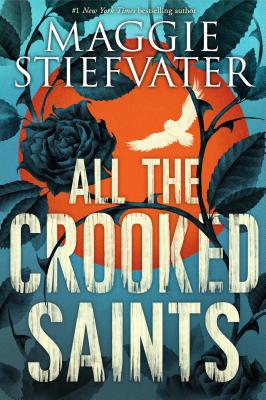
All the Crooked Saints

by Maggie Stiefvater
First sentence: “You can hear a miracle a long way after dark.”
Support your local independent bookstore: buy it there!
Release date: October 10, 2017
Review copy provided by the publisher.
Content: There’s some swearing, including a couple of f-bombs. It will be in the Teen section (grades 9+) of the bookstore, but younger kids might be interested in it.

The problem with this book is that the plot is really hard to describe. There’s a family in the southern Colorado desert, the Sorias, that have basically made a living performing miracles for pilgrims who come to their homestead looking for help. But, it’s much more than about the miracles. There’s a boy who comes looking for help (but not a miracle) and a few pairs of lovers, some who are new and some who have lost their way. In fact, a lot of the plot is about how to find one’s way back from being, well, lost.

It’s historical, set sometime in the 1960s (I had it initially pegged for contemporary, then set in the 1970s… so I was close), but it feels, well, set out of time.

Mostly, though, the best thing about this is, like many Stiefvater novels, the words. She just has a way of telling a story that sucks you in and won’t let you go. And this was no exception. The magic here was less “magic” and more magical realism; it felt like it really could happen, that it was a natural outgrowth of the story, and it made perfect sense.

I’m sure Stiefvater will get some push back for writing a story with Latin@ main characters, but honestly, I don’t think she used stereotypes at all. (Or at least, that’s the way I felt; I’m not a great judge of this.)  I loved all the characters, from the Soria family to the pilgrims, and I loved the way Stiefvater told the story. Everything just seemed to fit.

It’s really a wonderful story.

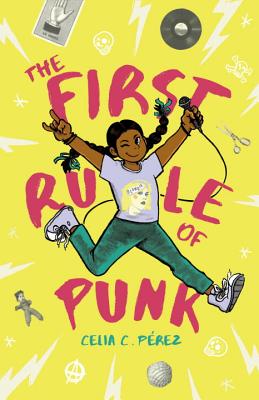
The First Rule of Punk

by Celia C. Pérez
First sentence: “Dad says punk rock only comes in one volume: loud.”
Support your local independent bookstore: buy it there!
Review copy provided by the publisher.
Content: There’s some lying (by omission) and some middle school drama. It’s in the Middle Grade section (grades 3-5) of the bookstore, though 6th-7th graders might like it too.

Mariá Luisa (call her Malú please) is NOT happy about moving to Chicago. She wants to stay where she is, in her own school, splitting her time between her house and her father’s record store. But, her mom got a job in Chicago teaching Mexican literature, so they’re moving. And so she has to start over. Which is additionally hard because she’s in a school with a large Mexican American population, and Malú is struggling to find her own identity, especially with her mother always harping on Malú’s love of punk music.

But, she slowly finds her crowd in this new school, and maybe even some friends, although she makes some enemies as well (inevitable). Maybe she can find a balance in this new place.

I loved this one! Malú is a seriously great character, and I loved how Pérez wove in Mexican culture and history through the work. I loved the inclusion of punk music (and lifestyle) and actually really liked the conflict between Malú and her mom (it’s SO hard to let kids be themselves and not what we want them to be). I loved the zines in the book, and Malú’s slow acceptance of her new school and neighborhood. It was just an excellent story all around.

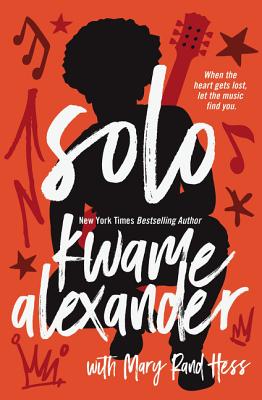
Solo

by Kwame Alexander and Mary Rand Hess
Support your local independent bookstore: buy it there!
Review copy provided by the publisher.
Content:  There’s some drug use and drinking, mostly by adults. It’s in the Teen Section (grades 9+) at the bookstore, but I’d give it to a 7th/8th grader who is interested.

Blade Morrison is the son of an aging rocker, whose career has been in a steady decline for most of Blade’s life. Drugs, alcohol, and Blade’s mom’s death all contributed to the decline, and Blade has lost patience with his father. Especially when he shows up, mostly naked, at Blade’s graduation. It also doesn’t help that his girlfriend’s father has forbidden her to see him. So, when a long-kept family secret comes out and Blade ends up half way across the world, he is given a chance to figure out his own life and maybe figure out his relationship with his family.

On the one hand, this was a super privileged book, with its Hollywood sensibilities with parties and drugs (mostly on the part of Blade’s dad) and Misratis and paparazzi. And when Blade gets to Ghana, there’s a LOT of “things are solved through the simple people” going on, which didn’t really sit that well with me. (Maybe it’s me?)

That said, Alexander and Hess’s poetry is lovely, and I loved how they incorporated music. There’s a line, near the end of the book about how, in spite of everything, music is something that binds us and brings us together, and that resonated so very much with me. Rock-n-roll, R&B, jazz, classical… music is universal and helps heal, and Alexander and Hess captured that perfectly. Which, in spite of the little complaints I had, really made this book, well, sing.

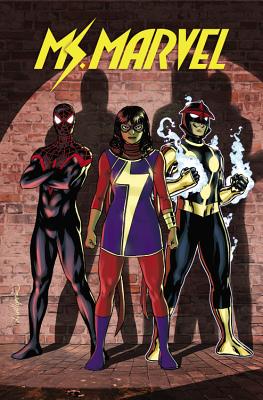
Ms. Marvel: Civil War II

by G. Willow Wilson, et al
Support your local independent bookstore: buy it there!
Other is the series: No Normal, Generation Why , Super Famous
Content: Violence, mostly. It’s in the graphic novel section of the bookstore, but it’s good for teens and up.

I’m not sure if I’m completely up on Ms. Marvel (it’s hard to keep track!)… but I picked this one up, and fell into it. Kamala is having issues at school and as a superhero – she doesn’t have time for her friends much anymore, and Bruno is no longer happy with being her “sidekick”. And then Captain Marvel asks Kamala to be the head of this predictive crime unit, where they take a psychic’s premonitions and then arrest people before they commit a crime. It’s going fine, until one of Kamala’s friends gets arrested for thinking about doing something drastic. Maybe predictive crime prevention comes perilously close to profiling?

Kamala tries to get out of it, but ends up alienating everyone, so she heads off to Pakistan to her family’s home, trying to find herself there. But not everything is quite as simple as it seems.

It helps that each issue is really its own arc, and that you don’t really need to know what went on before, which is good because I’m not sure I remember from issue to issue. That said, this one touched on some really interesting ideas, including profiling, and the costs/benefits of trying to stop crime before it happens. The side trip to Pakistan at the end was interesting, too, as was the Kamala’s parents’ backstory that was threaded throughout the issue. I keep picking these up because I love the story arcs that Wilson comes up with, and this one didn’t disappoint.

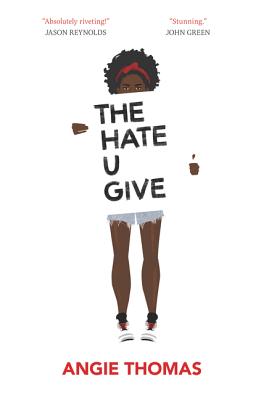
The Hate U Give

by Angie Thomas
First sentence: “I shouldn’t have come to this party.”
Support your local independent bookstore: buy it there!
Content: There is a lot of swearing, including multiple f-bombs, some almost sex, and some drinking. It’s in the teen section (grades 9+) of the bookstore.

I came to this one in a round-about way. I have a teen review group, and one of them read this (and loved it), and so I didn’t feel a need to read it. Too many other things on the pile. Then, it became a big thing (and rightly so), being talked about all over the internets. and so we picked it to be a part of our summer teen book group. And that is really what pushed me to read it. (If all else fails: pick it for a book group. I’ll read it then!)

As one of my co-workers said, I’m reading this as a privileged white woman, and it makes one VERY aware of that privilege. At first, I thought I was not hip enough for Starr and her world, but after a couple of chapters, I found myself immersed in the world Starr inhabits. Thomas very eloquently shows (not tells!) the reader what it’s like to live in the inner city, the conflict- both with the “system” and with each other – that they face every day.

The basic plot is this: Starr is at a party, when a shooting happens. As everyone is fleeing, she ends up with an old friend, Khalil, and they end up getting pulled over by a white cop. And, because this unfortunately happens too often, the cop shoots Khalil. And from there, the story follows Starr as she deals with the aftermath of that. From dealing with PTSD after the experience (it’s her second friend who has been shot and killed), to dealing with being a witness at the grand jury (and all the implications that brings), to dealing with the balance between her home life and her school life — she goes to a prep school in the suburbs — and her friends there. Thomas treats everything complexly and is incredibly forthright and honest about absolutely everything. It’s an excellent portrait of the life of a black teenager and an important book, especially for a white person to read.

I Believe in a Thing Called Love

by Maurene Goo
First sentence: “When I was seven, I thought I moved a pencil with my mind.”
Support your local independent bookstore: buy it there!
Review copy provided by the publisher
Content: There’s a propensity to use the s-word. It’s in the YA section (grades 6-8; I debated, but decided that it ultimately wen there) of the bookstore.

Desi does it all: she’s student body president, involved in practically every club, soccer star, valedictorian, and a model daughter for her dad (especially since her mom’s sudden death seven years before). The only thing she doesn’t have (and hasn’t ever had): a boyfriend.  And then Luca shows up at her school: reserved, artistic, with a shady past, and that… something… that makes him completley desirable to Desi. The problem? Desi is absolutely lousy at flirting. (Or as her two best friends, Fiona and Wes, call what she does: flailure.) So, Desi turns to one of her father’s passions to get help, and starts binge-watching K-Dramas. She comes up with a list of 28 tried-and-true (and also a bit cliche) steps to Get the Guy and starts her project.

The best part of this incredibly sweet book is that you don’t have to know K-Dramas (though I suppose it helps) in order to enjoy that this is parodying K-Dramas while also following the formula. (It’s  Jane the Virgin in book form!) Yes, there’s a definite arc to the book, but it feels, well a bit wink-wink-nudge-nudge about it all. It’s very self-aware, and that was something I really enjoyed about it. That, and the father-daughter relationship. Sure, there’s a dead mom, but Desi’s dad is the most well-adjusted adult in a YA novel I’ve read in a while. I liked that he was a mechanic with a passion for funny shows (Desi was named after Desi Arnez) and K-Dramas. I liked his relationship with Desi, and the love that I could sense between the two.

It’s cute, it’s sweet, it’s a little silly, and it’s thoroughly enjoyable.

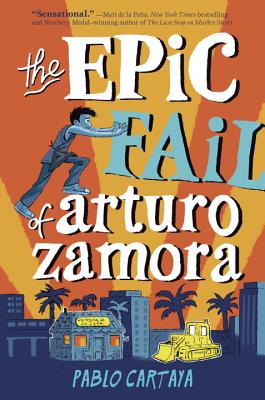
The Epic Fail of Arturo Zamora

by Pablo Cartaya
First sentence: “I’m officially resigning from love.”
Support your local independent bookstore: buy it there!
Content: It’s a bit more, well, mushy than your usual middle grade fare, but it doesn’t smack of YA quite yet. While it’s in that nice spot for 10-12-year-olds, it’s in the Middle Grade section (grades 3-5) of the bookstore. I may change that and put it in the YA. We’ll see.

It’s the summer after 7th grade, and Arturo Zamora is ready to have a good one. He’s working at his family’s restaurant, hanging out with friends in his Miami neighborhood. That all changes, however, when a big developer decides to make a bid for the lot next door to the restaurant, the one which the Zamora’s were hoping to purchase from the city for their expansion, and has plans to put in a fancy new “exclusive” building. All of a sudden Arutro’s summer has turned into fighting this developer, and figuring out his place in the family. Not to mention his burgeoning feelings for his mother’s goddaughter, Carmen. It’s going to be quite the summer.

This was a really fun book. I enjoyed Arturo’s attempts to figure himself out. I loved the Cubano culture that threaded itself through the book. I loved Arturo’s relationship with his grandmother and mother. Even the slight romance wasn’t overdone. I loved that the Spanish was woven seamlessly in the book, often without English translation. It felt more authentic that way. And I also thoroughly enjoyed getting to know the Zamora’s and cheering the little guy in the fight against Big Man. Definitely one to check out.

Homegoing

by Yaa Gyasi
First sentence: “The night Effia Otcher was gorn into the musky heat of Fanteland, a fire raged through the woods just outside her father’s compound.”
Support your local independent bookstore: buy it there!
Content: There’s non-graphic sex, a lot of swearing, violence, and general difficult situations. It’s in the adult fiction section of the bookstore.

A good, powerful look at two sisters, separated at birth — one eventually sold into slavery in America, and the other remaining in Africa — and the subsequent generations. It’s a powerful look at choices (made by and for individuals) and how those can affect not only individual lives but also generations. It’s a unique way to tell a story — every chapter is a different person, progressing through the generations — and both the writing and the actual storytelling are excellent.

It’s a haunting read, but a good one.

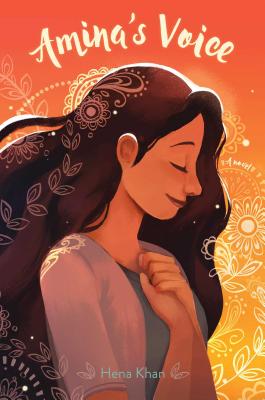
Amina’s Voice

by Hena Khan
First sentence: “Something sharp pokes me in the rib.”
Support your local independent bookstore: buy it there!
Review copy provided by the publisher
Content: There is an act of vandalism (against the mosque) that is handled really well, but might be upsetting. It’s in the Middle Grade (grades 3-5) section of the bookstore.

Amina is starting sixth grade, the one time that people associate with change. And Amina’s experiencing it. Her best friend Soonjin is becoming a U.S. citizen and is thinking about changing her name. She’s also becoming better friends with their former grade-school bully’s sidekick, Emily. Her uncle is coming from Pakistan to stay with them for three months, and his stricter interpretation of Islam has Amina wondering if her love of music (both playing the piano and singing) is against God’s wishes. And then there’s the fact that she has stage fright, and there’s a Quran competition that her parents are making her enter. Will she survive all this?

Such a delightful portrait of a 12-year-old trying to figure out her place in the world. Khan got pre-teen girls, their anxieties and insecurities, and how they are struggling to find their own, well, voice. I also appreciated the religion in the book; Khan give us a slice of Islam with faithful people, loving parents (and Imam), which is completely relatable to anyone who reads it. This is one of those important books: it’s a great window into an Islamic family and community, and it’s a great mirror not just for Muslim kids but anyone who is religious. But, it’s also a great story, well told.

Very, very good.