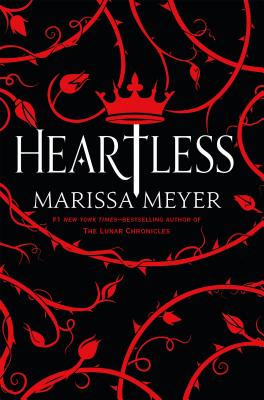
Heartless

heartlessby Marissa Meyer
First sentence: “Three luscious lemon tarts glistened up at Catherine.”
Support your local independent bookstore: buy it there!
Review copy provided by the publisher.
Content: There’s some kissing. And it’s length might turn some readers off. It’ll be in the YA (grades 6-8) section of the bookstore.

All Cath wants to do is bake amazing sweets. It’s something she’s good at, it’s something she enjoys, it’s what makes her happy. She has dreams of opening up a bakery, of selling her goods to everyone in the Kingdom of Hearts. But she’s the daughter of the Marquis of Rock Turtle Cove, and her business partner is her maid, and she’s attracted the attention of the King, and, well, it just isn’t Done.

And then she meets Jest. Dark, brooding, handsome, and the court joker. Not someone she should be paying attention to. And yet, she’s attracted to everything about him. His sense of whimsy, his magic. It’s all… impossible.

And because this is Wonderland, fate has something else entirely in mind for Cath.

This book is to Alice in Wonderland as Wicked is to The Wizard of Oz. Its the backstory of not only the Queen of Hearts, but many of the characters in Alice. In fact, the better you know Alice in Wonderland, the more fun Heartless is. It’s clever the way Meyer weaves in the original story (and Through the Looking Glass as well!) and gives us a wholly new story as well. I liked Cath as a character, I liked that she had a dream and a plan to have a happy life. And yet, she wants to please those people she cares about. And she gets put into an increasingly tight situation. Which leads to heartbreak and some less than ideal choices.

I found it fascinating. I enjoyed the way Meyer played with the original. I liked the chemistry between Cath and Jest. Where it kind of fell apart was the dark ending. It had to be that way — it’s the backstory about the Queen of Hearts, after all — but it kind of came out of left field for me. That said, it wasn’t enough to completely throw my enjoyment of the book. It was a good story, complete, and one that is definitely is worth spending time on.
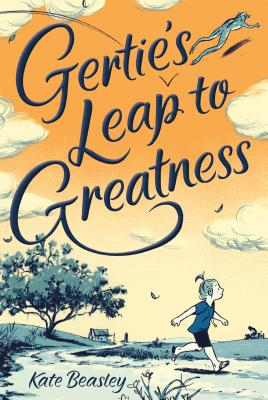
 

Getie’s Leap to Greatness

gertieby Kate Beasley
First sentence: “The bullfrog was only half dead, which was perfect.”
Support your local independent bookstore: buy it there!
Review copy provided by the publisher.
Release date: October 4, 2016
Content: Aside from Gertie’s tendency to say “Oh my Lord!” which drove me batty, there’s really nothing that the 3-5th grade set couldn’t handle. It will be in the Middle Grade section of the bookstore.

Gertie has a plan: she’s going to tackle 5th grade with a vengeance and going to be the Best 5th Grader in her southern Mississippi town. Maybe then her mother, who walked out on Gertie and her father years ago, will pay attention. Unfortunately, her plan is a bit thwarted by the arrival of a new girl, the daughter of a movie director and an environmentalist. Mary Sue takes the wind out of Gertie’s sails, and so what does Gertie do? Try harder. Unfortunately, that may cost Gertie not only the title of the Best 5th Grader, but her friendships as well.

It was an absolutely adorable book. Gertie is such a fun character (she reminded me of an older Clementine or Ramona), that you can’t help but fall in love with her. Sure, the plot hangs on low stakes (aside from the absent mom and the father who works on an oil rig that Mary Sue’s mother is trying to get shut down), but when you’re 10, even the low stakes seem big. It’s very much a southern story, full of southern charm and quirks. But, the real star is Gertie. She really is the heart and soul of this book, and she really makes it completely worth reading.

So much fun.

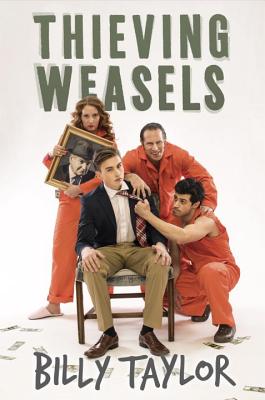
Thieving Weasels

thievingweaselsby Billy Taylor
First sentence: “I would have killed to go to Princeton.”
Support your local independent bookstore: buy it there!
Content: There’s a handful of swear words (no f-bombs that I remember) and some off-screen, implied sex. Plus drug use and teen drinking. It’s in the Teen Section (grades 9+) of the bookstore.

Cam Smith has a goal: finish up at his boarding school, Wheaton, get into Princeton with his girlfriend, and leave his dirty, awful past behind. Then: his dirty, awful past comes for him. In the form of his Uncle (Wonderful, meant very sarcastically), his cousin Roy, and his mother. Who supposedly attempted suicide and is in a mental institution. It turns out that Cam — who is really Skip O’Rourke — is needed for a Big Job, one that will pay everyone lots of money and so they can all be Very Happy. What it turns out to be is a royal mess.

I was torn about this one. On the one hand: long con books. I love heist and long con books. It’s fun to follow the clues, to figure out who is conning who (in this case, everyone is conning everyone) and to see who comes out on top. This one, as far as cons go, was probably overly complicated (it kept twisting and turning), but in the end, very satisfying.

On the other hand: Cam/Skip’s mom was AWFUL. Beyond awful. Neglectful and borderline abusive (“I’m doing this for your own good”), in the end I just couldn’t handle her. (Maybe my opinions on bad mothers have changed since having E in the house…) I not only wanted to smack his family, I actively despised them. The uncle was awful, the cousin was a brat. But his mother didn’t deserve anything but scorn. And perhaps Taylor meant it to be that way, to have someone so awful that the illegal things Cam/Skip did weren’t “too bad”, but it grated on me. In the end, I think it was supposed to be humorous, but I found myself often annoyed. Which is never a good sign.

So: not bad, but not the best con book I’ve ever read, either.

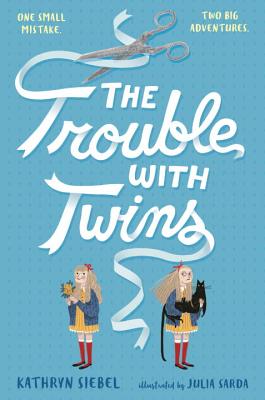
The Trouble with Twins

troublewithtwinsby Kathryn Siebel
First sentence: “And so it begins in front of the fire, the story of two twin sisters.”
Support your local independent bookstore: buy it there!
Content: There’s some neglectful treatment of kids and some awful parenting, but nothing physically harmful. It’s in the middle grade (grades 3-5) section of the bookstore.

Arabella and Henrietta are twins (in some distant past). Arabella is the beautiful, smart, sweet one and Henrietta is… not. (Before I get too much further, the better sister story, if maybe a bit more mature for this age group, is Jacob Have I Loved which is one of the more powerful reading memories I have as a child.) Henrietta is neglected, ignored, unloved. And so when she tries to get attention by cutting Arabella’s bangs off (they seem a bit old for those kind of shenanigans, but maybe that’s me projecting), she’s banished to Great-Aunt Priscilla’s house. Where she’s basically Cinderella. That is, until Arabella decides she misses her sister and goes looking.

It’s kind of a Lemony Snickett/Roald Dahl feeling book, where there’s bad adults (but not quite as bad as Dahl) who are neglectful and hate children and it’s the good, long-suffering child who gets the reward in the end. And in that light, it’s a good little book. The thing that got me was the intrusive narrator. Usually, I don’t mind them. But, this time the framing conversation between a mother and daughter just grated. I think it was meant to be cute, but it just didn’t work for me, and as a result the whole book fell flat.

I think I’ll see if any of my Dahl kids are interested in this one; maybe it’s just me being overly sensitive.

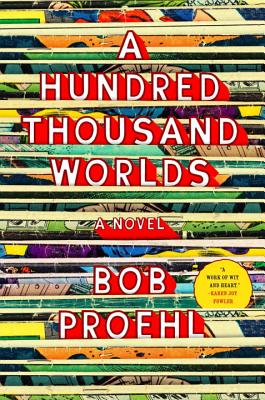
A Hundred Thousand Worlds

hundredthousandby Bob Proehl
First sentence: “Alex Torrey, nine but small for his age, writes the names of the places on the exit signs in his notebook.”
Support your local independent bookstore: buy it there!
Release date: June 28, 2016
Review copy put in my box at work by the purchasing manager.
Content:  There’s a bunch — a couple dozen — of f-bombs, plus other swearing, and some sexytimes, though nothing graphic. It’ll be in the adult fiction section of the bookstore.

By all accounts, I should love this book. A single mother, the former star of a beloved canceled sci-fi show, travels across the country attending ComicCons (some big, some small), meeting all sorts of cosplayers and comic writers and artists as she comes to terms with letting her nine-year-old son live permanently (at least temporarily) with her ex-husband, his father.

Except, I didn’t like it. At all. (In fact, I thought upon finishing it: “This is why I don’t read that many adult books anymore!”) It wasn’t bad enough to bail on; in fact, I kept hoping that it’d get better.  But I just didn’t like it. I wanted to like the inside peek behind the scenes of a con, of the ups and downs of being a cosplayer, or even one of the main talent. I’m not too terribly interested in the politics of comics (that’s more Hubby’s ballgame), and there was a lot of  time devoted to the politics of characters, the dynamics between artists and writers, and the politics of creating a storyline, none of which I was interested in.  (And that’s not even mentioning the precocious nine-year-old who was simultaneously too young and too old to be real.)

I wanted to like it. I hoped to like it. But, in the end, it just fell flat.

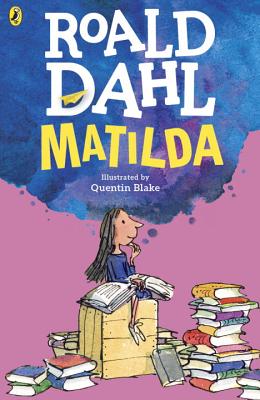
Matilda

matildaby Roald Dahl
First sentence: “It’s a funny thing about mothers and fathers.”
Support your local independent bookstore: buy it there!
Content: It’s a bit longer than Charlie, and a bit more complex. But, that said, I’d give it to a confident 8-year-old reader. It’s in the middle grade (grades 3-5) section of the bookstore.

So, I’ve read this one before, but it’s been years and years and years and even though I’ve watched the movie a bunch (it’s one of my girls’ favorites), I wasn’t quite prepared for how DARK Matilda is.

I mean, all the usual Dahl themes are there: a powerless, nice child (not poor, though that comes with Ms. Honey) is bullied (by her parents and other adults) and discovers something grand within herself in order to overcome. But, the adults are beyond awful. They’re abusive. The Wormwoods (who are hilarious in the film) are corrupt and neglectful. But, it was Miss Trunchbull, who I always condered just an annoyance, who really got me this time. She’s not annoying: she’s an abuser. And perhaps it’s where I am in my life, but that didn’t sit well with me. I’m not entirely sure why; Matilda and Ms. Honey have a happy ending, after all, and Miss Trunchbull (not to mention Mr. Wormwood) get their comeuppance. But, it kind of rang hollow for me.

That said, it’s also not as funny (or at least clever) as Charlie and the Chocolate Factory.  It was sweet — both Matilda and Ms. Honey are sweet characters amid all the lame, awful people — but it wasn’t clever. (Dark undertones!) I did enjoy it, but I’m not sure it’s my favorite. (Then again, I still have four more books to read this summer.)

The book group discussion, however, was fantastic! I had 20 kids ranging in age from 5 to 12, and they all had amazing things to say. One boy said he had read it eight times, and had some smart thoughts on it. As did many others. We talked about favorite characters and whether the Wormwoods were funny (yes) and whether Mr. Wormwood deserved the pranks (yes!). Ms. Trunchbull was deemed to be too mean to be funny, though one girl insisted that her parents would have believed her if she had told them what Ms. Trunchbull was doing. We talked a lot about the chocolate cake, and many pointed out that an 18-inch cake really isn’t that big. One girl said it was “just right”. And my favorite comments were when we were talking how Dahl makes ugly=mean and beautiful=good. One girl pointed out that ugly people can’t help being ugly and that they could be nice and beautiful people can be mean. And another girl said that maybe Dahl was just trying to make the character’s inward ugliness show outward. Both excellent.

So, maybe not my favorite, but it was a great discussion.


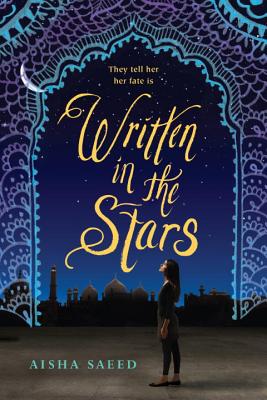
Written in the Stars

writteninthestarsby Aisha Saeed
First sentence: “‘Naila, I wish you didn’t have to miss the game,’ Carla tells me.”
Support your local independent bookstore: buy it there!
Review copy provided by the publisher ages and ages ago.
Content: There’s a (non-graphic) rape and some REALLY bad parenting. It’s in the Teen (grades 9+) Section of the bookstore, but if a 12- or 13-year-old were interested, I’d recommend it.

This was one I’ve been meaning to read for a long, long time. I have no excuse for not getting to it, except that I have a LOT of books to read (so much so that I’m actually starting to panic about my piles. There’s just not enough time!) and many things competing for my attention.

But, recently, I picked this one up and gave it a try. And finished it nearly in one sitting. It’s just THAT compelling.

Naila is the daughter of Pakistani immigrants, ones who are fairly traditional. While she can go to public school and is not required to wear a hijab, she’s not allowed over at friends’ houses, to date, to drive, and college is still up for grabs. (An interesting side-note: Saeed never spells it out, but the discrepancy in treatment between Naila and her younger brother is both unsurprising and frustrating.) She happens to have a boyfriend, though, one she keeps secret from her parents. And when her secret gets out, her parents react by whisking her away to Pakistan where they go about arranging a marriage for her. Behind her back.

It’s awful.  Seriously: I know that arranged marriages like this happen, and that they’re not always bad, but Saeed makes no bones about it: the way Naila’s parents go about this, in order to “save” her honor from the boy she picked, is just awful. And that’s being mild.

It’s an interesting thing to think about though: the balance between choice and tradition, between religious principles and progressive thought (I’ve been trying to think of a better way to say that, and I just couldn’t), between The Way Things Have Always Been and what individuals want. It was especially interesting reading it as a parent because I could see that while her parents thought they were doing right, they were so, so very wrong. And that’s a tough thing to see.

It’s excellently written, highly diverse (hardly any white people at all!), and an intriguing story. One that I hope many, many others will read.

These Shallow Graves

theseshallowgravesby Jennifer Donnelly
First sentence: “Josephine Montfort stared at the newly mounded grave in front of her and at the wooden cross marking it.”
Support your local independent bookstore: buy it there!
Content: There’s some mild swearing, murder, and some questionable situations. It’s in the Teen (grades 9+) section of the bookstore, but I’d give it to a 7th or 8th grader, who was interested.

Josephine is a thing that an 1890s socialite isn’t supposed to be: curious. She’s supposed to obey her parents, be elegant and ladylike, and marry a wealthy, eligible bachelor of her parent’s choosing. But, when her father unexpectedly turns up dead, supposedly having shot himself, Josephine won’t — can’t — settle for that. She heads out, teaming up with a reporter by the name of Eddie Gallagher, to find the Truth.

Thus starts a winding, sometimes scary, path that will lead Josephine down paths that would scandalize her family if they knew, but ultimately opens Josephine’s eyes and changes her forever.

I’ll be honest: the mystery was kind of predictable. I guess who it was fairly early on, as well as guessing the “big secret”. I didn’t have the how and why, but eventually, I figured out that too. The thing that kept me reading was Jo herself. I enjoyed the push and pull she had with Upper Crust New York Society, how she was willing to go against the expectations of her family. I found it all fascinating, and found Jo a character worth spending time with this.

Which made it worth reading.

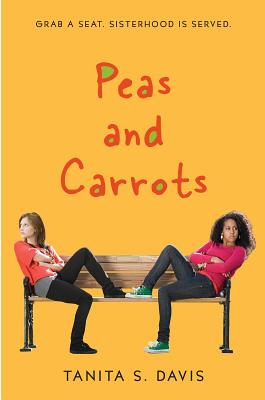
Peas and Carrots

peasandcarrotsby Tanita S. Davis
First sentence: “By the door,on the other side of the sheet that divides the room, Baby cries in his car seat.”
Support your local independent bookstore: buy it there!
Release date: February 9, 2016
Disclaimer: I’ve met the author, working with her for KidlitCon in Sacramento and I find her an absolutely delightful person.
Review copy snagged off the ARC shelves at my place of employment.
Content: There are several instances of mild swearing, plus some illusions to adult drug and alcohol use. Because there are no f-bombs, it’ll be in the YA section (grades 6-8, though it might be better for the older end of that spectrum) of the bookstore.

Dess is a 15-year-old girl stuck in the foster care system. Her deadbeat dad’s finally in jail, as is her mom. Dess’s grandmother gave up trying to care for her and her baby brother years ago. Dess is determined: she doesn’t need anyone. And so when she gets placed in a new home, one of an affluent family, she figures it’s not going to last.

Hope’s parents are stable and happy and take in foster kids, including Dess’s brother Austin, to give back to the community. Hope’s used to the revolving door of kids, but there’s never been one close to her age. Until now. And since Dess is doing pretty much everything to keep people at arm’s length, Hope knows that living with Dess is going to be a challenge. She just doesn’t know if she’ll be able to adjust.

First test: which one of these girls is African American and which one is white? (Answer: Dess is white. Did you pass?) That’s actually one of the first things I liked about this: Davis takes your (my) assumptions about foster care, about the State of the Country, and turns it upside down. In this story, the white girl is the one who’s on the run from an abusive family and the black girl who has the stable life. And Davis doesn’t leave it there; there’s discussion about race and class and belonging, which I respect.

And, as an unofficial foster parent myself, I found myself nodding and agreeing and loving the entire book. Yes, the kids come with baggage and a backstory that usually isn’t pretty. Yes, their lives can be changed by living in a stable, more affluent (though we’re not nearly as well off as Hope’s parents) situation. But Davis also got the corollary to that: having a foster kid in your home is challenging, sometimes disruptive, but is also life-changing. And, if you let yourself — as Hope and Dess eventually find out — you will be better off for it.

Definitely worth reading.

Upside Down Magic

upsidedownby Sarah Mynowski, Lauren Myracle, and Emily Jenkins
First sentence: “Nory Horace was trying to turn herself into a kitten.”
Support your local independent bookstore: buy it there!
Review copy pilfered off the ARC shelves at my place of employment.
Content: It’s simple enough for the younger set; probably good for advanced 2nd graders and up. It’s in the middle grade (grades 3-5) section of the bookstore.

Nory has a problem. She’s a witch, and she wants to get into the prestigious magic school that her super stuffy, absent father is head of. All she needs to do is turn into a kitten and hold that form for a few minutes. The problem is that she can’t do it. Well, she can turn into a kitten, but it never is just a kitten: it’s a beaver-kitten, or a dragon-kitten, or some other awful, terrible combination.

sOf course she doesn’t get into the school, and ends up going to a public magic school (the horror) and put in a class for those with “wonky” magic. There’s a kid who floats but can’t come down, another kid who turns into a rock, one who makes it rain inside and another one who is terrifying to animals. They are working to not only accept their magic as valid (in this society, those with wonky magic are Outcasts) and work together to make their magic do something incredible.

I think there’s a certain sort of kid who would love this kind of book. The kind of kid who likes magic stories, who likes an underdog story, and who doesn’t want to smack the adults in the book. I, unfortunately, am not that kid. I was annoyed at the predictable storyline and wanted to smack both the dad (the aunt who Nory ends up with is okay) and the mean girl at the new school. I understand I’m not the intended audience, so even though I didn’t care for it much, I realize that there are kids out there who will. And so I’m glad I read it for that reason.

(Just for the record: because this is a Cybils nominee, I’ve been asked to make sure y’all know this is my opinion only, and not that of the panel.)