Glory Be

by Augusta Scattergood
First sentence: “What was taking Frankie so long?
Support your local independent bookstore: by it there!
Content: There’s some physical violence. It’s short and the chapters are short. It’s in the middle grade section (grades 3-5) of the bookstore.

Glory, the youngest daughter of a Southern preacher, has grown up all her life in Hanging Moss, Mississippi. She hasn’t thought much about how her cook, Emma, is black. Or why she doesn’t see any black people at the pool or library. But, it’s the summer of 1964, and things are changing. The pool closes “for repairs”, but it’s because the pool committee doesn’t want “those people” sullying the waters. They try to do the same with the library, but the librarian stands up and keeps it open. And Glory’s best friend, Frankie, is on the line because his older brother and father are leading the charge against desegregation.

This had a lot of the same feeling as The Help did: white southern people being enlightened and standing up to their racist neighbors, but not really doing much else. I don’t know. It wasn’t bad, and I’m glad that white people have this kind of awaking story, but it kind of left a sour aftertaste. It was a very white book (I am surprised it was on my list for a mulitcultural children’s literature class…) and I wanted, well, more. Emma, the cook, didn’t play a huge role, and the whole book had a white savior narrative to it: Look! White people can recognize that black people are people too. Ugh.

I wanted more.

With the Fire on High

by Elizabeth Acevedo
First sentence: “Babygirl doesn’t even cry when I suck my teeth and undo her braid for the fourth time.”
Support your local independent bookstore: buy it there!
Review copy provided by the publisher.
Content: There is swearing, including multiple f-bombs, one almost sex-scene, and frank talk about teenage sex. It’s in the teen section (grades 9+) of the bookstore.

Emoni is many things: Afro-Puerto Rican. A mom. A senior in high school. And most importantly, someone who loves to cook.

As she starts her senior year, she’s navigating her world: co-parenting with her ex, Tyrone, and taking more responsibility for their daughter. Her relationship with her abuela and her absent father. And her final year at high school. She wasn’t really expecting any challenges, but she is thrown for a loop: her school has just added a culinary arts class. And she wants to take it, but will she be able to handle the pressure from a working chef.

This isn’t a novel in verse like Poet X is but it’s still just as lyrical. I thoroughly enjoy Acevedo’s writing, and her celebration of Afro-Latinx culture. I loved the food in this book, and though she touched on magical realism (I really love it when food makes people feel/do things) she didn’t really go there. I loved Emoni as a character, and her struggle to overcome the results — the baby — of a bad decision she made when she was 15. I loved the support she got from her abuela and friends, and I felt that Acevedo captured some very real emotions.

It was just a delight to read and I can’t wait to see what else Acevedo writes.

There There

by Tommy Orange
First sentence: “There was an Indian head, the head of an Indian, the drawing of the head of a headdressed, long-haired Indian depicted drawn by an unknown artist in 1939, broadcast until the late 1970s to American TVs everywhere after all the shows ran out.”
Support your local independent bookstore: buy it there!
Content: There is violence, a rape (though I think it was just talked about) and a lot of f-bombs. It’s in the fiction section of the bookstore.

This book, in a series of short chapters, each focusing on a different character, depicts what life is like for the Native Peoples’ population in Oakland, California. It’s contemporary, but there’s also a bit of historical fiction for context, and it culminates in a huge powwow in Oakland. The overall plot is that there are some kids who, because they need the money and because it’s an easy target, decide to rob the powwow of the cash prize. But, mostly, it’s just a picture of what life is like for the remnants of the tribes that have settled in Oakland.

Most of the Native Peoples fiction I’ve read (admittedly: not a lot) has been centered on the reservation, and I think Orange wanted to remind people (read: white readers) that Native Peoples exist elsewhere too. That, and I think he felt his story — that of the Urban Native — hasn’t been told. There was a lot of inner conflict between feeling “not Indian enough” and feeling lost without a tribe or traditions to fall back on. Orange is exploring what it means to be “Indian”, and the perception (possibly foisted upon them by white culture) that you’re only “Indian” if you’re on the reservation or dressed up in traditional clothes.

I hesitate to say I “liked” this. The more accurate word would be “challenged”. I feel for the characters; their lives are not easy and the systemic racism and oppression of them isn’t helping. I appreciate Orange for exploring all the stereotypes of Native culture, and for giving readers a fuller picture of what Native life — both urban and on the reservation — is like It’s very much a “white people are terrible” book; but it’s an honest sentiment, and one that I think is important. And it’s always good to get an own-voices view of things.

So, while I wouldn’t say I enjoyed it, I did find it worthwhile to read.

First Sunday Daughter Reviews: May 2019

The school year is winding down, which means (I suppose) that the girls’ reading will slow down as well. I’ll be interested to see if K keeps up the reading pace she has had during the school year.

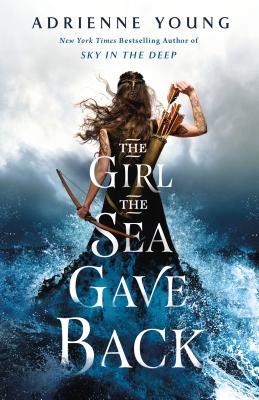
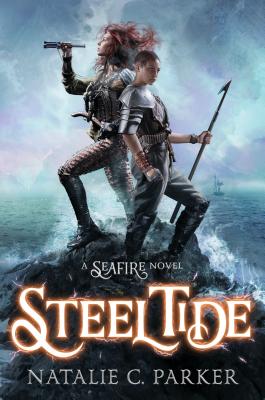
Speaking of K, she plowed through these this past week:

She wasn’t terribly thrilled with the romance, and she didn’t think Inej has a personality for the longest time, but in the end, she liked them a lot.

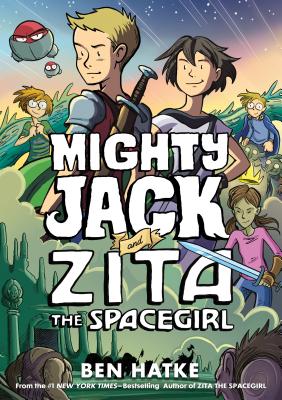
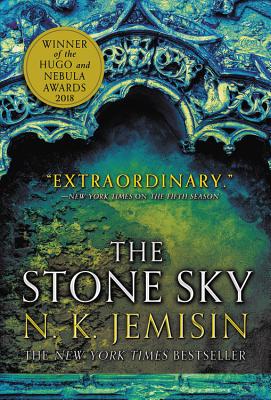
A decided that she wanted to read this:

She’s finding it a bit confusing, right now. (Which is, to be honest, a fair assessment.) But she’s not disliking it.

What are your kids reading?

Miles Morales Spider-Man

by Jason Reynolds
First sentence: “Miles set the good dishes on the table.”
Support your local independent bookstore: buy it there!
Content: There’s violence, but not graphic and some mild swearing. It’s in the YA section (grades 6-8) but I’d give it to a younger kid who was interested.

Yes, I did pick this up because I adored Into the Spider-Verse. I liked Miles Morales as a character, and I wanted to spend more time with him. Aside from the movie, I have no knowledge of Miles’s backstory or comic history, so I’m pretty much operating blind.

The basic plot is that Miles is kind of tired of being Spider-Man, and mostly just wants to focus on school. Except he keeps getting called into the office, first for leaving class (his Spidey sense was tingling) and then for a minor theft, for which he was totally framed. And it feels like his history teacher is super antagonistic toward him. And maybe it’s not an evil plot to take over the world, but maybe it is.

And on top of all that, he’s struggling with school and friends and fitting it. Not to mention the crisis about being Spider-Man; maybe he’s just not cut out for this.

My first reaction? It was fun, but heavy on the social justice. Not that that’s a bad thing. I liked the book well enough; Reynolds is a great writer and Miles is a great character. But… perhaps I would have liked it more had I been more invested in Miles Morales as a superhero. Coming in with as little knowledge as I did, I kind of felt like I was missing something. I caught similarities between the book and the movie, but it wasn’t enough or deep enough for me to truly love this book.

The Vanderbeekers of 141st Street

by Karina Yan Glaser
First sentence: “In the middle of a quiet block on 141st Street, inside a brownstone made of deep red shale, the Vanderbeeker family gathered in the living room for a family meeting.”
Support your local independent bookstore: buy it there!
Review copy provided by the publisher.
Content: There’s a wee bit of “romance” (one of the siblings “likes” a boy and ends up going to the 8th grade dance). The chapters are short, and there’s a lot of white space. It’s in the middle grade (grades 3-5) of the bookstore.

The Vanderbeeker family — mom, dad, and five children (four girls and a boy) — are perfectly happy in their brownstone apartment (one of three) in Harlem. They know the neighborhood, and even though they’re a bit squished, they love their home. That is, until their landlord, Mr. Beiderman, tells them a few days before Christmas, that he’s not renewing their lease for the next year and that they have until December 31st to get out. The Vanderbeeker parents are upset and resigned. The kids? Upset, but they’re going to do something about it! They being Operation Beiderman, They set about doing nice things for their grump of a landlord, in hopes that he will realize what a wonderful family they are and not kick them out.

You can probably already guess how this will end, but the plot really isn’t the point of the book. It reminded me of All of a Kind Family or The Penderwicks, where the actual point of the book was this charming, boisterous, delightful family that I loved getting to know. It was sweet and delightful and I loved the family dynamics between all the characters. This one is perfect for those who want a classic feel to their books. And I’m sure this would make a fabulous read-aloud to younger kids.

Definitely recommended.

Obsidio

by Amie Kaufman and Jay Kristoff
First sentence: “Perhaps we should get proceedings under way?”
Support your local independent bookstore: buy it there!
Others in the series: Illuminae, Gemina
Content: There is a lot of swearing, all blacked out, and a lot of violence. It’s in the Teen section (grades 9+) of the bookstore.

Spoilers for the first two, obviously.

First off: this series is some solid action/adventure science fiction. This one is lacking the aliens or diseases of the others, but deals more on the human aspects of war. We’re back on Kerenza, where for the past seven months (while the previous two books were happening), the people who didn’t escape are now being occupied by BeiTech forces. Who, to be frank, are murderous, awful people. In fact, that’s the central conflict of the book, as we find out how the Illuminae files were compiled (though I wonder how the audiobooks changed from the first, as we learned more) and the conflict between the Hypatia and Heimdall crews. It’s about what happens to humans in time of conflict, and the decisions — and rationalizations — that come from it. Kaufman and Kristoff are also exploring the consequences of decisions made by the AI without the aid of emotion.

And, yes, this one has two new characters to add to the mix. And while we weren’t given as much time to connect with them, they still were fascinating to read through the twists and turns. And while they didn’t play as big a role as other characters, they were still integral to the plot.

It’s such a good series, maybe made better by being able to read them all back-to-back without waiting in between. I was able to catch small things in the stories that I would have probably missed if I had waited between books. But plowing through them all one right after another is highly recommended.

Gemina

by Amie Kaufman and Jay Kristoff
First sentence: “… over seven hundred thousand employees across dozens of colonized worlds.”
Support your local independent bookstore: buy it there!
Others in the series: Illuminae
Content: All the swear words are blacked out, but there’s a lot of violence and some drug use. It’s in the Teen section (grades 9+) of the bookstore.

Spoilers for the first one, probably.

The nice thing about not reading a series when it first comes out is that you can read them all one right after another. And I remember what happens! That said, Gemina is part of the whole story, and picks up where we left off, but it also it’s own thing.

It’s the space station Heimdall, and everything is going lovely for Hannah and her boyfriend Jackson for their Terra Day plans. She’s got a super cute outfit, she’s about to pick up some dust to make the party super lit. Except, while she’s on her way, the station is attacked by an elite crew of 24 “auditors” (read: assassins) from BeiTech corp, who is still trying to cover up their attack on Kerenza. They have orders to take over Heimdall and open up the wormhole before any survivors reach the jump station.

(There’s a bit of a gap here: how did BeiTech know that there were survivors from the Kerenza attack?)

Anyway. The assassins capture the station, kill the commander (who happens to be Hannah’s dad), and take over. But, a few people Hannah and her drug dealer, Nik, and Nik’s cousin Ella, who’s a hacker, are left on the outside to stop the assassins from completely taking over.

I wondered how this would go over in print, since I adored it so much in audio. And it’s fabulous. I’m amazed that Kauffman and Kristoff could put so much into just documents, text streams, and illustrations, but they do! (since this one is so heavily illustrated, I wonder how it is in audio?) It never got tedious, I adored the reveals as they happened, and I was never too far ahead of the characters. I figured something out, and by the next page, the characters were there as well. It’s quite brilliantly plotted. And they do tension SO very well. I kept having to take breaks as I read because it would just get too much for me to handle. So very very good.

And yes, I’ve got the third already checked out, so I can see how this story ends.

Laura Dean Keeps Breaking Up With Me

by Mariko Tamaki and Rosemary Valero-O’Connell
Support your local independent bookstore: buy it there!
Review copy provided by the publisher.
Release date: May 7, 2019
Content: There is implications of sex (but none actual), some teen drinking, and a few instances of f-bombs plus other language. It will be in the Graphic Novel section of the bookstore.

Freddy has a problem: her girlfriend, Laura Dean, keeps breaking up with her. It’s more complicated than that: Laura will be super cute and lovey and want Freddy to do all sorts of things with her and Freddy will feel wonderful, and then Laura Dean will take off, or Freddy will find her kissing another girl, or she’ll just disappear and leave Freddy hanging.

This roller coaster ride of a relationship is taking its toll on Freddy, too: she’s become a crappy friend to her actual friends, whom she stands up often because of Laura Dean. And she’s questioning whether or not it’s her fault that Laura Dean keeps taking off.

I loved this. Seriously. I loved that it was a lesbian love story, that everyone was so accepting, but that Tamaki and Valero-O’Connell used this to talk about abusive relationships. Because, as the reader probably figures out before Freddy: Laura Dean’s super abusive. In fact, that’s the whole arc of the story: helping Freddy figure out that even though Laura Dean is popular, and even though she might enjoy the time she spends with Laura Dean, that doesn’t mean they have a healthy relationships. But they also tackle other issues: one of Freddy’s friends is in the closet to his family, and his boyfriend is upset he can’t go to a family party, and Freddy loses the connection with her best friend, right at the time when she needs Freddy the most.

This book is messy and complicated, but it’s also glorious and compelling. And I hope people read it because it’s fantastic.