Audiobook: Keeping the Castle

by Patricia Kindl
Read by Biana Amato
Support your local independent bookstore: buy it there!
Content: There’s nothing objectionable, but my 8-year-old was quite confused while listening to it. So, it’s probably not for the younger set, just because of intricate plot lines and needing at least a working knowledge of Regency England. It’s in the YA section (grades 6-8) of the bookstore.

Althea Crawley has always known that she needed to marry well. Her father died shortly before her younger brother (and her father’s heir), Alexander, was born. The castle — in the north of England, on a cliff, and their home — her great-grandfather built is slowly falling apart (well, maybe not so slowly). And so when Lord Boring (yes, that really is his name) shows up in the neighborhood, Althea knows what she must do: get him to marry her. Unfortunately, his crass, merchant, cousin, Mr. Fredericks, keeps getting in the way.

The jacket compared this one to I Capture the Castle and Pride and Prejudice. The Capture the Castle part of it is silly: the only things those two books have in common is a young heroine and a castle. However, the book read like a spin on all of Austen’s books. There were elements of Emma and Sense and Sensibility as well as P&P. It’s a more practical Austen, however: Kindl gives us a more confident and curious and modern heroine than Austen ever did. And Kindl gives us more blatant class divisions than Austen did, as well. The love interest is a merchant, and falling in love with a merchant, even a  wealthy one, is something which a landed gentry in Austen’s world just wouldn’t do. In fact, there’s quite a few interesting elements that probably existed in Austen’s time but didn’t overtly make it into her books. As we were listening to it (Hubby quite liked it, too), it occurred to me that this is Jane Austen-lite: an Austenesque books for kids who are curious but can’t quite make it through Pride and Prejudice.

The back did have this right: it is frothy and light as a champagne cocktail. It’s not deep — we were discussing all the ways in which Kindl could have made it more complex and darker than it was — but it sure is fun.

The Summer Prince

by Alaya Dawn Johnson
First sentence: “When I was eight, my papai took me to the park to watch a king die.”
Support your local independent bookstore: buy it there!
Content: I was initially thinking that this would be good for those who like Uglies; there’s about the same amount of swearing. But the reason it’s in the Teen section (grades 9+) is because there’s a lot of allusions to sex, including a couple (tasteful) sex scenes.

June Costa is the best artist in Palmeres Três. Or so she thinks; she just hasn’t had a chance to prove it yet. And in this, a moon year in which her futuristic, matriarchal society chooses a one-year Summer King to “rule”, she will have that chance. It starts innocently: her best friend, Gil, falls in love with the summer king, Enki. And she does, too, though she tells herself that it’s mostly about the art. And what art June and Enki create. Ever more elaborate, they end up sparking a revolution of sorts between the technophiles and the isolationists; the government, made up of women they call “Aunties”, has placed strict regulations on what kind of tech can be in the city.

It was this tech element that reminded me so much of Uglies. But, I think Johnson was pointing out the value of art and the power of love, even in a futuristic (and while not dystopian, certainly not perfect) society. It’s a very thought-provoking novel, one that winds and unfurls instead of proceeding in a linear fashion. And it was this winding that kept me most interested. Johnson chose to build her futuristic Brazilian society in bits and chunks throughout the entire book, dropping hints and clues about what happened to get the world to this point along the way. And the society she built was equally as fascinating, with all its machinations and political scheming.

But, ultimately, it was June and Enki and Gil (and June’s competition/friend, Bebel) that kept me reading in the end. I cared about what happened to them, how this year played out for the summer king and his newfound friends. I found myself moved by the ending, and thinking about the book long after I turned the last page.

Audiobook: Randi Rhodes Ninja Detective: The Case of the Time Capsule Bandit

by Octavia Spencer
Read by the author.
Support your local independent bookstore: buy it there!
Content: There wasn’t anything objectionable. I don’t know how it’d be reading it, but my 8-year-old followed the story pretty well while listening to it. We did have to stop the audio a few times to explain some things, however. It’s in the middle grade (grades 3-5) section of the bookstore.

I threw this in the audiobook pile mostly because I’ve seen it at the store and wondered if it was any good. (I know: celebrity authors. Ugh. But, sometimes they surprise me. Not often, though.)

Randi Rhodes is a die-hard city girl. She’s grown up in Brooklyn and loved every minute of it. Her family summers in Deer Creek, Tennessee, which is just about the right length of time for a city girl to spend in a boring, dull, small town. But the year after her mother dies (I called that pretty early on; I do get so tired of dead parents), her father, a mystery writer, packs the two of them up to live full-time in Deer Creek. Randi is not happy about this.

But, once there, she falls head-first into a mystery: the 200-year-old time capsule for the town’s Founder’s Day has been stolen. And they have 72 hours to get it back. Much against her over-protective father’s wishes, Randi (and her two new friends, D. C. and Pudge) decide that they are the only ones to solve the mystery.

It’s a pretty run-of-the-mill middle grade mystery book. Nothing too fantastic or brilliant; in fact, as an adult, I’ve seen all the tropes before. The banker is a Bad Guy, as is the power-grabbing Mayor. There’s a grumpy old man with a heart of gold, and a woman sheriff who’s a bit bumbling. (Though — spoiler — this isn’t a true middle grade novel, because by the end, you discover that the sheriff isn’t bumbling at all, but has instead figured out the mystery WAY before the kids ever did.) The best parts of the book are when Randi and her friends are out being detectives; the worst are the angsty tensions between her and her overprotective dad. I got extremely tired of the rants Randi went on about not being “understood.” (But that’s a parent speaking. I did appreciate that Randi was a non-girly girl; she was often ranting about how she wasn’t a princess and didn’t need protection. She’s a black belt in Tae Kwon Do, after all.)

In the end, it wasn’t anything special, though A and K enjoyed listening to it. But, it wasn’t absolutely horrible, either, and Spencer did an admirable job of narrating her book (which I would expect, with her being an actress and all).

Audiobook: The House at Pooh Corner

by A. A. Milne
Read by: Stephen Fry, Judi Dench, Michael Williams, Geoffry Palmer
Support your local independent bookstore: buy it there!
Content: It’s Pooh Bear! Perfect for everyone.

I have read the Pooh Bear stories over and over to my children (as has Hubby), but still, when I saw this on the shelf at the library, I snapped it up. I never mind hearing the Pooh Bear stories again, if they are being read by a handful of really great British actors, it’s positively perfect.

And it really was. These are the later ones, the Tigger stories, and I loved (we all did!) hearing them again. Our realizations this time? Eeyore is such a delightful cynic. He made us laugh every single time. Piglet is such a Good person (or pig, as is the case) and no one appreciates it. Tigger is quite possibly high. Rabbit is the only one of the bunch who actually actively has machinations: he wants to Get Rid of some of the other animals (*cough*tigger*cough*). Owl is a complete fraud. Christopher Robin is God. And Pooh? He’s that delightfully clueless person that you can’t help but love. The full cast audio was an absolutely perfect way to do this book; the personalities came shining through with each reader.

And the last story, In Which Christopher Robin and Pooh Come to an Enchanted Place? It made Hubby and me both tear up. Growing up is such a bittersweet thing.

Delightful.

First Sunday Daughter Reviews: July 2014

We’ve been in Summer Mode this past month, and Vacation Mode this past week. So, there really isn’t much reading getting done. There is, however, a lot of swimming, playing outside and arguing happening. But when there is time, the girls have picked up books.

M is currently reading the KU Common Book

She’s enjoying the writing, and thinks the plot is interesting, but the life of the main character and her mother is stressing M out. She can only read it in small bits because it’s just so depressing.

C doesn’t read much during the summer, but a conversation we had led me to check this out for her

I’m not sure if she started it yet. But, she did bring it with her on vacation.

A hasn’t been reading much lately either, but she did finish one of my past Cybils favorites.

She thought it was fascinating mostly because the world Keyes created was very rich and very interesting.

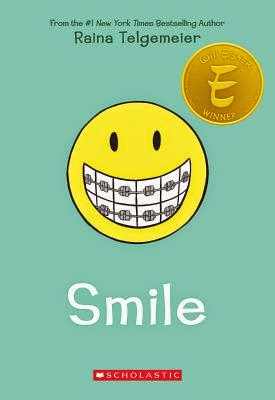
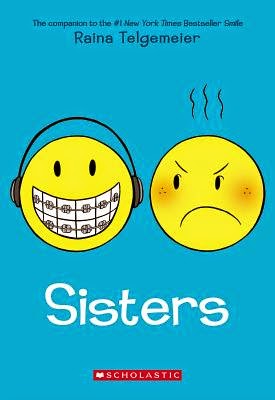
And K, this summer, has decided to focus on graphic novels. She’s gotten the first two Amulets, and loved them, but this (thanks Charlotte!) was a hit

Once she finished it, she was bubbling over with how cool it was. I need to read it now.

What are your kids reading?

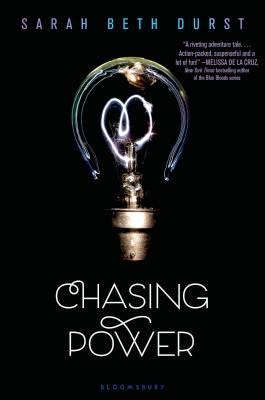
The Lost

by Sarah Beth Durst
First sentence: “For the first hundred miles, I only see the road and my knuckles, skin tight across the bones, like my mother’s hands, as I clutch the steering wheel.”
Support your local independent bookstore: buy it there!
Content: The publisher is marketing this one as fiction, but I think it’s because the main protagonist is 27. There’s some mild swearing, and lots of kissing, but other than that, nothing. I’d give this one to a teenager who is interested.

I’ve had a difficult time getting into adult fiction lately. Too often, I picked it up and it’s just Words and no Plot or Characters or anything interesting. But, I saw that Sarah Beth Durst (whom I love) had an adult book (!) out, and I figured if there was an adult fiction book I’d love, it’d be one written by Durst.

I was right.

Lauren Chase is in a holding pattern in her life. She’s given up on her art to get a practical job because her mother has been diagnosed with cancer. But on this particular day, the day in which the book starts, her mother is off to get Bad News, and Lauren can’t handle it. So she runs away. And finds herself in Lost. A place where all the lost things go, once you arrive in Lost, you’re pretty much stuck. Until you find the thing you lost, and then the Missing Man can send you back.

Except the Missing Man, when he saw Lauren, bolted. Which means, she’s got half the town out to get her, and has to figure out how to survive. Thankfully, she has Claire, a precocious 7-year-old, and Peter, who is the Finder, to help her.

It sounds a little trite, writing it all down, like it’s been something that’s been done before. But Durst made it new and fresh for me. Told from Lauren’s point of view, we got her panic when she initially encountered Lost, as well as her confusion and determination as things got worse for her. And the end, while open for the intended sequel, also gave me a sense of closure.

Perhaps I’m just a genre-fiction reader, but I found reading this one to be so much more enjoyable than many of my other forays into adult fiction. Which is something that made me very happy.

KidlitCon 2014: Call for Session Proposals

The call for propoals for this year’s KidlitCon is out! This year’s theme is Blogging Diversity in Young Adult and Children’s Lit: What’s Next?.

From the proposal submission form:

“We are looking for presentations and panels that will inspire and edify Kidlitosphere bloggers. While we’re specifically interested in presentations that address what bloggers can do to make a meaningful difference in increasing and promoting diversity in children’s and young adult literature, sessions covering other topics such as reviewing critically, trends, social media, marketing, technology, and industry relationships are welcome.”

I’m not planning on submitting one (but if someone else wants to come up with an idea and shoot it past me, I’ll be happy to participate) but that doesn’t mean YOU shouldn’t. KidlitCon is a wonderful place to discuss ideas among friends.

Proposals are due by August 1, so there’s about a month to come up with ideas. Hope to see you there!

The Glass Sentence

by S. E. Grove
First sentence: “It happened long ago, when I was only a child.”
Support your local independent bookstore: buy it there!
Review copy provided by the publisher.
Content: There’s nothing objectionable or scary. It is, however, nearly 500 pages and it’s small type and that can be intimidating. (A was initially intimidated. I think I’ve convinced her to read it.) It’s also kind of slow-moving, with a lot of tricky names, so probably not the best book for a reluctant reader.

I think the best place to start with this one is Megan Whalen Turner’s quote on the back cover: “Not since Philip Pullman’s The Golden Compass have I seen such an original and compelling world built inside a book.”

That’s quite a lot for a book to live up to (MWT! Philip Pullman! Original! Compelling!) but you want to know something? She was right. So very, very right.

In 1799, something happened, and the whole world shifted. It came to be known as the Great Disruption, and what it did was cause different parts of the globe to be in different time periods. Europe was stuck in the middle ages, the Northwest Territory in a prehistoric ice age. What we know as the 13 colonies stayed in linear time, for the most part, though they never developed much farther than that. Past the Mississippi River and into Mexico is what is known as the Baldlands, a hodgepodge of raiders and outlaws, except for three cities which are known as the Triple Era, with people and creatures spanning 3000 years in the same place.

Pretty cool, no?

It’s no wonder that in this world explorers and map-makers are held in the highest esteem. And Sophie Tam’s uncle, Shadrack Elli, is one of the best. He’s been raising his niece ever since her parents — also explorers — disappeared. She’s learned to live without knowing about her parents, and she’s learned how to read the maps that Shadrack makes. So when he’s kidnapped, she’s really the only person who can save him.

The world is brilliant, and the use of maps and magic (of sorts, though kind of not really “magic” as you’re thinking about it; it’s more future techonology) are refreshingly unique. But, once the plot starts going (which, admittedly takes a while), it picks up and becomes one of those books you can’t put down. I was thrilled with the world, with Sophie and her friend Theo and their increasingly intense and urgent adventure. I thought that Grove captured an interesting balance between the older people — like Shadrack — and their expertise and the younger ones — like Sophie — who were able to see things in a new and different light. I loved the use of time and Ages and invented words; I haven’t seen this kind of  creativity in naming things since Harry Potter. I also loved that the “bad guy” wasn’t wholly evil. That while they did some morally questionable things, it wasn’t a pure black and white thing. There’s layers here: yes, it’s a middle grade fantasy adventure, but it’s also so much more.

I can’t wait for the sequel.

June 2014 Wrap Up

I really did mean to get this up this morning, but things just didn’t work out that way. Instead, I’m in a hotel in Billings, Montana (where the population of cows outweigh that of people), trying to get it up before bed. I reread a few this month and didn’t write reviews of a couple of them; I felt like I didn’t have anything new to say.

My favorite this month was, because it was just so much fun:

The Hero’s Guide to Being an Outlaw

As for the rest:

MG:

My Basmati Bat Mitzvah
The Screaming Staircase

YA:

The City of Heavenly Fire
Conversion
Everything Leads to You
Fat Boy vs. the Cheerleader
The Geography of You and Me
Girl in Reverse
Graceling (reread)
I Love I Hate I Miss My Sister
The Riverman
Will Grayson, Will Grayson (reread)
The Fault in Our Stars (reread)

Graphic Novels:

A Game for Swallows
Hereville: How Mirka Met a Meteorite
Wil &Whit

Adult:

The Chocolate Thief 
The Cuckoo’s Calling (audio)

What did you enjoy reading this month?

Graphic Novel Roundup, June 2014

I discovered that 1) I’m reading more graphic novels than usual right now. Perhaps because I’m picking up a bunch for K at the library due to summer reading. Her goal is to read 36 graphic novels by the end of July. She’s read 15 so far. And 2) I really like these graphic novel roundups. Here’s what I’ve been reading this month.

Will & Whit
by Laura Lee Gulledge
Support your local independent bookstore: buy it there!
Content: The cover is misleading; it’s not a romance. Not really. Thematically, it’s a little mature — it’s in the teen graphic novel section — but I’d give it to an interested 10- or 11-year-old.

The Will in the title is Wilhelmina Huckstep,  girl whose parents died in an accident recently, the summer before her senior year. She’s living with her aunt, who runs the family antiques store. The Whit in the story is Tropical Storm Whitney which causes the entire town to lose power, thereby creating a situation where everyone has to be unplugged from their technology and interact with each other. It’s delightfully drawn, and balances the dark — Will grieving for her parents and trying not to be a burden — and light — her wonderfully eclectic friends, and the Penny Farthing carnival they put on. There is some romance, with a couple of Will’s friends, but it was very sweet and not at all central to the plot. A delightful summer read.

Hereville: How Mirka Met a Meteorite
by Barry Deutsch
Support your local independent bookstore: buy it there!
Others in the series: How Mirka Got her Sword
Content: There’s nothing. I’d let K read this, though she might be a bit confused with the Yiddish words. It’s in the middle reader graphic novel section.

Mirka has her sword, but she longs for more adventures. Instead, she’s stuck at home, knitting berets (its the only thing she can knit) because she’s grounded. Her stepmother, Fruma, just wants her to make reasonable choices. But Mirka is impulsive — something I love about her — and as soon as she could, she went back to the troll for her sword, craving something More. Then the troll sends a meteorite to earth, and the witch changes it into another Mirka. Suddenly, Mirka’s got someone she hast to share her life with. It’s complicated, and Mirka learns that adventures sometimes aren’t all they’re cracked up to be.

Like the first, this one is a delightful mix of Orthodox Judiasm and fantasy. And it works wonderfully. I adore Mirka, I love learning about her life, and I love the adventures Deutsch gives her. Fantastic.

A Game for Swallows
by Zeina Abirached
Support your local independent bookstore: buy it there!
Content: There’s some talk of war and killing, so thematically it’s pretty intense. But, I wouldn’t object to giving it to a 10- or 11-year-old, if they expressed interest. It would been in the teen graphic novel section.

I know absolutely nothing of the Lebanese civil war that happened in from 1975 to 1990. I was a teenager in a small town in America, and it just wasn’t on my radar. But, thanks to Abirached, I have gotten a glimpse into what life was like for those going through it. The book takes place entirely in one night in the foyer of the apartment of two children as they wait for their parents to come back from their grandparents’ house. It shouldn’t be that big of a deal, but in East Beirut, full of shelling and snipers, it is. The foyer is the only safe place in the apartment, and their neighbors — from the young(ish) handyman to the older couple to the former French teacher to the older woman who has been a nanny for a family for 65 years — congregate there in the evenings. The mood ranges from celebratory — they make a cake and enjoy a game of Scrabble — to tense — when they find out that the children’s parents had left an hour earlier and had still not arrived. It’s a picture to how life goes on in the face of war, in the face of uncertainty and in the face of death. Done in very stark black-and-white drawings, it’s a very simple and powerful tale of human resilience.