Landline

by Rainbow Rowell
First line: “Georgie pulled into the driveway, swerving to miss a bike.”
Support your local independent bookstore: buy it there!
Review copy nabbed off the ARC shelves at my place of employment.
Content: It’s all about marriage, so I don’t know how appealing it would be to teenagers. It’s also full of f-bombs and illusions to sex and drinking (but no actual, I don’t think). It’s in the adult fiction section of the bookstore.

After 15 years of marriage, Georgie and Neal are broken. Well, Georgie doesn’t really like to think they are; she loves her husband and her two  young daughters. But she’s gone all the time, writing for a popular TV sitcom. Neal stays home with the kids, and does a fantastic job, but increasingly it seems like it’s not enough for him. And so when an opportunity comes for Georgie, and her best friend Seth, to pitch a new show — their own show — just after Christmas, Neal digs his heels in. They were supposed to go to his mom’s house, in Omaha. And now Georgie is putting work first, again. So, he packs up the kids and takes them, leaving Georgie stranded a week before Christmas.

But then, Georgie discovers that her old yellow landline phone connects her to a Neal in the past, one the year they got engaged. And maybe, by talking to Neal-in-the-past, she can figure out what is wrong in the present.

Rowell is a talented writer; don’t get me wrong. There were some fun moments, and some beautiful turns of phrase in this book. But, I think she writes better about falling in love than about staying in love. There wasn’t much drive, much reason to stay connected to this book (and I didn’t cry!), much reason to care about the characters. It all felt very rote, very run-of-the-mill, and not at all fresh or original. Perhaps we were supposed to think it was, since Georgie is the breadwinner and Neal is the stay-at-home parent, but it felt like the same old conflicts with just a role reversal. And perhaps there was growth, but I just didn’t feel it. They are both self absorbed and unfit for each other, and although Rowell wanted us to believe that love is “enough” she never gave me enough proof to convince me that, in the case of Georgie and Neal, it would be.

Not bad, but not great, either.

First Sunday Daughter Reviews: August 2014

We have spent the past three weeks since getting home from vacation being incredibly lazy. Incredibly. It’s been hot (mostly), and we’ve gone to the pool. We kind of (sort of) finished out the library’s summer reading program (the enthusiasm for it this year was…. lacking). We’ve replaced two bikes and added a third. And now, with the beginning of August, we’re ready to go back to school.

And, of course, there has been reading.

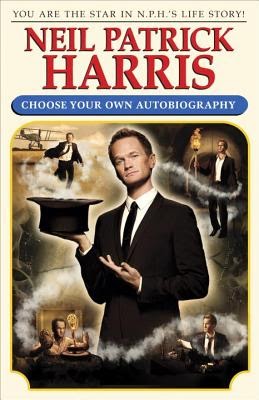
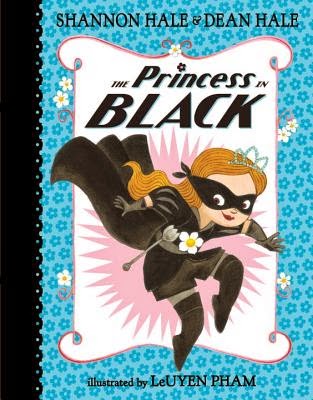
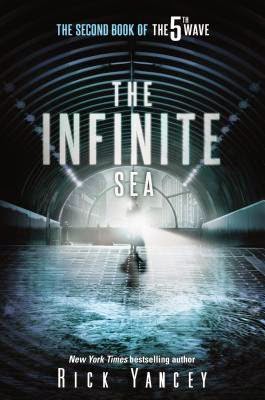
K and Hubby finished up Howl’s Moving Castle (and watched the movie; they liked it, but said it was very different from the book) and have started this:

I threw it on the pile saying it’s “feminist pirates!” I guess that works with an 8-year-old. She’s really liking it.

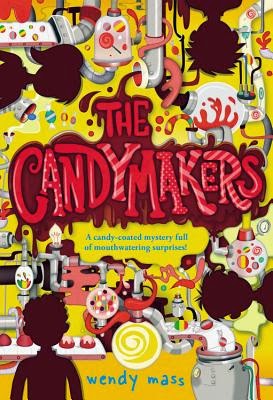
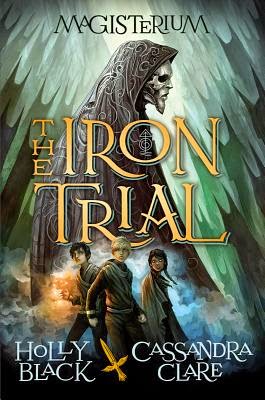
A has started a half-dozen books, but has yet to find the drive to finish them (mostly because she also discovered Dr. Who, and has plowed through EVERYTHING from the 9th doctor on. She likes the 11th Doctor the best.) The one book she did finish was this:

It’s a re-read for her, but she loves the characters SO much (how can you not?) that she needed to reread this one.

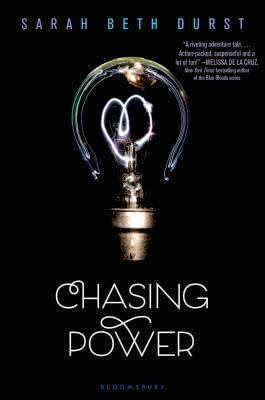
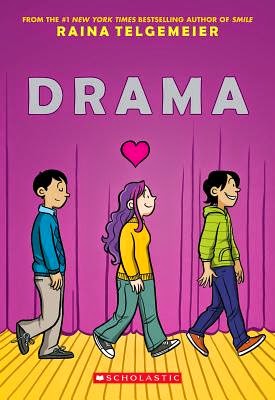
C didn’t have much time for reading; she ended up being in an intense two-week-from-start-to-finish musical revue. Which was a fantastic experience for her. When she did have time, though, she read this:

It’s a series of personal essays about the relationships between girls and gay boys. She has really enjoyed the ones she’s read so far.

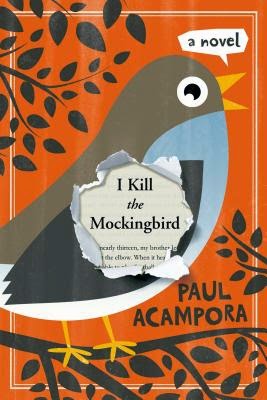
And M (like A) has started a number of books, but has petered out on most of them. The one that she spent the most time with was

which was lent to us by a regular customer at the store who knew about M’s trip to India. M’s really enjoyed it; she simultaneously relates to it as well as is deeply grateful her experience in India wasn’t as initially terrible as the author’s. It also is allowing her to revisit a place that she’s come to miss.

What are you and your kids reading?

The Fourteenth Goldfish

by Jennifer L. Holm
First sentence: “When I was in preschool, I had a teacher named Starlily.”
Support your local independent bookstore: buy it there!
Review copy snagged from the ARC shelves at my place of employment
Release date: August 26, 2014
Content: I think it’s geared towards younger readers: larger font, lots of white space, and everything is pretty much spelled out. It’ll go in the middle grade (grades 3-5) section of the bookstore, but could go for strong younger readers.

Eleven-year-old Ellie has a pretty normal life. Her parents — both Theater People — are divorced, but get along. She is dreading middle school, especially since she and her best friend since Kindergarten seem to be drifting apart. But, mostly, it’s just your normal, every-day life. That is, until her mom gets call to go pick up “Melvin”. Who happens to be her father, Ellie’s grandpa. Except now he’s 13. Turns out, he discovered a new species of jellyfish, one when ingested, gives you back your youth.

But things aren’t all roses and unicorns for Melvin: being 13 is not the same as being in your 70s. There are some upsides: a good digestive system, and the lack of a need to pee in the middle of the night. But the downside is that Melvin has lost access to his lab, which means if he can’t get the jellyfish, he can’t prove his theory, and he won’t win the Nobel Prize.

While Ellie is our narrator, it’s Melvin who drives the action. He’s the one who introduces Ellie to Science; gets Ellie to talk to her new friend, Raj; the one who needs to break into the building. One of my problems with this (aside from being Too Old; I do think younger readers will love it) is that Ellie is not proactive, but rather reactive in her own life. She’s a sweet girl, and a nice person to read about. But the book just wasn’t exciting.

It was, however, charming and informative. Holm managed to put a ton of science in her science fiction book: everyone from Galileo and Newton to Oppenheimer and Einstein make an appearance. And she explains some basic scientific concepts in pretty general — and clever — ways. So, while it wasn’t exciting, it was interesting. It did take me a while to figure out the title, why it was called the 14th goldfish (since goldfish didn’t play much of a role), but I thought the ending was sweet and Holm did explain it.

Not my cup of tea, but I’m glad I read it.

July 2014 Wrap Up

I don’t know about you, but the end of July pretty much marks the end of the summer here in Kansas. The girls go back to school on August 12th, and while I’ve got my John Green book club through the end of the month (the 3-5th grade one died, unfortunately), my responsibilities at work are kind of pulling back. Though I’ve got a project in the works that hopefully will be Fun and a lot of people will want to participate. More later.

Anyway, I spent a lot of time watching movies — both Pirates of the Caribbean and Lord of the Rings with A; Say Anything with C; Howl’s Moving Castle with K; Godzilla with Hubby — and a lot of time at the pool, so I didn’t get much reading done. I am thinking, though, that I’m due for a good dose of non-fiction. Maybe as the weather starts cooling off..

I didn’t really have a strong favorite this month, but I did thoroughly enjoy this one:

The Glass Sentence

 it really was a wonderful world and a gripping story (once it got going; it really is slow to start).

As for the rest:

Middle Grade

A Horse Called Hero
Loot: How to Steal a Fortune
Randi Rhodes, Ninja Detective: The Case of the Time Capsule Bandit (audio)
The House of Pooh (audio)

Adult:

The Lost

YA:

The Bitter Kingdom
Keeping the Castle (audio)
The Summer Prince

I read two John Green books, but I didn’t feel a need to re-review them.

Graphic Novel:

Cleopatra in Space

Non-Fiction:

The End of Your Life Book Club

What were your favorites this month?

The End of Your Life Book Club

by Will Schwalbe
First sentence: “WE were nuts about the mocha in the waiting room at Memorial Sloan-Kittering’s outpatient care center.”
Support your local independent bookstore: buy it there!
Content: There’s really nothing. It’s a very adult book in its sensibilities, but there’s no reason a teenager — especially a bookish one — couldn’t read this.

This book has been on my radar for a little while; it made the rounds at the bookstore when it came out and many of the staff and regulars loved it. But I didn’t get around to reading it until a good friend of mine suggested it for our book group.

If you haven’t heard about this one, it’s basically the story of Will’s mother as she goes from diagnosis for pancreatic cancer through her final days. The two of them are both avid readers, and they formed their own small book group during her chemotherapy sessions. It’s one part book-lovers book, and one part death and dying story.

I liked the book-lover part better, mostly because it was something I could grasp. I hadn’t read (or even heard of) a good number of the books they talked about, but Schwalbe was enthusiastic and thoughtful about enough of them that I’m interested in checking several of the books and authors out. I highlighted quite a few quotes about books and reading, ones that resonated with me.

As for the death and dying part, I was touched by Schwalbe and his mother’s story. She was a remarkable woman, who did remarkable things in her own small way. I had one of those “if I could only be as awesome as she was” moments. And you could tell the affection that Schwalbe had for his mother. I know that sometimes in these sorts of books the dead person gets “sainted”, but I never felt that his mother was. By framing the book around the books they read, Schwalbe gave this book a grounding — and a broader audience — that you don’t usually find in cancer books, something which I appreciated quite a bit.

I don’t think it was my favorite book ever, but I am glad I finally got to read it.

The Bitter Kingdom

by Rae Carson
First sentence: “We run.”
Support your local independent bookstore: buy it there!
Others in the series: The Girl of Fire and Thorns, The Crown of Embers
Content: It’s a pretty complex book, full of politics and machinations. But, even with all the fighting and killing and wars (and some brief sexytimes), it’s not a graphic book. It’s in the teen section (grades 9+) of the bookstore, but I think a strong younger reader would enjoy it as well.

Queen Elisa is in a terrible predicament. Her country has been taken over by an ursuper, Conde Eduardo. The man she loves and the commander of her Royal Guard has been kidnapped by traitors. And she only has a few friends she can count on. The problem is that she needs to head into Invierne and convince them to stop invading her country. And figure out how to deal with her newfound power from her Godstone.

That doesn’t even begin to touch this complex and fascinating ending to a complex and fascinating trilogy. I’ve always loved the religious element to this story, how God plays a role in Elisa’s life. I really enjoyed the way Carson pitted the Joyans and the Inverinos against each other; both think they are right, and both think the other is wrong. It’s really a book about compromise and understanding, and I loved that.

Elisa has become, for me, one of my favorite heroines. She’s not kick-butt fighter, but rather a savvy, clever, and fascinating character; someone who uses her brain rather than her fighting skills. Carson also gave us Hector’s point of view a few times in this book, something which I appreciated. While I’ve loved seeing Hector from Elisa’s point of view, it was interesting to be inside his head and to know a little more how he works.

I do think that the only thing I would have done differently with this series is wait until they were all out so I could read them one after another. I think the experience of this story would be that much better if I had read it all in one gulp.

A Horse Called Hero

by Sam Angus
First sentence: “Wolfie stopped, distracted by the stacks of sandbags and newly dug trenches.”
Support your local independent bookstore: buy it there!
Review copy provided by the publisher.
Content: There’s really nothing objectionable for the target audience, though there are letters written in cursive, and I know my 3-5 graders would have problems deciphering those. There’s also several intense situations, so if you have a sensitive child, you might want to shy away from that.

Dorothy and Wolfgang Revel — they go by Dodo and Wolfie, however — are children in London the winter of 1940 when the German bombs start dropping. Their father is called up to serve in the army — he was a celebrated commander during World War I — and they are sent off to Northern England to live with strangers. They’re doing okay, until word comes back that their father was arrested for desertion. Then, they are outcasts in this strange place. That is, until they’re taken in by the school teacher. Whereupon Wolfie chances across a horse being born and adopts it for his own.

If you can’t tell my my enthusiastic summary of the first 50 pages (which is really all that is; this book covers an enormous amount of time), I am not a horse person. And, alas, this book did nothing to help with that. I kind of had hopes that this would be Inspiring and Uplifting and help me see what people find in horse books, but… no. I was bored. The basic plot revolves around Wolfie’s love for Hero The Horse and the kids’ concern about their father. There was an incident when Hero saved them after they got trapped in the bog, and another when Hero helped Wolfie get out of a mine after an explosion, but by then, I was so Bored because of the lack of Real Plot (and the extended time; Wolfie was 5 or so when it started, and 14 by the end), I was just skimming.

I am sure that there are kids who would Love this one, but I am not one of them.

10 Great Audiobooks

For quite a few years, I’ve gone to the library and picked out a few (sometimes upwards to a dozen) audiobooks to choose from as alternatives to music or movies in the car. This time, we got to talking about books we’ve listened to (and liked) over the years, and that prompted me to come up with a list of our favorite audiobooks. I’ve added a few of my personal favorites as well.

1. The True Meaning of Smekday, by Adam Rex; read by Bahni Turpin. This is one we still rave about; it’s absolutely captivating and Turpin is fantastic as a narrator. In fact, we love it so much, we’re kind of worried about the changes that they’re making with the movie. Though we agree that Jim Parsons is perfect at J. Lo.

2. The House at Pooh Corner, by A. A. Milne; read by a whole cast. As I was going back through my records, it turns out we listened to this one before. Doesn’t matter; we were still captivated by the voices (particularly Geoffry Palmer as Eeyore) and you can’t go wrong with the Pooh bear stories.

3. The Black Cauldron, by Lloyd Alexander; read by James Langton. I think hubby and I enjoyed this one more than the girls did. They complained there were too many characters and it was confusing. Perhaps, they were just too young. Langton, however, was a perfect narrator.

4. Encyclopedia Brown Gets His Man by Donald J. Sobol; read by Greg Steinbruner. Another one we rave about, still. The girls have asked, on multiple occasions, if we can get more of these, but I haven’t found any yet. We loved listening to the stories and trying to solve along. And Steinbruner was excellent.

5. The Lion, the Witch, and the Wardrobe by C. S. Lewis; read by Michael York. If you haven’t noticed yet, we tend to pick classics to listen to while we road trip. Partially that’s because we want to expose our kids to them, but also because I think they’re more interesting when read by a good reader. This is certainly true for Lewis’s books. The ones we’ve listened to have been fantastic.

6. The Graveyard Book, by Neil Gaiman; read by the author. The only thing I have to say is that if you’ve never heard Gaiman read one of his books, you’re missing out. I’d listen to him read a tech manual and be hanging on every word. It helps, of course, that he’s a great writer and storyteller as well.

7. Daughter of Smoke and Bone, by Laini Taylor; read by Khristine Hvam. Taylor’s a beautiful writer, and Hvam captures her characters perfectly. Especially Brimstone. It was one that I just listened to on my own, but she had me hanging on every word.

8. To Kill a Mockingbird, by Harper Lee; read by Sissy Spacek. It’s one of those that everyone should read, and Sissy Spacek’s perfect southern drawl compliments Lee’s words quite nicely.


9. Major Pettigrew’s Last Stand, by Helen Simonson; read by Peter Altschuler. Often, when listening to an audio book, the reader makes or breaks the experience. In this case, the reader made it. He captured everything perfectly, and I had a better experience than I think I would have if I had just read the book.

10. One Summer: America, 1927, by Bill Bryson; read by the author. Much like Neil Gaiman, Bryson’s books are better listened to. He’s got an incredibly dry sense of humor, and that suits his writing quite well. They’re chock full of information, though, so don’t be surprised if you end up checking out the print book as well.

What have been some of your favorite audio books?

Loot: How to Steal a Fortune

by Jude Watson
First sentence: “No thief likes a full moon.”
Support your local independent bookstore: buy it there!
Content: The only think I can think of is that it’s a bit intense, action-wise. Probably on par with the Percy Jackson books. There’s no swearing, no romance. It’s happily in the middle grade (grades 3-5) section of the bookstore.

This book — combined with The Great Greene Heist (it’s a trend! Does two books make a trend?) — has gotten me thinking about the implausible versus the impossible. It is implausible that Jackson Green could have thrown together a crew to scam less-than-intelligent adults into exposing a blackmailing scheme. It is highly impossible, however, that 12-year-old March McQuin could have gotten together a crew in order to steal back 7 Moonstones that his illustrious thief father, Alfie, stole 12 years before. (Granted, the premise behind the Heist Society books by Ally Carter is also impossible.)

Impossible, however, doesn’t mean “bad”.

In fact, Watson has put together quite a ripping tale. After Alfie’s death during a heist in Amsterdam, March discovers he has a 12-year-old twin sister, Julia, that he didn’t know about. And then, at Alfie’s funeral, March and Julia are confronted by the woman from whom the moonstones were stolen. She’s offered them $7 million in order to steal them back. In a week. They’re up against incredible odds: Alfie’s old partner, who has just recently gotten out of jail, are after the stones as well.

Even though the premise is impossible, Watson does a fantastic job keeping up the pace. The chapters are short, the pacing quick, making it a perfect read for reluctant readers. Plus, it’s action-packed with chases (both in the car and on foot) and rooftop falls as well as planning and executing some pretty amazing heists.

No, it’s not a story that could actually “happen”. But it was still a lot of fun.

Cleopatra in Space

Book One: Target Practice
by Mike Maihack
Support your local independent bookstore: buy it there!
Content: There’s some violence, but nothing terribly graphic. What struck me is that there is a lot of exposition (with long words) in this one. I’m not sure if K understood everything that went on, but she got the gist of it. Which is what graphic novels are great at.

It’s her 15th birthday, Cleopatra (yes, that Cleopatra) doesn’t want to go through with her party. The ceremony, the pomp, the everything. So, she sneaks away from her tutor, and discovers a portal to a future time and place that is being besieged by a tyrannical dictator. The prophecies declare that she will be the Savior of the world, but first: she has to go to academy to figure things out.

It’s essentially a fish-out-of-water story; BCE girl meets futuristic technology. I liked how she found everything boring, until she got to combat training. She took to that immediately. She’s a girl of action, and she’s smart and tough — when it comes to combat. She’s not a scholar and that’s okay. The only thing that was a bit disconcerting was the whole talking cats. Cats in this world have evolved to the point where they kind of run things. And it’s a bit weird. But that just may be me.

In the end, it reminded me a lot of Zita the Spacegirl — both in the content as well as the artistic style — which is a good thing. And I’m curious to see where Maihack goes next.