Kill the Boy Band

killtheboybandby Goldy Moldavsky
First sentence: “People have called me crazy.”
Support your local independent bookstore: buy it there!
Release date: February 23, 2016
Review copy provided by the publisher.
Content: There’s a LOT of f-bombs, plus an off-screen sex scene. It’ll be in the Teen (grades 9+) section of the bookstore.

You ever finish a book and think “Huh. That was a wild, weird, insane trip”?

Yeah, this is that sort of book.

The premise? Four friends — Samantha, our narrator; Erin; Isabel; and Anna — who are all dedicated fans of The Ruperts (a One Direction-like band) have met up in New York City for The Ruperts’ Thanksgiving show. They’ve managed (thanks to Anna, whose family is loaded) to score a room in the hotel where the boys are staying. Their goal? To score tickets to the show, maybe meet the band.

Or at least that’s what it begins like.

Then, they accidentally sort-of on purpose kidnap the most useless member of the Ruperts, Rupert P., and things kind of go (hilariously) downhill from there.

I’ll admit it: I laughed. I laughed a lot. The premise is so ridiculous, so inane that I had to laugh. The fans are called Strepurs (that’s Rupert’s backwards). The four girls got into ever increasingly weird situations. But, at it’s heart, it’s a dark novel. What is the purpose of a celebrity? How much do they owe their fans? How much should a fan expect? You see this all the time with celebrities, finding a balance between being a private person and appeasing their fans, and Moldavsky just takes it to the extreme. It’s also a musing on the extremes that fans — especially teenage girls, but maybe that’s a stereotype — will go to meet and interact with the object of their affection. It’s a fascinating look — albeit satirical — at the current state of culture.

Did I like it? Yes. Did it scare me? Somewhat. (My boss says it’s because I have teenage girls who are fans of things.) Is it good? Definitely.

See How They Run

seehowtheyrunby Ally Carter
First sentence: “I don’t know where I am.”
Support your local independent bookstore: buy it there!
Others in the series: All Fall Down
Review copy provided by the publisher.
Content: There’s some deaths, off screen, some mild swearing, and a lot of intense moments. It’s in the YA (grades 6-8) section of the bookstore.

Spoilers for the first book, obviously.

The last thing Grace remembers was finding out that she killed her mother (by accident, but still), and then her grandfather’s chief of staff shot the Adrian prime minister (who is currently in a coma). What she’s being told, however is that the prime minister had a devastating heart attack, so Grace is still questioning her sanity. That and said chief of staff happens to be part of a secret 300-year-old organization of librarians who also happen to be assassins. Oh, and Grace’s mother was part of that society as well.

To make things worse, her brother Jamie shows up with a friend in tow, and after a party on a nearby island, said friend turns up… dead. The person being targeted is the son of the Russian ambassador (obviously) and Grace’s almost love-interest, Alexei. And Grace is determined to prove what she knows: Alexei’s innocent.

While this is a darker turn for Carter, it’s still very much her fun, engaging writing. I adored the chemistry between the characters (though I ship Grace and Noah, but that’s just me. I need more Noah in these books.), and the twists and turns kept me turning pages. While it was predictable at times (yeah, I figured something bad would happen to the new guy who just showed up and was a bit of a jerk) I never felt bored by it at all. I loved the intrigue, the history and mythology Carter is weaving around her invented country.

That said, I did want more of the assassin-librarian group, and Grace and her PTSD were often annoying. But, I was able to look past the second one, especially as the book wore on and Grace became less fraught with emotion and more invested in proving Alexei’s innocence.

In short, it’s a good, solid series and I’m curious to see where it goes from here.

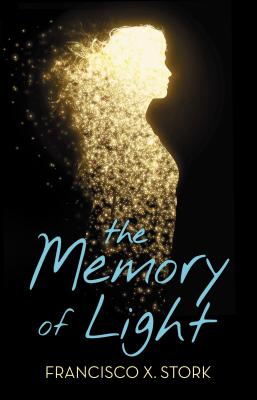
The Memory of Light

by Francisco X. Stork
First sentence: “Nana, I tried to write you in Spanish by my Espanol no es muy bueno en este momento.”
Support your local independent bookstore: buy it there!
Release date: January 26, 2016
Review copy provided by the publisher.
Content: There’s frank talk of depression and suicide, a few mild swear words, one (maybe two?) f-bombs, and some indirect drug use. Nothing too bad, though, so it’ll probably be in the YA (grades 6-8) section at the bookstore.

Vicky should have the perfect life. Her father is a high-powered Latino businessman, so she’s never wanted for anything. She goes to a high-powered private school, she has a popular boy who likes her. But. She doesn’t feel like anything’s worth living for. Her Nana is being sent back to Mexico, in spite of having been a part of the family since before Vicky was born. Vicky’s constantly being compared to her “perfect” older sister; she’s never quite good enough, smart enough, driven enough. So, one night, she decides to take her own life.

Except, it doesn’t work. She finds herself in the mental ward of a hospital, walking to a therapist and a group of other mentally ill teenagers — bi-polar, anger management, schizophrenic — wondering if there is a way to have depression rather than to be depressed.

I can’t tell you how much I loved this book. I am SO glad that there is a book out there about depression and suicide that isn’t depressing as well. Yes, Vicky is sad, a sadness that is impossibly empty, but the book itself finds hope and healing in it. Slowly, Vicky finds reasons to live, she finds her voice, she finds friends, she finds a community to connect with, and she figures out ways to deal with this depression she has. On top of that, in Stork’s hands this story — which is personal for him, since he suffers from depression as well — has a heart and soul that reached out and grabbed me. He’s so good a portraying pain, but he’s also incredible at portraying healing and friendship, all of which I needed at this point in my life.

Excellent.

The Sword of Summer

swordofsummerby Rick Riordan
First sentence: “Yeah, I know.”
Support your local independent bookstore: buy it there!
Content: There’s really nothing objectionable. Some violence (lots of death, mostly) and some more serious underlying issues. I’d give it to a 4/5th grader. I’m undecided about where it should go. It’s currently in middle grade (grades 3-5) with the Percy Jackson series, but I’m thinking about moving it to YA (grades 6-8).

Magnus Chase is a 16-year-old homeless kid (he’s been homeless for the past two years since his mom was murdered) when he discovers that he’s not who he thought he was. He is, in fact, the son of the Norse god, Frey, and he’s been targeted by all of Frey’s enemies. In fact, he loses his first battle and ends up dead, in Valhalla. From there he realizes that he can’t let something as insignificant as death stop him: he needs to find the sword of summer and stop the evil forces from rising. The question is, though, can he do it?

First off, plot and everything else aside, I am SO happy the sassy chapter titles are back! Seriously, I have missed those.

In fact, Magnus’s voice is eerily similar to that of Percy in the first series. No, it’s not as good as PJ and the Olympians, but it’s the closest thing to it since Riordan wrote The Last Olympian. It’s sprawling and meandering and I think that Riordan’s cramming way too much in there (but then again, doesn’t he always?). But the characters are fascinating and aside from the “deaf and dumb” moniker (which Abby called him out on) for one of the characters who was deaf, it was wonderfully, naturally diverse. Sam, the Muslim Valkyrie, is one of my favorite characters. It’s nice to see Riordan being inclusive.

Oh, and Annabeth is in it! (Yes, that Annabeth.) You don’t have to read any of Riordan’s other books to enjoy this one, but there’s always some nice asides (like how a pen turning into a sword is lame) for those of us who have.

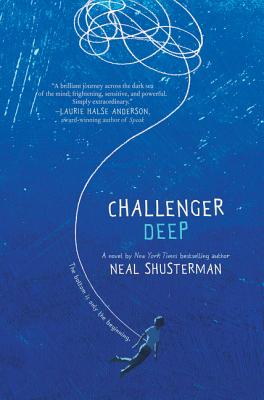
Challenger Deep

challengerdeepby Neal Shusterman
First sentence: ”
Support your local independent bookstore: buy it there!
Content: There’s some talk about drinking, but none actual. And there’s some mild swearing. But the reason it’s in the Teen (grades 9+) section of the bookstore is because it’s an extended metaphor. I’d give it to someone in 7/8th grade if I thought they’d “get” it.

Very seldom does a jacket flap so succinctly sum up a book, but in this case, I think whomever at HarperTeen did this, was spot on:

Caden Bosch is on a ship that’s headed for the deepest point on Earth: Challenger Deep, the southern part of the Marianas Trench.

Caden Bosch is a brilliant high school student whose friends are starting to notice his odd behavior.

Caden Bosch is designated the ship’s artist in residence to document the journey with images.

Caden Bosch pretends to join the school track team but spends his days walking for miles, absorbed by the thoughts in his head.

Caden Bosch is split between his allegiance to the captain and the allure of mutiny.

Caden Bosch is torn.

This book. I’ve been avoiding it for months, and I really only picked it up because Pop Culture Happy Hour did a recent podcast on it. But this book pulled me in and didn’t let me go. I don’t know of a more accurate, a more compelling, a more beautiful rendering of the spiral that mental illness — it really doesn’t matter what Caden’s diagnosed with — is. Shusterman gives us an allegory with the ship that is compelling and intriguing and maybe a little confusing. But the confusion is part of the trip; Shusterman not only wants us to read about Caden’s descent into illness, he wants us to feel that with him. And feel I did.

Powerful. And definitely one that will stay with me for a long time.

All Fall Down

embassyrowby Ally Carter
First sentence: “‘When I was twelve I broke my leg jumping off the wall between Canada and Germany,’ I say, but the woman across from me doesn’t even blink.”
Support your local independent bookstore: buy it there!
Content: There’s some intense situations, but no swearing and  no sex. It’s in the YA section (grades 6-8) of the bookstore.

Grace saw her mother murdered three years ago. She is 100% sure of this fact. She knows it was a man with a scar on his face, that her mother was shot, not burned in an accidental fire. The problem? No. One. Believes. Her.

She’s spent the past three years in and out of therapy and in and out of drugs, and now has come to Embassy Row in Adria to live with her grandfather and forget what happened. The problem? Grace can’t let it go.

And it doesn’t help that Grace is positive that she’s seen the man who murdered her father. So, she ropes her new friends Noah and Megan (and her German neighbor, Rosie) into spying on the man. The further she goes, however, the more confusing everything becomes. Grace has no idea who’s her friend and who isn’t.

This is darker than Carter’s usual fare, and without the swoon factor (ahhh HALE). But what it lacks in fluff and swoon it more than makes up for with a completely unreliable narrator, several twists and turns, and a pretty amazing ending. Grace is a fascinating character, angsty (well, I prefer to think of it more as PTSD-y), smart, and completely wrong about so much. It makes for a trippy ride, one where I had no idea what was going to happen next. I loved that about this book. And I’m completely in the dark as to where the next book is going.

Of course I’m going to have to read it.

Not if I See You First

by Eric Lindstrom
First sentence: “My alarm buzzes and I slap it off and tap the speech button at the same time.”
Support your local independent bookstore: buy it there!
Review copy provided by the publisher.
Release date: December 1, 2015
Content: There’s a lot of swearing — not overly so, but enough that I wouldn’t recommend it to sensitive souls. It’ll be in the Teen section (grades 9+) of the bookstore.

Parker Grant hasn’t had an easy life. She lost her sight at age 7 when her mother crashed the car (and was killed), but she and her dad have made do. Parker found a close cohort of friends that have stuck with her through the years. With the exception of Scott, who she thought was her friend until a betrayal in 8th grade. Now, just before the start her junior year, Parker’s life just got messy again: her father accidentally overdosed on prescription meds, and she’s alone again. (Well, not really: her aunt and uncle and their family have moved in with her. Which helps, but isn’t really something she is happy about.)

(Before I go much further, I know: dead parents. I understand getting them out of the way for the purposes of the story, but wow. Merciless.)

Now, Parker has to figure out what she’s going to do. She’s coping, but not well. And when Scott shows back up at her high school (they went their separate ways in 9th grade), she has to deal with those resurfacing emotions as well.

Lest that make it sound like a love story, it isn’t really. Yeah, there’s some kissing, and some talk about love and boyfriends and such, but the ending isn’t a perfect, happily-ever-after.

I did, however, fall in love with Parker. Seriously. From the opening pages where she goes for an early morning run, and the mechanics of that, I knew I was hanging out with someone worth getting to know. And the great thing is that she was a complicated person. She was angry, she was holding her emotions about her dad, about Scott, about everything in. She was a bad friend sometimes. But she also learned and grew and changed. And there were pretty great people (who were also normal) surrounding her.

I don’t know how accurate Lindstrom’s depiction of a blind girl was, or how well it’ll resonate with people who have experience with blindness. But, I liked that he didn’t limit Parker by her “disability”. She was capable, she was smart, and yes she needed help, but she was independent in so many ways. I also liked that no one was limited by color, size, sexuality (though that wasn’t really explored), or ability. There were POCs in the book, but it was only mentioned in passing. It wasn’t dwelt upon; these were just kids hanging out, making decisions, trying to get through each day.

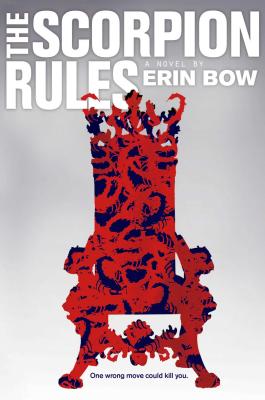
The Scorpion Rules

 scorpionrulesby Erin Bow
First sentence: “Once Upon a Time, at the End of the World.”
Support your local independent bookstore: buy it there!
Content: There are exactly two f-bombs, some mild swearing, and one illusion to sex. It’s in the Teen (grades 9+) section of the bookstore, but I’d give it to a 7th grader, if they had no objections to the content.

At this point in my life, I’m very much been-there, done-that when it comes to dystopian/post-apocalyptic books. I feel like I’ve read/seen them all, and there’s really nothing new to explore there.  So, my first thought was that this was just going to be more of the same-old, same-old, and I passed on the ARC. Then it came in, and on the back were quotes from authors I respect, so I thought (somewhat begrudgingly), that I would give this one a try.

(I know, I know: I’m not “supposed” to start these with “I’m not a fan of x”. But bear with me.)

It didn’t take me too long to realize that I was utterly wrong. First of all, the premise is something I haven’t encountered in a long while: humans have destroyed the world through climate change and war, and somewhere along the way, invented artificial intelligence. One of the AIs decided that enough was enough, and took over — by blowing up a number of huge cities — ruling the world. And the way Talis, the AI, decided to keep the peace? By keeping the children of the world’s rulers hostage. If they enter into war, their children would be killed.

Brilliant, no?

Greta is the Crown Princess of the PanPolar Confederacy, a major North American power formed out of what we know as Canada. She’s also a hostage of Talis, living in the prairies of Saskatchewan at the Precepture with her compatriots, fellow hostages. Then one day, war breaks out, one of her friends dies, and a new boy, Elian, shows up. He’s the grandson of the leader of a new alliance, and he’s not at all willing to take his role as a Dutiful and Humble hostage. He fights every step of the way. And somehow, this awakens Greta (and the rest, including her best friend La Da-Xia) to the horrible reality that is her life.

There is so much more to it than that, but I don’t want to give it all away. I adored the combination of high-tech (there are flying battleships and smart pads and cameras and, of course, the AI) and low-tech (the children at the Precepture are basically farmers, thinking about raising goats and bees and harvesting vegetables. There’s a monastery-like feel, as well: they call the AI in charge “Father”. But I also loved the diversity: Bow rightly depicted people from all over the world — African, Asian, Native American, Hispanic — but it felt natural and organic rather than some sort of forced diversity.

But what I really loved was the fluidity of the romance. There’s a love triangle of sorts, but not your typical one; Greta is bisexual and there’s no angst or heartache about this. She’s in love with both a male and a female, and it’s just the way she is. And even Talis, when he shows up, was more gender fluid in his depiction (as benefiting and AI, no?). It was all very different, and very, very refreshing.

It’s the start of a series, and I’ll definitely be picking up the next one to see where Bow takes Greta’s story.

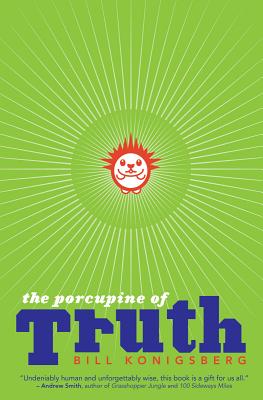
The Porcupine of Truth

by Bill Konigsburg
First sentence: “The Billings Zoo has no animals.”
Support your local independent bookstore: buy it there!
Content: There’s a lot of swearing, including multiple f-bombs. It’s in the Teen (grades 9+) section of the bookstore.

Carson Smith has drawn the short stick for the summer: he’s stuck in Billings, Montana with his mom. They’ve moved back to take care of his dying, alcoholic father whom Carson hasn’t seen in 14 years. It’s not exactly the Ideal Summer at all.

Then Carson, completely by chance, meets Aisha and strikes up a friendship. No romance here: Aisha’s a lesbian who has been kicked out of the house by her super religious dad. She’s having a winner of a summer too, so she moves in with Carson and his parents. Everything is shaping out to be a complete Win until Carson and Aisha start nosing through boxes in the basement and uncover some clues to Carson’s grandfather’s disappearance back in the early 1980s. One thing leads to another and soon Carson and Aisha are on a road trip to find Carson’s grandfather.

This was a hard book for me to read, as a religious person. Mostly because Carson and Aisha are incredibly hostile — for good reason, I think — toward organized religion. I can understand why: too often people hide behind Religion, using it to justify their prejudices and to promote hate. But not everyone does, and I was made uncomfortable by the broad strokes: all people who are “religious” are bigots.

Thankfully, there is growth with these characters, and I appreciated that. I appreciated that, overall, Konigsberg treated everything thoughtfully and carefeull. Which meant that no one was truly black and white and that both Carson and Aisha learned things along the way.

There’s a lot to think about in this book, and I do think it’s a story, with all its broken people and hurtful relationships, that needs to be told. I just wish religion and religious people came off better.

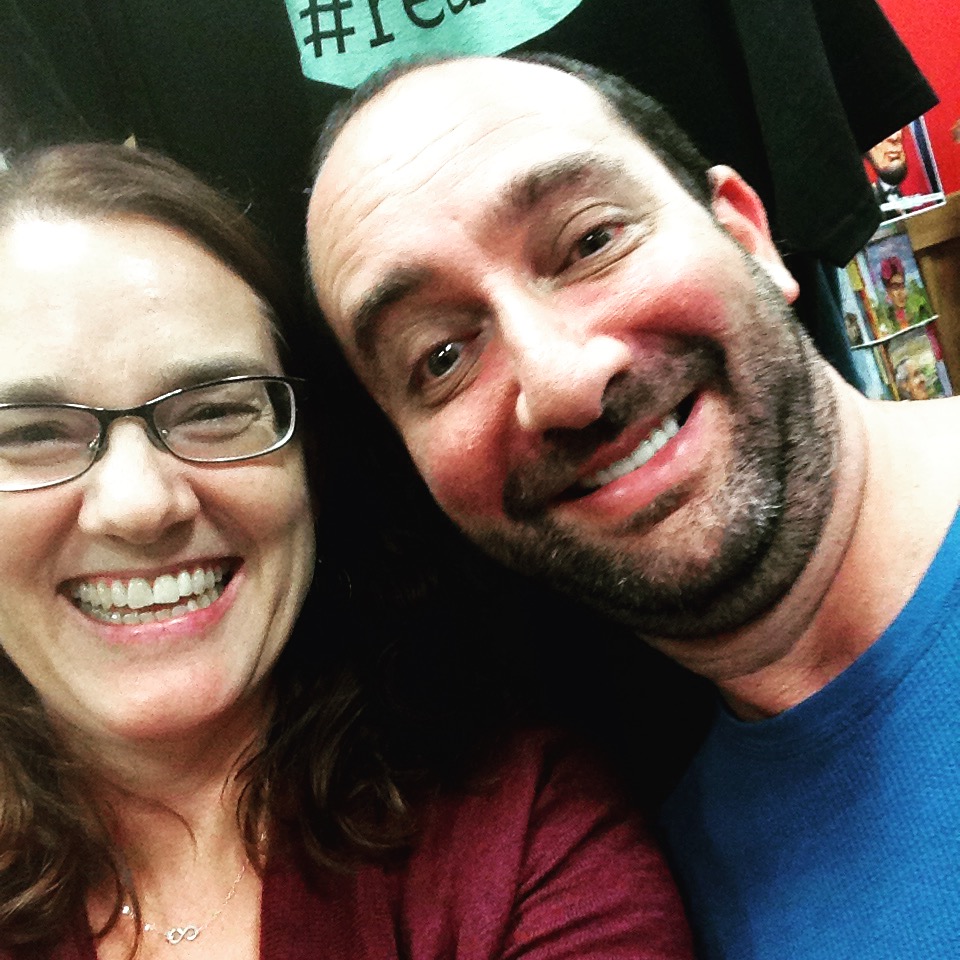
A quick aside: Konigsberg stopped by the store as part of his Porcupines for Trevor tour. While it wasn’t super well-attended, we got a small crowd and we sat in a circle talking about religion and the LGBTQ community. It was a very interesting (and civil) discussion, one that I was glad we had.

Also: we took a selfie. He was very kind, and very, very tired.

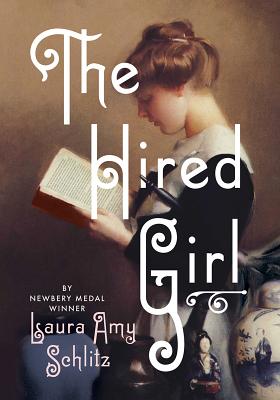
The Hired Girl

by Laura Amy Schlitz
First sentence: “Today Miss Chandler gave me this beautiful book.”
Support your local independent bookstore: buy it there!
Content:  There’s some harsh illusions to domestic violence in the beginning and some illusions to sex near the end, but nothing actual. It’s in the YA (grades 6-8) of the bookstore.

Joan is a 14-year-old Pennsylvania farm girl in the early 1900s who longs to be Educated and See the World. However, ever since her mother died, she has been increasingly chained to the farm by her boorish and harsh father. He forces her to withdraw from the local school, but the last straw was when he burned her books. So, she packs up in the middle of the night, and heads to Baltimore to Make Her Fortune.

Her fortune turns out to be Solomon Rosenbach, who finds her distraught in the park with nowhere to go. He brings her home and his mother hires Joan — who is pretending to be 18 and is going by Janet — to be the hired girl. From there, Joan becomes a part of the Rosenbach family’s lives, sometimes with positive results and other times not so much.

It sounds pretty mundane, but in Schlitz’s hands, this time period comes alive. Not only does she capture the cusp of the women’s movement: the idea that women can be educated and can be live without husbands and fathers, she captures a girl who is out discovering not only the world, but herself. Additionally, Joan’s voice is so captivating that it makes the book a delight to read.

But what I liked best — being religious myself — is the way Schlitz addressed religion. The Rosenbach’s are Jewish, and while not Orthodox, they do practice their religion. And Joan is a Catholic. Or at least, she’d like to be because her mother was. Schlitz explores prejudice and Antisemitism, explores how to practice your own religion while respecting that of other people around you. All of which is not only relevant, but interesting.

I do have to admit that I kind of lost interest near the end, when there is some Drama involving another Rosenbach son. But, Schlitz even handled that well, and the last chapter gave the book a good ending.

Overall, a good book.