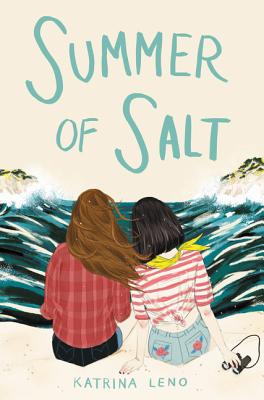
Summer of Salt

summerofsaltby Katrina Leno
First sentence: “On the island of By-the-Sea you could always smell two things: salt and magic.”
Support your local independent bookstore: buy it there!
Content: Lots and lots and lots of swearing, including f-bombs (which seemed really out of place to me; I don’t know why) and some teenage drinking. It’s in the Teen section (grades 9+) of the bookstore.

Georgianna and Mary are twins that have grown up on the island By-the-Sea, daughters of the Fernweh line of women who have, well, magic. It usually manifests at birth, but sometimes takes longer. One of their great-grandmothers, Annabella, has turned into a bird, and comes back every summer to nest and attempt to hatch babies. Except this year.

This is the year that Georgianna and Mary turn 18, the summer before they are destined to leave the island. And everything seems to be going wrong. It won’t stop raining. Mary’s acting strange. And Annabella hasn’t shown up. And Georgianna’s magic won’t manifest itself.

This was an odd book — more magical realism than anything else — but I found myself enjoying it. I loved the matriarchal family, I loved the little island and it’s support of the weirdness that is the Fernweh women. I loved the magic, and now ordinary it was. And I just enjoyed the way Leno told the story.

It was all very charming.

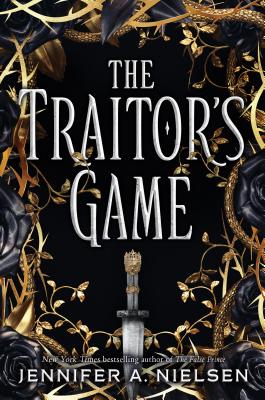
The Traitor’s Game

traitorsgameby Jennifer Nielsen
First sentence: “The truth of where I’d been for the past three years wasn’t what anyone believed.”
Support your local independent bookstore: buy it there!
Review copy provided by the publisher.
Content: There are some intense situations and violence. It’s in the young adult (grades 6-8) of the bookstore.

Kestra Dallisor is the daughter of the second most powerful person in the land. Which makes her highly valuable. She survived a kidnapping attempt three years ago, and has been in exile ever since. Now, as she is summoned back to Antora by her father, she is faced, yet again, with an impossible situation: she’s been kidnapped by rebels, her beloved guard held hostage, and they’ve laid before her an impossible challenge: recover the Olden Blade, the only thing that can kill the immortal dictator of Antora. And do it in three days.

She complies, of course, but not willingly. And the things she discovers as she searches for the Blade are going to turn her world upside down.

I thought this one was a lot of fun! I enjoyed Kestra’s determination and stubbornness and her desire to receive affection from her father. She’s smart and capable and it was quite delightful reading her banter with the other characters (no one was safe from her sarcasm). And there were a couple of twists in there that caught me off guard (happily so) and led the story in interesting directions. It’s the first in a series, so while it has a conclusion, it leaves it open for the story to take off in intriguing directions.

Highly recommended.

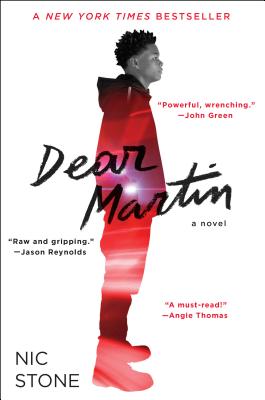
Dear Martin

dearmartin.jpgby Nic Stone
First sentence: “From where he’s standing across the street, Justyce can see her: Melo Taylor, ex-girlfriend, slumped over beside her Benz on the damp concrete of the FarmFresh parking lot.”
Support your local independent bookstore: buy it there!
Content: There is some teenage drinking, talk of sex, swearing, and violence. It’s in the Teen section (grades 9+) of the bookstore.

Justytce is a scholarship student at one of the most prestigious prep schools in Atlanta. He’s smart, he’s observant, he definitely deserves to be there.

Except. He’s one of only three black students in the school. And when he was arrested for trying to help his drunk ex-girlfriend (so she wouldn’t drive drunk!) right before his senior year, he starts to notice things he’s let slide before. Like how his best friend’s (who’s also black) friends are, well, racist. Like how cops seem to get a pass when dealing with black people (especially men). And he tries, through writing letters to Martin Luther King, Jr, to understand they way black people are treated, and tries to understand how to do the, well, “right” thing.

It’s not easy. Justyce says at one point in the book that it’s tough being in his position: he’s got white people at his school questioning whether he deserves to be there (or to get into Yale) and then black people in his mother’s neighborhood trying to pull him back and making fun of him and his aspirations. It’s unfair, to say the least.

And then, in one fateful afternoon, his whole life changes: his best friend is shot and killed in a traffic altercation with an off-duty cop. And Justyce — who was also in the car – – is caught in the cross hairs, and blamed for everything.

It’s a short novel — just over 200 pages — but it packs a punch. The takeaway? White people are awful. We have to work really hard at not being awful, because we take so much for granted. It was definitely eye-opening.

Pair it with The Hate U Give and Ghost Boys, and if you’re white, remind yourself of the privilege you have every day of your life.

The Dark Descent of Elizabeth Frankenstein

darkdescentby Kiersten White
First sentence: “Lightning clawed across the sky, tracing veins through teh louds and marking the pulse of the universe itself.”
Support your local independent bookstore: buy it there!
Review copy provided by the publisher.
Content: There is some talk of violent acts, and one swear word. It’s in the YA section (grades 6-8) of the bookstore.

This book is being billed as a retelling of Mary Shelley’s Frankenstein, but I think it’s more a prequel: the story is of Elizabeth, who becomes a childhood companion of Victor Frankenstein, ostensibly to keep him company, but really to keep his anger and unusual tendencies in check. She is endebted to the Frankestein family for taking her in when she was a small child and basically raising her. And now that they are grown, she feels like Victor is all she has. If she doesn’t keep him in line, she will lose her whole life. So, when he disappears after going away to school, Elizabeth goes after him. And what she discovers is, well, the subject of the classic book.

What this really was (or at least the way I read it) about was the portrait of an abusive man and a woman’s response to it. Victor, if you’ve read the original, is not a nice person. And the way White wrote him, he was never a nice person. And Elizabeth was gaslighted from a very young age. Victor was her world, and the way White portrayed it, that was never a good thing. Or, maybe that’s just the way I read it. Either way, I was angry and disturbed and more angry. It was an interesting book, though: Elizabeth had a phenomenal growth arc, and there were some characters along the way who helped her realize just what an awful situation she was in.

In the end, though, I couldn’t get past the abusive relationship at the heart of it, and the book just made me angry. Maybe that’s a good thing?

Audio book: Give Me Some Truth

by Eric Gansworth
Read by the author and Brittany LeBorgne
Support your local independent bookstore: buy it there!
Or listen at Libro.fm
Content:  There is a lot of swearing, including some f-bombs, a very very awkward almost sex scene, plus some underage drinking. It’s in the Teen section (grades 9+) of the bookstore. 

Set in 1980, this follows two members of the Tuscarora Nation in Northern New York: Carson, whose sole goal is to win the Battle of the Bands and a trip to New York City, and Maggi, whose family has just moved back to the reservation and is trying to figure out where she fits in. There are other things going on: there’s a diner off the reservation called Custer’s Last Stand that is (literally) The Worst, and Carson (and his brother) are mixed up in it. There’s an incident with making turkey in home ec class. There’s Maggi’s (and Carson’s friend Lewis’s) job at the garage. There’s selling traditional beadwork outside of Niagra Falls set against Maggi’s desire to be an artist, rather than just a traditional beadworker.  

Two things: 1) white people are HORRIBLE. And 2) I almost gave this up because of the pedophile. Maggi’s involved with a 31-year-old white guy (she’s 15!) and he was giving her presents and telling her he loved her, and pressuring her to have sex with him, and yet wanted to keep her secret from everyone (“if we don’t tell, it’s not illegal”). I was (literally) screaming at the car radio because of this. But, after talking to A and C about it, I came to realize that the pedophile was part of the larger theme which was my first point. White people (even though this was set in 1980, I’m not sure much has changed) are. the. worst. 

In the end, this was a really good exploration of the way native peoples are treated, and what life on the reservation was like. And, while I thought that Brittany was a much better reader than Eric, I still enjoyed listening to the book. Oh. And finish it. It all does come out right in the end. 

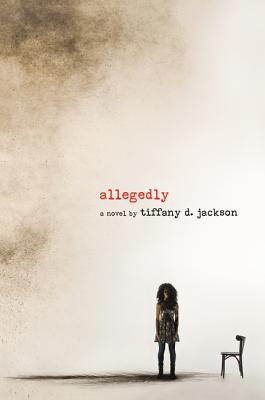
Allegedly

by Tiffany D. Jackson
First sentence: “Some children are just born bad, plain and simple.”
Support your local independent bookstore: buy it there!
Content: There’s a lot going on here: drug use, (tasteful) sex, lots and lots of swearing, not to mention more mature themes. It’s in the teen section (grades 9+) of the bookstore.

Mary Beth Addison was convicted at 9 years old for the murder of a baby, Alyssa. She never said a word in her interviews with detectives, and was convicted in the court of public opinion: some children, Mary being one of them, was just Bad. It didn’t help that the baby was white, and Mary is black.

Six years later, she’s out from “baby jail” (her words) on good behavior, and in a group house with five other teenage girls, convicted of crimes, some more major than others. She was just trying to survive until she met Ted and got pregnant. When she realizes that the state could take her baby away from her, she decides to take action: she wants to go to college, so she attempts to take the SATs. But, mostly, she finds her voice and decides to tell people what really happened the night Alyssa died.

This books was… a lot. Seriously. A LOT. So much to take in: a critique on parenting and poverty and the justice system and white privilege and teenage pregnancy and and and… It’s SO well written and so compelling, that even in its worst moments, when I, as a white woman, had to look at it and realize just how far from my lived experience this book was, and realize that there are people — KIDS — out there LIVING this experience, I could NOT put it down. It has a good mystery element to it as well — what really happened the night Alyssa was killed, and how can we really believe anyone’s testimony — but, as social critique, it’s superb. And it’s a great story as well. Jackson had me totally won over to Mary’s side, and yet left questions and doubts and open ends all the way to the very end.

Incredible.

West

by Edith Pattou
First sentence: “I had placed the box, the one etched with the runes that contained the story of Rose and her white bear, in a quiet corner of my library.”
Support your local independent bookstore: buy it there!
Others in the series: East
Review copy provided by the publisher.
Release date: October 23, 2018
Content: There are some intense moments, and the main character is married with a baby, so it may not interest younger readers much. It will be in the YA section (grades 6-8) of the bookstore.

When I finished this — and don’t get me wrong: I loved it — I thought, “Well, that’s the best unnecessary sequel I’ve ever read.”  See: East (which I also loved) ended satisfyingly. Rose and the White Bear (spoilers, if you haven’t read it or don’t know the fairy tale) got their happily ever after. There was, really, no need for there to ever be a sequel.

And yet, here we are.

It’s two years after the end of East, and Rose and Charles are happy. They have an adopted daughter, Estelle, and a baby, temporarily named Winn. They have a good life in Fransk. Then they decide to go visit Rose’s parents, traveling separately, and Charles never makes it. Word comes that he died in a huge storm. But Rose determines that, no, he’s still alive, and her old arch-enemies, the Trolls, are behind it. So she takes off — leaving Estelle and Winn in the care of her family — to rescue her White Bear. Again.

It really was an enjoyable read, but I just couldn’t shake the whole unnecessary side of it. Why did Rose need to go again? I understand wanting to revisit this world that Pattou created, but I really didn’t need a rehashing of Rose’s story. It it, instead, had followed Neddy (which it did, for a bit, and I really liked those parts) or Estelle (and made it a really young adult book, rather than this weird feels-like-a-young-adult-but-the-main-character-is-an-adult book) I might have liked it more. Pattou couldn’t have even come up with a new antagonist; she had to resurrect the Troll Queen again. So, yeah, while Pattou’s writing is lovely, and the story is nice enough, it’s really all… unnecessary.

Though I suppose there will be fans who are grateful for it.

Marcus Vega Doesn’t Speak Spanish

by Pablo Cartaya
First sentence: “Most kids clear out of the way when I walk down the hall.”
Support your local independent bookstore: buy it there!
Review copy provided by the publisher.
Content: There’s nothing “objectionable” language or other-wise, but the main character is 14 years old, and the themes seemed a bit more mature than the usual middle grade fare. So, it’s in the YA (grades 6-8) section of the bookstore.

Marcus Vega is a very large 14 year old. He’s one of those kids that went through puberty early, and he’s the giant in the hallway. He uses this to his advantage: he charges kids for his “protection” services, walking them to school and home again and otherwise being the heavy, enforcing the principal’s rules (for a fee). The money goes home to help out his struggling single mom, and he’s also super protective of his younger brother, Charlie, who has Down Syndrome. So, it’s not out of character for Marcus to punch a kid — the school bully, Stephen — for making fun of his brother. However, it’s his word against Stephen’s, and Stephen’s parents are the super involved, high donors type, and so it’s Marcus who ends up being threatened with expulsion. Thankfully, it’s right before spring break, and Marcus’s mom decides that it’s about time for them to head to Puerto Rico to meet Marcus’s father’s (who left when Marcus was four) family.

Marcus then becomes obsessed with finding and confronting his father, if only for closure. This takes him, his mother, and his brother, all over the island, meeting different members of the extended Vega clan. But, mostly what this book becomes at this point is an extended love letter to Puerto Rico. The book starts with a blurb about the hurricanes that hit the island last year, and how many of these places in the book are no longer like Cartaya describes them. But, as a reader, you can tell the affection that Cartaya has for the island. It’s a charming, sweet, Spanish- and Puerto Rican-infused book. Sure, Marcus has a happy ending but that’s not the point of the book, I think. It’s more to raise awareness: there is a culture and a history in Puerto Rico that’s rich and rewarding and even though they’re different from us, they’re also Americans too.

And while it’s not as good as visiting Puerto Rico, it’s a good second choice.

Muse of Nightmares

by Laini Taylor
First sentence: “Kora and Nova had never seen a Mesarthim, but they knew all about them.”
Support your local independent bookstore: buy it there!
Release date: October 2, 2018
Others in the series: Strange the Dreamer
Content: There’s references to sex and rape, and there’s violence. It’s in the teen section (grades 9+) of the bookstore.

Spoilers for Strange the Dreamer, of course.

This one picks up immediately after Strange ends. Lazlo is now one of the gods. Sarai is dead. And neither one knows what’s going to happen next. And what does happen next — which takes place over mere hours, it feels like — is completely unlike anything they expected.

Interspersed with flashbacks, where Taylor introduces a couple of new characters and explains how the gods came to be over Weep, Taylor looks at tragedy, occupation, and the choices we make when faced with fear and rage and love.

I actually think I liked this one better than Strange, primarily because it didn’t feel like  retread of old ground for Taylor. She’s come up with some interesting world-building, and even though the “bad guy” — in this case the one who started all the horror — has been long dead, his presence was still made known in the book. Taylor’s exploring — I think — the aftermath of occupation and how, even if the occupiers are long gone, there are still scars that need to be healed. On both sides, really. It’s a much more introspective book than her other ones , or at least it feels that way. There is some action, and Sarai really does play an important role in the end, but mostly it’s exploring character’s feelings of bias and prejudice and hate and revenge, and, ultimately, forgiveness.

I’m not sure this duology is for everyone, but I thoroughly enjoyed it.

A Mad, Wicked Folly

by Sharon Biggs Waller
First sentence: “I never set out to pose nude.”
Support your local independent bookstore: buy it there!
Content: There’s one steamy kissing scene and some posing “undraped” (it’s not naked, it’s nude if it’s art). It’s in the YA section (grades 6-8) of the bookstore.

it’s 1908, and all Vicky Darling wants is to be an artist. She has found a community in Paris that she sneaks away to, away from her finishing school, and draws to her heart’s content. The thing is: Art is not done in Vicky’s social circles. At least not by women. Sure, they can paint… but only acceptable things: flowers, furniture, etc. Not Art. And definitely not Nudes.

So, when Vicky poses nude for her (all-male) art class, it causes a scandal. And she’s sent home to London where her parents decide the best thing is to marry her off as quickly as possible (she’s 16!) to curb her desires to Make Art. Because, of course, being a wife and mother will be so fulfilling that Vicky won’t have time for Art.

Except, it doesn’t really work. it’s also the time of the suffragette movement, and Vicky is inspired to help out. Initially, it’s only to draw them to work on her application to the Royal Art College, but eventually, she finds herself emboldened and empowered by these women who are fearlessly trying to exercise their right to vote.

It doesn’t help, either, that she’s met a supportive (and cute!) police officer, who’s willing to be her muse.

Vicky ends up faced with a choice: please her parents and society and give up her passion or follow her passion and give up her place in society?

Two guesses as to which one she picks.

I actually really enjoyed this one. It’s good to be reminded of the initial fight for equal (such as they are) rights for (white, mostly) women, and the struggles and trials they went through. And while Waller was sympathetic to Vicky and the suffragettes, she never really painted the upper class world that Vicky ran in as completely morally bankrupt. Constricting, yes. And lacking in understanding. But her parents did care for her (even if her friends and their parents did not). I especially liked the end (well, most of it), when Vicky left. Waller never hid the amount of privilege she had. She didn’t sugarcoat what it cost Vicky — monetarily, but also personally — to leave, and how much she had to learn when living on her own.

It was a really well done bit of historical fiction. And thoroughly enjoyable.