Naked Heat

by Richard Castle
ages: adult
First sentence: “Nikki Heat pondered red lights and why they seemed to las so much longer when there was no traffic.”
Support your local independent bookstore: buy it there!

Oh, you knew this review was coming.

Yep.

I figured, since I’ve already caved into the publicity machine that is ABC, and the meta-ness of it all (and am really kind of finding it all fun and games), what the heck. Why not read the second one?

Besides, it’s a really good book to read when I’m on the elliptical at the gym: engaging, but not hard to follow.

As far as the book itself: I think it holds up better than the first book as a novel. Sure, it’s still in-jokes from the series (the book opener is lifted pretty much straight from the season 3 TV opener), and the basic plot lifts from a few episodes of season 2 Castle. The murder is of a gossip columnist, which ends up being a triple murder/suicide. There’s some nice twists and turns in the plot, and the outcome didn’t really become obvious until nearly the end. It was plotted much more evenly as well; it was more character- and plot-driven, and relied less on the reader knowing the background of the show. This is a book I could see non-Castle fans picking up and actually liking on its own terms. That’s not to say there isn’t the jabs and in-jokes (in fact, what made me laugh the hardest was the moonlighting profession they assigned to Jameson Rook. Too, too perfect).

Additionally, it’s much less about wish-fulfillment on the part of Castle, the character, and more about getting the story across. In other words, Nikki comes off as more of a real character this time — she’s smart and resourceful (and remember that episode where Castle has Alexis duct tape him to the chair? That’s important.) and while she does a lot of saving Castle’s butt (coming to his rescue at least twice), they’re also working more as a team than they did in the first book. The sex is dialed way back (though there is a couple of scenes; they are just briefer and less “steamy”), and it’s more about building an actual relationship between the two characters.

So, the discussion I ended up in with Hubby was about whether or not there will be more. On the show, they’ve kind of abandoned Castle’s premise for following Beckett around, and — if I remember right — he’s not done much writing this season. So, is ABC going to keep churning out the Nikki Heat books if there’s no reference to them in the show? Hubby seems to think that they could put out as many as they like independent of the TV show, but I think that the books lose much of their charm if you divorce them from the fun of the weekly episodes. Either way, I’ll probably keep reading them until they stop being brain candy.

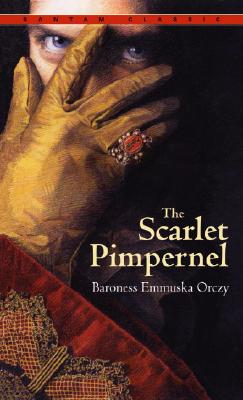
The Scarlet Pimpernel

by Baroness Orczy
ages: adult(ish)
First sentence: “A surging, seething, murmuring crowd, of beings that are human only in name, for to the eye and ear they seem naught but savage creatures, animated by vile passions and by the lust of vengeance and of hate.”
Support your local independent bookstore: buy it there!

I’ve heard about this book for years. YEARS, I tell you. From people who love it mostly; I don’t remember hearing much bad about the book. And so, when finally given the push to pick it up and read it (for the in-person book group), I was quite intrigued, to say the least.

Thankfully, I’d been forewarned about the first few chapters; had I not been, I’d have thrown in the towel. As far as gripping beginnings go, this one is terrible. Horrid. Confusing and distracting, it’s supposed to set the mood, but doesn’t really do much for the story. Sure, I get that the Baroness was trying to emulate the novels of the time period (it’s set in 1792), but it was a really, really bad way to get one into an adventure/mystery novel.

Once we settled on Lady Marguerite Blakeney and her husband, the foppish Sir Percy, the story picks up. For those of you who haven’t read it (people tell you they love the book, but they never tell you what it’s about!), it’s the middle of the French revolution, and about a year int’ Marguerite’s, who’s French, and Percy’s marriage. There’s been a bit of an estrangement between them ever since it came out that Marguerite inadvertently said something which sent a couple of nobles to the guillotine. On top of that, she’s incredibly clever and fashionable and Sir Percy is, well…. not. In the backdrop of all this, the folk hero The Scarlet Pimpernel has been, under the cover of night (and under French police chief — I think; I was never quite sure — Chauvelin’s nose) rescuing and transporting condemned French nobles to the relative safety of English shores. This infuriates Chauvelin, of course, who sets out — blackmailing Marguerite along the way — to discover the identity of The Scarlet Pimpernel and get Rid of Him Once and For All.

Not a bad bit of plot, there; except that it seemed to go everywhere and nowhere at once. It seemed that the world was so populated with people flitting in and out that, while it felt busy and it felt like things were progressing, it never gave anyone a chance to really shine as a character. There are pages and pages of nothing, until the book’s nearly over when we finally figure out (called it!) who the Scarlet Pimpernel is and the adventure part begins. Except, since we’re seeing it through Marguerite’s eyes, it never really goes anywhere either. Speaking of Marguerite, there was a lot of hysterical clinging and wishing and crying on her part, which got old quite quickly. And, in the end, the real point of the plot was not really to figure out the Scarlet Pimpernel, or to criticize the French Revolution, but rather a simple love story: to reunite Percy and Marguerite.

Which is okay, I guess. It just didn’t work as well for me as I had hoped.

Heat Wave

by Richard Castle
ages: adult
First sentence: “It was always the same for her when she arrived to meet the body.”
Support your local independent bookstore: buy it there!

“Oh, Melissa,” you say. “We know that you are really eclectic in your reading. But, a book written by the main character of a TV show. Really? Isn’t that a bit meta for your tastes?”

Yes. Yes, it is. And yet, it sat out there in cyberspace, it’s sultry cover calling to me, piquing my interest. Eventually, I had to cave in.

“Yes, but it can’t have been a good book. It’s written by a fictional person!”

Well, it wasn’t fine literature, that’s true. And I’m not sure it wasn’t even a good mystery, since I called it about halfway through. It did feel pretty pedestrian as far as books go. But, it was fun, and that’s all I was expecting. I’m guessing the screenwriters wrote it, by the way.

“What makes you say that? Nathan Fillion’s headshot’s on the back cover… they went pretty far keeping the illusion that Richard Castle ‘wrote’ the book.”

I know! And that’s one of the things I liked (besides Nathan Fillion’s headshot on the back cover). It really was an in-joke kind of things for fans of the series. Scenes in the book that were lifted straight from episodes; in many ways it was a mash-up of Castle, season one. Aside from Nikki Heat thoroughly beating up a bad guy while buck naked, of course. (Though honestly, I wouldn’t mind seeing Stana Katic pull that off…)

“So, if it’s just a bunch of scenes from episodes thrown together by the screenwriters, is there even a plot?”

Yes, it does have a plot. Nikki Heat is a NYPD detective and the latest murder is millionaire developer Matthew Starr. Jameson Rook is a celebrity journalist following Nikki around to get background for an article he’s writing. As they investigate Starr’s murder, things unravel about his background, his wife, and his business, centering in on the $60 million art collection in his house. Of course, lives are put on the line, banter is had, and sparks fly. It’s not as fun as the show, and I got annoyed with a few things — like calling Detectives Raley and Ochoa “Roach” — but mostly, it’s was just fluffy fun.

“Even if it is fun, why should we, who don’t really watch Castle or follow Nathan Fillion obsessively on Twitter, read it?”

My response: Why aren’t you? It’s quite fun as TV goes. Great writing, pretty good stories, it’s some serious fun. Seriously, though, if you’re not a fan of the show, I really don’t know why you’d pick up the book. Unless you really, really like mysteries and will read just about anything. But, if you’re a fan (or even if you only just watch the show), it’s a quick, fun, fluffy read.

“*sigh* That means you’re going to read the sequel, doesn’t it?”

Yep. It does.

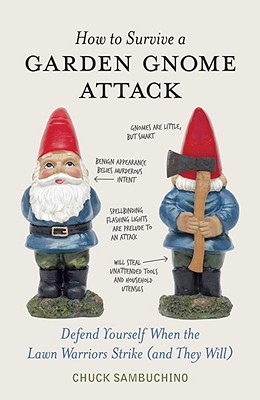
How to Survive a Garden Gnome Attack

Defend Yourself When the Lawn Warriors Strike (and They Will)
by Chuck Sambuchino
ages: adult
First sentence: “Keep reading if you want to live.”
Support your local independent bookstore: buy it there!

You know you have that zombie invasion handbook sitting on your bookshelf. (Or maybe it’s hidden in your personal safe?) But really, zombie invasion? That’s so not happening. The real threat? Those stupid garden gnomes you have in your yard (or if not you, your neighbors). (Yes, I do have one in my backyard, thankyouverymuch.) Thankfully, Chuck Sambuchino has done the research necessary to help you protect yourself (and your friends and neighbors, should you choose to share).

I found this one through Whimpulsive, and knew I had to find a copy for myself. It sounded so hilarious. And in many ways– mostly because it reads like a 1950s bomb shelter advert — it was hilariously funny. There are instructions, illustrated with pictures of gnomes in various attack modes (too funny!), on how to asses the risk of attack and protect and defend oneself against the homicidal maniacs. It’s too far-fetched to even remotely be realistic, but, it also takes itself seriously enough that I could sense myself almost being convinced: yes, I do need to fortify my house! Then I’d do a double-take: it’s only silliness. Ah, the power of propaganda.

At the very least, it’s a fun way to spend an hour. I think I’m going to go check my garden gnome now, though. Just in case.

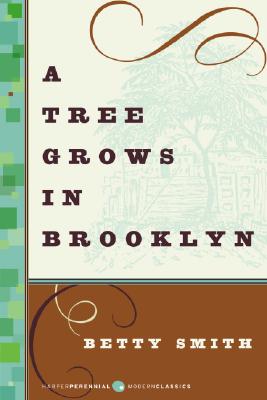
A Tree Grows in Brooklyn

by Betty Smith
ages: adult
First sentence: “Serene was a word you can put to Brooklyn, New York.”
Support your local independent bookstore: buy it there!

I’ve heard about this book for years, mostly from people who absolutely love it. So, while I knew next to nothing about this going in, I did know it was beloved by many, many people whose opinions I respect.

Happily, it lived up to my expectations. As the Anna Quindlen pointed out in the forward, this book is both about nothing and about everything. It’s so hard to summarize: how do you take a childhood and distill it down into a few pithy sentences? It’s semi-autobiographical, Betty Smith’s childhood was probably not unlike that of her main character, Francie Nolan. It’s a childhood in Brooklyn, New York; but it’s not a glorified childhood: Smith holds nothing back. There’s poverty, discrimination, abuse, drunkenness, attempted rape, murder, death. It’s life, in all its griminess, for all to see. And yet, for all that, it’s not depressing.

In fact, while I hesitate to call it lyrical, it is thoughtful and very evocative, of both a life and a place and a time. There were parts to make me laugh, parts to make me think, and while I think it kind of petered out at the end, it petered out in a hopeful note (I was actually very happy there wasn’t an epilogue; that would have killed the book entirely). I found it to be a very touching portrait of a life, and now I understand what everyone is talking about.

Daughter of the Forest

by Juliet Marillier
ages: adult
First sentence: “Three children lay on the rocks at the water’s edge.”
Support your local independent bookstore: buy it there!

Sorcha is the seventh child and only daughter of Lord Colum of Sevenwaters. She’s led an idyllic childhood, for the most part (aside from her mother’s death with Sorcha’s birth, and her father’s unwillingness to show any affection towards her after that), in ancient Erin, playing and exploring with her brothers in the forest behind their home. Then, as she hits the cusp of adulthood, her father remarries an enchantress who, for various reasons, becomes jealous of Sorcha and her brothers. When, in a moment of spite she turns the brothers into swans, Sorcha is devastated. And, even more so when she finds out the only way to break the curse is to sew shirts of a thistle plant without speaking until she’s done. It’s not an easy task, and only the love she has for her brothers can see it through.

A grand, sweeping retelling of the Brother’s Grimm tale, The Six Swans, it has a little bit of everything: magic, faeries, and, of course, romance. It’s set in ancient Britain/Ireland, which allows Marillier to explore the tension between the old ways and the newer religion. A grand book.

When Kelly suggested this as a buddy read, I jumped at the chance. She has the first part of our conversation at her blog; come back and read the rest when you’re done!

—————

Melissa: I agree: when it’s done well, it’s a joy to read. And I thought Mariller balanced the fantasy and the history quite well. Have you read anything else by her?

Kelly: I have read Wildwood Dancing, which is a young adult novel that is also a fairy tale retelling. I quite liked it, so I am happy to have finally read something else by her. All of her books look really good, actually, and I even ‘collected’ her for a while because I just figured I was going to like her. I don’t have everything by her, obviously, because I have only actually read one book by her until this one. I think she is going to continue to be an author I enjoy. What do you think?

Melissa: I also read Wildwood Dancing, but I loathed it. Seriously. Which, I suppose, was part of my subconscious hesitation to read this one. But, I‘m glad I gave her a second chance; I liked this one a lot better. (And it’s unusual for me to like an adult book better than a YA one!) What did you think about the brothers, and the love triangle (of sorts)? Did it work for you?

Kelly: Really? I really like fairy tale re-tellings… They are one of my favourite parts of fantasy, so it is hard for me to find one I don’t like. I actually read a couple in the last few years that share the same fairy tale with Wildwood Dancing. Anyway, I really liked Connor. There was something compelling about him, but there were times near the end of the book where I was a bit shaken in that liking. Then, there was one conversation that he had with Sorcha and it made him appear better in my eyes again. I think that all of the brothers added something to the story and to their family. Do you mean Sorcha and her brothers as the triangle or Sorcha and the other two brothers?

Melissa: I generally like fairy tale re-tellings; I just had issues with Wildwood Dancing in particular. I liked Conor as well, though I’m not sure he was my favorite brother. I agree: there was a time near the end of the book when I wondered what he was doing. He was very out of character, and I’m not sure I quite bought the reasoning for it. I liked Sorcha’s relationship with Finbar at the beginning, and I found it interesting how the enchantment affected him. I liked Liam, as well; I felt he was a good eldest brother, fair and firm and yet loving. And I meant the love triangle with the British brothers. Did it work for you?

Kelly: I am not sure which brother was my favourite… Finbar was for a while in the beginning, but then he changed and I was never entirely sure what to make of him. He was a very brooding character. There were times where I felt really bad for him. As to the love triangle, I am not really sure. When it all played out, it seemed to make sense… And, I liked Red more than Simon. I think if the triangle wasn’t there it would have been a very different book and then I am not sure exactly how it would work out. I suppose it made sense for me and really, it was more the Fair Folk than the people themselves for a while there. Speaking of the Fair Folk, do you think the step-mother and the woman that constantly appeared to Sorcha really were the same people?

Melissa: Wow, I never even thought about that. Two sides of the same coin? I didn’t get that vibe, though I did feel like the step-mother was a part of the Fair Folk. I really liked Simon, for what it’s worth, though I can see the appeal of Red. I agree about it being a different book, though, without the love triangle. In this case, it made the book a better one. Anything else?

Kelly: I think the Fair Folk and her step-mother will be explained more in the second book. Then we will know if our thoughts are correct. See, I liked Red better. I knew that Simon would be upset, but Red was a more interesting character. Simon might have been, too, if the circumstances were different and we got to know him a bit better, but it is hard to say. I think that is most of the story covered without giving too much away. It was fun, though. I am glad we read this book together because otherwise I may never have got through it!

Melissa: Me, too; it’s always good to have extra motivation.

The White Queen

by Philippa Gregory
ages: adult
First sentence: “My father is Sir Richard Woodville, Baron Rivers, an English nobleman, a landholder, and a supporter of the true Kings of England, the Lancastrian line.”
Support your local independent bookstore: buy it there!

I have to admit, first off, that I picked this book up after the Cybils on purpose. I wanted something sweeping, something grand, something intricate, and yes, something slightly skanky.

I got two of the four, plus lots of fighting, scheming and plotting, so I’m not disappointed.

Gregory takes leave of the Tudors (oh, how we all love them), and turns her more than capable gaze to the family that preceded them: the Plantangents. Since I knew absolutely nothing about them, historically speaking, I was starting from scratch. The White Queen is the story of Elizabeth Woodville, a widow whose husband fought against Edward of York, and who fell in love with Edward after meeting him to appeal the loss of her lands to her former mother-in-law. They eventually marry, in secret, and when Edward finally fights his way to the kingship, she becomes queen. It’s not a pretty book, or a simple one. There’s a huge cast of characters, and it’s full of intricate plotting and planning and fighting and twisting. There’s no such thing as real loyalty; it’s every man, and every woman out for him/herself. And, at the center of every twist and turn, is Elizabeth.

All this twisting and turning has both its pros and cons. It’s good because it keeps the 400 page book moving, and the reader guessing: what is going to happen next, and where on earth is all this going? There’s enough plotting and backstabbing and turncoating in the book to entertain just about anyone. But, there’s also enough to confuse one, too. I kept flipping back to the beginning where there was a family tree, but it didn’t do much to keep everyone straight in my head. Neither did the Author’s Note at the end, though that at least provided some fascinating historical detail. In the end, I had to put aside all my questions of who, what and where and just throw myself into the novel.

Which worked for a while. But, around two-thirds of the way through, about the time that King Edward dies, it all fell apart for me. The mystery of the missing princes that the jacket flap promised, and that sounded so intriguing, was almost an afterthought to the novel. Things unraveled for Elizabeth, as queen, as a person, and yet, somehow, the book kept going. Until, finally, it just stopped. Which, of course, leaves room open for sequels. It’s not a “to be continued”, but it’s only just short of that.

It’s not as tight as some of Gregory’s other books, but there’s much of what her fans have come to love from her in the book. Even if it wasn’t exactly what I wanted, I did enjoy much of it. There’s just something about the scheming and plotting of the English royalty that makes for a good story. And, at the very least, this was that.

A Short History of Tractors in Ukrainian

by Marina Lewycka
ages: adult
First sentence: “Two years after my mother died, my father fell in love with a glamorous blond Ukrainian divorcee.”
Support your local independent bookstore: buy it there!

I really wanted to like this book. I’d heard good things about it, or at the very least okayish things. I picked it up at a Friends of the Library sale back in June, I think, and it’s been languishing on my TBR pile since then. I just really couldn’t get excited by the cover. Or the title. Or the back blurb. In fact, if it hadn’t have been one I’d chosen for the 2010 Challenge, I probably would have passed on it altogether.

As it turns out, I’m pretty much passing on it anyway. After one hundred pages, I was still wondering what the point was. I threw a feeler out on Twitter, and SuziQ at Whimpulsive bit: she said it was weird. And I had to agree.

The basic plot: two sisters, daughters of Ukrainian immigrants, are feuding after their mother’s death. Then their 84-year-old father falls in love (or lust), with a blond, 36-year-old Ukrainian divorcee (perhaps; I never could quite figure out if she really was) who’s using him to gain citizenship to the UK. This, of course, leads to tension between the dad and the daughters, which, interestingly enough, manages, in the end, to bring the family back together. Or, so I gathered.

See, I didn’t finish it really. I read the first 100 pages or so, then flitted about a bit, and then read the last 50. And I wasn’t impressed. I didn’t like the characters, didn’t sympathize with them (differing life situations, and I just wasn’t interested in their whining and moaning), and I was bored by the book. I have wondered, off and on, if too much YA has spoiled me for adult fiction; the pace was glacially slow; I kept wondering how on earth Lerwycka was going to fill 300 pages. Was there really that much story? I’m not sure there was.

But, obviously, I’m missing something here; it’s one of those that was nominated for a Man Booker Prize. And, obviously, I have different expectations from books than those who are on the Man Booker Prize committee.

Can’t say I’m too sorry about that.

Fried Green Tomatoes at the Whistle Stop Cafe

by Fannie Flagg
ages: adult
First sentence: “The Whistle Stop Cafe opened up last week, right next door to me at the post office, and owners Idgie Threadgoode and Ruth Jamison said business has been good ever since.”
Support your local independent bookstore: buy it there!

I don’t quite know where to start. Perhaps I should say that I saw the movie years and years ago, and while I liked it, I’m not sure it really stuck with me.

But when Cass said the book was one of her favorites, I figured I needed to give the story a second look. And I’m glad I did.

It’s not a book for 20-somethings, though the mystery underlying the vignettes might have some appeal. But that’s not what I got out of the story. In fact, I had a hard time picking out much of a story at all. That’s not to say I didn’t enjoy it. I did. But, it took me a while to realize that the book is a kind of fictionalized oral history. Once I accepted that, then I found I was able to enjoy the book more, taking the stories for what they were: reminiscences of a full life.

That I loved the characters helped as well. I looked as forward to visits with Mrs. Threadgoode as much as Evelyn did. I loved hearing about Whistle Stop, about all the characters — even with all the 1930s area Southern racism — and their antics. It’s a cozy book and a welcoming, homey one, too, one that makes you feel like you are a part of the community. It shows both the positives of small towns (how everyone bonds together in a crisis, the support systems, the community building) and the negatives (nosiness, lack of privacy, prejudice). It doesn’t sugarcoat anything, which, in turn, makes everything resonate more.

And then there’s Evelyn. Ah, the quintessential doormat middle-aged wife and mother. I think I enjoyed her “awakening” most of all. Firstly, because it came through the stories. And secondly, because I think she needed it. To find fire and want and to stop being so dang selfless all the time. Sometimes, it’s okay to do something for yourself, and to be angry at the injustice in the world.

It’s a wonderful book and I’m glad I had a chance to visit with it.

The Importance of Being Earnest

by Oscar Wilde
ages: adult
First sentence: “Did you hear what I was playing, Lane?”
I’d tell you to go buy it, but you can get this one online for free.

I really don’t have much idea what to say here. I’ve been a fan of the play for ages: my mom had a copy of a BBC production while I was growing up, and I remember watching and finding it hilarious. And I own the Colin Firth/Rupert Everett version which still makes me laugh. Judi Dench is so fabulous as Lady Bracknell.

So, I don’t really know what I expected to get out of reading the play, if I expected anything. I guess I was kind of curious to see how the movie version held up to the actual play, and I also figured since I loved it so much I should actually read the play. That, and I have decided that I really like Wilde’s writing. So, I wanted to read more of him.

And, the long and short of it: I like it better performed. That shouldn’t have come as a surprise; I have a terrible track record reading Shakespeare, and I don’t see why any play should be different. The lines weren’t as funny, the silliness of it all came off as banal rather than hilarious. I’m terrible at reading inflection and timing; I need narration. And while I enjoyed it, I didn’t love it like I love the movie. I did find out (and it’s to be expected) that the movie does take some liberties with the play, giving Lady Bracknell a past, and switching the ages of Jack and Algy around as examples, it’s really quite faithful to the original.

The play itself is a delightful spoof on Victorian England, on class restrictions, and on love in general. No matter how you get it, whether reading or watching, it’s quite worth your time.