Crossing to Safety

by Wallace Stegner
ages: adult
First sentence: “Floating upward through a confusing of dreams and memory, curving like a trout through the rings of previous risings, I surface.”
Support your local independent bookstore: buy it there!

I spent a good portion of the novel trying to figure out how to describe it. And what I came up with was: thoughtful. It was a thoughtfully written work, one that made me thoughtful as I read it.

It’s the story of two couples in the 1930s. The men — Sid and Larry — are both English PhDs, trying to make it in academia. Their wives — Charity and Sally — are instant friends when they meet. It follows their friendship and lives through ups and downs for years, up until the time of Charity’s death. It’s told from Larry’s point of view, and while I intellectually know it’s not autobiographical, I never could shake that feeling that Stegner was telling, somehow, his story. Because, as Larry points out near the end, this isn’t your typical novel.

How do you make a book that anyone will read out of lives as quiet as these? Where are the things that novelists seize upon and readers expect? Where is the high life, the conspicuous waste, the violence, the kinky sex, the death wish? Where are the suburban infidelities, the promiscuities, the convulsive divorces, the alcohol, the drugs, the lost weekends? Where are the hatreds, the political ambitions, the lust for power? Where are speed, noise, ugliness, everything that makes us who we are and makes us recognize ourselves in fiction? 

They aren’t here. What we get is a thoughtful book, a reflection on people — though in the end, I was unsure if it was really about all of them, and not solely Charity’s story — on relationships, on marriage, on work (especially in academia; there was much I recognized there). It was beautifully written, mostly in flashbacks; descriptive enough that I could picture the Vermont woods even though I’ve never been to that part of the country, and yet not overly flowery in its language. Stegner has a poet’s sensibility for choosing the right word for the right circumstance in order to get across a particular feeling. (My vocabulary expanded while reading this. Honestly.)

It’s not flashy and loud, and not much happens. But it moved me to tears and to think and reflect on how I’m interacting with those around me; I saw much to much of myself in Charity, and I’m not sure that’s always a good thing. As I said before: it’s a thoughtful book. And I’m happy to finally have read some Stegner; he’s an excellent writer.

Six Sentence Saturday: Unfinshed Books

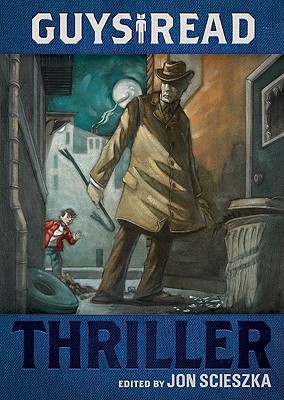
Guys Read
ed. by Jon Scieszca
ages: 10+

It was a good idea to get together a bunch of talented writers and compile a collection of thriller stories. The problem was, in my humble opinion, that none of the stories (that I read; I bailed, I have to admit) were even remotely thriller-y. Perhaps if I were a 10-year-old boy, these would have some appeal. (Maybe it’s just that my humor is more along the lines of a 10-year-olds, that I liked Funny Business better?) Or maybe I just don’t go in for thriller stories anyway. Whatever the reason, this fell flat.


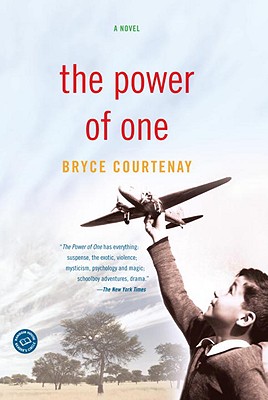
The Power of One
by Bryce Courtenay
ages: adult

This was a case of me just not being interested in the book. I tried; I got about 100 pages in, but this boy’s story just wasn’t to my interest. And the writing wasn’t holding me. And I have a huge pile of other books to read. So, I abandoned it. Who knows, though: maybe someday I’ll come back to it.

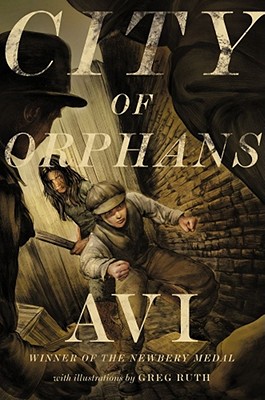
City of Orphans
by Avi
ages: 10+

Heaven knows, I enjoy an Avi book. The detail, the characterizations, the plots: all top-notch. But, this one didn’t grab me. The language, while authentic, was off-putting, and the plot was just so dang slow. I gave it 75 pages, and then realized that my time is much more precious than to slog through a book I have no interest in.

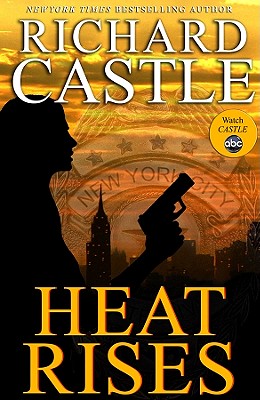
Heat Rises

by Richard Castle
ages: adult
First sentence: “The thing about New York City is you never know what’s behind a door.”
Support your local independent bookstore: buy it there!

Nikki Heat is investigating the murder of a local parish priest, found at an S&M studio (is that what they’re called?). The investigation takes her in all sorts of directions, but then she’s called off the investigation, on the orders of her precinct captain. It’s nothing, he assures her. Which only makes her — and her lover, companion, sometimes partner, Jameson Rook — more suspicious. And since Nikki Heat doesn’t give up, she ends up digging into things she really shouldn’t have.

I’m realizing that the books really do follow not only the plots from the season (yes, this one has elements from Castle season 3 episodes), but also the mood. Which means, this book wasn’t as fun as either Heat Wave or
Naked Heat. Not to say that there wasn’t fun moments (like the passing Firefly reference? Cracked me up.) in the book. There were. It just wasn’t as fun as the previous two. (Also: not as sexy or foul; they really pulled back on the language and the sex was entirely off-screen.) It’s still good brain candy, and it was gratifying to see Nikki do so much entirely on her own. She really does rock.

Oh, and if you’ve seen the entire season 3, there’s a nice twist on the ending in the book. Which means, of course, that there will be a fourth. And yes, I will read it. (Hopefully, considering the way season 4 is going, the next book will be more fun to read overall.)

Audiobook: The Help

by Katheryn Stockett
read by: Jenna Lamia, Bahni Turpin, Octavia Spencer, Cassandra Campbell
ages: adult
Support your local independent bookstore: buy it there!

I should probably start by admitting that I’m the last person in the universe to read this book. I’ve been avoiding it for years because, as you all know about me, I really don’t like hyped books. (I should amend that: what I don’t like is the hype surrounding a book. If I catch it before the hype, I may like it just fine.) I figured there was no way this one would live up to its reputation. That, and the subject matter: the relationships between white women and their black maids in 1960s Mississippi just seemed too, well, explosive. Better just to let things be.

Since you all basically know the plot — it’s about two maids, Aibileen and Minny and a white 20-something woman, Skeeter Phelan, and how they come to know each other, and then work together to get a book of memories of black maids published — I’ll just stick with my reactions to the book, as well as the audio production.

First off, this book did nothing to improve my impression of Mississippi. I haven’t had anything good to say about the state since our year there 10 years ago, and the white women in this book — from Skeeter’s overbearing mother to the spineless Elizabeth Leefolt to Hilly Holbrook (especially Hilly Holbrook) — did nothing to make me more sympathetic to the state and the people there.

I also wanted more. I wanted more Celia (and for her to find a friend in Skeeter; I was highly disappointed that didn’t happen), for the main characters to have more spine and stand up (I know: a very 21st-century attitude there), and for Hilly to get some sort of come-uppance (rather than the more true to life “she’ll just have to live with herself for the rest of her life” ending I did get).

That said, I loved the audio book. I think, in many ways, this was the right way for me to experience this book. There were parts that I would have gotten frustrated with if I’d just read it, but I found loving listening to. I adored the inflection the narrators would give to the sentences, the rich Southern accents (and yes, I did find myself speaking Southern more often than I should have), and the voices they’d give to the characters. (Octavia Spencer’s Celia was just perfect.) Because they made the book come alive for me, I was able to connect with it better, and let my objections (and annoyances) slide.

So, am I glad I read it? I guess. It did make for a really good book group discussion, and it was an interesting story. I didn’t absolutely love it, but it surprised me that I liked it as much as I did. Which isn’t a bad thing, in the end.

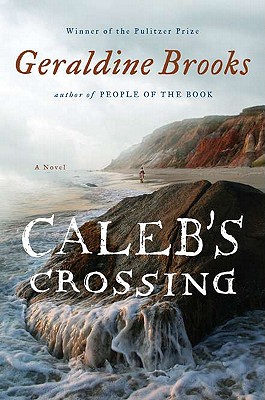
Caleb’s Crossing

by Geraldine Brooks
ages: adult
First sentence: “He is coming on the Lord’s Day.”
Support your local independent bookstore: buy it there!

It’s the 1660s, on what is now known as Martha’s Vineyard. There’s a small group of Puritan settlers there, and Bethia’s father is the minister. He is determined not only to lead the English in the ways of the Lord, but to convert the heathen “salvages” to the Truth.

As a girl, Bethia is consigned to a life of labor, even though she longs to be more like her brother Makepeace and study languages and scripture. She is educated to a degree; her father teaches her how to read and write, though after a while he discourages anything further. She is discontent, though, and wanders the island rather than attending to her chores. In doing so, she meets a Wampanoag boy whom she comes to call Caleb.

They develop a bond — not a romantic one — and the book follows their relationship as Caleb comes to live with Bethia’s family and then goes across to the mainland to attend school — first a primer school, and then Harvard; the first Native American to do so. Bethia follows him, at first working in the school and then working in the buttery at Harvard. The book is named after Caleb, but it’s about Bethia and the whole Puritan culture; Brooks has certainly done her research about the time period. The book is in the form of Bethia’s journal, of sorts (it’s not a daily one), and so not only do the characters put forth ideas and thoughts about the time period — Bethia is the only remotely modern one of the bunch — but Brooks keeps up the pretense even down to the spelling of certain words.

Because it’s a series of Bethia’s reflections and memories, the book is incredibly slow. It’s not a book for the plot-driven or even the character-driven. The only character we get to know in any depth is Bethia herself; because most of the other main characters are men, we’re only allowed to get to know them peripherally, as per the Puritan custom. In many ways, the book was interesting for that: because Brooks did her research, she was able to fully immerse herself in that time, and it came through in the writing. However, because I wasn’t terribly interested in the plot, while I found theanthropological look at the Puritans interesting — I did finish the book after all — it wasn’t enough for me to be completely riveted by the book.

That said, Brooks is a talented writer, and this one isn’t a complete waste of time.

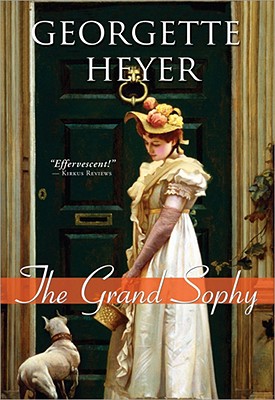
The Grand Sophy

by Georgette Heyer
ages: adult
First sentence: “The butler, recognizing her ladyship’s only surviving brother at a glance, as he afterwards informed his less percipient subordinates, favoured Sir Horace with a low bow, and took it upon himself to say that my lady, although not at home to see less nearly-connected persons, would be happy to see him.”
Support your local independent bookstore: buy it there!

Ah, Georgette Heyer. (Which I just learned is pronounced “hair”. Now I know.) I think the best way to sum her up is this: when she’s good, she’s really, really good. (And when she’s bad she’s horrid?)

And this one was good.

Twenty-year-old Sophy has spent her life following her father all around Europe. Because her mother died early on, Sophy has become accustomed to being the lady of the house, performing tasks for her father that most women wouldn’t dream of doing. As a result, she’s unpredictable, independent, and, to the fashionable London society, completely shocking. So, when her father dumps her on some little-known relatives (his sister, Lady Ombersley) so he can pop off to Brazil (with the side hope that they’ll somehow manage to marry Sophy off, since she’s — shock — heading towards being an old maid!), little do they know the chaos that Sophy will cause.

Like so many other of Heyer’s books, the point is not the plot. There will be a slight romance, two people will fall in love and get married. It’s the getting there that’s so much fun. And this one is classic Heyer: wonderfully amusing. Initially I wrote “hilarious”, but I think that’s misleading. While the book is funny, it’s not the snort-milk-through-your-nose funny. But it did make me smile and chuckle.

Like (and the characters and situations don’t really matter):

“No, of course I do not!” responded Cecilia. ” But Eugenia never wears modish gowns. She says there are more important things to think of than one’s dresses.”

“What a stupid thing to say!” remarked Sophy. “Naturally there are, but not, I hold, when one is dressing for dinner.”

From the sparing way in which Miss Wraxton partook of a few of the delicacies it was not dificult to see that she considered such lavish hospitality vulgar; but Huber, making a hearty meal, began to think the Marquesa a very good sort of woman after all. When he saw how many coffee creams, Italian rusks, and brandy-cherries she herself consumed, in the most negligent fashion, his manner towards her because tinged with respect bordering on awe.

There are more. Truly.

I think one of the reasons I like Heyer so much is the same reason I like Jane Austen: she pokes fun at socieity, the primness and properness, while endearing us to all these silly, stuffy, stupid characters. She invites us to laugh at them and (in Heyer’s case, at least) their outdated ideas, while, especially in this book, introducing a thoroughly modern character to challenge the others’ ways. It makes for a wonderfully entertaining romp.

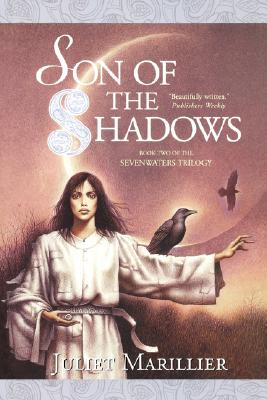
Son of the Shadows

by Juliet Marillier
ages: adult
First sentence: “My mother knew every tale that was ever told by the firesides of Erin, and more besides.”
Support your local independent bookstore: buy it there!

This book picks up a little while where Daughter of the Forest left off. Red and Sorcha have three children: Niamh, and twins Sean and Liadan. Things are becoming uneasy again; there’s a band of outlaws that are wandering the countryside. Niamh has a forbidden dalliance, and is sent off to marry someone for an alliance. Sean is coming into his own, learning to be the lord of Sevenwaters. And Liadan is just trying to be a healer. That is, until she’s kidnapped by the Painted Man’s outlaws, and taken to their camp. There, everything changes, not only for Liadan, but for Sevenwaters and maybe for Erin as well.

Since we enjoyed the last book, Kelly (she’s in bold; I’m not) suggested reading this one as a buddy read as well.

So, the obvious first question: how did it compare to Daughter of the Forest?

Well, I was a little worried at first. The second book in a trilogy, which this started off being, isn’t usually a big letdown from the first book. I actually enjoyed that in order to keep this fresh book fresh the focus was on Sorcha’s daughter. That being said, this book wasn’t quite as good as the first book. It was a bit too much of a romance for me and there wasn’t as much action. It was basically a set-up for the third book and considering that I still really enjoyed this book, I am really excited for the third book. What did you think of this book?

I enjoyed the first book more as well, but I think it was because that one had a premise (the fairy tale) that I actually knew. I didn’t mind learning about the Irish tales in this one, but it really slowed the book down for me. I didn’t mind the romance so much, though I still have issues with the idea of The One. She’s 16, and she finds (by accident) the guy she wants to spend the rest of her life with? That raises the red flag for me. That said, I did feel that Marillier managed the romance pretty well. I think part of my enjoyment of the first one was that I just happened to like Sorcha as a character better.

The book this reminded me most of was Mists of Avalon; there was a lot of strong women and Goddess-inspired magic in it. Was that just me?

Yes, I was always excited about the first book because of the fairy tale connection. It still took me forever to get around to reading it, but that is what drew me to it in the first place. This book still had tales as its background, but they were not tales that I was familiar with. It made the whole experience a bit different. As to the romance, it didn’t bother me necessarily, but I did just find it more a central theme than in the other book. I would have enjoyed if there was a bit less emphasis on that aspect. I also am getting a bit tired of the story-line where a young girl meets a guy and then that is who she wants to be with for the rest of her life. I didn’t find myself getting as annoyed with this book as others, though, so she obviously carried it off well.

No, I can see that. I have read Mists of Avalon and the other books that Bradley wrote in that series and I can actually see a very strong connection between how Bradley wrote and what Marillier is trying to accomplish with her books. My favourite part of this trilogy so far is the strong women that are portrayed. I always feel like there is not enough of that in fiction.

What did you think of the men in the book? Any stand out for you?

I agree: there’s never enough books with strong women characters. I also wish I knew more about the tales that served as a backdrop for the book; while I like things Irish, I’m actually not that familiar with them. Perhaps I should change that…. As for men, I kind of liked Bran, especially once I figured out (well, it was revealed anyway), how he fit into the Sevenwaters family and his connection to the past. I liked that he was passionate and strict, but also fair and merciful as well. I also liked that he cared about the men he worked hard to save from the edges of society. I also liked Red (can’t remember his Irish name, now), for his strength and balance in the family. Though, speaking of him (and the men in general): I loathed the treatment of Niamh when she was found with her lover. Especially since Liadan turned around and did the same thing (and got pregnant by it!). What a bunch of hypocrites! I know I’m imposing modern sensibilities on this, but STILL! To rip her away from her lover and marry her to a brute who barely cared for her? Horrid, horrid men.

What did you think?

I really enjoy books with strong women. I think part of my problem is the love triangles and other drama in young adult books lately. It doesn’t set a very good example. I always wish I could read more. I know when I read the Fables series, for example, I always figured I was either missing something or knowing that I was missing something. There is just too many things to read!

I enjoyed Bran. He was an interesting character. I knew there was going to be more to him than met the eye and spent the entire time reading trying to fit the pieces together in my mind. When it came together I was thinking I should have known that long before it was revealed. And, yes, the part with Niamh was TERRIBLE! I understand that they thought they had their reasons, but it was really quite sad. It was a bit strange that it was okay when Liadan did it. It was a bit of a double standard. It was particularly bad because we didn’t know why everything played out like it did. It made a bit of sense when it was explained, but it still bothered me.

Head over to The Written World for the rest of the conversation!

The Night Circus

by Erin Morgensternages: 16+ (shelved in the Adult Fiction section of my library)
First sentence: “The circus arrives without warning.”
Support your local independent bookstore: buy it there!

I am inherently suspicious of anything that receives an inordinate amount of buzz. (Which is why I have yet to read The Help.) People have told me it’s just sour grapes; that if I would just catch a book early enough, I wouldn’t have this violently negative reaction to hip and popular books.

But when Corinne said that I should read it, I listened.

I’ll be frank here: there is a plot to this book, but it’s pretty predictable and fairly cliche. In the end, it’s your basic Romeo and Juliet love story. Two magicians from two differing schools of thought pit their students against one another. This time it’s Celia and Marco. They’re never supposed to meet, they’re not supposed to even know who the other is; yet, they find out, and fall in love. Of course there are ramifications, of course there are hazards and heartbreak.

That’s not the point of the book, though.

The point of the book is the atmosphere. It’s a very slow moving book, one that luxuriates in the descriptions of the circus, of clothes, of the food, of the magic. It’s not a spare and poetic book, but rather weighty and opulent: there’s scenes that for plot purposes probably don’t need to be there, but because they add to the atmosphere and mood of the book, fit perfectly. There’s characters wandering in and out of the book that have little to do with the plot, and yet they add to the carnival-esque feeling. It reminded me strongly of Jonathan Strange and Mr. Norell; the use of magic is unique and traditional at the same time. Morgenstern uses stage magicians as a launching point, musing on the idea of an the illusion actually not being an illusion. And, surprisingly for me: the book is written in the present tense while still flitting back and forth in time. Usually, this drives me batty, but in this book, in this setting, it worked. (I didn’t even notice until I was halfway through. Which says much.)

I do recognize that all this all might be a downer for some people; I’m not expecting to add to the hype for this book. I don’t think it’s the next Harry Potter, or even the next “big thing”. But, in many ways it is worth the hype: it’s a beautiful, descriptive, haunting and gorgeous book.

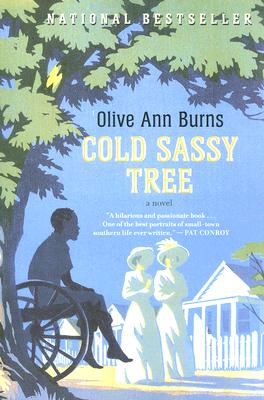
Cold Sassy Tree

by Olive Ann Burns
ages: adult
First sentence: “Three weeks after Granny Blakeslee died, Grandpa came to our house for his early morning snort of whiskey, as usual, and said to me, ‘Will Tweedy? Go find yore mama, then run up to yore Aunt Loma’s and tell her I said git on down here. I got something to say. And I ain’t a-go’n to say it but once’t.'”
Support your local independent bookstore: buy it there!

It’s 1906, in Cold Sassy, Georgia. Everyone knows their place in society, and how to behave. But, the summer Will Tweedy’s grandmother dies, his Grandpa decides to shake everything — including everyone’s expectations — upside down by marrying, a mere three weeks after the death, a woman half his age.

It sounds a bit creepy (everyone I described the plot to said, “Ew” as their first reaction), it’s really not; it’s more a story of second chances. From the Grandpa getting a second chance at a kind of youth; to his wife, Miss Love, getting a second chance at happiness (she has a very sad life story); to Will’s aunt getting a second chance at chasing her dreams. It helps that the story is told from 14-year-old Will’s point of view, which adds to the innocence. Will’s just discovering love and learning to live his life, and he has this wide-eyed naivete towards his grandfather and his beautiful bride.

In addition, it’s nice reading about someone (granted, that someone is white, and fairly well off; black people barely make a presence in the book, except as the cooks and hired help they were during Jim Crow in the South) shake up the entrenched Southern Expectations of the small town from his married daughters on down. It’s not an easy journey: it’s lonely and harsh being different from the norm, as any visionary knows, and Burns doesn’t spare us any of either the spite or the heartache.

Perhaps that’s what makes this simple novel work: the fact that everyone’s emotions and the consequences of their actions are laid open for us to discover. From the treatment of Will’s uneducated Uncle Camp to the desires of Will himself towards a mill girl, someone a “respectable” town boy should never deign to associate himself with. It’s a picture of a time, and not a glossed-over, prettified one, either. There’s racism, classism, xenophobia towards the Yankees. On the other hand, there’s an incredible sense of family, community, loyalty and responsibility. In other words: for good or ill, it’s the South.

Unfortunately, the book peters out in the end, giving Grandpa (and the town) a kind of pathetic, easy way out. I so wanted for them all to work things out, to get along, and for Grandpa and Miss Love to be happy, but it was not to be so. Which, perhaps, it the way it should be. There are no happily-ever-afters in real life, after all.

Very, very good.

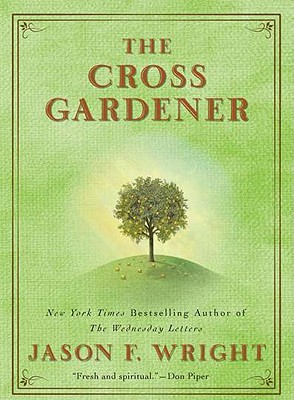
The Cross Gardener

by Jason F. Wright
ages: adult
First sentence: “I was born on the side of a two-lane Virginia highway at 1:21 a.m. on February 1, 1983.”
Support your local independent bookstore: buy it there!

Perhaps it’s best if I’m up front with this one: I didn’t like it. I thought it was sappy, manipulative, blatant and poorly written. I felt like a rat being run through the maze, being prodded which way to turn. And the ending? Unpredictable and kind of, well, lame.

Basic plot: John Bevan, who has suffered lots of loss in his life (first his mom died in a car accident which resulted in his birth; then his grandfather, whom he never met; then his father), loses (why is it always loss and loses for death? We don’t misplace anyone when they die, do we?) his True Love (ugh) and unborn child in a freak car accident. He suffers grief and pain and basically ceases to function until he meets The Cross Gardener, who helps him find The Way Back.

Before I get too snarky, I should admit something: aside from a couple of early-term miscarriages (I didn’t even make it to a D and C) and the deaths of my grandparents at generally advanced ages (my grandmother died when she was 64, but I was only 9, so it didn’t really impact me), I have not had much experience with death. No infant deaths, no spouse deaths, no parent deaths, no sibling deaths. So, I admit, readily, that I had no frame of reference in which to connect with this book. Perhaps if I had experienced some sort of tragic event, some grand loss in my life, I would be better equipped to actually connect with this book.

That said, if it were a better written book, I wouldn’t have had to have shared experience in order to connect with the characters and their experience with grief.