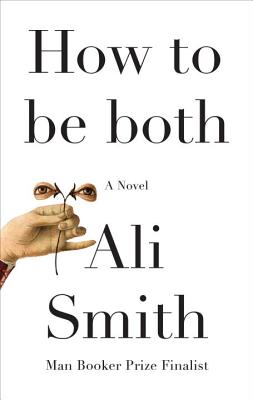
Audiobook: How to Be Both

by Ali Smith
Read by John Banks
Support your local independent bookstore: buy it there!
Content: There’s probably six or so f-bombs spread through the whole book. It’s in the adult fiction section of the bookstore.

I knew very little about this book before picking it up, only that it made for an excellent book group discussion in one of the book groups at the store, and that a couple people on staff really loved it. It was enough for me to use my last audiobooks.com credit to get the audio. The other thing I knew was that this book is two novellas in one, and that half the books printed have one first, and the other half are reversed. You don’t know, previous to picking it up, whose story you will get first.

The two stories are interconnected looks at art and perception. One is contemporary, the story of a mother-daughter relationship. The other is a stream-of-consciousness from the perspective of an Italian Renaissance painter in the 1400s. I really don’t want to say much more than that, except I read it Camera-Eyes, and I thoroughly enjoyed the way the two stories weaved together. It gave me much to think about.

Also, once I got used to the narrator (and the book), I thoroughly enjoyed listening to this one. I enjoyed his style, and that he didn’t try to do falsetto female voices. Everything was pretty matter-of-fact, which took a bit to fall into the groove with, but once I did, was quite lovely.

An excellent read.

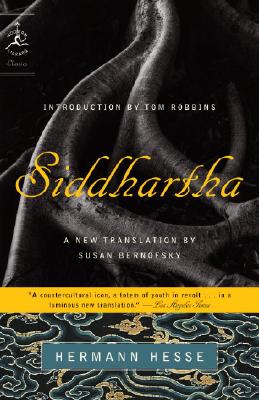
Siddhartha

by Herman Hesse
First sentence: “In the shadow of the house, in the sun on the riverbank by the boats, in the shadow of the sal-tree forest, in the shadow of the fig tree, Siddhartha, the beautiful brahmin’s son, the young falcon, grew up with his friend, the brahmin’s son Govinda.”
Support your local independent bookstore: buy it there!
Content: It’s dense. And there’s some illusion to sex, though nothing graphic. It’s in the adult fiction section of the bookstore.

I picked this up because I was looking for something to fill out one of my last bingo squares, one on a religion I knew very little about. I picked Buddhism, mostly because it’s the one I know the least about (though I do know some). A friend suggested this, even though it’s written by a Westerner, because it’s an accessible read for Westerners about a Buddha-like character and Buddhist thought.

It’s basically the life journey of Siddhartha, a young, well-to-do man in India (I’m assuming). He starts out with everything and then gives it up to join the shramanas, a group the eschews material things in search of knowledge and nirvana. He leads that life for a while, until he sees a beautiful woman, and he gives up his path for the path of material things and love. He finds happiness for a while, but eventually gives that up for a simpler life of service and meditation by a river.

I’m not sure I fully got what this book was supposed to teach me. It’s one of those that I think will be different at different stages of your life, and that multiple readings will lend to more insights. I’m glad I read it, even if I didn’t fully understand it. It’s definitely given me something to think about.

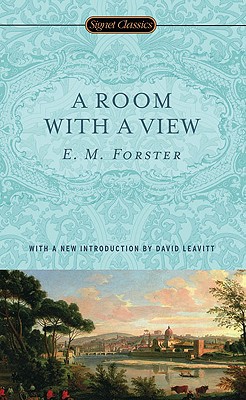
Room With a View

by E. M. Forester
First sentence: “‘The Signora had no business to do it,’ said Miss Barttlet, ‘no business at all.'”
Support your local independent bookstore: buy it there!
Content:  There’s some mild swearing, but not much at all. It’s dated, and English, but not too difficult to understand. It’s in the adult fiction section of the bookstore.

I don’t know when I first read this one; probably sometime soon after the Merchant Ivory movie (which I own still on videotape!) came out in the 1980. I don’t know when I got the copy I own, either. (A duo with Howard’s End). I do know that it’s loved enough that it’s falling apart.

And it’s well worth it.

I love Lucy’s innocence and Charlotte’s fussbudget-ness and George’s impulsiveness and Mr. Emerson’s progressiveness and Cecil’s snobbishness. I love Forester’s commentary on the Victorian English upperclass. I love it all. (And yes, I do firmly have the movie in mind when I read.)

I don’t have much more to say; this has been one of my comfort reads in the past, and it was absolutely delightful revisiting it again after being away for so long.

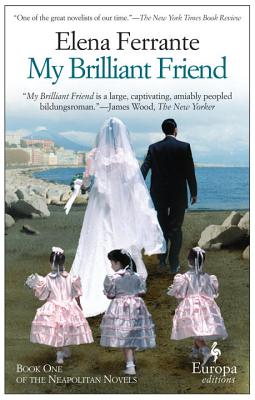
Audiobook: My Brilliant Friend

by Elena Ferrante
Translated by: Ann Goldstein
Read by: Hillary Huber
Support your local independent bookstore: buy it there!
Content: There’s a few mild swear words and some frank talk about not-quite sex. It’s incredibly slow with a lot of narration rather than dialogue, but I’d give it to a high schooler who was interested in historical fiction. It’s in the adult section of the bookstore.

I picked this one up because I’ve heard good things about Ferrante from our translation book club (they only read works in translation), and because I needed a book in translation for my bingo card.  (Which I’m going to end up being three squares short from getting a blackout. I read a lot.) I didn’t know much about it, going in, so I didn’t think I had any expectations. (I did however, expect to really enjoy the narrator, which I did.)

What it turned out to be was a very slow, intricate, detailed portrait of a girl, Elena, in a neighborhood in Naples, Italy, and her (somewhat obsessive) relationship with her best friend, Lila. This first book is a lot of set up: their lives — Lila is the daughter of a shoe repairman; Elena the daughter of a porter, whose mother has a wandering eye and limp and is cruel — and their relationship — mostly competitive, mostly on the side of Elena — to each other. They meet in elementary school, where Lina is the smartest and the best. But because she is poorer than Elena and because her parents won’t be bullied by the teacher (there was a lot of bullying by people in this), Lina drops out of school while Elena continues.

And yet, everything Elena does is because she wants to seem important to Lina. She wants Lina to look at her and feel like she Needs Elena in her life. And yet, for the most part, she doesn’t.

I’m still not sure how I feel about this one. On the one hand, I adored Huber’s narration, the way she embodied the characters (and how effortlessly the Italian names and places came off her tongue). She really is a talented reader, and I love listening to her. But, I’m not sure I figured out what was so great about the novel. I was interested enough to keep reading; the character’s lives were intriguing and, yeah, I guess I did want to hear what Elena and Lina would do next. But, in the end, I don’t know if I cared. I finished the book and kind of went, “Huh.” Maybe it’s because I don’t read a lot of books like this (both translated as well as adult fiction), but it just kind of washed over me.

Not that it was bad. It just wasn’t something I was terribly enthusiastic about.

Cold Comfort Farm

by Stella Gibbons
First sentence: “The education bestowed on Flora Poste by her parents had been expensive, athletic and prolonged; and when they died within a few weeks of one another during the annual epidemic of the influenza or Spanish Plague which occurred in her twentieth year, she was discovered to possess every art and grace save that of earning her own living.”
Support your local independent bookstore: buy it there!
Content: It’s a bit early-20th-century with the language and the pacing. And there’s some illusions to sex. But, really, if you think you can manage, go for it. It’s in the adult section of the bookstore.

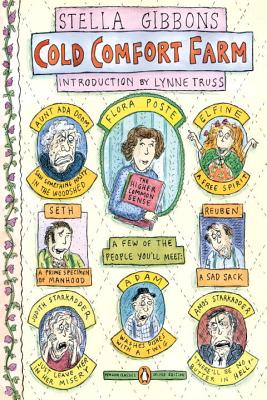
This is one of those classic books that somehow I missed growing up. I don’t know why. I kind of knew it existed: knew there was a movie, knew that it was a book… but not enough to really know anything about it. So I went into this one blind, and the edition I got (pictured above) didn’t help me much, going in: it looks like it’ll be a bit of a silly book, with some weird characters.

And that’s pretty much accurate.

Flora is, as the first sentence indicates, unable to support herself, being one of those “educated” women (it is 1932, after all; I have no reason to believe this wasn’t meant to be contemporary). So, she decides, with her 100 pounds a year, to take advantage of hospitality of her relatives, writing them to see if they’ll house her. The most interesting letter she got was from Cold Comfort Farm, which said that they had once done her father a great wrong, and that they are not like “other folk”. Of course Flora finds this intriguing. And so, she’s off to Cold Comfort Farm to see what mysteries await her.

There have always been Starkadders at Cold Comfort Farm, from the dawn of time (or at least since they came into possession of it), and because of the iron fist of Aunt Ada Doom, they are a weird bunch. The whole book is Flora sticking her nose into everyone else’s problems to fix them, thereby making Cold Comfort Farm a happier place.

And it’s a hilarious ride. (Maybe not laugh-out-loud funny, but definitely amusing.) I adored the characters: the rogue Seth, the grumpy Reuben, the over-religious Amos, the depressed Judith, the hippie (she’s ahead of her time) Elfine… there’s just so much to enjoy here. My favorite was Mr. Mybug, who was obsessed with sex, mostly because he was SO ridiculous. The only thing that I felt was left hanging was the Thing that Aunt Ada saw in the shed that made her SO crazy (I wanted to know, dangit!), but other than that, this was an absolute delight.

I’m so glad I finally read it. (Now to watch the movie!)

The Wonder Garden

by Lauren Acampora
First sentence: “John likes to arrive first.”
Support your local independent bookstore: buy it there!
Review copy pilfered from the ARC shelves at work.
Content: There’s a bunch of f-bombs, but not as many as you’d think. Also some mild drug use and off-screen sex. It’s in the adult fiction section of the bookstore.

If I had to choose a favorite way to read short stories (other than not at all), I prefer them to be interconnected ones. Ones where it almost seems like I’m reading a novel. So, I was immediately made curious about these with the words “intricately interwoven stories”. Yes, please.

And, at first I enjoyed this. One minor character from the previous story would show up as the protagonist in the next, giving layers to what had previously went on. Some stories were odd (the insect installation), others kind of weird (the accountant-turned-hippie). I don’t know if I was truly enjoying it, but I was interested.

But about 2/3 of the way through, it fizzled. I was tired of trying to remember which story what protagonist showed up in. I was bored with the way it interconnected. And the stories weren’t enough to keep me interested; I just couldn’t find myself interested in their lives, and the words just weren’t pulling me in.

It could totally be me: short stories and I aren’t always the best of friends and I may have just not been in the mood for this. But, it is possible that it may have just worn out its welcome.

Audio book: Something Fresh

by P. G. Wodehouse
Read by: Jonathan Cecil
Support your local independent bookstore: buy it there! (Though it looks like this one is out of print…)
Content: There’s really nothing. Some smoking. A few words of mild swearing. I’d give it to a high schooler who was interested in Downton Abbey. It’d be in the Adult Fiction section of the bookstore.

Ah, Wodehouse. I had a square on my bingo card that was “Published exactly 100 years ago.” I did some research, and when I discovered that Wodehouse had a book I’d never read out that year, I jumped at the chance.

There’s a lot going on plot-wise in this one, though it mostly surrounds a scarab that is inadvertently stolen from an American millionaire, Mr. Peters. His daughter, Aline, is engaged to the Hon. Freddy Threepwood, the son of the Earl of Elmsworth, who is the one who walked off with the scarab. So, Peters hires Ashe Marson (and Aline hires Joan Valentine) to pose as his valet and get the scarab back. Unfortunately, at the castle, the Earl’s secretary, the Efficient Baxter, is super suspicious and is thwarting all attempts to return the scarab to its rightful owner. There’s several side love stories as well as a bunch of ridiculous relatives as well.

Silly, no? Well, it’s Wodehouse.

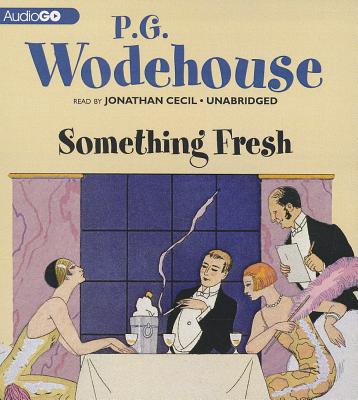
There were several audio versions of this, and I picked one at random, not knowing what to expect. I wasn’t terribly impressed; it was hard to tell, sometimes (especially since Wodehouse does rapid-fire dialogue), who was talking. And Cecil’s American accent was HORRIBLE. Awful. Seriously. As was his women’s voices. (Sometimes, he wouldn’t even bother with changing his voice for the women.)

In spite of that, Wodehouse’s writing made me smile (I wonder: how much I’d have laughed if the narrator had been better?), the characters were sufficiently silly, and the plot was sufficiently ridiculous. I thoroughly enjoyed my trip to Blanding’s Castle.

Audiobook: The Library at Mount Char

by Scott Hawkins
Read by Hilary Huber
Support your local independent bookstore: buy it there!
Content: SO so SO violent. So VERY violent. And a LOT of swearing, including a big bucketful of f-bombs. You are forewarned. It’s in the adult fiction section of the bookstore.

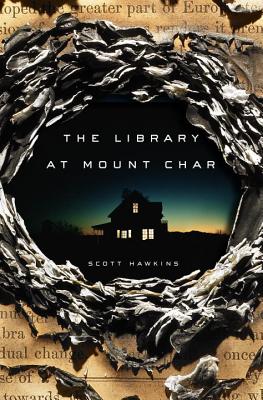
When the Random House rep came in to pitch this one, she started by saying “I have no idea how to  describe this book.” And it’s true: it’s about a Library. And librarians, but not the way you think. It’s about the end of the world, but not in the way you think. In fact, any way I try to sum this one up it’s going to end with: but not in the way you think. Throughout this whole book, that was the one constant: it’s nothing like you expect.

When Carolyn was eight, her parents died in a tragic accident, and, along with 11 other children, she was adopted by a man they came to know as Father. Father was a librarian, the caretaker of a most unusual library, and Carolyn and her new siblings became his apprentices, each learning a catalog. It wasn’t an ordinary apprenticeship, either: David, who was in charge of war, learned all the ways of war and death known to man (and some not yet known). He became awful and violent and cruel. Margaret learned the ways of death and the underworld, dying multiple times. (Another one, Jennifer, learned the ways of healing and was tasked with bringing everyone back from the dead.) Carolyn’s catalog was all the languages known to man, both ancient and current, as well as ones not known. To be simplistic, it was an awful existence: Father was heartless and cruel in his punishments, and there was no mercy to be seen anywhere.

But now, Father has gone missing, the siblings have been kicked out of the library, and it’s up to them — well, Carolyn, since she speaks English best — to figure out where Father is.

This is, unfortunately, one of those books that the less you know, the better. Know that Steve — an American man that Carolyn ropes into helping — is the heart of the book. And Erwin — an ex-military Homeland security agent — is crass and awful, but good at heart. Know that the end is worth the rest of the book. And that it definitely gets worse before it gets better. And that “better” is relative.

I was talking to another bookseller about it (one who read an ARC months ago) about how this one is best when read in a group, almost: you need another person to be able to process what happens. So, it’d be a good one for book groups, if you can handle the dark.

A bit about the audio: Hilary Huber was FANTASTIC. Seriously. In many cases, her narration is what kept me reading. Especially since, in many ways, listening to this book is more difficult than reading it: you’re not able to skim the really horrible bits. But her voice, and the way she chose to narrate this book, was amazing. So much so, that I’m going to look for more books read by her.

I didn’t love this one, but I am really glad I listened to it. There’s a lot to think about.

Gone With the Wind

by Margaret Mitchell
First sentence: “Scarlett O’Hara was not beautiful, but men seldom realized it when caught by her charm as the Tarleton twins were.”
Support your local independent bookstore: buy it there!
Content: There’s mild swearing, and a LOT of the n-word. Take it for what you will. It’s in the adult fiction section of the bookstore.

I first read this when I was 15 or 16. I don’t remember why I picked it up, just that I did. I don’t remember what I thought of it, but it couldn’t have been much, since I really had no desire to ever visit it again. (I think I’ve seen bits of the movie.)

We picked this one for my in-person book group, partly because no one had read it in a long time, and partly because Samantha Ellis wrote about it in How to Be a Heroine. And so I began the slog.

Because it was a slog. It’s so sexist and racist, I couldn’t stand to read it for long periods of time. It really is Old South — and there’s still a lot of the Old South in the south — and that’s just hard for me to understand. Eventually, I took to looking at it as a sociological study: why was the Old South the way it was. Why couldn’t they shake their prejudices and adapt? Why were they still stuck in the Way Things Were and that’s they way They Always Should Be?

And Scarlett… on the one hand, she’s an incredibly feminist character: a person who is willing to do what needs to be done, in the face of the Patriarchy and Public Opinion; a person who flies in the face of convention. It’s amazing how modern she is.

But she’s also mean and cruel and opportunistic. And hung up on a fantasy that she needed to move past.

Maybe, though, that’s the point? That only the cruel people are successful? I don’t know.

In the end, I didn’t like it, not just because of the content, but because it was SO LONG. Seriously: knock 700 pages off of this book and maybe it’d be a decent story.

There will at least be a lot to discuss.

The Little Paris Bookshop

by Nina George
First sentence: “How on earth could i have let them talk me into it?”
Support your local independent bookstore: buy it there!
Content: There’s a few sex scenes, mostly tasteful, though it gets somewhat crude once. There are also several instances of mild swearing. It’s in the adult section for thematic reasons.

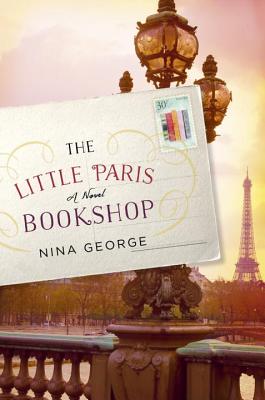
Jean Perdu (which is French for lost) owns a small bookshop on a barge floating in the Seine in Paris. His specialty is figuring out what a person needs to read and then “prescribing” the Right Book for the malady. He calls his store the Literary Apothecary and has had some measure of success.

With everyone but himself.

His great love, Manon, left him 22 years ago, and Jean’s life has basically frozen since then. Sure, he’s lived — he’s in his 50s now — but he’s not Lived. And then he meets Catherine, and his life starts unthawing (but not in the way you think at first). He ends up on a boat trip (river trip?) down to the south of France to find Manon’s memory (she died soon after she left him) and to properly grieve.

This book is being billed as a bookish book, and it is in a way. It’s about the power of stories and narrative to help us through all times — both the good and the bad. But, it’s more about the healing power of grief. How, if you don’t let yourself grieve for what is lost then you can never move on, never really live again.

It’s very French, as well.  (A co-worker, who is very knowledgeable in All Things French, mentioned that this is a homage to Jean de Flourette and Manon of the Spring, both of which I saw when I was at BYU and probably should hunt down again.) There’s is a slight magical realism thread through it, in the way Jean could find the right book, to the power of food and company. It gets bogged down in the middle, during the river trip, and Manon’s travel journals, while providing some interesting insight to her and Jean’s relationship, interrupt the flow of the book.

That said, it was enjoyable, though it’s not my favorite bookish book about books.