State of the TBR Pile: October 2019

It’s not a big pile this month, partially because fall is kind of busy(ish), though not as busy in the past, and partially because I think I’m falling into a bit of a slump. It’s not that I’m not reading or enjoying what I’m reading, it’s just that I’m not sure what I feel like reading. It’s weird.

Oh, and I’ve noticed that I’m down one Terry Pratchett every month. Which means I should have them done by the end of the year… 😀

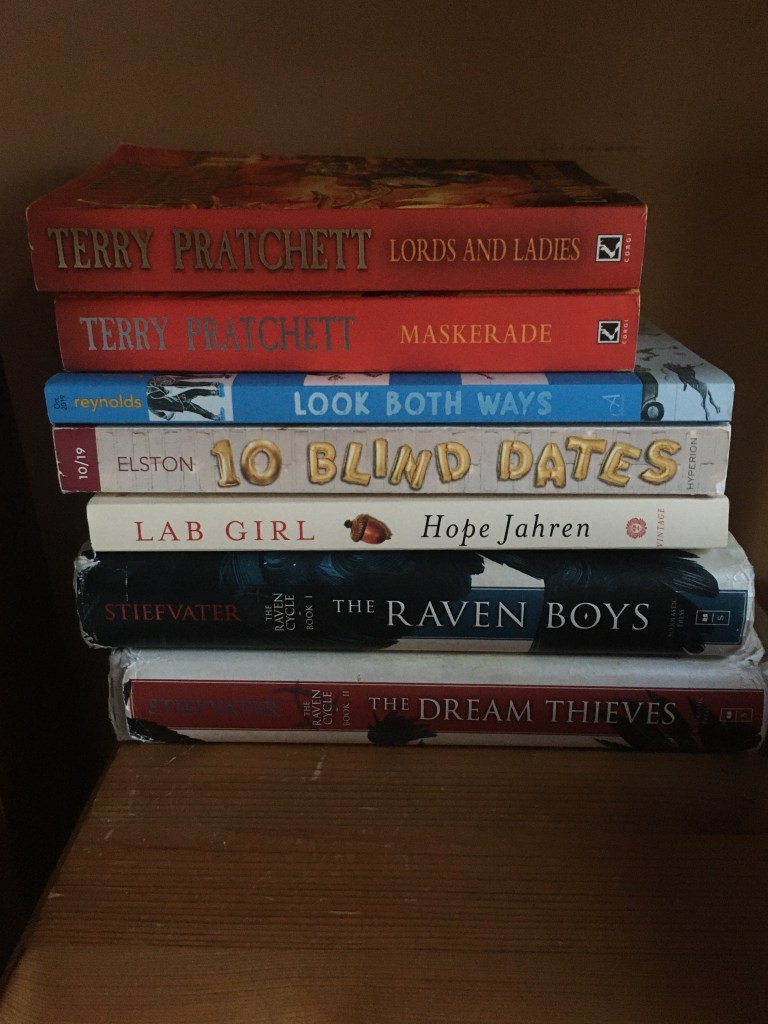
Lords and Ladies by Terry Pratchett
Maskerade by Terry Pratchett
Look Both Ways by Jason Reynolds
10 Blind Dates by Ashley Elston
Lab Girl by Hope Jahren
The Raven Boys by Maggie Stiefvater
The Dream Thieves by Maggie Stiefvater

What are you looking forward to reading this month?

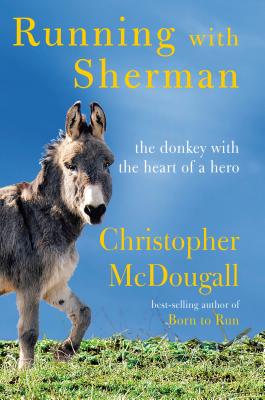
Running with Sherman

by Christopher McDougall
First sentence: “I knew something was wrong the second the pickup truck pulled into our driveway.”
Support your local independent bookstore: buy it there!
Review copy provided by the publisher.
Release date: October 15, 2019
Content: There’s some mild swearing. It will be in the sports section of the bookstore.

When our Random House rep came and pitched this book, he said (something to the effect of) he didn’t think that a book about burro racing would be a good read, but that this was fantastic. Since we all love him, we took him at his word, and I picked it up. And you know what? He’s right. This IS a fantastic read.

Chris McDougall and his wife ended up in Amish country by choice. They liked the idea of a simpler life, and so chose to get out of Philadelphia and live next door to people who shun most of modern technology. And so, when one of his neighbors (a Mennonite, not an Amish) begged Chris to take a neglected donkey off of a hoarder, Chris didn’t blink an eye. They christened the donkey Sherman, and had to figure out what to do with him. Another one of his friends mentioned that donkeys need a job, and Chris got a harebrained idea: he had heard of (and attempted to run, once) burro racing in Colorado and maybe, just maybe, that would be a goal for Sherman.

So, Chris and his wife Mika and some friends set about attempting to train Sherman for the World Championship Burro race. And the trip is SO worth the ride. Chris takes us through the ups and downs of healing a donkey — and a few people, as well — and prepping and how everything got figured out. And along the way, I was reminded that 1) connection with animals is important for humans (it’s a good thing we have a dog!); 2) connection with community — friends and wider than that, if possible — is important; 3) exercise and being out in nature is important; and 4) fear the thing, do the thing.

And the ending? The chapter in which Sherman got to run the burro race? I legit cried. It’s such a heartwarming and special and wonderful book!

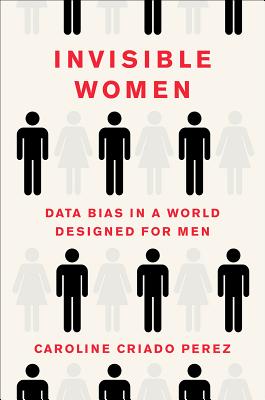
Invisible Women

by Caroline Criado Perez
First sentence: “Most of recorded human history is one big data gap.”
Support your local independent bookstore: buy it there!
Content: There is some harsh facts about women’s health and some mild swearing. It’s in the sociology section of the bookstore.

An old high school friend of mine invited me to read this book as part of a book club she started on Facebook. She said she needed a sounding board to go off on as she read this book, and after finishing it, I can see why. Perez’s thesis is that women have not been included in studies — medical, transportation, housing, government, you name it — because the “typical human” is a 30-something, average height, white male. And since women — and I think this includes trans women, though Perez doesn’t talk about that — have different needs, patterns, biological responses, that means the lack of data is literally killing women. It’s an extreme position, but I think she has the data to back it up.

I found the book to be enlightening — while this is a first world problem, it’s more of a dire issue in places like Bangledesh and India, where assistance from first world organizations (often run by men) don’t think about the how the needs of women in those places differ from the needs of women in the first world, not to mention how the are vastly different from men. It makes me want to respond to this problem somehow, but I’m not entirely sure. Give to organizations that give assistance that are run by women? (That was an awkward sentence…) Vote for women, definitely. But: how do you change thousands of years of men being the “norm”? It’s disheartening. I suppose the least I can do is some of the small things: make sure I’m not defaulting male in my speech, in my thinking (I’ve already had to stop myself a few times) to be more inclusive. Because inclusivity is good. And making sure that women are represented is important.

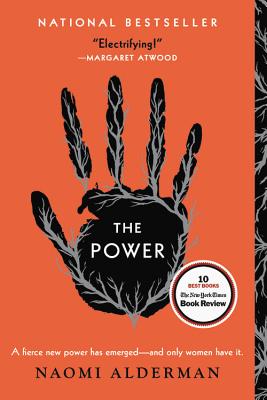
The Power

by Naomi Alderman
First sentence: “Dear Naomi, I’ve finished the bloody book.”
Support your local independent bookstore: buy it there!
Content: There is a lot of swearing, including multiple f-bombs, some sex, and a few graphic rape scenes. It’s also incredibly violent. It’s in the science fiction/fantasy section of the bookstore.

The basic premise of this book is that one day, suddenly, all women in the world get a power — the ability to channel electricity — that gives them the ability to “fight back” against men of the world. It starts with teenagers, but eventually spreads to most women. The narrative follows four people: a mayor of a New England town, a girl in the foster system, a daughter of a British mob boss, and a young Nigerian man. The change affects all their lives: the mayor becomes governor and then senator, creating for-profit training camps for girls to learn to better control and use their power; the girl kills her foster father (who was raping her) and runs away and eventually starts a new religion, becoming Mother Eve; the daughter of a mob boss ends up taking over the whole operation; and the young man becomes a news reporter, going where the stories — of rebellion, of resistance, of control — are.

It was, for me, a tough book to swallow, and it wasn’t until the end when I realized what Alderman was doing. It’s best to remember that science fiction is more about the present than the future; and Alderman is shining a light on violence against women by turning the tables. The women in this book, once they get the power, become very… well… masculine. They embrace and abuse power, they torture and rape and kill men solely because they are weak. They create laws that restrict men’s movements, and in the end, blow the whole system up.

It’s also a critique of the nature of power, I think. I feel like Alderman is saying that power over another person corrupts anyone, male or female. That there is no “better nature” that will, inherently, make a woman better at leading. That power is, at it’s heart, an violent act of controlling another person.

It’s not an enjoyable read, but it is an interesting one, and has given me much to think about.

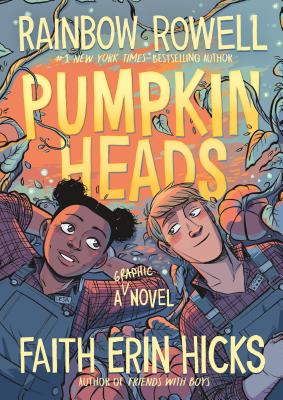
Pumpkinheads

by Rainbow Rowell and Faith Erin Hicks
Support your local independent bookstore: buy it there!
Content: It’s a friendship story and a little bit of romance, but it’s more sweet than anything. It’s in the graphic novel section of the bookstore, but I’d give it to 6-8th graders, if they were interested.

I picked this up because of the authors, and because it looks, well, cute. And it definitely lived up to that: Josiah and Deja are “seasonal best friends”: every fall, they work at the local pumpkin patch attraction through Halloween. They’ve been working in the succotash barn since freshman year, enjoying time together. Except Josiah has always gone on about the “Fudge Shop Girl” that he’s had a seasonal crush on every year. This year is different: it’s the last night of their their last fall; next year they’re off to college and won’t be able to work the pumpkin patch. So Deja decides: Josiah is going to talk to the Fudge Shop girl, and let her know how he feels.

Except, things get derailed: everyone is moved around, and Josiah and Deja spend the evening taking in the pumpkin patch for the last time as they reminisce about their years at the pumpkin patch.

It’s homey and sweet and cute and just a warm pumpkin spice hug of a book. Nothing spectacular (except that Deja is not your typical rom-com lead: she’s black and tall and not slim at all!) but it is charming. And worth picking up.

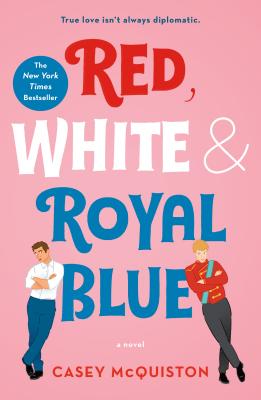
Red, White & Royal Blue

by Casey McQuiston
First sentence: “On the White House roof, tucked into a corner of the Promenade, there’s a bit of loose paneling right on the edge of the Solarium.”
Support your local independent bookstore: buy it there!
Content: There’s lots of swearing, including multiple f-bombs, and some tasteful sex scenes. It’s in the romance section of the bookstore.

The 30-second pitch for this one? In an alternate reality, a woman has become President, and her 21-year-old son has fallen in love with Prince Henry (not Harry…) of England. Of course they keep it secret for a while, of course there are bumps and fights, and highs and lots of steamy kisses in cloakrooms. Of course this creates an international incident (sort-of, but not really) and of course this is super fluff.

It’s fun and smart super fluff though. I enjoyed Alex and Henry’s relationship, how they went from arch-nemesis (but they were never, not really) to lovers and I liked Alex’s mom and how smart a president she was. I liked the world that McQuiston imagined existed (can we live in that one instead of this one?).

There’s really not much more to say. It was fun. And maybe that’s all that matters.

Monthly Round-up: September 2019

Thoughts? I read an awful lot of adult fiction this month. A LOT. And I’ve noticed over the months that I’ve read less and less middle grade. I wonder why.

My favorite this month?

She is such a good historical fiction writer.

YA:

That Inevitable Victorian Thing

Adult:

The Peacock Emporium
Autopsy of a Boring Wife
The Reckless Oath We Made (audio)
The Testaments
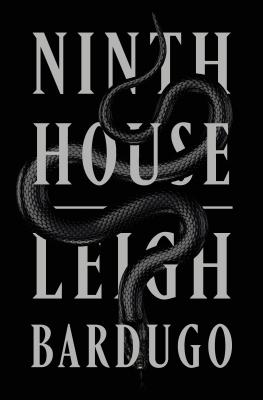
Ninth House

Middle Grade:

Some Places More than Others
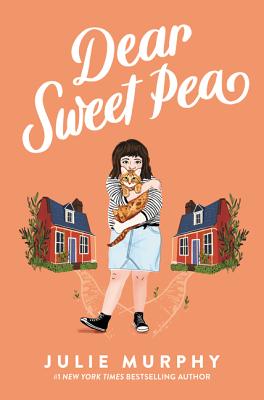
Dear Sweet Pea

Non-Fiction:

The Sun is a Compass (audio)

Graphic Novels:

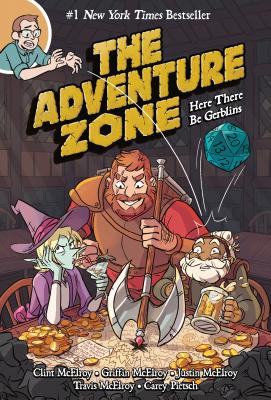
Here There Be Gerblins
Best Friends

What was your favorite this month?

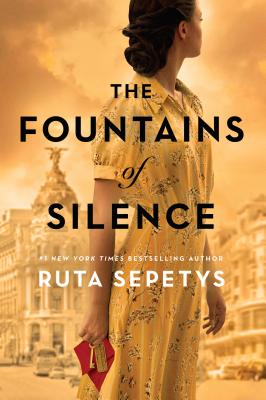
The Fountains of Silence

by Ruta Sepetys
First sentence: “They stand in line for blood.”
Support your local independent bookstore: buy it there!
Release date: October 1, 2019
Review copy provided by the publisher.
Content: There’s some violence, and some talk of sexual assault and affairs. It will probably be in the Teen section (grades 9+) for more “mature” themes than the YA section usually holds.

The one thing that Sepetys does better than any other person writing historical fiction out there is finding the stories underneath the major events, and focusing in on what the decisions of dictators – in this case, General Francisco Franco of Spain — have done to ordinary people. (Well, she did write one book that didn’t head in that direction, but go with me here.) She looks at the lives of the peasants — in this case Ana and her siblings, who were children of people involved in the resistance during the Spanish Civil War — and how the strict rules and the fear effect their daily lives.

It’s 1957, and Ana has gotten a job at the Castellana Hilton, a posh hotel that has opened up in hopes that Americans will go to Madrid on vacation. One such American is Daniel, the son of a Dallas oil tycoon, who would much rather be a photojournalist than go into the oil business. They strike up a friendship (romance?) as David looks into the hidden worlds under then shine that is the Castellana Hilton.

There’s more going on than that in this book: Sepetys touches on the kidnapping of children — the government would take newborns away from parents, and tell them that their children had died soon after birth — and on the general fear that the Guardia Civil inspired in the population. It’s a lot for one book, but Sepetys handles it all without letting it overwhelm the more personal stories of the book.

Very highly recommended, like all of her books.

Ninth House

by Leigh Bardugo
First sentence: “By the time Alex managed to get the blood out of her coat, it was too warm to wear it.”
Support your local independent bookstore: buy it there!
Release date: October 8, 2019
Review copy provided by the publisher
Content: There’s a lot of swearing including multiple f-bombs, some drug use, a couple of rape scenes (not graphic) and it will be in the science fiction and fantasy section of the bookstore.

Alex has had a rough life. She’s seen ghosts ever since she can remember, and that’s gotten her in a LOT of trouble over the years. So much so, that she ran away from home at age 15 and ended up living with (and having sex with) a drug dealer. Then one night, she woke up in a hospital, with no memory of how her friends died, and a recruiter from Yale (yes, the one in New Haven, Connecticut) in her room. He — Dean Sandow — offers Alex a way out: full-ride scholarship to Yale, erasing her past, if she’ll come work for Lethe.

Lethe, in this world, is the “house” that keeps all the other magic houses — ones full of people with Connections and Power, both of the magical and non-magical kind — in check. They study the dead — hence their interest in Alex — and they keep the other eight houses from getting too out of hand, like, say, murdering people on accident. Or letting ghosts — which they call Grays — connect with the living world.

She is training to be the new Dante — which is the person on the ground, I think; it was never spelled out — with Darlington, who has come from a long-line of Connecticut blue bloods and is Lethe’s “golden boy”. However this year, this semester, is not going well. Especially since Darlington has disappeared.

One part murder mystery — a town girl turns up dead, and Alex is convinced it has something to do with the houses — and one part exploration of class, money, power, and place with a bit of feminism thrown in there, this book is a LOT. It took me a while to get into it, mostly because it bounces back and forth through time and it took a while to keep things straight, but once I got into it I could NOT put it down. Bardugo has a way with words, and is an excellent storyteller, but I think I enjoy her characters more. I loved the clashes between the upper class kids that usually go to Yale and Alex, the streetwise former drug dealer.

It is a lot more intense than her YA books, but it holds up. (Which makes me wonder if Six of Crows could have been a lot more graphic than it was.) And I’m excited to see what she does next!

Dear Sweet Pea

by Julie Murphy
First sentence: “I’ve counted my birthday savings three times, and at this rate, I don’t think I’ll ever have enough money to clone myself.”
Support your local independent bookstore: buy it there!
Release date: October 1, 2019
Review copy provided by the publisher.
Content: Most of the problems are with parents and friendships, and so while it may not be interesting to the younger end of the middle grade (grades 3-5) it’s not inappropriate.

As she finishes up seventh grade, Sweet Pea is trying to figure things out. Her parents are getting a divorce, which is hard. But she’s fighting with her best friend, Oscar, while making up with her ex-best friend, Kiera. It’s all super confusing. It doesn’t help that Miss Fannie Mae, who writes the local advice column, has asked Sweet Pea to watch her house while she’s gone, but asks her not to tell anyone, which just puts a huge wrench in the whole situation.

I haven’t read any other of Murphy’s work (why not?) but this one truly tickled me. I loved that she got the middle grade voice down: the real problems are friendships and trying to figure out how to navigate those, as well as trying to understand her family’s new dynamic. They stakes aren’t terribly high, but they’re still meaningful. I appreciated that her parents weren’t awful, but honest and open about their differences and reasons they were splitting. And I loved Sweet Pea. She was charmingly not perfect, but she tried her best and that’s really all that counted.

It’s really a delightful middle grade book.