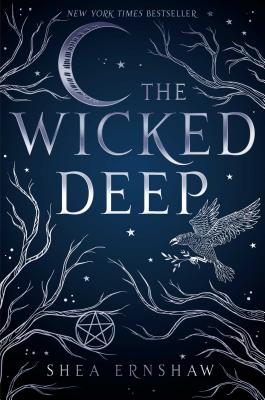
The Wicked Deep

by Shea Ernshaw
First sentence: “Three sisters arrived in Sparrow, Oregon, in 1822 aboard a fur trading ship named the Lady Astor, which sank later that year in the harbor just beyond the cape.”
Support your local independent bookstore: buy it there!
Content: There are instances of teenage drinking and lots of talk about sex. There is also swearing, including several f-bombs. It’s in the Teen section (grades 9+) of the bookstore. 

This one a hard one to summarize: it’s a slowly unfolding tale of three sisters who were accused of being witches and drowned, of a town that’s paid for their deaths for nearly 200 years through drownings of boys each summer. It’s the story of forgiveness and sacrifice and of falling in love. It’s the story of judgement and the price paid for not being open and accepting. 

It was atmospheric, as it slowly unfolded the historical tale of the Swan sisters and the contemporary tale of Penny and Bo. I was interested enough to keep reading to the end, but once there I was left with a shrug. I think I was supposed to care about the sacrifices made, about the love story. But mostly, it was all just a big meh. I guessed the twist fairly early on, and once I got to the Big Reveal, I was left kind of shrugging: yeah, so? 

I suppose I just wanted to like this one a lot more than I actually did. 
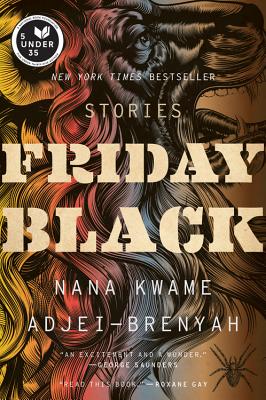
Friday Black

by Nana Kwame Adjei-Brenyah
First sentence: “Fela, the headless girl, walked toward Emmanuel.”
Support your local independent bookstore: buy it there!
Content: It’s violent and there is some strong language, including a lot of f-bombs. It’s in the adult fiction section of the bookstore. 

I picked this one up after hearing the author on the New York Times Book Review Podcast. I’m not usually a short story sort of person — and this one took me a while to get through — but it sounded fascinating enough that I felt compelled to pick it up. 

It’s a set of mostly unconnected short stories (though there are three about working in retail that take place in the same store) about what it’s like to be black in America. It’s nominally speculative fiction: the shoppers in the title story are forms of zombies, made that way by consumer greed, literally killing each other on the way to get the Product They Need. Or, in the final story, “Through the Flash”, Adjei-Brenyah imagines a future where technology and climate change has stuck us all in this terrible time loop, doomed forever to repeat the same day and the effects that would have on people, for good and ill. 

But my favorite story — “favorite” meaning “the one that suck with me the most” is “Zimmer Land”, an “amusement” park where white people get to pay for the opportunity to extract “justice”: stop a terrorist, solve a bomb threat, or stop a “thug” from invading their streets. If, by the end, you haven’t realized that it’s a pretty damning telling of the way white people deal with crises, whether real or perceived, then I think you read it wrong. 

I didn’t get all the stories — part of my problem with short stories, usually — but that could be because I’m a white person, and I just don’t understand black life or experience. Even so, I found this to be incredibly powerful. He’s definitely a voice in fiction I’ll be watching out for more from. 

Spinning Silver

by Naomi Novik
First sentence: “The real story isn’t half as pretty as the one you’ve heard.”
Support your local independent bookstore: buy it there!
Content: There is some domestic violence and other violence as well as some more mature themes. It’s in the Science Fiction/Fantasy section of the bookstore. 

If you’ve read Novik’s Uprooted, then you know what you’re in for with this book. (If you haven’t read Uprooted, why not?) 

This takes place in much of the same place that Uprooted does: a vaguely Eastern-European/Russian country. We follow the story of Miryem, the daughter of an inept Jewish money lender, who decides to take on the family business for herself. She becomes successful enough that it captures the attention of the Staryk, a viscous race of faerie who, during the winter, stole from the humans, goods, yes, but often money. She is tasked with turning silver into gold — which she does — and as a “reward” is kidnapped and taken to the Staryk kingdom. 

So, yes: shades of Rumplestiltskin, but the inferences go deeper. There is playing with names and the importance of them (everyone who reads a lot of fantasy knows that one’s true name is to be kept close because there is magical power in them). But, there’s also a demon and quite a few very very smart women who are willing and able to play the system to get what’s not only best for them, but also for the country. 

My only real complaint is the shifting narrative — but that’s just because I’m in the middle of the Cybils, and it seems like there’s a lot of shifting narrative books out there and I’m a bit over it. I love the way Novik plays with fairy tales, meshing them with religion and folklore to create something wholly her own. 

Excellent. 

Mirage

by Somaiya Daud
First sentence: “He is the only one of his family without the daan.”
Support your local independent bookstore: buy it there!
Content: There is some violence, and a few mild swear words. It was in the teen section (grades 9+) but I moved it to the YA, partially because there was nothing really “offensive” in it, and partially because I think 6-8th graders might be a better target audience. 

I’ve been thinking of this one as Star Wars with a Persian flair. Let me explain: in this universe, there is a cruel imperial overlord, the Vath, who conquer lesser systems, including the home world of our main character, Amani. The cruel overlords (and their droids) have wiped out the native language and customs, though they do keep some. 

The daughter of the emperor is about to come of age, and it turns out that she is very disliked on Andala, the world she is set to rule. So, Amani is kidnapped — because she looks exactly like the princess — and made to serve as a body double, something she resents, until she discovers (you guessed it: the resistance). See? Star Wars. 

The Persian flair is what made this book stand out to me: Daud infuses the world with a rich mythology, religion, and history, sewn together with poetry and family. I liked the developing relationship between Amani and the princess’s fiance, Idris. And I even really liked where the story went, though it took a long time to get to the climax. My only complaint is the usual one: I do wish it had been a stand-alone. 

Even so, it was a unique and interesting tale. 

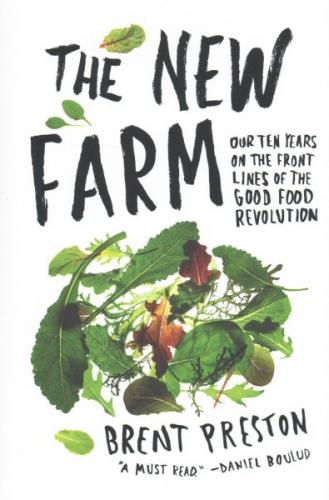
Audiobook: The New Farm

by Brent Preston
Read by: Chris Henry Coffey
Support your local independent bookstore: buy it there!
Or listen at Libro.fm
Content:  There’s some swearing, including a handful (6 or so) f-bombs. It’d be in the sociology or gardening section of the bookstore, if we had it. 

To be honest, this is usually the sort of book that my husband would read: the story of a couple of Canadians who got tired of working the office grind and city life, and decided to head out to the country and start an organic farm. I don’t know if that’s something he would like to do, but it’s definitely something he admires. I don’t know what made me pick it up; I suppose I was curious to see what went goes into making a sustainable, small, organic farm work and survive as a business. And I guess it just sounded interesting. 

And it was, for the most part. Preston and his wife Gillian had a super huge learning curve with this farm, and he doesn’t mince words about all the things that went wrong. Or how much money they lost during their first two or three years. He was also pretty frank about how running a small, sustainable, organic farm is a community effort: they started making progress financially when they reached out and found communities to be a part of, and ways to increase their reach. Growing excellent produce isn’t enough (though it’s important); you also need to have ways to reach people, and ways to get help working the farm. 

I did pick up some good gardening tips, things to help with the soil in our little garden, and things to help with growing plants better. And I did find the narrator entertaining (though I assumed it was the author reading it; I was mildly disappointed when I found out it wasn’t). My only real complaint is that it only went through the first couple of seasons, and it just kind of … ended. That may have been my version of the audiobook, but the narrative just stopped. But, if that’s the only complaint, it’s not that bad. 

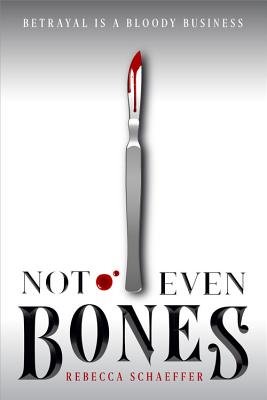
Not Even Bones

by Rebecca Schaeffer
First Sentence: “Nita stared at the dead body lying on the kitchen table.”
Support your local independent bookstore: buy it there!
Content: There is a LOT of violence, and some of it is gory. There is also swearing, including a couple of f-bombs. It’s in the teen section (grades 9+) of the bookstore. 

First off: this is being billed as a horror novel, and in some ways, I guess, it is. I was wary about starting this one, mostly because I really don’t do horror, but it’s more surgical gross/violent. And I do better with that in print than I do on the screen. So, if there is ever a movie made of this one (and it’d be a cool movie), I probably wouldn’t see it. 

Nita’s parents — her mother, mostly — deal in the black market. Body parts of supernatural beings, specifically. And for as a long as she can remember, Nita has been doing the dissecting. Until one day, Nita’s mother brings home a live “specimen” and Nita decides that she has some ethics, and refuses to dissect a non-dead body. However, that ends up badly: Nita is kidnapped and finds herself on the wrong side of a cage, in a parts market along the Amazon river. Which means, since she really doesn’t want to die, she needs to find a way out. 

It was one part moral dilemma — all of Schaeffer’s characters are “bad”, ranging from despicable to just morally questionable — and one part suspense novel (will Nita make it out alive and in one piece? How did she end up kidnapped? Who sold her out?). But it was immensely readable, and highly unputdownable. I thought Schaeffer had a very clever take on mythical creatures; unicorns, for example, were men who preyed on virgins, but whose bones, once ground up, were more addictive than crack. It was a unique and interesting world, one I definitely would like to learn more about. I also liked that this book is compact: Nita has one goal, to get out, and while questions are raised, Schaeffer doesn’t spend a lot of time chasing them down. 

It’s a first in a series (at least two), which means Nita will have more adventures as she tries to figure out the answers to her questions, and I think I might be willing to follow her there.

State of the TBR Pile: December 2018

Such is the nature of December: things get to a point with judging the Cybils, and my reading pile ends up looking like it’s going to fall over. It’s all YA Speculative Fiction, All The Time. And I’ve got just a few weeks to plow through these.

To be fair: there are two book group books on this pile, but since they’re YA Spec Fic as well, they just blend in. 

Black Wings Beating by Alex London
Bring Me Their Hearts by Sarah Wolf 
Beasts Made of Night by Tochi Onyebuchi
The November Girl by Lydia Kang
Give the Dark My Love by Beth Revis
This Mortal Coil by Emily Suvada
Boneless Mercies by April Genevieve Tucholke 
Ignite the Stars by Maura Milan
Night Flights by Philip Reeve
The Echo Room by Parker Peevyhouse
Someday by David Levithan
Unearthed by Amie Kaufman and Megan Spooner

What’s on your TBR pile? Any good YA Spec Fic? 

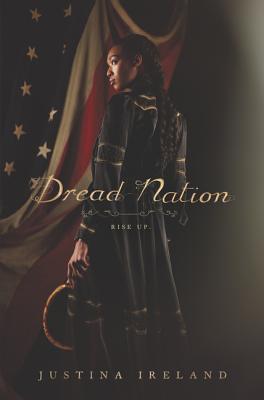
Dread Nation

by Justina Ireland
First sentence: ” The day I came squealing and squalling into the world was the first time someone tried to kill me.”
Support your local independent bookstore: buy it there!
Content: There’s a lot of violence and some swearing and some references to the sex trade. It’s in the Teen section (grades 9+) but I think it’d be good for a younger reader, if they were interested. 

It’s the 1880s, and America is still trying to overcome the zombie — they call them shamblers — infestation that began during the Civil War. Sure, the war kind of petered out, but the south is pretty much wiped out, given over to shamblers. And the east coast is partially fortified, but mostly because the government ships blacks and native peoples into schools where they get training to be, well, shambler killers. 

Our main character is Jane McKeene, a half-black girl from a plantation in Kentucky, who has attended Miss Preston’s School of Combat in Baltimore. She’s set to graduate and become an Attendant, protecting some rich white woman, when she discovers the seedy underbelly of the city. Which puts her into some definite hot water. And lands her in the West, where there are no rules. Especially for someone like her. 

I loved this one. Seriously. It’s a lot of fun, first of all (and I don’t really read zombie books), and I really liked the alternative history that Ireland created. It felt like it could have been a real history, just with zombies. But, I also really liked that it wasn’t all fluff and nonsense, that there were some real issues of racism and sexism and even zealotry in there. Things that would make for a good book discussion. 

And while there will most likely be a sequel, the story did come to a satisfactory conclusion. Which is always nice. 

A really really good book. 

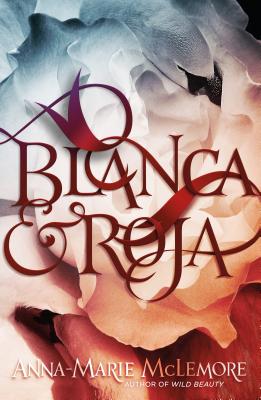
Blanca & Roja

by Anna-Marie McLemore
First sentence: “Everyone has their own way of telling our story.”
Support your local independent bookstore: buy it there!
Content:  There are some references to sex and some swearing (including a few f-bombs). It’s in the teen section (grades 9+) of the library.

For their whole lives, the del Cisne sisters — Blanca and Roja — have known that one of them would live and one of them would be turned to a swan.

All their lives, Blanca and Roja — named so because Blanca was blond and fair, and Roja had red hair and darker skin — tried to thwart the swans. They weren’t going to be divided, one of them was not going to be left behind. Then, the swans came. And behind them, two boys: Page and Barclay. 

One part fairy tale retelling (Snow White and Rose Red) and one part love story, Blanca & Roja is incredibly lyrical. I love the way McLemore writes, with spare chapters and magical language. I loved the way she used the fairy tales, and the way she was exploring the consequences of racism and white preference. It was a fascinating story, incredibly well-told, and thoroughly enjoyable!

Beneath the Citadel

by Destiny Soria
First sentence: “Four people were supposed to die at sunrise.”
Support your local independent bookstore: buy it there!
Content: There’s multiple instances of one swear word, and some violence. It’s in the YA section (grades 6-8) of the bookstore.

Things I really liked about this book:

  1. The time frame was super condensed: most of the action took place (shock) beneath the citadel, where the council of Eldra has been hiding, listening to prophecies, and determining the Fate of the citizens of their country.  Likewise, the entire book took place over four days. 
  2. Even though there was shifting perspectives (I really am kind of over that) between the five characters, Soria kept the action propelling forward, and I never found myself losing interest in the story. 
  3. Which is to say: Soria really knows how to write. No, the sentences weren’t lyrical and lovely all the time, but the characters and dialogue popped, and she kept me guessing throughout the whole book. And she doesn’t hold back any punches. 
  4. I really liked the world Soria built, and the conflict between prophecy and free will. It was a nice tension, and the fact that who the “bad guy” was kept shifting was pretty impressive as well. 

In short? I really enjoyed this one.