Imprisoned: The Betrayal of Japanese Americans During World War II

by Martin W. Sandler
First sentence: “It was a heroic achievement.”
Support your local independent bookstore: buy it there!
Content: There are some difficult moments, especially for younger readers. It would be in the middle grade history section of the bookstore.

I’ve known vaguely about the Japanese internment that happened during World War II for a while now (though it wasn’t something that was taught in school), but I had never read anything that detailed the actual experience of Japanese Americans in America.

My thoughts? White people are awful. (This is not a new realization. Just an additional confirmation.) My reservations about this book? It’s written by a (very nice) white guy. The book — which goes through the experiences of Japanese in America from the turn of the 20th century through World War II and afterward — seems really well-balanced and fair, and Sandler has done his research. I just couldn’t shake the feeling that this is a story that would be better told by someone who had gone through the experience, by someone who could first-hand explain the experiences of racism they had while they were trying to make a living here. Sandler doesn’t really hold those in charge accountable (really: what were the politicians thinking?!) and while he is sympathetic to the plight of the Japanese and forthright about the conditions they lived in, it lacks the emotional punch a Japanese writer could most likely give it.

Still, not a horrible book.
Jacob Have I Loved

jacobhaveilovedby Katherine Patterson
First sentence: “As soon as the snow melts, I will go to Rass and fetch my mother.”
Support your local independent bookstore: buy it there!
Content: It’s slow (it won the 1980 Newbery Award), and there’s not a lot of action. It’s perfect, though, for those 12 or 13-year-old kids who are trying to figure out themselves. And who like historical fiction.

A quick side note: it’s my 12th blogiversary today! I’ve fallen out of the habit of celebrating these, but I carved out this little corner of the internet 12 years ago today. Hard to believe, but there it is.

I wasn’t feeling much like reading new stuff the past couple of weeks, so I turned to a couple of rereads. One was The Blue Sword, which I’ve already given its own review. But the other, I only mentioned briefly, 12 years ago, so I thought it deserved its own post.

Sara Louise has spent her whole life on the small island Rass in the Chesapeake Bay. Her father works the water, crabbing in the summer, and harvesting oysters in the winter; her mother was a former schoolteacher and currently runs the house. Louise is mostly content, except… her younger twin, Caroline. It’s not that Caroline is mean or awful; in fact, it’s the opposite. Caroline is beautiful, Caroline is talented, Caroline is kind. Caroline is the joy of everyone on the island, and Lousie just can’t compete. She knows she should be supportive of her sister, proud of her sister. And she is. But she’s also jealous: she wants to be Noticed. But she’s not. She’s the backbone. The work horse. The awkward child.

There isn’t much of a plot; it’s Louise’s experiences growing up, and her (finally) figuring out what she wants out of life as an adult (which is nice). I spent this reread (it’s been a while) trying to figure out why this moved me as a pre-teen, why I have such a powerful attachment to it. I think it’s because everyone (well… me) can connect to being left out. To being looked over. To working and working and working and never feeling appreciated. To always being on the outside. And Patterson captured that feeling so very perfectly. She captures the awkwardness of the pre-teen years (I really don’t think anyone ever has things together the way Caroline does in the book; I’d love to see this story from Caroline’s point of view. It’d make her more human), the way they Want but don’t quite know how to articulate that want. The up and down feelings, the drama of just Living. It’s a perfect portrait of those years, and I think that’s what resonated.

Does it hold up as an adult? Yes, it does. It’s definitely historical fiction; it’s a picture of a small island in the 1940s, during World War II, and I found that interesting. I wanted to smack Grandma. Seriously, the woman had issues. I wished there was more about Louise’s mom; I would have loved to hear her story. I did enjoy it, even if I didn’t connect to it as deeply as I did when I was a pre-teen.

Definitely still worth reading, though.

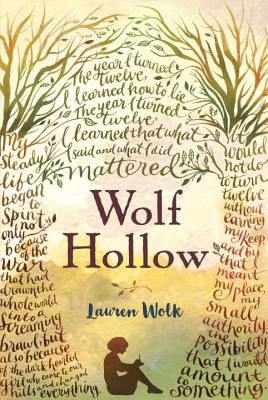
Wolf Hollow

wolfhollowby Lauren Wolk
First sentence: “The year I turned twelve, I learned how to lie.”
Support your local independent bookstore: buy it there!
Release date: May 3, 2016
Content: There’s some death and bullying and one pretty intense injury scene. Probably not for the younger set. It will probably go in the YA section (grades 6-8) of the bookstore.

It’s the fall of 1943, and Annabelle is living a happy, quiet life on her farm in Pennsylvania. Sure, the war in Germany is raging, seemingly without end, but it doesn’t really touch Annabelle’s life. What does touch her is Betty, the new girl who has moved in with her grandparents. Betty has decided that Annabelle is her target, and demands things from her. And when Annabelle refuses to give in, Betty turns her ire on bigger targets. Like Toby, the World War I veteran who Annabelle’s family has taken care of for the past few years. And so when Betty goes missing, it’s Toby who gets blamed.

On the one hand, this really grew on me. It took about 100 pages, but I finally got to where I was invested in Annabelle’s story, and curious about the direction it was taking. The writing is excellent; Wolk really does know how to spin a story. And I thought that, even though it’s a work of historical fiction, the themes of acceptance of others and defending the innocent were incredibly timely.

My problem with it? It’s not really a children’s book. Our narrator is reflecting back on her childhood, so everything is kind of infused with adult sensibilities. (At least: I thought so.) I appreciated that the parents were good parents, helping out when Annabelle confessed the bullying to them. But, it just doesn’t feel like a book I can give to a kid (maybe that special, precocious kid? The 9-year-old who likes Harper Lee, maybe.). Maybe I’m being too sensitive, dumbed down by Diary of a Wimpy Kid-like books. Maybe this is like Pax, which I had a viciously violently negative reaction to, but it turned out it was just me.

Though I didn’t have a negative reaction to this. I liked it, I thought it was well-written and the story incredibly powerful. I just don’t think it’s really a kids’ book.

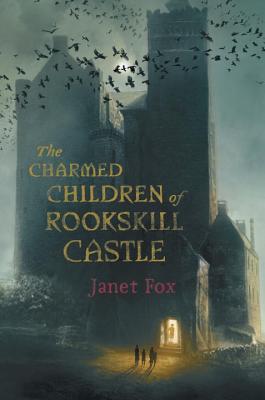
The Charmed Children of Rookskill Castle

charmedchildrenby Janet Fox
First sentence: “It is 1863.”
Support your local independent bookstore: buy it there!
Review copy provided by the publisher.
Release date: March 15, 2016
Content: There’s some scary imagery, and the narrative is a bit confusing. I’d give it to a precocious 3rd grader, but definitely 4th and up. It will be in the Middle Grade (grades 3-5) section of the bookstore.

At first glance (at least for me), this looks like a kind of off-beat historical fiction. It’s the middle of WWII, and the children in London are being sent out to the countryside in order to escape the bombing. Kat and her siblings Robbie and Amelie are among those kids sent away, in this case to a castle in Scotland where a boarding school of sorts has been set up.

But things aren’t always what they seem. Including this book.

Rookskill Castle is a dark place (and not just because fall in Scotland is dreary), and the lady of the castle is up to something. Kat is sensible and practical, and not at all inclined to believe that what it going on could be dark magic.

And yet.

I loved this book, with reservation. On the one hand, the story was compelling — by the end, I was flying through it — and I adored Kat. She was practical, mechanically-minded and good at math, all things you don’t usually get from fantasy heroines. She was also willing to admit when she’s scared, and the boys were mostly willing to support her in the decisions that had to be made.

However,  I have issues when I know more than the characters. Fox flits back and forth through time, from WWII backwards to the mid-1800s, in order to give the reader the backstory of the castle. I’m not the most careful reader, and so I was able to piece things together before the characters did. I’ll admit it kind of heightened the tension — I wanted Kat to figure things out before they got too bad — but I was also annoyed that it took her so long. In the end, I found I didn’t mind so much, but it did niggle at the back of my mind while I was reading,.

The magic, however, was great. I loved the way Fox wove good vs. dark magic, and how it was a very practical sort of magic as well. That much — plus the  general, overall creepiness — definitely nakes the book worth reading.

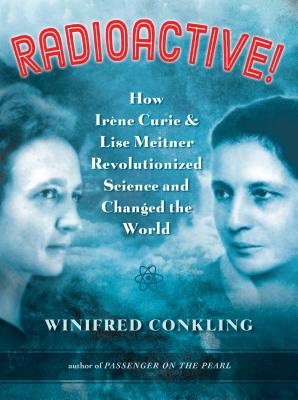
Radioactive!

radioactiveby Winifred Conkling
First sentence: “Their moment had finally arrived.”
Support your local independent bookstore: buy it there!
Review copy provided by the publisher.
Content: There’s some science terms and such in this, but they’re explained pretty well. It’s a bit on a higher grade level, but I think 5th graders and up could handle it.  It’s in the kids’ biography section at the bookstore.

I’m a sucker for biographies highlighting people or things I don’t know much about. And this one definitely fits the bill. Conkling highlights two physicists doing research in the 1920s and 1930s, ones that I didn’t know anything about.

Irene Curie was the daughter of the more-famous Marie, but was a stellar physicist in her own right. Along with her husband, Frederic Joliot, she discovered artificial radiation. This opened up many avenues in the scientific world. And while she got credit, no one (well, not us non-scientists anyway) remember her for this. The other scientist Conkling highlights — and in some ways, the more interesting story — is Leisl Meitner. She, along with several other scientists, discovered nuclear fission. The rub, though, is that because Leisl was considered a Jew in Nazi Germany (her grandparents were Jewish), she had to flee to Sweden. Then her partner (and friend?!), Otto Hahn, completely wrote her out of the research. He said he did this all on his own, mostly because he was afraid of the Nazis.

It’s a fascinating story, and Conkling does a good job of explaining the science (there’s some helpful tables, etc. throughout the book) as well as making both of these fascinating women come to life. There’s a bit about their history, their relationship with the scientific community (which was incredibly sexist, no surprise), as well as a lot on their contributions to the advancement of physics.

It’s fascinating and well worth the read.

Salt to the Sea

salttotheseaby Ruta Sepetys
First sentence: “Guilt is a hunter.”
Support your local independent bookstore: buy it there!
Review copy provided by the publisher.
Content: There are some disturbing elements — it is the horrors of WWII, after all — including violence and rape, though none of it is graphic. It’s in the Teen (grades 9+) section of the bookstore, but I’d give it to an interested 7th- or 8th-grader.

One of the things I really admire about Sepetys is her willingness to tell the untold story. The story that’s been buried or neglected because of the way history has been told. The story that’s difficult to face or bear. She looks at them unflinchingly, and compels us to bear this hard history with her. It’s a difficult thing, but she does it so eloquently we just can’t look away.

This time around she tackles the sinking of the Willhelm Gustloff, a Nazi ship that was carrying 10,000+ refugees that was sunk by the Soviets near the end of the war. We follow four young adults (they range in age from 15 to 21) — Emelia, a pregnant Polish refugee; Florian, a Prussian who’s on the run with a stolen secret; Joana, a Lithuanian nurse who’s been able to repatriate into Germany, and who’s searching for her mother; and Alfred a young Nazi recruit who is a bit… off — as they head toward the ship in the dead of winter. The chapters are short, almost poetic, and they intertwine in compelling ways. It propels you forward, in spite of the horrors (perhaps because of them?). The minor characters — the orphan boy Joana finds, as well as the shoemaker they travel with, among others — are just as fleshed out and real as the main characters. Sepetys didn’t cut corners, and I appreciated that.

It’s exactly what I’ve come to expect from her. And that’s the best thing.


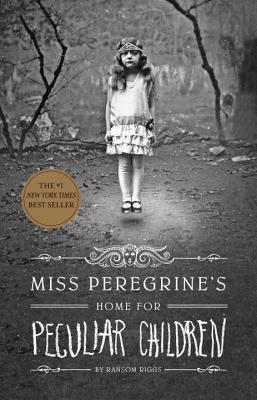
Miss Peregrine’s Home for Peculiar Children

by Ransom Riggs
First sentence: “I had just come to accept that my life would be ordinary when extraordinary things began to happen.”
Support your local independent bookstore: buy it there!
Content: There’s a few swear words and general creepiness. It’s in the Teen section (grades 9+) because that’s where adults want to find it, but I wouldn’t be adverse to giving it to a 7th or 8th grader.

I read this one by request of one of my fellow booksellers; she’d picked it for her summer teen book group and couldn’t make a session. So, I’m filling in.

I know the rest of the world has read this already, so I’ll spare much of the plot. I’ll just say that Jacob has grown up on his grandfather’s stories of the boarding school he stayed at in England during World War II. They weren’t normal stories, and the other children weren’t normal children. But Jacob thought that’s all they were: stories. That is, until his grandfather ends up dead in his garden, Jacob feels like he’s slowly going insane. So, he heads off to this island off the coast of Wales (or some place sufficiently secluded and broody and English-y) to find out the truth for himself.

Yes, the format was clever. Riggs intersperses (real) creepy, weird, old photographs and it’s quite unique how he incorporates the pictures. But, that’s all it was: clever. I never got past the whole “I’m supposed to be loving this?” feeling. Maybe it’s too much hype. Or maybe it was his writing. Or maybe it was just the mood I’ve been in, but this one fell flat.

On the other hand, that might make for more interesting discussion at the book group….

Black Dove, White Raven

by Elizabeth Wein
First sentence: “Sinidu told me I should aim for the sun.”
Support your local independent bookstore: buy it there!
Content: There’s a smattering of violence, and some insinuations, but it’s not nearly as intense as Wein’s other books we have in the store. I’m torn between leaving it where it is (in Teen, grades 9+) and moving it to YA (grades 6-8), where it really fits better, subject and content-wise. Thoughts?

I know Wein has written other books about Ethiopia, but I didn’t know they existed, really, until this one came out and I started hearing the buzz. And so I really didn’t know what to expect with this one.

Many of the elements I have enjoyed about Wein are there: women pilots, in this case two: a white woman, Rhoda, and her black friend, Delia,  learned to fly in France and go around the States in the late 1920s/early 1930s with their barnstorming act. There is also World War II: after Delia’s accidental death, Rhoda takes their two children, her daughter Emelia and Delia’s son Teo (whom Rhoda has taken as her own) to live in Ethiopia, which was Delia’s dream.

The book is a long letter written to the emperor of Ethiopa by Emelia. It’s in the middle of World War II, and the Italians have invaded Ethiopia. Because of their precarious legal situation: Teo is not legally Rhoda’s son, they’re not really legally in the country, and because Teo’s father was Ethiopian, it means that their position in the country, especially with the Italians there, is a precarious one.

Emelia recounts history and how their little family ended up where they are. Teo contributes some, writing journal entries and flight logs — Rhoda eventually teaches both children to fly — and so you hear his voice as well as Emelia’s.

There’s a lot going on in this book, and yet, I felt like the conflict didn’t really pick up until the last third. It’s a quieter book than her previous two WWII books, one that felt more vignette-driven as well. (Though typing that, and thinking back to Code Name Verity and Rose Under Fire, I’m not sure that’s true.) The characters were definitely younger in this one, and perhaps that’s what I’m feeling. I did like how Wein rounded out most of the characters in the book, but especially the female ones (the male ones, aside from Teo, were basically set dressing, there to move the plot along). Wein also touched on a lot of cultural issues for the time: segregation in the US, slavery in Ethiopia, the war, the limitations of women at the time. Even though it didn’t feel like much, plot-wise, there was enough to hold my interest and carry the book.

I’m not sure I love it as much as I do the other books I’ve read by Wein, but I did thoroughly enjoy it.

All the Light We Cannot See

by Anthony Doerr
First sentence: “At dusk they pour from the sky.”
Support your local independent bookstore: buy it there!
Content: There is some graphic (read: Nazi) violence and about a half-dozen f-bombs. It’s not a difficult read, even for it’s length, and if there’s a teen interested in WWII, it would be a good one to give. It’s in the adult fiction section of the bookstore.

I’ve kind of been avoiding this one. It was a slow build, but eventually EVERYONE was reading this. And we all know how much I love reading books that everyone is reading. (Not.) At least when it comes to adult books, anyway. I just don’t trust Everyone. (No interest in Gone Girl. Or The Girl on the Train. At. All.)

But this was picked for my in-person book group, and so I was kind of obligated to read it. I didn’t go in expecting much of anything, so I was pleasantly surprised when the chapters were short. And the story was engaging. And that the 500+ page book wasn’t one that was going to bog me down.

In fact, if I dare say this: I enjoyed it. Immensely.

This is, at its simplest, the story of two kids, a blind French girl and an orphan German boy, during World War II. Werner, the boy, is an orphan resigned to growing up in this mining town, working the mines, even though he’s a technical genius. Then, he gets drafted into the German Army, which in 1939 isn’t the happiest place. Marie-Laure is a French girl, living in Paris, with her father who works at the Museum of Natural History. When the Germans invade, they end up in Saint-Malo with Marie-Laure’s great-uncle Etienne. Then her father gets called back to Paris and goes “missing”. Their stories meet, finally, in August 1944, when the town of Saint-Malo is set on fire.

The story, however, is immaterial in this book. No, what’s important, I think are the characters. They way they interconnect with each other, with themselves. And the little acts of goodness — of light — that thread throughout the book. It’s a very dark time, World War II, but this is an incredibly hopeful book. Its short chapters are lyrical and evocative, and the suspense building up to August 1944 — every section or so, Doerr gives us a glimpse of what is happening — is palpable.

My only real complaint is that I could have done without the two epilogues, one in 1974 and the other in 2014. I felt no need to know what the characters were up to after the story ended, and it felt forced and not nearly as emotional as the rest of the book. But that’s a small complaint in the wake of the story.

The Calligrapher’s Daughter

by Eugenia Kim
First sentence: “I learned I had no name on the same day I learned fear.”
Support your local independent bookstore: buy it there!
Content: It’s pretty long and involved, and some off-screen sex (both married and extra-marital). It’d be in the adult section of the bookstore.

Najin Han was born in 1910, soon after the Japanese invasion (I suppose) of Korea.The daughter of a talented calligrapher, she was supposed to be raised in the traditional manner: to be a servant to men, without the education or opportunities men have.

But, because her mother was Christian, and because Najin was curious, she ended up having more opportunities than she “should” have. She went to school, learned both English and Japanese.She spent time in the exiled court (thanks to some terrific maneuvering from her mother and a well-placed aunt). She got trained to be a teacher and a midwife. So when her husband — an arranged marriage, of course — goes to America for theological training and she gets stuck in Korea, she has Options.

Based on her parent’s lives, Kim writes a fascinating story about life in early-20th century Korea. There was much I didn’t know, from the way the Japanese took over the Korean culture, trying to suppress it to the fact that Christianity was in Korea fairly early on.

I enjoyed reading this one, though there were times that I skimmed — I didn’t care when Kim switched into other points of view; Najin’s story was the one I was most interested in — but for the most part I found this to be a fascinating portrait of a country and time we don’t hear much about.