Audiobook: Graciela in the Abyss

by Meg Medina
Read by Elena Rey
Support your local independent bookstore: buy it there!
Or listen at Libro.fm
Content: There are some pretty intense and scary moments, as well as emotional abuse by parents. It’s in the Middle Grade (grades 3-5) section of the bookstore.

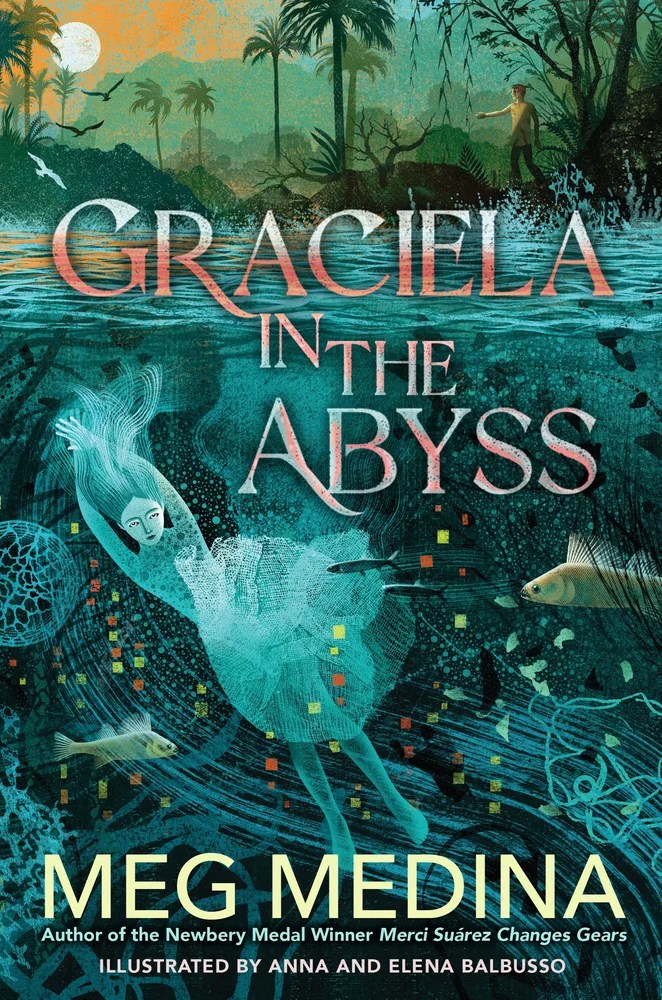
Graciela accidentally died in the sea a long time ago, and woke up to be a ghost. She’s pretty content living her life until a series of things happen: her spirit guide, Amina, gets called to be a part of the ocean’s governing body; a spirit-killing harpoon gets unleashed (by accident) by a boy named Jorge; and then Graciela and Jorge have to destory the harpoon and save the sea.

Kind of. I think? The plot for this one kind of is immaterial – it’s all about Graciela’s growth. She starts the book selfish and annoying, and by the end she’s a decent human being. (At least, by the end I didn’t want to smack her as much.) Jorge was an abused child who just wanted to make things right. It’s a lot for a middle grade book.

And I had to move the narration up to 1.3x becuase it was sooooo slow at a slower speed. Like mind-numbingly slow.

I wish I had better things to say. I respect Medina and I’ve liked her books up to this point, but this one just didn’t do it for me.

Audiobook: Soul of an Octopus

by Sy Montgomery
Read by the author
Support your local independent bookstore: buy it there!
Or listen at Libro.fm
Content: There’s probaby not a lot that’s questionable, content-wise. It’s in the science section of the bookstore.

I’ve seen this book around for years, and have even given it as a gift a couple of times, but have never read it. There was a sale at Libro.fm recently (Independent Bookstore Day, maybe?) and this was on sale, so I picked it up. I figured it might be a good listen while we were on vacation. (The kids nixed that; they said she sounded overly enamored with the octopuses.)

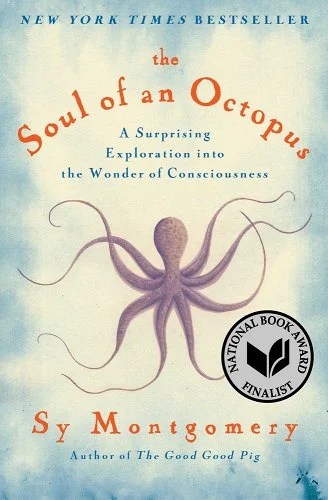
This is Montgomery’s exploration of octopuses. That’s really the best summary. It’s not a history, it’s not a true scientific exploration. No, Montgomery got to know several octopuses at the New England aquarium, and she was interested in knowing more about them. Not just the way they interact with humans, but how they act in the wild and how they process information. It’s kind of a memoir, since it’s her experiences, though she does talk to scientists and gets to know the director of the aquarium. Mostly, though, it’s her Thoughts and Experiences With Octopuses.

And it was interesting. She was a very amenable reader, though once my kids mentioned that she sounded overly enamored with the octopuses, I couldn’t unhear that. She does love the animals, and that comes through. I liked the depictions of interactions she had with the animals, and even though I felt like she anthropomorphized them, maybe they really did have the feelings/emotions/reactions that she attributed to them. I am a little conflicted about the way aquariums get their animals (I don’t know why I didn’t think they were taking them from the wild), but other than that, I enjoyed this one.

The Fire, the Water, and Maudie McGinn

by Sally J Pla
First sentence: “I learned this great calm-down trick recently.”
Support your local independent bookstore: buy it there!
Content: There is on-page physical abuse by a stepparent as well as neglect and shaming by a parent. It’s in the YA section (grades 6-8) of the bookstore, but I’d give it to some 4th and 5th graders. I read this book for the Cybils, and this is a reflection of my opinion and not that of the whole panel.

For Maudie’s whole life, she has spent summers with her Dad in his cabin in California and the rest of the year with her mom in Texas. But her mom recently go remarried, and her stepdad, Ron, has an explosive temper. So much so that he hurts Maudie, whom he doesn’t seem to want around. And her mother isn’t doing much to help. Especialy since Maudie has autism and needs more time and allowances to get things done. But her mother told her not to tell her dad, so she’s keeping the secret.

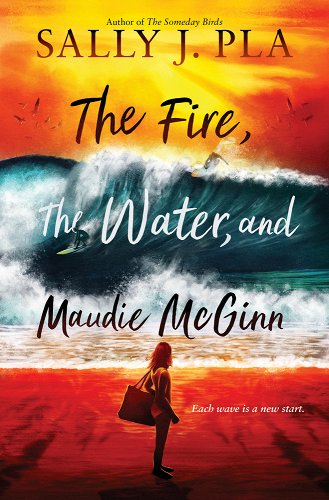
This summer, though, there’s a wildfire in the mountains around her dad’s cabin, and they have to flee. They’re left with nothing, so they head south to the beach to stay with one of her dad’s high school friends. There, Maudie discovers surfing, makes friends, and gains confidence. Will she have enough to tell her dad the secret and to tell him what she really wants: not to go back to Texas at all?

I really liked the autism representation in this. I liked the way Pla described what Maudie was feeling, and the sensations that made her anxious and unsettled. She had panic attacks and meltdowns, and the author described them just as if they were parts of life, which they are. I liked that her dad was also neurodivergent. And I liked that Maudie found something she could focus on in the surfing, and that the community was so welcoming.

Things were unsettling though. I disliked Maudie’s mom, who didn’t care about what Maudie needed to thrive, but more on what she (the mom) wanted. I think one could blame it on Maudie’s mom being a teenager when she had Maudie, but maybe not. She was horrible, her new husband was horrible, and Pla leaned into that. I also wondered about the representation. I liked that the town was populated with all sorts of people, but some of it felt stereotypical. Maudie’s dad is half Venezuelan, and his mom died soon after Maudie was born, so he doesn’t really have a connection to that. His friend is Latine, and they meet an Indian/Pakistani (assuming from the name, there’s nothing that gives it context) woman who runs an alternative school for neurodivergent kid. And Maudie’s surving mentor is Etta Kahuna, who is Black? Polynesian? Her only defining feature is her gray “dreadlocks” which is a big red flag.

That said, I did like how the overall message was trusting yourself and believing in (some of) the adults around you. And I did like watching Maudie learn to surf. I’m just not sure it’s that great with representation.

Don’t Call Me a Hurricane

by Ellen Hagan
First sentence: “‘Grab your board,’ Isa shouts, throwing open the screen door letting sunshine and cool breeze into our living room.”
Support your local independent bookstore: buy it there!
Review copy pilfered from the ARC shelves at work
Content: There is mention of teenage drinking and some intense moments with a natural disaster. It’s in the Teen section (grades 9+) of the bookstore.

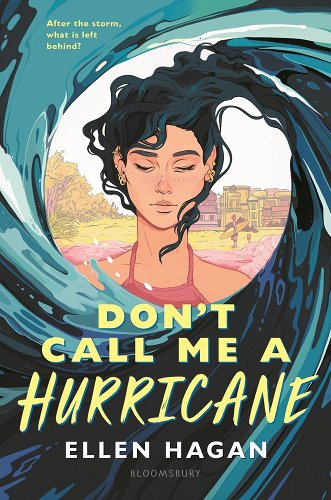
Eliza’s life hasn’t been the same in the five years since the hurricane hit her island off the Jersey shore. Sure, her family’s still living there, still scraping by, but the island itself has changed. Developers have come in, and bought up houses, knocked them down, in the name of progress. The latest example? They want to build out the marshland. And Eliza – and her friends – don’t want to lose that much of their island.

It also doesn’t help that a new boy – Milo – is from New York City, is one of those rich summer-only island visitors and that Eliza seems to be falling for him.

This one had all the elements I like: it’s about the ocean and island living! It’s got a strong female character! It’s a novel in verse! There’s a strong environmental message! But it fell completely flat. Not so flat that I didn’t finish it, but flat enough that I found myself skimming the chapters, just enough to get the information. I wanted to like this one so much more than I actually did. Not sure where it went wrong: Eliza is a good character and Hagan does a good job of showing the trauma after a natural disaster (though she did amp up the stakes by almost killing Eliza’s brother in the storm), but I just didn’t connect with it.

The Aquanaut

by Dan Santat
Support your local independent bookstore: buy it there!
Content: There’s a death of a parent, and mistreatment of animals. It’s in the middle grade graphic novel section of the bookstore.

Ever since her father, an marine researcher, died in a boating accident while out on the ocean, Sophia (and her Uncle Paul, who is taking care of her) has been just trying to survive. The place Paul and his brother built, Aqualand, is being run by a team of investors who don’t care about science, and Sophia’s grades are becoming worse and worse. And then, one day, a team of underwater creatures show up in Sophia’s father’s old diving suit.

It would just be easy to say: And then all havoc breaks loose. But it’s more than that. Paul and Sophia learn they need to actually try and grieve their loss and grow together as a family. Paul stands up to his investors, and less aqua land, but gains his dignity back. And the animals work together as a crew, while Sodapop (a hermit crab, I think) faces his fears of a giant squid. It’s about growth and togetherness and grief, with an underlying message about conservation and science, and maybe amusement parks that capture wild animals to put them in cages are bad.

I adore Santat’s heartfelt storytelling, and enjoy his art as well. This one is definitely one to hand to everyone, kids and adults alike.

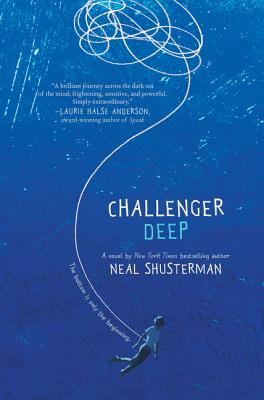
Challenger Deep

challengerdeepby Neal Shusterman
First sentence: ”
Support your local independent bookstore: buy it there!
Content: There’s some talk about drinking, but none actual. And there’s some mild swearing. But the reason it’s in the Teen (grades 9+) section of the bookstore is because it’s an extended metaphor. I’d give it to someone in 7/8th grade if I thought they’d “get” it.

Very seldom does a jacket flap so succinctly sum up a book, but in this case, I think whomever at HarperTeen did this, was spot on:

Caden Bosch is on a ship that’s headed for the deepest point on Earth: Challenger Deep, the southern part of the Marianas Trench.

Caden Bosch is a brilliant high school student whose friends are starting to notice his odd behavior.

Caden Bosch is designated the ship’s artist in residence to document the journey with images.

Caden Bosch pretends to join the school track team but spends his days walking for miles, absorbed by the thoughts in his head.

Caden Bosch is split between his allegiance to the captain and the allure of mutiny.

Caden Bosch is torn.

This book. I’ve been avoiding it for months, and I really only picked it up because Pop Culture Happy Hour did a recent podcast on it. But this book pulled me in and didn’t let me go. I don’t know of a more accurate, a more compelling, a more beautiful rendering of the spiral that mental illness — it really doesn’t matter what Caden’s diagnosed with — is. Shusterman gives us an allegory with the ship that is compelling and intriguing and maybe a little confusing. But the confusion is part of the trip; Shusterman not only wants us to read about Caden’s descent into illness, he wants us to feel that with him. And feel I did.

Powerful. And definitely one that will stay with me for a long time.

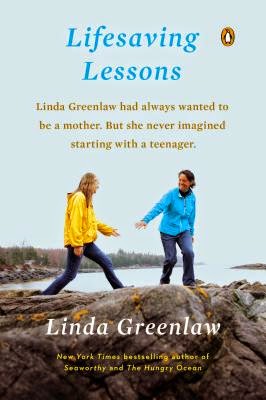
Lifesaving Lessons

by Linda Greenlaw
First sentence: “Confrontation was imminent.”
Support your local independent bookstore: buy it there!
Content: There’s some swearing, including a number of f-bombs. Plus some discussion of sexual abuse of an adult and a minor.

I read a few of Linda Greenlaw’s books way back when and although I didn’t keep up with what she was doing, when I found that she was coming to the store for the paperback version of her latest memoir, I snagged at the chance to both see her and read the book.

This one is a memoir of how she became a mother, of sorts. It’s the story of a girl who came to the island from an abusive family, with an uncle who was seen as a savior. That is, until she escaped one night, and the truth came out: her uncle was sexually and emotionally abusing her. It’s not a pleasant story to read; Greenlaw pulls no punches when talking about the abuse. She’s not graphic either, but rather giving us the full emotional heartache that her daughter — and the island — went through because of this. And how she ended up the legal guardian — and eventually feeling like a mother figure — of the girl.

It’s a hopeful book in the end, though. It’s not an easy road, with a lot of ups and downs, but Greenlaw takes us along for the ride in her frank, yet engaging way. I was drawn into her island way of life again, and worked through her problems with her. I wanted things to work out the best for Greenlaw and her ward, and it was that desire that kept me plugging through what usually would be considered Other People’s Problems.

I’m not sure it’s a book for everyone. But I did find the journey interesting.

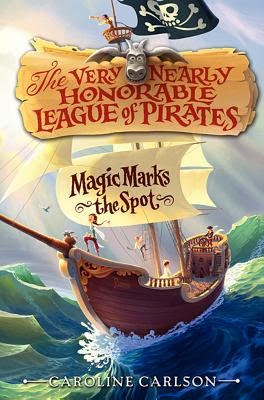
Magic Marks the Spot

The Very Nearly Honorable League of Pirates, Book 1

by Caroline Carlson
First sentence: “Ever since the letter had arrived from Miss Pimm’s, Hilary had spent more and more time talking to the gargoyle.”
Support your local independent bookstore: buy it there!
Review copy provided by the publisher for the Cybils
Content: There’s a couple of swordfights where no one gets injured. For a pirate book, it’s really quite tame. It’s shelved in the middle grade (3-5th grade) section of the bookstore.
Hilary Westfield has one dream: to become a pirate. Unfortunately the league of pirates in Augusta has one rule: no girls. Girls are sent to Miss Pimm’s finishing school, because that’s Where Girls Go. Thankfully, Hilary has Pluck and Determination and doesn’t let the Rules stop her. (This book insists you talk about Things in Capital Letters.) As soon as she gets a chance, she runs away from Miss Pimm’s and finds a pirate — Jasper, the Terror of the South Seas — who doesn’t care that she’s a girl. 
There’s more to this book — magic and treasure and an Enchantress and a Wicked Parent — but really, what I loved most about this book was that Hilary set out to be a pirate and succeeded ON HER OWN TERMS. No dressing up like a boy. No bowing to Tradition. No Resigning Oneself to her Fate and Making the Best of It. Nope. Not for Hilary. She (and her talking gargoyle, whom I really loved) decided that they wanted to be pirates, and Dang It, they became pirates. 
I liked this one an awful lot, mostly because of the above reason. But — aside from the unnecessary letters that were written in cursive, which is a real turn-off for kids These Days; the book got much better after I started skipping them — I really enjoyed all of it. There was humor (Miss Greyson, the governess/chaperone, was hilarious), sword fighting, a wee bit of romance (but not overstated; it was between the adults), and most of all Hilary being Awesome.
Yeah, it was a bit slow at the start, and I really don’t like that it’s yet another one in a series, but I thought the story wrapped up well enough, and I’d be willing to see where Hilary’s piratical adventures take her. 

(Just for the record: because this is a Cybils nominee, I’ve been asked to make sure y’all know this is my opinion only, and not that of the panel.)

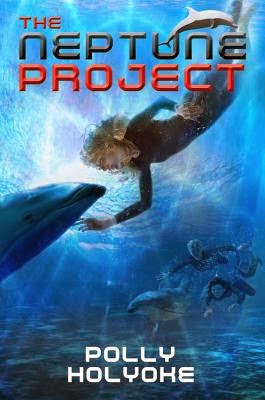
The Neptune Project

by Polly Holyoke
ages: 10+
First sentence: “I wake to an urgent tap at my window.”
Support your local independent bookstore: buy it there!

Nere Hanson (a terrible name, that, as A pointed out) has never understood why she felt more at home in the sea, with the dolphins. Her parents are scientists who study the ocean, but that’s not the whole picture. Nere has problems breathing on land, and it’s just getting worse. Then the government of the Western Collective (roughly some futuristic dictatorship that came out of the US; this is set along the Pacific coast) demands that everyone who lives by the ocean move inland, to help with “food production.” So, Nere’s mom pushes forward her plans, breaking the news  to Nere and her friends Robry and Lena that the reason why they struggle to live on land is that they’re genetically altered to survive — like breathe seawater and everything — under the ocean.

I’m going to stop here for a minute. I’ve read books about exploring the ocean as an option for when global warming takes over and turns this planet into one gigantic mass of water, and I’ve read books that deal with genetic mutation of people (and I think I’ve read one that combines the two in some search for Atlantis, now that I think about it), but this one struck me as unique. Holyoke has done her research and this one felt, well, authentic. I appreciated that. I also enjoyed her use of dolphins; they weren’t props, but rather their own characters, which added another interesting layer to the story.

After they make the change, and get away from the Marine Guard (read government thugs), Nere, Robry, and Lena have to figure out how to survive in their new environment. They meet up with another group of kids who have had this change done to them — Nere is resentful for a good part of the book because her mother did this to her, without her consent, and didn’t give her the time to adjust to this. I love Bad Mom Decisions in Middle Grade books — and set out for the rendezvous point. From there, they head north to Vancouver to the colony that Nere’s father is setting up.

Even though it’s a first in a series — I really would love a stand-alone speculative middle grade fiction book sometime — and it’s just an elaborate set-up, Holyoke does a fantastic job creating her world. And I liked the dynamics she created in the group. It wasn’t as middle school-ish as the jacket flap led me to believe, but a genuine portrayal of kids thrown in a new situation and forced to survive. And Holyoke isn’t afraid to kill characters off or have characters betray one another. It was complex, and I enjoyed that.

I only wish I had more of a sense of closure with this one; I’m not sure I’m all excited to read further adventures of Neve and the Neptune Project. But this one was definitely enjoyable.

(Just for the record: because this is a Cybils nominee, I’ve been asked to make sure y’all know this is my opinion only, and not that of the panel.)