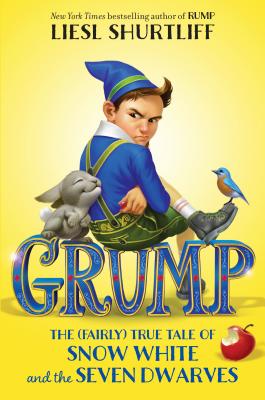
Grump

by Leisl Shurtliff
First sentence: “I was born just feet from the surface o the earth, completely unheard o for a dwarf, but it couldn’t be helped.”
Support your local independent bookstore: buy it there!
Content: It’s got a longer chapters, and some challenging words, but nothing too outrageous. It’s in the Middle Grade (grades 3-5) section of the library.

Borlen is a very unusual dwarf: he was born near the surface and is more curious about the human world than digging for gems. He carries around a pet bat, and spends his time reading about the human world and trying to go above and see it. His Fate Stone — the stone that all dwarves get when they come of age — is a mirror, which is unheard of. And so, when he’s placed as a Seventh (the worst position) on a mining team and there’s a chance for him to see what the humans are like, he takes it. 

Once above ground, Borlen stumbles into the clutches of Snow White’s power-hungry stepmother, the Queen Elfrieda Vronika Ingrid Lenore (let’s see if you get it), who unfortunately mis-interprets the word “fairest” to mean most beautiful instead of most fair. That creates a problem for Borlen, when he’s tasked with seeing Snow White killed.

The rest of the plot follows the fairy tale pretty closely, and I enjoyed it. I’m not entirely sure why giving Borlen — Grump of the seven dwarves (I recognized Sneezy, Bashful, and a couple others in the mix) — a backstory was necessary to retell Snow White, but it did make for an entertaining little book.
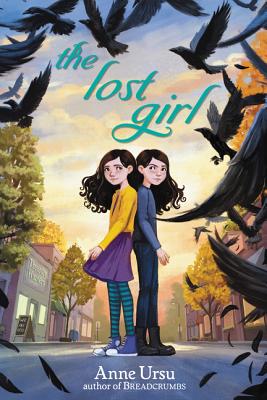
The Lost Girl

by Anne Ursu
First sentence: “Once upon a time, there were two sisters, alike in every way, except for all the ways they were different.”
Support your local independent bookstore: buy it there!
Review copy provided by the publisher.
Content: There are some scary moments. It’s in the middle grade (grades 3-5) section of the bookstore.

Iris and Lark are identical twins. And they’ve always been together, from the very start. They’re stronger together, and even though they are different, they help each other out. That is, until this year, their 5th grade year, when their parents (darn them!) decide that it would be better if Iris and Lark are in two different classes. That shakes both girls to their core, but Iris, who’s nominally our main character, is really having a tough time of it. And things get a lot more complicated when she starts frequenting a strange new antique store in town with an odd owner who says there is magic in the world.

I swear I read a tweet by Anne Ursu (who, if you don’t follow on Twitter, you should!) that this book was about girls and friendships and smashing the patriarchy, and I am totally here for all of that. It’s a seriously good book; the parents create conflict by being good parents (which is incredibly unusual) and by trying to stretch their twins in new ways. And it’s uncomfortable (do I really listen to my kids the way they want to be listened to?) and challenging and amazing and wonderful all at the same time. I adored Iris’s loud strength and courage and prickliness and Lark’s whimsical nature and quiet strength. But what I really loved was the way the girls banded together to overcome the conflict. Seriously. Usually in middle grade fiction, it’s the main character Facing the Challenge and Overcoming (maybe with a little help), but very rarely is it a group of kids who work together and are Awesome. Don’t underestimate the power of kids working together.

It’s such a fantastic, wonderful, gorgeous middle grade book.

The Boneless Mercies

by April Genevieve Tucholke
First sentence: “They say dying makes you thirsty, so we always gave our marks one last drink.”
Support your local independent bookstore: buy it there!
Content: There is a lot of death and some drinking. It’s in the Teen sectiong (grades 9+) but it’d be appropriate for younger kids as well.

Frey and her companions — Ovie, Runa, Juniper — are Boneless Mercies: women who roam the country performing mercy killings for payment, such as it is. They’re shunned by society, even while they’re treated with respect. But the girls — and they are all girls, ranging from 15 to 19(ish) — are tired of the death trade. Frey, especially, longs for something More out of life. So, when they here of a monster — a giant — who is terrorizing the Blue Vee area of Vorseland, they head out to perform that impossible task.

There’s more to it, of course. And it’s very much an Epic Tale in the tradition of the Odyssey, or (more accurately) one of the Norse myths. In fact, it’s deliberately Norse (without being explicitly so): the Boneless Mercies worship the goddess Valkree, and others follow Obin. It’s Vorse and Finnmark and Dennish. Warriors die and go to Holholla, and they believe in Hel. This bugged me, at first, because why be Norse without really being Norse? But, eventually, I settled in and it didn’t bother me as much.

It’s a very feminist book, without hitting the reader over her head: it’s female-centric (there are about five male characters in the whole book), it’s a world where while females don’t have power (there are references to the way women and girls are kept down), they search out the power they do have and wield it to the full extent, while working for change. But, mostly, it’s beautifully written. Tucholke has a gift for words in the same way Laini Taylor and Maggie Stiefvater do: she keeps the story going, while painting beautiful word pictures.

It’s a lovely epic story, and one I’m very glad I read.

Beasts Made of Night

by Tochi Onyebuchi
First sentence: “I make sure to sit where they can’t see me.”
Support your local independent bookstore: buy it there!
Content: There are a couple of mild swear words, some violence, and a bit of kissing. It’s in the YA section (grades 6-8) of the bookstore.

The world that Onyebuchi created is fantastic: purity means everything to the people of this city, and so to remain pure from sin and wrongdoing, the rich and powerful hire Magi to call the sin from them, in the form of shadow beasts. Then sin-eaters, called aki, destroy the beasts, and swallow the sin, which appears in the form of a tattoo on their bodies. The aki are considered the lowest of the low, because their impurity is visible on their bodies, and so they are shunned and cheated and die early.

But, unfortunately, that’s as far as the book got. There isn’t much of a plot — first our main character, Taj, is in the slums, and then he’s in the palace, and then he’s sent to train new aki — and it never really seemed to go anywhere. There’s a rebellion and a resistance and who is really the “bad guy” (was it the head Magi? Or the royals?) and the princess Taj was kissing HAD to be at least old enough to be his mother, which just creeped me out.

So, while I adored the world that Onyebuchi created, the book just didn’t do it for me.

Bruja Born

by Zoraida Cordova
First sentence: “This is a love story.”
Support your local independent bookstore: buy it there!
Review copy provided by the publisher for the Cybils.
Content: There is some mild swearing and a few f-bombs. There is also a lot of violence. It would be in the Teen section (grades 9+) if the bookstore had it, but I think a 6-8th grader who was interested could read it. 

I’ll be forthright: this is a second in a series. And no, I haven’t read the first one (yet). But this one worked as a stand alone; Cordova gives enough information that it kept me in the loop with the backstory (though I do wonder if it was too much, if you’ve already read the first one?) but didn’t really get in the way of this story. 

Lula has been growing distant from her boyfriend, Maks, for many reasons (most of which have to do with book 1, but also because she’s a bruja – a witch) and he decided that he was done trying to make this work. So, on the way to a soccer game — he’s a player, she’s part of the cheer/dance team — he did. And then the bus got into a fatal accident. Lula’s family — who are all brujas — was able to save her through magic, but Maks, well, died. Except Lula, when she recovered, wasn’t able to accept that. So, she and her two sisters — Alex and Rose — performed a canto (a spell) to save him. Which… worked. Sort of. What it actually did was trap Death (the Lady de la Muerte) in between realms and created a whole hoard of casimuertos — zombies who eat hearts instead of brains — that quickly took over Brooklyn. 

What Lula (and Alex and Rose by extension) need to do is figure out how to get the Lady back to her realm and figure out a way to stop the casimuertos before they kill everyone. 

I’ve already addressed how nice it was that this was its own story rather than a continuation of a story that began in the first book, but it’s also a lot of fun. I enjoyed the Latinx flair that Cordova brought to witches (and zombies) and I thought the story was just a lot of fun. There was romance gone wrong, consequences to choices, some fun sidekicks, and a great family relationship. 

I’m going to try and go back and get my hands on the first book in the series. It’s really a LOT of fun. 

Beneath the Citadel

by Destiny Soria
First sentence: “Four people were supposed to die at sunrise.”
Support your local independent bookstore: buy it there!
Content: There’s multiple instances of one swear word, and some violence. It’s in the YA section (grades 6-8) of the bookstore.

Things I really liked about this book:

  1. The time frame was super condensed: most of the action took place (shock) beneath the citadel, where the council of Eldra has been hiding, listening to prophecies, and determining the Fate of the citizens of their country.  Likewise, the entire book took place over four days. 
  2. Even though there was shifting perspectives (I really am kind of over that) between the five characters, Soria kept the action propelling forward, and I never found myself losing interest in the story. 
  3. Which is to say: Soria really knows how to write. No, the sentences weren’t lyrical and lovely all the time, but the characters and dialogue popped, and she kept me guessing throughout the whole book. And she doesn’t hold back any punches. 
  4. I really liked the world Soria built, and the conflict between prophecy and free will. It was a nice tension, and the fact that who the “bad guy” was kept shifting was pretty impressive as well. 

In short? I really enjoyed this one. 

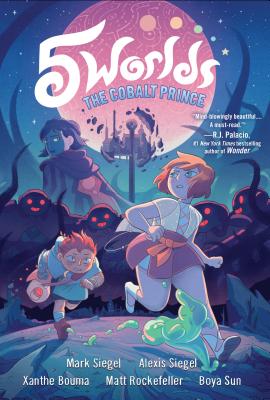
5 Worlds: The Cobalt Prince

cobalt princeby Mark Siegel, Alexis Siegel, Xanthe Bouma, Matt Rockefeler, and Boya Sun
Support your local independent bookstore: buy it there!
Others in the series: The Sand Warrior
Content: There is some fantasy violence. It’s in the middle grade graphic novel section of the bookstore.

Picking up where the first book left off, we get more of Oona’s backstory as she tries to figure out how to light the rest of the sand beacons and change the fate of the five worlds. The Cobalt Prince is the leader of the blue planet, Toki, which conquered the sand planet, and destroyed the sand castle. Turns out, though, that he has been taken over by the Mimic, an evil spirit that wants to gain control of the universe. Oona finds her sister there, working with the Cobalt Prince. Can she figure out her past, and save her sister and stop the mimic?

I put off reading this but honestly, I shouldn’t have. This is such a great series. I like the art, and while there’s a huge cast of characters, I think the authors juggle everything incredibly well. I also like how each individual one has it’s own arc while being a part of the larger whole; it makes it so each can be read as a stand-alone, which is nice.

Here’s to waiting for the next one!

Reign the Earth

reigntheearthby A. C. Gaughen
First sentence: “There was a scorpion in my tent.”
Support your local independent bookstore: buy it there!
Content: There’s violence, including spouse abuse (both verbal and physical). Also, though the main character is 17, she marries a man 10 years older than her. It’s in the teen section (grades 9+) of the bookstore.

The basic plot: a desert girl, whose nomadic country has been at war with a bigger, more powerful, oppressive country, is married off to the king of the country in order to achieve peace. Said peace is only tentative as long as the king is happy (and he’s not often happy, for many reasons) and as long as desert girl keeps her magic powers a secret from her husband.

There’s more to it: including a prophecy and a resistance and a secret love, but really, that’s it.

I’m being a little snarky, but I did like this enough to finish it. I did have a big issue with this: the main character is married to an abusive man. It starts out with him raping her on their wedding night (he kind of couches it in “I don’t want you to be uncomfortable” but he doesn’t really take her comfort into mind) and it just escalates from there. Granted, our main character does, eventually, stand up to him (and he is the “bad guy” of the story), but I couldn’t help but wonder: is this really a book for teens? I don’t mind darkness in books, or even dealing with issues like abusive relationships, but this one felt more… adult than usual. I know the marriage has something to do with it, but I’m not sure that’s all. I don’t know if I can put my finger on it exactly.

Also: I feel like this one could have been better if it were an own voices story. Again, I’m probably nit-picking, but I felt like it was just “desert girl saves white oppressed culture” and not much else.

So, while I liked it enough to finish it, I didn’t love it.

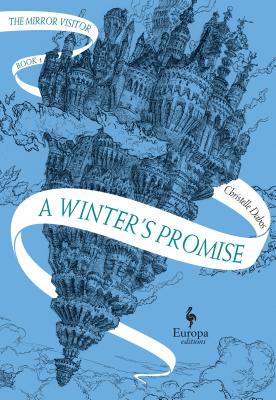
A Winter’s Promise

winterspromiseby Christelle Dabos
Translated by Hildegarde Serle
First sentence: “It’s often said of old buildings that they have a soul.”
Support your local independent bookstore: buy it there!
Review copy provided by the publisher.
Content: The main character is engaged, but other than that there’s nothing “objectionable” (at least that I read). It’s in the teen section (grades 9+) but if a 6-8th grader is interested, I’d give it to them.

When my rep for Europa pitched this book, the first thing I told him was “the cover is awful”. Yes, it fits with the other Europa titles, but, really: what kid is going to want to pick up this book?

But it’s a huge deal in France, he countered. And it’s supposed to be sweeping and epic. So I picked up a few for the store, if only to support Europa’s first foray into young adult fiction. And then I nominated it for the Cybils, so I’d force myself to read it.

And…

Well…

I’m sorry. It’s awful.

I liked Dabos’ world building: she’s imagined a world where there are a bunch of floating “arks” populated by different families with different magical skills. I really  liked our main character, Opheilia’s, magical skill at reading items — she can tell the history of the owner through their items, and she wears gloves so she doesn’t accidentally read other people’s histories without their permission. But, Opheila herself was a huge pushover. I think she was supposed to be cheerily mousy, but instead I just got annoyingly wimpy. She’s been given in an arranged marriage (arranged by the heads of her family, I assume?) to Thorn, who is from the Polar ark (I think), and whose family’s skill has to do with illusion. Except, once on their ark, Sophie finds out that everyone is at each other’s throat and she’s in the middle of it.

At this point, I was more than 200 pages into a nearly 500 page book, and I bailed. It was just going nowhere too slowly for me. The only thing that was holding my attention was the world, and there wasn’t enough of that to make me care enough to keep reading. (And I thought Rowling was overly wordy!) So, I bailed.

But, I suppose, if large, very French, fantasies are your thing, then this one will be perfect. They’re just not my thing.

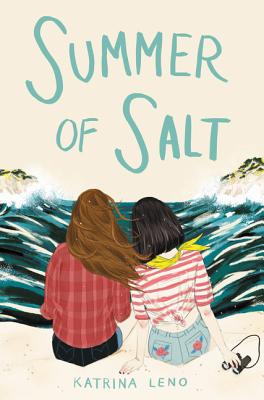
Summer of Salt

summerofsaltby Katrina Leno
First sentence: “On the island of By-the-Sea you could always smell two things: salt and magic.”
Support your local independent bookstore: buy it there!
Content: Lots and lots and lots of swearing, including f-bombs (which seemed really out of place to me; I don’t know why) and some teenage drinking. It’s in the Teen section (grades 9+) of the bookstore.

Georgianna and Mary are twins that have grown up on the island By-the-Sea, daughters of the Fernweh line of women who have, well, magic. It usually manifests at birth, but sometimes takes longer. One of their great-grandmothers, Annabella, has turned into a bird, and comes back every summer to nest and attempt to hatch babies. Except this year.

This is the year that Georgianna and Mary turn 18, the summer before they are destined to leave the island. And everything seems to be going wrong. It won’t stop raining. Mary’s acting strange. And Annabella hasn’t shown up. And Georgianna’s magic won’t manifest itself.

This was an odd book — more magical realism than anything else — but I found myself enjoying it. I loved the matriarchal family, I loved the little island and it’s support of the weirdness that is the Fernweh women. I loved the magic, and now ordinary it was. And I just enjoyed the way Leno told the story.

It was all very charming.