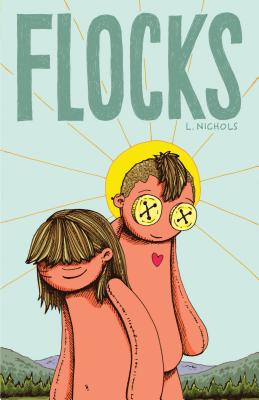
Flocks

by L. Nichols
Support your local independent bookstore: buy it there!
Review copy provided by the publisher.
Content: There is some mild swearing and two f-bombs, plus some drinking and self harm and illusions to sex. It’s in the graphic novel section of the bookstore.

I’ll be up front: Nichols is a transgender man who was assigned female at birth in Louisiana and raised in a very religious Southern Baptist family.This is his story.

It’s not just a story of feeling out of place in a religious society — he tried very very hard to pray the gay away from the time he was young — but also feeling out of place in his own body. The only place he felt at home and at peace was in nature. He graduated from high school and went to MIT (the first in his family to go to college) where the sense of displacement both increased and decreased. Decreased because he was among friends who accepted him and cared about him for who he was; increased because he loathed his body — he began cutting himself — and couldn’t figure out why (that is, until he had a realization that it was because he wasn’t male enough). It’s a very personal story, as one would expect from a memoir, but one that raises some interesting questions about religion and community.

I loved Nichols’ art as well. Everyone is drawn fairly realistically except him, and he’s in this doll-esque shape, which I loved because it allowed him to not only be the gender he was assigned at birth (while simultaneously demonstrating his obvious discomfort with himself) but it allows the reader to empathize more with him as a character. It’s quite clever, and I loved it.

I also loved that this made me think, not just about trans people, but about how communities include and exclude others and the benefits and disadvantages of that. I appreciated his (inadvertent) critique of religion vs. God and it made me want to be more open and kind to others. We’re all struggling here, why add hate to the pile?

Excellent.

Ruin of Stars

by Linsey Miller
First sentence: ”
Support your local independent bookstore: buy it there!
Others in the series: Mask of Shadows
Review copy provided by the publisher.
Content: There’s a lot of violence (but not overly graphic) and one tasteful sex scene (that’s more implied than anything). It’s still in the YA section (grades 6-8) of the bookstore, but I’m thinking about moving it.

When we left Sal, they had  just become part of the Queen of Igna’s right hand, taking up the mantle of Opal. But, since that moment, Igna is facing imminent war. Their neighbor, Erland — they of the restrictive gender norms and constricting policies, they who also wiped out Sal’s birth land — has invaded Igna, taking back some of the land they lost in the war ten years earlier. And Sal has  been asked to put a stop to all this by killing Erland’s leader and those who conspired against Igna. It’s easy for Sal to take this assignment: the names of the people coincide with the names on their list of people to exact revenge for wiping out their home and family.

The problem? The cost that assassinating these people and stopping the war is extremely high: costing Sal their friends, their love, and possibly their life.

This is a fantastic end to Sal’s story. Seriously. Miller’s got pacing and writes action incredibly well. I found myself getting anxious for Sal and their mission as I went through the book. I still think that Miller handled the fluidity incredibly well; it was part of the plot in that Erland’s culture was incredibly homophobic and suppressed anything that didn’t buy into traditional gender norms, and Miller was a bit heavy-handed with letting readers know that this was part of the reason Erland was the “bad” guys (though she makes a much more compelling case for readers to dislike people — or at least those in charge — from Erland later), but she settled into the plot and the book went super fast.

Incredibly exciting, and I really loved the ending. A strong series.

Audio book: Leah on the Offbeat

by Becky Albertalli
Read by Shannon Purser
Support your local independent bookstore: buy it there!
Or listen on Libro.fm
Content:  There’s a LOT of swearing. It’s in the Teen section (grades 9+) of the bookstore.

This is being billed as a sequel to Simon vs. the Homo Sapiens Agenda, and it is, kindof, but I don’t think you need to have read that one to enjoy this one. Sure, there’s some little Easter eggs for those who have, but this — first and foremost — is Leah Burke’s story. And 1) because they’re all seniors now and 2) the book is through Leah’s eyes, this is a lot more angsty than I was expecting from this world.

The basic plot is this: it’s near the end of senior year, and everyone — Simon and Bram, Nick and Abby, etc. — is happy. Except Leah. She identifies as bi, and has a raging crush on Abby, which of course is unrequited because 1) Nick’s girlfriend and 2) Abby’s straight. But after Abby breaks up with Nick right before prom and then kisses Leah on a trip to the University of Georgia (where they’re both going in the fall), Leah’s not quite so sure. About anything.

It’s a lot of ups and downs and angst and friendships falling apart, but I think Albertalli got the uncertainty of the second half of senior year, when everything is just about to change and be different. It’s a tough time (change is always tough), and I think Albertalli caught that in Leah’s story. And I really enjoyed the narrator, as well. She got Leah’s voice down — kind of that apathetic, sarcastic front for someone who feels deeply but who doesn’t want to share — and I found it didn’t really matter that she didn’t do voices for the other characters. It made sense: this is Leah’s story, and keeping the focus on Leah’s voice was something I respected.

I didn’t like this as much as I did Simon, but I did like it.

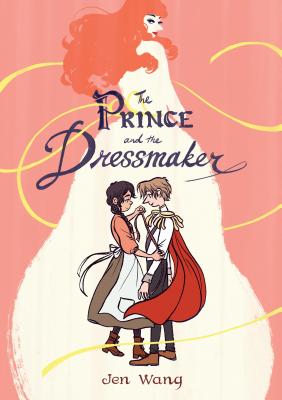
The Prince and the Dressmaker

by Jen Wang
First sentence: “The prince is holding a ball!”
Support your local independent bookstore: buy it there!
Content: There are some more mature themes, and it’s in the teen graphic novel/graphic novel section of the bookstore, but I think if there was a 4/5th grader who was interested in the subject, they could certainly read it.

Frances is a dressmaker in Paris in around the turn of the 20th century. She works for a tailor, but has dreams of creating her own fashion line, if only she can meet the right people. When she designs a dress for a client for the prince’s ball celebrating his 16th birthday, it captures the attention of a mysterious patron. Frances jumps at the offer: it’s her chance to get noticed.

The mysterious patron turns out to be the prince himself, who has a secret he keeps from everyone except Frances: he likes to wear dresses and wants Frances to make it possible for him to go out in public. He becomes his alter-ego, Lady Crystallia, who, dressed in Frances’s creations, becomes the talk of the town. This, however creates a conflict: Frances wants credit for her designs, but Prince Sebastian is afraid of what his family and his people are going to think if they discover that he is Lady Crystallia.

I’m actually not sure if this fits under the LGBT umbrella, since Sebastian is actually attracted to Frances (I thought for a long time that he was gay, since he wasn’t interested in any of the girls that his parents were proposing he marry), but the ending is ambiguous (aside from a couple of kisses), so maybe it does? It does fall under the “let people be themselves” umbrella. Setting it in the late 19th century, Wang heightens society’s disapproval of someone breaking gender norms, which is really the point. Sebastian wants to wear dresses. Why should it matter who he is attracted to? Sebastian wants to wear dresses. Why should that affect how he relates to those around him or even, eventually, govern? Sebastian wants to wear dresses. Why should that make him less of a person? The ending is a bit too quick for me: initially everyone rejects Sebastian, but they come around pretty quickly (or maybe lots of time passed and I just missed it because it was a graphic novel)…

Wang’s art is charming, as always, and I found the book, overall, to be a delight to read.

Arrows of the Queen

by Mercedes Lackey
First sentence: “A gentle breeze rustled the leaves of the tree, but the young girl seated beneath it did not seem to notice.”
Support your local independent bookstore: buy it there! (Though, to be honest, you’ll probably have to buy it used.)
Content: There is some violence, and some (tasteful) attempted sex. It would be in the YA section (grades 6-8) of the bookstore, if we had it.

Talia is a young, sheltered girl in a Holding that is super patriarchal, giving all the power to men and making women either wives or nuns in service to the Goddess. But Talia dreams of something more: she wants to be a Queen’s Herald. She’s secretly read tales of the Heralds, with the horse-Companions and the adventures, and longs to be one of them. She has no idea how one becomes a Herald, but when she turns 13 and her elders start talking about marrying her off, she runs off. And is chosen by one of the Companions, Roland. From there, Talia is thrust into a whole new world, one of classes and work and acceptance and challenges and friends. At first, she is hesitant, but as the months and (eventually) years go on, she becomes more confident with her role not only as a Herald, but as the Queen’s Own.

I’ve read Lackey before, but not in a while, and not very much. I like her style, though there seems to be a lot more exposition than either action or dialogue. Perhaps that was part of the style when this was written in 1987, but it did drag the story down. That, and Talia was super perfect. I liked her — I mean you have to be heartless if you don’t — but she wasn’t the most interesting character. She was always stalwart, always likable, and always had the answers to her problems. It got old pretty quickly.

Even so, I liked her adventures and the world that Lackey built, and I’m not sorry I dipped into this one.

Girl Mans Up

by M-E Girard
First sentence: “There are four of us dudes sitting here right now.”
Support your local independent bookstore: buy it there!
Content: There’s smoking and drinking, a lot of swearing (including multiple f-bombs) and talk of sex. It’s in the Teen section (grades 9+) of the bookstore.

I’m going to say this up front: I’m glad this book exists. I’m glad that this book is out there for the people it represents, and for people to understand those who are different. I understand the value of this book, even if I didn’t finish it.

Pen Oliveria just wants to be herself. She likes playing video games, and she likes dressing in jeans and tshirts and hanging out with guys. She’s attracted to girls, but she doesn’t want to be your stereotypical “feminine” girl. Unfortunately, this doesn’t hold up with her old-world, traditional Portuguese parents, and no one at school — even her friends — seem to get this.

I bailed mostly because I wanted to punch Pen’s best friend, Colby. He’s the definition of toxic masculinity, picking up girls to hook up with them and dump them, judging them solely on their looks. He claims that loyalty is the most important thing, but he is constantly making fun of his friends and leaving them high and dry.  He tolerates Pen because she reels the girls in for Colby to bag and bang, but when she decides to be done with that — after Colby gets a girl pregnant and says it’s not his problem — he’s done with her. I literally wanted to punch him every time he opened his mouth. And Pen’s parents were no better. They are constantly upset at Pen’s older brother, Johnny, for not having a “real” job — Johnny owns his own landscaping business that is slowly gaining a good reputation — because he doesn’t want to work at the factory where their father works. And they’re constantly railing on Pen for not being feminine enough. It’s awful and toxic and a good way to ruin a relationship with your children.

Between the two of those things, I just couldn’t finish. Call it wrong time for me and the book.


Shine

by Lauren Myracle
First sentence: “Patrick’s house was a ghost.”
Support your local independent bookstore: buy it there!
Content: This one has drug use and drinking by teenagers and a pretty graphic rape scene. It would be in the Teen (grades 9+) section of the bookstore if we had it.

Cat’s former best friend, Patrick, has been found at the local convenience mart beaten and tied up to a gas pump, left for dead. The local sheriff is calling it a hate crime, since Patrick is gay, and that it was probably some out of towners who did it. He was right about the hate crime part, but Cat’s convinced it’s someone in the small, southern town of Black Creek, North Carolina. So, she sets out to find out who, which means facing her brother’s friends and her past.

Oh, this was a hard book. It’s a mystery — sort of — but more, it’s a portrayal of what poverty and toxic masculinity can do to people. It turns them to meth, makes them suspicious of each other, makes them feel like they can just take things without any sort of consequences. There’s rape in this — and that was SUCH a difficult scene to get through — and just plain hopelessness. I think Myracle gave it a happy-ish ending in order to alleviate a lot of the general bleak feel of the novel (I certainly was expecting a different ending). I did figure out who committed the crime a little more than halfway through, and I even figured out why, but I kept reading because I wanted to see how it all would play out. Myracle did an excellent job with Cat’s character development — she went from a hurt, scared girl into a more confident one, facing down the boy who raped her and her brother’s friends for their various “boys will be boys” infractions.

It’s just a very hard read, emotionally.

Ask the Passengers

by A. S. King
First sentence: “Every airplane, no matter how far it is up there, I send love to it.”
Support your local independent bookstore: buy it there!
Content: There’s almost sex, references to pot smoking (by an adult), and a number of f-bombs. It’s in the Teen section (grades 9+) at the bookstore.

Astrid Jones’ parents moved her from New York City to Union Valley, a wealthy small town somewhere in Pennsylvania (or Ohio; I never quite figured it out) when she was 10. In the seven years since, Astrid has felt like an outsider, and so, as her family slowly dissolves — her father off smoking his pot, her mother to her job, her sister to being popular — Astrid spends her time surviving, trying to figure out if she’s gay, and sending her love to the airplanes that fly above.

Of course there’s more to the story than that: Astrid has a girlfriend she’s keeping secret from everyone, she and her friends get busted for being underage at a gay bar, she explores the philosophy of Socrates, and she and her family try to (maybe) figure out how to be a family.

The thing that struck me most — and this is just because of who I am and my personal experiences — is that King nailed the feeling of being on the outside. Especially when you’re on the outside in a small, conservative, wealthy town. Where everyone knew each other from the time they were little and then you move in and they never really — even if you do have a couple of friends — accept you for who you are because you don’t fit their idea of “acceptable”. There was  LOT in here about appearances and labels and fitting in and caring what other people think of you, and that’s what resonated. I think, especially since this was published seven years ago, that our ideas of LGBT and labels about sexuality have changed (mine have,  at least) and so the fact that Astrid felt that she needed to come out as definitely gay was a bit off-putting: everyone around her pushed her to label herself, whereas I think now we might be more open to her saying “I’m in love with a girl” and not making her label herself as “gay” because of that. But maybe I’m wrong.

At any rate, this gave me a lot to think about. I loved it.

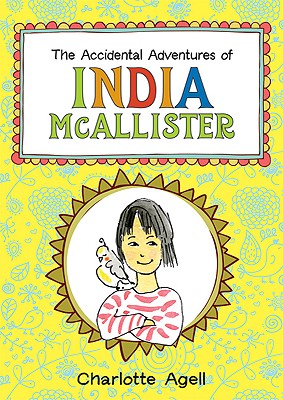
Module 7: The Accidental Adventures of India McAllister

Agell, C. (2010). The Accidental Adventures of India McAllister. New York, NY: Henry Holt and Co.

Genre: Realistic beginning chapter book.

Book Summary: At the end of her fourth grade year, India McAllister — named for the ink not the country — tries to figure out friendship, especially since her best friend is a boy and that seems to be an unacceptable thing in fourth grade; whether or not she can like her dad’s new partner, Richard;  and wonders if she will ever have an adventure (until she gets lost in the woods!).

Impressions: The reviews and summaries I read focused mostly on India’s friendship with Colby and her rivalry with Amanda, but I think that short-changes the book. India is concerned with every aspect of her life: her relationship with her parents, especially her dad who’s left and has a new partner, Richard, among other things. I liked how this one was very nondescript with that: India’s dad is gay, and has a male partner, but there isn’t a huge issue surrounding it. I thought Beatrice Bird was delightful, and enjoyed India’s relationship with her pets. And I could understand  her annoyance and confusion surrounding Colby’s sudden hanging out with Amanda, but I think it was less boy/girl friend thing and more just friend thing — if Colby had been a girl, the dynamics and feelings that India has would probably still be the same. It was a delightful story, overall; I loved the diary feel of it, including the sketch drawings.

Review: Reviewer Phelan praised the book, calling it ” rooted in a tradition that goes back to Beverly Cleary’s Ramona stories”, and praised it for being nuanced emotionally, especially around relationships, and called it a strong start to a series.

Phelan, C. (2010). The Accidental Adventures of India McAllister. The Booklist. 106 (21), 55, 58.

Library Uses: This one would be good on a display of fun girl characters boys would like, or LGBT families, or just first in a series books. It would also make a good book for a book group for younger kids.

Readalikes:

  • Clementine by Sarah Pennypacker: Clementine is slightly younger than India (eight instead of nine) but this book has the same sort of whimsy and charm that India has. Clementine is a hilarious free spirit and the books are delightful to read.
  • Ramona the Brave by Beverly Cleary: The true first of the Ramona series, in which we see Ramona tackle kindergarten. The Ramona books don’t have to be read in order, and Ramona Quimby, Age 8 or Ramona and her Father are probably more closely like India.
  • Charlie and Mouse by Laurel Snyder: There aren’t many realistic fiction books featuring boys that aren’t also survivalist or some other extreme situation, but Charlie and Mouse is a great example of one. It’s younger than India, but has the same sort of down-to-earth, yet whimsical and often hilarious, feeling that India has.

Audio book: When They Call You a Terrorist

by Patrisse Khan-Cullors and Asha Bandele
Read by the author
Support your local independent bookstore: buy it there!
Listen to it on Libro.fm
Content: There is a lot of swearing, including multiple f-bombs. It’s in the Sociology section at the bookstore.

This book, from one of the founders of the Black Lives Matter Movement, is small, but it packs a punch. It’s basically Cullors’ life, growing up poor in LA in the 1990s, and how that experience — along with the arrests of her biological father and brother — propelled her to activism and the forming of the Black Lives Matter movement.

I am a white, cis-gender, hetrosexual woman, so I don’t really have a lot to say, really, about this one. Except to stand as a witness to Cullors’ experience and pain and try to be better about my behavior and opinions and actions in the future. I do think this book, much like Between the World and Me is a vitally important one. We, as a society, need to open our eyes and recognize that experiences like Cullors’ are not only valid, but that they should NOT be happening in a first world country. That the world that she experienced is not the world I experienced, and that there is a fundamental wrong happening there.

The audio book is excellent as well. I highly recommend listening to Cullors’ experiences in her own voice; it adds a power to it that may not have existed in print. There is an interview at the end of the book, as well. I recommend sticking around for that.