Ms. Marvel: Civil War II

by G. Willow Wilson, et al
Support your local independent bookstore: buy it there!
Other is the series: No Normal, Generation Why , Super Famous
Content: Violence, mostly. It’s in the graphic novel section of the bookstore, but it’s good for teens and up.

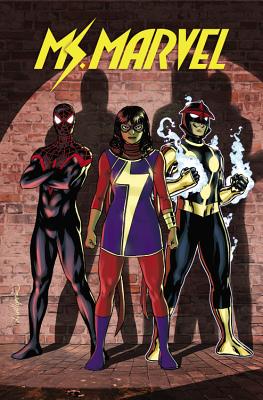
I’m not sure if I’m completely up on Ms. Marvel (it’s hard to keep track!)… but I picked this one up, and fell into it. Kamala is having issues at school and as a superhero – she doesn’t have time for her friends much anymore, and Bruno is no longer happy with being her “sidekick”. And then Captain Marvel asks Kamala to be the head of this predictive crime unit, where they take a psychic’s premonitions and then arrest people before they commit a crime. It’s going fine, until one of Kamala’s friends gets arrested for thinking about doing something drastic. Maybe predictive crime prevention comes perilously close to profiling?

Kamala tries to get out of it, but ends up alienating everyone, so she heads off to Pakistan to her family’s home, trying to find herself there. But not everything is quite as simple as it seems.

It helps that each issue is really its own arc, and that you don’t really need to know what went on before, which is good because I’m not sure I remember from issue to issue. That said, this one touched on some really interesting ideas, including profiling, and the costs/benefits of trying to stop crime before it happens. The side trip to Pakistan at the end was interesting, too, as was the Kamala’s parents’ backstory that was threaded throughout the issue. I keep picking these up because I love the story arcs that Wilson comes up with, and this one didn’t disappoint.
Amina’s Voice

by Hena Khan
First sentence: “Something sharp pokes me in the rib.”
Support your local independent bookstore: buy it there!
Review copy provided by the publisher
Content: There is an act of vandalism (against the mosque) that is handled really well, but might be upsetting. It’s in the Middle Grade (grades 3-5) section of the bookstore.

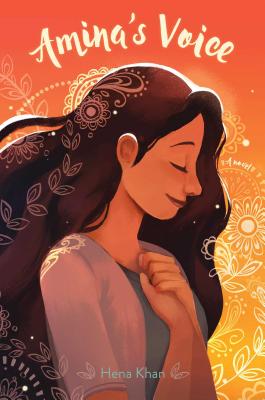
Amina is starting sixth grade, the one time that people associate with change. And Amina’s experiencing it. Her best friend Soonjin is becoming a U.S. citizen and is thinking about changing her name. She’s also becoming better friends with their former grade-school bully’s sidekick, Emily. Her uncle is coming from Pakistan to stay with them for three months, and his stricter interpretation of Islam has Amina wondering if her love of music (both playing the piano and singing) is against God’s wishes. And then there’s the fact that she has stage fright, and there’s a Quran competition that her parents are making her enter. Will she survive all this?

Such a delightful portrait of a 12-year-old trying to figure out her place in the world. Khan got pre-teen girls, their anxieties and insecurities, and how they are struggling to find their own, well, voice. I also appreciated the religion in the book; Khan give us a slice of Islam with faithful people, loving parents (and Imam), which is completely relatable to anyone who reads it. This is one of those important books: it’s a great window into an Islamic family and community, and it’s a great mirror not just for Muslim kids but anyone who is religious. But, it’s also a great story, well told.

Very, very good.

Ms. Marvel: Super Famous

msmarvelby G. Willow Wilson, Takeshi Miyazawa, Adrian Alphona, Nico Leon
Support your local independent bookstore: buy it there!
Others in the series: Volume 1, Volume 2
Content: There’s some violence, and there are a few more mature themes, but K is interested in this one and I’d let her read them. It’s in the Graphic Novel section of the bookstore.

Kamala has a problem. She’s been invited to be a part of the Avengers (not the problem), but between that, school, and home commitments, it’s getting harder and harder to stay on top of things. And so, she doesn’t notice at first when her face appears on the billboard touting a new development in her neighborhood. It’s nothing she signed off on, but it turns out that the development not only plans on destroying her neighborhood, but also is brainwashing all of its tenants. And, with Bruno’s help, hopefully she’ll be able to stop the developers.

That’s the better of the two stories in this latest Ms. Marvel, though the second story (about some clones that Bruno and Kamala make in order to help her get to all of her commitments) isn’t as strong, it does have one of my favorite moments, when Kamala realizes that she can’t do It All. The art — even though I still don’t like the switch between artists and prefer Miyazawa’s rendition best — is fantastic, and I love that the people are really realistically portrayed and diverse!

This series is SO good.

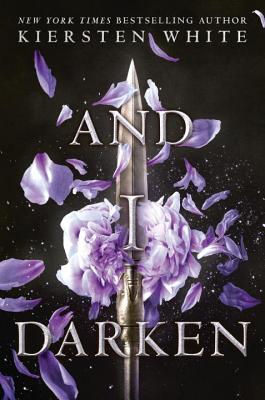
And I Darken

andidarkenby Kiersten White
First sentence: “Vlad Dracul’s heavy brown descended like a storm when the doctor informed him that his wife had given birth to a girl.”
Support your local independent bookstore: buy it there!
Content: There’s a lot of violence, an almost-rape, and some round-about talk of sex. It’s in the Teen (grades 9+) section of the bookstore, but I would give it to a 7th or 8th grader who was interested in historical fiction.

Historical fiction, set in the 15th century, isn’t always something that jumps off the shelf at me. But the cover of this one was SO pretty… And, I admit: I was expecting a fantasy. What I got was a sweeping history of the Ottoman empire, of two siblings — children of the Dracul line — and the paths they forged for themselves against odds.

What I got was a fascinating love triangle (brother and sister in love with the same man), one that was built on friendship and trust and where none of them could be entirely happy. It was the story of a girl who refused to be coddled and took power for herself — Lada is nothing if not fierce — in unique and interesting ways. It’s a story of forced immigration and learning to be at home in a new place. (Or not.) It’s fascinating.

But it was also long; the book begins with Lada’s birth and goes for twenty years. It’s sprawling, complex, and not a little meandering. There were a ton of characters to keep a handle on, most of which I didn’t care about. I didn’t care about the campaigns and there wasn’t enough of the politics I found fascinating. Perhaps I’ll read the second (yeah, this is a first in a series), but I don’t know.

There was much to like about this book. I’m just not sure if it was enough.

Ms. Marvel, vol. 2

msmarvelby G. Willow Wilson, Elmo Bondoc, Takeshi Miyazawa, Adrian Alphona
Support your local independent bookstore: buy it there!
Others in the series: Ms. Marvel, vol. 1
Content: There’s violence, again, but not as much as other superhero comics. It’s in the Graphic Novel section, but A (whose 12) loves this. (I bet K would too, except for the romance-y parts.)

I know I should be reading these as they come out (but that would require either webcomic-ing it,or schlepping down to the comic book store), but it’s just easier to wait for these huge eight-book compilations to come out to catch up on the storyline.

I’m still loving this. It’s got some strong, good YA themes, of trying to figure out how to fit in the world and with relationships (both friendships and with boys). I loved the fangirl aspect, especially when Kamala meets Carol Danvers. That was a lot of fun. I liked how she met and fell for a Pakistani boy, who then turns out to be a lackey for a bad guy. Nice. And I liked the themes of acceptance vs. control. And the art — especially in the middle sections, which was drawn by Takeshi Miyazawa — was fantastic.

It’s all great and a ton of fun. Wilson has definitely come up with a modern superhero I can get behind. (Now, when are we going to get her movie?)

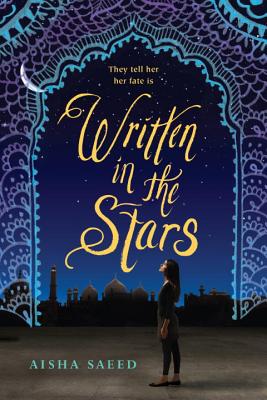
Written in the Stars

writteninthestarsby Aisha Saeed
First sentence: “‘Naila, I wish you didn’t have to miss the game,’ Carla tells me.”
Support your local independent bookstore: buy it there!
Review copy provided by the publisher ages and ages ago.
Content: There’s a (non-graphic) rape and some REALLY bad parenting. It’s in the Teen (grades 9+) Section of the bookstore, but if a 12- or 13-year-old were interested, I’d recommend it.

This was one I’ve been meaning to read for a long, long time. I have no excuse for not getting to it, except that I have a LOT of books to read (so much so that I’m actually starting to panic about my piles. There’s just not enough time!) and many things competing for my attention.

But, recently, I picked this one up and gave it a try. And finished it nearly in one sitting. It’s just THAT compelling.

Naila is the daughter of Pakistani immigrants, ones who are fairly traditional. While she can go to public school and is not required to wear a hijab, she’s not allowed over at friends’ houses, to date, to drive, and college is still up for grabs. (An interesting side-note: Saeed never spells it out, but the discrepancy in treatment between Naila and her younger brother is both unsurprising and frustrating.) She happens to have a boyfriend, though, one she keeps secret from her parents. And when her secret gets out, her parents react by whisking her away to Pakistan where they go about arranging a marriage for her. Behind her back.

It’s awful.  Seriously: I know that arranged marriages like this happen, and that they’re not always bad, but Saeed makes no bones about it: the way Naila’s parents go about this, in order to “save” her honor from the boy she picked, is just awful. And that’s being mild.

It’s an interesting thing to think about though: the balance between choice and tradition, between religious principles and progressive thought (I’ve been trying to think of a better way to say that, and I just couldn’t), between The Way Things Have Always Been and what individuals want. It was especially interesting reading it as a parent because I could see that while her parents thought they were doing right, they were so, so very wrong. And that’s a tough thing to see.

It’s excellently written, highly diverse (hardly any white people at all!), and an intriguing story. One that I hope many, many others will read.

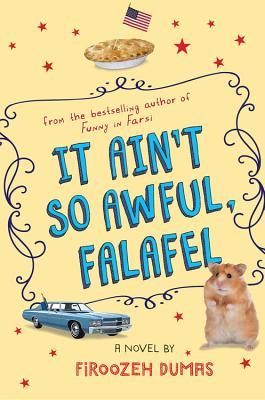
It Ain’t So Awful, Falafel

aintsoawfulby Firoozeh Dumas
First sentence: “Today’s Sunday and we’re moving, again.”
Support your local independent bookstore: buy it there!
Review copy provided by the publisher.
Content: There’s no swearing (well, maybe a mild one) but the subject matter — middle school and the Iran Revolution in 1978 — might be a little mature for the younger set. It will be in the middle grade (grades 3-5) section (or the YA — grades 6-8 — section, I haven’t decided) of the bookstore.

I was in third grade in 1981 when the American hostages in Iran were released and I have a vague memory of it. Nothing substantive, just some hazy images of me seeing the news on TV. I don’t know much else about that, and even though I’ve read a bit about the Iranian revolution, that’s one aspect that I didn’t know much about.

Zomorod Yousefzadeh is in America because her father has a job with an oil company in California. They’ve been here before, when Zomorod was younger, but now she’s going into 6th grade, and she wants to turn over a new leaf. Be more American. So, she changes her name to Cindy and sets out to make new friends. It’s not easy being Iranian in California in the late 1970s (most people either think she’s Mexican, or ask her if she owns a camel. The answer is no to both), but eventually, Cindy figures things out. And then the Iranian revolution happens, and suddenly the home she and her parents thought they could go back to is no longer there. Add to that, Americans were taken hostage, and suddenly Cindy and her parents find themselves subjected to anti-Iranian sentiment. Her father loses his job. Garbage is left on their doorstep. Kids at school tell her to “go home”. It’s not easy.

Loosely based on Dumas’ life, this novel not only captures a slice of history (fairly accurately, but without being kitschy) but also manages to be timely as well. I found myself thinking about how Americans reacted to Muslims after 9/11 (or now, really). Or how immigrants are treated in general. It’s a good thing to see American life from the perspective of an immigrant, and to find out that we’re equal parts good and bad. (Which really isn’t a surprise.) Dumas also manages to capture the awkwardness of middle school with grace and humor. There were some actual laugh-out-loud parts. She definitely understands middle school, with all its ups and downs. And it was delightful to read a book where the parents weren’t bad or sick or dead.

It’s definitely an excellent read.

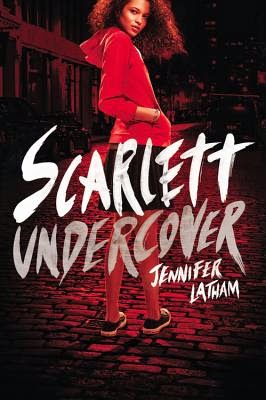
Scarlett Undercover

by Jennifer Latham
First sentence: “The kid was cute.”
Support your local independent bookstore: buy it there!
Content: There’s a bit of mild swearing (s**t) being the “worst” one, plus some kissing and references to (adult) smoking. It’s in the YA section (grades 6-8) of the bookstore, but I wouldn’t mind giving it to a savvy 5th grader.

I adored Nancy Drew as a kid. Seriously. I devoured them all. I loved the mystery, I loved Nancy Drew’s pluck. It was what I wanted.

This, however, is Nancy Drew for the Modern Age: she’s sassy, smart, and street-wise. And I loved it just as much (if not more).

Fifteen-year-old Scarlett is many things: an orphan (dad was murdered, mom died because of cancer); brilliant (she graduated from high school two years early); Muslim; and, perhaps most importantly, a detective. No, it’s not really official: she mostly does inside jobs for the Las Almas police department, and sometimes she hustles and gets a case locating something missing. Nothing that prepared her for when 9-year-old Gemma walks through her door.

Gemma’s worried about her older brother: something has happen to change him; he’s become distant, angry, and mean. But, more than that: Gemma’s convinced that her brother is responsible for the “suicide” of his (former) friend. And she needs Scarlett to find out what’s going on. Little does Scarlett realize the rabbit hole that she’s just opened up.

One of the things I loved most about this book was that Scarlett came from a religious family (she wasn’t non-religious; she just wasn’t as religious as her older sister), and there was a huge support in the surrounding community. But, it wasn’t an issue: it was just who Scarlett was. She greeted people in Arabic, she said her prayers, she observed Islamic customs and traditions. And she solved cases. It was so perfect in so many ways.

I also liked that she was sassy. She had an attitude, but one that suited her and the narrative, and it came through loud and clear. If I was my 11-year-old self, I would have adored Scarlett. (Which my mother may not have appreciated it.) I also loved that Scarlett, was capable: she got into some dangerous situations, and she had the know-how (and the tools) to get herself out. It’s really fantastic.

There is a vague hint of the supernatural — talk of djinn and portals and such — but it didn’t develop in a speculative fiction way, which actually made me very happy. I love speculative fiction, but it would have been out of place here.

I’m willing to talk this one up as much as possible; I do hope it finds a ton of readers.

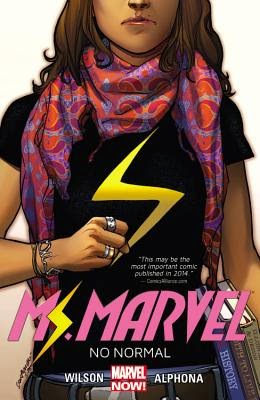
Ms. Marvel, Volume 1: No Normal

by G. Willow Wilson and Adrian Alphona
Support your local independent bookstore: buy it there!
Content: There’s some talk of teen drinking and some violence, but I’d hand it to anyone who loves superheroes and is willing to sit through the Avengers movie. It’s in the adult graphic novel section, but I wonder if it’d get more traction in the teen?

I’m sold. Seriously. I’ve heard the buzz (thanks to Leila and others) and I caved, and THEY WERE RIGHT. It’s worth it: you should read it.

(Do I need to say more?)

Kamala Kahn is a 16-year-old daughter of Pakistani immigrants, and she’s basically chafing against her life. She doesn’t like being Muslim. She doesn’t like having overprotective parents. She doesn’t like not being “pretty” and “blonde”. And so when Captain Marvel appears to Kamala (after a party she snuck out to) and gives Kamala an opportunity to reboot her life, Kamala wishes to be like Captain Marvel. Her wish is granted: she has super-powers. (And is tall and blonde.) Eventually, she figures out that the tall and blonde and “non-politically correct” costume isn’t all it’s cracked up to be. She accepts that she — Ms. Marvel, as she dubs herself — is Pakistani and goes with it, embracing (albeit reluctantly) her new superpowers.

Why did I love it? First: it’s a Pakistani girl superhero! She’s Muslim, and while she chafes against her parents’ rules, she’s faithful, which I appreciated. Which also means she’s a character of color: not all superheroes need to be white. (Or drawn with super-skimpy costumes, so yay for that as well.) But it’s more than that: Kamala is smart and funny, and the writing and art reflect that. I loved Kamala’s ordinary-ness, and her devotion to her friends (and parents), and her struggle to figure out what all this means and to accept who she is.

It’s completely worth the buzz. Fantastic.

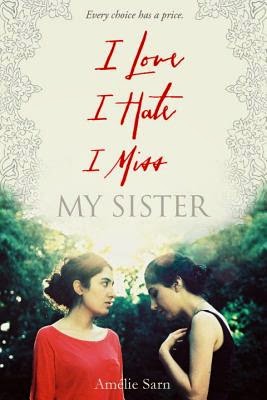
I Love I Hate I Miss My Sister

by Amélie Sarn, translated from French by Y. Maudet
First sentence: “The women walk slowly, heads down.”
Support your local independent bookstore: buy it there!
Release date: Augst 5, 2014
Review copy snagged from the ARC shelves at my place of employment.
Content: There is violence, some mild swearing, and some teen drinking and smoking. I’ll probably put this in the Teen (grades 9+) section of the bookstore, though I wouldn’t hesitate to give it to a 7th- or 8th-grader who is interested.

Sohane Chebli is many things: 18 years old, a daughter, a sister, a scholar, French, and a Muslim. She lives in an apartment complex full of others of  Algerian heritage, and mostly she and her younger sister (by 11 months), Djelila, get along with their neighbors, schoolmates, and each other just fine.

Then, during Sohane’s senior year, a few young Muslim men take it on themselves to start harassing Djelila because she dresses in jeans and tighter shirts. Because she wears makeup. Because she smokes with her friends. And Sohane, whose path has become more conservative — she wears the hijab — doesn’t step in to defend her sister. Partially because Sohane thinks her sister is wrong for following a path away from Islam. And partially because Sohane’s been expelled from school, due to a French law banning all religious symbols, for wearing the hijab.

I’m going to spoil a bit — it’s not too bad, because from the beginning,  you know this — but Djelila is killed by the Muslim boys for her refusal to conform to their expectations. And it’s that paired with the other side of the coin: Sohane’s constant discrimination for wearing the hijab. (Not that I mean to compare murder with discrimination.) But it got me thinking: why do we feel a need to tell others how to behave? Why did these boys feel compelled to not only shame, but eventually kill a girl for not following her/their religion to the letter? Why did people refuse to see Sohane’s hijab wearing as an expression of her religion, instead interpreting it as an act of repression? It’s a thought-provoking book.

And it’s written well, in tight, short chapters. It took a bit for me to catch the rhythm of the book because it’s translated, but once I did, I was hooked. And I wasn’t disappointed, in the end.