Enchanted Air

by Margarita Engle
First sentence: “When my parents met, it was love at first sight.”
Support your local independent bookstore: buy it there!
Content: It talks indirectly about drugs, sex, and teen pregnancy, as well as the violence of war, but it doesn’t dwell on that. It’ll be in the children’s biography section of the bookstore

I noticed that Abby had read this one and liked it, so I pulled it off my pile to give it a try. I mostly wanted something I could finish in one sitting, and this one — being a memoir in verse — fit the bill.

I didn’t expect to be thoroughly delighted by it.

Margarita is the daughter of a Cuban immigrant and the son of Ukranian holocaust survivors. Needless to say, she had an interesting story to start. Add to that the conflict in the 1950s with the Cuban revolution and the subsequent cold war, she definitely had  a story to tell. But: she chose to tell it through travel, through depictions of the island itself (which she described so lushly) as well as her family’s vacations to Mexico and Europe. She portrayed herself as an awkward child, caught between two countries and then unexpectedly cut off from half of her family. I can only imagine what her mother felt.

Elegantly told, beautifully imagined, it’s a love story to the power of words and images and home. (And I’m glad that her hope in her afterward for more normalized relations between the U.S. and Cuba may slowly be coming to fruition. I would love to visit there someday.)

Dragons Beware!

by Rafael Rosado and Jorge Aguirre
Support your local independent bookstore: buy it there!
Others in the series: Giants Beware!
Content: There’s nothing that a capable third grader couldn’t handle, and I would have willingly read this aloud to a second- or first-grader. It’s in the Middle Grade Graphic Novel section of the bookstore.

There are a few graphic novels that my girls — especially K — will go to over and over and over again, thoroughly immersing themselves in the story each time. Giants Beware! is one of them, and so when I brought home the sequel every single one of my girls was super excited. (K wins, though. She practically grabbed the book out of my hands and ran off to read it.)

And none of us were disappointed with the story line. After “slaying” the giant, Claudette, Gaston, and Marie have basically gone back to their lives. However, things have changed: Claudette is still trying to prove herself to her father and is living it up as a hero in Mount Petit Pierre. Marie has been locked in a tower by her mother, her princess lessons intensified, with a camp of foppish princes at the base. And Gaston (who my heart went out to) decided to give up his love, cooking, and try to be more like his father and sister, determined to be a warrior and a blacksmith.

Then ?, the wizard, escapes from his prison, and heads toward Mount Petit Pierre, bent on revenge. Claudette and Gaston’s dad takes off for ? to get his sword back from the dragon ?. And, of course, Claudette, Gaston, and Marie follow him.

A quick aside: one of the running themes throughout the book is that it’s really quite impossible to do something on your own. EVERYONE (well, maybe except Gaston and Marie) in this book starts off thinking that they need to protect everyone else and just do things on their own. But, in the end, it’s only together that they succeed. I loved that.

Of course, there are adventures on the way. I don’t think you need to have read Giants Beware (though why haven’t you??) before you read this one, but it is better if you do know the story, if only to get the little illusions dropped throughout the book. I love how it’s paced, with epic battle scenes at the end, and everyone playing a different role. Which is something else I loved: Gaston finally stops trying to be what he thinks he “should” be and embraces his passion. Marie is awesome in her own way: she’s not a warrior, but without her, they wouldn’t have succeeded. And Claudette learns patience and a willingness to work with others. They’re all better off for their adventure.

It was an absolutely delightful read. Hopefully, there will be more!

Bayou Magic

by Jewell Parker Rhodes
First sentence: “My name is Madison Isabelle Lavalier Johnson.”
Support your local independent bookstore: buy it there!
Review copy provided by the publisher in conjunction with the ABA Children’s Institute.
Content: It’s a pretty basic story, and aside from some French scattered through, it’s pretty basic in its vocabulary. I’d give it to anyone 2nd grade and up. It’s in the middle grade (grades 3-5) section of the bookstore.

Not-quite-ten-year-old Maddy is the youngest of five sisters in New Orleans. She’s the one that is always the tag-along, never quite fitting in with her sisters. She is often teased, and the only time she feels comfortable is when she’s cooking with her mom. Then, her turn to spend the summer in Bon Temps, in the Louisiana bayou, with Grandmère comes around. At first, Maddy doesn’t know what to expect: her sisters all spent summers with Grandmère and came back with horror stories. But Maddy is different: she likes the quiet, earthy nature of Grandmère and the bayou. She wants to learn the old ways. And she finds friends and adventure there. And magic.

Rhodes simple, lyrical style was really well suited to this story. I loved the earthy feel of the book, and the connection to old stories and family roots. I loved the mix of African and French, of Creole and magic and modern. The environmental crisis aspect of it wasn’t as important as the back blurb led me to believe — it was really just tacked on at the end — but the theme of caring for and connecting to the earth was prominent and important for the story. At first, I thought that this could pass for “realistic” fiction, that maybe the mermaids Maddy saw were just dreams and imagination, but no: this is speculative. And it worked for me. I loved seeing Maddy grow and learn and develop, and yet she was still a 10-year-old girl with all the concerns and abilities of that.

I haven’t ever read Ninth Ward, but I think I need to, now. I’ve come to really love Rhodes simple style.  

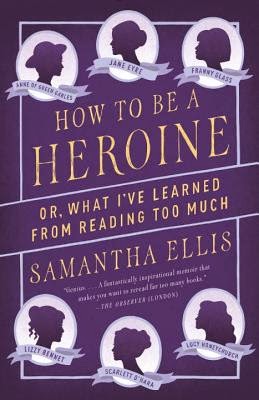
How to Be a Heroine

by Samantha Eliis
First sentence: “A couple of summers ago, I was on the Yorkshire moors, arguing (over the wuthering) with my best friend about whether we’d rather be Jane Eyre or Cathy Ernshaw.”
Support your local independent bookstore: buy it there!
Review copy provided by the publisher.
Content: There’s a handful — not more than six — of f-bombs and some mentions of sex, but nothing graphic. It’s in the adult creative nonfiction section of the bookstore, but I’d give this to anyone in high school and up.

Somehow, I ended up with a complimentary copy of this book. I really have no idea how it ended up on my pile. I do know the idea of it (and the subtitle: “Or, What I’ve Learned from Reading Too Much”) appealed to me. Any book that is about books or the love of reading has to be good, right?

And it was.

The book is nominally a reflection of Ellis’s life. She’s an Iraqi Jew, living in London, with all the cultural and religious implications you’d think that entails. She struggled against expectations, she struggled with faith, she struggled to find her own path. And, on its own that would be a fascinating story. But she framed the book with an analysis, heavily feminist, of classic heroines. From familiar to me ones like Jo March and Anne Shirley and Jane Eyre to ones I’ve never heard of, like Franny Glass and Esther Greenwood. She explored their narrative arcs, and what she took away from their stories. Both when she was younger and then, as an adult, how she feels the held up. Some did. A lot didn’t. And many she got something different out of the book than what she got when she was younger. She discovered new things along the way, and made me want to revisit books I’d loved when I was younger and read ones I’ve not read before.

And for all the literary criticism, it wasn’t a stuffy book. Ellis has a way of drawing the reader in, of making the characters pop to life. Perhaps that’s because she’s a playwright and has a way with words as it is. But whatever the reason, this one won my heart over.

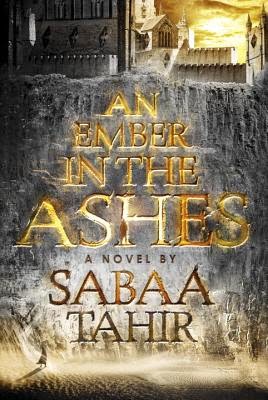
An Ember in the Ashes

by Sabaa Tahir
First sentence: “My big brother reaches home in the dark hours before daown, when even ghosts take their rest.”
Support your local independent bookstore: buy it there!
Review copy provided by the publisher.
Content: It’s dark and it’s brutal. Seriously. More so than Hunger Games. And because of that, it’s in the Teen section (grades 9+) of the bookstore.

Laia has grown up in a world where her people, the Scholars, are a captive people. Their great enemy, the Martials, conquered them and have shown no mercy. They imprison the Scholars, they rape the women, they torture and kill those that they catch. Laia’s parents were part of the resistance, and they were betrayed and killed, along with her older sister. She and her brother Darin lived with their grandparents, trying to fly under the radar of the Martials. Until one day, when they don’t. And the Masks come for them, kill her grandparents, take Darin. Laia barely gets away.

Elias has grown up at Blackcliff, the military school that trains the Martial Masks. An unwanted bastard son of Blackcliff’s Commander, he spent the years before he turned six with the Tribal people in the desert. Then the Augurs — the mystic, magical, immortal Martial prophets — came for him and thrust him into a kill-or-be-killed world. The only way he survived was because of Helene, his fellow student and best friend. Now, just as he was graduating and dreaming of freedom, the Augurs decide that it’s time for a new emperor, and pit Elias and Helene against each other and two other students in a bid to be emperor (or die).

I think the most logical comparison read for this book is Game of Thrones. This is brutal, unflinching, dark, violent, harsh… there’s magic, but it takes a back seat to the exploration of Martial culture. And yet, underneath all of that dark is a hope, a light. Elias, for all the terrible things he’s done (and that have been done to him), turned out to be a decent human being. Laia, even though she thinks of herself as weak, has a quiet strength and bravery to her that isn’t readily seen or valued. It’s a very human book, as well: the characters are complex and messy, there’s depth even to the most hateful of characters (Marcus and the Commander, I’m looking at you), that makes them understandable, even if they aren’t likable.

In fact, the only thing I didn’t like about this book was that there are many unresolved issues, and many unanswered questions at the end. Then again, if this is the quality of writing that Tahir gives us with her first book, I only have high hopes for where this story is going to go.

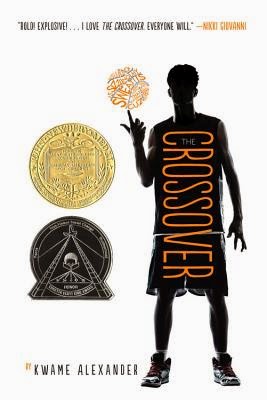
Crossover

by Kwame Alexander
First sentence: “At the top of the key, I’m MOOVING & GROOVING, POPping and ROCKING — “
Support your local independent bookstore: buy it there!
Content: It’s poetry, which is a plus and a minus: plus, because it means it’s a quick read. Minus, because you have to convince kids that it’s okay to read poetry. There’s some kissing, but I’d give this to kids ages 10+. It’ll be in the Newbery section of the bookstore (yes, we do have one!).

I really didn’t know what to expect going into this. I’m sure it would be good — it won the Newbery, after all — but is it one of those good books that are just all style and no substance?

Because this book does have style. You can tell that right from the first page. Alexander’s not only writing a novel in verse, he’s playing with form. There’s style to these poems, it’s not just words on a page; they sometimes (like in the opening poem) leap right off the page. (There’s one poem, about 2/3 of the way though, that can be read in two different directions. I love that!) But, there’s also substance as well.

Twins Josh and Jordan Bell are inseparable, both in life and on the basketball court. Sons of a retired (due to injury) Euroleague player, basketball is their Sport. Their Religion. Their Life. But, during their 8th-grade year, things change. They drift apart, mostly because Jordan — JB as he wants to be known — starts going out with a girl. And their dad has serious heart problems. All of this weighs on Josh, and he lets it interrupt his game.

It’s a simple story, but one with tremendous amounts of heart. Josh is a complex character, who worries about his parents, misses the connection with his brother, and wants to be the top of his game. And yet, he has a temper, one that gets in the way of his wants and desires sometimes. There’s a depth to him that makes him real, which I appreciated it.

I did have a couple of complaints… I didn’t like the portrayal of the girlfriend, but I do understand it’s from Josh’s point of view, and he didn’t really like her intrusion into the relationship with his brother. So, I can understand why she was a bit of a caricature.) The other thing I didn’t really care for — and this is a spoiler — was the dad dying in the end. I did like that there wasn’t a “neat and tidy” ending, but it was a bit, well, Dramatic.

But aside from those two little complaints, I loved this one. I loved the style and the characters and just immersing myself in this world. For the Bells, the highest compliment is that they are Da Man. And this book is definitely that.

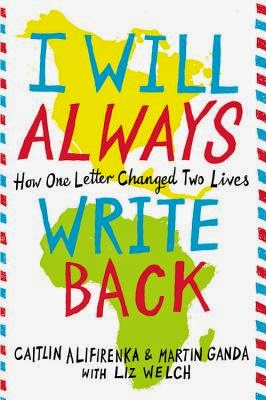
I Will Always Write Back

by Caitlin Alifirenka, Martin Ganda, and Liz Welch
First sentence: “I’d never heard of Zimbawe.”
Support your local independent bookstore: buy it there!
Content: It’s a non-fiction book that deals with teens, and so there’s some mention of teen drinking and pot smoking, but for the most part it’s pretty harmless. It’ll be in the middle readers biography section, though I’d hesitate giving it to the younger end of the readers. I think it’ll be best for grades 5 and up.

In the fall of 1997, Caitlin Stoicsitz made an impromptu decision that changed multiple lives. She raised her hand to get a pen pal, and her letter was sent to Martin Ganda in Zimbabwe. You wouldn’t think something as simple as that would be life-changing, but it was. Caitlin’s letter got sent to a small, rural school in Mutare, and by chance Martin, who was one of the best students in class, was on the receiving end. He wrote back, and that was the beginning of what became a deep friendship for them. And because of that friendship, Caitlin was able to change Martin’s life, to give him the opportunities — especially educational — that he wouldn’t have had otherwise. For what seems like mere pittance, Caitlin (and eventually her whole family) was able to pay Martin’s fees for school (especially since his father was out of work) and help him get into a U. S. College. That doesn’t sound like a whole lot, but as you get to know both Caitlin and Martin over the course of the book, you realize that it IS.

In return, Martin gave Caitlin something that many Americans desperately need: a view of how everyone else lives. Compassion for the downtrodden, and a knowledge that we really, truly are privileged in America.

Like many memoirs, this one is uneven. It’s chatty, and sometimes Caitlin’s narrative borders on whiny, neither of which might bother the intended audience, but kind of grated on me. I also felt like there was a bit of the “American savior swoops in to save the day” which also kind of grated.

But I do honestly believe that Caitlin and Martin have a bond, and I do believe that writing and responding to the letters, when one truly cares and when one is open to other ideas, can change lives.

And this book is a good reminder of that.

The Calligrapher’s Daughter

by Eugenia Kim
First sentence: “I learned I had no name on the same day I learned fear.”
Support your local independent bookstore: buy it there!
Content: It’s pretty long and involved, and some off-screen sex (both married and extra-marital). It’d be in the adult section of the bookstore.

Najin Han was born in 1910, soon after the Japanese invasion (I suppose) of Korea.The daughter of a talented calligrapher, she was supposed to be raised in the traditional manner: to be a servant to men, without the education or opportunities men have.

But, because her mother was Christian, and because Najin was curious, she ended up having more opportunities than she “should” have. She went to school, learned both English and Japanese.She spent time in the exiled court (thanks to some terrific maneuvering from her mother and a well-placed aunt). She got trained to be a teacher and a midwife. So when her husband — an arranged marriage, of course — goes to America for theological training and she gets stuck in Korea, she has Options.

Based on her parent’s lives, Kim writes a fascinating story about life in early-20th century Korea. There was much I didn’t know, from the way the Japanese took over the Korean culture, trying to suppress it to the fact that Christianity was in Korea fairly early on.

I enjoyed reading this one, though there were times that I skimmed — I didn’t care when Kim switched into other points of view; Najin’s story was the one I was most interested in — but for the most part I found this to be a fascinating portrait of a country and time we don’t hear much about.

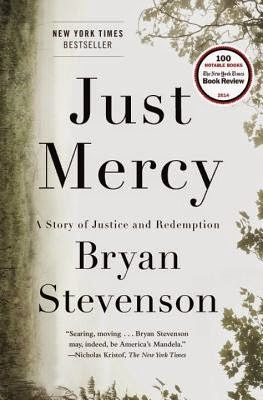
Just Mercy

by Bryan Stevenson
First sentence: “I wasn’t prepared to meet a condemned man.”
Support your local independent bookstore: buy it there!
Content: It’s intense, and there are some graphic elements, as well as swearing. It’s not for the tender-hearted (I had to put it down several times and read other books because I couldn’t handle the nature of the story). It’s in the adult non-fiction sections of the bookstore.

This one has been on my radar for a while as one I’d need to get around to reading. But what really prompted me to pick it up was listening to Serial. The two don’t really have a ton in common, but there are similarities. Both deal with minorities being imprisoned, mostly unjustly. Both are difficult, at times, to listen to/read. Both are important.

Bryan Stevenson was a young lawyer from Harvard in the mid-80s when he went to Atlanta to do an internship there. He got involved with a death-penalty case in Alabama, where he determined that the man was accused falsely. Stevenson became involved in the case to the point where he started the Equal Justice Initiative, a group that advocates for people on death row, as well as for children and for those with mental disabilities who have been imprisoned for life.

I took away two things from this book: First, our justice system may work “as well as it can”, but that usually means “for those who can afford it.” If it wasn’t clear before, it’s clear after reading this: our system is broke. It favors those who are white, those who are healthy, and those who are well off. Especially in the South. It saddened and depressed me that this isn’t history. This is happening in my lifetime, not in some distant past.

The second thing is that Stevenson is an incredibly hopeful individual. He’s practical, yes. But he’s also hopeful, and Christian, and just Good to do this work for people society — people like me — have written off. It makes me want to go out and give everyone I meet a second, or third, chance. Yes, there are people out there who are beyond hope, but I think, especially after reading this, that there aren’t that many people who are completely unredeemable.

It was a tough book, emotionally, for me to read (it didn’t help that I went and saw Selma while reading this as well). I cried a lot. My heart broke. And I had to think about the way I treat and judge people.

I am grateful that there are people like Stevenson out there doing this work. And I’m glad he wrote this book if only to make people like me more aware.

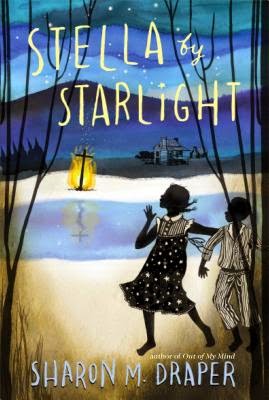
Stella By Starlight

by Sharon M. Draper
First sentence: “Nine robed figures dressed all in white.”
Support your local independent bookstore: buy it there!
Review copy snagged off the ARC shelves at my place of employment.
Content: There’s some pretty intense stuff going on in this book, by Draper never lets it get too dark. She knows her audience and (rightly) assumes they can handle anything that is thrown at them. Be prepared, however, for some discussion. It’s in the middle grade (grades 3-5) at the bookstore.

It’s 1932, North Carolina. The whole country is in the throes of the Great Depression, Franklin D. Roosevelt is running for office. For Stella and her family, this doesn’t really matter. They’re more concerned about making ends meet. And avoiding the local Klu Klux Klan.

And they’re doing a pretty good job until Stella’s dad, pastor, and a family friend decide to exercise their constitutional right and vote. Then, all hell breaks loose.

There’s actually a lot more going on than that: Draper knows her history, and paints a picture of what life was like for African Americans struggling to get ahead in the 1930s. The one-room school, with a teacher who handles all grades next to the white school where they get new books. The small houses and hand-me-over clothes. Having to enter in the back door of shops. Or, most tellingly, a white doctor who won’t come help Stella’s mother after she’d been bitten by a rattler.

And Stella is such an engaging character to go through all this with. She’s an observant, smart girl, but one who also struggles with writing in school. She’s trying to figure out her place in life, how to navigate the injustices of her situation, and still come out ahead. She’s got fantastic parents, and a supportive community. There’s so much that I found admirable about the way she deals with her situation. And so much to discuss (I know; I ended up talking to my family) when you’re done.