Three Books for African American History Month

I wrote this in my introduction to my newsletter:

I saw this video on Facebook a while back, and it got me thinking. Especially the part where they say that black history begins with slavery and ends with Martin Luther King, Jr. It helped that it came on the heels of the scandal surrounding A Birthday Cake for George Washington. I especially appreciated this post by author Mitali Perkins is definitely worth checking out. Both things together have made me more aware of the importance of diversity in children’s books, and made me more determined to search out more honest portrayals of black life.

I think that’s true, and as a result, I tried to find books that reflected the African American experience but didn’t have anything to do with slavery or civil rights. The three I came up with are these:

97808075301779780062342331 9781442459489

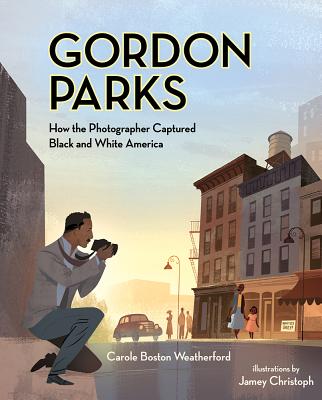
Gordon Parks: How the Photographer Captured Black and White America by Carolyn Boston Weatherford, illustrated by Jamey Cristoph

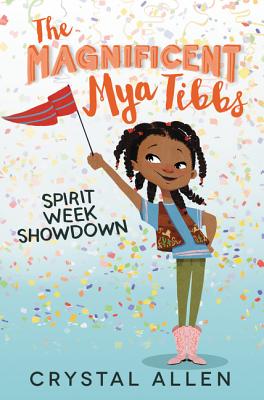
The Magnificent Mya Tibbs: Spirit Week Showdown by Crystal Allen

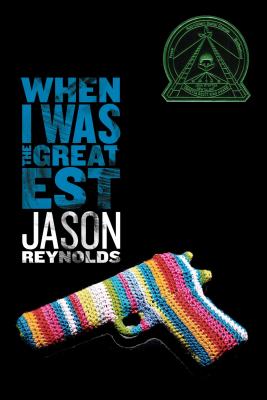
When I Was the Greatest by Jason Reynolds

A confession: I haven’t read any of these. But I think it’s definitely something I can rectify.

What would you have picked?

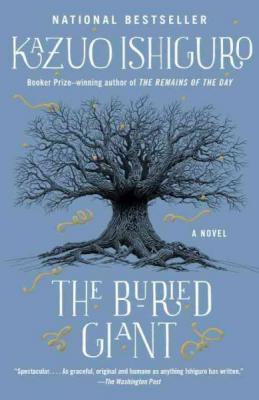
Audio book: The Buried Giant

buriedgiantby Kazuo Ishiguro
Read by: David Horovitch
Support your local independent bookstore: buy it there!
Content: There’s some violence and mild sexual elements. But, no worse than any Tolkein book. In fact, if you’ve made it through LOTR, you will probably really like this one.

Axl and Beatrice have had a long, good life. Or, at least as much as they can remember. They live in a cave dwelling in Britain, in the time after the Romans left and Arthur’s peace with the Saxons is waning. They’re not quite content, and so they determine that they need to head to a nearby village to see their son — whom they only can barely remember having — because he’s anxiously waiting for them.

They have no idea how their journey will go, or the people they will meet (an elder Sir Gawain among them, much to my delight), and how it will all change them.

I’m not sure how much more of the actual plot I want to divulge. Much like LOTR (which this strongly reminded me of), the plot is less important than the journey. Axl and Beatrice’s journey — though we never really got inside Beatrice’s head, which disappointed me — was a grand one, like Odysseus, or Frodo. The people the met, the friendships they made, the emotional journey they took as well as the physical one all had a mythological quality to it.

I’m sure you can find a lot of deeper meaning in the story as well. But for me, listening to it on my way to and from Dallas (the narrator was excellent, once I got used to his cadence), it was more a long oral narrative, a story to be heard by the firelight over several nights, a story to capture the imagination and to be swept up in.

Which means it’s being told by a master storyteller. And I loved every minute.

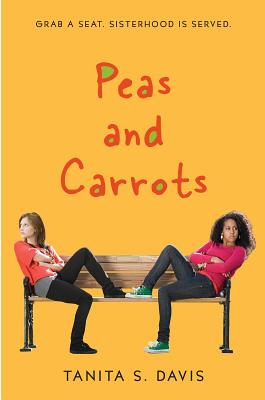
Peas and Carrots

peasandcarrotsby Tanita S. Davis
First sentence: “By the door,on the other side of the sheet that divides the room, Baby cries in his car seat.”
Support your local independent bookstore: buy it there!
Release date: February 9, 2016
Disclaimer: I’ve met the author, working with her for KidlitCon in Sacramento and I find her an absolutely delightful person.
Review copy snagged off the ARC shelves at my place of employment.
Content: There are several instances of mild swearing, plus some illusions to adult drug and alcohol use. Because there are no f-bombs, it’ll be in the YA section (grades 6-8, though it might be better for the older end of that spectrum) of the bookstore.

Dess is a 15-year-old girl stuck in the foster care system. Her deadbeat dad’s finally in jail, as is her mom. Dess’s grandmother gave up trying to care for her and her baby brother years ago. Dess is determined: she doesn’t need anyone. And so when she gets placed in a new home, one of an affluent family, she figures it’s not going to last.

Hope’s parents are stable and happy and take in foster kids, including Dess’s brother Austin, to give back to the community. Hope’s used to the revolving door of kids, but there’s never been one close to her age. Until now. And since Dess is doing pretty much everything to keep people at arm’s length, Hope knows that living with Dess is going to be a challenge. She just doesn’t know if she’ll be able to adjust.

First test: which one of these girls is African American and which one is white? (Answer: Dess is white. Did you pass?) That’s actually one of the first things I liked about this: Davis takes your (my) assumptions about foster care, about the State of the Country, and turns it upside down. In this story, the white girl is the one who’s on the run from an abusive family and the black girl who has the stable life. And Davis doesn’t leave it there; there’s discussion about race and class and belonging, which I respect.

And, as an unofficial foster parent myself, I found myself nodding and agreeing and loving the entire book. Yes, the kids come with baggage and a backstory that usually isn’t pretty. Yes, their lives can be changed by living in a stable, more affluent (though we’re not nearly as well off as Hope’s parents) situation. But Davis also got the corollary to that: having a foster kid in your home is challenging, sometimes disruptive, but is also life-changing. And, if you let yourself — as Hope and Dess eventually find out — you will be better off for it.

Definitely worth reading.

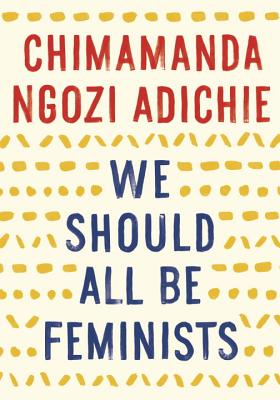
We Should All Be Feminists

weshouldallbefeministsby Chimamanda Ngozi Adichie
First sentence: “Okoloma was one of my greatest childhood friends.”
Support your local independent bookstore: buy it there!
Content: There’s really nothing objectionable; my 12 year old has read it. It’s in the sociology section of the bookstore.

I wasn’t going to write a review of this one, mostly because it’s so short and simple, but I decided I needed a record of having read it.

It’s basically an extended, written version of Adichie’s Ted Talk on the same subject, an exploration of the value of feminism. I read this over Christmas, after I heard a that Sweden gave this book out to every 16 year old in the country. I know I’m not really the target audience (neither are my girls, to whom I gave this book for Christmas) already self-identifying as a feminist, but I wanted to see what Adichie had to say.

And she had a lot to say, actually. A lot of it was directed toward African culture — it’s very male — but I think that it’s relevant even in America. The fact that women do experience sexism, the fact that men don’t notice gender, the fact that things are easier for men, and so on, is important. It’s important to have discussions about gender and equality, to raise boys so that they understand the value of women, to raise girls to speak their minds without fear. It’s important, to say, as Adichie writes, “Yes, there’s a problem with gender as it is today and we must fix it, we must do better.”

I may not be the target audience for this one, but it was definitely worth my time.

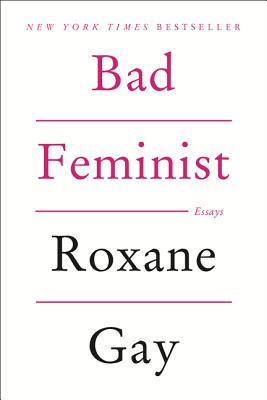
Bad Feminist

badfeministby Roxane Gay
First sentence: “The world changes faster than we can fathom in ways that are complicated.”
Support your local independent bookstore: buy it there!
Content: There’s fewer than 6 f-bombs, and some other mild swearing. And there’s a whole chapter on 50 Shades of Gray which is frank, but not explicit. It’s in the Sociology section of the bookstore.

I really don’t know what compelled me to pick this up. It’s been on my radar for a while, and I always figured I’d get to it, but why now?  No idea.

I’m glad I did, though.

In this series of essays, Gay takes on not only feminism (the Establishment) but race relations, sexism, culture, and Scrabble. (Well, there’s only one essay on Scrabble.) She’s insightful about relationships, critical about the State of Culture, but most of all, open and honest about the fact that she’s conflicted. She laments the lack of people of color on TV but is critical of the idea of diversity for Diversity’s Sake. (She’s not all that impressed with Orange is the New Black. It’s still a white woman’s story and the diverse characters are often stereotypes.) She admits to finding Blurred Lines catchy, while being disgusted at the content. There’s a whole chapter about the disturbing nature of 50 Shades of Grey while addressing the fact that its popularity shouldn’t be dismissed.

And it was this conflict I found I connected with. Because I’m a conflicted feminist. I don’t live up to Establishment Ideals. And it’s so refreshing to hear the voice of someone outside the establishment — in this case, a first-generation Haitian woman — stand up and say that there’s room in feminism for those of us who don’t fit the mold.

I borrowed my copy from the library, but I need to get this one. There’s an awful lot I need to underline and mark up, and it’s definitely one I want all my girls to read.

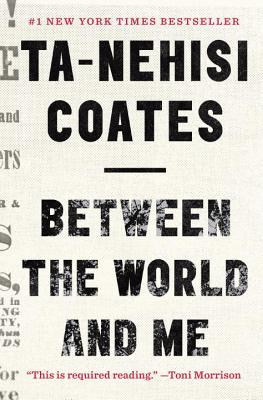
Between the World and Me

betweentheworldby Ta-Nehisi Coates
First sentence: “Son, Last Sunday the host of a popular news show asked me what it meant to lose my body.”
Support your local independent bookstore: buy it there!
Content: There is some swearing, including a couple f-bombs and the use of the n-word. It’s in the Sociology section (I think) of the bookstore.

By now, most of you will have either heard of this or read it, I think. There’s not much to say, summary-wise; it’s a letter from Coates to his son concerning what Coates thinks about being a black man in America. It’s sort of rambling, and kind of disjointed; it feels like a series of random thoughts jotted down on a piece of paper as Coates was musing about his place in this world. Which fits, I think.

What it is, really, is damning. Especially if you, as Coates put it, think you’re white. There’s a complacency that comes with being white, with being privileged (even if you’re “just” middle class), that isn’t afforded to those who are not. And Coates, rightly, forcefully, reminds us of that. Reminds us that to be black — particularly a black male, since he’s writing from his own experience — is to bear the burdens of all our complacency. That our “freedom” isn’t free, and that it’s not the military who are paying for it. That all these shootings that are making the news aren’t new, that they have been going on for hundreds of years, and those that think they are white just throw up their hands and turn a blind eye.

One passage that really struck me:

I am ashamed I made an error, knowing that our errors always cost us more. This is the import of history all around us, though very few people like to think about it. Had I informed this woman that when she pushed my son, she was acting according to a tradition that held black bodies as lesser, her response would likely have been “I am not a racist.” Or maybe not. But my experience in this world has been that the people who believe themselves to be white are obsessed with the politics of personal exoneration.

It’s a difficult read, because he condemns everyone and offers no answers. There’s no solutions, possibly because Coates doesn’t have any, and I found that a difficult thing to swallow. I want to know HOW I can change, what I can do to make a difference. Perhaps reading books like this is a start; it has made me aware that there are black men and women who think this way, who believe that they are lesser because we let police arrest and shoot them. Who are not given the same opportunities because they can’t afford to buy a house in the suburbs. Who are treated differently when they walk into stores just because of the color of their skin.

It does make me feel hopeless, in a way. But, on the other hand, I’ve read this and I’ve been made aware. Maybe that’s a start.

Everything Everything

by Nicola Yoon
First sentence: “
Support your local independent bookstore: buy it there!
Release date: September 1, 2015
Review copy picked up at CI3 and signed by the author.
Content: There is a few mild swear words, and one sort-of on-screen, sort-of-off-screen sex scene. The publisher has it listed for grades 7 and up, which puts it in the YA section, but I might move it to the Teen (grades 9+).

Madeline has spent her entire life inside. White furniture, white walls, filtered air, the whole deal. It’s because she has Severe Combined Immunodefiency (SCID), which basically means she’s allergic to the world. Any little disease, any little microorganism will kill her. So, she stays inside, reading, doing her online school.

And then Olly moves in next door.

Okay: yes, the plot is predictable. Boy moves in next door, they meet and have instalike, and suddenly the girl is questioning her Life Choices and Taking Risks.

But I ate this up. I don’t know if it was the short chapters, snippets of Madeline’s thoughts and observations, interspersed by some charming line drawings. Or the parallel worlds between her being trapped inside her house because she’s sick and Olly being trapped because of his abusive father. Or just the chemistry between Madeline and Olly, which was fantastic. Or the fact that Madeline was Afro-Asian, and yet it wasn’t really an issue. She just was. Her mother is suffenciently controlling (for good reason), and I adored Carla the Latina nurse, who was really more of a mother figure to Madeline.

And all of this added up to overcome the predictable plot and make me fall for this book. Another absolutely amazing debut.

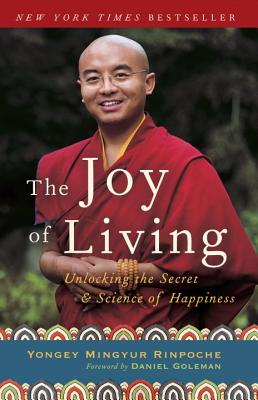
The Joy of Living

by Yongey Mingyur Rinpoche
First sentence: “When you’re trained as a Buddhist, you don’t think of Buddhism as a religion.”
Support your local independent bookstore: buy it there!
Content: It’s pretty complex, and somewhat dull, so it’d probably appeal to those who have the patience for it. It’d be in the religion section of the bookstore.

This was for another bingo square. I initially picked it up to cover “a religion you don’t know about” (hard for me, actually) but ended up using it as “popular psychology” because this was less about Buddhism and more about the scientific benefits of meditation.

And there are many: Rinpoche draws upon Western studies proving that the brain is calmer and that people are healthier when you meditate. And he explores some of the Western preconceptions about meditation: how we’re often intimidated by it because it seems so, well, unattainable.

He gives some practical advice for meditating: shorter times, more frequently during the day. And I’ve tried to take some of what he said to heart. During my last “down” time (I suffer from intermittent depression; it’s not chronic, but it is there and it is real), I worked on being attentive to my feelings and breathing through the sadness. I won’t say it worked well (or even much at all), but I did manage to come out of the funk faster than in the past. I need to get into the habit (again; I used to meditate more often) of stopping and unplugging and just Be longer.

I did find that a lot of this was familiar to me through my experiences with yoga over the years. A truly mindful yoga practice (of which I am not doing right now; I still go to yoga, but it’s more about the physical movement rather than a mindful practice) will incorporate elements of Buddhist meditation, I think.

It has made me curious about Buddhism, though. I think I’m going to hunt down and read more.

Trouble is a Friend of Mine

by Stephanie Tromly
First sentence: “Of course I didn’t like Digby when I first met him.”
Support your local independent bookstore: buy it there!
Release date: August 4, 2015
Review copy provided by the publisher rep.
Content: There’s some mild swearing. And inferences about drug use by teens. I think it’ll be in the YA section (grades 6-8) though. (It’s not too bad.)

Zoe is the product of a bad divorce: her Wall Street broker dad cheating on her mom. She generally sided with her dad, but ended up in her mom’s custody, moving to a small podunky college town in upstate New York after the divorce. Zoe doesn’t want to be there at all and when Digby — kind of the high school pariah, of sorts — decides that she needs to be his side-kick (she really doesn’t have much say in it; he really just inserts himself into her life and she doesn’t kick him out) in discovering what has happened to a local kidnapped teenager, she goes along with it. For kicks and giggles.

When the ARC came into the store, it had this sticker on it:

I won’t say it gave me high hopes, but I was expecting some laughs. And there were: Digby has a talent for getting into some very bad situations, and there was some pretty amusing antics trying to get out of them. And Zoe’s mom with her bumbling cluelessness was pretty amusing too. (Though: not as amusing as the mom in Finding Audrey.) But while I didn’t find it funny, I did find it endearingly charming. Incredibly charming. And fascinating. There’s a mystery running throughout — and not just the finding the kidnapped teenager one — that kept my interest, and kept me guessing, which added to my general enjoyment. And I just adored Zoe and Digby and their friend Henry. And all the other people they came into contact with. It was just… delightful.

So, maybe it’s not the hilarious read our rep promised. But it’s still definitely worth the time to read it.

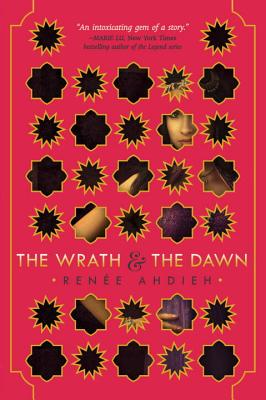
The Wrath and the Dawn

by Renee Ahdieh
First sentence: “It would not be a welcome dawn.”
Support your local independent bookstore: buy it there!
Review copy supplied by the publisher rep.
Content: There is some (implied) sex and there’s some violence, but it’s mostly appropriate for those who love grand, sweeping romances. I’d give it to an 8th grader and up, even though it’s in the Teen (grades 9+) section of the bookstore.

In this land, the king — 18-year-old Khalid — marries a new bride (chosen at random) every night, just to have her murdered the next dawn. It’s horrible for the people of the country who have come to look at him as a monster. But for Shahrzad, it’s personal: the most recent young woman sent to her death was Shazi’s best friend, Shiva. So (of course) Shahrzad volunteers for the job of bride.

And what follows is her attempt to stay alive.

If you know, even vaguely, the story of Arabian Nights, you pretty much know what’s going to happen. But, Ahdieh takes the story a step further: it’s not just the tales Shahrzad tells to keep alive. She gives motivation to Khalid (though in many ways it came too late for me to care very much) and she gives drive to Shahrzad. She’s there to exact revenge for her best friend, but discovers that there’s more to Khalid than murder.

Yeah, yeah, yeah.

I know people are loving this book. Seriously loving it. But, I just didn’t. I wanted to; I wanted to enjoy the sweeping Persian-inspired grandeur of the story, the fiestiness of Shahrzad, the illusions to the old tale. But, mostly what I wanted to do was smack Khalid and wonder why Shahrzad fell in love with him. (Too much telling, not enough showing?) It’s not that it didn’t make sense; it’s more that I just felt it was Decreed that they Fall in Love and So Mote It Be. I didn’t feel their love story. Then again, I didn’t feel Shahrzad’s rage. Or her first love’s betrayal. It was all Grand and Distant and I really didn’t care.

But since it’s getting pretty much universal raves from everyone else, it’s probably just me.