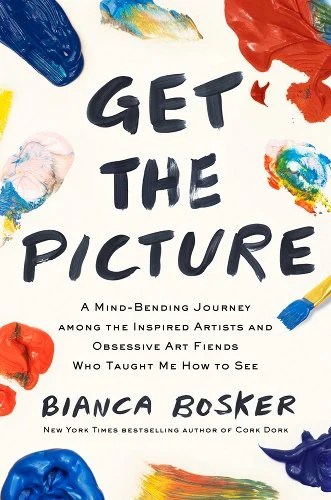
Journalist Bianca Bosker wanted to understand art, how to look at it, and the creation of it. And so, because she’s that sort of journalist, she decides to immerse herself in the art world. Through the book, she works for two different art galleries, is an artist assistant, and a docent at the Guggenheim. She sees the ins and outs and ups and downs of the art world, trying to figure out.
I don’t know a whole lot about the art world. I occasionally go to art museums, and I have some art on my walls (mostly photographs, though), but I have never thought I had an eye or even “understood” art. I found this to be fascinating. The art world is wack – elite, snobbish, monied, and not at all an accommodating place for people who don’t know art – and Bosker didn’t pull any punches with her depiction of the world. She was highly entertaining in the process, both as a writer and a narrator. I was with her every step of the way as she figured out the galleries, and talked to artists, and helped create art. But the section that affected me the most was the one with the Guggenheim. It made me think about the way I interact with museums and the way I look at art. The next time I head to a museum, I will look at and experience the art differently.
So, yes, a fun and fascinating book that I learned from.
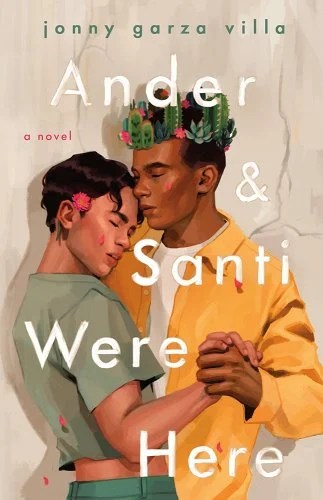
by Jonny Garza Villa Read by: Avi Roque Support your local independent bookstore: buy it there! Or listen at Libro.fm Content: There is a lot of swearing, including many f-bombs, marijuana use, and mention of sex (it’s not quite on-screen, but not entirely off- either)
Ander is taking a gap year after they graduated high school to figure things out. They’ve been accepted into a prestigious art school in Chicago, but for right now, they’re doing an internship with a non-profit in their hometown of San Antonio. But then their parents and grandmother hire Santi at their taquira, and Ander’s world turns upside down. But it’s not just first love: Santi is an undocumented immigrant, which poses all kinds of complications for their relationship.
I really enjoyed this one, especially on audio. The narrator was fantastic, and kept me interested the whole way through. But, it was also about art and finding one’s voice (can you find a voice in art?) and expressing the true version of oneself. It’s about this country’s messed-up immigration system. But it was also about family, and being there for and supporting each other.
I loved how effortless that Latinx elements were, and how much Villa just sprinkled it with Spanish. it felt very authentic and real, and I could just imagine Ander and Santi at different places around San Antonio. An excellent read.
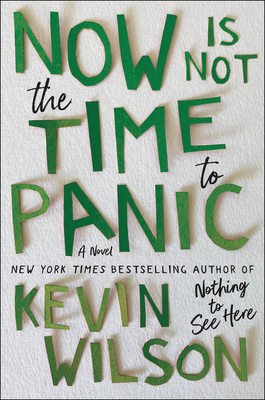
by Kevin Wilson Read by Ginnifer Goodwin Support your local independent bookstore: buy it there! Or listen at Libro.fm Content: There is some talk of violence and sex, and some swearing (maybe a couple of f-bombs? I can’t remember). It’s in the fiction section of the bookstore.
It’s the summer of 1996 in Coalfield, Tennessee, and there isn’t a whole lot to do, especially if you were 16. Frankie is resigned to another boring summer until she meets Zeke. And the two of them create a poster – Frankie comes up with the words and Zeke the art – that, once they start putting it up all over town, creates a panic. Two people end up dying, and there is talk of the poster coming from a Satanic cult. Frankie and Zeke promise to never tell, but 21 years later, Frankie is contacted by a reporter who has discovered that she is behind the Coalfield Craze of 1996. Now, it seems, the story needs to be told.
On the one hand, the book is an interesting musing on the purpose and reach of art: did the poster mean what everyone thought it meant? What responsibility do Frankie and Zeke have for others’ reactions to their art? There was a bit of coming-of-age, as Frankie had a first love, and her dreams were crushed, and realized that maybe everything isn’t perfect. But – I had issues with her as a 16-year-old. She felt… young. Obsessive. I hated the use of “weird” – she was “weird”, she felt “weird”, and she had a “weird” brain. It was a lot. I liked the narrator; she was sweet and read the book well, but in the end, I wasn’t sure I really got what Wilson was getting at.
This is the last roundup for the year. My panel has met, and we’ve talked about all the books and come up with her our lists., which I’m quite proud of. It’s a good list, reflective of all the good graphic novels that have been published hits year We’ll announce it on January 1st!
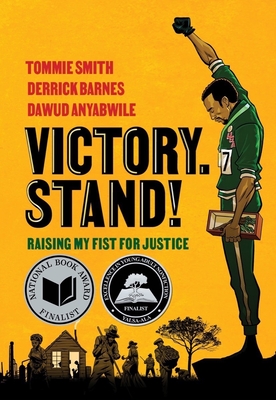
Victory. Stand! by Tommie Smith, Derrick Barnes, and Dawud Anyabile Support your local independent bookstore: buy it there! Content: There is racism and depictions of injustice. It’s in the Middle Grade Sports section of the bookstore.
This is the story of how Tommie Smith got to the 1968 Olympics, and the story behind the famous picture of him and John Carlos raising their fists at the medal ceremony. It’s a remarkable story, one full of sacrifice and good luck and determination and support. There is fighting for equality and civil rights, as well as excellence in sports.
I know I’ve seen the photo lots of times, but honestly, I’ve never thought about the story behind it. As a result, this book was incredibly fascinating. I liked hearing Smith’s story and the sacrifices and hardships as well as the opportunities he had on his path toward the Olympics. it was a reminder that racism was (is) everywhere, not just in the South, and that things were (are) much harder for Black people than it needed to be. The amount of racism that Smith faced is astounding, and it’s a little-known civil rights story that deserves to be told. An excellent book.
Tiny Dancer by Siena Cherson Siegel and Mark Siegel Support your local independent bookstore: buy it there! Other ins the “series”: To Dance Content: There are some mild swearing, divorce, and body image issues. It’s in the Graphic Novel section of the bookstore.
About 16 years ago, the Siegels wrote a middle-grade graphic novel about Siena’s experience being a ballerina. It’s a good book, one that talks about the path to being a professional ballerina, and the subsequent injury that derailed Siena’s career. I thought it was a good story, a complete story, but the Siegels must have thought there was more to tell. Enter Tiny Dancer, where Siena goes deeper into what it takes to be a ballerina on the highest level and the consequences and aftermath of her injury. I don’t know if this book was necessary, but I found it interesting and worth reading. It hits some of the same beats as To Dance, but it adds another, deeper layer to the story. And, as usual, Mark Siegel’s art is beautiful, capturing the elegance of the dancers as well as the pain and indecision post-injury. A good book, overall.
Slip by Marika McCoola and Aatmata Pandya Support your local independent bookstore: buy it there! Content: There is talk of mental illness, as well attempted suicide, and some swearing, including a couple f-bombs.
Jade has gotten into a prestigious art camp, a place for her to hone her art and get ready for art school. Right before she leaves, she finds out that her best friend Phoebe has attempted suicide and has been hospitalized. Jade still goes to the camp, but finds that she can’t focus because she’s worried about Phoebe. She also feels guilty as she develops feelings for another camper, Mary. It’s compliated dealing with everything, and Jade is not quite sure how to move on.
I really liked this one. I liked the discussion of mental illness and the difficulty it is when friends don’t know what to do when their friends are sick. I liked the art aspect, and the slight magical realism in it. It’s beautifully drawn, and I think it opens up an avenue for discussions of suicide and how to deal with friends who are suffering. Really really good.
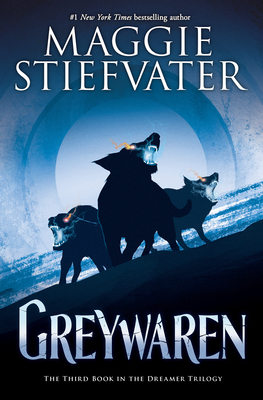
by Maggie Stiefvater First sentence: “At the beginning of this story, years and years ago, two dreamers arrived at paradise.” Support your local independent bookstore: buy it there! Others in the series: Call Down the Hawk, Mister Impossible Content: There is violence (the body count is high) and swearing, including multiple f-bombs. It’s in the Teen section (grades 9+) of the bookstore.
Stiefvater starts “Call Down the Hawk’ thus: “This is going to be a story about the Lynch brothers.” Lest you forget and think this series is about Ronan (or Ronan and Adam) or Bryde, or Hennessey or Jordan, or any of the other characters that weave in throughout the series, at its heart, this is a story about the Lynch brothers. It is a story about family – the family of origin, yes, and how it became that way – but also found family. It’s about sticking together through any odds and letting go when you need to. It’s about art and the power that it has – in this world, literally – but also the way it touches all lives. it’s about relationships between people who are different and the same, sometimes literally the same. It’s about forgiveness and acceptance. It’s about so much, all packed into a story about preventing the end of the world and figuring out one’s role in it. It’s about choices and the consequences of those choices.
But most of all it has a heart that is so, so big. Yes, I cried when it was over because it moved me in ways that I didn’t think I could be moved. My life is so vastly different from the Lynch brothers (obviously), and yet the themes are universal. It’s a more mature book than I think Stiefvater’s younger readers will realize, and I appreciate the way these books – beginning with the Raven Boys – grew up over time.
I am sad to see them all go, but I am glad that they went out this way It was a perfect ending.
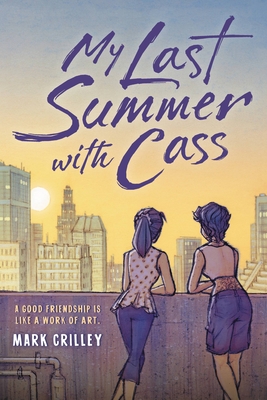
by Mark Crilley Support your local independent bookstore: buy it there! Content: There is some teenage drinking and nudes in art. It’s in the graphic novel section of the bookstore.
Megan and Cass have known each other their whole lives. They used to spend summers together in a cabin by a lake in Michigan, and that’s where they discovered their mutual love of art. But., as they got older, Cass’s family stopped coming and they grew apart. But the summer fore their senior year, Megan begs her parents to go spend the summer in New York City with Cass. What Megan experiences when she gets there, though, opens her eyes to a whole new art world.
This in some ways is very much a small-town girl is changed by big-city ways” book. Megan is a midwesterner, Cass is a New Yorker. Her ways, especially when it comes to art, are better. Of course. As a midwesterner, I kind of resented that. There is personal growth for both Megan and Cass, which is good, but I really felt the story felt flat. What did amaze me is the art. It’s a gorgeous book. Simply stunning to look at. But that wasn’t enough for me to really love it.
by Maggie Stiefvater First sentence: “When they came to kill the Zed, it was a nice day.” Support your local independent bookstore: buy it there! Others in the series: Call Down the Hawk Content: There is a lot of swearing, including multiple f-bombs.It’s in the Teen section (grades 9+) of the bookstore.
I saw a virtual event last fall for Swamp Thing in which Maggie said that writing a graphic novel helped her writing overall, made it tighter and more streamlined. And that it affected the way Mister Impossible was written. And you know what? She’s right. Mister Impossible is a tight, streamlined ride. There is action and tension and mystery and reveals, and maybe she’s not all up in the feels with Ronan and Adam, but it all works. In fact, I would say that this one, while it’s the middle in a series, is one of her best books, overall. (Not my favorite, but definitely one of the best.)
I’m not going to go into the plot because spoilers, but know this: it’s a great book. It’s full of Stiefvater-ness (chapter 13! So many little turns of phrases here and there!) and I love the magical world she’s built. And there’s really no “bad” guy — just competing good intentions. What does one do when your good intention is in conflict with someone else’s?
And the end? Let’s just say that waiting for the last book in this trilogy is going to be agonizing.
I love Maggie’s work, yes, but this one? This one is truly excellent.
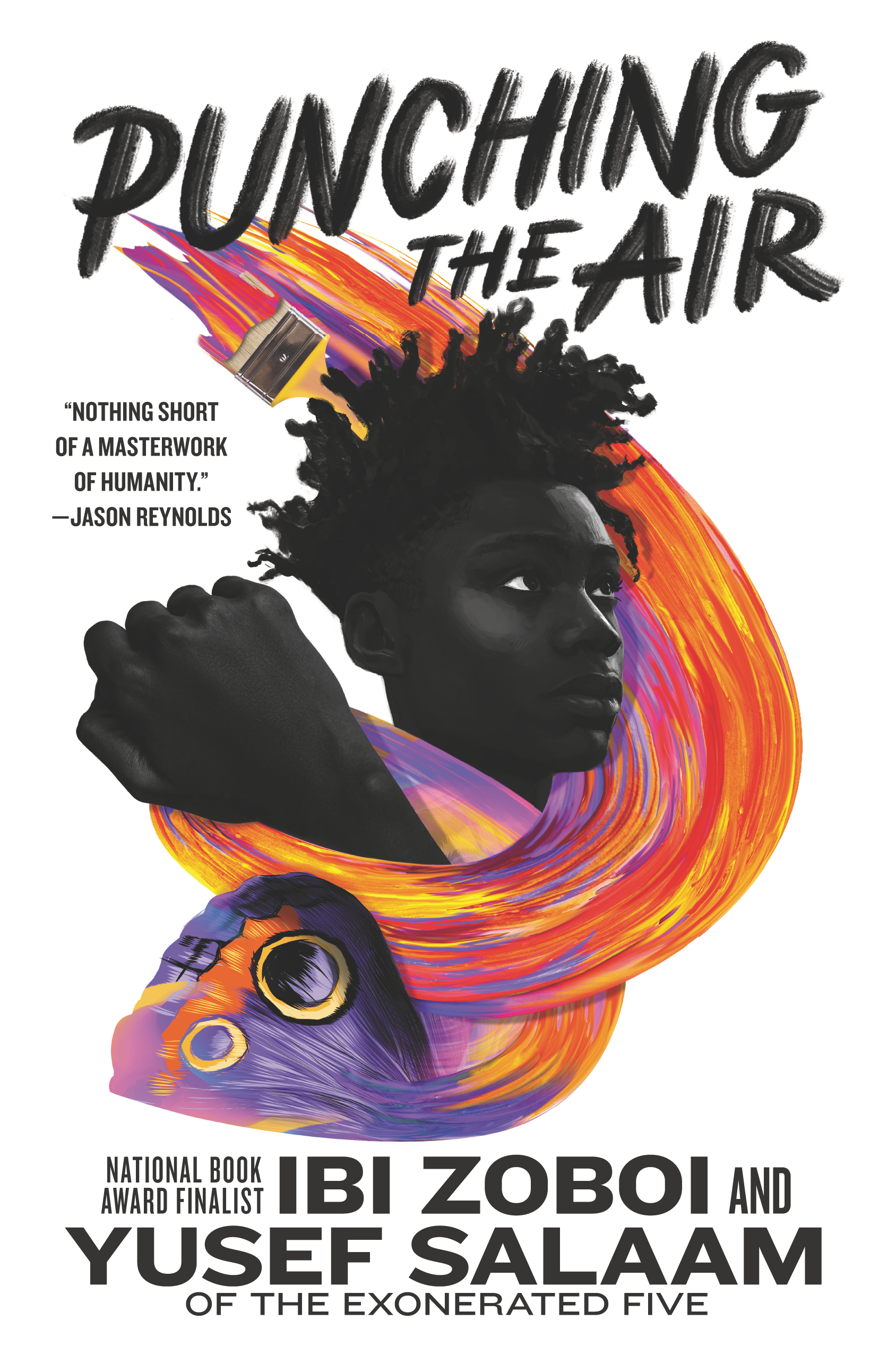
by Ibi Zoboi and Yusef Salaam First sentence: “Umi gave birth to me” Support your local independent bookstore: buy it there! Content: There is swearing, including multiple f-bombs. It’s in the Teen section (grades 9+) of the bookstore.
Amal Shamal was growing up in New York City, attending a school specializing in art. He had friends. And, yes, he had a temper. But, one fateful night, he was in the wrong place at the wrong time, and ended up starting a fight with a white boy. A fight that ended — Amal didn’t end it — with the white boy in a coma in the hospital. And Amal ended up in prison for something he didn’t do.
It’s a quick(ish) read, but a heavy one. Based somewhat on Salaam’s experience (he was part of the Exonerated 5), this is mostly a story of how Shamal gets through the hell that is prison. He’s technically in juvenile prison, but even in there it’s a lot less hope and a lot more despair. The book is Amal fighting against the expectations of the (white) world, trying to find a space for himself and his art. Trying to find hope and a will to go on in the face of oppressive and systemic racism.
If you think that prison is a good thing, that it keeps criminals and “thugs” off the street, this is a book you need to read. It drives home that the prison system (and by extension, the justice system) is not only flawed, it’s racist and corrupt. And it’s erasing futures.
by B. A. Shapiro
First sentence: “This isn’t how it was supposed to be, Edwin.”
Support your local independent bookstore: buy it there!
Review copy provided by the publisher.
Content: There are a couple of f-bombs, and a couple of tasteful sex scenes. It’s in the fiction section of the bookstore.
It’s 1922 and Pauliene Mertens is in Paris, abandoned by her ex-fiance (he took the money and ran, ruining her family’s fortune and name) and disowned by her family. So she changes her name to Vivienne Gregsby and reinvents herself, as a secretary to an American, Edwin Bradley, who is in Paris looking to collect art and start a museum. Knowledgeable about Impressionism and post-Impressionism, Bradley soon discovers that Vivienne is indispensable, and brings her to America to help him set up his (private) museum. From there, it’s a lot of drawing-room drama: alleged and actual affairs, money issues, ex-fiance popping up with another scheme, Matisse and Gertrude Stein, and the whole undercurrent of whether or not anyone will figure out who Vivienne really is.
It’s a little bit of a mystery — who killed Edwin? It’s a little bit 1920s art history. It’s a little bit romance (Vivienne takes up with Matisse, not to mention her relationship with George that starts the whole book off). It’s a little bit of a lot of things, which maybe is what kept me from loving it. I enjoyed the art history part the best; the way Shapiro writes Matisse is fabulous; he (and Gertrude Stein) was my favorite character. Vivienne was kind of a bland character to spend most of the book with, and it made the ending kind of surprising. (In fact, the only thing I wanted out of the book was George to get his comeuppance. Seriously.)
It’s (really) loosely based on history, and I found myself wondering what was true (answer: not much, really) and what wasn’t. And while I enjoyed it well enough, it wasn’t my favorite novel this year by a long shot.
by Sharon Biggs Waller
First sentence: “I never set out to pose nude.”
Support your local independent bookstore: buy it there!
Content: There’s one steamy kissing scene and some posing “undraped” (it’s not naked, it’s nude if it’s art). It’s in the YA section (grades 6-8) of the bookstore.
it’s 1908, and all Vicky Darling wants is to be an artist. She has found a community in Paris that she sneaks away to, away from her finishing school, and draws to her heart’s content. The thing is: Art is not done in Vicky’s social circles. At least not by women. Sure, they can paint… but only acceptable things: flowers, furniture, etc. Not Art. And definitely not Nudes.
So, when Vicky poses nude for her (all-male) art class, it causes a scandal. And she’s sent home to London where her parents decide the best thing is to marry her off as quickly as possible (she’s 16!) to curb her desires to Make Art. Because, of course, being a wife and mother will be so fulfilling that Vicky won’t have time for Art.
Except, it doesn’t really work. it’s also the time of the suffragette movement, and Vicky is inspired to help out. Initially, it’s only to draw them to work on her application to the Royal Art College, but eventually, she finds herself emboldened and empowered by these women who are fearlessly trying to exercise their right to vote.
It doesn’t help, either, that she’s met a supportive (and cute!) police officer, who’s willing to be her muse.
Vicky ends up faced with a choice: please her parents and society and give up her passion or follow her passion and give up her place in society?
Two guesses as to which one she picks.
I actually really enjoyed this one. It’s good to be reminded of the initial fight for equal (such as they are) rights for (white, mostly) women, and the struggles and trials they went through. And while Waller was sympathetic to Vicky and the suffragettes, she never really painted the upper class world that Vicky ran in as completely morally bankrupt. Constricting, yes. And lacking in understanding. But her parents did care for her (even if her friends and their parents did not). I especially liked the end (well, most of it), when Vicky left. Waller never hid the amount of privilege she had. She didn’t sugarcoat what it cost Vicky — monetarily, but also personally — to leave, and how much she had to learn when living on her own.
It was a really well done bit of historical fiction. And thoroughly enjoyable.







 The Book Nut