Drums, Girls and Dangerous Pie

by Jordan Sonnenblick
ages: 11+
First sentence: “There’s a beautiful girl to my left, another to my right.”
Support your local independent bookstore: buy it there!

This is a cancer book. Just to get that out of the way.

Steven is in eighth grade and on his way to being a wicked-good jazz drummer (being one of two eighth graders in the All-City Jazz Band). He has had a crush on Renee since third grade, and she still doesn’t know he exists. And his best friend, Annette, has been acting a little weird lately.

Steven also has a younger brother. Jeffrey is five, and annoying in the way five year olds can be. And while Steven doesn’t mind his younger brother, he often feels like he’s competing with Jeffrey for his parent’s affection. And who can win out against a very cute five-year-old?

Steven starts the year complaining about everything, but in October, things change. That’s when Jeffrey’s diagnosed with leukemia, and Steven’s — well, the entire family’s, really — whole world is turned upside down. It’s heartbreaking and tough to deal with, as we witness this crumbling. And yet, it’s not a downer of a book. It’s funny, it’s sweet, it’s endearing. Steven’s a good kid, and while he struggles and is resentful, he means well. By the end you’ve grown to love both him, and Jeffrey (whom you couldn’t help but love), and understand and empathize with them. It’s an excellent example of showing: while we get Steven’s perspective, we’re never pummeled over the head with anything.

Which makes it the best kind of cancer book, I think.

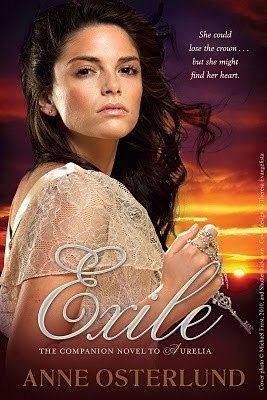
Exile

by Anne Osterlund
ages: 13+
First sentence: “Hoofbeats thundered from behind.”
Support your local independent bookstore: buy it there!
Release date: April 28, 2011
Review copy sent to me by the author

There will be spoilers for Aurelia. You have been forewarned.

(And if you haven’t read Aurelia yet, you really should.)

When we left our fair heroine and — her, um, companion/protector — Robert, had just survived an assassination attempt. In the wake of that, and of Aurelia being unmade the heir of the kingdom, Robert, Aurelia and several guards are sent off on a tour of the Kingdom of Tyralt. Little did they know that this would be the most dangerous thing they’ve ever done. They have to fight off another assassination attempt, make their way through some of the most difficult terrain, and perhaps most daunting, figure out their feelings for each other.

Anne Osterlund has a knack for writing sweeping stories, ones that are full of suspense, action and romance. Ones that keep you engaged in the book, wondering what’s going to happen next, rooting for the characters all the way. All the best elements of Aurelia are there: she’s still a kick-butt heroine, passionate and determined; he’s still a swoon-worthy partner. Osterlund knows how to write action, and how to take readers on some pretty wild twists and turns, and yet grounds it all in some pretty intense ideas of freedom and loyalty.

The question is, then: what’s going to happen next to our fair duo?

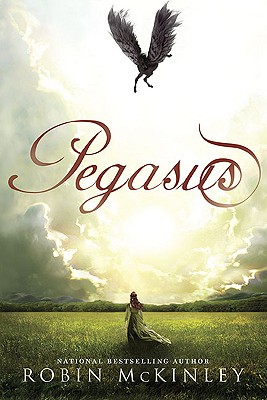
Pegasus

by Robin McKinley
ages: 12+
First sentence: “Because she was a princess she had a pegasus.”

I love Robin McKinley, I really do. And so I hate to say that I didn’t finish this book. I wanted to finish this book. I wanted to love, or at least like, this book. But I just didn’t.

The concept is interesting: McKinley imagines a world where pegasi are a species of intelligent beings, with language and culture and kings, but fragile ones. So, they make a pact with the humans for protection. They will bond the ruling humans and pegasi together in exchange for keeping the land safe. The only problem is that they need magicians to communicate.

That is, until princess Sylvi bonds with her pegasus, Ebon. They can talk, not just bits and snatches that they come to understand, but really communicate. And, of course (though I never really could figure out why), this causes all sorts of problems.

Honestly? I got bogged down in the setting up of the world. I was halfway through the book, and the story hadn’t hardly started. It was history, it was world building, and while it was interesting, it wasn’t engaging. I wanted it to be. But at some point, I realized it just wasn’t working for me. So, I skipped around and read the ending. Which, if that’s the end ending, it’s just wrong. It’s a horrible ending, and if I had invested even more time in the book, I would have been more upset.

As it was, I was just disappointed. I suppose even Robin McKinley can’t win them all.

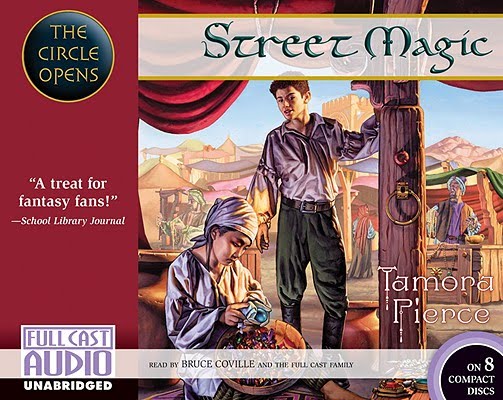
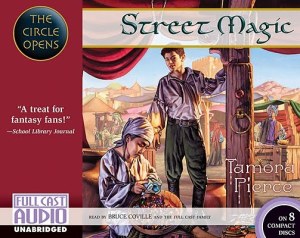
Audiobook: Street Magic

by Tamora Pierce
read by Full Cast Audio
ages: 12+
Support your local independent bookstore: buy it there!

I realized sometime in the last couple of weeks that I was spending an inordinate amount of time in the car driving my children places. I don’t mind this: I like my car, I like my children, and I generally don’t mind listening to the news/music. But then I got thinking: the more time I spend in my car, the less time I have to actually sit and read (though I do take a book for me to read while I am waiting). Then the tragedy in AZ happened, and the news was just depressing, and that’s when it hit me: audiobooks! (I’m slow sometimes.)

I wandered around the audiobook section (I really need an MP3 player/iPod so I can listen to downloadable stuff) and realized that I hadn’t read a Tamora Pierce book in a while, so I pulled this one off the shelf. When M saw the book, she informed me that it’s the second book in a second series and I might be a little lost. But then she proceeded to fill me in on all the information I needed.

Fourteen-year-old Briar Moss and his teacher, Rosethorn, are have been in Chammur, a Middle Eastern-like country, for a while to try and figure out a way to help the farmers with their plants. As both are plant mages, this is an ideal way for them to collect and study new plants and ideas. As their time comes to a close, Briar spots Evvy, a young street rat, in a market, and noticed she has stone magic. Once he finds Evvy, it becomes an interesting race with one of the nobles in town — Lady Zenadia, who is dabbling in leading a gang and inciting gang wars for a unspecified motivation — to see who can tap into Evvy’s power first.

That sounded bad. But it’s hard to explain, even though it’s pretty black and white: Briar wants to teach Evvy (or find her a teacher at least), Lady Zenadia wants the power (I’m assuming, since it was never specified) that Evvy’s magic will bring her. Evvy just wants to be fed and clothed and treated like a person not a slave.

The story is an interesting one, dealing with issues of ownership and propriety as well as those of class. However, I’m thinking this one was probably one I should have actually read, because I was distracted by the full cast audio. The narrator was okay, but several of the actors voices drove me nuts, so every time they spoke, I cringed. Of course this took away from the story. Also, it seemed to me, every time we turned around Pierce was describing what people were wearing. Did it really matter that Lady Zenadia was wearing a black and crimson sari, arms hung heavy with gold, a delicate nose ring that had a slim chain connecting it to her earring? Did it matter that Briar’s favorite overrrobe was a long, forest green one, beautifully embroidered? Um, no. Not really. I could have skipped over all that had I been looking at the text, but because I was listening, I couldn’t. Yawn.

Aside from that, the story was just okay. I wanted Pierce to give me more motivation for Lady Zenadia’s involvement in the city’s gangs, for her ruthlessness. It just was, and that bothered me. I wanted to know why. And while the ending was cool — it’s always nice to see YA characters taking action and being awesome without help from the adults — it was a bit too pat for my taste.

Maybe I should ask for some good audiobook recommendations. They need to be clean YA or MG because I drive around with my kids in the car, and there are some things that a 4 year old doesn’t need to hear. Any suggestions for my next book?

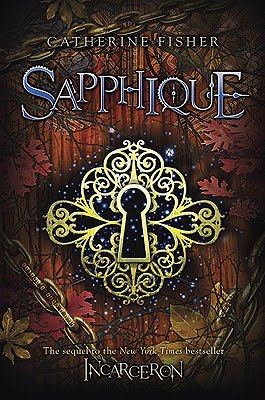
Sapphique

by Catherine Fisher
ages: 13+
First sentence: “The alleyway was so narrow that Attia could lean against one wall and kick the other.”
Support your local independent bookstore: buy it there!

If you haven’t read Incarceron, you’ll probably want to skip this review, because there’s no way to talk about Sapphique without giving away the ending of the first one. That also begs the question: WHY haven’t you read Incarceron?

Finn has made it out of Incarceron, discovering that Outside isn’t all that it’s cracked up to be. He’s got endless Protocol, and after the relative freedom of the prison (ironic, yes), it’s driving him batty. He thought he could remember his past once he got outside, but is finding even that isn’t what he’d hoped. Claudia, who was banking on the belief that Finn was the lost prince, is even having second guesses. On top of that, Finn’s oathbrother Kiero and their friend (such as it is) Attia are still stuck in Incarceron, still looking for a way out. That knowledge haunts Finn, because he feels it’s his fault that they couldn’t escape with them. And to add insult to injury, there’s another claimant for the throne, one that Finn and Claudia are sure has been put up by the current, not so nice, queen. Finn has to prove something he doesn’t quite believe in himself, both his and Claudia’s lives are forfeit.

On the inside, Kiero and Attia are looking for the Glove of Sapphique, a magical item that legends say helped Sapphique escape from the prison. Is the glove real? Can they find it? And more than that, will they be able to stop the prison from escaping itself.

This book is much like Incarceron: complex, intricate, yet held together with brilliant writing and plotting. It’s not a romance: everyone in the book is working to save their life and/or the world that they know, to just survive. And yet there are moments of tenderness, of reflection, and insight as well. It’s a good follow-up book, wrapping things up quite nicely, yet leaving room for another book, if Fisher so chooses (I have no idea if she will or not). And while Finn is meandering aimlessly, and Kiero is his still-annoying self, the girls carry the book: Attia is amazing, finding hidden resources and connections that otherwise would have gone missing. And Claudia, even with her doubting, handles the scheming and plotting of the court quite admirably. The unsung hero award, however, goes to Master Jared: Claudia’s tutor and father-figure, he’s the one who finds most of the answers to the questions, as well as ultimately saving the day. He’s remarkable.

At the very least, Fisher is an author to keep an eye out for.

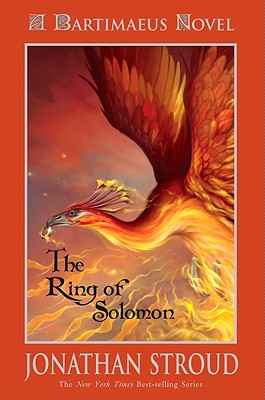
The Ring of Solomon

by Jonathan Stroud
ages: 12+
First sentence: “Sunset above the olive groves.”
Support your local independent bookstore: buy it there!

Ah, Bartimaeus. I’ve missed you.

I’ve missed your snarky footnotes, your adventures, your soft spot for humans, your insights. I could go back and read the other three books, true, but I’m so happy to have you back in a new story.

Stroud re-imagines Solomon and his reign in Jerusalem, using the same world of magicians and spirits he created for the previous Bartimaeus books. The basic idea is this: what if Solomon had a ring, something which accesses magic more terrible, more powerful than any other magician. This allows him to create peace and prosperity. However, he also employs magicians, some of which are not too nice. It’s one of these that summons Bartimaeus and keeps him in servitude. Of course, Bartimaeus being Bartimaeus, he tends to get into trouble a lot. As a punishment, he’s off in the desert cleaning up bandits. Which is where he meets Asmira.

She’s not any ordinary girl, but one of the personal guards of the Queen of Sheba. Sent to Jerusalem on a quest to assassinate Solomon and steal the ring, she’s fairly single minded in her quest. She falls in with Bartimaeus and between the two of them, they attempt the impossible.

It’s a great book for the same reason the rest of the trilogy is great. It’s as fabulously imagined world, and Baritmaeus is a grand character. There’s action and adventure, loathesome bad guys, and an undercurrent of intriguing and deep ideas to think about. It falls apart a bit at the end, but, mostly it lives up to the reputation of the Bartimaeus books.

And you can’t beat that.

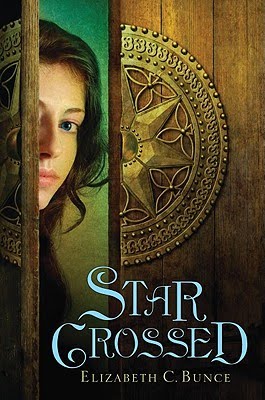
Starcrossed

by Elizabeth C. Bunce
ages: 13+
First sentence: “I couldn’t think.”
Support your local independent bookstore: buy it there!

I adored Elizabeth Bunce’s first novel, A Curse Dark as Gold, so when I found out that she had another (thanks, Leila), I knew I would read it. And I kind of had an inkling I would love it. Which, of course, I did.

Without giving too much away, sixteen-year-old Digger is a thief in the city of Gerse. She’s made a living, ever since she ran away from the convent at age 11, stealing things for people. It’s been a good way to survive, especially in the increasingly intolerant and restrictive atmosphere of the capital city. Except, this time, the job went horribly wrong. The authorities were waiting, and Digger just barely escaped with her life. Twenty-four hours later, disguised, she falls in with a bunch of nobles and ends up in a mountain retreat with them. Where she finds that nothing is quite as it seems, especially since she’s being blackmailed to find out all the secrets.

It’s a complex world Bunce has created, fascinating in its religion and politics. I would have been captivated if it had only been that. She reveals things slowly, peeling back layer by layer, to keep you guessing and wondering and hoping. But it’s more than that: the characters, especially Digger, are fascinating. (Okay, it helps that I’m half in love with one of the men, yet again.) Like the religion and politics of the world, they are fairly complex; you can sense that even the stereotypical ones are hiding some sort of secret. Maybe it won’t be revealed in this book, but it’s there, lurking under the surface.

It’s the first in a series (I hope; there’s a sequel due out next year), something which I can’t wait to sink my teeth into.

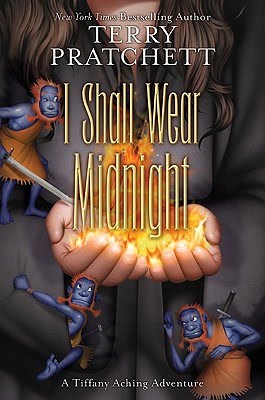
I Shall Wear Midnight

by Terry Pratchett
ages: 13+
First sentence: “Why was it, Tiffany Aching wondered, that people liked noise so much?”
Support your local independent bookstore: buy it there!

Tiffany Aching has discovered that she was a witch, gone through training, accidentally joined a dance she shouldn’t have and had to kiss the winter as a result. Now, she’s back at the Chalk, a sixteen-year-old girl, trying to manage her stead as a witch. It’s not going too horribly: she’s managing to get the things done that need doing. Until one day, things start to unravel. It began with a beating of a young girl by her father, and the rough music started. Then it morphed into something grander: Roland’s engagement to Letitia, daughter of an uppity Duchess, the Baron’s death, and a growing resentment and fear of witches. It turned out that Tiffany had accidentally let out something quite evil, something which, if left to roam, will result in the demise of all the witches. And it’s up to her to make things right again.

I know it sounds dark, and there are some dark moments, but this book is so wonderfully affirming, so incredibly hopeful, that it isn’t the dark bits that stand out. While it’s not as hilarious as some of the other books in the series, it’s still quite amusing. And Tiffany really, truly grows into her own. She has to give up some things, and learn some things, and make some difficult decisions, but she does it all. And she makes some new friends, looking past prejudice and bad first impressions to see that everyone is wonderfully more complicated and interesting that we give them credit for at first.

A perfect ending for an excellent series.

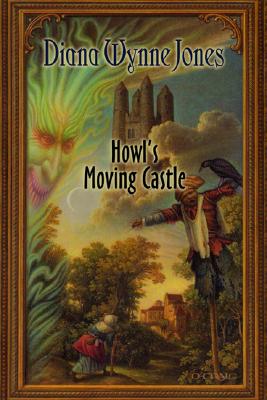
Howl’s Moving Castle

by Diana Wynne Jones
ages: 12+
First sentence: “In the land of Ingary, where such things as seven-league boots and cloaks of invisibility really exist, it is quite a misfortune to be born the eldest of three.”
Support your local independent bookstore: buy it there.

My third outing with Diana Wynne Jones, and I have to say that I understand why she’s beloved by many. The book was wonderful. Not in a gripping, suspenseful, exciting sort of way. But in a quiet, sweet, kind, yet somehow completely and totally amazing sort of way.

For those who have neither read the book or seen the movie, our main character, Sophie, is the eldest of three daughters. Which pretty much means she’s bound to fail. (As the stories go.) A daughter of a women’s hat shop owner, she’s pretty much resigned to staying there forever. Her sisters manage to get away in apprenticeships — one to a bakery, the other to a witch — but she believes that she’s forever stuck. That is until the Witch of the Waste comes in, has a conitpitoin fit and turns Sophie into an old woman. Sophie figures it’s not going to get much worse, and sets off to seek her fortune, in the form of making a bargain with the Wicked Wizard Howl. Only, she discovers, once inside his moving castle, that things aren’t quite what they seem, and she’s going to get a whole lot more than she bargained for.

I liked it because it was quiet. Everything unfolded properly in its due time, and while the foundation was there, it wasn’t necessarily obvious: I didn’t see the ending coming from a mile away, and yet it didn’t feel like a surprise either. Everything was as it should be. Sophie’s a fabulous main character: determined, if a bit stubborn. Fearless, if a bit pushy. Altogether winning and immanently likable.

The minor characters were thoroughly likable, too. From Sophie’s sisters, Martha and Lettie, to Michael, How’ls apprentice, to Calcifer, the fire demon who’s helping manage Howl’s castle: they were all developed in their own separate ways, adding depth and dimension to the story.

And, then there’s Howl. I have got to stop falling for fictional men, but seriously: I adored him. Sure, he’s a fop and a dandy, and he tries (so hard) to undervalue himself, and yet he’s so wonderfully awesome, in his own way. It all comes on so slowly, and the use of magic is relatively underrated (there’s one battle, near the end, but for the most part it’s just little things), that you don’t quite realize that you’re adoring Howl until it’s too late. Which is, I suppose, how it should be.

My only problem is that I’m a bit wary about watching the Miyazki movie. Should I be?

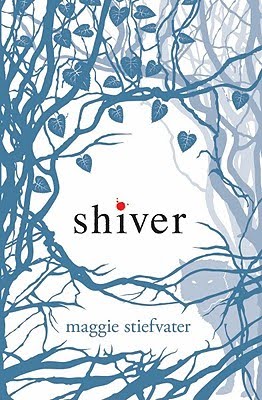
Shiver

by Maggie Stiefvater
ages: 13+
First sentence: “I remember lying in the snow, a small red spot of warm going cold, surrounded by wolves.”
Support your local independent bookstore: buy it there!
Review copy won from Scholastic

First off: okay, okay, okay. I should have read it sooner. I should have listened to all you fans of Maggie Stiefvater out there. But better late than never. Right?

For the five of you out there who haven’t read this: think Twilight, but better written and with werewolves instead of vampires. It’s still the same story: human girl falls in love with paranormal boy, but it’s got so much more depth than Bella and Edward.

Grace is eleven when she’s attacked by wolves. She figures she’s going to die, but something – someone — saves her. She just knows it’s the wolf with the yellow eyes, her wolf. In the six years that follow, every winter, she looks for the wolf, only satisfied when she knows he’s near.

Sam, hates his life: wolf when it’s cold, human when it’s warm. And he knows his time is growing short. So when he’s shot — on purpose; the wolves have bitten and killed another resident of their small Minnesota town, and so the men take to the forest with guns to “solve” the problem — and turns back into a human, he turns to Grace. It’s only then that they realize how much they care for and need each other — and yes, love each other — and the cruel fate that awaits them unless they can figure out a way to stop Sam from changing back.

That’s obviously not enough to hold a book of this size, and so Stiefvater gives us the background story. But, unfolds it slowly, a piece here, a nibble there. And then there’s Grace’s friend Olivia, who’s almost as obsessed with the wolves as Grace is. Or Isabel, the sister of the unfortunate boy who was killed. There’s a lot of balls to be juggled in this book, aside from the love story, but Stiefvater manages to juggle them quite admirably. More than admirably: the writing was lyrical, evocative, sensuous. Almost poetic. And the chemistry: oh, the chemistry.

Which means: I can’t wait to get my hands on the next book.