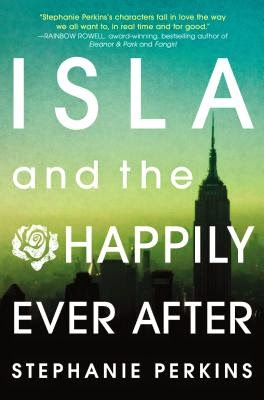
Isla and the Happily Ever After

by Stephanie Perkins
First sentence: “It’s midnight, it’s sweltering, and I might be high on Vicodin, but that guy — that guy right over there — that’s him.”
Support your local independent bookstore: buy it there!
Others in the series (you don’t have to read first, but you might want to): Anna and the French Kiss, Lola and the Boy Next Door
Review copy snagged out of the ARC box our Penguin rep sent the store.
Content: There’s a half-dozen (or more) f-bombs, and several instances of tasteful (and protected!) sex. Plus, it felt more mature than your usual romance. It’s in the Teen section (grades 9+) of the bookstore.

Isla has had a crush on Josh ever since their freshman year at the School of America in Paris. A super major crush, one of those ones that makes her go all gooey when he’s around. But he’s unattainable, with his super-cool friends (St. Clair!) and his gorgeous girlfriend. Isla (pronounced EYE-la) just figures her crush will stay just that: a crush.

But then, their senior year starts, and Josh is unmoored, and it turns out that he’s kind of had a crush on her all these years. After an awkward start, they fall into a full-blown romance, escaping one weekend to Barcelona to be alone. Which, unfortunately, sets off a chain of events that threatens their relationship.

It’s a charming book, a sweet and tender look at first real love. Perkins captures that sense of falling for someone, that first blush of new love. I think I like Anna and Lola better than Isla as characters; Islais so insecure and somewhat needy, but that’s something that adds to the whole plot arc, so even though it bothered me on and off, I ended up touched by Isla’s growth. I also loved the art that ran through the book; one of the sexier moments (it was a really sexy book!) was when Josh drew all over Isla’s body.

It’s a worthy addition to a wonderful little collection of books.

Ruin and Rising

by Leigh Bardugo
First sentence: “The monster’s name was Izmrud, the great worm, and there were those who claimed had had made the tunnels that ran beneath Ravka.”
Support your local independent bookstore: buy it there!
Others in the series: Shadow and Bone, Siege and Storm
Content: There’s some violence and lots of kissing and some off-screen sex (implied). It’s in the YA (grades 6-8) section off the bookstore.

Alina is in a bit of a predicament. She has two of the amplifiers and that enabled her to temporarily set back the Darkling. However, it cost her most of her power, turned her hair white, and has forced her underground and into the protection of the Apparate, whom she despises.

Her goal: fend of the zealots who consider her a saint, get out of the White Cathedral, hope that Nikolai is still alive (and in some sort of condition to be king), find the firebird and the third amplifier, and defeat the Darkling, once and for all.

And manage to come out of all of it alive.

My only complaint is that I didn’t reread the other two books beforehand; I really do think that this series is best read one right after another. Even so, it didn’t take me long to remind myself of the big, broad points. There’s a lot of action, and Alina is a major player in all of the decisions, including the final, heart-rendering one. There were a lot of small moments I loved, but I adored the big ones: the battles with the Darkling, the confrontation with the former king. Nikolai was fantastic, and even Mal (and the True Love between Mal and Alina) grew on me over the pages.

A fantastic way to end a series.

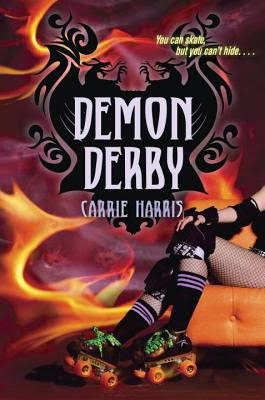
Demon Derby

by Carrie Harris
First sentence: “Once upon a time, whenever I saw a tall building, I wanted to jump off it.”
Support your local independent bookstore: buy it there!
Review copy snagged off the ARC shelves at my place of employment.
Content: There’s some violence — demon attacks and all — and the content is a little mature for younger readers (well, A tried reading it and lost interest). It’s in the YA section (grades 6-8) of the bookstore.

Casey Kent has cancer. It’s in remission right now, but it’s forced her to re-think her extreme lifestyle. No more free jumping. No more trick boarding. In fact, everyone — from her parents, to her older sister, to her best friend, Kyle — is pretty much making sure Casey stays in a safe bubble.

And it’s driving her insane.

So, she decides to try out for one of the junior roller derby teams in town. Where she discovers that the coach (hot as he is) isn’t human. He’s a Sentinel, here to train people to fight demons. And it turns out that Casey, having been on the brink of death with her cancer, is the perfect hunter.

I was thinking this was Supernatural meets the roller derby and in many ways it is. There’s creepy demons trying to kill people, and this book will definitely make you rethink ever buying a bobble-headed doll again. But, it lacked (for me) a certain… oomph. The hot guy wasn’t terribly interesting, the danger not terribly exciting. It was all kind of … meh.

What I DID like, however (and what kept me reading) was that this wasn’t your ordinary cancer book. Sure, Casey battled cancer and it’s in remission. But she was made strong because of it, not in spite of it. It was because of the cancer that she became an awesome Hunter and was able to defeat demons. And I liked that perspective. I also like that the person you thought would be the Traitor didn’t actually turn out to be one. It was a nice touch.

I wanted to like it more than I did, but reading about Casey — who was strong and feisty and awesome — made it worth wading through the meh elements.

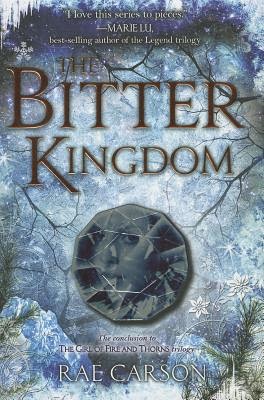
The Bitter Kingdom

by Rae Carson
First sentence: “We run.”
Support your local independent bookstore: buy it there!
Others in the series: The Girl of Fire and Thorns, The Crown of Embers
Content: It’s a pretty complex book, full of politics and machinations. But, even with all the fighting and killing and wars (and some brief sexytimes), it’s not a graphic book. It’s in the teen section (grades 9+) of the bookstore, but I think a strong younger reader would enjoy it as well.

Queen Elisa is in a terrible predicament. Her country has been taken over by an ursuper, Conde Eduardo. The man she loves and the commander of her Royal Guard has been kidnapped by traitors. And she only has a few friends she can count on. The problem is that she needs to head into Invierne and convince them to stop invading her country. And figure out how to deal with her newfound power from her Godstone.

That doesn’t even begin to touch this complex and fascinating ending to a complex and fascinating trilogy. I’ve always loved the religious element to this story, how God plays a role in Elisa’s life. I really enjoyed the way Carson pitted the Joyans and the Inverinos against each other; both think they are right, and both think the other is wrong. It’s really a book about compromise and understanding, and I loved that.

Elisa has become, for me, one of my favorite heroines. She’s not kick-butt fighter, but rather a savvy, clever, and fascinating character; someone who uses her brain rather than her fighting skills. Carson also gave us Hector’s point of view a few times in this book, something which I appreciated. While I’ve loved seeing Hector from Elisa’s point of view, it was interesting to be inside his head and to know a little more how he works.

I do think that the only thing I would have done differently with this series is wait until they were all out so I could read them one after another. I think the experience of this story would be that much better if I had read it all in one gulp.

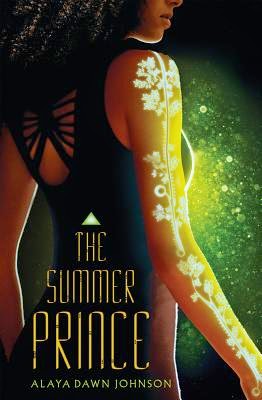
The Summer Prince

by Alaya Dawn Johnson
First sentence: “When I was eight, my papai took me to the park to watch a king die.”
Support your local independent bookstore: buy it there!
Content: I was initially thinking that this would be good for those who like Uglies; there’s about the same amount of swearing. But the reason it’s in the Teen section (grades 9+) is because there’s a lot of allusions to sex, including a couple (tasteful) sex scenes.

June Costa is the best artist in Palmeres Três. Or so she thinks; she just hasn’t had a chance to prove it yet. And in this, a moon year in which her futuristic, matriarchal society chooses a one-year Summer King to “rule”, she will have that chance. It starts innocently: her best friend, Gil, falls in love with the summer king, Enki. And she does, too, though she tells herself that it’s mostly about the art. And what art June and Enki create. Ever more elaborate, they end up sparking a revolution of sorts between the technophiles and the isolationists; the government, made up of women they call “Aunties”, has placed strict regulations on what kind of tech can be in the city.

It was this tech element that reminded me so much of Uglies. But, I think Johnson was pointing out the value of art and the power of love, even in a futuristic (and while not dystopian, certainly not perfect) society. It’s a very thought-provoking novel, one that winds and unfurls instead of proceeding in a linear fashion. And it was this winding that kept me most interested. Johnson chose to build her futuristic Brazilian society in bits and chunks throughout the entire book, dropping hints and clues about what happened to get the world to this point along the way. And the society she built was equally as fascinating, with all its machinations and political scheming.

But, ultimately, it was June and Enki and Gil (and June’s competition/friend, Bebel) that kept me reading in the end. I cared about what happened to them, how this year played out for the summer king and his newfound friends. I found myself moved by the ending, and thinking about the book long after I turned the last page.

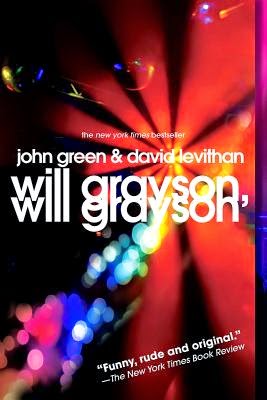
Will Grayson, Will Grayson

by John Green and David Levithan
First sentence: “When I was little, my dad used to tell me, ‘Will, you can pick your friends, and you can pick your nose, but you can’t pick your friend’s nose.'”
Support your local independent bookstore: buy it there!
Content: There’s a lot of swearing in this one. A. Lot. So, it’s in the Teen section (grades 9+) of the bookstore.

I think the last time I read this, four years ago, I cheated on the review. It’s like I had nothing original to say. And perhaps, because I read it when everyone else was reading it, I didn’t.

So, I decided it deserves a proper review.

Will Grayson (1) is one of those people who just kind of goes with the flow. His best friend, for better or worse, is Tiny Cooper — who is anything but tiny — and he is the sort of person who creates drama. In fact, he’s written a musical, aptly title Tiny Dancer, about his life and is staging  it.

Will Grayson (2) is on medication for clinical depression, and by any account is less than enjoyable to be with. He has exactly three friends (sort of) but is harboring a crush on his on-line friend, Isaac. So when Isaac suggests that they meet up in Chicago, WG2 jumps at the chance

Except, Isaac isn’t real. And, WG2 meets WG1 (and Tiny) instead. And, lives were changed. Mostly for the better.

A lot of what there is to be said about this book is about the format. Green wrote WG1 and Levithan wrote WG2, and at the beginning, you can tell. It’s jarring traveling back and forth between the Will Graysons, but after they meet things become easier. And more fluid. I love how Tiny goes back and forth between the Wills but still ends up being Tiny. I also love the inclusiveness of this novel. That being gay is not an Event. It’s more who you are. And that’s okay. I also love that there’s a terrific example of non-romantic love. (Watch this video for what I mean.) While it’s not my favorite John Green book, I found myself touched by the end, by Tiny’s inclusiveness, and by his friends’ ultimate desire to help him realize that he matters. And by extension, that we all matter.

I’m glad I had an opportunity to reread it.

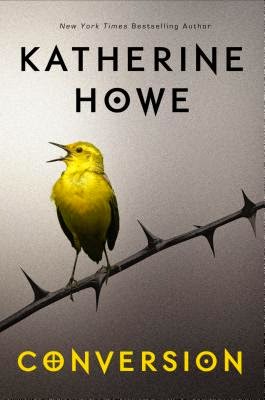
Conversion

by Katherine Howe
First sentence: “How long must I wait?”
Support your local independent bookstore: buy it there!
Review copy downloaded from Edelweiss
Content: There is some mild swearing, and talk of sex, but nothing actual. It’d be happy in the YA section (grades 6-8) of the bookstore, but I might put it in Teen (grades 9+) so I can get the adult crossover.

Colleen Rowley is a senior at St. Joan’s Academy, a high-profile, all-girls school in Danvers, Massachusetts. Everything is going great… mostly. Colleen is a tenth out of valedictorian position, something which stresses her out because her college acceptance to Harvard (only one of many Ivy League schools that have wait-listed her) is hinging on her senior year academic performance. She’s not the only one under pressure; all of her friends and many of her classmates are as well.

And then something strange happens: Colleen’s classmates, one by one, succumb to a mysterious illness that pulls them out of school. Some develop Turette’s Sydrome-like tics, others loose the use of their legs; still others’ hair is falling out. It’s an epidemic. Except Colleen, spurred on by some anonymous texts, is suspicious. And when she starts looking into the real events behind The Crucible, which they’re studying, especially Ann Putnam’s story, she finds that there is possibly a connection to what’s happening in Danvers now, and what happened in Salem back then.

Told in alternating storylines, Howe gives us both the story of the girls of St. Joan’s and Ann Putnam’s confession about the incident that began what came to be called the Salem Witch trials. She doesn’t spell things out for the reader; instead, she trusts our intelligence and in our ability to draw parallels between the two stories. And although the characters — especially Colleen and her friends — are quite sympathetic, it’s finding the parallels and solving the mystery that fascinated me most about this book.

Unfortunately, the ending didn’t hold up to the rest of the book. Howe kind of goes off into muddle-land, and doesn’t hold up to the suspense that the book built. Even so, it wasn’t enough to completely kill the book for me (it was more of a “HUH?” moment). And it’s made me curious about Howe’s adult books, which is a good thing.

Fat Boy vs. The Cheerleaders

by Geoff Herbach
First sentence: “Shortly before midnight on June 15, Gabriel Johnson, a sixteen-year-old from Minnekota, MN, was apprehended outside Cub Foods by Officer Rex McCoy.”
Support your local independent bookstore: buy it there!
Review copy pilfered from the ARC shelves at my place of employment.
Content: There’s a lot of swearing, none of it strong. I put it in the Teen (grades 9+) section of the bookstore primarily because I like to keep the YA section toned down. Also, because that’s where all of Herbach’s other books are. I’d say, depending on your kid, it’s good for as young as 7th graders.

In high school, there are two types of people: the jocks and everyone else. Gabe is everyone else.  Actually, Gabe is a band geek, and a mostly friend-less loser. He’s been going downhill since his mom ran off with a Japanese guy a few years back, and his grandpa moved in. It’s not just that he has only two friends, it’s that he’s overweight. Massively so. In fact, everyone (including his friends) call him Chunk. And he’s okay with that.

Gabe spends his days chugging Code Red, primarily because the money in the school’s soda vending machine goes to support the band that is Gabe’s lifeline. He figures he can chug 5 bottles of the stuff, if the money goes to fund his program. Then he finds out that a Super Sekrit school board meeting took away the vending machine money from the band and gave it to the Brand Spanking New dance team. Which makes Gabe mad. Eventually.

There’s more to the plot, of course, but it’s more about Gabe gaining self-respect than any eventual result. You know from the start — the whole book is his confession; a one-sided conversation with a Mr. Rodriguez — that he’s gotten arrested for doing something. You assume it’s for stealing money out of the vending machine. But, things are more complex than that.

Part of the charm of this book is the format; I was entertained by hearing only one side of the conversation, and imagining what Mr. Rodriguez’s side was. But, it was also Gabe. He was such a loser to start with, and it’s empowering to see how he regains control over his life, in spite of the people — from his friends to his father — who are trying to hold him back. Everyone needs a summer in which they find their best selves, and this story of Gabe’s was a truly fun one.

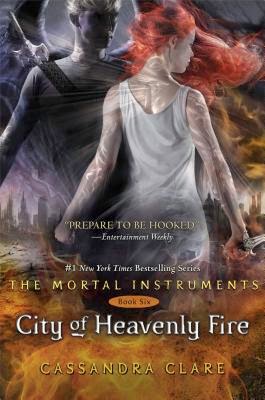
City of Heavenly Fire

by Cassandra Clare
First sentence: “On the day Emma Carstairs’s parents were killed, the weather was perfect.”
Support your local independent bookstore: buy it there!
Others in the series: City of Bones, City of Ashes, City of Glass, City of Fallen Angels, City of Lost Souls
Also helpful to read before picking up this one: Clockwork Angel, Clockwork Prince, Clockwork Princess
Content: There’s violence, some mild swearing, and some sexytimes. The sex is tasteful and protected (yay!), but it is depicted, to an extent. This entire series is in the Teen section (grades 9+).

I’m not even going to try and sum up what has happened up to this point, or even what happens in this book. Coming in at over 700 pages, to say a lot of stuff happens is a major understatement. But, everyone is here: Jace and Clary, Simon and Isabelle, Alec and Magnus, Jocelyn and Luke, as well as hangers on: Brother Zachariah (yay!) and Tessa each play a role, as do Maya and Raphael. And, of course, the big baddie, Sebastian.

It also introduces new characters in 12-year- old Emma Carstairs and her best friend Julian Blackthorn. They don’t really play a huge role in the story; mostly they just play small roles. But they — and their family — are involved enough that we get to know them. And — and this is a complaint I have — they serve as a linchpin for a start of a new series. At some point, one does have to wonder, I think, if Clare can write any stories in a different world. But then, why should she, when this one is so rich?

It was nice to hang out with Clary and crew again, to see how relationships have developed, and follow them as they try to thwart Sebastian’s evil plan. Like always, Magnus was the most interesting character, and I was thrilled to see the way he and Alec’s relationship went. There’s some heartbreaking moments, and Simon even gets to shine with his Dungeons & Dragons references.

It’s a good conclusion (of sorts) and a fun story, even for all its length.

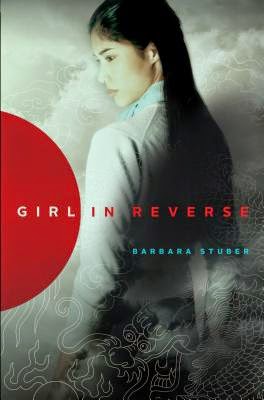
Girl In Reverse

by Barbara Stuber
First sentence: “Say it, Lily.”
Support your local independent bookstore: buy it there!
Content: There’s some mild swearing and kissing. It’s probably a more complicated plot than the Middle Grade section warrants, so it’s in the YA section (grades 6-8) of the bookstore.

Lillian Firestone is an adopted daughter of Chinese heritage. Which makes her a target in Kansas City in 1951, the height of the Korean War. She took the bullying and name-calling when she was younger, but now that she’s 16, she’s taking a stand. Sort of. She walked out of class and school one day, and that act started a domino chain of events that led to the discovery of her birth parents.

There’s art involved and a lot of Chinese culture as Lily goes on this journey.

(I’m tired. Can you tell?)

I wanted to like this book. I love the cover, I love the ideas, the conflict. But I could never connect with Lily. She drove. me. nuts. Completely. And so I started skimming, skipping ahead just to see what happens. And yeah, everything’s tied up in a nice little bow.

It had potential, and I’m sure some readers will really love the art and China elements. But I wasn’t really one of them.