Miss Mayhem

by Rachel Hawkins
First sentence: “This is going to be a total disaster.”
Support your local independent bookstore: buy it there!
Review copy snagged off the ARC shelves at my place of employment
Others in the series: Rebel Belle
Content: There’s some violence and a bit of swearing — not as much as Rebel Belle in either case. It’s in the YA section (grades 6-8) of the bookstore.

Spoilers for Rebel Belle. Just so you know.

It’s been a few months since Harper became a butt-kicking Paladin, sworn to protect her now-boyfriend David Stark, who’s the super-mystical Oracle. She’s working with her ex, Ryan (who’s now a Mage) to protect David, and for Harper — who is super controlly by any standard — that means limiting David’s visions to helping out Harper’s friends and family.

Unfortunately, that backfires: the Ephors find them, and while they give back Harper’s best friend Bee, who was kidnapped, they decide that Harper needs to go through a super-intense test to prove that she’s worthy to be the Oracle’s Paladin.

Of course, things aren’t as simple as that: David’s questioning his abilities, and things are on the rocks between him and Harper. Ryan’s having his own problems with girls, and Bee is finding re-entering society after being gone for several months isn’t as easy as they hoped. And then there’s the question of the spooky Ephor guy.What does he really want?

I really enjoyed Rebel Belle, and I was hoping for the same level of sillyness and fluff and fun from this one. But, alas, it’s the middle book in a trilogy, which means I got angst and unease and things unraveling to the point where it just wasn’t fun. It wasn’t bad — Hawkins knows how to write action, and Harper’s definitely grown on me even with all her Southernisms that drive me batty. But, it just wasn’t AS fun as Rebel Belle. Which made me a little sad. Then again, I can always hope for the next book to go back to being fun… at least by the end.

It’s a good series, overall, though.
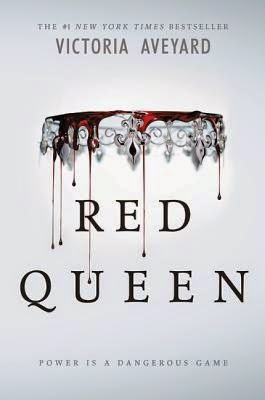
Red Queen

by Victoria Aveyard
First sentence: “I hate First Friday.”
Support your local independent bookstore: buy it there!
Review copy brought back from the ABA Winter Institute for me by a co-worker.
Content: There’s a lot — a LOT — of violence, some of it gruesome. It’s in the teen section (grades 9+) of the bookstore, and I’m going to leave it there, but I wouldn’t be adverse to giving it to a kid who could stomach Maze Runner or The Hunger Games.

This one is getting All the Buzz (at least in the bookselling circles). It’s got a great cover (seriously), and it’s another one of those vaguely apocalyptic books and so I think publishers are expecting it to do Great Things. I don’t know if that raised my expectations — it is a debut novel, so I don’t know how high they could have been — but this fell flat for me.

Mare Barrow is a Red. Which means, in this world (it was never clear if it’s Earth or a different world entirely), that she’s considered low. Base. A slave. Because her blood bleeds red. See, in this world, the people who have all the power are the ones whose blood is Silver (perhaps because they were aliens that invaded the planet hundreds of years ago? It was never clear.) and because they have powers that give them an advantage over those low Reds. Mare figures she’s going to spend her short life stealing to get by until she gets conscripted into the war that’s been going on for a hundred years, in which she will die.

And then her life changes: she meets Cal, a Silver, who gets her a job in the palace, and then during the Queenstrial (in which Silvers from the noble houses compete to become the prince’s bride), she discovers (quite by accident) that she has powers, like a Silver.

All this sets in motion political intrigue, betrayal, and a lot of fighting that will ultimately be Mare’s downfall. Maybe.

The plot doesn’t sound half bad: there’s a bit of a forced love triangle, and a twist at the end that wasn’t entirely unexpected. But the thing that kept pulling me out of the book was two simple words: smirk and sneer. EVERYONE smirked. EVERYONE sneered. And after the first 15 times, I noticed every time someone did. Then after the next 30, I lost patience with the book and skipped to the end. I did go back and fill in the middle, just to see how we got to the end, but I ended up loathing the book for two simple words. I couldn’t get past it. That’s just lazy writing and lazy editing (and the book would have been 20 pages shorter if they were all deleted). Sure, there were some interesting ideas about class and race and bias, but I couldn’t rise above the writing level to appreciate them.

Definitely for someone less picky than me.

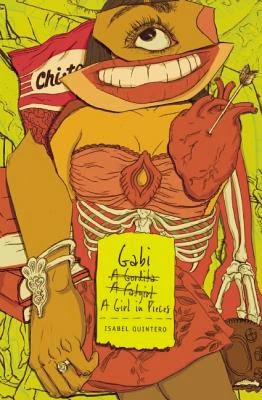
Gabi a Girl in Pieces

by Isabel Quintero
First sentence: “My mother named me Gabriela after my grandmother who — coincidentally — did not want to meet me when I was born because my mother was not married and was therefore living in sin.”
Support your local library: buy it there!
Content: There’s a lot here: talk of drug use, sex (off screen, not graphic), and swearing (including multiple f-bombs). It’d be in the Teen section (grades 9+) of the bookstore.

I didn’t know what to expect when I picked this up. I’d heard good things about it, and it won the Morris Award this year. Even so, I wasn’t prepared for the onslaught of emotions I’d feel while reading it.

It’s Gabi Hernandez’s senior year, and life has gotten more complicated than usual. One of her best friends is pregnant; the other just came out, and has been kicked out of his parents’ house. She’s still struggling with math in school, but she has hopes that she can get into college, the first in her family, since her parents immigrated from Mexico. She wants a boyfriend, but is afraid since she’s a self-proclaimed “fat girl” that she’ll never find love. Then there’s her meth-addicted father, and her punk younger brother. Not to mention a mom who is constantly placing pressure on her to be a “good” girl.

Writing all that down, it both sounds like a lot and not quite enough to hold a book together. One of the things that makes this book shine is the voice. Told in diary form, we get Gabi’s innermost thoughts, her insecurities and feelings, her poems and heartfelt letters to her father (which she never sends). Even though her life is complicated and hard, you can’t help but connect with Gabi on the most elemental level: she’s just a girl trying to live the best she can.

But, it’s also a feminist book, showing us the double standard we have for girls and boys. Which leads me to: oh my gosh, her mom. I wanted to smack her. She was SO hard on Gabi, from nagging her constantly about her weight to lectures about sex (while she tells Gabi’s brother “be sure to use a condom”). I know she was trying and doing the best she could under the circumstances, but I wanted to shake her. Call this another one of those reverse-parenting books, but there is no way I want to have the sort of relationship with my daughter that Gabi had with her mom.

It was Gabi’s awakening to the double standard, and her actively trying to do something about it — which came near the end of the book –which endeared me to the book. There was so much crap going on (if there’s an issue out there that deals with teenagers, it was in the book) going on in Gabi’s life that I found it difficult, initially, to relate. But by the end, I was cheering for Gabi, for her attitude toward her life, and for Quintero’s unflinching portrayal of her.

Rebel Belle

by Rachel Hawkins

First sentence: “Looking back, none of this would have happened if I’d brought lip gloss the night of the Homecoming Dance.”
Support your local independent bookstore: buy it there!
Content: There’s some mild swearing, and some (somewhat oblique) references to sex. Plus some violence. None of which is enough to make it “objectionable”, so it’s in the YA section (grades 6-8) of the bookstore.

Harper Price is one of those annoyingly perfect people. She’s the president of everything, super involved in her school. Great grades, popular friends, the Perfect Boyfriend. She’s even going to be crowned Homecoming Queen. (Seriously: about 50 pages into the book. I’m thinking she’s the embodiment of everyone I loathed in high school.) So, the last thing she expected, when she went to the restroom the night of the homecoming dance to touch up her lip gloss, was to get superpowers. She inadvertently stumbled into a world with Mages and Paladins — who are protectors, and it’s the powers Harper ended up with — who have sworn to protect the Oracle. Who just happens to be the person Harper loathes most.

There’s a lot more going on in this novel, including boyfriend drama and a Cotillion, but that’s basically the gist of it.  Harper, the annoyingly perfect girl, gets powers and becomes awesome.

I was in the mood a while back for something completely fluffy, something that was fun, but not taxing, so I turned to an author who I knew would deliver. And Hawkins did. Yeah, there’s probably some inconsistencies in the book and it’s definitely really white. (Then again, it’s Alabama.) No, it’s not as good as Hex Hall. However, it IS fun. It’s got that delightfully quirky Southern feel to it (I loved Harper’s great-aunts), and the magic is clever and different. But mostly, it was just FUN. Which is all I really wanted out of this book.

I even enjoyed it enough to pick up the second one. 

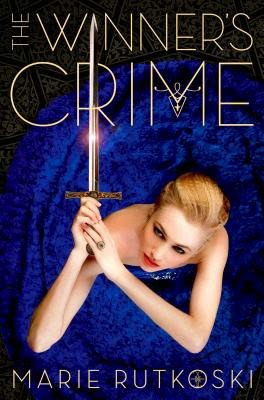
The Winner’s Crime

by Marie Rutkoski
First sentence: “She cut herself opening the envelope.”
Support your local independent bookstore: buy it there!
Review copy snagged from the ARC shelves at my place of employment.
Others in the series: The Winner’s Curse
Content: There’s some violence, sometimes a bit graphic, and mention of sex (but only illusions). It’s in the YA section (grades 6-8) of the bookstore.

There will be spoilers for Winner’s Curse. You’ve been warned.

Kestrel handed Arin his country, a treaty that gave them a pseudo-independence from Valoria after their brief revolution. Even though she’s in love with Arin, she knows she can’t have him. He’s Herran. He was her slave. And, probably most importantly, she offered herself to the emperor to be his son’s bride in exchange for Herran’s independence.

But, of course, things are not simple. She can’t get Arin out of her head. The emperor is cruel and manipulative, which means Kestrel is constantly playing games with other people’s (and her own) lives. Especially because she wants — no, NEEDS — to help the Herrani out. By becoming a spy for them. She’s definitely playing with fire.

First: I LOVED being back with Kestrel. She’s so smart, so wily, and yet feels everything deeply. She’s just a fantastically complex character, and I thoroughly loved being in her head as she went through the paces. I loved hating the emperor (oh, man, he’s despicable). And even though Arin is pretty annoying, I enjoyed his character growth.

That said, it’s very much a middle book in a trilogy. It’s moving things forward, sure, but it’s also very much spinning in place. Kestrel, while fun, doesn’t have any character growth, really, until the end when she does something completely out of character (but leads to a pretty great cliffhanger ending). Arin did grow, however, and after he stops being moody about Kestrel, he has some pretty great scenes. It took me a while to get going, but once I did, I plowed through straight to the end which left me begging for the last book.

Even with the second-book-in-a-series curse hanging over it, it’s still a GREAT read.

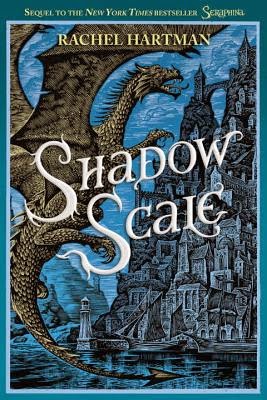
Shadow Scale

by Rachel Hartman
First sentence: “I returned to myself.”
Support your local independent bookstore: buy it there!
Others in the series: Seraphina
Release date: March 10, 2015
Review copy snagged off the ARC shelves at work.
Content: It’s pretty complex, when it comes to keeping tabs on everything that’s going on, and it’s fairly long and slow-moving as well. It’s also more mature in its sensibilities, though there’s not much else that would put it in the Teen section (grades 9+). Even so, that’s where I shelve these.

There’s so much going on in this novel that, much like Seraphina, it’s kind of difficult to put all of what’s going on down on paper. (Or the internet, for that matter.) On the one hand, this is a straight-forward road trip: to help her friend Glisselda, who is now queen of Goredd, Seraphina goes on a quest to find the other ityasaari — those who are half-dragon, half-human. She feels that, if she gets everyone in one place, they’ll be able to create a mind-field to keep the renegade dragons out of the city. Seraphina initially thinks this will be a simple task: go into the surrounding countries, locate the ityasaari, get back to Goredd and they will all live happily-ever-after.

Thankfully for the reader, it’s not that simple. There are obstacles in Serpahina’s way, and not least of all is Jannoula, an abused, embittered, scheming ityasaari who has the ability to manipulate the humans (and dragons) around her. She is there every step of the way, adding conflict, tension, and suspense to Seraphina’s path.

Also like Seraphina, there’s much to love about this one. Hartman’s world-building is impeccable, and it’s fantastic to see what she’s done with the other cultures, religions, and people surrounding Goredd. The romance that was budding at the end of Seraphina is still here, but it takes a back-seat to Seraphina’s journeys and allows Seraphina to become her own strong woman independent of anyone else. That said, there’s some surprises by the end of the book, ones that I thought were thoroughly refreshing.

Speaking of the end, about two-thirds of the way through, I worried that Hartman wasn’t going to wrap up the story, but she pulled through. In classic high-fantasy style, she gives us an epic and truly fantastic ending, one that is thoroughly satisfying while staying true to the story, characters, and world she built.

Hartman is truly a writer to keep an eye out for. Whatever she touches is just amazing.

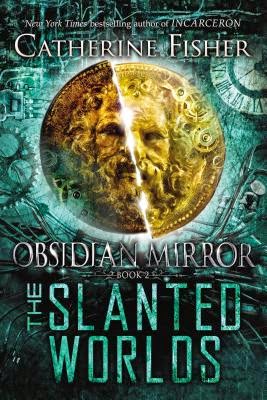
The Slanted Worlds

by Catherine Fisher
First sentence: “The Bomb fell in a split second of silence.”
Support your local independent bookstore: buy it there!
Others in the series: Obsidian Mirror
Content: There’s some violence and (much like the first one) this takes some effort to follow. Not for the reluctant of readers. It’s in the YA (Grades 6-8) section of the bookstore.

A few spoilers for the first one, obviously. You’ve been warned.

Both Jake and Venn have become increasingly desperate to use the mirror, to make it work right. Jake, in order to find his father. Venn, because he wants to turn back the clock to get his wife back. Neither of them know of the outside forces controlling the mirror — that’s a knowledge known intimately to Maskelyne, an old, old time traveler, who may have been the one who invented the mirror — but both are willing to do whatever it takes to keep the mirror safe, and bring back the ones they love. Including involving Summer, the leader of the Shee, the fae-like creatures.

I have realized while typing the above that I could recount the plot of the entire book and it probably wouldn’t make any sense to those who haven’t read it.

There are other factors, as well: Sarah’s still around, trying to destroy the mirror and rid the world of Janus, and she’s willing to involve the Shee as well.  In fact, the Shee is the wild card here: Summer is the chaotic evil here, working toward her own end, but we have no idea what that end it.

There’s a lot of wibbly wobbly timey wimey stuff in this book, time looping in and back and forward on itself in incredibly fascinating ways. Jake is the real focus of the book; its his quest to find his father that we follow most closely. It was a good thing to focus on one arm of the conflict, though I did miss having Sarah around.

But at the end, I was left wondering: how is this all going to come together in the next book? How are we going to resolve the tension between needing to rescue those trapped in time and the need to destroy the mirror to save the world?

I suppose I’m just going to have to read the third one and find out.

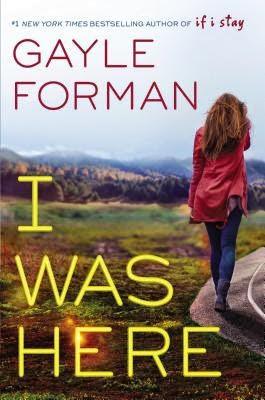
I Was Here

by Gayle Forman
First sentence: “The day after Meg died, I received this letter:”
Support your local independent bookstore: buy it there!
Review copy pilfered from the Penguin rep pile.
Content: There is drinking, illusions to pot smoking, language, and some tasteful sex. It’s also a post-high school graduation book. For these reasons, it’s in the Teen section (grades 9+) of the bookstore.

Cody and Meg have been best friends for as long as Cody can remember. Since her mother was gone pretty much all the time, Cody practically grew up at Meg’s house. Meg’s family became her family, Meg’s dreams her dreams. Until they graduated, and Meg got a full-ride scholarship away from their small Eastern Washington town and to a fancy liberal arts school in Tacoma. Suddenly, Cody was the one left behind.

A year later, though, Meg committed suicide. Leaving Cody behind again.

An aside here, in case this sounds crass: this book isn’t about Meg’s suicide. Not really. It’s about Cody, and her reactions to Meg’s suicide. Dealing with grief, dealing with loss, dealing with the reasons why. Meg isn’t a character in this book, even though you kind of get to know her. She’s a reason. A cause.

Cody heads to Tacoma to clean out Meg’s apartment and discovers an encrypted file. Suddenly what seemed like a simple suicide looks more suspicious. And with the help of one of Meg’s roommates (stereotypical Korean computer whiz) and an ex-boyfriend (tortured rock soul whom Cody ends up “saving”) Cody tries to make sense of the senseless.

In the end, it was less of a mystery than I hoped for and more of a romance. And while the romance was okay, I kind of thought it took away from the whole grief thing. Cody is hurt, and maybe one needs a Man to heal, but it kind of felt out of place here. Forman is a good writer, though, and she got across Cody’s raw grief and her questions that didn’t have answers and her need for closure.

A good read, if not an exceptional one.

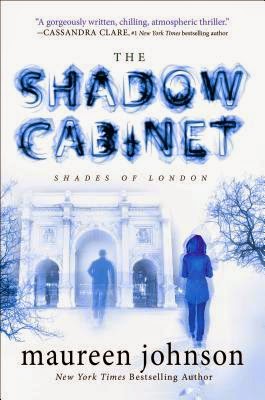
The Shadow Cabinet

by Maureen Johnson
First sentence: “The curtains at 16 Hyssop Close hadn’t been opened all day.”
Support your local independent bookstore: buy it there!
Review copy snagged from the box from the publisher rep.
Others in the series: The Name of the Star, The Madness Underneath
Release date: February 10, 2015
Content: There’s a lot of murder in this one, some of it gory, but never graphic. Other than that, it’s just intense. The series is in the Teen section (grades 9+) of the bookstore, but I wouldn’t oppose giving it to a younger kid who was interested in ghost stories.

First off: spoilers for the other two books, obviously. You’ve been warned. (And if you haven’t read them, you really should. They’re excellent.)

Two years is a long time to wait for a book. And in the process, I’ve forgotten all the anxiousness I experienced when I finished the last one. So I do have to admit, that this one took a little bit of time to get back into the swing of things.

It begins forty years ago, with the grisly murder of 10 teenagers by a pair of odd, unusual twins named Sid and Sadie (though in my mind, Sadie was always the Thrilling Adventure Hour Sadie…). It’s a violent way to begin a book (then again, they are murder mysteries) and it’s important, though it doesn’t come to fruition until the end. The main story is the two prongs leftover from Madness: trying to figure out what happened to Stephen when he died and trying to figure out where crazy Jane took Charlotte. Both of those lead Rory and the rest of the ghost team: Thorpe, Boo, and Callum down increasingly crazy paths.

Things I really liked: I loved the addition of Freddie, a new ghost hunter. She was spunky and funny and a breath of fresh air in the midst of Rory’s loss. And I loved that MJ brought back Jerome from book one. Even though he’s mostly kept in the dark, he plays an important role in all of the crazy that follows.

It’s as good as Name of the Star, I think. And it sets up an epic conclusion (I hope). Now, it’s just waiting until that conclusion comes.

Fairest

by Marissa Meyer
First sentence: “She was lying on a burning pyre, hot coals beneath her back.”
Support your local independent bookstore: buy it there!
Others in the series: Cinder, Scarlet, Cress
Content: There are some sexytimes, but it’s entirely off-stage and only vaguely alluded to. It’s in the YA section (grades 6-8) of the bookstore, like the rest of the series.

This wasn’t the Marissa Meyer book I was expecting to review this year. I wanted Winter, the final installment in my series, the one that will hopefully bring everything to a satisfying conclusion. So, I kind of jokingly asked our Macmillian rep when he was here a couple weeks back if he had an ARC of it for me. His response? “Oh, you haven’t heard? They’ve pushed that off in favor of telling Queen Levana’s backstory.” Me? “WHAT?”

This one goes back an unspecified number of years (10? 15? 20?) to when Levana was 15, the younger sister of a very beautiful, and very cruel princess. A princess who used her mind-manipulation powers to control Levana. To make Levana do things she wouldn’t usually do. To hurt Levana. It’s also the story of the damaged (emotionally and physically) Levana trying to find love in inappropriate places (ie, with a married guard), and manipulating people to get what she wants. And, it’s the story of how Levana became queen (mostly by an accident of fate), and how she ended up with Winter.

Sometimes, going back and telling a character’s backstory works. Say, like Kristin Cashore’s Fire. It was needed to fully understand what she was going to tell in Bitterblue. But this? I enjoyed Levana as a cardboard villain, the fairy tale Bad Queen. I really wasn’t looking to find her sympathetic, to understand Why she was the Bad Guy.

But I read this anyway. And I still feel the same: I’m not sure it was a necessary diversion, but perhaps I’ll be proved wrong when Winter finally comes out.