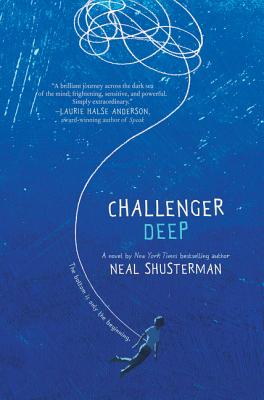
Challenger Deep

challengerdeepby Neal Shusterman
First sentence: ”
Support your local independent bookstore: buy it there!
Content: There’s some talk about drinking, but none actual. And there’s some mild swearing. But the reason it’s in the Teen (grades 9+) section of the bookstore is because it’s an extended metaphor. I’d give it to someone in 7/8th grade if I thought they’d “get” it.

Very seldom does a jacket flap so succinctly sum up a book, but in this case, I think whomever at HarperTeen did this, was spot on:

Caden Bosch is on a ship that’s headed for the deepest point on Earth: Challenger Deep, the southern part of the Marianas Trench.

Caden Bosch is a brilliant high school student whose friends are starting to notice his odd behavior.

Caden Bosch is designated the ship’s artist in residence to document the journey with images.

Caden Bosch pretends to join the school track team but spends his days walking for miles, absorbed by the thoughts in his head.

Caden Bosch is split between his allegiance to the captain and the allure of mutiny.

Caden Bosch is torn.

This book. I’ve been avoiding it for months, and I really only picked it up because Pop Culture Happy Hour did a recent podcast on it. But this book pulled me in and didn’t let me go. I don’t know of a more accurate, a more compelling, a more beautiful rendering of the spiral that mental illness — it really doesn’t matter what Caden’s diagnosed with — is. Shusterman gives us an allegory with the ship that is compelling and intriguing and maybe a little confusing. But the confusion is part of the trip; Shusterman not only wants us to read about Caden’s descent into illness, he wants us to feel that with him. And feel I did.

Powerful. And definitely one that will stay with me for a long time.

All Fall Down

embassyrowby Ally Carter
First sentence: “‘When I was twelve I broke my leg jumping off the wall between Canada and Germany,’ I say, but the woman across from me doesn’t even blink.”
Support your local independent bookstore: buy it there!
Content: There’s some intense situations, but no swearing and  no sex. It’s in the YA section (grades 6-8) of the bookstore.

Grace saw her mother murdered three years ago. She is 100% sure of this fact. She knows it was a man with a scar on his face, that her mother was shot, not burned in an accidental fire. The problem? No. One. Believes. Her.

She’s spent the past three years in and out of therapy and in and out of drugs, and now has come to Embassy Row in Adria to live with her grandfather and forget what happened. The problem? Grace can’t let it go.

And it doesn’t help that Grace is positive that she’s seen the man who murdered her father. So, she ropes her new friends Noah and Megan (and her German neighbor, Rosie) into spying on the man. The further she goes, however, the more confusing everything becomes. Grace has no idea who’s her friend and who isn’t.

This is darker than Carter’s usual fare, and without the swoon factor (ahhh HALE). But what it lacks in fluff and swoon it more than makes up for with a completely unreliable narrator, several twists and turns, and a pretty amazing ending. Grace is a fascinating character, angsty (well, I prefer to think of it more as PTSD-y), smart, and completely wrong about so much. It makes for a trippy ride, one where I had no idea what was going to happen next. I loved that about this book. And I’m completely in the dark as to where the next book is going.

Of course I’m going to have to read it.

Not if I See You First

by Eric Lindstrom
First sentence: “My alarm buzzes and I slap it off and tap the speech button at the same time.”
Support your local independent bookstore: buy it there!
Review copy provided by the publisher.
Release date: December 1, 2015
Content: There’s a lot of swearing — not overly so, but enough that I wouldn’t recommend it to sensitive souls. It’ll be in the Teen section (grades 9+) of the bookstore.

Parker Grant hasn’t had an easy life. She lost her sight at age 7 when her mother crashed the car (and was killed), but she and her dad have made do. Parker found a close cohort of friends that have stuck with her through the years. With the exception of Scott, who she thought was her friend until a betrayal in 8th grade. Now, just before the start her junior year, Parker’s life just got messy again: her father accidentally overdosed on prescription meds, and she’s alone again. (Well, not really: her aunt and uncle and their family have moved in with her. Which helps, but isn’t really something she is happy about.)

(Before I go much further, I know: dead parents. I understand getting them out of the way for the purposes of the story, but wow. Merciless.)

Now, Parker has to figure out what she’s going to do. She’s coping, but not well. And when Scott shows back up at her high school (they went their separate ways in 9th grade), she has to deal with those resurfacing emotions as well.

Lest that make it sound like a love story, it isn’t really. Yeah, there’s some kissing, and some talk about love and boyfriends and such, but the ending isn’t a perfect, happily-ever-after.

I did, however, fall in love with Parker. Seriously. From the opening pages where she goes for an early morning run, and the mechanics of that, I knew I was hanging out with someone worth getting to know. And the great thing is that she was a complicated person. She was angry, she was holding her emotions about her dad, about Scott, about everything in. She was a bad friend sometimes. But she also learned and grew and changed. And there were pretty great people (who were also normal) surrounding her.

I don’t know how accurate Lindstrom’s depiction of a blind girl was, or how well it’ll resonate with people who have experience with blindness. But, I liked that he didn’t limit Parker by her “disability”. She was capable, she was smart, and yes she needed help, but she was independent in so many ways. I also liked that no one was limited by color, size, sexuality (though that wasn’t really explored), or ability. There were POCs in the book, but it was only mentioned in passing. It wasn’t dwelt upon; these were just kids hanging out, making decisions, trying to get through each day.

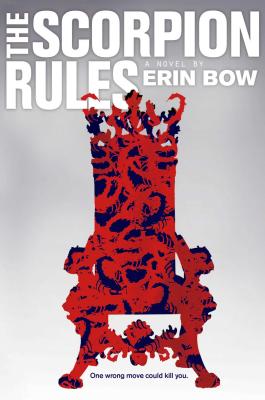
The Scorpion Rules

 scorpionrulesby Erin Bow
First sentence: “Once Upon a Time, at the End of the World.”
Support your local independent bookstore: buy it there!
Content: There are exactly two f-bombs, some mild swearing, and one illusion to sex. It’s in the Teen (grades 9+) section of the bookstore, but I’d give it to a 7th grader, if they had no objections to the content.

At this point in my life, I’m very much been-there, done-that when it comes to dystopian/post-apocalyptic books. I feel like I’ve read/seen them all, and there’s really nothing new to explore there.  So, my first thought was that this was just going to be more of the same-old, same-old, and I passed on the ARC. Then it came in, and on the back were quotes from authors I respect, so I thought (somewhat begrudgingly), that I would give this one a try.

(I know, I know: I’m not “supposed” to start these with “I’m not a fan of x”. But bear with me.)

It didn’t take me too long to realize that I was utterly wrong. First of all, the premise is something I haven’t encountered in a long while: humans have destroyed the world through climate change and war, and somewhere along the way, invented artificial intelligence. One of the AIs decided that enough was enough, and took over — by blowing up a number of huge cities — ruling the world. And the way Talis, the AI, decided to keep the peace? By keeping the children of the world’s rulers hostage. If they enter into war, their children would be killed.

Brilliant, no?

Greta is the Crown Princess of the PanPolar Confederacy, a major North American power formed out of what we know as Canada. She’s also a hostage of Talis, living in the prairies of Saskatchewan at the Precepture with her compatriots, fellow hostages. Then one day, war breaks out, one of her friends dies, and a new boy, Elian, shows up. He’s the grandson of the leader of a new alliance, and he’s not at all willing to take his role as a Dutiful and Humble hostage. He fights every step of the way. And somehow, this awakens Greta (and the rest, including her best friend La Da-Xia) to the horrible reality that is her life.

There is so much more to it than that, but I don’t want to give it all away. I adored the combination of high-tech (there are flying battleships and smart pads and cameras and, of course, the AI) and low-tech (the children at the Precepture are basically farmers, thinking about raising goats and bees and harvesting vegetables. There’s a monastery-like feel, as well: they call the AI in charge “Father”. But I also loved the diversity: Bow rightly depicted people from all over the world — African, Asian, Native American, Hispanic — but it felt natural and organic rather than some sort of forced diversity.

But what I really loved was the fluidity of the romance. There’s a love triangle of sorts, but not your typical one; Greta is bisexual and there’s no angst or heartache about this. She’s in love with both a male and a female, and it’s just the way she is. And even Talis, when he shows up, was more gender fluid in his depiction (as benefiting and AI, no?). It was all very different, and very, very refreshing.

It’s the start of a series, and I’ll definitely be picking up the next one to see where Bow takes Greta’s story.

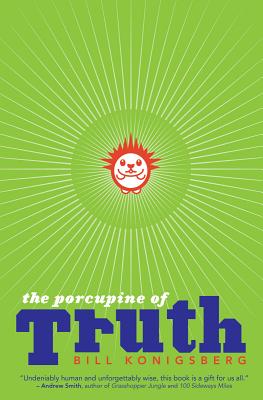
The Porcupine of Truth

by Bill Konigsburg
First sentence: “The Billings Zoo has no animals.”
Support your local independent bookstore: buy it there!
Content: There’s a lot of swearing, including multiple f-bombs. It’s in the Teen (grades 9+) section of the bookstore.

Carson Smith has drawn the short stick for the summer: he’s stuck in Billings, Montana with his mom. They’ve moved back to take care of his dying, alcoholic father whom Carson hasn’t seen in 14 years. It’s not exactly the Ideal Summer at all.

Then Carson, completely by chance, meets Aisha and strikes up a friendship. No romance here: Aisha’s a lesbian who has been kicked out of the house by her super religious dad. She’s having a winner of a summer too, so she moves in with Carson and his parents. Everything is shaping out to be a complete Win until Carson and Aisha start nosing through boxes in the basement and uncover some clues to Carson’s grandfather’s disappearance back in the early 1980s. One thing leads to another and soon Carson and Aisha are on a road trip to find Carson’s grandfather.

This was a hard book for me to read, as a religious person. Mostly because Carson and Aisha are incredibly hostile — for good reason, I think — toward organized religion. I can understand why: too often people hide behind Religion, using it to justify their prejudices and to promote hate. But not everyone does, and I was made uncomfortable by the broad strokes: all people who are “religious” are bigots.

Thankfully, there is growth with these characters, and I appreciated that. I appreciated that, overall, Konigsberg treated everything thoughtfully and carefeull. Which meant that no one was truly black and white and that both Carson and Aisha learned things along the way.

There’s a lot to think about in this book, and I do think it’s a story, with all its broken people and hurtful relationships, that needs to be told. I just wish religion and religious people came off better.

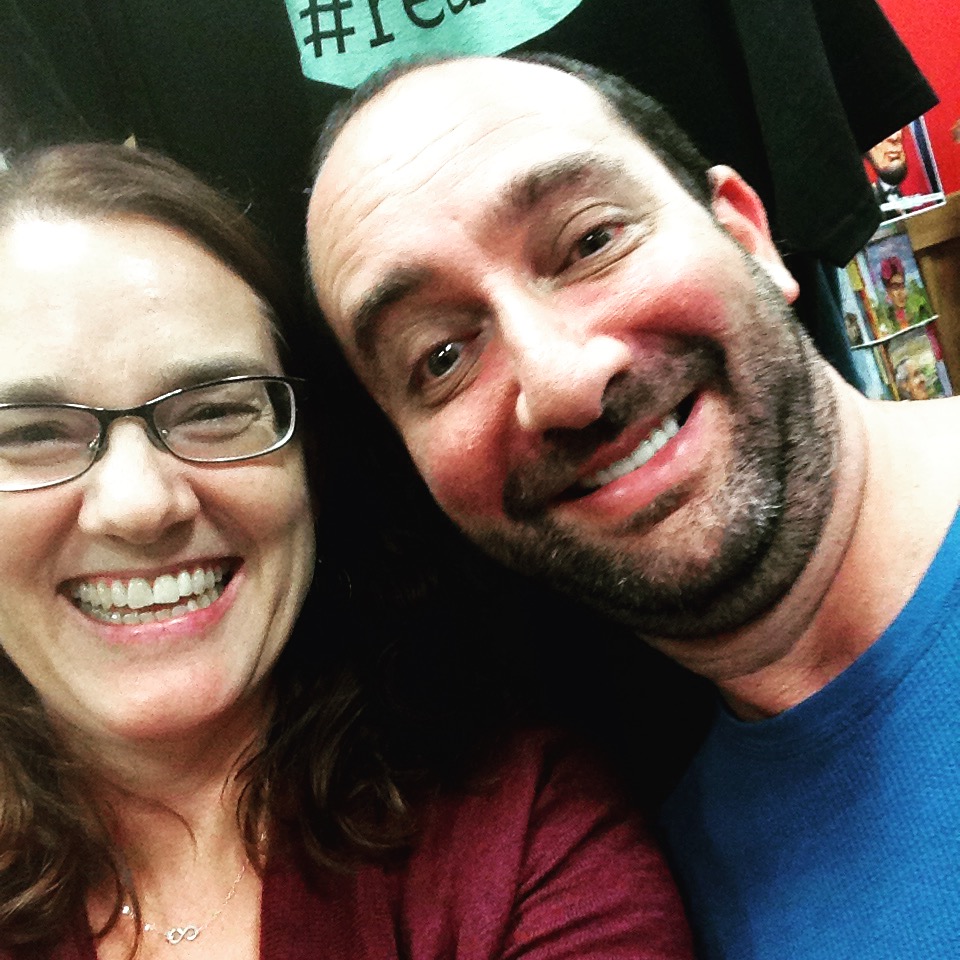
A quick aside: Konigsberg stopped by the store as part of his Porcupines for Trevor tour. While it wasn’t super well-attended, we got a small crowd and we sat in a circle talking about religion and the LGBTQ community. It was a very interesting (and civil) discussion, one that I was glad we had.

Also: we took a selfie. He was very kind, and very, very tired.

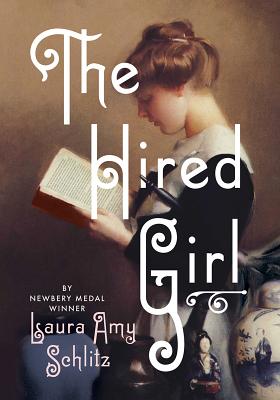
The Hired Girl

by Laura Amy Schlitz
First sentence: “Today Miss Chandler gave me this beautiful book.”
Support your local independent bookstore: buy it there!
Content:  There’s some harsh illusions to domestic violence in the beginning and some illusions to sex near the end, but nothing actual. It’s in the YA (grades 6-8) of the bookstore.

Joan is a 14-year-old Pennsylvania farm girl in the early 1900s who longs to be Educated and See the World. However, ever since her mother died, she has been increasingly chained to the farm by her boorish and harsh father. He forces her to withdraw from the local school, but the last straw was when he burned her books. So, she packs up in the middle of the night, and heads to Baltimore to Make Her Fortune.

Her fortune turns out to be Solomon Rosenbach, who finds her distraught in the park with nowhere to go. He brings her home and his mother hires Joan — who is pretending to be 18 and is going by Janet — to be the hired girl. From there, Joan becomes a part of the Rosenbach family’s lives, sometimes with positive results and other times not so much.

It sounds pretty mundane, but in Schlitz’s hands, this time period comes alive. Not only does she capture the cusp of the women’s movement: the idea that women can be educated and can be live without husbands and fathers, she captures a girl who is out discovering not only the world, but herself. Additionally, Joan’s voice is so captivating that it makes the book a delight to read.

But what I liked best — being religious myself — is the way Schlitz addressed religion. The Rosenbach’s are Jewish, and while not Orthodox, they do practice their religion. And Joan is a Catholic. Or at least, she’d like to be because her mother was. Schlitz explores prejudice and Antisemitism, explores how to practice your own religion while respecting that of other people around you. All of which is not only relevant, but interesting.

I do have to admit that I kind of lost interest near the end, when there is some Drama involving another Rosenbach son. But, Schlitz even handled that well, and the last chapter gave the book a good ending.

Overall, a good book.

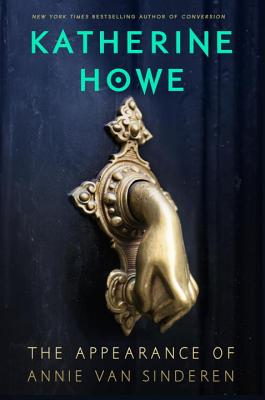
The Appearance of Annie Van Sinderen

by Katherine Howe
First sentence: “The cafe in the basement of Tisch, the art and film school at New York University, was redecorated this year.”
Support your local independent bookstore: buy it there!
Review copy snagged from the ARC shelves at work.
Content: There’s talk of teenage drinking (and some actual), plus drug use. There’s also one almost-sex scene. It’s in the Teen (grades 9+) section at the bookstore.

There is no way to write this, I think, without spoiling the premise. If you choose to go into this without knowing what it is, then you should probably stop reading now.

Wes is at NYU for the summer film workshop for a reason: he wants to transfer from the University of Wisconsin-Madison to NYU because Madison is, well, small. Constricting. The Same. He needs something different, and he Knows he can find it in New York City. (Well, can’t we all?) He’s out helping one of his friends, Tyler, film an art film at a seance when his life really changes: he meets Annie and Maddie. They’re edgy, they’re different, they are most definitely not from Wisconsin. And as Annie pulls Wes into her story (and he gets more tangled up with Maddie), he discovers that maybe the life-changing event he thought New York would offer him isn’t going to be in film school.

I’m going to say it, even though Howe danced around it: this is a ghost story. And, as such, it’s quite good. I liked not knowing that Annie was a ghost for a while — it took the whole first section for me to figure it out, though there’s a pretty big clue at the end of the prologue. I liked Wes’s discovering of her story, and how Annie flitted back and forth in time. I liked Howe’s historical detail; it’s most definitely something she excels at. And I thought the love triangle-ish thing between Wes, Annie, and Maddie was unique as well.

The only thing that really bothered me was that Howe refused to call a spade a spade. She never, once, admitted, in words, that Annie was a Ghost. She was a Rip Van Winkle. Every time it came up, they dodged the bullet. It got old. Just say she’s a ghost, please.

But, other than that, it was an intriguing weaving between past and present, and a unique way to look at ghost stories.

Zeroes

by Scott Westerfeld, Margo Lanagan, Deborah Biancotti
First sentence: “More coffee?”
Support your local independent bookstore: buy it there!
Review copy pilfered from the ARC piles at my place of employment.
Content: There’s some talk of drug use (none of it by teens), a smattering of mild swearing, and one (unnecessary, misplaced, and kind of glaring) f-bomb.

Who are the Zeroes?

They are six teenagers, all born in the year 2000, who have discovered, over the years that they have extra-ordinary powers. Bellwether can charm a crowd of people into believing whatever he wants them to. Crash is bothered by electronics, and she can make entire systems, well, crash. Flicker is blind, and yet she can see through every one else’s eyes. Anon isn’t invisible, but he is easily forgettable; his parents once forgot that he was deathly ill and left him (to die) in the hospital. Scam has this voice inside him that can talk anyone into anything he wants, which is what gets all the Zeroes into trouble.

With Mob, who can control a crowd’s mood, and her father, who is in deep with the Russian mob.

The question is: will the Zeroes be able to help them? Or are they just going to make things… worse?

It’s kind of hard to juggle multiple points of view in a book, and in this one they tackle six of them. Some of them — Anon, Flicker, Scam, and Mob come out with the best story arcs in the book — are really well developed. Others — Bellwether and Crash — aren’t so much. But, for the most part, the flipping between people helped push the story forward, and I found that I didn’t mind seeing the action from different perspectives.

And the story was pretty seamless, considering there were three authors writing. I was worried that it would be choppy, but whatever they did — editing, lots and lots of rewriting — worked.

It’s definitely a ton of fun.

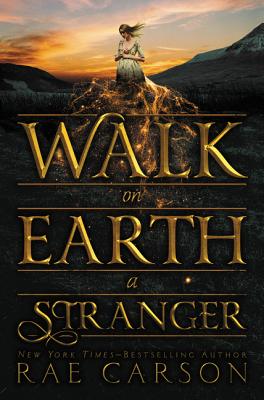
Walk on Earth a Stranger

by Rae Carson
First sentence: “I hear the deer before I see him, though he makes less noise than a squirrel — the gentle crunch of snow, a snapping twig, the soft whuff as he roots around for dead grass.”
Support your local independent bookstore: buy it there!
Review copy picked up at Children’s Institute and signed by the author (who I fangirled over).
Content: There’s some violence, including a few deaths, and some talk about sex (but none actual). It’s in the YA section (grades 6-8) of the bookstore.

Leah Westfall has a talent for finding gold. Well, maybe more than a talent: she can magically sense gold out in the wilderness. But, in northern Georgia in 1849, gold is getting pretty scarce. Even so, she and her parents get by. She’s fairly content. Then, her parents are brutally murdered by a man wants to control her “talent”, so she disguises herself as a man, runs away and head for the place where gold is most plentiful: California.

That’s basically the premise, as this book is primarily concerned with Leah’s — Lee’s — journey getting to California. It’s full of action and suspense, but it’s ordinary action and suspense. Robbers, rough rivers, threats from the known and unknown. It doesn’t seem like much, but it kept me turning pages.

This book deviates from Carson’s other works in that it’s more of a historical fiction piece and less of a magical one. Sure, Lee has magical abilities. But (so far), that’s the only magic. The rest of it, from the inherent sexism and racism to the trials they face while crossing the plains is historical. Even though I like Carson’s magic, I think I enjoyed this one more because the magic was so understated. It did help Lee out, on occasion. But for the most part, she was making her own way on her own terms. Which was awesome.

The other thing is that this is the first of a projected trilogy, but I have no idea where Carson is heading. Sure, the Big Bad isn’t taken care of, but he wasn’t a real threat in this novel either. I was actually content with the way this one ended: Lee survived the journey, she got to California, she can live happily ever after. However, I will follow Carson down whatever road she wants to take, and I wouldn’t mind reading more of Lee’s story at all.

Husky

by Justin Sayre
First sentence: “Ducks, now would you look at this!”
Support your local independent bookstore: buy it there!
Release date: September 22, 2015
Review copy provided by the publisher rep.
Content: There’s really nothing objectionable, though the subject matter is a bit on the more mature side. It will be in the YA section of the bookstore, though it’s probably good for 5th graders as well.

Davis is an only child, living with his mother — who is gone all the time, working at the bakery she owns — and his grandmother. His father’s out of the picture (dead? I think?) and his grandpa died a few years ago. And his grandmother is one of those Irish Grandmothers: overprotective, nosy, loud. The only real escape Davis has is his opera music (yes, he likes opera. No, it doesn’t come off as weird) and his friends, Sophie and Ellen. Except that Ellen is a sarcastic mean and likes Charlie (whom Davis isn’t really quite sure of), and Sophie has been hanging out with Allegra who is one of those stereotypical Mean Girls. So, where does that leave Davis?

During this summer before high school, Davis tries to figure all of it out.

I wanted to like it. Partially because I like our rep, and she really liked this one. But. I just didn’t get it. Davis was bothered by his weight, but it’s not a fat book. Which is a good thing. It’s not one of those books where he has to Overcome Being Fat in order to be happy. But, it’s also not a Accept Yourself and Be Happy book, either. On the one hand, it’s a process, and it doesn’t have a tidy happily-ever-after, which I respect. But I didn’t like the underlying assumption — especially at the end — that Davis was gay. A boy who listens to opera and whose best friends are girls isn’t necessarily gay. (Way to play into stereotypes.) That really bothered me, in the end.

Davis was a decent enough character; a bit lethargic for my tastes, and prone to being a reactor instead of someone who actually participates in his own life. But, it wasn’t a bad thing.

Aside from the stereotypes, I really can’t pinpoint why I didn’t love this book. It just wasn’t my thing.