Bayou Magic

by Jewell Parker Rhodes
First sentence: “My name is Madison Isabelle Lavalier Johnson.”
Support your local independent bookstore: buy it there!
Review copy provided by the publisher in conjunction with the ABA Children’s Institute.
Content: It’s a pretty basic story, and aside from some French scattered through, it’s pretty basic in its vocabulary. I’d give it to anyone 2nd grade and up. It’s in the middle grade (grades 3-5) section of the bookstore.

Not-quite-ten-year-old Maddy is the youngest of five sisters in New Orleans. She’s the one that is always the tag-along, never quite fitting in with her sisters. She is often teased, and the only time she feels comfortable is when she’s cooking with her mom. Then, her turn to spend the summer in Bon Temps, in the Louisiana bayou, with Grandmère comes around. At first, Maddy doesn’t know what to expect: her sisters all spent summers with Grandmère and came back with horror stories. But Maddy is different: she likes the quiet, earthy nature of Grandmère and the bayou. She wants to learn the old ways. And she finds friends and adventure there. And magic.

Rhodes simple, lyrical style was really well suited to this story. I loved the earthy feel of the book, and the connection to old stories and family roots. I loved the mix of African and French, of Creole and magic and modern. The environmental crisis aspect of it wasn’t as important as the back blurb led me to believe — it was really just tacked on at the end — but the theme of caring for and connecting to the earth was prominent and important for the story. At first, I thought that this could pass for “realistic” fiction, that maybe the mermaids Maddy saw were just dreams and imagination, but no: this is speculative. And it worked for me. I loved seeing Maddy grow and learn and develop, and yet she was still a 10-year-old girl with all the concerns and abilities of that.

I haven’t ever read Ninth Ward, but I think I need to, now. I’ve come to really love Rhodes simple style.  
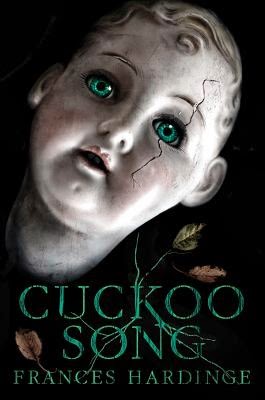
Cuckoo Song

by Frances Hardinge
First sentence: “Her head hurt.”
Support your local independent bookstore: buy it there!
Review copy left for me by the publisher rep.
Comtent: It’s more than a bit creepy, and it’s slow (like many Hardinge) books. I’ll probably put it in the YA section (grades 6-8), but I’d give it to a 10-year-old who showed interest and was willing to be patient with it.

I have not read everything Hardinge has read, but what I’ve read I’ve (almost) wholeheartedly loved. She is not an easy author to love; she makes you work for the story, often having a very slow start and building from there. Cuckoo Song was no different in that respect. It was a slow and somewhat confusing beginning, one that took me a bit to get into.

Triss has been ill for a good long while. She is Delicate, and often prone to Sickness. And so when she wakes after an accident during her family’s vacation no one seems to think that anything is the matter. Except she feels like something is … off. And her younger sister, Pen, (with whom she has always had a contentious relationship) is screaming awful things at her.  And so Triss does what any 12-year-old would do: she tries to figure out what’s wrong with her. And the deeper she goes into that mystery, the more she discovers that there are things Wrong with her family in some very dark (and somewhat magical) ways. And it’s probably up to her and Pen to fix things.

I don’t want to give away too much because much of what I loved about this was the slow realization of what was going on. There’s a reason the beginning is slow and confusing: Triss, herself, is slow and confused. The reader figures things out as Triss does, peeling one glorious, dark, delicious layer back after another. And no to worry: once the story really gets going, Hardinge’s writing is so lyrical it pulls you in, increasing the tension until the immensely satisfying ending.

It’s absolutely wonderful.

Momo

by Michael Ende
First sentence: “Long, long ago, when people spoke languages quite different from our own, many fine, big cities already existed in the sunny lands of the world.”
Support your local independent bookstore: buy it there!
Content: If you can read The Phantom Tollbooth, then this one is for you. It’d be in the Middle Grade (grades 3-5) section of the bookstore.

This book is one of the reasons why, busy as I am, I won’t give up an in-person book group. (I’ve been a slacker with my on-line one lately…) While I read The Neverending Story by Ende as a child (when the movie came out…), I had no idea (and no inclination to find out, for some reason) that he’d written any other books. But, because it’s probably been 30 years since I’d read Neverending Story (or seen it for that matter; we may have tried showing it to the kids), I had no idea what to expect.

What I got was a sweet little fable. Momo is a little orphan girl that shows up in this town and moves into the old amphitheater. What endears her to the people in this town to Momo is twofold: she has a remarkable imagination, and she truly listens to them. Then one day, the grey men show up and infiltrate the town, stealing time from people. Suddenly, no one has enough time for Momo to listen to them, and everyone except the children stay away. And even the children are different. Momo happens to find out the grey men’s plan, and then sets out on an adventure to get her friends back.

It reminded me most of The Phantom Tollbooth: it was a bit on the preachy end — YEAH I get it, unplug from being busy and actually CONNECT with people — but it was also sweet and tender and had that late-60s/early-70s feel to it. It’s nothing earth-shattering, but it is very sweet.

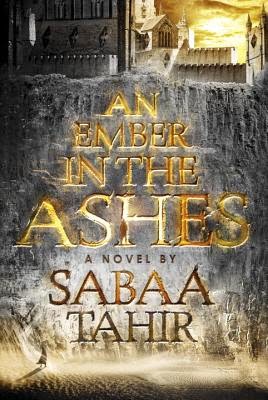
An Ember in the Ashes

by Sabaa Tahir
First sentence: “My big brother reaches home in the dark hours before daown, when even ghosts take their rest.”
Support your local independent bookstore: buy it there!
Review copy provided by the publisher.
Content: It’s dark and it’s brutal. Seriously. More so than Hunger Games. And because of that, it’s in the Teen section (grades 9+) of the bookstore.

Laia has grown up in a world where her people, the Scholars, are a captive people. Their great enemy, the Martials, conquered them and have shown no mercy. They imprison the Scholars, they rape the women, they torture and kill those that they catch. Laia’s parents were part of the resistance, and they were betrayed and killed, along with her older sister. She and her brother Darin lived with their grandparents, trying to fly under the radar of the Martials. Until one day, when they don’t. And the Masks come for them, kill her grandparents, take Darin. Laia barely gets away.

Elias has grown up at Blackcliff, the military school that trains the Martial Masks. An unwanted bastard son of Blackcliff’s Commander, he spent the years before he turned six with the Tribal people in the desert. Then the Augurs — the mystic, magical, immortal Martial prophets — came for him and thrust him into a kill-or-be-killed world. The only way he survived was because of Helene, his fellow student and best friend. Now, just as he was graduating and dreaming of freedom, the Augurs decide that it’s time for a new emperor, and pit Elias and Helene against each other and two other students in a bid to be emperor (or die).

I think the most logical comparison read for this book is Game of Thrones. This is brutal, unflinching, dark, violent, harsh… there’s magic, but it takes a back seat to the exploration of Martial culture. And yet, underneath all of that dark is a hope, a light. Elias, for all the terrible things he’s done (and that have been done to him), turned out to be a decent human being. Laia, even though she thinks of herself as weak, has a quiet strength and bravery to her that isn’t readily seen or valued. It’s a very human book, as well: the characters are complex and messy, there’s depth even to the most hateful of characters (Marcus and the Commander, I’m looking at you), that makes them understandable, even if they aren’t likable.

In fact, the only thing I didn’t like about this book was that there are many unresolved issues, and many unanswered questions at the end. Then again, if this is the quality of writing that Tahir gives us with her first book, I only have high hopes for where this story is going to go.

The Island of Dr. Libris

by Chris Grabenstein
First sentence: “Billy Gillfoyle’s dad shifted gears and gunned the engine.”
Support your local independent bookstore: buy it there!
Review copy provided by the publisher.
Content: It has a few big works, but there’s a lot of white space, short chapters, and quick pacing. Good for reluctant readers as well as the middle grade crowd. I’d give it to anyone 8 and up who’s interested. It’s in the middle grade (grades 3-5) section of the bookstore.

I really REALLY loved Escape from Mr. Lemoncello’s Library a couple of summers back. And so, I was really REALLY excited that Grabenstein was returning to a similar idea in this one. Anything that celebrates books and bookishness for kids (while making it kind of techy cool) is a win in my world.

Billy Gillfoyle’s parents are having issues and so he’s spending the summer out at a cabin by a lake with his mother that she has rented from a university colleague of hers. She’s going to write her dissertation, and he’s going to… explore the woods? Ugh. There’s no TV, no internet, and the next-door neighbor is a Mean Kid. This is going to be the Worst Summer Ever. Especially since there’s no cool books in the library of Dr. Libris (the colleague, whose first name is Xiang, so he can be X. Libris. Ha!), only old Classics. BORING.

But, when Billy begins reading, he hears weird things off in the distance, at the island in the middle of the lake. And when he goes to investigate, he discovers that the characters in the books have come to life! Not actors, not holograms, but real, live people who are interacting.

Cool so far, even though the “technology” behind the island is a bit squidgy and feels more like magic. (It’s supposed to be technology, but the science was so vague, I just considered it magic. I’ll be interested to see where it ends up during Cybils season.) I really liked seeing the classic characters come to life and I thought Grabenstein made them fresh and interesting for a new crowd. If I hadn’t already read The Three Musketeers or Robin Hood, I’d be tempted to pick them up.

But I didn’t utterly love the book, for one reason: there were no girls. Seriously. Maid Marion was there, a little tiny bit, being Robin Hood’s sidekick, but she really didn’t do anything. And Pollyanna was there, but she was mostly annoyingly cheerful (well, that’s to be expected) and served as a love interest. And Billy made a friend with his other next door neighbor (not the Mean Kid) and he had a younger sister, but her role was to 1) introduce Billy to her brother and 2) be annoying and mess up the island. And, yeah, there’s Billy’s mom, but she was barely there. It was a glaring hole. (As was the lack of diversity: all the classic characters were white, and the other characters were never really given physical features,  so I suppose they could have been diverse, but it was never really defined as such.) I wish there had been more girls, stronger girls, more interesting girls.

I’ll still recommend it to kids, but I do wish it had been… more.

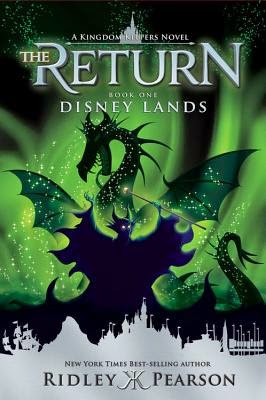
The Return: Disney Lands

by Ridley Pearson
First sentence: “
Support your local independent bookstore: buy it there!
Review copy provided by the publisher.
Content: I was made a bit wary when I started and discovered that the main characters are high school graduates, but (aside from the age) it really is a middle grade novel. Lots of action, a little bit of romance, and easy to follow. It’s in the middle grade (grades 3-5) section of the bookstore.

I got an email, as part of my new role at the store, that Ridley Pearson was interested in coming to visit. I got excited, said hey sure! And then promptly realized that the only thing I’ve ever read by him was Peter and the Starcatchers, which I didn’t really think of as “Ridley Pearson” but more “Dave Barry and the other guy.” So I had the publishers send me a book, partially because I wanted to read it, but also because I wanted to test their claim that it would “bring new readers to the series.”

The series is this: there are five kids who, at night when they sleep, become holographic hosts at Disney World and Disneyland and fight the evil Disney villians for control of the world. They thought their job was done, they’re moving on — graduated from high school and are off to Bigger and Better Things — but WAIT, something has happened and they need to Fix It.

On the one hand, this book is an elaborate set-up, so yeah, it worked for me. I’m sure I missed some in-jokes, and some references went over my head, but as a start of a new adventure, I Got It. The best comparison I can think of (and that I’ve been using with customers) is that reading this without reading the first series is kind of like reading Heroes of Olympus without reading Percy Jackson and the Olympians series. You can do it. It’s probably not the best way to go about it, but it can be done.

In fact, there’s a lot of similarities between Pearson and Riordan’s writing styles: short chapters, a lot of action, overarching mythology, a plethora of characters (7, in fact) to keep track of. The difference is that Pearson is playing around in the world of Disney rather than Greek Mythology. No, they’re not as fun as Riordan’s books (but then, I’m saying that as a long-time Percy Jackson fan), but they are good. It’s good, solid, accessible, middle grade fantasy. Nothing SuperWowAwesome, but it’s not horrible either.

As for the event…

Willy Maykit in Space

by Greg Trine
First sentence: “When Willy Maykit was three years old, his father went on an African safari and came home with amazing stories of lions, tigers, and bears.”
Support your local independent bookstore: buy it there!
Review copy provided by the publisher.
Content: It’s on the simpler end of things, language-wise. Short chapter, easier words. Good for reluctant and younger readers. It’s in the middle grade (grades 3-5) section of the bookstore.

Willy Maykit has exploring in his blood: his father was a fantastically adventuresome explorer. The problem is that he went missing in the Amazon a year ago. And so, Willy’s problem is getting his mother to let him go on the field trip to Planet Ed. Of course, she lets him  (or there wouldn’t be a book), and of course he, and another friend, get left on this strange planet (that looks a lot like Colorado), Of course they have adventures and fight monsters. Of course they get rescued (sort of). And, of course, the book is filled with knock knock jokes and silly puns.

(My favorite? The book Yellow River, by I. P. Freely.)

It’s a silly premise for a silly book. And you know what? It totally works. Especially if you’re 8 years old at heart. (And even if you’re not, it’s a good punny book.) No, it’s not Deep with well-drawn characters or a good plot, but it is Fun, and sometimes, that’s what counts.

The Trap

by Steven Arntson
First sentence: “The last day of summer break before the start of my seventh grade year was the first time I ever got punched in the face.”
Support your local independent bookstore: buy it there!
Review copy provided by the publisher.
Content: It’s some pretty dark subject matter — kidnapping and out-of-body experiences. Plus there’s romance, but nothing too mature. It’s in the middle grade (grades 3-5) section of the bookstore, though it’ll probably be of interest to the older end (and maybe into the 6th grade).

It’s the summer of 1963, right before seventh grade, and Henry Nilsson is pretty sure nothing exciting is going to happen. His dad is being laid off at the railroad and they’re having to tighten their belts at home (they even sold the TV!). Henry like-likes his twin sister’s best friend, Nikki, but has no idea what to tell him. And his best friend, Alan’s, brother bullying has increased.

Then, two things happen to change the trajectory of Henry’s summer: Alan’s brother goes missing. And they discover a book to teach them how to have an out-of-body experience, called “subtle” travel. Once they figure out how, they enter the subtle world, where things aren’t as nice as they seem. And where there’s some pretty scary things going on in them thar woods.

On the one hand, I enjoyed this one. I liked the historical detail, which was never the point of the book, but rather just background to give it some weight. I liked the friendship between Henry and the rest, including his sister. I liked that both Nikki and Alan were people of color — Nikki is Asian; Alan, Latino — but that it was never really an issue. (Well, it is, once.) I liked the mystery, the discovery of what was going on with Alan’s brother, and the realization that even though he’s often mean, he has some good in him.

What I didn’t like was the whole speculative fiction part of it. The subtle travel was weird (Seriously.) and I was never really able to suspend my disbelief enough to make it work for me. There was just too much left underdeveloped, that was just plain weird.

But, perhaps, those are adult concerns creeping into a middle grade book. It is a dark book, one that’s kind of creepy, and for those who like a slight creep factor to their book, it’s a good one. And perhaps, the positives outweigh the negatives.

Genuine Sweet

by Faith Harkey
First sentence: “Genuine Sweet.”
Support your local independent bookstore: buy it there!
Review copy sent by the publisher.
Content: There’s a bit too much lovey-dovey stuff than I like for books this age (they kiss a bit and hold hands). Even so, it’s really a middle grade novel, so it’ll be in the middle grade (grades 3-5) section of the bookstore.

I’m a sucker for small town Southern books. (Unlike Ms. Yingling, who loathes them.) I love the small community feel, the quirkyness, and you throw in a bit of magical realism and I’m sold.

Genuine Sweet has all of that. She lives in a small town in Alabama where everyone knows everyone’s business, so that means everyone knows that her daddy is a drunk. Genuine’s (pronounced gen-u-wine) grandma takes care of her, since her mother’s dead, and it turns out that a gift runs in the female side of the family: wish fetching. They don’t grant them, per se, they sing to the stars and fetch the star juice (for lack of a better word) and give it to people who need things. The one cardinal rule: they can’t grant any for themselves.

So, burdened with this knowledge, Genuine sets out to make life a little better for those in the town. But, even as she does so, things get worse at home. No money, no food, no electricity. And as word gets out about her wish fetching Genuine has more and more pressure to fill them ALL. Which takes a toll.

On the one hand, quirky Southern charm. It was very sweet and very Southern, and I liked the way the magic worked: nothing major, nothing huge, just small little helps that fit in with the mood of the book.

But, even with all the quirkyness and the Southerness and the magic, I didn’t absolutely love this book. Partially, because I thought the romance between Genuine and Travis was a bit, well, out of place in a book aimed toward the younger set. And the drunk dad was pretty unnecessary. As was the angry, bitter woman who opposed Geunine’s wish fetching. And all of that added up to make me like, but not thoroughly enjoy this one.

It was a good book, but I think it could have been so much better.

Miss Mayhem

by Rachel Hawkins
First sentence: “This is going to be a total disaster.”
Support your local independent bookstore: buy it there!
Review copy snagged off the ARC shelves at my place of employment
Others in the series: Rebel Belle
Content: There’s some violence and a bit of swearing — not as much as Rebel Belle in either case. It’s in the YA section (grades 6-8) of the bookstore.

Spoilers for Rebel Belle. Just so you know.

It’s been a few months since Harper became a butt-kicking Paladin, sworn to protect her now-boyfriend David Stark, who’s the super-mystical Oracle. She’s working with her ex, Ryan (who’s now a Mage) to protect David, and for Harper — who is super controlly by any standard — that means limiting David’s visions to helping out Harper’s friends and family.

Unfortunately, that backfires: the Ephors find them, and while they give back Harper’s best friend Bee, who was kidnapped, they decide that Harper needs to go through a super-intense test to prove that she’s worthy to be the Oracle’s Paladin.

Of course, things aren’t as simple as that: David’s questioning his abilities, and things are on the rocks between him and Harper. Ryan’s having his own problems with girls, and Bee is finding re-entering society after being gone for several months isn’t as easy as they hoped. And then there’s the question of the spooky Ephor guy.What does he really want?

I really enjoyed Rebel Belle, and I was hoping for the same level of sillyness and fluff and fun from this one. But, alas, it’s the middle book in a trilogy, which means I got angst and unease and things unraveling to the point where it just wasn’t fun. It wasn’t bad — Hawkins knows how to write action, and Harper’s definitely grown on me even with all her Southernisms that drive me batty. But, it just wasn’t AS fun as Rebel Belle. Which made me a little sad. Then again, I can always hope for the next book to go back to being fun… at least by the end.

It’s a good series, overall, though.