Beowulf: A New Verse Translation

by Anonymous

translated by Seamus Heaney

ages: adult

First sentence: “So. The Spear-Danes gone by adn the kings who ruled them had courage and greatness.”

Support your local independent bookstore: buy it there!

I’ve been intimidated by this for years. Somehow, I managed to miss reading this in college (sometimes the Journalism major was a good thing…) and I’ve avoided it for years. It’s just so… old. And huge. And intimidating.

Enter Seamus Heaney and my on-line book group. (This is why I love this group: they’re always pushing my reading comfort zone!) We decided on Beowulf for this month’s read, and a good portion of us picked this translation for it’s ease.

And in the end? I liked it. I’m not sure how much I “got,” though. I did get an overall image: of a huge group of hairy men (and women) gathered around a fire, listening to a storyteller spinning tales about the heroic Beowulf. I’m sure it’s stereotypical, but I figure since I’m half Danish, I’m allowed. But as for the plot? Not sure I got most of it. Sure, I understood that Beowulf dealt Grendel a fatal blow (but it really wasn’t all that exciting), had to go kill Grendel’s mom (more exciting in my book), and then 50 years later killed a dragon (did it remind anyone else of Smaug, or was it just me?). But the rest of it? Just a bunch of words.

However, I am glad I read it, if only to say that I have. And I am looking forward to the discussion with the group. Maybe afterwords, I’ll understand a bit more.

Thomas the Rhymer

by Ellen Kushner

ages: adult

First sentence: “I’m not a teller of tales, not like the Rhymer.”

Support your local independent bookstore: buy it there!

I know very little about the Thomas the Rhymer tale; just the basic brief outline of the plot. What I got from Ellen Kushner was a lyrical tale, not like anything I expected.

Thomas is a talented harper, but also a bit cocky. He’s in at court, making his living wooing women with his fine words and lies. Something happens and he has to leave court; he finds his way to a farming community, and takes up with an elderly couple. There he meets Elspeth, a country girl with spirit. She falls for him first, but he’s too caught up in himself to notice much. Then, one day, the beautiful Queen of Faeries comes to him, offers him herself in exchange for seven years service. Of course he takes it. She takes him away, without saying goodbye; he serves his time, and returns with one caveat: he can no longer tell a lie.

It’s a very earthy novel, one that’s filled with homespun images of hearth and home. Weaving plays a role, as does bread-making and feasting. The things that Thomas misses most when he’s with the faerie are the work of home. The things that endear Thomas to Elspeth in the end are the things of the mortal world: she’s not as beautiful as the Queen, but she’s more real, more earthy, for lack of a better word.

I liked this book, but it wasn’t quite I was expecting. I think I was expecting more about his time in faerie, or a something more grand or significant when it came to the consequences of his choice to go to faerie. It was a subtle book, almost too subtle. That’s not to say it wasn’t enjoyable; it was incredibly well-written, and Kushner knows how to spin a tale. But it lacks excitement, and while there’s sex (though not graphic), there’s no romance. I enjoyed the tale, but I never really connected with it.

And I missed that.

Mission Road

by Rick Riordan
ages: adult
First sentence: “Ana had to get the baby out of the house.”
Support your local independent bookstore: buy it there!

Even after my failed attempt to read Southtown, I wanted to finish out Tres Navarre’s story. Mission Road didn’t sound like such the gritty story, and so I picked it up, hoping for the same sort of thrilling mystery that Riordan had delivered before.

Tres Navarre has settled into a bit of a routine: visit his girlfriend Maia up in Austin, take care of his resident ex-FBI housemate, take a PI job here and there, try not to get killed in the process. But when his old friend Ralph Arguello shows up at Tres’s back door shaking, covered in blood, and accused of being his wife’s, Sargeant Ana DeLeon, shooter, there’s only one thing Tres can do: help him.

That makes Tres a fugitive from the law: he and Ralph have 48 hours to figure out who shot Ana, and solve a cold case from 1987. Because the two are inevitably connected. This, of course, involves getting the help of a notorious San Antonio mob boss, who also happens to be the father of the murder victim in the 1987 case.

Interestingly enough, Tres is more of a pawn in this book than an actual participant. It’s Maia who does all the legwork, getting the information, and actually is the one who solved both crimes. She’s the one who had the intense face-down with the suspect, who put the puzzle pieces together while Tres and Ralph were running around creating a nice diversion while trying to save their necks. I didn’t mind this at all; I like Tres, but I’ve decided that I like Maia more. She’s a tough, intelligent, interesting woman; full of power and vulnerability in all the right ways. It also helped that Tres and Ralph hooked up with another intriguing, complicated woman — Madeline White, daughter of the mob boss — which spiced up their run for their lives.

Even with these two women, the book is populated with less-than-lovely characters. There’s an interesting division between bad and truly evil, between skirting the law and doing unspeakable crimes. Riordan handles something that could be really disturbing — the rape and murder of multiple young women — with sensitivity; the book never crosses over into the truly graphic, which makes it go down easier. First and foremost is saving Tres and Ralph, and by extension, Ralph’s wife and year-old daughter.

As for the mystery: I kind of figured it out halfway through, but only one part of it. There’s a really nice twist in the very last chapter, one that was surprising, but made sense given the characters and the plot.

Very satisfying.

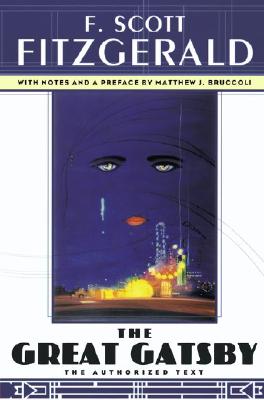
The Great Gatsby

by F. Scott Fitzgerald
ages: adult
First sentence: “In my younger and more vulnerable years my father gave me some advice that I’ve been turning over in my mind ever since.”
Support your local independent bookstore: buy it there!

Ah Gatsby.

I fell for this book sometime in high school during my jazz phase. I don’t remember what it was about the book that captured my fancy; I just remember loving it. However, after using it as a basis for a paper in my class on the history of jazz my freshman year of college, I haven’t opened the book.

Enter John Green and the Nerdfighters. They’re doing a read-along of the book this summer, and while I may not actively participate in the discussion (though I did enjoy John’s first video on the book), I decided I would at least give The Great Gatsby another try to see if it held up over the years.

And it did. I’m not sure I was as enamored over it as I was in high school. Upon rereading, I think what I liked was the feel of the book. It captures the feel of the jazz age — the aimlessness, loneliness after the first World War, and yet the desire to distance oneself from anything destructive — so perfectly. I was caught up again in their mediocre lives of desperation, indulging in the reminder that being rich does not solve any problems, and may only serve to create more. It was also a reminder, this time around, that the past should stay in the past, that any desire to relive it will just end in pain for everyone.

I find the writing lyrical, and the story beautiful in it’s desperation. A true American classic.

Pastwatch

The Redemption of Christopher Columbus
by Orson Scott Card
ages: adult
First sentence: “Some people called it the ‘time of undoing’; some, wishing to be more positive, spoke of it as ‘the replanting’ or ‘the restoring’ or even ‘the resurrection’ of the Earth.”
Support your local independent bookstore: buy it there!

I’ve been trying to wrap my brain around this one ever since I finished. It’s so hard to sum up: as one-part dystopian, one part historical fiction, and one part time travel, it has a bit of everything.

The end of the world came, basically destroying most of the Earth. Only a few thousand people survived, and they’ve been trying to restore the Earth. As part of this, they developed a technology, and a group called Pastwatch evolved from this technology, to watch the past, to learn from it.

As part of this, one researcher, Tagiri, discovers that Christopher Columbus played an important role in the shaping of the current world. Which got her to thinking: what drove Columbus to go west in order to find India? What if he never made it back to Spain, thereby sending more conquerors to the Americas to plunder, rape and enslave the native populations? There’s a lot in the book from Columbus’s point of view: Card explores Columbus’s thoughts, motivations and the amount of conviction it took to convince Ferdinand and Isabella to fund a seemingly crazy trip.

After the Pastwatch researchers start thinking about Columbus’s decisions, and after they discover a couple bits of crucial information, they begin musing about how to — and whether or not to — influence the past. Eventually, for many reasons — sometimes this novel was a bit circuitous and confusion, but eventually, if you wade through all of Card’s exposition (and he tends to philosophize, especially in his later works), it does make sense — they do decide to send a team into the past to reshape the course of history.

The novel had an intriguing balance: more than two-thirds was set up, and the pay off was less than one-third of the novel. It makes it a much more philosophical novel than I was expecting, but it turns out to be a good thing. I think it was Card’s intention to raise questions about pre-destiny and divine right, as well as acceptance of religion and race. He presents things to think about, but he’s very heavy-handed in doing it. More than once I felt like I was being hit over the head with a hammer, and I even agreed with the sentiments he was expressing.

In the end, I was surprised at how much I ended up liking it. For all it’s flaws, it’s an interesting story.

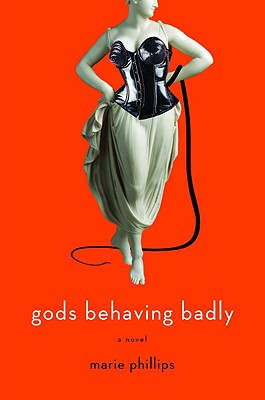
Gods Behaving Badly

by Marie Phillips
ages: adult
First sentence: “One morning, when Artemis was out walking the dogs, she saw a tree where no tree should be.”
Support your local independent bookstore: buy it there!

The gods have a problem. They’ve been stuck in an increasingly run-down house in London for 300 years. They’re bored. They’re losing power. Sure, they’ve tried other occupations — Aphrodite has a bit of a business as a phone sex operator, and Dionysus runs a pretty happening club, not to mention Apollo’s stint as a TV psychic — but it’s just not working for them. Things just aren’t going well.

Enter Alice, the unassuming cleaner and her would-be boyfriend, Neil. She’s pretty shy, as far as mortals go, but after Artemis hires her to clean the absolutely filthy house, she brings some life to the group. (That’s helped along a bit, due to some revenge work by Aphrodite: she gets Eros to hit Apollo with an arrow and he falls for Alice.) This leads to some sticky situations, though, culminating in possibly the end of the world. Interestingly enough, Neil finds a role as a hero, and the gods find a new reason to exists again.

It’s a unique little take on the Greek gods. Sure, I prefer Percy Jackson, but this one deals directly with the gods themselves. They’re dealing with the lack of belief from Mortals (can I say one of my favorite parts was Eros’s devotion to Christianity? Very intriguing.), though they don’t realize that’s what it is until near the end. (Though an observant reader will pick that up, so it’s not really a spoiler.) It’s not as funny or as witty as I would have liked, but it is entertaining. I’m also not sure the overall story is quite what I would have liked it to be: there’s a trip into the Underworld, and the whole “Everyone Believes” at the end seemed a bit forced; but that could just be my devotion to Percy Jackson talking.

There were moments that made me smile, though. And I liked Artemis and Alice and Neil, so there’s at least a couple of characters that I could connect with. So, t’s a not a complete waste of time after all.

The No. 1 Ladies’ Detective Agency

by Alexander McCall Smith
ages: adult
First sentence: “Mma Ramotswe had a detective agency in Africa, at the food of Kgale Hill.”
Support your local independent bookstore: buy it there!

People have been telling me for years that I ought to read this book. But as I always figured it was a mystery, I never really gave it much thought. I don’t like mysteries, after all. (Ha! Sometimes it’s true, but other times it’s not.)

The thing is: this really isn’t a mystery. Or at least not in the “traditional” sense. Sure, Mma Ramotswe (I had a hard time thinking of her as Precious, even if that was her name) is a detective, doing investigative work for people in her town in Botswana. But it’s not a mystery.

It is, however, a lovely portrait of a woman who loves her country, her people, and finds a niche for her self as an independent woman (after a very violent marriage thankfully failed) in her town. She is an observant woman, which helps in her business: she’s able to think about human nature (this book is quite down on most Botswanian men; they’re mostly no-good) in ways that
help her solve the little cases that come her way.

There is one big case that overshadows the novel; a boy is kidnapped, and they think that he’s been killed to make medicine. Mma Ramotswe doesn’t really want to take on the case, but she does because the police aren’t as reliable as they should be. Thankfully, it doesn’t end as sinister as it began.

It’s a delightful book, full of interesting, quirky characters. And Mma Ramotswe’s story is a good one to spend time with.

Southtown

by Rick Riordan
ages: adult
First sentence: “Fourth of July morning, Will Stirman woke up with blood on his hands.”
Support your local independent bookstore: buy it there!

Two things before I get going: I still adore Rick Riordan. And there are things I just can’t read about. Serial murderers out for revenge are on that list.

I was 70 pages into this very gruesome book before I realized that I had to abandon it. I can handle lots of swearing (at least reading), I can handle dark and gritty. But the opening chapter involving a prison break pushed me almost to my limits. But when the main bad guy tried to kidnap Tres’s boss’s 8-year-old, Jem, I realized that was the end of the line for me. I just don’t do violence against children: it’s one of my secret terrors (secret in that I tend to bury it down deep), and I don’t like being reminded that there are bad people out there, and something could happen to my girls at any moment.

I did flip through the rest of the book, reading a bit near the end to see how it all resolved (thankfully Jem is kept safe; sorry for the spoiler, but it was something I needed to know). I know I missed some things, especially between Tres and his girlfriend Maia Lee. But, I’m not sure my life will be worse off for not finishing this one.

You can’t win them all.

Twelfth Night

by William Shakespeare
ages: adult
First sentence: “If music be the food of love, play on.”
Support your local independent bookstore: buy it there!

This is an insane play.

Girl gets shipwrecked in a town, disguises herself as a boy (probably a good thing, considering the time period), and goes to work for the head guy. Head Guy is in luuuuuv with the most beautiful girl in town (think: Gaston, starting at about 3:15 of this video) who constantly spurns his, um, affections. (At this point, C, who watched the 1980 BBC production with me as I read, said, “He’s SUCH a brat and dork!”) So, Head Guy sends Girl dressed as guy to woo Beautiful for him, and beautiful ends up falling for Girl (whom she thinks is a guy).

With me so far?

Then, Girls twin brother (whom she thought was dead at sea) arrives in town and suddenly everything become really, really confusing. People think Brother is Girl, including Beautiful, who up and marries him the first time she comes across him (thinking he’s Girl (dressed as a guy)). And Girl, who’s fallen for Head Guy, is trying to sort things out and get out of Beautiful’s obsession with her, and something else happens that involves a really, really, really bad joke gotten way out of hand, and suddenly everyone is happily ever after.

Huh?

Like many of Shakespeare’s comedies, this one balances right between insanity and tragedy. There’s so much that could go wrong, if people’s attitudes had gone a completely different way. Malvolio — the guy who the really bad joke was played on — was given a sop at the end, and sent off though his parting words are “I’ll be reveng’d on the whole pack of you.” so who knows what could happen next. Besides, all these romances are built upon love at first sight, so who knows how any of them will turn out? I mean, Orsino is all pining for Olivia, but then he realizes she’s
married and Violet is a girl and he’s all of a sudden “Oh, I love you now, how about we hook up”?

Seriously?

I do wonder if Shakespeare was poking fun at something: love at first sight? Stupid nobles with nothing else to do? It wasn’t as funny as some of his other comedies. It was confusing, but lacked the inane hilarity of Midsummer Night’s Dream. And the wit of Much Ado About Nothing. It was a lot of silly people running around falling in luuuv.

But, I suppose, that’s not a bad thing on a hot summer day.

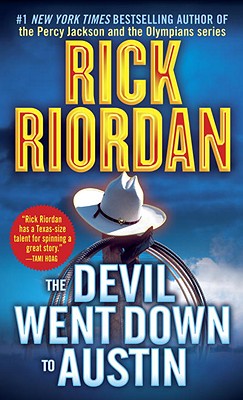
The Devil Went Down to Austin

by Rick Riordan
ages: adult
First sentence: “The first time I knew I would kill?”
Support your local independent bookstore: buy it there!

Our erstwhile college professor and PI, Tres Navarre, is off to UT Austin for the summer to teach a class in Medieval English lit. Which means, since he’s not interested in getting an apartment for six weeks, he gets to bunk with his older brother, computer programmer extraordinaire, Garrett.

Except, because it’s Tres, things don’t quite go as smoothly as planned. He ends up going early because he’s found that Garrett’s mortgaged the family ranch to cover costs for his new start-up tech business. Which is failing. Badly. And then, Garrett’s partner and long-time friend, Jimmy, ends up shot dead, and Garrett’s the main suspect. So, it’s up to Tres (well, it’s not, but Tres decides it is) to figure out who, besides his paraplegic older brother, could have done the dirty deed. Throw in a scheming ex-wife, some rich but estranged relatives, and a cutthroat businessman out for blood, and you’ve got some dangerous people to deal with. Not to mention Tres’s ex, a successful corporate lawyer, that he hasn’t seen in two years.

Just like in The Last King of Texas, Riordan piles it on fast and furious. He’s moved the local to Austin, and while he doesn’t have the same affection for that town as he has for San Antonio, he captures the unique flavor of Austin and the UT campus. That said, the town itself takes a backseat to the story, which is all kinds of gripping. It’s an incredibly gritty story, but for different reasons than King was: dealing with domestic issues as well as business ones. Still, Riordan puts the reader through the paces, keeping us guessing as to who the real murderer is. And when the twists come (and they are there), it’s enough to knock you out of your seat. And yet, they are not out of nowhere: the ground has been laid, and it makes perfect sense when they do come, right at the end. But, even with the grittiness and twists and turns, Riordan doesn’t skimp on character: Tres is fleshed out even more, and the relationship he has with his ex is a fascinating, complex one.

I would say I’m finding it hard to believe I’m hooked on these mysteries, but honestly, I’m not. I adore Riordan’s writing. And these definitely qualify as good Riordan writing.