My Name is Asher Lev

by Chaim Potok
First sentence: “My name is Asher Lev, the Asher Lev, about whom you have read in newspapers and magazines, about whom you talk so much at your dinner affairs and cocktail parties, the notorious and legendary Lev of the Brooklyn Crucifixion. ”
Support your local independent bookstore: buy it there!
Content: It’s long and often philosophical. It’s in the adult fiction section, but I think high schoolers who are interested in art should read this.

I’ve briefly talked about this book (in 2004 and in 2007), but I’ve not written a proper review. I probably haven’t picked up the story of Asher Lev in about 10 years, and doing the #ICTReads challenge gave me a chance to revisit this world of Brooklyn Hasidic Jews and the struggle between religion and art.

The basic story — if you haven’t heard — is that of  prodigy artist and orthodox Jew Asher Lev’s childhood and teenage years. His father was an ambassador for their sect leader, the Rebbe, and his mother ended up going to school to learn Russian to help with the work as well. They were both fully committed to their religion, to helping build up yeshivas (schools) around the world, and to helping Jews escape communist countries in the years after World War II. Asher’s passion, on the other hand, was to draw. He had a drive to do it, sometimes not even realizing that he was drawing. That’s not to say he wasn’t religious — he was. He went to school and to synagogue, he studied the Torah, he kept kosher. But, he wanted to create art. Which meant that his parents just didn’t understand him or his desires to do something so frivilous.

And it all comes to a head in his 20s, after he goes to Florence and Paris and has been abroad for many years. He comes back with paintings that use the form of the crucifixion —  he says in the book something along the lines of “what better way to depict anguish?” — and his parents, for whom Jesus is the symbol of suffering and hate, just cannot accept that.

It’s a very introspective book, musing about the meaning of art and the purpose of religion and whether there’s a place in religion for art that doesn’t conform to the rules of religion.  And while it’s often philosophical and sometimes has a tendency to be sluggish, I do think Potok does an excellent job walking the line between religion and art, and showing not only the conflict within Asher, but also between him and his parents (especially his father) and between his parents. And while I wish, now, that there were more female characters (there’s his mother, their housekeeper, and the art gallery director), it’s still an excellent book.
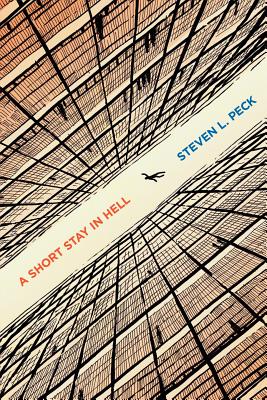
 

A Short Stay in Hell

by Stephen Peck
First sentence: “Although I have loved many, there has been only one genuine love in my near-eternally stretched life — Rachel who fell to the bottom of the library without me.”
Support your local independent bookstore: buy it there!
Content: There’s some violence. It would be in the adult fiction section of the bookstore, if we carried it.

This was not the Stephen Peck book I set out to read. I was supposed to read Scholar of Moab, but about 1/3 into that, the apostrophes were driving me nuts (they were in the wrong place — do’nt as opposed to don’t — and while I understood why they were that way, it didn’t stop it from pulling me out of the story) and so Russell threw this book at me and said I might like it better.

The idea behind it is that everyone’s idea of the afterlife is wrong (except for the Zoroastrians). And our main character, who was a good Mormon in this life, is in hell. Which happens to be a big library, containing every possible book that could ever be written. Which means, it’s very very very very very large. The idea for him to get out of hell is to find the book containing his story, except that’s an impossible task. (Well not impossible, just very very very hard.) It follows him as he meets people, is part of a university, finds and loses his love, gets captured by a wack job, falls for days, and on and on. It’s an exercise in trying to grasp what infinity means (spoiler: you can’t).

And while I liked it enough to finish it (it was short, which helped), I’m not sure I get what makes Peck such a great writer. Maybe it’s because I’m too literal a reader (plausible), and his works are full of symbolism and metaphor and satire, all of which escape me. Give me a good plot, some great characters, and decent writing and I’m happy.

At least I tried.

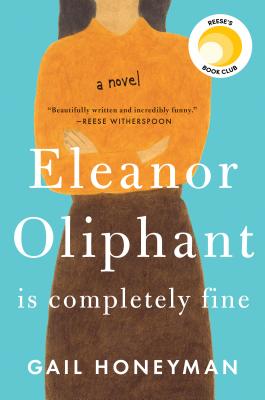
Audio book: Eleanor Oliphant is Completely Fine

by Gail Honeyman
Read by Cathleen McCarron
Support your local independent bookstore: buy it there!
Listen at Libro.fm
Content: There is some disturbing material, and quite a few f-bombs. It’s in the adult fiction section of the bookstore.

Eleanor Oliphant is fine. She has a job — the same job she’s had since she graduated from university — as a finance clerk in a graphic design firm. She goes to work, she comes home, gets drunk on weekends, and talks to her mom (which is not a pleasant experience) on Wednesday nights. She has food, shelter, and work. It’s not a bad life.

Then, one day, she sees a musician that she decides she wants to have a relationship with, so she starts changing herself superficially. And at pretty much the same time, she ends up talking to Raymond, an IT guy in the building, and purely by happenstance, they end up helping an older gentleman who took a bad fall outside a store. And suddenly Eleanor’s life opens up.

This was such a delightful book! It has dark undertones with emotional and physical abuse, but it wasn’t graphic, and it played a role in Eleanor’s growth arc. As a character, she was delightful to spend time with, and the other characters that Honeyman populated the book with were absolutely charming. I appreciated that Raymond and Eleanor developed a close friendship, but not a romance (though that door wasn’t completely shut). That, and the narrator was absolutely delightful! It was one of the those books that I found myself immersed in, and one I didn’t want to get out of the car when I was listening.

An excellent read.

Dreadful Young Ladies and Other Stories

by Kelly Barnhill
First sentence: “The day she buried her husband — a good man, by all accounts, though shy, not given to drink or foolishness; not one for speeding tickets or illegal parking or cheating on his taxes; not one for carousing at the county fair, or tomcatting with the other men from the glass factory; which is to say, he was utterly unkonwn in town: a cipher; a cold, blank space — Agnes Sorensen arrived at the front steps of Our lady of the Snows.”
Support your local independent bookstore: buy it there!
Review copy provided by the publisher.
Content: There are more mature themes and some swearing (though I’m not remembering any f-bombs). It’s in the Science Fiction/Fantasy section of the bookstore.

I have a tortured history with short stories. I want to like them, but I find them much like poetry: I don’t get them. They’re words, and often pretty words, but I just don’t… well… understand them. (Even Neil Gaiman’s stories, which I seem to have a bit more affinity for.) And this collection was more of the same: I liked the stories, but I need someone else to read them and then explain them to me. (Especially the title story. I know it’s a metaphor, and I’m sure I’ll smack my head when someone tells me what it’s a metaphor for, but right now, I’m a bit lost.)

Barnhill is a gorgeous crafter of sentences, and this is no exception. She has a beautiful way with words, and it does pull you into the story. I especially liked the final story, which is more of a novella (which could be why), because the world that Barnhill built — a comet flies by once every 25 years and endows pre-born children with magical powers which a minister then harnesses for his own means — was so fascinating, but also because the writing was just so beautiful.

And maybe, someday, I’ll figure out how to read short stories and actually understand.

That Time I Loved You

by Carrianne Leung
First sentence: “1979: This was the year the parents in my neighbourhood began killing themselves.”
Support your local independent bookstore: buy it there!
Review copy provided by the publisher.
Content: There is some sex (on-screen but not graphic) and swearing, including a few f-bombs. It’s in the adult fiction section of the bookstore.

Set in a suburb of Toronto, specifically on one street in a particular neighborhood, this collection of connected short stories  follows the inner workings of a dozen people of all ages.  The characters are mostly women, except for one black teenage boy, and many of them are immigrants. Leung explores immigrant expectations and prejudices toward them. She explores female dynamics both with other females and with males. She touches on sexual assault and racism and emotional abuse. It’s a lot. And yet, it works.

I usually have problems with short stories, but I think because these are connected — the characters in the stories appear in their own as well as in the background of other stories — it felt more like a novel. We got to know the characters, we get to know the neighborhood, and because each story focuses on a different person, we get to know them intimately and it means more when they show up in a different story.

I really enjoyed this one!


Audio book: Back Home at Firefly Lake

by Jen Gilroy
Read by: Karissa Vacker
Support your local independent bookstore: buy it there!
Listen to it through Libro.fm
Content: There’s mild swearing and one pretty graphic (but not distasteful) sex scene. It would be in the fiction section, if we had it in the store.

I needed a fluffy book, and when this one showed up, I jumped at it. It’s exactly what it looks like: Cat, a single mother, and adjunct history professor moves back to her hometown of Firefly Lake, Vermont. There she meets her high school crush, Luke, a former Olympic and NHL hockey player, who is still recovering from the sudden death of his wife, the love of their life.

Of course Cat and Luke have a thing for each other. Of course things — Luke’s dead wife, Cat’s daughter Amy — get in the way. Of course the sex was hot. And, of course, there’s a happily ever after. I didn’t listen to this because the plot was fantastic or the character development was amazing, though there was some growth in the characters, which was nice. No, I wanted pure fluff, and this delivered. Which was nice.


Enchantress of Numbers

by Jennifer Chiaverini
First sentence: “A piteous mewling jolts Lady Annabella Byron from her melancholy contemplation of the fire fading to embers though the evening is still young.”
Support your local independent bookstore: buy it there!
Content:

I picked this up because I think Ada Lovelace is the BEST, and there needs to be more about her. And so I was excited that Chiaverini wrote this historical fictional biography of her. Except. This wasn’t the biography I wanted.

This follows Ada Byron from her mother’s short marriage to Lord Byron through to… well… I don’t know because I didn’t finish it. I wanted to, I kind of liked what I was reading, but honestly? It wasn’t that great. It wasn’t bad. It was just long. And kind of boring. And I don’t know why I didn’t bail on it sooner. I guess I hoped it would get better. But, it didn’t, and even though I love Ada and think she’s a mathematical genius, I just didn’t like this book.

Oh, well. Can’t win them all.

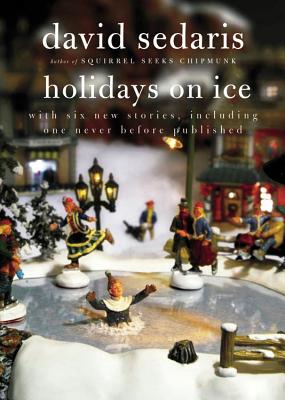
Audiobook: Holidays on Ice

by David Sedaris
Read by the author.
Support your local independent bookstore: buy it there!
Listen on Libro.fm
Content: There was a lot of swearing. It’s in the holiday book section at the store every year.

Okay, yeah, so I’m starting the year off with a DNF. It’s not that I don’t like David Sedaris. I do. (Sometimes.) I like him a lot better on audio than in print, so I was hoping that this one would come off better listening to it. And the first one, his Santaland Diaries, kind of did. I didn’t really laugh (his humor is often too mean for me), but I was amused. But, by the third story, the Christmas letter where everything goes wrong, I was thinking that satire really isn’t my thing. I’ve learned this before; i just take things way too literally to be amused by satire. But I guess I thought maybe this one would be different. It wasn’t, though.

I had to abandon it to listen to a Cybils book, and was thinking I’d get back to this one. But, the holidays are over, I’m enjoying (for the most part) the other book, and I have no desire to listen to the other two stories in this one. So, I’m calling it a DNF and moving on.

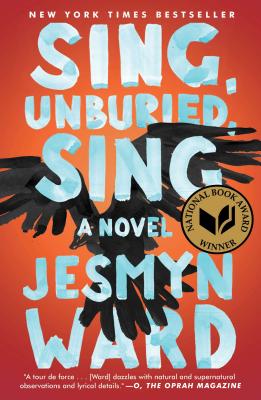
Audiobook: Sing Unburied Sing

by Jesmyn Ward
Read by Kevin Harrison Jr, Chris Chalk, and Rutina Wesley
Support your local independent bookstore: buy it there!
Listen to it at Libro.fm
Content: There’s a lot of swearing, including multiple f-bombs, drug use, and violence. It’s in the adult fiction section of the bookstore.

It’s not often I end up reading the National Book Award winner for fiction, and to be honest, I was surprised that I did. (I started listening to it before the awards…) I picked it up because people were talking about it, because I’ve never read Jesmyn Ward before, and because I was curious.

It’s basically a slice of life portrait of Mississippi. A black woman, Leonie, takes her two children — Jojo, whose story this is, and Kayla — on a road trip from the Gulf to Parchman, where their dad is getting out of jail after serving time for drug charges. It’s a hot mess of a road trip, partially because Leonie is a drug addict, and partially because she just can’t parent, interspersed with reflections from Jojo, his grandfather (Leonie’s father), and Leonie. It’s about relationships — Leonie’s brother was killed in a race-related shooting by her boyfriend’s (and baby daddy’s) cousin — and surviving and growing up and expectations.

I enjoyed the narration; there were three different narrators, one each for Jojo (I liked him best), Leonie and a ghost who shows up halfway through, but I wonder if this was a book that would have gone down easier read than listened to. It’s not that I didn’t like it; I just felt like I missed things — connections, imagery, story — and I could have taken it slower in print than in audio.

Still, a worthwhile read.

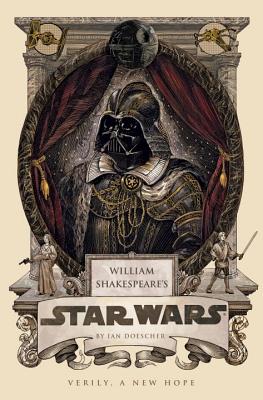
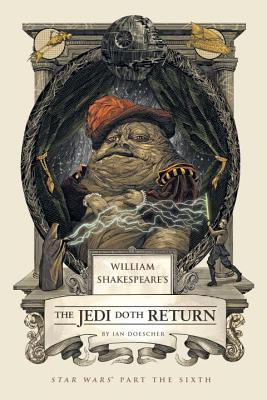
Audiobook: William Shakespeare’s Star Wars Collection

Verily a New Hope, The Empire Striketh Back, The Jedi Doth Return
by Ian Doescher
Read by: Full cast
Support your local independent bookstore: buy it there!
Content: It’s Shakespearean English, but it’s also basically the movies. It’s in the humor section of the bookstore.

So, when I talked to my dad on his birthday, he gushed about these, especially on audio. And you know: he was right. They’re a LOT of fun, especially on audio.

The premise is thus: Doescher got approval from Lucasfilm to take the scripts (alas, they were the updated scripts so Jabba shows up in the first one) and then he worked them into a Shakespearean format: language, play structure (each book is 5 acts, which is a very Shakespearean thing), etc. It was actually kind of impressive! There were subtle differences: R2D2 didn’t just beep and whistle; he had asides where he commented on the action around him (Doescher said in the afterward to Jedi that R2D2 was the fool of the play, and I could see where he was going with that, though R2 had more lines in the first movie), and we got asides from pretty much all the characters. It felt a bit jarring at first with some of the characters (like, Han, for instance), but eventually, I became used to it and enjoyed it.

And it really was like listening to the movies. Doescher got rights to the music (yay!) and there were sound effects. And I know the movies well enough (I think it’s for those people who do know and love the movies) that I could picture what was going on while the play was going. (Though, I missed the “I love you!” “I know.” in Empire, but that’s because it wasn’t scripted.)

Oh: and stick around for the Afterwards. Doescher talks a bit about his methods and how he decided on different types of forms for each character (Yoda’s in haiku!), and a bit about the process working with Lucasfilms. It was an absolutely delightful book to listen to.