The Bear and the Nightingale

by Katherine Arden
First sentence: “It was late winter in northern Rus’, the air sullen with wet that was neither rain nor snow.”
Support your local independent bookstore: buy it there!
Content: There is a lot of violence and some sexual content. It’s in the Science Fiction/Fantasy section of the bookstore.

The plot of this one is hard to describe: it’s Russia on the cusp of when Christianity is becoming more accepted, but the Old Ways are still in play. There are demons keeping the Big Demon — known as The Bear — at bay, but due to priests, the people are beginning to neglect the Old Ways. Everyone, that is, except for Vasilisa. The youngest daughter of a northern lord, she sees and talks to the demons that keep the hearth fires burning, the stable animals quiet, and the lands safe. And when her father remarries a woman who is paranoid about the Old Ways, Vasilisa is the only one who keeps the village and the lands safe.

It’s a slow start, this one, but once it gets going — about halfway through — it really takes off. I mostly liked Vasilisa as a character; she is headstrong and not traditional and doesn’t keep anyone’s advice but her own. I really enjoyed the magic and the contrast between the Old Ways and religion, and how the priests believed that the two couldn’t co-exist. Arden is exploring interesting themes and I’m curious to see where the next one goes, since this one felt like a stand alone.

Maskerade

by Terry Pratchett
First sentence: “The wind howled.”
Support your local independent bookstore: buy it there!
Others in the series:  Equal RitesWyrd SistersWitches Abroad, Lords and Ladies
Content: There’s some reference to sex, because that’s just who Nanny Ogg is. And some creative swearing. It would be in the science fiction/fantasy section of the bookstore if we had it.

Ah, I have come to adore Granny Weatherwax and Nanny Ogg. Sure, some of the witches books are better than others (my personal favorite is still Witches Abroad), but I do adore the combination of Granny and Nanny taking on the world.

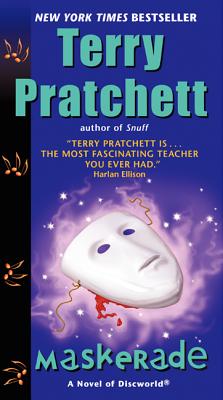
In this one, they head to Ankh-Morpork to tackle the opera. It seems that one of Lancre’s own, Agnes Nitt (aka Perdita X. Nitt) has moved to the big city to try and make her fortune, and has fallen in with the opera. That has a Ghost who seems to not only be haunting the opera house, but is murdering members of the cast and crew.

So, if this sounds vaguely like Phantom of the Opera, you’re probably right. Except — like a few of the other ones in the witches series — Pratchett takes the familiar bones of the story and overlays a funny and clever and insightful story with Granny and Nanny being their amazing selves. There’s a mystery in this one that they manage to solve (with some hilarious asides about being in the book publishing business), before getting Agnes to come back to Lancre and take up her True Calling as a witch.

Not my favorite of the series, but definitely fun! (I thought this was the last of them, but it turns out that there’s one more to go before I hit the Tiffany Aching series.)

Dominicana

by Angie Cruz
First sentence: “The first time Juan Ruiz proposes, I’m eleven years old, skinny and flat-chested.”
Support your local independent bookstore: buy it there!
Content: There is swearing, domestic violence and rape. It’s in the adult fiction section of the bookstore.

Ana Canción is a 15-year-old girl living in the Domincan Republic. It’s 1965, and all her family wants is for her to marry well, particularly a Dominican who has immigrated to America. So when 32 year old Juan Ruiz proposes (seriously: he’s 32! She’s 15!) her parents basically sell her to him (well, they give Juan a piece of their land in order to get him to take her) and she’s off to New York.

Where life is hard. Juan has a lover, Caridad, and is always going to see her. And he’s abusive — both physically and controlling her life and who she sees and talks to — on top of that. So, when he’s called back to the Dominican Republic to hold onto some land during the revolution, Ana takes the opportunity to enjoy life: take some English classes, start a small business, fall in love with Juan’s brother Ceasar.

And because it’s an adult book, that doesn’t mean there’s a happily ever after.

I liked that it was an immigrant story. I liked hearing Ana’s perspective about America, and how hard these characters worked to make ends meet. They hustled and worked and saved and tried their hardest. And though Cruz didn’t directly touch on racism and discrimination, it was an undercurrent. I appreciated that she even brought up the Ruiz brother’s attitudes towards Jewish or black people; racism comes in many shapes and forms. I appreciated how hard it was for Ana to make friends (though much of that was Juan’s abuse) and how hard it was for her to find a place.

But I had a hard time stomaching the abuse. A really hard time. It was abuse and rape, and a 17 year age difference (!) and while I finished the book, I couldn’t, in the end, get past those parts of the story.

I know that this book was being raved about, and I do agree that immigrant stories need to be told. I just wish this one was easier (for me) to take.

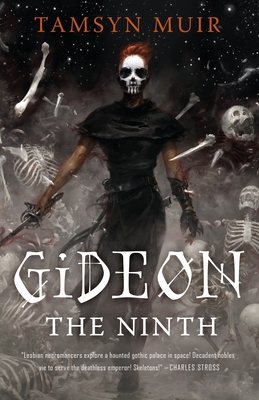
Gideon the Ninth

by Tamsyn Muir
First sentence: “In the myriadic year of our Lord — the ten thousandth year of the King Undying, the kindly Prince of Death! — Gideon Nav packed her sword, her shoes, and her dirty magazines, and she escaped from the House of the Ninth.
Support your local independent bookstore: buy it there!
Content: It’s violent and it’s sweary (including many f-bombs). It’s in the science fiction/fantasy section of the bookstore.

So, this one is hard to describe. The short pitch is lesbian necromancers in space, though that doesn’t really begin to touch on what really goes on in this book. The slightly longer version is that Gideon is an orphan raised by the Ninth House, which (in this world) is tasked with guarding the Locked Tomb for the Undying Emperor. However, when the heirs to each of the nine houses are called to the emperor to compete to be one of his Hands, Gideon is dragged along as the cavalier to Harrowhawk, the Ninth heir, into a world of intrigue.

But that doesn’t even give you a glimpse into the total awesomeness that is Gideon the Ninth. Not just the book, either: Gideon the character is so very awesome. Full of snark and sass and grit and just plain awesomeness, she’s a marvel. And I adore the relationship that grows between her and Harrow. Muir is a marvel of a writer, and the world that she has built is unique and brilliant and wild.

I can’t wait for the rest of this trilogy.

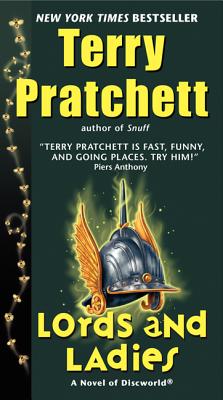
Lords and Ladies

by Terry Pratchett
First sentence: “Now read on…”
Support your local independent bookstore: buy it there!
Others in the series:  Equal RitesWyrd Sisters, Witches Abroad
Content: There’s some mild swearing and inference about sex. It’s in the science fiction/fantasy section of the bookstore.

Up until this point, with the witches series, you really didn’t have to read the ones that came before it. I mean, it helps, but it’s not ultimately necessary. However, with this one, you really do need to know what happens in the previous books if only so that all the little things that are happening in this one make sense.

Granny Weatherwax, Nanny Ogg, and Magrat Garlick have just gotten back from their jaunt in Witches Abroad and it turns out that Magrat is marrying the King of Lancre. (Who was the fool, but that’s the story in Wyrd Sisters). However it turns out that someone has been playing with the boundary between Lancre and the Elf world. As it turns out, elves — who the witches refer to as “the lords and ladies” — are not nice people, and they want to come through and create havoc. Which they do. And it’s up to the witches to stop them.

There are a few references to A Midsummer Night’s Dream, but it’s not as direct a parody as Wyrd Sisters is of Macbeth. Mostly this is the story of Magrat figuring out how to stand up for herself, and embrace what she really wants. (There was a moment near the end in which I literally cheered: “Go Magrat!”) And that you don’t have to do things the way books say, just because books say so.

Its not my favorite of the witch books, but I am really enjoying this Discworld series.

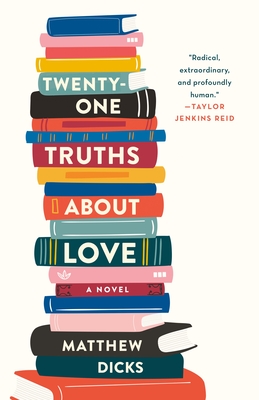
Twenty-One Truths About Love

by Matthew Dicks
First sentence: “Ways to keep Jill from getting pregnant”
Support your local independent bookstore: buy it there!
Release date: November 19, 2019
Review copy provided by the publisher.
Content: There is swearing, including multiple f-bombs. It will be in the adult fiction section of the bookstore.

10 Reasons you should read this book
1. It’s told in lists. Seriously
2. And yet, there’s a plot with character development.
3. Which is really quite brilliant, if you think about it
4. It’s about a not-quite 40-something man stressing about his life.
5. Which sounds boring, but really isn’t because of the lists.
6. They range from “books of the month” — Dan, the main character owns a bookstore — to “Songs you would think have great lyrics but don’t”.
7. It’s charming and sweet and funny but isn’t all happiness and roses.
8. And about being honest with your spouse and how having friends is important.
9. And maybe a little bit about forgiveness.
10. But really, it’s that it’s told through lists that makes it so incredibly unique and worth spending your time on.

I loved it.

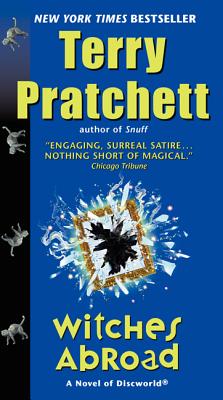
Witches Abroad

by Terry Pratchett
First sentence: “
Support your local independent bookstore: buy it there!
Others in the series: Equal Rites, Wyrd Sisters
Content: There’s some violence, but nothing graphic, as well as some mild swearing. It’s in the science fiction section of the bookstore.

AhHA! I found Granny Weatherwax. So, now you know: it took until this book for Pratchett to really fully develop Granny and her spitfire ways and headology. And this one was such a delight.

When a nearby witch finally dies, she sends a package to Magrat (which I keep misreading as Margaret, poor girl) Garlick with her wand, deeming Magrat a “fairy godmother”. Her task: go to Genua (which kind of felt New Orleans-y) and make sure Ella does NOT go to the ball. And, oh, don’t bring Granny Weatherwax and Nanny Ogg along.

Of course Granny and Nanny come, and of course the three witches have adventures getting to Genua where they realize that someone — Granny knows who, but isn’t saying — has made a “perfect” kingdom where everyone lives out their “stories” and ends up “happily ever after”. And, of course, the witches get involved to help the stories, well… stop.

Yes, it’s a spin on fairy tales — Sleeping Beauty, Red Riding Hood, and Cinderella among others — but it’s also a musing on those last three words: happily ever after. See, Granny doesn’t believe in happily ever afters. Or fairy godmothers. People ought to make their own happiness, and witches are there not so much to give people what they want, but rather what they know they need. And I appreciated that.

It was laugh out loud funny in some spots, and just amusing in others. It was delightfully chaotic, poking fun at those people who don’t quite know how to travel abroad. I have to say, it’s my favorite among the witch books I’ve read (Tiffany Aching aside) so far.

An absolute delight.

The Starless Sea

by Erin Morgenstern
First sentence: “There is a pirate in the basement.”
Support your local independent bookstore: buy it there!
Release date: November 5, 2019
Review copy provided by the publisher.
Content: There is some violence and some swearing, including a few f-bombs. It will be in the Fiction section (though I think it fits better in science fiction/fantasy), but I bet it’ll have some YA crossover.

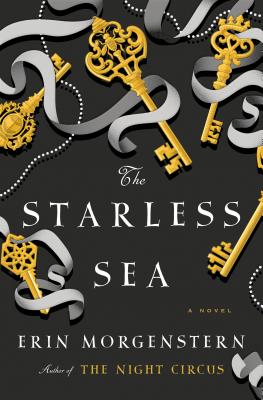
I haven’t read The Night Circus since it first came out, though I own it and I was thinking I need to reread it, but I imagine my reaction to The Starless Sea was pretty much the same: Morgenstern may not have a driving plot to her books, but she can write! Oh, she can write. Such lovely sentences, such lovely pages. Such gorgeous, haunting, twisting, lovely words. (And I don’t usually read for words.) There were pages I wanted to highlight and copy and, yes, get tattooed on my body (and I’ve never felt that way about words before, not even Maggie Stiefvater’s words). And, truth be told, the way this book unfolded kept me interested until the end.

The plot is simple: Zachary, a fortune-teller’s son, found a magic door when he was 11, but didn’t go through it. Fourteen years later, he’s at grad school in Vermont and finds — entirely on accident — a book called Sweet Sorrows, that has a tale about a fortune-teller’s son who finds a magic door but doesn’t go through. That piques Zachary’s interest, and he begins a journey — one that starts in Manhattan and ends by the shores of the Starless Sea and involves a reformed hit-man and a painter who may or may not be immortal — to find out what, exactly, was behind that door he didn’t go through all those years ago.

But, really: this book is a book for all of us who love and recognize the power of stories. Who recognize that truths can be found in fiction, that there is a need to tell stories and believe stories and embrace stories. It’s a remarkable book, and one that will stay with me for a long, long time.

Audio book: Red at the Bone

by Jacqueline Woodson
Read by: Jacqueline Woodson, Bahni Turpin, Shayna Small, Peter Francis James, and Quincy Tyler Burnstine.
Support your local independent bookstore: buy it there!
Or listen at Libro.fm
Content: There is some on-screen sex as well as swearing, including multiple f-bombs. It’s in the adult fiction section of the bookstore.

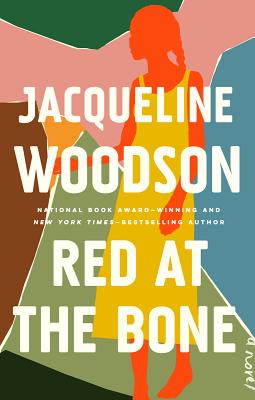
I’m at a loss to talk about this one plot-wise. It jumps back and forth through time, starting in 2001, at Melody’s “coming of age ceremony”, where she’s wearing the dress her mother, Iris, wasn’t able to wear, because she was pregnant with Melody and didn’t get a ceremony. It gives us glimpses into the inner lives of Iris and Melody, but also Iris’s parents, and Aubrey, Melody’s father. It’s an introspective novel; nothing really happens, but Woodson’s tight writing and way of observing human nature still allows us to get to know these characters and understand their motivations.

I thoroughly enjoyed the audio book, partially because Woodson’s writing is a joy to listen to, and partially because the different narrators helped keep the story straight. (I was talking to a co-worker who said she was having trouble with this one because she didn’t know which chapter was from which point of view — Woodson, unlike other writers, doesn’t do any favors by telling us at the outset who is narrating, instead making us do the work of figuring it out.) It was short, and to the point, and I liked listening to this one family’s story through the years.

Recommended, particularly in audio.

The Power

by Naomi Alderman
First sentence: “Dear Naomi, I’ve finished the bloody book.”
Support your local independent bookstore: buy it there!
Content: There is a lot of swearing, including multiple f-bombs, some sex, and a few graphic rape scenes. It’s also incredibly violent. It’s in the science fiction/fantasy section of the bookstore.

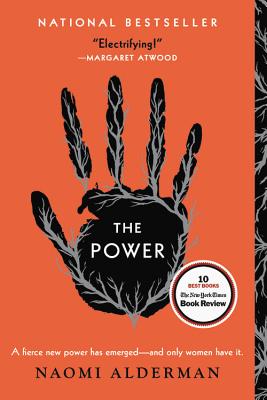
The basic premise of this book is that one day, suddenly, all women in the world get a power — the ability to channel electricity — that gives them the ability to “fight back” against men of the world. It starts with teenagers, but eventually spreads to most women. The narrative follows four people: a mayor of a New England town, a girl in the foster system, a daughter of a British mob boss, and a young Nigerian man. The change affects all their lives: the mayor becomes governor and then senator, creating for-profit training camps for girls to learn to better control and use their power; the girl kills her foster father (who was raping her) and runs away and eventually starts a new religion, becoming Mother Eve; the daughter of a mob boss ends up taking over the whole operation; and the young man becomes a news reporter, going where the stories — of rebellion, of resistance, of control — are.

It was, for me, a tough book to swallow, and it wasn’t until the end when I realized what Alderman was doing. It’s best to remember that science fiction is more about the present than the future; and Alderman is shining a light on violence against women by turning the tables. The women in this book, once they get the power, become very… well… masculine. They embrace and abuse power, they torture and rape and kill men solely because they are weak. They create laws that restrict men’s movements, and in the end, blow the whole system up.

It’s also a critique of the nature of power, I think. I feel like Alderman is saying that power over another person corrupts anyone, male or female. That there is no “better nature” that will, inherently, make a woman better at leading. That power is, at it’s heart, an violent act of controlling another person.

It’s not an enjoyable read, but it is an interesting one, and has given me much to think about.