The Wand & the Sea

by Claire Caterer
First sentence: “Holly Shepard was unlike most twelve-year-olds in that she didn’t at all mid sharing a cramped cottage bedroom with her pudgy, snoring, laptop-loving younger brother.”
Support your local independent bookstore: buy it there!
Others in the series: The Key & the Flame
Review copy provided by the author’s publicist.
Content: It’s kind of slow to start, and the fantasy is more Narnia-esque than Harry Potter or Percy Jackson. Even so, there’s nothing content-wise, and if there’s a 9- or 10-year-old who likes Narnia, they’ll probably love this. It’s in the middle grade (grades 3-5) section of the bookstore.

It’s been a year since siblings Holly and Ben and their British friend Everett have been to the magical land of Anglielle, where Holly can do magic, and where they’re caught up in a good versus evil battle. They’re determined to get back, but this time, the portal they used before won’t work. This time, it’s the water element that’s highlighted. This time, they need to rescue their friends, who have been imprisoned by the king, and try and find the other adepts, who have been exiled from Anglielle.

Of course, it’s not a simple thing: Everett is still playing the role of the sulky somewhat traitor (think Edmund), the prince Avery’s loyalties are still in question. They do meet a group of pirates, on the ship the Sea Witch, that are quite fascinating. And when Holly finally confronts the Big Bad Guy, it’s pretty intense.

I went back and re-read my review/reaction to the first book in the series, and it seems I liked it. I had a less positive experience this time around; the first book didn’t stay with me as much, and it’s been a couple of years, and it took me longer to get into this story. Still, it’s channeling Narnia quite well, and in the end, the adventure was satisfying, while leaving room for another sequel. (I’m starting to suspect there will be four in all; one for each element.)

Not bad, overall.

Trouble is a Friend of Mine

by Stephanie Tromly
First sentence: “Of course I didn’t like Digby when I first met him.”
Support your local independent bookstore: buy it there!
Release date: August 4, 2015
Review copy provided by the publisher rep.
Content: There’s some mild swearing. And inferences about drug use by teens. I think it’ll be in the YA section (grades 6-8) though. (It’s not too bad.)

Zoe is the product of a bad divorce: her Wall Street broker dad cheating on her mom. She generally sided with her dad, but ended up in her mom’s custody, moving to a small podunky college town in upstate New York after the divorce. Zoe doesn’t want to be there at all and when Digby — kind of the high school pariah, of sorts — decides that she needs to be his side-kick (she really doesn’t have much say in it; he really just inserts himself into her life and she doesn’t kick him out) in discovering what has happened to a local kidnapped teenager, she goes along with it. For kicks and giggles.

When the ARC came into the store, it had this sticker on it:

I won’t say it gave me high hopes, but I was expecting some laughs. And there were: Digby has a talent for getting into some very bad situations, and there was some pretty amusing antics trying to get out of them. And Zoe’s mom with her bumbling cluelessness was pretty amusing too. (Though: not as amusing as the mom in Finding Audrey.) But while I didn’t find it funny, I did find it endearingly charming. Incredibly charming. And fascinating. There’s a mystery running throughout — and not just the finding the kidnapped teenager one — that kept my interest, and kept me guessing, which added to my general enjoyment. And I just adored Zoe and Digby and their friend Henry. And all the other people they came into contact with. It was just… delightful.

So, maybe it’s not the hilarious read our rep promised. But it’s still definitely worth the time to read it.

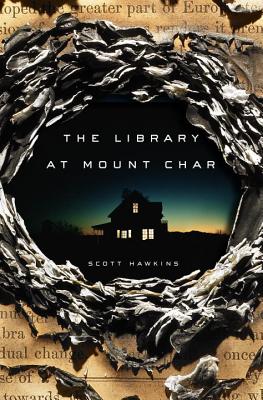
Audiobook: The Library at Mount Char

by Scott Hawkins
Read by Hilary Huber
Support your local independent bookstore: buy it there!
Content: SO so SO violent. So VERY violent. And a LOT of swearing, including a big bucketful of f-bombs. You are forewarned. It’s in the adult fiction section of the bookstore.

When the Random House rep came in to pitch this one, she started by saying “I have no idea how to  describe this book.” And it’s true: it’s about a Library. And librarians, but not the way you think. It’s about the end of the world, but not in the way you think. In fact, any way I try to sum this one up it’s going to end with: but not in the way you think. Throughout this whole book, that was the one constant: it’s nothing like you expect.

When Carolyn was eight, her parents died in a tragic accident, and, along with 11 other children, she was adopted by a man they came to know as Father. Father was a librarian, the caretaker of a most unusual library, and Carolyn and her new siblings became his apprentices, each learning a catalog. It wasn’t an ordinary apprenticeship, either: David, who was in charge of war, learned all the ways of war and death known to man (and some not yet known). He became awful and violent and cruel. Margaret learned the ways of death and the underworld, dying multiple times. (Another one, Jennifer, learned the ways of healing and was tasked with bringing everyone back from the dead.) Carolyn’s catalog was all the languages known to man, both ancient and current, as well as ones not known. To be simplistic, it was an awful existence: Father was heartless and cruel in his punishments, and there was no mercy to be seen anywhere.

But now, Father has gone missing, the siblings have been kicked out of the library, and it’s up to them — well, Carolyn, since she speaks English best — to figure out where Father is.

This is, unfortunately, one of those books that the less you know, the better. Know that Steve — an American man that Carolyn ropes into helping — is the heart of the book. And Erwin — an ex-military Homeland security agent — is crass and awful, but good at heart. Know that the end is worth the rest of the book. And that it definitely gets worse before it gets better. And that “better” is relative.

I was talking to another bookseller about it (one who read an ARC months ago) about how this one is best when read in a group, almost: you need another person to be able to process what happens. So, it’d be a good one for book groups, if you can handle the dark.

A bit about the audio: Hilary Huber was FANTASTIC. Seriously. In many cases, her narration is what kept me reading. Especially since, in many ways, listening to this book is more difficult than reading it: you’re not able to skim the really horrible bits. But her voice, and the way she chose to narrate this book, was amazing. So much so, that I’m going to look for more books read by her.

I didn’t love this one, but I am really glad I listened to it. There’s a lot to think about.

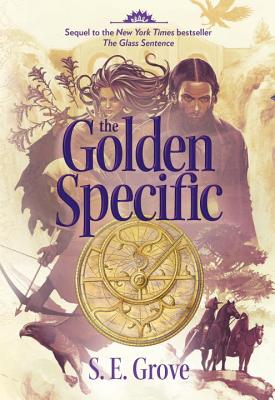
The Golden Specific

by S. E. Grove
First sentence: “Dear Shadrack, You ask me for news of the Eerie, and I can tell you that there is no recent news of them in the Indian Territories.”
Support your local independent bookstore: buy it there!
Others in the series: The Glass Sentence
Review copy provided by the publisher rep.
Content: It’s a long book, and it’s one of those that take some investment. Probably not for the younger end of the middle grade spectrum, even if it’s in the Middle Grade section (grades 3-5) of the bookstore. I’m actually wondering if these might do better in the YA (grades 6-8) section, with the Philip Pullman books…

I’ll be honest: I don’t really remember what happened in the first book. The good thing? You don’t really need to. There’s no real sum-up at the beginning (thank heavens!) but you get the sense, fairly quickly, about what’s going on. And Grove is nice enough to let us know what we need to know as the book progresses.

Which helps, because there are three story lines going here. One is Sophia’s continuing quest to figure out what happened to her parents 10 years ago. This involves going to restricted libraries and ending up across the Atlantic (accidentally by herself) in the Papal States, looking for the lost land of Ausentintia. (I read that Austen-tia every. single. time.) Her adventures there are weird and wild, and the way Grove messes with time, religion, and fantasy are quite mesmerizing. She makes new friends, particularly Errol and Goldenrod, who are fascinating additions to the world Grove has built.

The second story line is related: it’s the diaries that Sophia goes looking  for, the writing of her mother that Sophia was looking for. (This is a second in a trilogy, so there’s a lot of loose ends.) This was the least interesting part to me; yeah, I was curious about Sophia’s parents, but not especially invested in their journey, so to have the story I was interested in interrupted with this one was a bit annoying.

The third — and my favorite this time around — story line was that of Theo, who stays behind in Boston, and attempts to prove that Sophia’s uncle Shadrack didn’t, in fact, kill the prime minister. It’s a fascinating plot line, full of deceptions and intrigue. Additionally, it has the most intriguing characters; Theo’s new friend, Nettie, is the daughter of the police inspector, and absolutely delightful.

I don’t know if it’s as strong as The Glass Sentence was, but I do think that this will be a compelling series once it’s completed.

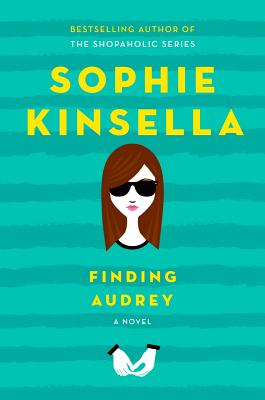
Finding Audrey

by Sophie Kinsella
First sentence: “OMG, Mum’s gone insane.”
Support your local independent bookstore: buy it there
Content: It has six f-bombs, all near the end of the book, and nothing else. So, I’m torn: do I leave it on the YA shelves (grades 6-8), where it thematically belongs? Or do I move it to Teen (grades 9+) where it’s not quite edgy enough, but it fits language-wise? Tough call.

Audrey doesn’t leave the house. Doesn’t talk on the phone. Doesn’t talk to people (outside of her therapist and her family). Doesn’t look people in the eye (in fact, she prefers to wear dark sunglasses all the time). She hasn’t done any of these things since the “incident”. And she prefers to keep it that way.

Before I go much further I have to interject: this is a hilarious book. Perhaps it’s because I love All Things British, but I was thoroughly charmed by Audrey and her family. It is possible to take something serious (like bullying — though you never really find out what happened, and that’s okay) and severe anxiety and to be, well, warm about it.

Maybe I should make a second diversion: I adored Audrey’s family. From her gamer older brother (with his mile-wide sarcastic streak) to her absolutely adorable four-year-old younger brother (adorable!) to her completely clueless dad (probably stereotypical, but it worked), to her over-protective mom (I will stand by my statement that the best way to be a good parent is to read YA books), they were all entertaining. Kinsella definitely wrote this with love.

(It reminded me, in some ways, of the Casson family books. That makes me happy.)

The arc of the novel is Audrey’s “recovery”. It’s aided by Linus, one of her brother’s friends who takes an interest in her. He supports her and pushes her to try new things, to somehow get a grip on her anxiety. I really liked that Audrey was never “cured”: she learned how to handle her fears and her body’s reaction to them, but they were always still around, which was not only realistic but somewhat of a relief.

Yes, things were kind of tied up in a nice bow at the end, but that’s kind of expected and I didn’t mind. In fact, I really quite enjoyed this.

11 #QuietYA Books Worth Checking Out

I was looking for an idea for a list this morning when I stumbled upon the #QuietYA hashtag. I’d seen it around, sure, but it hit me that using it might make a good list. Then I discovered that as of late, I’ve been leaning towards the books that are getting a lot of buzz. It’s the tendency in bookselling, I think, to get on whichever bandwagon (right now? Go Set a Watchman and adult coloring books) is the most current one.

But going through my backlist (nearly 11 years now!) was a good thing. It reminded me that I used to read a lot more contemporary YA (I tend to lean toward the fantasy now), and a lot more smaller books, ones that have less press behind it. Something to think about.

But for now, here’s 11 books I consider flying under the radar (at least here in Kansas) and definitely worth reading.

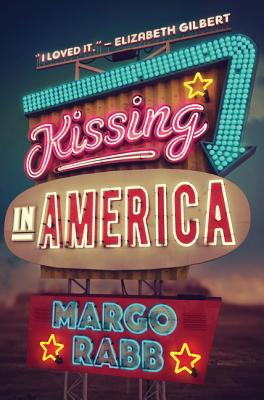
Kissing in America

Gabi a Girl in Pieces
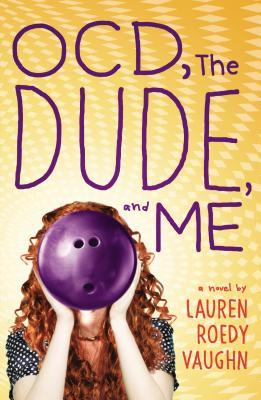
OCD, the Dude, and Me

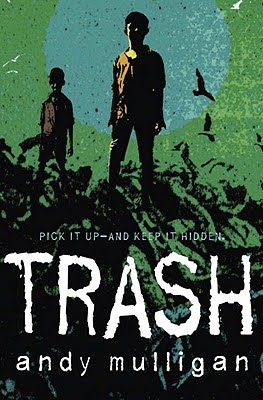
Trash
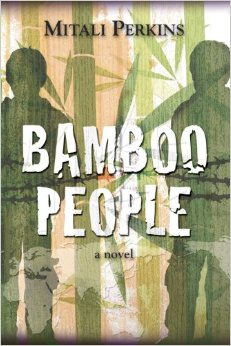
Bamboo People
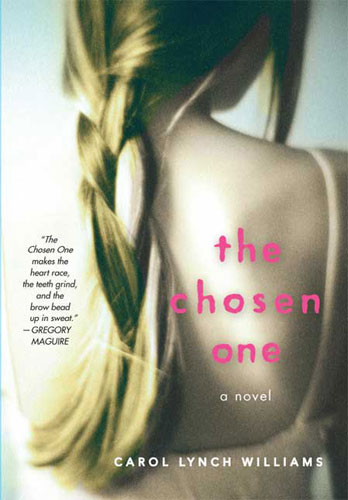
The Chosen One
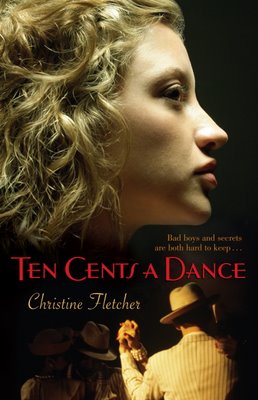
Ten Cents a Dance
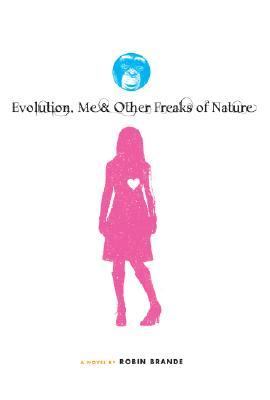
Evolution, Me, and Other Freaks of Nature
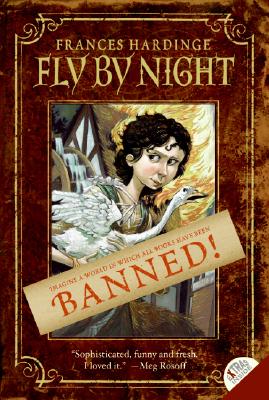
Fly by Night
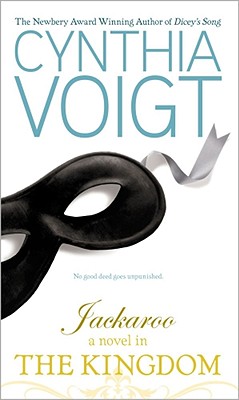
Jackaroo

What are some other good #QuietYA books that you’ve read?

Gone With the Wind

by Margaret Mitchell
First sentence: “Scarlett O’Hara was not beautiful, but men seldom realized it when caught by her charm as the Tarleton twins were.”
Support your local independent bookstore: buy it there!
Content: There’s mild swearing, and a LOT of the n-word. Take it for what you will. It’s in the adult fiction section of the bookstore.

I first read this when I was 15 or 16. I don’t remember why I picked it up, just that I did. I don’t remember what I thought of it, but it couldn’t have been much, since I really had no desire to ever visit it again. (I think I’ve seen bits of the movie.)

We picked this one for my in-person book group, partly because no one had read it in a long time, and partly because Samantha Ellis wrote about it in How to Be a Heroine. And so I began the slog.

Because it was a slog. It’s so sexist and racist, I couldn’t stand to read it for long periods of time. It really is Old South — and there’s still a lot of the Old South in the south — and that’s just hard for me to understand. Eventually, I took to looking at it as a sociological study: why was the Old South the way it was. Why couldn’t they shake their prejudices and adapt? Why were they still stuck in the Way Things Were and that’s they way They Always Should Be?

And Scarlett… on the one hand, she’s an incredibly feminist character: a person who is willing to do what needs to be done, in the face of the Patriarchy and Public Opinion; a person who flies in the face of convention. It’s amazing how modern she is.

But she’s also mean and cruel and opportunistic. And hung up on a fantasy that she needed to move past.

Maybe, though, that’s the point? That only the cruel people are successful? I don’t know.

In the end, I didn’t like it, not just because of the content, but because it was SO LONG. Seriously: knock 700 pages off of this book and maybe it’d be a decent story.

There will at least be a lot to discuss.

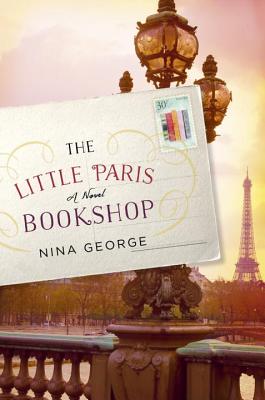
The Little Paris Bookshop

by Nina George
First sentence: “How on earth could i have let them talk me into it?”
Support your local independent bookstore: buy it there!
Content: There’s a few sex scenes, mostly tasteful, though it gets somewhat crude once. There are also several instances of mild swearing. It’s in the adult section for thematic reasons.

Jean Perdu (which is French for lost) owns a small bookshop on a barge floating in the Seine in Paris. His specialty is figuring out what a person needs to read and then “prescribing” the Right Book for the malady. He calls his store the Literary Apothecary and has had some measure of success.

With everyone but himself.

His great love, Manon, left him 22 years ago, and Jean’s life has basically frozen since then. Sure, he’s lived — he’s in his 50s now — but he’s not Lived. And then he meets Catherine, and his life starts unthawing (but not in the way you think at first). He ends up on a boat trip (river trip?) down to the south of France to find Manon’s memory (she died soon after she left him) and to properly grieve.

This book is being billed as a bookish book, and it is in a way. It’s about the power of stories and narrative to help us through all times — both the good and the bad. But, it’s more about the healing power of grief. How, if you don’t let yourself grieve for what is lost then you can never move on, never really live again.

It’s very French, as well.  (A co-worker, who is very knowledgeable in All Things French, mentioned that this is a homage to Jean de Flourette and Manon of the Spring, both of which I saw when I was at BYU and probably should hunt down again.) There’s is a slight magical realism thread through it, in the way Jean could find the right book, to the power of food and company. It gets bogged down in the middle, during the river trip, and Manon’s travel journals, while providing some interesting insight to her and Jean’s relationship, interrupt the flow of the book.

That said, it was enjoyable, though it’s not my favorite bookish book about books.

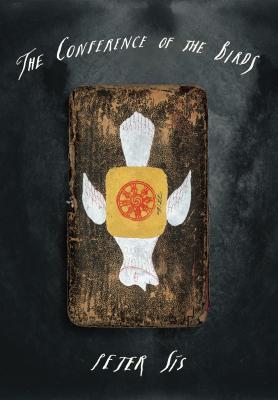
The Conference of the Birds

by Peter Sis
First sentence: “
Support your local independent bookstore: buy it there!
Content: There’s nothing. I found it in the kids poetry section, but it’s more an adult poem; something to ruminate on. So I moved it to the adult poetry section.

So, I blame Books on the Nightstand bingo for this. I started my card back in May, and the one I ended up with has a square for “written for adults but with illustrations”. I had no idea what to do with that. Then, we got a competition of sorts going at work (we all have bingo cards going and the first one to blackout wins… something), and I was doing inventory in my sections (the kids books are basically my fiefdom. Seriously. I have had  many coworkers tell me they just “don’t mess with Melissa’s sections”.) and discovered this book. It’s not a children’s book, so it fits the bill: adult book, with illustrations (but not a graphic novel).

Bascially, it’s an adaptation of a 12th-century Sufi poem, about an epic flight of birds, who fly through thick and thin, through days, through the deepest despair, in order to find their True King, Simorgh. You can pretty much sense the allegory dripping off of this poem (Deeper Meaning for my mother). And I’ll admit: I needed to read this poem this week. It gave me the reminder that I can get through all the valleys of my life, and maybe there will be fulfillment in it all.

But, what I truly loved was Peter Sis’s art. The book itself is gorgeous: thick pages, that are just luxurious to touch (and should be, with such a high price for a slim book). And the paintings were done in muted earth tones, with layers of depth to them (at least to my untrained eye). It’s a book I could imagine going back to when I just wanted to page through something lovely.

It’s not something I ever would have picked up on my own, so I’m grateful for the extra push from the bingo game. Sometimes getting outside of your comfort zone is a good thing.

State of the TBR Pile: July 2015

I’ve been super busy at work. Between Saturday Storytime, getting our local Where’s Waldo up and running, and hoping people sign up for our day camp (and then making sure our teachers — pulled from the community — are set), there’s been a lot to do.

That said, I had a little crowd on Saturday for storytime (in which we read The Princess and the Pony. Hilarious!), the Waldo seems to be going well (need to plan the ending party!), and from all accounts, the first camp session went well. So, maybe it’ll be a good month overall.

(And it’s Harper Lee week this week, too!)

(I haven’t got much reading done this weekend, though. I’ve been listening as much as possible to panels at SDCC. And I saw this and this and this — yes, they are all Nathan Fillion links — all of which made me very happy.)

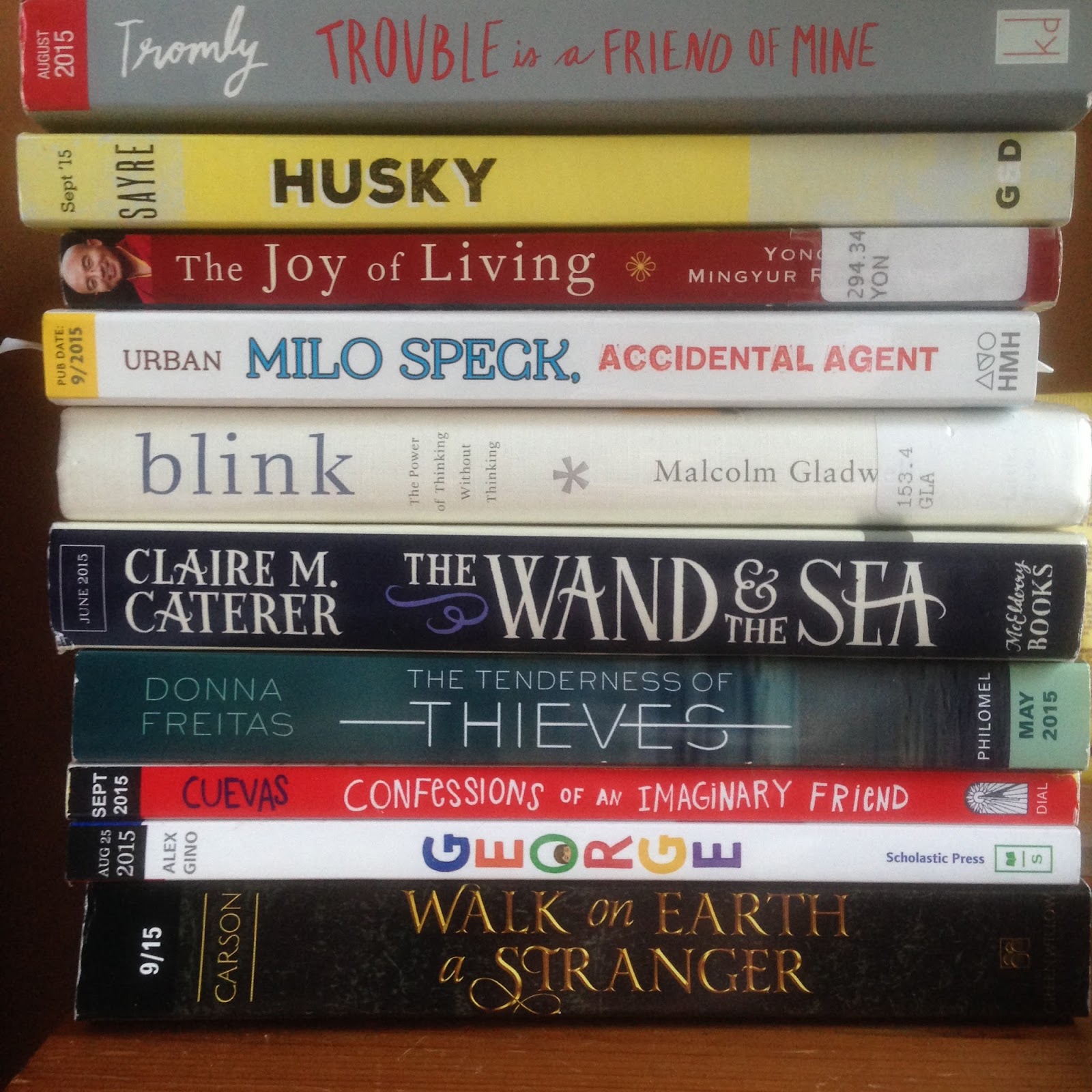
My pile is a mix right now of bingo books (we’ve got a bit of a bookseller challenge going on right now) and Autumn Kid’s Next books (though the deadline is the 15th. I don’t know how much I’ll get read).  Here’s what’s on it:

Trouble is a Friend of Mine, by Stephanie Tromley
Husky, by J. E. Sayre
The Joy of Living, by Yongey Mingyur
Milo Speck, Accidental Agent, by Linda Urban
Blink, by Malcom Gladwell
The Wand and the Sea by Claire Caterer
The Tenderness of Thieves, by Donna Freitas
Confessions of an Imaginary Friend, by Michelle Cuevas
George, by Alex Gino
Walk on Earth a Stranger, by Rae Carson

What’s on your TBR pile?