

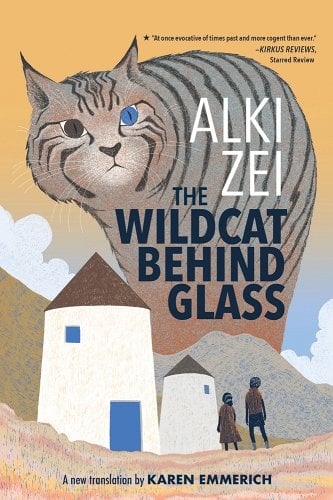
by Alki Zei
Translated by Karen Emmerich
First sentence: “Winter Sundays are the most boring days of all.”
Support your local independent bookstore: buy it there!
Content: It’s a little long and talks bluntly about fascism. It’s in the Middle Grade (grades 3-5) section of the bookstore.
It’s 1936 in Greece and all Melia wants is to run and play, listen to their grandfather tell stories about his “ancients”, and hang out with her sister, Myrto. But, it’s 1936, and the adults are all concerned about the rise of fascism and the overthrowing of the king. It really doesn’t help when their older cousin Nikos ends up in hiding because he’s wanted by the government. Or, when, in the fall, they go to a public school for the first time (they were homeschooled before), and Myrto gets sucked into their school’s phalanx, which is kind of like the Hitler Youth Program. Melia doesn’t quite know how to process everything.
And, honestly, after finishing this book, neither do we. It was initially written in 1968, and you can feel that when reading it. It’s a lot of everyday stuff happening, and not a lot of conflict and resolution. In fact, the book just kind of ends, and peters off without any real resolution. (Well, spoiler: Nikos gets away, but that’s about it.) Also, a bone to pick with the marketing: the back reads as if the titular wildcat- a taxidermied cat in Melia’s house – was magical and took them on adventures. It’s not. I wanted it to be. But there is no magic adventures here. I think the author wanted to tell Nikos’s story, but someone told her that it would be better if you made a young girl the protagonist and so she did that. Nikos was a much more interesting (and less whiny!) character. Oh well.
At least it wasn’t terribly long.
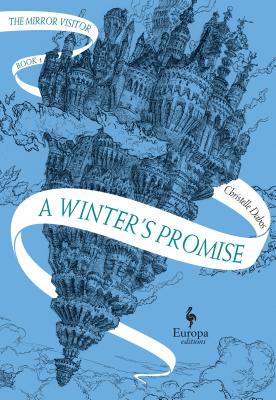 by Christelle Dabos
 The Book Nut