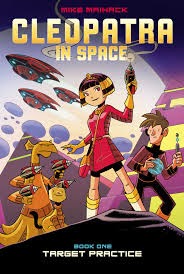
Cleopatra in Space

Book One: Target Practice
by Mike Maihack
Support your local independent bookstore: buy it there!
Content: There’s some violence, but nothing terribly graphic. What struck me is that there is a lot of exposition (with long words) in this one. I’m not sure if K understood everything that went on, but she got the gist of it. Which is what graphic novels are great at.

It’s her 15th birthday, Cleopatra (yes, that Cleopatra) doesn’t want to go through with her party. The ceremony, the pomp, the everything. So, she sneaks away from her tutor, and discovers a portal to a future time and place that is being besieged by a tyrannical dictator. The prophecies declare that she will be the Savior of the world, but first: she has to go to academy to figure things out.

It’s essentially a fish-out-of-water story; BCE girl meets futuristic technology. I liked how she found everything boring, until she got to combat training. She took to that immediately. She’s a girl of action, and she’s smart and tough — when it comes to combat. She’s not a scholar and that’s okay. The only thing that was a bit disconcerting was the whole talking cats. Cats in this world have evolved to the point where they kind of run things. And it’s a bit weird. But that just may be me.

In the end, it reminded me a lot of Zita the Spacegirl — both in the content as well as the artistic style — which is a good thing. And I’m curious to see where Maihack goes next.

Mouseheart

by Lisa Fielder, illustrated by Vivienene To
First sentence: “The young rat prince knew he was taking a monumental risk.”
Support your local independent bookstore: buy it there!
Review copy given me by our Simon & Schuster rep, via my boss.
Content: There are some mild scary parts, and some mild violence, but really, it’s quite happy in the middle grade (grades 3-5) section of the bookstore.

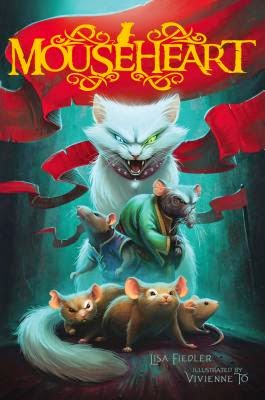
I have to admit that I was a little turned off by the cover. It just looks so…. I don’t know. Juvenile, maybe. Or lame, perhaps. But, either way, I was completely unprepared for the awesome found inside.

I do have to qualify the word “awesome”: if you don’t like fantasy or talking rats, you may not find this awesome at all. The thing is: usually I don’t either. I liked  The Tale of Despereaux well enough, and Mrs. Frisby and the Rats of NIMH okay, but I didn’t like Redwall, and I have studiously stayed away from the Warriors series. So, talking animals, not exactly my thing.

But the story of a pet-store bred mouse, Hopper, who — ends up beneath the subways of Brooklyn in the sewers — got to me. Perhaps it was his insecure optimism that won my heart over. Or the fact that his sister, Pinkie, was a bully and my mom-sense (kind of like Spidey-sense) kicked in. Or perhaps it was that he found a civilization of rats underground that has a tentative peace with feral cats. Or maybe it was the prophecy of the Chosen One, and the complications that brings.

What I really enjoyed was the way that Fiedler had the rats interact with the human world. How they taught themselves to read, and how Hopper figured out the subway system. How they used cast-off items (and some scavenged ones, too) to furnish their world. It was fantastic.

Maybe, too, I was just in the mood for a straight-up fantasy adventure with talking rats and a mouse with a heart of gold. I didn’t know that I was, but I found I couldn’t put this one down.

Lord and Lady Bunny — Almost Royalty

by Polly Horvath
First sentence: “It was summer on Hornby Island.”
Support your local independent bookstore: buy it there!
Others in the series: Mr. and Mrs. Bunny — Detectives Extraordinaire
Content: The only thing I can think of is that some of the vocabulary (like synchronicity or textured soy protein or materialized) might make it challenging for younger readers. It’s in the middle grade (grades 3-5th) section of the bookstore.

Fresh off their last adventure, both Mr. and Mrs. Bunny and their human friend Madeline are finding life a little boring. Madeline’s still stressing about money (thanks to her parents’ — Flo and Mildred — lack of foresight), and most especially about a college fund. Mr. and Mrs. Bunny are back to squabbling and comparing themselves to their uppity neighbor Mrs. Treaclebunny. But never fear: adventure is in the cards. Flo and Mildred discover they’ve inherited a candy shop in a small English village and Mr. and Mrs. Bunny decide to head to England on vacation. Of course they meet up on the cruise ship ride to England from Victoria, Canada (implausible, I know  — but some of the funniest scenes are on the cruise ship), and of course madcap farce ensues.

I don’t know if it was my mood, but I didn’t find this one as funny as the first. Maybe it was because it was very much the same thing over again, and not being New and Fresh, it wasn’t as enjoyable. But I also think it was because there was a lack of a consolidated conflict. In the first book Madelline and the Bunnys had to save Madeline’s parents from the bad foxes. This time, they were just going across the ocean and puttering about England trying to raise money. Not as, well, interesting in my book.

Though there were some brilliant moments. My favorites was the often-repeated aside that went like this:
“American?”
“No. Canadian.” When would they learn to tell the difference?

I laughed every time.

I was also amused at the meta part where Mrs. Bunny ended up at a book signing that the “translator” of the first book was at. Because, well, the humans think the translator is making things up, and Mr. and Mrs. Bunny don’t exist. It was pretty amusing.

But, in the end, it didn’t tickle my funny bone the way the first one did.

The True Blue Scouts of Sugar Man Swamp

by Kathi Appelt
First sentence: “From the rooftop of Information Headquarters, Bingo and J’miah stood on their back paws and watched Little Mama and Daddy-O trundle away; their stripy gray and black silhouettes grew smaller and smaller in the deepening dusk.”
Support your local independent bookstore: buy it there!
Review copy snagged from the ARC shelves at my place of employment.
Content: There’s a few difficult words but it’s pretty appropriate for anyone. It’s in the middle grade (3-5th grade) section of the bookstore. I think it’d make a great read aloud for younger kids as well.

Bingo and J’miah are the two newest members of the Sugar Man Scouts. Like their ancestors before them, they are the raccoons that keep an eye on the Sugar Man Swamp, listening to the Voice, and keeping ready to wake the Sugar Man in case they need to.

I suppose I should back up and say that Sugar Man Swamp is in Texas (not Louisiana, which is where I thought it was for half the book and where I am convinced it should be) and in it grows this amazing sugarcane. From which Chap Brayburn and his mom make fried sugar pies. Which should be famous, but aren’t because they are off the Beaten Path.

And so, they owe lots of money to a nefarious businessman named Sonny Boy, who wants to sell the swamp to a ‘gator wrestler for a theme park.

Oh, and did I mention that a gang of wild hogs are on the rampage?

That kind of gives you a taste for this tale. And it is a tale. In fact, the narrator was bugging me — it’s a pretty intrusive narrator — until  I realized that this is the sort of book that begs to be read aloud. Once I imagined myself listening to this story, perhaps told by a fantastic storyteller with a fabulous Southern accent, then the book came alive for me. I understood the humor, I understood the whimsical nature of the characters, and — honestly — I fell for it.

It’s not perfect — it’s probably a bit longer than it needed to be — but it’s very, very good. And charming. And enjoyable.

And that’s enough for me.

(Just for the record: because this is a Cybils nominee, I’ve been asked to make sure y’all know this is my opinion only, and not that of the panel.)

The Books of Elsewhere: The Strangers

by Jacqueline West
ages: 9+
First sentence: “Houses are good at keeping secrets.”
Support your local independent bookstore: buy it there!
Others in the series:The ShadowsSpellbound, The Second Spy

I’m going to be honest. At this point in the series, if it hadn’t been nominated for the Cybils panel I’m on, I wouldn’t have read it. Because I feel like the series is kind of dragging on. Just how many more times can Olive go up against Annabelle McMartin in order to save the house? How many threads can not be wrapped up by the end of a book? Why can’t they find Morton’s parents? And how completely dense are Olive’s?

In this one, some neighbors show up: a Brilliant Professor married to a Slightly Batty Medium (it’s too bad she wasn’t a Small Medium at Large), and an Incompetent Apprentice. They weasel their way into Olive’s life when her parents get kidnapped on Halloween. The main focus of this one is figuring out where Olive’s parents are and getting them back, while still protecting the house from Nasty Annabelle.  As far as that goes, I called who the Bad (or Misguided) Guys were early on, and so it was just a matter of time until Olive caught up to what I already knew.

It’s not that it was a poorly written book — it wasn’t. It’s just that the premise is getting old by book 4, and even the talking cats that were so much fun in book one aren’t making me laugh. And to be totally, completely honest: I skimmed this one, mostly, because I just wasn’t interested in Olive anymore.

(Just for the record: because this is a Cybils nominee, I’ve been asked to make sure y’all know this is my opinion only, and not that of the panel.)

The Whizz Pop Chocolate Shop

by Kate Saunders
ages: 8+
First sentence: “‘We’ll probably sell the place,’ Dad said, from the driver’s seat.”
Support your local independent bookstore: buy it there!

I really liked Beswitched last fall, and so when I found out that Kate Saunders had a new one, I was quite interested. And the cover and title promised good things, as well.

(You know where this is going, right?)

Oz and Lily are twins — Oz is the genius, Lily has dyslexia — whose family has inherited a run-down, old chocolate shop in London. Their family up and moves there, where the kids find out that the shop, run by their great-great-uncles, was a place for magic. The chocolate (and candy) was infused with magic in order to help and entertain people (think Weasly’s Wizarding Wheezes). Except one of the brothers invented a chocolate for immortality. And another brother, Isadore, is remarkably still alive, and wants the molds so he can be immortal. (Wait: what?) With the help of a talking cat, Demerara, Oz and Lily are tasked with stopping Isadore from achieving his goal.

This one had all sorts problems. First off, the talking cat. Actually: I couldn’t get past the talking cat. I’m not a talking animals person, but sometimes I can get past that and enjoy the book. Not so with this one. I wanted to strangle the cat. I took to skipping everything the cat said and did. Then I started skipping around in the book, because without the talking cat, there’s not much left. There was something in there about Isadore being more misguided than evil (even though he kidnaps Oz), but by that point, I honestly didn’t care enough to find out why.

Chalk this one up to good premise, lousy execution.

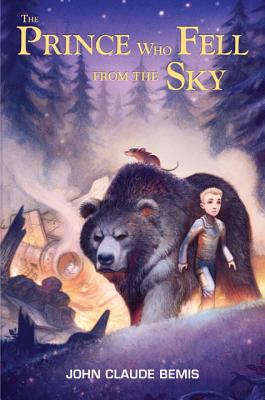
The Prince Who Fell From the Sky

by John Cladue Bemis
ages: 10+
First sentence: “The Forest was green with summer when the bear lumbered up from the creek bed where she had been cooling off.”
Support your local independent bookstore: buy it there!

I’ve read a lot of fantasy. Not as much as some, but definitely a lot. And so, especially this Cybils season, it takes something really unique to get my attention.

And, impressively, this one did.

I found myself marveling at the world that Bemis created; it’s one of the more unique ones that I’ve read.
in this distant future, the humans have disappeared (Died off? Destroyed? We never really find out), and the animals have basically taken over. Under the “leadership” of the Ogeema (he’s not very nice), the rest of the animals are managing okay. They have their clans — divided into predators and prey — and they basically have enough food. Our main character, a bear named Casseomae, is content. Until a pod crashes in Casseomae’s forest. Most of the Skinless Ones (her word for the humans) in it were killed, but a child survived. The coyotes want to kill the child, but Casseomae saves the child and adopts it as her own.

I should mention that even though the title says “prince” and the picture is of a boy, I never really felt like the child had a gender. Or that it was really of much importance to the story, which may bother some readers. But, I felt like it was the animals’ story more than it was the child’s. It’s the animals, after all, who are going on the journey and experiencing  hardships, and it’s their eyes that we see everything through.

Of course, Casseomae knows that in the forest the child, ‘s life is in danger. She she needs to take him someplace safer, someplace far away from the Ogeema’s domineering grasp. So, she takes the child out of the forest, heading toward a place called the Havenlands. Along the way, they meet a rat named Dumpster and a dog named Pang, talk to some vulture oracles.

If this is sounding a little weird, it’s because, well, it is. (Talking animals, in my opinion, are always a little weird.) And, truth be told: if it were told with humans, it would be your typical post-apocalyptic journey book, just a group of people running from an evil overlord, trying to make a new life for themselves.

But, with animals, it’s an amazing story. The way that Bemis writes about how the animals interact with the destroyed human world is completely fascinating. The rat, Dumpster, the Memory keeper (in other words: he knows all about humans and their stuff) for his mischief, helps the bear get along and make this perilous journey. And as they went along, I found myself time and time again being drawn into world — both familiar and strange — seeing through animal eyes. Additionally, Bemis wove together the classic animal stories — Watership Down and Jungle Book are two that come to mind — in with the post-apocalyptic setting, which gave what could have been a trite story added depth.

I do have to wonder about kid-appeal with this one, though: did I like this story so much just because of the world, or because, as a mother, I related to Casseomae’s fierce protective streak? Will kids actually wander through this world, and this adventure, and become as excited by it as I was?

I can only hope so.

(Just for the record: because this is a Cybils nominee, I’ve been asked to make sure y’all know this is my opinion only, and not that of the panel.)

Wildwood

by Colin Meloy/Illustrated by Carson Ellis
agest: 10+
First sentence: “How five crows managed to lift a twenty-pound baby boy into the air was beyond Prue, but that was certainly the least of her worries.”
Support your local independent bookstore: buy it there!

What if, across the river from a small community outside of Portland lay an Impassable Wilderness? And what if, a 12-year-old girl, Prue, and her friend, Curtis, were able to get past into the Impassable Wilderness because that’s the direction they saw the crow’s fly with Prue’s baby brother? And what if, when they got into the Impassable Wilderness they discovered an entire community: one with talking animals, and Dowager Governesses and a civil war looming? And what if, they got caught in the middle of it?

What then?

On paper, this book has everything it needs to be a grand middle-grade fantasy. Talking animals both good an evil? Check. Bandits in the forest?  Check. An evil queen/governess who vaguely reminded me of the White Witch in Narnia? Check. Golden eagles big enough to carry a person? Check. A baby kidnapping, and a subsequent sacrifice for evil gain? Check. A winning hero and heroine who manage to Figure Things Out (and on the other hand, Completely Dopey Parents who are Utterly Clueless)? Check.

So, why didn’t I like this one more than I did?

I think it’s primarily because it was too. long. Unfortunately, a side effect of Harry Potter is that fantasy writers think they need 540 pages to tell a 250 page story. Really? I don’t need all the extra stuff: the inner monologues, the extended prison scenes, the tender asides. Perhaps the world was too big for one book (well, yeah: there’s a sequel), but even so, I think Meloy spent too much time on building the huge world and not enough on tightening up the plot to give me what I wanted — in this case, for Prue to rescue her brother — without all the extra stuff. (I really am spoiled when it comes to reading. I just don’t have the patience.)

That said, it definitely works as a “mood” book. I did feel like I was in Portland in the fall: it’s a rainy and dire world that the children have found their way into. The pen-and-ink illustrations reminded me of the ones Jon Klassen did for the Incorrigible Children of Ashton Place series, and they were scattered throughout the book providing a needed break from the endless prose.

I guess what I’m really saying is that I think this is one of those books that adults think kids should like. And maybe some will. But, as an adult, I sure didn’t like it all that much.

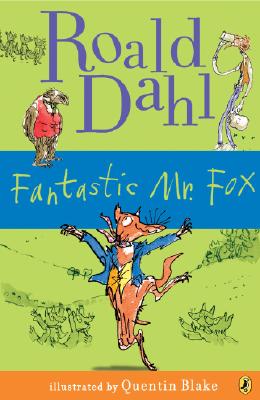
Fantastic Mr. Fox

by Roald Dahl
ages: 8 to 11
First sentence: “Down in the valley there were three farms.”
Support your local independent bookstore: buy it there!

I’m not quite sure what I expected when I started this. It’s Dahl, so something weird, obviously. And Hubby’s been raving about it for years: it was his favorite Dahl as a kid. So, something… fantastic, hopefully.

And so I was surprised at how little I liked it.

It’s not that it was bad or poorly written. It was fine; it’s Dahl after all. But… perhaps that’s the problem. It’s very Dahl. On the one side of the ring are three horrible farmers, Boggis, Bunce and Bean. They’re disgusting, they’re mean, they’re… well, horrible. And on the other is Mr. Fox and his family — wife and three kids. They have to eat, of course, and what better catch is there than the ducks, geese, chickens and turkeys from the horrible farmers. So, Mr. Fox (being a fox), steals them for his family. The farmers get wise, and eventually try to catch Mr. Fox. They shoot his tail off, and then stake out his house. Mr. Fox (being a fox), is much to wily to catch, and he and his family dig ever deeper into the hill. There ensues a huge siege by the farmers; eventually the foxes will starve and come out, right?

And this is where the weirdness starts. Mr. Fox gets his friends — Badger, Rabbit, Mole — and they start digging. Amazingly, they hit right in the middle of each of the three farmer’s storehouses, creating a grand feast for all of the now-trapped underground animals, and so they never, ever have to go outside again. And… that’s it. That’s the story. It’s short, it’s for younger kids, but I’m not satisfied.

Really. That’s it. Huh.

I like Dahl’s weirdness, the fact that the horrible people get their comeuppance. But, there just wasn’t enough to this story. It wasn’t developed enough, even for a middle grade book, and it just ended, which was highly unsatisfying.

Sigh. Some books were just meant to be read as kids, I guess.

Three for the Circular File

I haven’t done something like this in a while, but none of these three books deserved their own post, so here I am lumping two did not finishes and one blah book in a post. Feel free to skip if you feel so inclined.
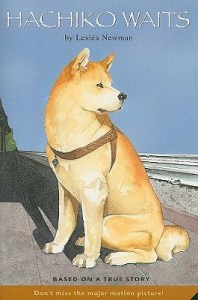
Hachiko Waits
by Leslea Newman/Illus. by Nachiyo Kodaira
ages: 7/8-10
First sentence: “When Professor Eizaburo Ueno woke up, he liked to play a game with his golden-brown puppy, Hachi.”

My fundamental problem with this one wasn’t so much that I often felt the author was talking down to me — sure it’s for lower Middle Grade readers, but in the best ones, I never feel that way — it’s that this simplistic little book was the one chosen for our 4th/5th grade mother-daughter book group. I kept wondering why we couldn’t have picked a story that wasn’t so maudlin (sweet, yes, but so maudlin).

It’s the story of a dog, a dog so faithful and so unwavering, that he became beloved by the Japanese people in the early 1930s. Hachi was the dog, an Akita-ken, and every day he waited for his master, Professor Ueno, at the train station. One day, Professor Ueno had an unexpected heart-attack at work and didn’t come home. Hachi was confused, and the next day came back to wait. He kept coming back, day after day, for ten years, until he finally passed away… waiting.

Yeah.

As I said, it wasn’t so much the story, or even the author talking down to me as a reader, as it was that I can’t believe there’s going to be much to discuss. Next month, I swear, I’m going to push something more complex. (Appropriate, though.)
Hamlet
by John Marsden
ages: 15+
First sentence: “‘Do you believe in ghosts?’ Horatio asked him.”

I picked this one up in my ever-continuing attempt to make sense out of htis play. It’s not a constant search, just every once in a while, I do like to try and see if a different person — especially someone with more imagination — can make more sense out of Hamlet than I can.

I abandoned it because it just wasn’t jiving with me. It’s a very sexualized version of Hamlet, and a very modern take as well. Hamlet was a bit of a weird jerk — there was this scene involving animals and I wasn’t quite sure if it was bestiality or just ritualized killings — and the narrative kept flitting between characters. Each one of these things, individually, could have worked for me. But the combination of them just killed the story. Admittedly, I didn’t get very far — my time is precious, of course — and perhaps it got better further along in the book. Then again, maybe it wouldn’t have and I’ve spared myself the agony of time lost, never to be returned.

But we’ll never know, will we?

Return to Sender
by Julia Alvarez
ages: 11+
First sentence: “Tyler looks out the window of his bedroom and can’t believe what he is seeing.”

I wanted to like this one. Really, I did. But, it had one strike against it from the start: I really don’t like books written in present tense. (Yeah, I know: I just complained a couple days ago about a book written in past tense. I’m being picky this week.) But it seemed like a nice story about a farmer, and about the use of illegal immigrants, and separation and loss. And I felt like I needed a Hispanic story.

And yet, what I hoped this story could do got lost in what I thought was an overly preachy tone. I’m sure Alvarez meant to be sympathetic to the plight of illegal immigrants, especially the children of the immigrants. But she kept hammering this point in over and over and over and over, that I finally abandoned the book due to preachiness.

Sigh. You can’t win them all.