Three for the Circular File

I haven’t done something like this in a while, but none of these three books deserved their own post, so here I am lumping two did not finishes and one blah book in a post. Feel free to skip if you feel so inclined.

Hachiko Waits
by Leslea Newman/Illus. by Nachiyo Kodaira
ages: 7/8-10
First sentence: “When Professor Eizaburo Ueno woke up, he liked to play a game with his golden-brown puppy, Hachi.”

My fundamental problem with this one wasn’t so much that I often felt the author was talking down to me — sure it’s for lower Middle Grade readers, but in the best ones, I never feel that way — it’s that this simplistic little book was the one chosen for our 4th/5th grade mother-daughter book group. I kept wondering why we couldn’t have picked a story that wasn’t so maudlin (sweet, yes, but so maudlin).

It’s the story of a dog, a dog so faithful and so unwavering, that he became beloved by the Japanese people in the early 1930s. Hachi was the dog, an Akita-ken, and every day he waited for his master, Professor Ueno, at the train station. One day, Professor Ueno had an unexpected heart-attack at work and didn’t come home. Hachi was confused, and the next day came back to wait. He kept coming back, day after day, for ten years, until he finally passed away… waiting.

Yeah.

As I said, it wasn’t so much the story, or even the author talking down to me as a reader, as it was that I can’t believe there’s going to be much to discuss. Next month, I swear, I’m going to push something more complex. (Appropriate, though.)
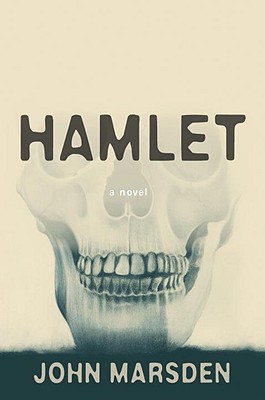
Hamlet
by John Marsden
ages: 15+
First sentence: “‘Do you believe in ghosts?’ Horatio asked him.”

I picked this one up in my ever-continuing attempt to make sense out of htis play. It’s not a constant search, just every once in a while, I do like to try and see if a different person — especially someone with more imagination — can make more sense out of Hamlet than I can.

I abandoned it because it just wasn’t jiving with me. It’s a very sexualized version of Hamlet, and a very modern take as well. Hamlet was a bit of a weird jerk — there was this scene involving animals and I wasn’t quite sure if it was bestiality or just ritualized killings — and the narrative kept flitting between characters. Each one of these things, individually, could have worked for me. But the combination of them just killed the story. Admittedly, I didn’t get very far — my time is precious, of course — and perhaps it got better further along in the book. Then again, maybe it wouldn’t have and I’ve spared myself the agony of time lost, never to be returned.

But we’ll never know, will we?
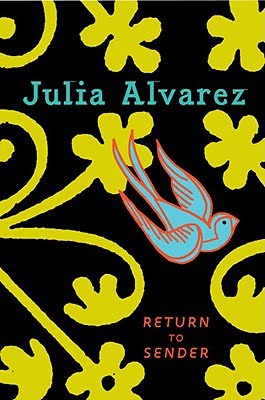
Return to Sender
by Julia Alvarez
ages: 11+
First sentence: “Tyler looks out the window of his bedroom and can’t believe what he is seeing.”

I wanted to like this one. Really, I did. But, it had one strike against it from the start: I really don’t like books written in present tense. (Yeah, I know: I just complained a couple days ago about a book written in past tense. I’m being picky this week.) But it seemed like a nice story about a farmer, and about the use of illegal immigrants, and separation and loss. And I felt like I needed a Hispanic story.

And yet, what I hoped this story could do got lost in what I thought was an overly preachy tone. I’m sure Alvarez meant to be sympathetic to the plight of illegal immigrants, especially the children of the immigrants. But she kept hammering this point in over and over and over and over, that I finally abandoned the book due to preachiness.

Sigh. You can’t win them all.
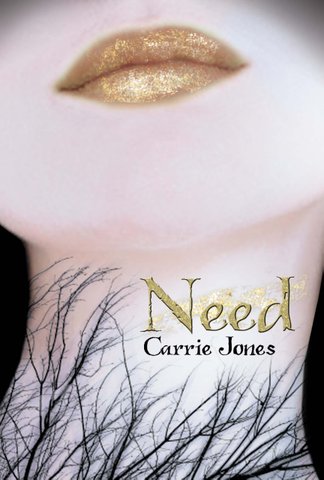
Need

by Carrie Jones
ages: 12+
First sentence: “Everybody has fears, right?”
ARC sent to me by the publisher.

Zara has issues: she collects phobias like some people collect stamps, and ever since her dad (step-dad, actually) died, the phobias are worse then usual. So her mom sends her to live in Maine with her grandma, in order to help Zara shake out of whatever funk she’s gotten herself in to.

It starts out as your typical new-girl-can’t-fit-in book, but then takes a sharp turn: there’s pixies out in the Maine woods, and one — the king — is stalking Zara. These aren’t your fairy-tale pixies: they’re out for blood (specifically boys’ blood) because they don’t have a queen.

With the help of her new friends — Nick, Devyn and Issie — she figures out what she needs to know, which includes several interesting, and somewhat unexpected, twists in the plot — in order to save herself from the impending doom of being turned into a pixie.

Of course this smacks of Twilight-ness (the comparisons are about as obvious as the many Harry Potter-type books), but that’s beside the point. It’s got everything: bloodthirsty pixies, weres (wolves, yes, but other animals, too), romance, adventure, a heroine who can hold her own (unlike Bella). Jones holds her own with the narrative: it’s tight and supsenseful and swooning, everything a novel like this is supposed to be. And even though it tapers off near the end — will there be a sequel? — it all comes together like a nicely wrapped package (with the gorgeous cover and all).

It’s pure escapism and, even with all the snow in the cold Maine winter, a perfect summer read. (Maybe reading about snow will keep us all cool?)

Buy it at Amazon, Powell’s or your local independent bookstore.

East

I had a hard time finishing this book by Edith Pattou. Not because of the book, though. Because my life wouldn’t let me sit down and just savor this book like a wanted to. I finally did, about 3/4 of the way through, because it was just too compelling. So, I let the home and Christmas stuff wait for a night. 🙂

The story is a retelling of the old fairy tale East of the Sun and West of the Moon. When I first read about this book in Chinaberry, I had no idea about the fairy tale, so we checked it out from the libarary as well. It’s a simple Norweigan fairy tale, one I think I’ve heard before. A white bear takes a girl from a poor family in exchange for wealth. He then takes her to live with him in his enchanted castle. It’s a fairly uneventful time, except that every night, someone comes to sleep with her in the bed. After a while, she aches to go home, and the white bear relents, with one condition: she must not be alone with her mother. She breaks this condition, tells her mother about the stranger in the bed, and her mother gives her a candle. Back at the castle she lights the candle and sees that it’s a man in the bed with her. Unfortunatly, though, with this act, she seals his fate: he’s taken away to marry the troll queen in the castle east of the sun and west of the moon. The girl then sets out to search for the man (whom she realized, too late, was the white bear). She walks for ages, picks up a golden spinning wheel, loom and harp, until the north wind takes her to the castle. There she trades the wheel, loom and harp for visits to the prince, finally succeeding in waking him up and breaking the troll queen’s curse.

East follows the basic fairy tale fairly well, but since I wasn’t attached to the original tale, I had no problems with Pattou’s changes to the story. She fleshes out the family, giving them reasons and motivations behind the departure of the girl (Rose, in the book). The relationship between Rose and the white bear is fleshed out. And the whole journey to find the bear is completely different. Rather than relying on magic, Rose relys on friends, common sense, and plain old inginuity. And, yes, she finally succeeds in the end, and it’s a completely satsifying success. Even the little (mostly unecessary) epilogue in the end doesn’t detract from the great ending to the story.

It was a wonderful book. Perhaps it was good that it took me so long to read. Maybe I enjoyed it more that way.