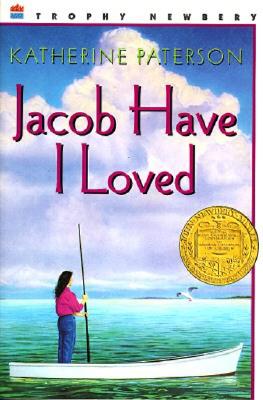
Jacob Have I Loved

jacobhaveilovedby Katherine Patterson
First sentence: “As soon as the snow melts, I will go to Rass and fetch my mother.”
Support your local independent bookstore: buy it there!
Content: It’s slow (it won the 1980 Newbery Award), and there’s not a lot of action. It’s perfect, though, for those 12 or 13-year-old kids who are trying to figure out themselves. And who like historical fiction.

A quick side note: it’s my 12th blogiversary today! I’ve fallen out of the habit of celebrating these, but I carved out this little corner of the internet 12 years ago today. Hard to believe, but there it is.

I wasn’t feeling much like reading new stuff the past couple of weeks, so I turned to a couple of rereads. One was The Blue Sword, which I’ve already given its own review. But the other, I only mentioned briefly, 12 years ago, so I thought it deserved its own post.

Sara Louise has spent her whole life on the small island Rass in the Chesapeake Bay. Her father works the water, crabbing in the summer, and harvesting oysters in the winter; her mother was a former schoolteacher and currently runs the house. Louise is mostly content, except… her younger twin, Caroline. It’s not that Caroline is mean or awful; in fact, it’s the opposite. Caroline is beautiful, Caroline is talented, Caroline is kind. Caroline is the joy of everyone on the island, and Lousie just can’t compete. She knows she should be supportive of her sister, proud of her sister. And she is. But she’s also jealous: she wants to be Noticed. But she’s not. She’s the backbone. The work horse. The awkward child.

There isn’t much of a plot; it’s Louise’s experiences growing up, and her (finally) figuring out what she wants out of life as an adult (which is nice). I spent this reread (it’s been a while) trying to figure out why this moved me as a pre-teen, why I have such a powerful attachment to it. I think it’s because everyone (well… me) can connect to being left out. To being looked over. To working and working and working and never feeling appreciated. To always being on the outside. And Patterson captured that feeling so very perfectly. She captures the awkwardness of the pre-teen years (I really don’t think anyone ever has things together the way Caroline does in the book; I’d love to see this story from Caroline’s point of view. It’d make her more human), the way they Want but don’t quite know how to articulate that want. The up and down feelings, the drama of just Living. It’s a perfect portrait of those years, and I think that’s what resonated.

Does it hold up as an adult? Yes, it does. It’s definitely historical fiction; it’s a picture of a small island in the 1940s, during World War II, and I found that interesting. I wanted to smack Grandma. Seriously, the woman had issues. I wished there was more about Louise’s mom; I would have loved to hear her story. I did enjoy it, even if I didn’t connect to it as deeply as I did when I was a pre-teen.

Definitely still worth reading, though.

Ghosts

ghostsby Raina Telgemeier
Support your local independent bookstore: buy it there!
Release date: September 13, 2016
Review copy provided by the publisher.
Content: There’s frank talk about death, so maybe it’s not for the younger kids (that depends on your kid). Otherwise, it will be in the middle grade graphic novel section of the bookstore.

Cat is resentful (and feels guilty about it). Her younger sister has cystic fibrosis and the climate in northern California is going to be better for her. Plus she’ll be closer to better doctors. But that means Cat has to upend her life and move. And she doesn’t want to have to start over. Especially since their new town seems to be a bit… obsessed… with ghosts.

But, as she settles in and makes friends, she discovers that maybe things aren’t always as they seem (and maybe sometimes they are), and that maybe she and her family can find a home here.

I love Telgemeier’s work. I love that she took something as series as a sibling with an incurable illness and made it not only accessible to kids but entertaining. She uses the Dia de los Muertos celebrations to talk about those we love who have died, and how we can honor and celebrate their lives. There’s also the usual pre-teen adjustments: making friends, handling school, boys… And it all balances out to an absolutely delightful graphic novel.

Highly, highly recommended.

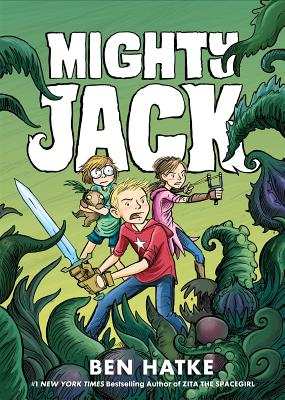
Mighty Jack

mightyjackby Ben Hatke
Support your local independent bookstore: buy it there!
Review copy provided by the publisher because Ben’s coming (September 30th)!
Release date: September 6, 2016
Content: There’s some intense magical violence, but other than that, it’s pretty straightforward. It’s geared towards the 10 and up crowd, but will probably be in the Middle Grade Graphic Novel section of the bookstore.

It’s summer, and Jack is stuck at home taking care of his autistic sister, Maddy, while his mother juggles two jobs. It’s not any fun, especially since Maddy doesn’t talk (much). But one day, at a local fair, Jack and Maddy meet some traveling strangers (and a nice Easter Egg for Zita fans!) and end up trading their mother’s car for some seeds.

(Yes, this is a nice twist on Jack and the Beanstalk. I’m glad you noticed.)

The seeds turn out to be magical, which sets off a chain of events that leaves Jack more than a bit wary. Along with a new friend, Lilly, the three kids try to figure out just what they’ve unleashed on their world.

Just a heads up: this is definitely a set-up for a new adventure. You learn about Jack, Maddy, and their mother. You find out a bit about Lilly (who is awesome. Period.). But, other than that, there’s a lot of mystery. The seeds are definitely Dangerous (and attract dragons!), and the conflict comes from Jack, Maddy, and Lilly’s disagreement over whether or not they should keep the garden going. Jack comes down on no, the girls vote yes. And it’s that conflict which sets up the adventure for books to come. (And here we are, again, waiting for sequels!)

I adore Ben Hatke, love his art style, and think he’s a great story teller. This one is definitely great for fans of Zita, as well as a good entry point for others (those who are hesitant to read Zita?). Fantastic!

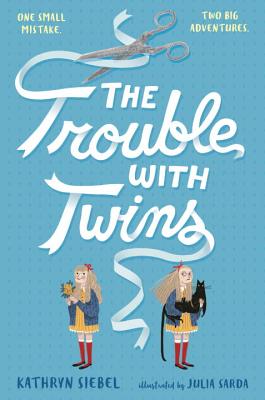
The Trouble with Twins

troublewithtwinsby Kathryn Siebel
First sentence: “And so it begins in front of the fire, the story of two twin sisters.”
Support your local independent bookstore: buy it there!
Content: There’s some neglectful treatment of kids and some awful parenting, but nothing physically harmful. It’s in the middle grade (grades 3-5) section of the bookstore.

Arabella and Henrietta are twins (in some distant past). Arabella is the beautiful, smart, sweet one and Henrietta is… not. (Before I get too much further, the better sister story, if maybe a bit more mature for this age group, is Jacob Have I Loved which is one of the more powerful reading memories I have as a child.) Henrietta is neglected, ignored, unloved. And so when she tries to get attention by cutting Arabella’s bangs off (they seem a bit old for those kind of shenanigans, but maybe that’s me projecting), she’s banished to Great-Aunt Priscilla’s house. Where she’s basically Cinderella. That is, until Arabella decides she misses her sister and goes looking.

It’s kind of a Lemony Snickett/Roald Dahl feeling book, where there’s bad adults (but not quite as bad as Dahl) who are neglectful and hate children and it’s the good, long-suffering child who gets the reward in the end. And in that light, it’s a good little book. The thing that got me was the intrusive narrator. Usually, I don’t mind them. But, this time the framing conversation between a mother and daughter just grated. I think it was meant to be cute, but it just didn’t work for me, and as a result the whole book fell flat.

I think I’ll see if any of my Dahl kids are interested in this one; maybe it’s just me being overly sensitive.

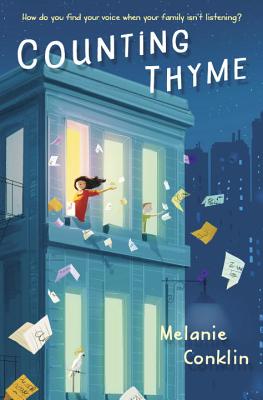
Counting Thyme

countingthymeby Melanie Conklin
First sentence: “When someone tells you your little brother might die, you’re quick to agree to anything.”
Support your local independent bookstore: buy it there!
Review copy provided by the publisher.
Content: There’s a slight bit of romance (no kissing, just like likeing), but otherwise, it’s great for 4th grade on up. It’s in the middle grade (grades 3-5) section of the bookstore.

Thyme has a good life: a best friend, a home near her grandmother in sunny San Diego. But her younger brother has a rare form cancer, and an opportunity for a new treatment has opened up in New York City. Suddenly, Thyme’s good life is taken away from her: in the middle of her sixth grade year her family up and moves. To say she’s not happy with this is an understatement.

It doesn’t help that home isn’t the best place. The treatment is hard on her younger brother, which puts everyone on edge. Her older sister is lobbying for more freedom, which terrifies her mother. And Thyme is just trying to find a place to fit in at school; it’s so very different from home. Which is where she’d rather be.

Cancer books are a dime a dozen, it seems like, so it takes something different to make one stand out. Told from the perspective of a sibling rather than the cancer patient helps. But it’s really the fish out of water theme that makes this one stand out for me. Sure, Conklin captures the stress cancer treatment puts on a family and how difficult it is for everyone, not just the cancer patient. But the parts I liked better were the ones where Thyme was torn between her old life and making a new one. That feeling of being in two places, of having to start over when you move is one that’s hard to capture. And I think Conklin did that well. I liked the variety of people — from the grumpy downstairs neighbor to the Italian babysitter to the friends the Thyme made at school — that populated the book.

A good read.

Completely Clementine

clementineby Sara Pennypacker
First sentence: “As soon as I woke up Monday morning, I flopped onto the floor with my drawing pad.”
Support your local independent bookstore: buy it there!
Review copy snagged from the ARC shelves at work.
Others in the series: Clementine, The Talented Clementine, Clementine’s Letter, Clementine, Friend of the Week, Clementine and the Family Meeting, Clementine and the Spring Trip (I thought I’ve read them all, but I guess I missed one!)
Content: It’s short, there’s lots of illustrations, and it’s perfect for beginning readers. You don’t have to read the series in order, but it does help a little.

I have a confession: this book came out in hardcover a year ago and I just couldn’t bring myself to read it. I couldn’t, not after eight years of loving Clementine, believe that it was coming to an end. So, I put it off. And put it off. But the paperback came out a bit ago, and I got brave and decided that maybe good things can come to an end.

Interestingly enough, that’s the theme of this last Clementine book. It’s the end of 3rd grade, and Clementine doesn’t want to move on. She doesn’t want to leave her teacher and move on to fourth grade. It’s all so new and scary. It also doesn’t help that she’s not talking to her father because she’s become concerned about animal rights and he won’t become vegetarian like her. Oh, and her mother is about to have another baby.

Pennypacker does with this one what she’s done in all the Clementine books: gives us a normal, every-day kid with a normal, every-day family and makes it super interesting. Clementine is such an affable character in all her normalness, that every kid can relate. Change is hard, and Pennypacker captures that resistance in Clementine. It’s charming, sweet, endearing, and cute. All the things I’ve come to expect from this series.

I’m just sad to see it end.

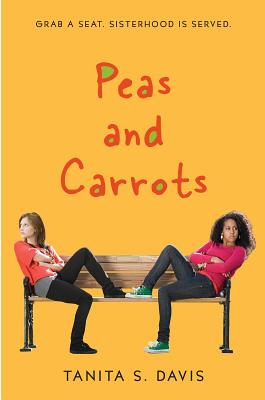
Peas and Carrots

peasandcarrotsby Tanita S. Davis
First sentence: “By the door,on the other side of the sheet that divides the room, Baby cries in his car seat.”
Support your local independent bookstore: buy it there!
Release date: February 9, 2016
Disclaimer: I’ve met the author, working with her for KidlitCon in Sacramento and I find her an absolutely delightful person.
Review copy snagged off the ARC shelves at my place of employment.
Content: There are several instances of mild swearing, plus some illusions to adult drug and alcohol use. Because there are no f-bombs, it’ll be in the YA section (grades 6-8, though it might be better for the older end of that spectrum) of the bookstore.

Dess is a 15-year-old girl stuck in the foster care system. Her deadbeat dad’s finally in jail, as is her mom. Dess’s grandmother gave up trying to care for her and her baby brother years ago. Dess is determined: she doesn’t need anyone. And so when she gets placed in a new home, one of an affluent family, she figures it’s not going to last.

Hope’s parents are stable and happy and take in foster kids, including Dess’s brother Austin, to give back to the community. Hope’s used to the revolving door of kids, but there’s never been one close to her age. Until now. And since Dess is doing pretty much everything to keep people at arm’s length, Hope knows that living with Dess is going to be a challenge. She just doesn’t know if she’ll be able to adjust.

First test: which one of these girls is African American and which one is white? (Answer: Dess is white. Did you pass?) That’s actually one of the first things I liked about this: Davis takes your (my) assumptions about foster care, about the State of the Country, and turns it upside down. In this story, the white girl is the one who’s on the run from an abusive family and the black girl who has the stable life. And Davis doesn’t leave it there; there’s discussion about race and class and belonging, which I respect.

And, as an unofficial foster parent myself, I found myself nodding and agreeing and loving the entire book. Yes, the kids come with baggage and a backstory that usually isn’t pretty. Yes, their lives can be changed by living in a stable, more affluent (though we’re not nearly as well off as Hope’s parents) situation. But Davis also got the corollary to that: having a foster kid in your home is challenging, sometimes disruptive, but is also life-changing. And, if you let yourself — as Hope and Dess eventually find out — you will be better off for it.

Definitely worth reading.

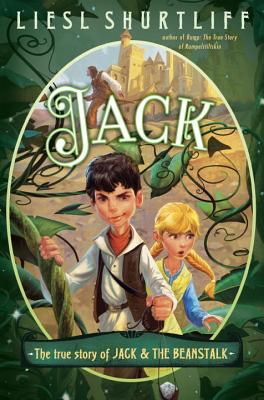
Jack

jackby Liesl Shurtliff
First sentence: “When I was born, Papa named me after my great-great-great-great-great-great-GREAT-grandfather, who, legend had it, conquered nine giants and married the daughter of a duke.”
Support your local independent bookstore: buy it there!
Review copy snagged off the ARC shelves at my place of employment.
Content: It’s pretty basic and a slim book, though it’s definitely  above a beginning chapter level. Give it to those who aren’t ready for longer, more involved books. It’s in the middle grade (grades 3-5) section of the bookstore.

Jack has spent his whole life on his parents’ rinky dink farm, hearing tales of his great-grandpa’s exploits. He’s sick and tired of growing wheat; he wants to see the world! He wants to do something grand!

So, when crops, animals, and buildings (not to mention people, including Jack’s father) in his village go missing, stolen by the giants in the sky (which his mother scoffs at), Jack figures this is his chance to make a difference. Three magic beans later, he climbs the beanstalk to find (and rescue) his dad.

What he finds is a giant nation in peril.H There’s a tyrant for a king who covets gold and taxes his people until they can’t pay any more. And there’s a famine on, which is why the king’s henchmen are stealing the food from the “elves” (non-giant people) and making them their slaves. Jack knows he needs to put a stop to all this, but what can one boy do?

It gets more complicated when Jack’s younger sister joins him up in giant land. They almost get trampled, they get taken by pixies, and Jack must learn to listen to and trust his younger sister and his friends if he’s ever going to get back home.

It’s not a bad book, and I did enjoy the nice twist on the Jack and the Beanstalk Tale. But it was just okay in the end. There were Lessons Learned and Adventures Had and Reunions and it just kind of all fell flat. But, that doesn’t mean a fairy-tale loving kid wouldn’t just love this to death.

(Just for the record: because this is a Cybils nominee, I’ve been asked to make sure y’all know this is my opinion only, and not that of the panel.)

Sunny Side Up

by Jennifer Holm and Matt Holm
Support your local independent bookstore: buy it there!
Release date: August 25, 2015
Review copy provided by the publisher rep.
Content: There’s some implied drug and alcohol abuse by the character’s older brother, so it’ll probably engender some discussion. It’ll be in the middle grade graphic novel section of the bookstore.

It’s 1976, and Sunny is being sent to live with her grandpa in Florida. It’s not something Sunny wants to do; she’d rather be at the coast with her best friend. But, her older brother’s been having problems with drugs and alcohol (that’s putting it mildly), and so Sunny is being sent away for her own safety. On paper, it’s okay: Florida has Disney World, right? But, in reality? Her grandpa lives in a retirement community, and that’s just boring. Trips to the post office or the grocery store, early all-you-can-eat buffet dinners, a kid-less pool. Thinks look up when she meets Buzz and he introduces her to comic books. But, she’s still haunted by  her brother’s actions and the secrets she keeps. Can Sunny make the most of the summer she’s been given?

The Holm siblings have come up with a semi autobiographical novel addressing some pretty heavy issues. Granted, they do it in such a way that’s accessible to kids and that engenders discussion. K read this one, too, and we talked a lot about how other people can hurt us but that it’s not our fault. The only complaint we had, though, was trying to figure out how the flashbacks fit into the present story line. It was a bit confusing at first, but we eventually figured it out. We did like the relationship between Buzz and Sunny as well as Sunny and her grandpa. The other residents of the community were delightfully quirky, and it’s also great that Buzz and his family were immigrants from Cuba.

It’s not the Holms’ usual fare; it’s more like Raina Telgemier’s books. But, it’s a very heartfelt and sweet look at a very dark subject.

The Truth Commission

by Susan Juby
First sentence: “First let me say that this will not be an easy tale to tell, so I’ll warm up with an author’s note.”
Support your local independent bookstore: buy it there!
Review copy pilfered off the ARC shelves at my place of employment.
Content: There’s some discussion of rape and bullying and a character doing drugs, but there’s no swearing, etc. It’s currently in the Teen section (grades 9-12), but I’d give it to a 7th or 8th grader.

This is going to be quick since I need to head to work. The basic story: Normandy Pale (she’s a girl) goes to an elite art school on an island off the coast of British Columbia. Her claim to fame? Her older sister immortalized a very awful version of their family in a cult popular graphic novel.

Normandy has never been happy with this, but when her sister shows back up into their lives (having suddenly left a prestigious art college in California), she’s really not happy. Add to that her friends Neil and Dusk (her name is really Dawn, but her personality is more Dusk-like) deciding that what they need to do is elicit Truth from people who aren’t fully honest with themselves, Normandy’s a bit of a mess.

Told as a work of “creative non-fiction” (complete with footnotes), this is really a delightful read. Juby’s exploring things like perception and truth, and whether or not it’s good to be honest with each other and with ourselves. It has a messy ending (being “true to life”), and some bumps along the way (the parents were particularly milquetoast) but in the end, I thoroughly enjoyed it.