The Legend of Auntie Po

by Shing Yin Khor
Support your local independent bookstore: Buy it there!
Content: There is a death, but nothing graphic. It’s in the middle grade graphic novel section of the bookstore.

Mei bakes the pies for the loggers and workers in a camp in the Sierra Nevadas in 1885. Her father runs the kitchen, and the two of them make a good team. She’s happy enough, even though she’s Chinese and knows that she won’t have the same opportunities as her best friend Bee, who is white. That doesn’t stop her from trying to learn more, from telling stories of the legendary Auntie Po, and from being the best person she can be.

That makes it sound trite because this was a really solid graphic novel. I enjoyed the historical context, knowing that the conflicts that existed between the white people and the Chinese workers were real. But I also enjoyed the larger-than-life feel of it, as well. Is Auntie Po real? Did he help the loggers? Did Mei see her? I also thought the adult characters were pretty great from Hels the foreman to Hao, Mei’s dad.

A really solid book from Khor. I can’t wait to see what she does next!

Devil House

by John Darnielle
First sentence: “Mom called yesterday to ask if I was ready to come home yet I went directly to San Francisco from college, and I’ve been in Milpitas for five years now, but she holds fast to her he story that eventually I’m coming back to San Luis Obispo.”
Support your local independent bookstore: buy it there!
Review copy passed along to me from my boss.
Content: There is some mild swearing, including a few f-bombs, descriptions of grisly murders, and domestic abuse. It’s in the Adult Fiction section of the bookstore.

The problem with a book like this is that the plot is secondary. The why you need t read the book, the reason to keep coming back, is for, well. Hm. I was going to say the story, but that’s what the plot usually is, right?

The “plot” is following true-crime writer Gage Chandler, as he works to unravel the mystery of a set of grisly murders in the “Devil House” in Milpitas in the mid-1980s. But, it’s more meandering than that. It explores the story of Chandler’s first book, about the White Witch, and the story of the Devil House murders, with a side detour through a weird medieval section.

But, while the story was interesting, and kept me engaged (they usually say “nonfiction that reads like fiction” but this was “fiction that reads like memoir”), I think it was the slow burn that kept me coming back. I wanted to know where Darnielle was going to take me next, what thing Chandler was going to think or find or reveal. And in the end, I realized this book was about the myriad of ways we look at each other, and about who is entitled to tell someone’s story. And maybe that’s what kept me coming back and turning pages.

Whatever it was, I found it fascinating to reflect on, and interesting to be immersed in. Definitely worth the time.

Small Things Like These

by Claire Keegan
First sentence: “In October there were yellow trees.”
Support your local independent bookstore: buy it there!
Content: There are two f-bombs. It’s in the adult fiction section of the bookstore.

Bill Furlong is a simple man. He’s the father of five daughters, and he delivers coal in his small Irish town. He doesn’t think terribly deep thoughts, but he is aware of his roots. His mother got pregnant when she was 16, and it was only the kindness of her employer, Mrs. Wilson, that allowed her to keep Bill and raise him. So, when Bill finds a girl at the convent locked in the coal shed, unable to feed her baby — the nuns had separated the two — Bill takes pity on her, even though he knows his wife, Elieen, won’t like it.

This is a slim novella, a slice of Irish life in the mid-1980s, and one that makes you think.It’s deeply Christian without being preachy: Furlong doesn’t seek to draw attention to himself, and he’s very kind and caring not just to his family but to the community as a whole.

It’s not life-shattering, but it is deeply moving. A good addition to our Christmas books, I think.

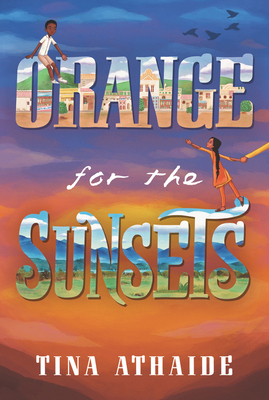
Orange for the Sunsets

by Tina Athaide
First sentence: “Yesofu glanced at his watch.”
Support your local independent bookstore: buy it there!
Content: There is some violence and name calling. It’s in the middle grade section (grades 3-5) of the bookstore.

History I didn’t know about: The British colonized Uganda and brought in Indians to do work for them. When the British left, the Indians stayed, filling the hole that the colonizers left. Then, in 1972, there was a military coup, and Idi Amin took over the country. One of the things he decided was that Uganda was for the Black people who have been oppressed, and the Indians — many of whom were citizens or had been born there — needed to get out. He gave them 90 days.

Asha is an Indian, whose best friend is Yesofu, the son of her family’s (Black) servant. They’re best friends, inseperable. That is, utnil Amin gives the order for the Indians to leave. Suddenly they find themselves on opposite sides: Asha believing she is Ugandan and deserves to stay; Yesovu wanting to have what Asha always has had: a good job, a nice house, running water.

There is more to the plot, as the book follows the 90 day countdown. Asha’s father is involved in getting people out of the country; Yesofu is friends with another kid who is incredibly militant about Amin’s orders, to the point of harming Asha.

I am uncertain what I think about this. On the one hand, it’s a story about a part of history I knew nothing about. I do think it’s important to tell those kinds of stories. But on the other hand, this book wanted me to sympathize with the colonizers, to feel bad that Asha and her family, the Indians who had lived in Uganda, were getting expelled from their home. And I did, but. well, Yesofu had a point too: it wasn’t fair that the native people, the Black people of Uganda were kept in lower positions. I think Athaibe wanted to balance both sides of the story, but I think it kind of felt maudlin at times: Asha and Yesofu trying to hold on to an obviously doomed friendship. I also think Athaibe hammered the corruption of the soldiers home too hard: the last scene is a soldier taking Asha’s mother’s gold bangles as a “payment” to let them leave. It may be true, but it was a bit heavy-handed.

So: conflicted on this one. It wasn’t badly written, but I’m not sure I liked it.

Two Black Historical Fiction Books

Finding Langston
by Lesa Cline-Ransome
First sentence: “Never really thought much about Alabama’s red dirt roads, but now, all I an think about is kicking up their dust.”
Support your local independent bookstore: buy it there!
Content: It’s short, with short chapters and about an 11-year-old. There is some bulling. It’s in the middle grade (grades 3-5) section of the bookstore.

Set in 1946, the book follows 11-year-old Langston, who has recently moved to Chicago with his father from Alabama. It’s a bit about a southern Black family trying to make a life in a big city. It’s not easy: they live in a one room apartment, Langston is bullied because of his accent, and they don’t have the comforts of family being nearby. The one thing Langston finds that is welcoming is the branch of the Chicago Public Library . he finds Black authors and learns about Langston Hughes. It makes grieving for his dad mother and the dealing with the bullies at school easier.

It’s a sweet family story, one with sympathetic characters (I even liked the dad), and a good look into issues surrounding the Great Migration. It went quick because it was short, but it had some complex character development and dealt with touch issues like classism and Northerners looking down on their Southern neighbors. I’m glad I read it.

Harlem Summer
by Walter Den Myers
First sentence:”I like Harlem in the summer except when it gets too hat, which it had been for the last week and we hadn’t even reached July yet.”
Support your local independent bookstore: buy it there!
Content: There is some violence and talk of people drinking but it’s short. It’s in the Teen section of the library, but I’d probably up t it in the YA section (grades 6-8) of the bookstore.

Set in Harlem in the 1920s, it follows the summer of a 16-year-old named Mark. He gets a summer job at the Crisis, a magazine run by WEB DuBois celebrating the “New Negro”. All Mark wants to do, though, is play his saxophone and impress Fats Waller (who was a real person!) with his jazz. Unfortunately, that gets him into a whole mess of trouble involving stolen whiskey, gangsters, and Langston Hughes.

I didn’t like this one as much, partially because I felt like it was a who’s-who of 1920s Harlem, which is fine and all, but doesn’t led itself to a really great plot. But I also kept thinking of Kendi’s description of assimilationists, and how they wanted Black people to “prove” themselves to white people. That was a huge part of the book, the talk of “New Negros” and how the 10% was going to save the rest of the race. And that’s just, well, racist. Myers may have been poking fun at them; in the end Mark decides that the Crisis and the people there aren’t nearly as much fun or interesting as the people involved in jazz music. Even so, it bothered me. I didn’t hate the book, but I did struggle to finish it, and it just wasn’t what I had hoped it would be.

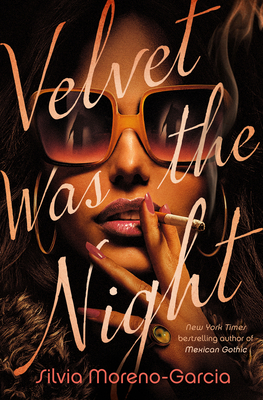
Audiobook: Velvet Was the Night

by Sylvia Moreno Garcia
Read by Gisela Chipe
Support your local independent bookstore: buy it there!
Or listen at Libro.fm
Content: It’s very sweary, including multiple f-bombs, very violent, and has on-screen sex. It’s in the adult section of the bookstore.

Maite, 30 years old and still unmarried, works as a secretary in a law firm in Mexico City in 1971. She’s bored with her life, lonely, and has only one thing to live for: the next issue of Secret Romance, a comic romance she follows. She reluctantly agrees to take care of her neighbor, Leonora’s, cat when she leaves the the weekend. The problem only begins when Leonora doesn’t come back. Determined to get her pay, Maite falls headfirst into a world od activist student, Russian spies, double-crossing government agents. She’s not the only one looking for Leonora, either: Elvis, who works or a shadowy government figure, is trying to track her down as well. Told in alternating narratives, Moreno-Garcia paints a picture of an underground Mexico City in the 1970s that was dangerous as it was alluring.

I’m not quite sure what to think of this one. I don’t usually go for thrillers, and so I don’t know who it stacks up in the genre. I didn’t particularly like any of the characters, though they grew on me as the book went on. Maite is so incredibly pathetic, it was hard not to feel sorry for her, but she got some pluck and drive as the book went on. Elvis seemed like a one-note character, but became more complex. At the very least, it kept me reading, which does say something. Though that may have more to do with the narrator, who was fabulous, than with the story I really enjoyed Chipe’s narration; she definitely knew how to pull the listener in, and keep them entertained

I’ve been saying at work that Moreno-Garcia doesn’t write the same book twice. If you like noir, you might like this one. It is a fascinating picture of a time in history, and she’s a good writer. I just don’t know if this is a great book.

News of the World

by Paulette Jiles
First sentence: “Captain Kidd laid out the Boston Morning Journal on the lectern and began to read from the article on the Fifteenth Amendment.”
Support your local independent bookstore: buy it there!
Content: There is some violence. It’s in the adult Fiction section of the bookstore.

Captain Kidd is a veteran of several wars, but, now at 71, he just wanders over north Texas performing readings of newspaper articles from around the world for a dime admission. It’s not a great life, but since his wife died, it’s a decent one. Then at at stop in Wichita Falls, he is paid $50 in gold to deliver a girl — Johanna — who was kidnapped by the Kiowa tribe when she was six. Now, four years later, she is being returned to the family she has left down near San Antonio. He agrees to take her, even though the journey will be dangerous, and they set out. The rest of the story is really just about Kidd and his developing bond with Johanna, through their good times and trials.

I didn’t dislike this one — even though I have an issue with authors who don’t use quotation marks for dialogue — but I din’t love it either. In retrospect, this one may have been better for me on audio, because I wouldn’t’ have been distracted by the form. I did like Kidd’s relationship with Johanna, though there was a part of me that felt like the book had a bit of a white savior complex: sure Johanna was kidnapped (which was wrong) but she had acclimated to her new life with the Kiowa. Why does she need to assimilate with the white people? Was the bits of her life with the Kiowa accurate (probably not)? Why is it important that men rescue a white girl from the “vicious natives”? It just felt a bit off to me, especially since the book was written by a white woman.

So, yeah. It’s not a terrible book, but it’s not a great one either.

Libertie

by Kaitlyn Grenidge
First sentence: “I saw my mother raise a man from the dead.”
Support your local independent bookstore: buy it there!
Review copy provided by the publisher.
Release date: March 30, 2021
Content: There is tasteful on-screen sex and use of the n-word. It will be in the adult fiction section of the bookstore.

It is the middle of the 19th century, and Libertie is a free Black girl being rasied by a single mother who has the audacity to become a doctor. And who wants only the best for Libertie. Which is to say, she expects Libertie to follow in her footsteps and become a doctor as well. The weight of that is so much for Libertie, that before her mother can find out that she flunked out of college, she marries and runs off with a man — her mother’s assistant — to Haiti. Only to find that the freedom she was hoping for isn’t there.

It’s less about the plot, though, than it is about Libertie and her relationship with her mother. There is very much a push-and-pull there; with Libertie wanting love and unconditional acceptance, and her mother showing her love with the expectation of excellence. It’s set in a world where there is slavery, racism, and colorism but that only brushes up against the plot. It’s mostly about expectations: those that are placed upon us by others — parents, spouses, society at large — and the ones we place on ourselves.

Greenidge is a very talented writer, and I think Libertie is a character that will stay with me for a while. I’m not sure I thought the ending was realistic, but I appreciated it. It was a good read and I’m glad I read it.

Deacon King Kong

by James McBride
First sentence: “Deacon Cuffy Lambkin of Five Ends Baptist Church became a walking dead man on a cloudy September afternoon in 1969.”
Support your local independent bookstore: buy it there!
Content: There is swearing, including many f-bombs, and the use of the n-word. It’s in the adult fiction section of the bookstore.

The plot of this one is almost incidental: Deacon Cuffy “Sportcoat” Lambkin (who also gets called Deacon King Kong for the amount of hooch he drinks) shot (but did not kill) a local drug dealer, who used to be a kid that played on a baseball team Sportcoat coached and umpired in the projects in Brooklyn. And, because of this, Things Happen. What the Things are doesn’t really matter: this is a novel that is propelled by the characters. And there’s a whole mess of characters. So many that when I tried to listen to this on audio, I got lost with who was who. But, reading it helped keep some of them straight. It’s a whole neighborhood full of characters, their wants and needs and desires and connections to each other. And McBride truly captured a moment in time, and a place, as the people of this Brooklyn neighborhood lived their lives and tried to keep things together as much as they could.

I didn’t absolutely love this book, but I didn’t dislike it either. It’s funny at times, and always interesting, if you like charioteer-driven novels.

Igniting Darkness

by Robin LaFevers
First sentence “Maraud awoke to the sound of retching — a retching so violent his own stomach clenched into a fist and tried to punch its way out of his throat.”
Support your local independent bookstore: buy it there!
Others in the series: Grave Mercy, Dark TriumphMortal Heart, Courting Darkness
Content: There is a lot of violence and abuse. It’s in the YA section of the bookstore.

I am thinking that LaFevers needed to write this duology because, while Mortal Heart ended on a positive note, there were many threads left hanging open. And it’s just nice to tie everything up.

Picking up where Courting Darkness left off, this one is more political intrigue (beause Genevieve has the ear of the French King and is trying to sway him away from being advised by his sister, the regent), machinations (Sybella vs. her horrible brother), love (which is always quite satisfying) and war (Sybella, Genevieve, Beast, and Maurad manage to spectacularly put down a rebellion).

At this point, it’s safe to say that if you liked the rest of the series, you will like this one. It’s a bit overlong, and I was truly losing patience with the king who was petulant and super dense, but I suppose LaFevers needed to keep it a little bit historically accurate.

In the end, though, it tied up all the loose ends and gave everyone if not a happy, then a hopeful, ending.