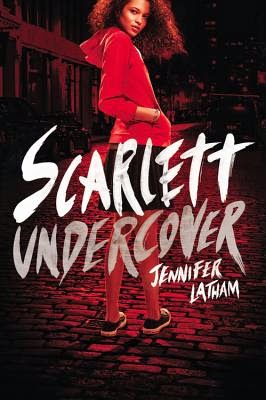
Scarlett Undercover

by Jennifer Latham
First sentence: “The kid was cute.”
Support your local independent bookstore: buy it there!
Content: There’s a bit of mild swearing (s**t) being the “worst” one, plus some kissing and references to (adult) smoking. It’s in the YA section (grades 6-8) of the bookstore, but I wouldn’t mind giving it to a savvy 5th grader.

I adored Nancy Drew as a kid. Seriously. I devoured them all. I loved the mystery, I loved Nancy Drew’s pluck. It was what I wanted.

This, however, is Nancy Drew for the Modern Age: she’s sassy, smart, and street-wise. And I loved it just as much (if not more).

Fifteen-year-old Scarlett is many things: an orphan (dad was murdered, mom died because of cancer); brilliant (she graduated from high school two years early); Muslim; and, perhaps most importantly, a detective. No, it’s not really official: she mostly does inside jobs for the Las Almas police department, and sometimes she hustles and gets a case locating something missing. Nothing that prepared her for when 9-year-old Gemma walks through her door.

Gemma’s worried about her older brother: something has happen to change him; he’s become distant, angry, and mean. But, more than that: Gemma’s convinced that her brother is responsible for the “suicide” of his (former) friend. And she needs Scarlett to find out what’s going on. Little does Scarlett realize the rabbit hole that she’s just opened up.

One of the things I loved most about this book was that Scarlett came from a religious family (she wasn’t non-religious; she just wasn’t as religious as her older sister), and there was a huge support in the surrounding community. But, it wasn’t an issue: it was just who Scarlett was. She greeted people in Arabic, she said her prayers, she observed Islamic customs and traditions. And she solved cases. It was so perfect in so many ways.

I also liked that she was sassy. She had an attitude, but one that suited her and the narrative, and it came through loud and clear. If I was my 11-year-old self, I would have adored Scarlett. (Which my mother may not have appreciated it.) I also loved that Scarlett, was capable: she got into some dangerous situations, and she had the know-how (and the tools) to get herself out. It’s really fantastic.

There is a vague hint of the supernatural — talk of djinn and portals and such — but it didn’t develop in a speculative fiction way, which actually made me very happy. I love speculative fiction, but it would have been out of place here.

I’m willing to talk this one up as much as possible; I do hope it finds a ton of readers.

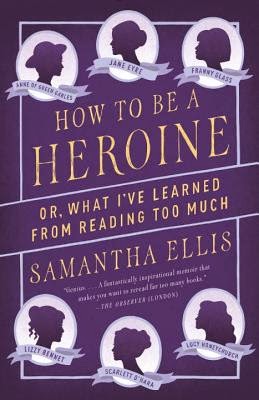
How to Be a Heroine

by Samantha Eliis
First sentence: “A couple of summers ago, I was on the Yorkshire moors, arguing (over the wuthering) with my best friend about whether we’d rather be Jane Eyre or Cathy Ernshaw.”
Support your local independent bookstore: buy it there!
Review copy provided by the publisher.
Content: There’s a handful — not more than six — of f-bombs and some mentions of sex, but nothing graphic. It’s in the adult creative nonfiction section of the bookstore, but I’d give this to anyone in high school and up.

Somehow, I ended up with a complimentary copy of this book. I really have no idea how it ended up on my pile. I do know the idea of it (and the subtitle: “Or, What I’ve Learned from Reading Too Much”) appealed to me. Any book that is about books or the love of reading has to be good, right?

And it was.

The book is nominally a reflection of Ellis’s life. She’s an Iraqi Jew, living in London, with all the cultural and religious implications you’d think that entails. She struggled against expectations, she struggled with faith, she struggled to find her own path. And, on its own that would be a fascinating story. But she framed the book with an analysis, heavily feminist, of classic heroines. From familiar to me ones like Jo March and Anne Shirley and Jane Eyre to ones I’ve never heard of, like Franny Glass and Esther Greenwood. She explored their narrative arcs, and what she took away from their stories. Both when she was younger and then, as an adult, how she feels the held up. Some did. A lot didn’t. And many she got something different out of the book than what she got when she was younger. She discovered new things along the way, and made me want to revisit books I’d loved when I was younger and read ones I’ve not read before.

And for all the literary criticism, it wasn’t a stuffy book. Ellis has a way of drawing the reader in, of making the characters pop to life. Perhaps that’s because she’s a playwright and has a way with words as it is. But whatever the reason, this one won my heart over.

10 Feminist Books for Kids and Teens

Inspired by Shannon Hale’s resurrection of #BoysReadGirls, I was going to write a post with books about girls that boys should be reading. Then I realized I did that already. But, I wanted to come up with SOMETHING for women’s history month…

After much thinking, I came up with a list of feminist books for kids/teens. Which are also books that everyone should be reading. My standards were kind of loose: if it felt like a feminist book, then I’m calling it a feminist book. Which means, I probably missed a TON. Let me know what you would have added.

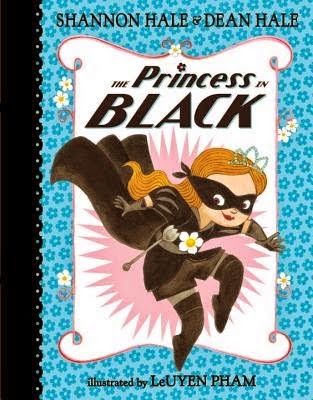
The Princess in Black, by Shannon Hale: “Princess Magnolia has a secret. She’s a superhero, rescuing innocent and unprotected goats from the Big Bad Monsters. The thing is: princesses aren’t supposed to be superheroes. They’re supposed to be princesses. Right?  Well, aside from the stuffy Duchess Wigtower, no one tells Princess Magnolia she can’t.”
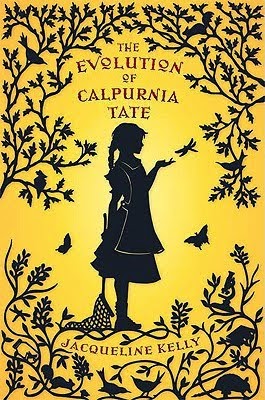
The Evolution of Calpurnia Tate, by Jacqueline Kelly: ” Callie discovers that studying the world around her is what she really wants to do. She spends as much time as possible with her grandfather — in between piano recitals, forced sewing, school, and managing her brothers’ crushes for her best friend — living for and thriving off of the time spent studying and observing. Of course, since this is 1899 and Texas, Callie couldn’t be allowed (allowed!) to proceed this way: good, proper, well-off girls just didn’t tromp through the underbrush looking at bugs. For me, this was the heart of the novel, this pull for Callie to do what she wanted and not what everyone expected of her.”
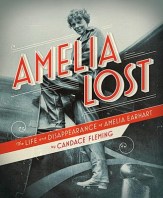
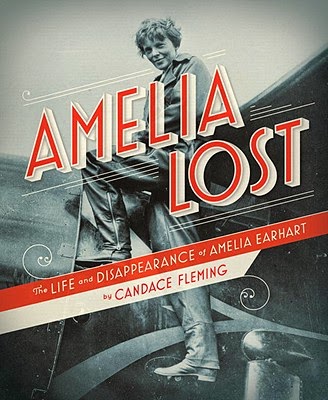
Amelia Lost, by Candace Fleming: “She flew not really because of skill — often she didn’t take the time to learn things thoroughly — but because of determination. She was a feminist: she believed that just because she was a woman didn’t mean she shouldn’t do whatever she wanted to do. Including flying. She resisted the boxes that the time period wanted to put her in, and literally soared. No, she wasn’t the most talented, or even the most skilled, but she was determined, and that made up for a lot.”
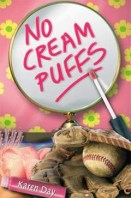
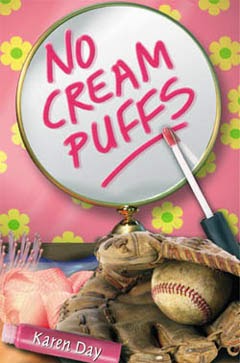
No Cream Puffs, by Karen Day: “The second big thing, and probably the more defining one, is that Madison decides to play in the boy’s baseball league. She’s a brilliant pitcher, and is encouraged by her older brother to test her skill in the league (since there isn’t a girl’s league). Because of this, she makes waves in her little town. Some people want to make her a pariah: she’s a girl, she has an unfair advantage because no one will want to hurt her, she’ll bring down the level of the game. Others, her mother included, want to make her out to be a trailblazer, a feminist, someone who stands up for women’s rights. Madison, refreshingly, just wants to play the game”
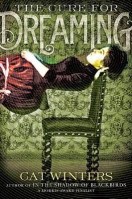
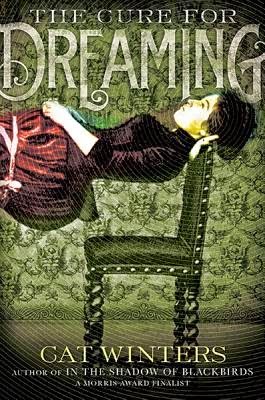
The Cure for Dreaming, by Cat Winters: “Sure, there’s more plot to this one than that, but who cares? This one has a strong feminist agenda and it’s not afraid of it. The father had me seething. The rich handsy boy whom the father liked made me want to smack him. Henri was nice enough, but I really loved Olivia and her struggle against the system (and the Man) and her desire to be Free. I was just cheering her on: you go girl!”

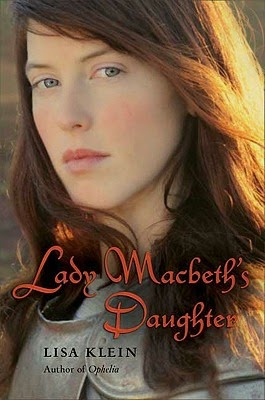
Lady Macbeth’s Daughter, by Lisa Klein: ” Lady Macbeth is only slightly better; she gives herself over to Macbeth because she knows no other way, and the motivations Klein gives her for encouraging Macbeth in his road to destruction evolve out of her feeling cornered in her life. In fact, Klein gives us an interesting dichotomy with her women characters: Lady Macbeth is what one would think is very traditional, very husband-bound; while Albia, on the other hand, is very modern and feminist, choosing her own path without being bound by men’s expectations”

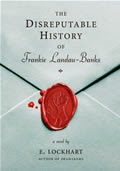
The Disreputable History of Frankie Landau-Banks, by E.Lockhart: “Frankie did something big; she proved something to herself — and to her family — that she can do something. Sure, they reacted badly, but then, most people react badly to people who think outside the box. Even if that box is something as simple and silly as a secret boys’ club at a posh boarding school.”

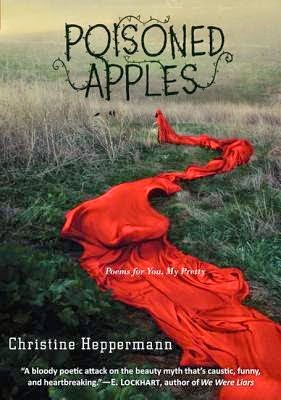
Poisoned Apples, by Christine Hepperman: “I didn’t know what to expect, but what I got was a weird, wonderful, empowering collection of poems. Hepperman mixes fairy tale retellings with modern issues, from anorexia and photoshopping to the everyday over sexualization of women. It’s a seamless transition from fantasy to reality.”

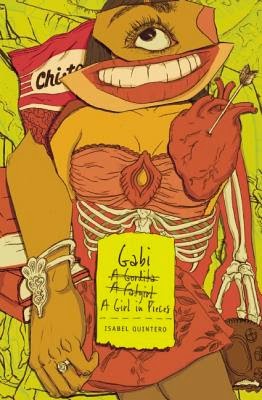
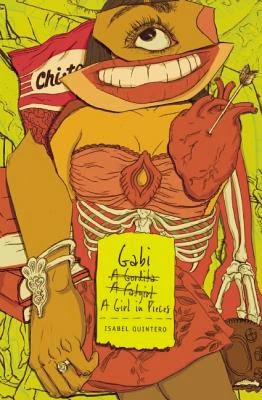
Gabi a Girl in Pieces, by Isabel Quintero: “It was Gabi’s awakening to the double standard, and her actively trying to do something about it — which came near the end of the book –which endeared me to the book. There was so much crap going on in Gabi’s life that I found it difficult, initially, to relate. But by the end, I was cheering for Gabi, for her attitude toward her life, and for Quintero’s unflinching portrayal of her.”

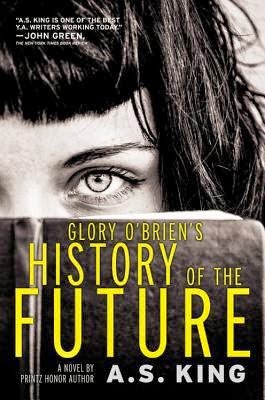
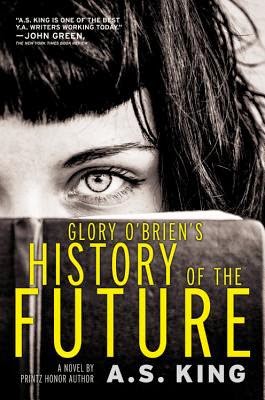
Glory O’Brein’s History of the Future, by A.S. King: “Glory’s visions are of a horrific patriarchal future, where women’s rights are completely taken away, and the country ends up in another Civil War. This fascinates and terrifies Glory — what’s her role in this future? How does it come to be like this? Will it? — and the act of having these visions pushes her into action.”

And a couple of adult ones tacked on the end:

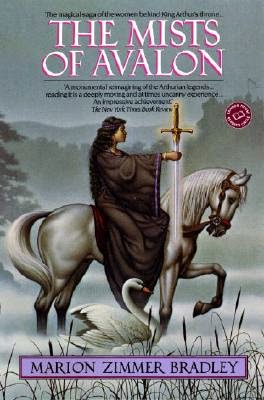
Mists of Avalon, by Marion Zimmer Bradley: “A heady piece of feminist fiction. The first time I read this, I was enraptured by the way she tells the story [of King Arthur] from the women’s point of view. “

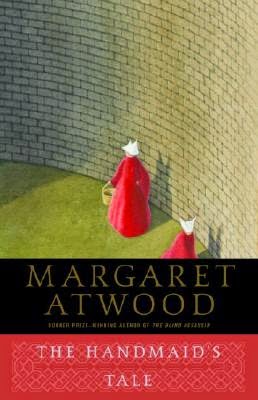
The Handmaid’s Tale, by Margaret Atwood: “I can’t imagine — more like, don’t want to imagine — a world where women are treated as nothing more than the sum of their bodies, where men get excused for their behavior because of their position, where women hate and loathe each other because of their roles. Wait… that, too much, describes what our world is like now. Without the religious framework, without the robes, without the martial law, there are elements of this world around us”

Gabi a Girl in Pieces

by Isabel Quintero
First sentence: “My mother named me Gabriela after my grandmother who — coincidentally — did not want to meet me when I was born because my mother was not married and was therefore living in sin.”
Support your local library: buy it there!
Content: There’s a lot here: talk of drug use, sex (off screen, not graphic), and swearing (including multiple f-bombs). It’d be in the Teen section (grades 9+) of the bookstore.

I didn’t know what to expect when I picked this up. I’d heard good things about it, and it won the Morris Award this year. Even so, I wasn’t prepared for the onslaught of emotions I’d feel while reading it.

It’s Gabi Hernandez’s senior year, and life has gotten more complicated than usual. One of her best friends is pregnant; the other just came out, and has been kicked out of his parents’ house. She’s still struggling with math in school, but she has hopes that she can get into college, the first in her family, since her parents immigrated from Mexico. She wants a boyfriend, but is afraid since she’s a self-proclaimed “fat girl” that she’ll never find love. Then there’s her meth-addicted father, and her punk younger brother. Not to mention a mom who is constantly placing pressure on her to be a “good” girl.

Writing all that down, it both sounds like a lot and not quite enough to hold a book together. One of the things that makes this book shine is the voice. Told in diary form, we get Gabi’s innermost thoughts, her insecurities and feelings, her poems and heartfelt letters to her father (which she never sends). Even though her life is complicated and hard, you can’t help but connect with Gabi on the most elemental level: she’s just a girl trying to live the best she can.

But, it’s also a feminist book, showing us the double standard we have for girls and boys. Which leads me to: oh my gosh, her mom. I wanted to smack her. She was SO hard on Gabi, from nagging her constantly about her weight to lectures about sex (while she tells Gabi’s brother “be sure to use a condom”). I know she was trying and doing the best she could under the circumstances, but I wanted to shake her. Call this another one of those reverse-parenting books, but there is no way I want to have the sort of relationship with my daughter that Gabi had with her mom.

It was Gabi’s awakening to the double standard, and her actively trying to do something about it — which came near the end of the book –which endeared me to the book. There was so much crap going on (if there’s an issue out there that deals with teenagers, it was in the book) going on in Gabi’s life that I found it difficult, initially, to relate. But by the end, I was cheering for Gabi, for her attitude toward her life, and for Quintero’s unflinching portrayal of her.

The Forgotten Sisters

by Shannon Hale
First sentence: “Miri woke to the rustle of a feather-stuffed quilt.”
Support your local independent bookstore: buy it there!
Others in the series: Princess Academy, Palace of Stone
Release Date: February 24, 2015
Review copy snagged from the ARC shelves of my place of employment.
Content: There’s some violence, but nothing graphic. And some kissing, which may be ew-inducing in the younger set. Still, I think it belongs in the middle grade (grades 3-5) section of the bookstore, though it might do better with the 5-7th graders.

Miri finished her year at the Palace and was looking forward to going back home to Mount Eskel, seeing her family, enjoying getting back to the life she once had before the Princess Academy changed her path. But, her winding road isn’t finished yet: the neighboring country, Stora, is threatening invasion, and in order to pacify them King Bjorn has offered up some distant cousins as a bride to the aging Storan king. And Miri is sent, unwilling and unprepared, to the swamp of Lesser Alvan to find these cousins and whip them into shape for a royal wedding.

What Miri finds when she gets to the swamp are three motherless girls — Astrid, Felissa, and Sus — who have been resourceful enough to find a way to survive without the help of the castle. They were supposed to be getting an allowance, which has been stolen by the local village overlord. They were supposed to have servants and a family, and they’ve been robbed of that, too. However, they made to, and once Miri figured out how to connect with them, things went well.

In fact, Astrid and Sus were my favorite characters. Felissa was nice enough — her main characteristic, as Hale often reminded us, was smiling — but Astrid was tough, no-nonsense, responsible, and just plain amazing. Sus soaked up the knowledge, and there’s a scene at the end (I won’t spoil it) where she talks coolly and rationally and logically and in the end makes everyone listen to her. Miri,too, was a bastion of resourcefulness: she adapted to the swamp life and fought back against the bandits and robber barons. She fought for justice and did so in a way that wasn’t violent.

The thing that kept running through my mind while reading this was that it was a girl power book, but not in the way we usually think of it. Usually, we want our girls to be like guys: kicking butt, fighting. But, Hale has given us girls and women who Do Things and stand up to people without violence, without force. In fact, you can look at this book as the myriad of ways women survive what men in power do to them. From making decisions to making war to actual physical violence, men can be (are often?) cruel and unthinking. But, women can survive and flourish.

It never got didactic or heavy-handed, though I did think some of the twists and turns of plot were a bit much. It came together in the end, though, in a very satisfying way. Because above all, Hale is a consummate storyteller. And this is definitely a good story.

Glory O’Brien’s History of the Future

by A. S. King
First sentence: “So we drank it – the two of us.”
Support your local independent bookstore: buy it there!
Content: There’s some swearing — including multiple f-bombs — plus some frank talk about sex. It’s definitely a more mature book, and is in the teen section (grades 9+) of the bookstore.

Eighteen-year-old Glory O’Brien has had her mother’s suicide hanging over her for practically her whole life. It’s kept her father from doing his art; he stays home, eating, and working as an on-line tech consultant. It’s kept Glory from doing much of anything, really, frozen with the expectation that she, too, will commit suicide eventually.

And it doesn’t help that no one ever talks about It. Or her mom.

Then she and her best friend (by default, since they live across the street from each other), find a dead, mummified bat in the barn. It gets turned to dust, and they mix it with beer and drink it up. And then they start seeing visions.

Glory’s visions are of a horrific patriarchal future, where women’s rights are completely taken away, and the country ends up in another Civil War. This fascinates and terrifies Glory — what’s her role in this future? How does it come to be like this? Will it? — and the act of having these visions pushes her into action.

Trippy doesn’t even begin to cover this book. It’s wild, weird, trippy, odd… King has bitten off a huge piece of cake here, and I’m not sure how well it worked for me. On the one hand, I was thinking it was a Handmaid’s Tale-esque feminist warning about what will happen if we give up the fight and stop questioning the status quo. But the longer the book went, the more I wondered if there was a point to all this, aside from spurring Glory and her dad to action. Maybe there wasn’t. And while I am glad that Glory actually made decisions and started living her life, I kind of wish there were a less trippy way of doing it.

So, in the end, even though I liked the individual elements of the book, I was unsatisfied with it as a whole.

Two Transgender Books

I thought about reviewing them separately, but then I realized that the authors of the two books actually dated at one point, and I think Simon & Schuster kind of meant for them to be a pair. So, here they are, together.

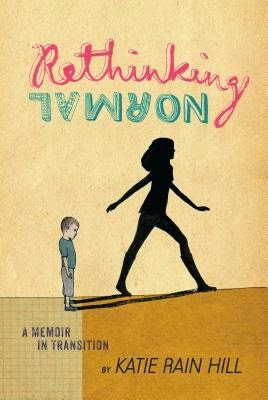
Rethinking Normal
by Katie Rain Hill (with Ariel Schrag)
First sentence: “I really, really hate flies.”
Support your local independent bookstore: buy it there!
Content: There are a few f-bombs, and some frank talk about genetalia. Also, some frank talk about having sex, though it’s not graphic. That, and the subject matter (which isn’t necessarily not for younger kids, but maybe parents want to have a chat with the younger set while they read this), put this in the Teen section (grades 9+) of the bookstore.

Katie is a trans girl. Which means — if I get this correctly — she was assigned the male gender at birth, named Luke by her parents, and as she grew up, she felt increasingly at odds with her physical body. She didn’t feel “male”; she was attracted to males, but wanted them to see her as a woman. This is the story of her journey.

It’s not an easy one for her. For her first few years, she was okay, but as she grew older, she became depressed. She didn’t know what was wrong with her, or why she didn’t feel comfortable in her body. Why she wasn’t compelled to do traditional “guy” things. She went to therapists, but they didn’t help. Most just threw medication at her. It wasn’t until she was 13 that she discovered a transgender website that opened the doors to what she was experiencing. She found a support group, a doctor who was willing to take her seriously (turns out that she was intersexual; she had high levels of estrogen in her body and undeveloped ovaries as well as a penis), and she was on the path to becoming who she truly felt she was.

I was hoping, I think, for this to shed some light on transgender(ism? Can I say that?) for me. It didn’t; but then I think my expectations were too high. One person’s story is going to shed light on just that: one person’s story. And even though the writing style was overly casual (imagine Katie sitting down and just rambling her story at you), I was fascinating by her experiences. And ashamed; this was set down in Oklahoma, and unfortunately, the religious people Katie knew did not treat her well. That always makes me feel sad; I do hope that there would be more acceptance and charity and kindness in these sorts of stories.

I am glad Katie wrote this book, though. The first step to making the unknown more knowable is to learn someone’s story. And this book does just that.

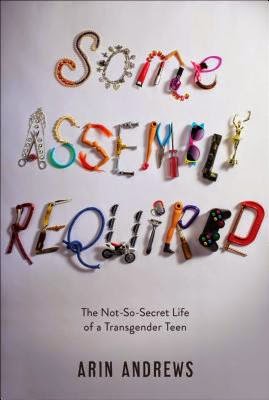
Some Assembly Required
by Arin Anderson (with Joshua Lyon)
First sentence: “Getting dumped at prom sucks.”
Support your local independent bookstore: buy it there!
Content: Same as above.

I didn’t have as positive an experience with this one. I’m not quite sure why, so this is mostly going to be me ruminating about why I bailed on this memoir, when I found the other one fascinating

First off, Arin is a trans boy, which means he was assigned the female gender (and had female body parts) when he was born. He struggled with this, but unlike Katie, his struggles seemed to come off as “I don’t like the clothes/pageants my mother is putting me in.” He was a tomboy as a child, even though he enjoyed the dance classes his mother insisted he take. He didn’t want anything to do with anything else about being a girl, and was repulsed when his body started to change.

I’m not asking for a justification or an explanation, but this seems weak to me. Especially in the light of the experiences Katie had. The way Arin presented himself (to me) came off as much more shallow. Or maybe it was because I’m a woman, and I had some of the same struggles with expectations and my body image. (I just turned feminist instead of trans, though…) I wanted to know what made his experience DIFFERENT from mine. How I could have a similar reaction to clothes/pageants/activities/my body changing and NOT be trans. Maybe I was expecting too much

Growing up in Oklahoma, Arin had a tough time. He came out as bi, and then trans, both of which were strongly rejected by the community, the religious school he was attending, and his mother.  (Of course, since religious people are closed-minded, duh.) In the end it was the the way these so-called Christians treated him that made me put down the book.

But, I also had to admit that my perception of Arin was skewed from the beginning; he shows up in Katie’s book, and while she isn’t cruel, he comes off as a whiny, clingy, needy boy. I couldn’t shake that image as I tried to read this one.

So, maybe the best thing is to pick one or the other, and immerse oneself in that individual story, recognizing that it’s just that: one individual story. Even so, it’s something that isn’t talked about much, and both of these books would be good for discussion.

Poisoned Apples

by Christine Heppermann
First sentence: “The action’s always there.”
Support your local independent bookstore: buy it there!
Content: There’s some mild swearing and one (very well placed) f-bomb. The content is about female empowerment, so if you give it to younger readers, be ready for questions. (Not a bad thing at all!) We have a kids poetry section at the store, but this doesn’t really fit. I could put it with the adult poetry but it might get lost. So, I might just shelve it in the YA section (grades 6-8), though it could go for any age.

I picked this up because Anne Ursu (whose work I’ve enjoyed, and who is fast becoming one of my favorite people on Twitter/Tumblr) told me I needed to. I don’t generally read poetry; I’ve never quite “gotten” it, and I don’t particularly want to curl up with a collection of poetry. But I couldn’t resist the draw of modern fairy tale retellings, even if it was poetry. (Plus: Anne Ursu!)

I didn’t know what to expect, but what I got was a weird, wonderful, empowering collection of poems. Hepperman mixes fairy tale retellings with modern issues, from anorexia and photoshopping to the everyday over sexualization of women. It’s a seamless transition from fantasy to reality. One of my favorites was “Retelling”, which is about what the miller’s daughter should have done. Thankfully, Heppermann got a bunch of people to read this, so you don’t have to listen to me sum it up.

But my favorite, the one I texted a picture to M about, was this:

But what really makes this book (aside from the awesome poems) are the weird and wonderful photographs that accompany the poems. They add a fantastical element that just makes this slim collection absolutely perfect.

C has already devoured this several times over and has declared that we need to own it. I agree.

The Cure for Dreaming

by Cat Winters
First sentence: “The Metropolitan Theater simmered with the heat of more than a thousand bodies packed together in red velvet chairs.”
Support your local independent bookstore: buy it there!
Review copy snagged off the ARC shelves my place of employment.
Content: There’s some pretty disturbing parenting, and enough horrible people to make anyone angry. It’s in the YA section (grades 6-8) of the bookstore, but it’d be appropriate (though they might have a difficult time understanding the politics of the situation) for younger readers.

It’s the turn of the 20th century, Olivia Mead is several things: a burgeoning scholar, the daughter of the local dentist, 17-years-old, and (most importantly) a supporter of the women’s suffrage movement.

This does not make Olivia’s father happy. So, when a hypnotist comes to town, he decides to hire the hypnotist to change Olivia, and make her bend to his will.

Fortunately, Henri the hypnotist is on Olivia’s side. Even though he does what her father wants, despicable as it is (he needs the money), he phrases the words so that Olivia will see the world as it Truly Is. Which means, her father is demonic, covered in blood. The rich socialites are bloodthirsty vampires. Women who don’t support suffrage are slowly turning invisible. And the women who do? They’re glowing from the inside out.

Sure, there’s more plot to this one than that, but who cares? This one has a strong feminist agenda and it’s not afraid of it. The father had me seething. The rich handsy boy whom the father liked made me want to smack him. Henri was nice enough, but I really loved Olivia and her struggle against the system (and the Man) and her desire to be Free. I was just cheering her on: you go girl!

I’m not entirely sure that the historical details were completely accurate, and I was kind of hoping for more of a supernatural element (like her father turned out to REALLY be a demon). But I’m not sure it matters. This is one of those books that’s just enough of a fun ride to let everything else slide.

First Sunday Daughter Reviews: August 2014

We have spent the past three weeks since getting home from vacation being incredibly lazy. Incredibly. It’s been hot (mostly), and we’ve gone to the pool. We kind of (sort of) finished out the library’s summer reading program (the enthusiasm for it this year was…. lacking). We’ve replaced two bikes and added a third. And now, with the beginning of August, we’re ready to go back to school.

And, of course, there has been reading.

K and Hubby finished up Howl’s Moving Castle (and watched the movie; they liked it, but said it was very different from the book) and have started this:

I threw it on the pile saying it’s “feminist pirates!” I guess that works with an 8-year-old. She’s really liking it.

A has started a half-dozen books, but has yet to find the drive to finish them (mostly because she also discovered Dr. Who, and has plowed through EVERYTHING from the 9th doctor on. She likes the 11th Doctor the best.) The one book she did finish was this:

It’s a re-read for her, but she loves the characters SO much (how can you not?) that she needed to reread this one.

C didn’t have much time for reading; she ended up being in an intense two-week-from-start-to-finish musical revue. Which was a fantastic experience for her. When she did have time, though, she read this:

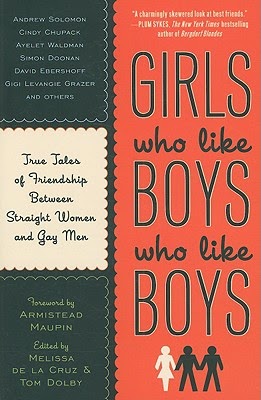
It’s a series of personal essays about the relationships between girls and gay boys. She has really enjoyed the ones she’s read so far.

And M (like A) has started a number of books, but has petered out on most of them. The one that she spent the most time with was

which was lent to us by a regular customer at the store who knew about M’s trip to India. M’s really enjoyed it; she simultaneously relates to it as well as is deeply grateful her experience in India wasn’t as initially terrible as the author’s. It also is allowing her to revisit a place that she’s come to miss.

What are you and your kids reading?