Radioactive!

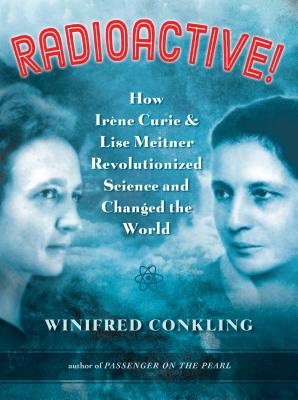
radioactiveby Winifred Conkling
First sentence: “Their moment had finally arrived.”
Support your local independent bookstore: buy it there!
Review copy provided by the publisher.
Content: There’s some science terms and such in this, but they’re explained pretty well. It’s a bit on a higher grade level, but I think 5th graders and up could handle it.  It’s in the kids’ biography section at the bookstore.

I’m a sucker for biographies highlighting people or things I don’t know much about. And this one definitely fits the bill. Conkling highlights two physicists doing research in the 1920s and 1930s, ones that I didn’t know anything about.

Irene Curie was the daughter of the more-famous Marie, but was a stellar physicist in her own right. Along with her husband, Frederic Joliot, she discovered artificial radiation. This opened up many avenues in the scientific world. And while she got credit, no one (well, not us non-scientists anyway) remember her for this. The other scientist Conkling highlights — and in some ways, the more interesting story — is Leisl Meitner. She, along with several other scientists, discovered nuclear fission. The rub, though, is that because Leisl was considered a Jew in Nazi Germany (her grandparents were Jewish), she had to flee to Sweden. Then her partner (and friend?!), Otto Hahn, completely wrote her out of the research. He said he did this all on his own, mostly because he was afraid of the Nazis.

It’s a fascinating story, and Conkling does a good job of explaining the science (there’s some helpful tables, etc. throughout the book) as well as making both of these fascinating women come to life. There’s a bit about their history, their relationship with the scientific community (which was incredibly sexist, no surprise), as well as a lot on their contributions to the advancement of physics.

It’s fascinating and well worth the read.

These Shallow Graves

theseshallowgravesby Jennifer Donnelly
First sentence: “Josephine Montfort stared at the newly mounded grave in front of her and at the wooden cross marking it.”
Support your local independent bookstore: buy it there!
Content: There’s some mild swearing, murder, and some questionable situations. It’s in the Teen (grades 9+) section of the bookstore, but I’d give it to a 7th or 8th grader, who was interested.

Josephine is a thing that an 1890s socialite isn’t supposed to be: curious. She’s supposed to obey her parents, be elegant and ladylike, and marry a wealthy, eligible bachelor of her parent’s choosing. But, when her father unexpectedly turns up dead, supposedly having shot himself, Josephine won’t — can’t — settle for that. She heads out, teaming up with a reporter by the name of Eddie Gallagher, to find the Truth.

Thus starts a winding, sometimes scary, path that will lead Josephine down paths that would scandalize her family if they knew, but ultimately opens Josephine’s eyes and changes her forever.

I’ll be honest: the mystery was kind of predictable. I guess who it was fairly early on, as well as guessing the “big secret”. I didn’t have the how and why, but eventually, I figured out that too. The thing that kept me reading was Jo herself. I enjoyed the push and pull she had with Upper Crust New York Society, how she was willing to go against the expectations of her family. I found it all fascinating, and found Jo a character worth spending time with this.

Which made it worth reading.

We Should All Be Feminists

weshouldallbefeministsby Chimamanda Ngozi Adichie
First sentence: “Okoloma was one of my greatest childhood friends.”
Support your local independent bookstore: buy it there!
Content: There’s really nothing objectionable; my 12 year old has read it. It’s in the sociology section of the bookstore.

I wasn’t going to write a review of this one, mostly because it’s so short and simple, but I decided I needed a record of having read it.

It’s basically an extended, written version of Adichie’s Ted Talk on the same subject, an exploration of the value of feminism. I read this over Christmas, after I heard a that Sweden gave this book out to every 16 year old in the country. I know I’m not really the target audience (neither are my girls, to whom I gave this book for Christmas) already self-identifying as a feminist, but I wanted to see what Adichie had to say.

And she had a lot to say, actually. A lot of it was directed toward African culture — it’s very male — but I think that it’s relevant even in America. The fact that women do experience sexism, the fact that men don’t notice gender, the fact that things are easier for men, and so on, is important. It’s important to have discussions about gender and equality, to raise boys so that they understand the value of women, to raise girls to speak their minds without fear. It’s important, to say, as Adichie writes, “Yes, there’s a problem with gender as it is today and we must fix it, we must do better.”

I may not be the target audience for this one, but it was definitely worth my time.

Bad Feminist

badfeministby Roxane Gay
First sentence: “The world changes faster than we can fathom in ways that are complicated.”
Support your local independent bookstore: buy it there!
Content: There’s fewer than 6 f-bombs, and some other mild swearing. And there’s a whole chapter on 50 Shades of Gray which is frank, but not explicit. It’s in the Sociology section of the bookstore.

I really don’t know what compelled me to pick this up. It’s been on my radar for a while, and I always figured I’d get to it, but why now?  No idea.

I’m glad I did, though.

In this series of essays, Gay takes on not only feminism (the Establishment) but race relations, sexism, culture, and Scrabble. (Well, there’s only one essay on Scrabble.) She’s insightful about relationships, critical about the State of Culture, but most of all, open and honest about the fact that she’s conflicted. She laments the lack of people of color on TV but is critical of the idea of diversity for Diversity’s Sake. (She’s not all that impressed with Orange is the New Black. It’s still a white woman’s story and the diverse characters are often stereotypes.) She admits to finding Blurred Lines catchy, while being disgusted at the content. There’s a whole chapter about the disturbing nature of 50 Shades of Grey while addressing the fact that its popularity shouldn’t be dismissed.

And it was this conflict I found I connected with. Because I’m a conflicted feminist. I don’t live up to Establishment Ideals. And it’s so refreshing to hear the voice of someone outside the establishment — in this case, a first-generation Haitian woman — stand up and say that there’s room in feminism for those of us who don’t fit the mold.

I borrowed my copy from the library, but I need to get this one. There’s an awful lot I need to underline and mark up, and it’s definitely one I want all my girls to read.

Audiobook: The Boston Girl

bostongirlby Anita Diamant
Read by: Linda Lavin
Support your local independent bookstore: buy it there!
Content: There are some mild swear words and references to drinking and smoking. It’s in the adult fiction section of the bookstore.

Addie Baum is the daughter of Eastern European immigrants, who came to American when the persecution became too bad back home. Addie was born in 1900 in Boston, and grew up in a world wholly different from that her parents, and even her older sisters (the youngest who was 14 years older than Addie), knew. It was a world where Addie went to school instead of getting married young and having babies. A world where she held a job and chose love for herself. A fascinating, modern world, but one that put her at odds with her parents — especially her mother — and the way of life they had always known.

I loved this one from the start. It begins as a series of reflections of an 85-year-old Addie in response to the question asked by her 22-year-old granddaughter: “How did you get to be the woman you are today?” The whole novel felt like a personal history, complete with asides that a grandmother would say in the telling. And while it covered Addie’s whole life, the focus was on her formative years from when she was 15 until she met and married her husband. The opportunities she had (because of the people she met), her struggles with family and religion and men, her jobs and the experiences she had because of them. It was a fascinating slice of life.

And the narrator was perfect. She caught that personal history vibe and ran with it; so very often I could almost see Addie, sitting in her living room, telling this story to an interested granddaughter. No, she didn’t do voices, though she had a good Boston accent overall, but I don’t think it was needed for this. The way Lavin read it was just perfect.

As was this story.

Prayers for Sale

by Sandra Dallas
First sentence: “The old woman peered past the red geraniums in her deep front window at the figure lingering in the moon-white snow at the gate.”
Support your local independent bookstore: buy it there!
Content: There’s some harsh violence against women in the beginning, but other than that, it’s mostly just more mature themes. It’d be in the adult fiction section of the bookstore.

This is one of those moments when I am grateful for my book group, because they introduce me to books I wouldn’t otherwise pick up. I had previously read Sandra Dallas and thought she was okay, but I wasn’t prepared for the storm of emotions that this one brought on.

It’s the early 1900s and Hennie Comfort is a long time resident of Upper Swan, a gold mining camp in the mountains of Colorado. She’s 86 and she’s loved her long life up in the mountains. So much so that she doesn’t want to go down and live with her daughter. She’s determined to get the most out of these last few months she has. And then she meets Nit. The wife of a new worker on the drudge boat, Nit is suffering from lots of things: being new, obviously, but also from the stillborn death of her first baby. Hennie reaches out to her as a mother-figure and a friend, and they form a bond. It’s through that bond that we learn about Hennie’s past (and a bit of Nit’s as well) and her life.

It’s a glorious novel, one that celebrates all aspects of women-hood. It made me long for a connection like Hennie and Nit had (they bonded over quilting; it also made me wish I was into that). Hennie’s stories were so rich, her life so full, and yet she probably didn’t feel that way in the midst of it all. I loved that it was straight-forward, that Hennie was open and loving and accepting, and yet wasn’t entirely perfect either. She had her struggles and her faults and her doubts. It gave me hope that maybe I can pull off a decent life in the end.

A full, rich work of historical fiction.

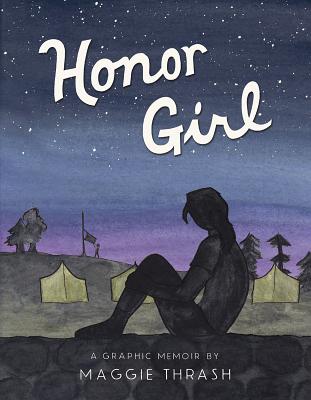
Honor Girl

by Maggie Thrash
Support your local independent bookstore: buy it there!
Content: There’s about a half-dozen f-bombs scattered throughout the book. It’s in the teen graphic novel section of the bookstore.

It’s the summer of 2000, and Maggie is 15. She’s been going to the same summer camp in Kentucky — Camp Bellflower — since she was little, the same camp her mother and grandmother both went to. There was a lot of tradition in the camp, including that of Honor Girl: the one senior camper that was supposed to embody all the Tradition of the camp.

There are very few books, I think, that truly capture what a 15-year-old girl is really like, in all her angst and insecurity. And Thrash’s graphic memoir hits the nail on the head. It’s spot-on. From the drama between her and another girl over who will get their shooting D.E. (a mark of excellence) first to the rumors that fly around the camp about anyone and everyone. But, for Maggie, her summer is wrapped up in a crush she has on one of the counselors, Erin. Does she like Maggie back? Is Maggie even supposed to like one of the counselors? What does it all mean?

The answer is, ultimately and honestly, that she doesn’t know. There is no grand Coming Out moment. There are some moments when I wanted to smack those running the camp, when they discriminated against Maggie for exploring who she is. But, mostly, it was just one slice of a moment in time, when a girl fell in love and didn’t really know what to do about that. And that was something I found I could relate to.

I’m glad Thrash decided that her story needed to be told.

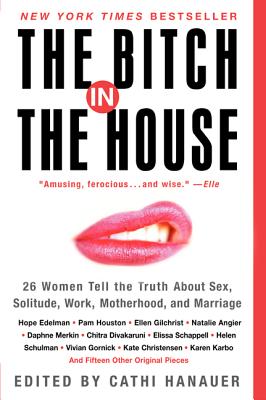
The Bitch in the House

26 Women Tell the Truth About Sex, Solitude, Work, Motherhood, and Marriage
edited by Cathi Hanauer
First sentence: “This book was born out of anger – specifically, my own domestic anger, which stemmed from a combination of guilt, resentment, exhaustion, naivete, and the chaos of my life at the time.”
Support your local independent bookstore: buy it there!
Content: A lot of swearing, including multiple f-bombs. Talking about sex, but no actual sex. Probably not interesting to teens, since most of these women are in their mid- to late-20s and older. It’d be in the sociology section of the bookstore.

I got a text from M a while back, with a picture of this, saying (essentially) that she really needed to talk to someone about this. So, I picked it up, just to see what it was.

It is precisely what the cover said it was: 26 women, all employed, some with families, expressing anger at their life situation. I get some of that anger: a lot of the pressure on women is societal. We were told we could have it all, but no one bothered to tell the men that they needed to help out. (Which, truly, seemed the biggest complaint.)

I did find myself identifying with some of the essays: life is tough, and I can see how it not going the way you think it should would equal anger. But, I can’t just muster that; I’m much too tired. I bailed about 2/3 of the way through; I found that I just didn’t care about upper-middle class women’s whining that they can’t have a job and a family and a relationship and everything else. So what? There are people out there who are trying to make ends meet without the help of a nanny.

That’s a bit harsh.

It’s also 12 years out of date, and I felt that time lapse. Maybe things haven’t changed all that much. Maybe they have changed a bit, and maybe not always for the better. But, I’m tired of anger. (I know it’s useful. I’m just tired of it.)

In the end, it just wasn’t the book I wanted to be reading.

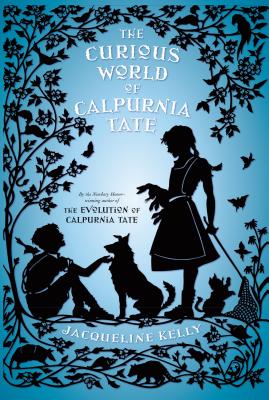
The Curious World of Calpurnia Tate

by Jaqueline Kelly
First sentence: “To my great astonishment, I saw my first snowfall on New Year’s Day of 1900.”
Support your local independent bookstore: buy it there!
Review copy snagged off the ARC shelves at my place of employment.
Content: It’s a bit old-fashioned and there are a lot of scientific words, but if you’ve got that sort of 9 year old reader, it’d be perfect for them. It’s in the middle grade (grades 3-5) section of the library.
Others in the series: The Evolution of Calpurnia Tate

I was super excited to find out that my favorite scientific Texan was back in a second installment. I really adored Calpurnia the first time around, and was very excited to spend more time with her. It’s 1900, and Calpurnia is doing her best to keep up with her scientific studies with her grandpa. It’s hard, especially with pressure from both her parents to be more ladylike. Calpurnia would much rather be tromping around the forests and swamps near their central Texas home, collecting specimens. Or studying the stars and weather.

Then a hurricane hits Galveston (a fact which sent me to Google to find out if it was real. It was.), and Calpurnia’s life changes. In to town blows an older cousin (who is, understandably, distraught) and a veterinarian. All of a sudden, Calpurnia has found a calling. The problem? She has to fight to let people even consider the idea of her wanting to be a vet.

Much like the first one, the charm in this is in the narration. Calpurnia is such a delight to spend a book with. This time, I felt her frustration and pain at being a second-class citizen, in her school, in her house, around the town. It seems that everyone, except grandpa, decided already that girls can’t do anything non-girly, and it was a wall Calpurnia kept banging up against. I admired her perseverance in breaking down barriers.

Also, like the first one, I thoroughly enjoyed all the science and the little historical details that Kelly uses to make Texas in 1900 come alive.

Delightful.

Bone Gap

by Laura Ruby
First sentence: “The people of Bone Gap called Finn a lot of things, but none of them was his name.”
Support your local independent bookstore: buy it there!
Content: There’s some intense situations, some creepiness, and some on-screen, tasteful sex. It’s also pretty mature in its themes. For those reasons, it’s in the Teen (grades 9+) section of the bookstore.

Bone Gap is one of those places that everyone knows everyone else’s business and opinions once formed aren’t so easily changed. So, everyone knows that the Rudes are hopeless and mean. That Charlie Valentine is just plain weird. And that Priscilaa — who insists upon being called Petey — is homely. And that Sam and Finn are okay without their mom, who ran off, but they could be better. And that the strange newcomer, Roza, is the most beautiful girl ever.

They also know that Finn’s not the most reliable person; he’s kind of spacey, like his mom, and so when he says some guy in a black SUV took Roza, no one believes him. They chalk it up to “women are always leaving those boys”. They assume that Roza wants to go. But Finn? Finn knows different. So, he sets about trying to find Roza, not because he loves her but because his brother does and his brother can’t quite bring himself to find her. Little does Finn know that looking for Roza will change everything.

I have been sitting here, staring at the screen, trying to figure out what to say about this book. It’s not that I didn’t like it; I did. But I didn’t love it like I felt I should.

My favorite part?  The women. I loved them. I loved Roza and her desire to be Seen for herself and not for her beauty. I loved Petey and her fierceness. I wished there were more women to love, because Ruby knows how to write them whole and complex, people rather than stereotypes.  I liked that they saved themselves, even though the men weren’t worthless louts or even helpless. It was something that was just Done, that they rose up and just did that. They were my kind of women. I also loved the idea that what we assume about other isn’t always the Truth. That there’s more to people than what we see.

But aside from that, I didn’t really love it. Maybe it was the whole magical realism thing; that genre and I have never really quite gotten along. I think I prefer my magic overt: if there’s going to be something strange going on, then give me magic with Rules. I didn’t understand what was going on until the book was nearly done, and that left me feeling, well, stupid.

So, I didn’t enjoy it as much as others on the interwebs, but I still think it’s a novel worth reading.