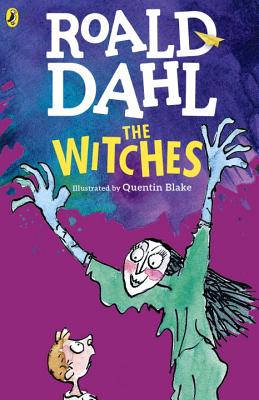
The Witches

witchesby Roald Dahl
First sentence: “In fairy-tales, witches always wear silly black hats and black cloaks, and they ride on broomsticks.”
Support your local independent bookstore: buy it there!
Content: It’s not as scary as I thought it would be, and surprisingly simple for the size. Heads up, though: grandma smokes a cigar. It’s in the middle grade (grades 3-5) section of the bookstore.

So, I remember reading this one at some point, and I had a violently negative reaction to it. I HATED it. So, I was a bit wary going in this time. But, since I picked this for the Roald Dahl book club, I needed a re-read going in.

And it’s…. weird. I was asked if it was “good”, and I said “It’s weird.” “Does that mean it’s bad? ” Nope. Just weird.

The basic plot? There are witches out there, and they look like us. Except they always wear gloves, and a wig (to cover their bald heads) and the have no toes. They hate children and make them disappear. They are, at all costs, to be avoided. So when our narrator (whose childhood sounds suspiciously like Dahl’s), accidentally ends up in a ballroom full of witches, he’s (understandably) terrified. Especially after he hears their master plan for the children of England: make a time-release mouse potion, put it in candy, and voila! No more children. They’ll all be mice.

Except our narrator doesn’t make it out in one piece: he’s caught and turned into a mouse. But, he can talk and he can still think like himself so he goes and convinces his grandma that he’s still her grandson. And informs her of the Grand Plan. Which they, unbelievably, thwart. But our narrator remains a mouse, which is just fine with him because then he won’t outlive his grandma.

Weird.

There are the usual Dahl themes: adults hating kids, and good kids being bullied (by the witches). But it really feels different from the other ones I’ve read. Matilda is darker, and Charlie is more didactic. I’m not quite sure what The Witches is other than… weird.  Was it supposed to scare kids? Was it supposed to just be amusing? (It wasn’t.)

This one’s going to be an interesting discussion at book group.

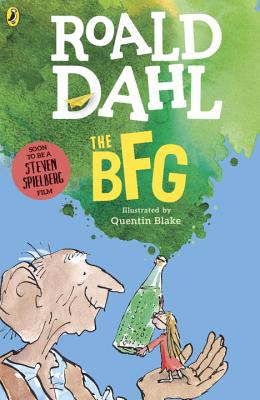
The BFG

thebfgby Roald Dahl
First sentence: “Sophie couldn’t sleep.”
Support your local independent bookstore: buy it there!
Content: There’s a small bit of violence, but for the most part, it’s easy enough for the youngest of the grades 3-5 set. It’s in the Middle Grade section of the bookstore.

Sophie is up late one night in her orphanage when she sees something coming down the street. That something turns out to be a giant, who plucks her out of the orphanage and takes her back to his land. He says it’s because he needs to keep her safe,  because there are other, bigger, badder giants around. And he’s not wrong: the giants back at the stomping ground ARE bigger, badder and meaner.

(And that’s where Dahl’s overall themes come in: the BFG is the “runt” of the pack and is constantly being picked on. He’s also more evolved, and smarter, and just better than those bullies.)

Sophie experiences life with the BFG, and together they decide that the other giants need to be stopped (mostly because they eat children; though the BFG’s argument for it was pretty persuasive…). So they go to the Queen (really, my favorite part), convince her of the existence of the giants, and get her help in stopping them.

Perhaps it’s just the order I’ve read these, but this one is now my favorite. I loved the Seuss-like wordplay that went on with the way the BFG talked. I liked the friendship between Sophie and the BFG, and I thought their solution to the problem was pretty ingenious. It’s a delightful book, much less dark than Matilda or as mean as Charlie. So far, this one is the best.

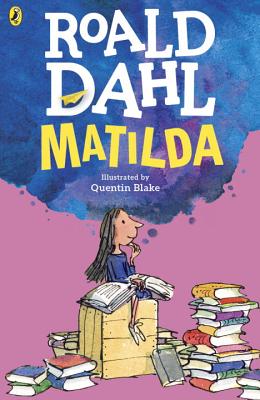
Matilda

matildaby Roald Dahl
First sentence: “It’s a funny thing about mothers and fathers.”
Support your local independent bookstore: buy it there!
Content: It’s a bit longer than Charlie, and a bit more complex. But, that said, I’d give it to a confident 8-year-old reader. It’s in the middle grade (grades 3-5) section of the bookstore.

So, I’ve read this one before, but it’s been years and years and years and even though I’ve watched the movie a bunch (it’s one of my girls’ favorites), I wasn’t quite prepared for how DARK Matilda is.

I mean, all the usual Dahl themes are there: a powerless, nice child (not poor, though that comes with Ms. Honey) is bullied (by her parents and other adults) and discovers something grand within herself in order to overcome. But, the adults are beyond awful. They’re abusive. The Wormwoods (who are hilarious in the film) are corrupt and neglectful. But, it was Miss Trunchbull, who I always condered just an annoyance, who really got me this time. She’s not annoying: she’s an abuser. And perhaps it’s where I am in my life, but that didn’t sit well with me. I’m not entirely sure why; Matilda and Ms. Honey have a happy ending, after all, and Miss Trunchbull (not to mention Mr. Wormwood) get their comeuppance. But, it kind of rang hollow for me.

That said, it’s also not as funny (or at least clever) as Charlie and the Chocolate Factory.  It was sweet — both Matilda and Ms. Honey are sweet characters amid all the lame, awful people — but it wasn’t clever. (Dark undertones!) I did enjoy it, but I’m not sure it’s my favorite. (Then again, I still have four more books to read this summer.)

The book group discussion, however, was fantastic! I had 20 kids ranging in age from 5 to 12, and they all had amazing things to say. One boy said he had read it eight times, and had some smart thoughts on it. As did many others. We talked about favorite characters and whether the Wormwoods were funny (yes) and whether Mr. Wormwood deserved the pranks (yes!). Ms. Trunchbull was deemed to be too mean to be funny, though one girl insisted that her parents would have believed her if she had told them what Ms. Trunchbull was doing. We talked a lot about the chocolate cake, and many pointed out that an 18-inch cake really isn’t that big. One girl said it was “just right”. And my favorite comments were when we were talking how Dahl makes ugly=mean and beautiful=good. One girl pointed out that ugly people can’t help being ugly and that they could be nice and beautiful people can be mean. And another girl said that maybe Dahl was just trying to make the character’s inward ugliness show outward. Both excellent.

So, maybe not my favorite, but it was a great discussion.


Audiobook: School for Brides

schoolforbridesby Patrice Kindl
Read by Bianca Amato
Support your local independent bookstore: buy it there!
Others in the series: Keeping the Castle
Content: Nothing objectionable, but a working knowledge of Regeny manners is helpful. It’s in the YA section (grades 6-8) of the bookstore.

Set a year after Keeping the Castle (but you don’t need to read that one first), the Winthrop Hopkins Female Academy has one purpose: to educate young ladies to make smashing matches. The problem, however, is that in Lesser Hoo, Yorkshire, there is exactly one bachelor, who isn’t exactly everyone’s idea of eligible. How are eight young women supposed to find their matches if there isn’t any eligible young men around?

Thus begins the very charming A School for Brides (which was a delight to listen to). Things begin to look up when a young man breaks his leg while in the country and is put up at the school to heal. His friends come calling, and suddenly everything is looking a lot more complicated. Several of the girls are simply delightful (plus the instructor, Miss Quince; I adored her), being that excellent cross between feminist and historical, saucy and authentic. There were so many delightful characters (though sometimes I wished I was reading it so I could keep track of who was who) doing so many delightful things. There were also ones to loathe, so it wasn’t a perfect froth.

As I was reading, I realized it’s a homage to Jane Austen’s work, but it’s also a parody. That feeling kind of increased when I did some looking at how to spell the names and discovered that Miss Foll-ee-ut (which is how the reader was pronouncing it) is spelled Pffolliott. Definitely a send up to the silliness that goes on in historical England. (Leave it to Psmith, anyone?)

Amato was also delightful, capturing the spirit of the book in her narration as well as the essence of each character, which is a trick since there’s so many. It’s definitely a fun read.

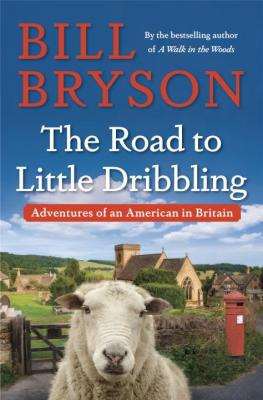
The Road to Little Dribbling

littledribblingby Bill Bryson
First sentence: “One of the things that happens when you get older is that you discover lots of new ways to hurt yourself.”
Support your local independent bookstore: buy it there!
Content: There’s a bunch (a dozen or so?) of f-bombs scattered throughout, and it’s a bit old-n-cranky for the younger set. But if you’re interested in that sort of thing (plus England), then it’s in the Creative Non-Fiction section of the bookstore.

It’s been 20 years since Notes from a Small Island, and Bryson’s publisher thought it’d be an interesting thing for Bryson to go back and revisit places. Well, he decided not to do that. Partially because he’s not one to do things exactly the same way, and partially because he applied for British citizenship and one of the questions asked what were the two farthest cities in Great Britain, he drew a line down the middle of the country and decided to loosely follow it, visiting places.

It doesn’t sound like much to hang a book on, but this is Bill Bryson after all. It’s been a while since he’s done a travel book, and I was more than happy that he got back to it. I was much more willing to read this one than I was Notes (I didn’t “get it”. I wonder what that means now.) and I thoroughly enjoyed traveling to all these small, out of the way, strange little English places with him.

But what really struck me is that Bryson is a bit of a crank. A lovable, affable, hilarious crank, but a crank nonetheless. He’s one of those people who think that it Used To Be Better back when he was younger, and that the world — or, more particularly, Great Britain — is going to pot. And yet, the affection he has for his adopted country is obvious. He adores Great Britain, not just with all his faults but because of them. In spite of his occasional crankiness (or maybe because of it?) I had a hilarious, fun, and sometimes insightful (his throw-away comments on U. S. gun control in the last chapter are spot-on) time traveling England with him.

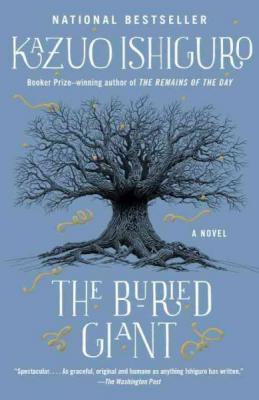
Audio book: The Buried Giant

buriedgiantby Kazuo Ishiguro
Read by: David Horovitch
Support your local independent bookstore: buy it there!
Content: There’s some violence and mild sexual elements. But, no worse than any Tolkein book. In fact, if you’ve made it through LOTR, you will probably really like this one.

Axl and Beatrice have had a long, good life. Or, at least as much as they can remember. They live in a cave dwelling in Britain, in the time after the Romans left and Arthur’s peace with the Saxons is waning. They’re not quite content, and so they determine that they need to head to a nearby village to see their son — whom they only can barely remember having — because he’s anxiously waiting for them.

They have no idea how their journey will go, or the people they will meet (an elder Sir Gawain among them, much to my delight), and how it will all change them.

I’m not sure how much more of the actual plot I want to divulge. Much like LOTR (which this strongly reminded me of), the plot is less important than the journey. Axl and Beatrice’s journey — though we never really got inside Beatrice’s head, which disappointed me — was a grand one, like Odysseus, or Frodo. The people the met, the friendships they made, the emotional journey they took as well as the physical one all had a mythological quality to it.

I’m sure you can find a lot of deeper meaning in the story as well. But for me, listening to it on my way to and from Dallas (the narrator was excellent, once I got used to his cadence), it was more a long oral narrative, a story to be heard by the firelight over several nights, a story to capture the imagination and to be swept up in.

Which means it’s being told by a master storyteller. And I loved every minute.

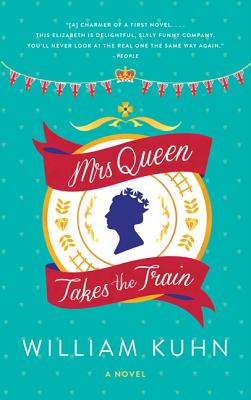
Mrs. Queen Takes the Train

mrsqueenby William Kuhn
First sentence: “Several years ago, on a dark afternoon in December, Her Magesty Elizabeth the Second, by the Grace of God, of the United Kingdom, Northern Ireland, and Her Other Realms and Territories Queen, Head of the Commonwealth of Nations, Defender of Faith, Duchess of Edinbugh, Countess of Merioneth, Baroness Greenwich, Duke of Lancaster, Lord of Mann, Duke of Normandy sat at her desk, frowning at a computer screen..”
Support your local independent bookstore: buy it there!
Content: There’s a few f-bombs (maybe a half dozen?). But other than that, it’s pretty clean. It’s in the adult fiction section of the bookstore.

You would think, from the title and first sentence, that this is a story about Queen Elizabeth and you would be right. She is most definitely a character. However, I’m not entirely sure she’s the main character, or rather just a plot device. The basic plot is this: The Queen gets down one December day, and then goes missing. Six people — her lady in waiting, Lady Anne; her dresser, Shirley; her butler, William; a member of her security team, Luke; an employee at the Mews, the horse stables, Rebecca; and an employee of the shop where The Queen gets her cheese, Rajiv — all, for various reasons, go looking for her. It’s much less about The Queen and the reasons she left than it is about the politics of the royal household, and the lives of those looking for her.

Which isn’t to say it was bad. It wasn’t. But it wasn’t as good as I had hoped, either. The parts with The Queen out and wandering around, connecting anonymously with people were really intriguing and quite fun. The rest of it — the backstories, the drama, the relationship building — not so much. There were several times when I considered bailing on this — it just took way too long to get going — but I didn’t because it was for book group. I think I just wanted it to be more… fun. And much less drama-y.

I just wasn’t thrilled with it in the end.

The Wand & the Sea

by Claire Caterer
First sentence: “Holly Shepard was unlike most twelve-year-olds in that she didn’t at all mid sharing a cramped cottage bedroom with her pudgy, snoring, laptop-loving younger brother.”
Support your local independent bookstore: buy it there!
Others in the series: The Key & the Flame
Review copy provided by the author’s publicist.
Content: It’s kind of slow to start, and the fantasy is more Narnia-esque than Harry Potter or Percy Jackson. Even so, there’s nothing content-wise, and if there’s a 9- or 10-year-old who likes Narnia, they’ll probably love this. It’s in the middle grade (grades 3-5) section of the bookstore.

It’s been a year since siblings Holly and Ben and their British friend Everett have been to the magical land of Anglielle, where Holly can do magic, and where they’re caught up in a good versus evil battle. They’re determined to get back, but this time, the portal they used before won’t work. This time, it’s the water element that’s highlighted. This time, they need to rescue their friends, who have been imprisoned by the king, and try and find the other adepts, who have been exiled from Anglielle.

Of course, it’s not a simple thing: Everett is still playing the role of the sulky somewhat traitor (think Edmund), the prince Avery’s loyalties are still in question. They do meet a group of pirates, on the ship the Sea Witch, that are quite fascinating. And when Holly finally confronts the Big Bad Guy, it’s pretty intense.

I went back and re-read my review/reaction to the first book in the series, and it seems I liked it. I had a less positive experience this time around; the first book didn’t stay with me as much, and it’s been a couple of years, and it took me longer to get into this story. Still, it’s channeling Narnia quite well, and in the end, the adventure was satisfying, while leaving room for another sequel. (I’m starting to suspect there will be four in all; one for each element.)

Not bad, overall.

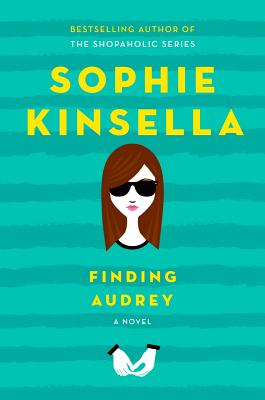
Finding Audrey

by Sophie Kinsella
First sentence: “OMG, Mum’s gone insane.”
Support your local independent bookstore: buy it there
Content: It has six f-bombs, all near the end of the book, and nothing else. So, I’m torn: do I leave it on the YA shelves (grades 6-8), where it thematically belongs? Or do I move it to Teen (grades 9+) where it’s not quite edgy enough, but it fits language-wise? Tough call.

Audrey doesn’t leave the house. Doesn’t talk on the phone. Doesn’t talk to people (outside of her therapist and her family). Doesn’t look people in the eye (in fact, she prefers to wear dark sunglasses all the time). She hasn’t done any of these things since the “incident”. And she prefers to keep it that way.

Before I go much further I have to interject: this is a hilarious book. Perhaps it’s because I love All Things British, but I was thoroughly charmed by Audrey and her family. It is possible to take something serious (like bullying — though you never really find out what happened, and that’s okay) and severe anxiety and to be, well, warm about it.

Maybe I should make a second diversion: I adored Audrey’s family. From her gamer older brother (with his mile-wide sarcastic streak) to her absolutely adorable four-year-old younger brother (adorable!) to her completely clueless dad (probably stereotypical, but it worked), to her over-protective mom (I will stand by my statement that the best way to be a good parent is to read YA books), they were all entertaining. Kinsella definitely wrote this with love.

(It reminded me, in some ways, of the Casson family books. That makes me happy.)

The arc of the novel is Audrey’s “recovery”. It’s aided by Linus, one of her brother’s friends who takes an interest in her. He supports her and pushes her to try new things, to somehow get a grip on her anxiety. I really liked that Audrey was never “cured”: she learned how to handle her fears and her body’s reaction to them, but they were always still around, which was not only realistic but somewhat of a relief.

Yes, things were kind of tied up in a nice bow at the end, but that’s kind of expected and I didn’t mind. In fact, I really quite enjoyed this.

As You Wish

Inconceivable Tales from the Making of The Princess Bride
by Cary Elwes with Joe Layden
read by Cary Elwes (with other actors/directors/etc. reading their contributions)
Support your local independent bookstore: buy it there!
Content: There’s nothing “objectionable”, though the reading level is probably that of high school. It’s in the biography and film sections of the bookstore, but I’d give it to anyone who has a interest in the movie (especially if they are big fans).

I’m late to this party, since this book came out last October. But, I’ve had my eye on it, mostly because I have loved the movie for years (and am constantly surprised how many of my regular daily sayings are actually lines from this movie) and finally got my hands on the audio book.

There’s not much to say about the content: Cary Elwes was asked at the 25th anniversary screening of the movie what he took away from the making of it. He came up with (in his words) a lame answer, and this book was born out of his desire to really detail what the experience meant to him. He got contributions from the actors who are still alive, and a book was born.

It’s not brilliant writing by any stretch of the imagination. But, it is chock-full of fun trivia (yes, I did watch the movie again, spouting out all the wonderful tidbits I’ve learned. My family was patient with me.) and delightful stories.

But, the best thing? (And the reason I’d recommend the audio over the print?) Cary Elwes is a brilliant narrator. Not just his regular voice, but he does a spot-on American accent (several, in fact), and he is just a delightful narrator to spend six hours with.

At the very least, it’ll make you smile. And that, I think, is worth it.