Audiobook: The Book of Delights

by Ross Gay
Read by the author
Support your local independent bookstore: buy it there!
Or listen at Libro.fm
Content: It’s irreverent and sweary, including multiple f-bombs.

I was having a week where I was angry at everything. Did not matter what it was, I was just in a constant state of pissed-off-ness. I was scrolling through my audio books, and I landed on this one. “Hm,” I thought to myself, “maybe I need this one.”

I vaguely knew about Gay going in because he visited the store, and a lot of the staff really loved him. (A lot of the customers, too.) But I wasn’t ready for this book back in April, when it came out. I did, however, need it now.

The basic premise is that Gay, a black poet, spent a year — from his 42nd birthday to his 43rd — writing small essays on the things that delight him. Sometimes they wander into memories, sometimes into ruminations on race or the nature of Joy. Sometimes it was just him expressing delight in a simple touch, or the sharing of a flower, or conversation.

Whatever it was, it was all particularly delightful, especially as read by Gay. His reading, for me, was everything. He made me think, he made me laugh, and he made me look for the delights in my own life. (If you want a sample of him reading, check out his poem To the Fig Tree on the Corner of 9th and Christian.)

This book is, simply, a delight.

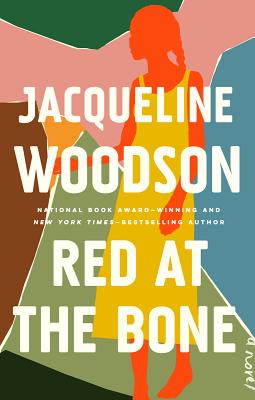
Audio book: Red at the Bone

by Jacqueline Woodson
Read by: Jacqueline Woodson, Bahni Turpin, Shayna Small, Peter Francis James, and Quincy Tyler Burnstine.
Support your local independent bookstore: buy it there!
Or listen at Libro.fm
Content: There is some on-screen sex as well as swearing, including multiple f-bombs. It’s in the adult fiction section of the bookstore.

I’m at a loss to talk about this one plot-wise. It jumps back and forth through time, starting in 2001, at Melody’s “coming of age ceremony”, where she’s wearing the dress her mother, Iris, wasn’t able to wear, because she was pregnant with Melody and didn’t get a ceremony. It gives us glimpses into the inner lives of Iris and Melody, but also Iris’s parents, and Aubrey, Melody’s father. It’s an introspective novel; nothing really happens, but Woodson’s tight writing and way of observing human nature still allows us to get to know these characters and understand their motivations.

I thoroughly enjoyed the audio book, partially because Woodson’s writing is a joy to listen to, and partially because the different narrators helped keep the story straight. (I was talking to a co-worker who said she was having trouble with this one because she didn’t know which chapter was from which point of view — Woodson, unlike other writers, doesn’t do any favors by telling us at the outset who is narrating, instead making us do the work of figuring it out.) It was short, and to the point, and I liked listening to this one family’s story through the years.

Recommended, particularly in audio.

Some Places More than Others

by Renee Watson
First sentence: “‘New York City is no place or a little girl,’ Mom says.”
Support your local independent bookstore: buy it there!
Review copy provided by the publisher.
Content: There’s some arguing, but mostly it’s pretty good for the age group — 8-12 — that it’s aimed for. It’s in the Middle Grade (grades 3-5) section of the bookstore.

Amara wants one thing for her 12th birthday: to go see her father’s home and family in New York City. She’d love to go by herself, but she’ll take going with her father on a business trip. The problem? Her father hasn’t spoken to her grandfather in 12 years, since Amara was born and her grandmother passed away.

It takes a while (probably a bit longer than it should for the pacing in the book, but that’s being nitpick-y), but Amara is on her way to Harlem to see her grandfather, aunt, and cousins (whom she has only spoken to). It’s awkward, especially since her cousins are 14 and 16 and don’t really want to hang out with her. Amara has a few adventures (and mis-adventures) and learns about her own personal history as well as African American history in Harlem.

I enjoyed the book, mostly for the history as well as the class tensions between Amara — who is decidedly upper middle class — and her cousins — who are not. I liked Amara as a character, and I think Watson got the middle grade voice right, even if the pacing was slightly off.

In the end, it was a sweet story about learning the importance of where you (or your people) came from.

My Life as an Ice Cream Sandwich

by Ibi Zoboi
First sentence: “These clouds are a concrete wall!”
Support your local independent bookstore: buy it there!
Release date: August 27, 2019
Review copy provided by the publisher.
Content: It’s kind of hard to tell imagination from reality and the print is a bit on the small side for a middle grade book. It’ll be in the middle grade section of the bookstore, but I’d give it mostly to 5-6th graders.

Ebony-Grace lives in Huntsville, Alabama with her mom and grandpa, who works at the NASA space center. He’s only an engineer — there’s no black astronauts in 1984 — but he inspires Ebony Grace. They have their own imaginary world, where he is Captain Fleet and she is Cadet E-Grace Starfleet, and the go on Star Trek-inspired adventures throughout space. Except, now Ebony is being sent to her father’s in Harlem, which seems like a whole new planet — she dubs it No Joke City — with a whole bunch of “nefarious minions” that she can’t quite figure out. It doesn’t help that the friend she made last time she was in Harlem (three years ago!), Bianca, has moved on from space adventure games and is now jumping Double Dutch, breakdancing, and rapping with her crew, the Nine Flavas. Ebony has no idea how to fit in and just wants to go home.

On the one hand, this is a fun bit of historical fiction and I appreciated a geek girl main character. I loved that Ebony was super into space and science fiction and super knowledgeable about it. It was nice to see a Black girl be into something that is usually reserved for white boys. So yay for that! And I could relate to Ebony’s feeling of otherness, coming from the South and going to the north. I moved to Michigan from Utah right before 6th grade, and felt a lot of the same sense of outsiderness. I talked funny, I didn’t understand the lingo, and it didn’t help that I hadn’t really listened to the radio (like ever: I mostly listened to my parents records). This one will really resonate with kids who feel like they’re on the outside looking in.

What I didn’t like — what I reacted really viscerally and negatively to — were the adults in the book. I think they’re historically accurate: Ebony’s mom is more concerned with the way Ebony looks and that she’s polite and obedient to her elders, and her father isn’t much better. But I wanted to shake them all. They have a girl who is interested in SPACE! Why are they calling her crazy and telling her she needs to stop with the nonsense?!? Just because she’s a girl?!? The rampant sexism (again: historically accurate) drove me absolutely nuts. And it trickled down to the kids that Ebony met as well: they “grew up” and cared for more “grown up” things — clothes, boys, competitions, and I was so angry that they kept calling Ebony crazy and stupid for liking the things she liked.

I also had issues with the ending — Ebony never finds out what happens to her grandfather who gets in a bit of trouble off-screen and then suddenly dies (WTH?!) — but it’s a middle grade novel, so I can forgive that.

In the end, I’m not entirely sure what to feel about this book. I want to recommend it, because I like Zoboi and I like the idea of a geeky Black girl. I just may not be able to get past my anger at the adults.

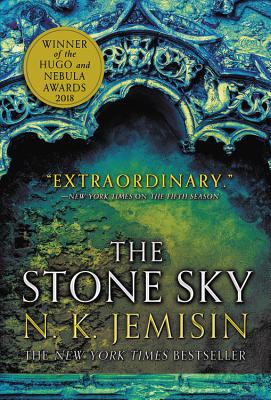
The Stone Sky

by N. K. Jemisin
First sentence: “Time grows short, my love.”
Support your local independent bookstore: buy it there!
Others in the series: The Fifth Season, The Obelisk Gate
Content: There is swearing and some violence, though none of it brutal. It’s in the Science Fiction/Fantasy section of the bookstore.

Well… if I didn’t want to do spoilers for the other two books, that leaves me with very little to say, here, doesn’t it?

Impressions: It’s definitely a book on the evils of colonialism, systemic racism, and oppression. No, it’s not overt, but it’s there. It’s also a book about forgiveness, and if not forgiveness, then maybe a sort of peace. It’s a book about parenting, and what children expect and/or need from their parents, which are not always the same thing. It’s a book about resilience and endurance and sacrifice. (No, I didn’t cry at the end, like a coworker suspected I might.)

It’s still a wildly beautifully written book, though I found this one had bits that pulled me out of the narrative more than the other two. And it was a satisfying conclusion. It definitely deserved all the awards it received.

And I’m going to try and read more Jemisin soon.

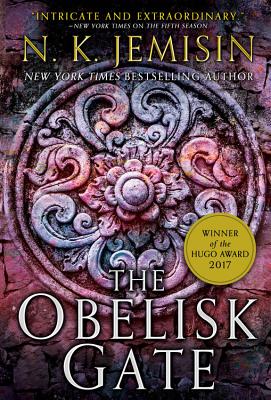
The Obelisk Gate

by N. K. Jemisin
First sentence: “Hmm. No. I’m telling this wrong.”
Support your local independent bookstore: buy it there!
Others in the series: The Fifth Season
Content: There is swearing, including many f-bombs, and violence. It’s in the Science Fiction/Fantasy section of the bookstore.

Again, it’s super hard to talk about this one without giving too much away. Let’s just say it’s about magic, and community, and the end of the world, and forgiveness and how all that fits together.

Things I really liked: the language. Jemisin KNOWS how to spin a story. And this one is super intimate, it’s one character telling it to another, which is why the second person (which usually drives me nuts, but doesn’t in this one). The storytelling is just effortless, even when dealing with tough and complex things.

I liked that Jemisin was fearless about what the end of the world means. Communities will run out of supplies, there will be starvation and cannibalism. It’s refreshing that she’s so frank.

I liked one character, Nassun, who is 10, though I thought she was much like most 10-year-olds in fantasy novels written for adults: super precocious, and not at all believable as a 10-year-old. Even so, she was smart and intuitive and I enjoyed her as a character.

One more book to go in this trilogy! I can’t wait to see how the story ends.

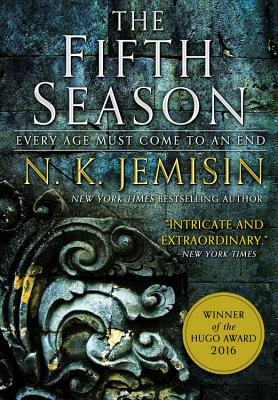
The Fifth Season

by N. K. Jemisin
First sentence: “Let’s start with the end of the world, why don’t we?”
Support your local independent bookstore: buy it there!
Content: There is some tasteful sex, and a lot of f-bombs. It’s in the science fiction/fantasy section of the bookstore.

As I was reading this, I know I thought at one point that there really is NO way to summarize this book without giving it all away. And it was so delightful — mostly, at first it was a bit confusing — not knowing what was going on and slowly discovering it for myself, that I think I’m going to spare you the plot summary. Let’s just say this book is about a world — the Stillness — that sometimes has catastrophic events they call Fifth Seasons, and at the beginning of this one, a Fifth Season starts. It’s about what happens before and after.

Which really doesn’t give you a sense of this book at all. At one point, early on, I wasn’t sure I liked it, but the writing kept drawing me in — Jemisin is a fabulous writer — and I was intrigued, which really was enough. By the end, though, I was blown away and, of course, I need to read the rest just to see what happens with these characters I’ve come to really enjoy. There are also layers and layers to this book — it was chosen for a book group (actually, they ended up doing all three), and I can see why. There’s a LOT to talk about with people who have also read it.

Which is to say: if you enjoy a good, complex fantasy, you ought to be reading this series.

Black Card

by Chris L. Terry
First sentence: “I was finally black again.”
Support your local independent bookstore: buy it there!
Release date: August 13, 2019
Review copy provided by the publisher.
Content: There are many f-bombs, and several instances of the n-word. It will be in the adult fiction section of the bookstore, but I think mature teens will be interested in it as well.

Our narrator — whose name I thought I knew, but looking through things, I’m not so sure now — is a bi-racial punk musician drop out, working at a coffee shop as a barista, and who is trying quite desperately, to figure out who he is. Is he white? If so, what does that mean? Or is he black? Again, if so, what does that mean? He’s not white enough to fit in with his white friends and other band members, especially when they pay at places outside of Richmond, VA where the Civil War is still being fought. (For the record, it is never never never okay for a white person to use the n-word. Ever. Even ironically.) But he’s not black enough because he works as a barista and plays (and likes) punk music, and doesn’t really understand street talk.

So where does that leave him? Mostly just floundering trying to find a direction.

It’s an interesting book, introspective, and challenging regarding race. It’s a quick read, with short chapters, and there’s a bit of magical realism going on that was odd but didn’t really bother me. I liked it, though, for the way Terry tackled race by looking at one person’s experience. It’s definitely a book worth picking up.

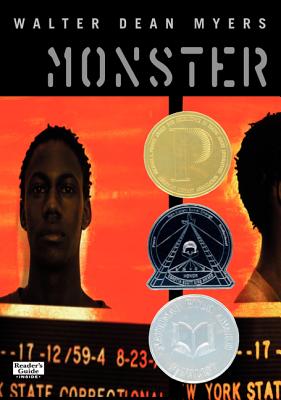
Monster

by Walter Dean Myers
First sentence: “The best time to cry is at night, when the lights are out and someone is being beaten up and screaming for help.”
Support your local independent bookstore: buy it there!
Content: There is some frank talk about what goes on in prison, the use of the n-word as well as f-bombs. It’s in the teen section (grades 9+) of the bookstore.

Steve Harman is a 16-year-old black kid in Harlem who is in jail waiting trial for murder because of a drugstore robbery gone bad. He’s not the only one on trial; his “acquaintance” is also on trial for the same murder (I found myself wondering about the legality of this). Because Steve is an aspiring filmmaker, the book is written as a screenplay, covering the trial with flashbacks to Steve’s life as well as the night of the incident, interspersed with handwritten journal notes from Steve.

The most fascinating thing about the book, for me, wasn’t the format (which took a bit of getting used to). It was the way the story unfolded. We were basically the 13th juror, albeit with a bit more information, listening in on the trial from the opening arguments to the testimony and cross-examinations through the closing arguments. I don’t feel like Myers biased the reader in one direction or another (or maybe he did, wanting us to be more sympathetic to Steve), but instead allowing the reader to draw their own conclusions from the evidence presented.

On top of that, it’s a scathing look at the justice system. Sure, people are just doing their jobs, but when a 16-year-old kid ends up in an adult prison just because of who he knows, or what lawyer he can or can’t afford, when the guards don’t do much to protect the prisoners from each other… no wonder we need prison reform in this country!

It really was a fascinating and enlightening read, and I’m glad I did.

Glory Be

by Augusta Scattergood
First sentence: “What was taking Frankie so long?
Support your local independent bookstore: by it there!
Content: There’s some physical violence. It’s short and the chapters are short. It’s in the middle grade section (grades 3-5) of the bookstore.

Glory, the youngest daughter of a Southern preacher, has grown up all her life in Hanging Moss, Mississippi. She hasn’t thought much about how her cook, Emma, is black. Or why she doesn’t see any black people at the pool or library. But, it’s the summer of 1964, and things are changing. The pool closes “for repairs”, but it’s because the pool committee doesn’t want “those people” sullying the waters. They try to do the same with the library, but the librarian stands up and keeps it open. And Glory’s best friend, Frankie, is on the line because his older brother and father are leading the charge against desegregation.

This had a lot of the same feeling as The Help did: white southern people being enlightened and standing up to their racist neighbors, but not really doing much else. I don’t know. It wasn’t bad, and I’m glad that white people have this kind of awaking story, but it kind of left a sour aftertaste. It was a very white book (I am surprised it was on my list for a mulitcultural children’s literature class…) and I wanted, well, more. Emma, the cook, didn’t play a huge role, and the whole book had a white savior narrative to it: Look! White people can recognize that black people are people too. Ugh.

I wanted more.